Keywords
Reach; RE-AIM framework; Coverage; Engagement; Equity; Communities of Practice (CoPs); Implementation science; Low- and middle-income countries (LMICs)

This article is included in the Policy Research Programme gateway.
Reach; RE-AIM framework; Coverage; Engagement; Equity; Communities of Practice (CoPs); Implementation science; Low- and middle-income countries (LMICs)
The dual burden of communicable and non-communicable diseases is unfolding as a significant global public health issue, more so, within low- and middle-income countries (LMICs) such as South Africa1,2. Recent analysis of 21 of South Africa’s national datasets, highlights a very high prevalence of hypertension, diabetes, arthritis, and HIV. The results indicate that the prevalence of these chronic conditions is as follows: hypertension (33.9%), HIV (18.2%), arthritis (11.3%), and diabetes (10.2%). Among adults aged 50+, hypertension reaches 70.6%3, illustrating a critical challenge of multimorbidity, that requires coordinated and person-centred care4.
This growing burden places additional strain on an already overextended health system worsened by inequities in environmental conditions, socio-economic status, healthcare workforce distribution, and a vertically structured, disease-siloed model of care5,6. In response, researchers and public health specialists are developing complex health interventions aimed at delivering more integrated and equitable care. However, scaling these interventions is challenging due to difficulties in identifying the specific components that produce observed effects across varied settings7.
Implementation science offers conceptual and practical tools to guide these efforts. Its theories, models, and frameworks (TMFs) help unpack contextual determinants, implementation barriers, and factors affecting affordability, scalability, and sustainability8,9. However, a significant gap exists in how TMFs are best for assessing reach of healthcare interventions9,10.
A widely used tool in this domain is the RE-AIM framework (Reach, Effectiveness, Adoption, Implementation, Maintenance). Here, reach refers to the proportion and representativeness of the population that engages with an intervention; however, definitions and measurements of reach vary widely in application11. Frameworks, such as PRECIS-2, CFIR, MRC guidance, Proctor’s implementation outcomes (“penetration”), and the Theoretical Domains Framework (TDF), influence and provide a lens for the conceptualization of reach12,13. Epistemological traditions further shape reach measurement; positivist approaches prioritising quantifiable indicators; critical and realist perspectives emphasise structural-contextual factors, equity, and lived experience. Indeed, A 20-year review of RE-AIM found that reach-representativeness, was less frequently assessed14.
Despite the widespread acceptance of quantitative measures of reach, there is no comprehensive systematic review of evidence that captures the nuance of how reach is defined, conceptualised and measured within healthcare interventions in LMICs. This review aims to support a critical conversation about measuring reach by exploring its methodological features, identifying gaps in current methods, particularly regarding equity and barriers to participation, and offering recommendations to enhance current measurement practices.
Therefore, this systematic review addresses two primary research questions:
1. How is 'reach' defined, conceptualized, and measured using various methods, models, and frameworks in healthcare interventions in LMICs?
2. How are equity, representativeness, and barriers to participation addressed when measuring reach, and what are the corresponding methodological strengths and limitations in current practice?
The evidence base on reach within healthcare and health systems interventions in LMICs is methodologically and theoretically diverse, encompassing quantitative, qualitative, and mixed methods designs. To ensure a comprehensive and conceptually rigorous synthesis of this heterogeneous literature, we employed a mixed-methods systematic review (MMSR) approach, conducted in accordance with the PRISMA 2020 guidelines15. The synthesis process was guided by Whittemore and Knafl’s integrative review methodology, which provides a systematic yet flexible framework for combining empirical and theoretical evidence across multiple research traditions16. It combines conversations from different paradigms and researcher’s epistemological positions to make sense of a particular topic to present high impact findings17.
In contrast to traditional systematic reviews that emphasize methodological uniformity for meta-analysis, this review adopted a mixed-methods systematic review (MMSR) approach that embraces methodological diversity by integrating quantitative, qualitative, and mixed-methods evidence18. This approach supported three core aims: to bridge conceptual and empirical insights in order to advance theory-informed understandings of reach and its measurement across contexts; to ensure transparency and reproducibility through clearly defined inclusion criteria, comprehensive database searches, and detailed documentation of screening and analysis decisions; and to apply Whittemore and Knafl’s framework that allows the combination of quantitative, qualitative, and mixed-methods studies. This systematic yet flexible approach enabled a rigorous and contextually sensitive synthesis, consistent with the review’s aim to illuminate how reach is defined, conceptualized, and measured within the complex, equity-oriented landscape of LMIC healthcare interventions19. The structured data analysis process, which includes data reduction, display, comparison, and verification, facilitates the synthesis of different information into a unified conclusion16,17,19.
Patients and members of the public were not directly involved in the design, conduct, or reporting of this review. The study did not include primary data collection or direct participant recruitment. The research question and analytical framework were developed in response to priorities identified in the objectives of this study, which focuses on exploring reach of interventions aimed at improving care for people in South Africa and similar low- and middle-income contexts.
Findings from this review will be shared with stakeholder groups to inform future designs of implementation and dissemination.
The concept of reach under this review is conceptually grounded in the reach domain of the RE-AIM framework20. To inform the search strategy, we first analysed RE-AIM’s definitions of reach, then expanded to its broader health systems conceptualizations. The research team (TT, JM, LF, RC) collaborated with an academic librarian to iteratively develop the strategy, refining terms via two consultative sessions. An initial test yielded limited results, necessitating broader search terms for sensitivity. We also utilized RE-AIM curated repository of framework-citing studies. Thus, two strategies were used 1) a database search (PubMed, Web of Science, EBSCOhost) with customized keywords and 2) A PubMed-specific search using RE-AIM.org terms. The overall review process, including the two complementary search strategies, is visualized in Figure 1. The review followed the Preferred Reporting Items for Systematic Reviews and Meta-Analyses (PRISMA) guidelines to ensure transparency and reproducibility15.
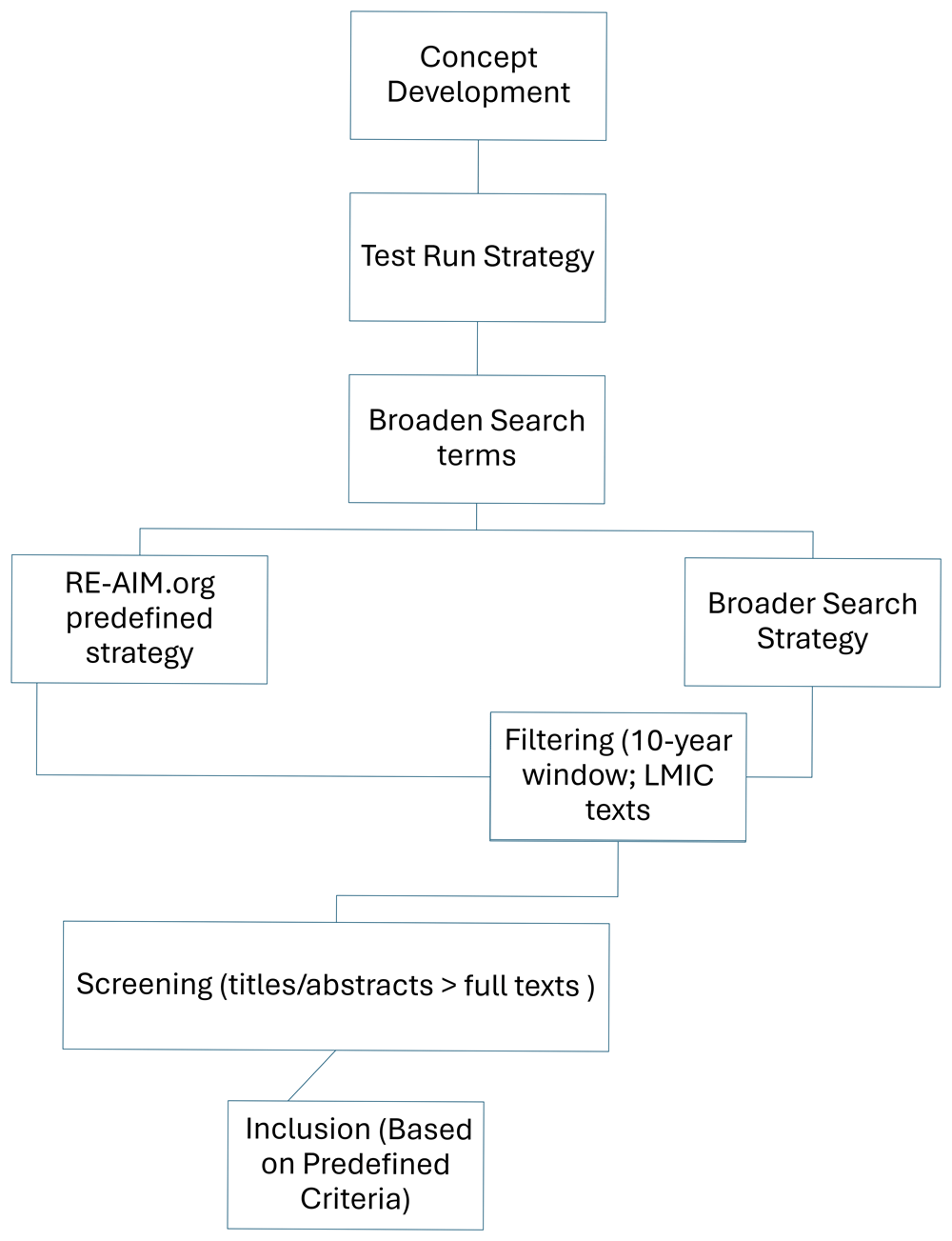
Search terms covered four main concept areas: Reach, Healthcare Interventions, Evaluation and Measurement, and Field Scope. Terms were adapted for each database syntax (e.g., Mesh for PubMed, TS for Web of Science, MH for EBSCOhost). The complete list of terms is presented in Supplementary Table 2. Two filters were applied: 1) Date range limitation to the past 10 years across all databases from the date of the search and 2). Setting: EBSCOhost search was filtered to return studies from low- and middle-income countries (LMICs) only. RE-AIM PubMed search was completed on the 11th of February 2025, followed by the independent (non-RE-AIM) search on the 28th of February 2025. The independent of RE-AIM search was update and an EBSCOhost search on the 3rd of March 2025. An additional RE-AIM extraction was conducted on the 28th of March 2025. The full list of search terms and Boolean combinations used across databases is presented in Table 1.
The study selection process followed a systematic approach involving de-duplication, title and abstract screening, and full-text assessment, as detailed below and illustrated in Figure 2 (PRISMA flow diagram). The criteria used during screening and full-text assessment are summarized in Table 2.
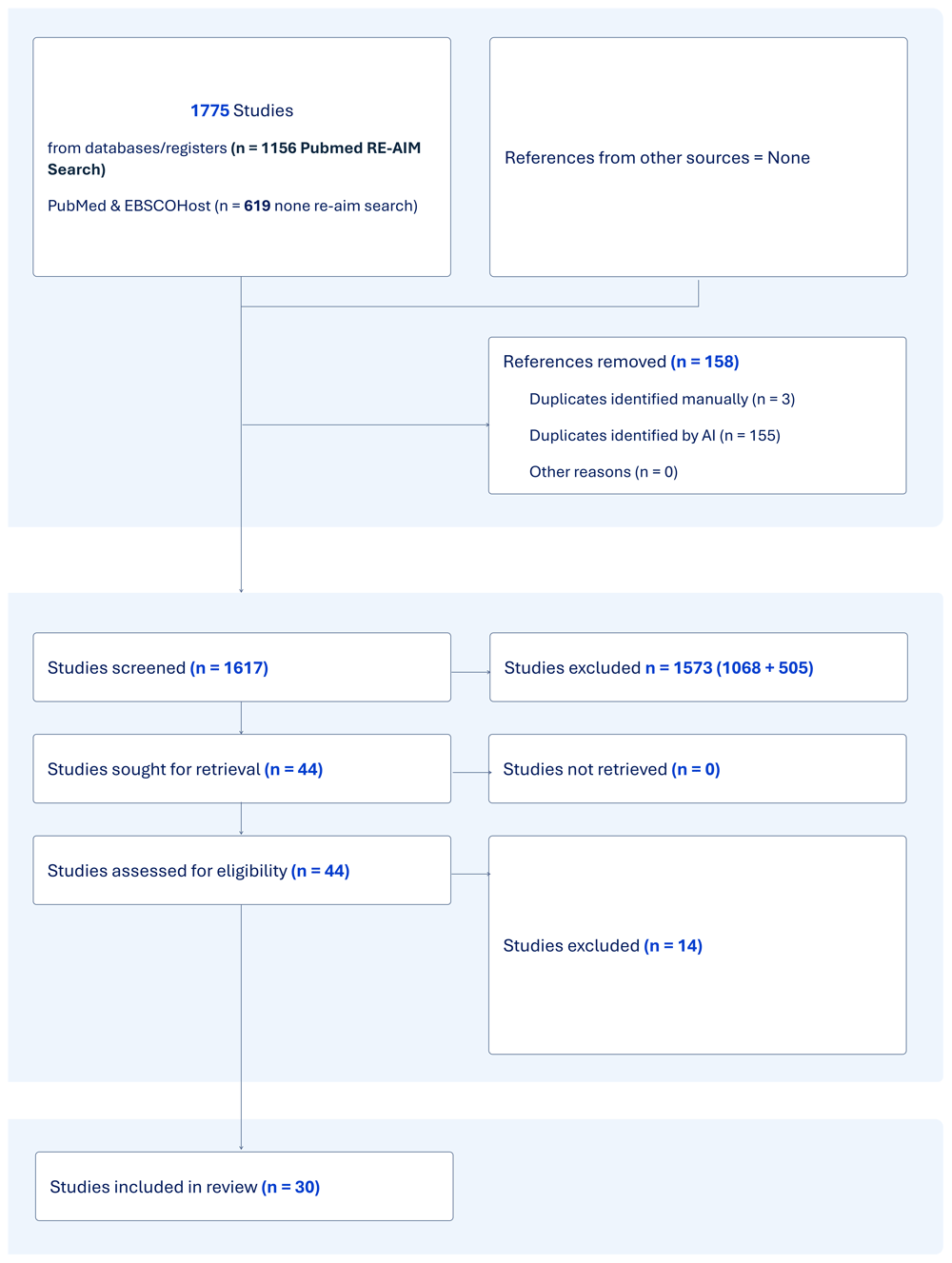
A total of 1,776 records were identified across the two search strategies: 1,157 from the RE-AIM-specific PubMed search and 619 from the independent searches (PubMed and EBSCOhost).
Following de-duplication,
After de-duplication 1,618 unique records were screened. Title and abstract screening were conducted sequentially by two reviewers. To ensure consistency, the first 50 records were independently screened by both reviewers (TT and JM), after which TT completed the screening of the remaining 1,568 records. A total of 1,559 studies were excluded at the title and abstract stage.
A total of 59 full-text articles were retrieved and independently assessed for eligibility by TT. Following full-text assessment, 1,564 studies were excluded at either the abstract or full-text stages. The systematic database search and screening process resulted in 25 studies meeting the inclusion criteria. An additional 5 studies were identified through snowball sampling (citation searching of included studies), yielding a final total of 30 studies included in the integrated review.
Extraction of data was guided by the review's objectives to analyse how reach is defined, conceptualized, and measured in healthcare interventions. Data were extracted using two complementary matrices that captured both technical and conceptual variables (see Supplementary Tables 1–2): the first captured technical details (study context, design, frameworks, and reach measures), while the second facilitated interpretive analysis of epistemological positioning and assumptions about reach. Category development began with RE-AIM framework analysis, expanded through snowball sampling, and was informed by the study’s focus on the limited understanding of how health system interventions effectively reach individuals, and which components are impactful based on current measures. The research team (TT, JM, RC, LF) iteratively refined these categories through documented discussions during regular meetings, ensuring alignment with study objectives.
Data extraction focused on descriptive and conceptual variables. Study characteristics were summarised in a matrix capturing (see Supplementary Tables 1–2):
a) Author,
b) Study title,
c) Country or setting,
d) Participants,
e) Intervention type,
f) Study design,
g) Framework used
h) Reach measurement.
Conceptual variables were guided by a second matrix including:
The reviewed studies span a wide range of low- and middle-income countries, particularly in sub-Saharan Africa and parts of Asia. A total of 30 studies were included, representing 15 countries, with South Africa (n=9) and Uganda (n=6) appearing most frequently. Other countries included Angola (n=2), Ghana, Malawi, Nigeria, Zimbabwe, Mozambique, India, Indonesia, Jordan, Zambia, Botswana, China, and multi-country LMIC initiatives (n=3). Most studies employed implementation science methodologies (n=27), with a strong emphasis on mixed methods approaches (n=25) that integrated both quantitative and qualitative data collection. Common data sources included interviews (n=25), surveys (n=18), routine health records (n=15), focus group discussions (n=10), and digital engagement tools (e.g., mobile phone apps) (n=9). Study designs were diverse, including randomized controlled trials (n=5), hybrid effectiveness-implementation trials (n=4), quasi-experimental evaluations (n=3), qualitative-only implementation evaluations (n=5), and observational or descriptive studies (n=7).
Sample sizes ranged from small qualitative cohorts (n=5), to large-scale interventions (n=22) involving thousands of participants, clinic-level actors, or full population coverage. For example, 17 key stakeholders in Mash 2024 GREAT Sustainability study, to large-scale evaluations involving tens of thousands of participants Ramadan 2023’s 18,644 antenatal visits and 23,262 sick child visits across 11 LMICs21,22. Four studies did not report sample sizes in extractable sections. Participant demographics varied widely, encompassing adolescents and youth, adults, pregnant or postpartum women, and vulnerable or high-risk populations, including people living with HIV, tuberculosis, hypertension, depression, or disabilities. Study settings were equally varied, including urban, peri-urban, and rural clinics, community-based interventions, schools, mobile health platforms, and refugee camps. The most frequently used implementation and evaluation frameworks were RE-AIM (n=23), CFIR (n=6), and PHCPI (n=2), with 5 studies not explicitly naming a framework. Many studies emphasized the need to understand reach not just in terms of coverage but in relation to equity, representativeness, and contextual barriers to participation, offering critical insights for scale-up and health systems transformation.
The methodological and relevance quality of included studies were assessed (see Supplementary Table 3) using a modified Hawker et al. (2002) framework scoring nine domains on a 1–4 scale (1=very poor, 4=good)23. This enabled systematic comparison of rigor and relevance across qualitative, quantitative, and mixed-methods studies. Most studies scored highly, particularly in clarity of aims, methodological detail, and practical implications. RE-AIM and hybrid designs showed strong engagement with equity and representativeness. Overall, studies demonstrated methodological soundness and relevance, providing robust insights into reach measurement within LMIC healthcare interventions.
While recognized systematic review standards often recommend design-specific tools (e.g., Cochrane RoB or MMAT), the Hawker's tool was retained for its utility in integrative reviews, which encompassed the diverse15. The resulting quality scores were not used as an exclusion criterion but served to inform the certainty and weight given to the evidence during the final synthesis.
Our analysis incorporated Whittemore and Knafl integrative review method. We employed rigorous thematic and interpretive processes to analyse: 1) how reach was measured, 2) participant characteristics and recruitment methods, and 3) representativeness of target populations - particularly addressing gaps in assessing differential reach among vulnerable group16,19.
Initial thematic analysis revealed reach data's diverse applications, from implementation refinement to equity assessment. The final synthesis integrated technical and conceptual data extractions with external frameworks, informed by epistemological discussions on positionality and reach's contextual meanings. This approach highlighted how reach intersects with relations, equity, and health system responsiveness beyond technical measurement alone.
We included 30 studies in this review. The key characteristics of the 30 included studies are summarized in Supplementary Table 1. The conceptualization of the reach measure was clustered around three overlapping communities of practice (CoPs): Coverage-focused (n=15, quantitative metrics like enrolment rates using RE-AIM), Relational (n=6, qualitative insights on participant experiences), and Systemic (n=5, structural analyses of determinants). Four hybrid studies combined these approaches. While classifications were based on dominant methodological orientations, many studies exhibited overlapping characteristics. This diversity reflects implementation research's recognition that reach requires multiple lenses to capture participation dynamics in real-world health systems.
Reach defined through a coverage-oriented lens emphasizes quantifiable participation, using metrics like proportions, enrolment rates, or coverage rates. These are shaped by eligibility criteria (e.g., enrolled patients, trained providers, or treatment cascades). Rooted in a positivist epistemology, this approach prioritizes standardised measurement, comparability, and generalisability. It aims to assess participation, guide scalability, and ensure accountability. Coverage-based approaches rely on administrative data, registers, digital records, or surveys, to inform decisions across settings, populations, and time. Frameworks like RE-AIM often guide these efforts through multidimensional reach assessment.
For example, in the implementation of the GREAT for diabetes program in South Africa, reach was defined as the percentage of trained facilities that implemented the program (31%), and number of patients reached (n=625) based on eligibility criteria, and trained facilitators (n=23)22. Similarly, a review of COVID-19 vaccine uptake in LMICs measured reach through reported proportions of the eligible population willing to receive or those who are actually receiving the vaccine, using secondary data from household surveys and national reports24. In another example, a multi-site study in Indonesia and India defined reach as the proportion of the target population who engaged with intervention activities. In Depok, Indonesia, this was calculated using attendance-based estimates, where total attendance at health camps and community events was divided by the district population, resulting in a reach of 32%. In Ballabgarh, India, reach was assessed through community surveys asking about exposure to program messages or participation25. Together, these examples illustrate how coverage-focused definitions of reach are operationalized across different contexts using varying data sources, from routine records to population-level surveys.
Relational definitions of reach focus on understanding program engagement through concepts like acceptability, willingness, barriers, and depth of participation. Rooted in interpretivist or constructivist epistemologies, they value context, meaning making, and interactions between implementers and participants26. These approaches rely on qualitative methods such as in-depth interviews, focus group discussions, or participatory inquiry to explore how participants navigate choices about engagement27. Relational studies extend beyond coverage metrics, capturing how people experience interventions within their realities28. Reach may include diverse forms of involvement, participant priorities, and how meaning emerges over time. Success is seen in how well participants connect, feel heard, and find the intervention relevant to their daily lives. Meaning is shaped contextually and co-constructed with those directly involved29,30.
For example, in a study evaluating uptake of 3HP tuberculosis preventive therapy among people living with HIV, reach was assessed through interviews exploring participants’ motivations and barriers. Decisions to participate were shaped by perceived TB risk, trust in peers and providers, and the convenience of the weekly dosing31. Similarly, in a CHW-led screening program in Soweto, South Africa, qualitative interviews revealed how home visits made participants feel seen and valued. One noted, “I was so happy, because it shows that we also matter,” highlighting how the intervention extended reach by fostering a sense of inclusion among those often missed by clinic-based care32. These studies demonstrate that relational approaches aim to understand the nuanced components influencing participation and acceptance.
Structural or systemic definitions of reach frame it as a function of broader issues such as accessibility, equity, and inclusivity, emphasizing how health systems, policies, geography, or social determinants shape who benefits from interventions33,34. This orientation draws from positivist, realist, or critical epistemologies, depending on how structural influences are theorized, and aligns with goals such as universal health coverage or service transformation29,34. The purpose of systemic-oriented measurement is to evaluate structural factors that enable or hinder access and participation, focusing on equity, inclusivity, and broader system transformation goals. These approaches often use disaggregated quantitative data, geographic mapping, or policy analysis to assess the equity and inclusiveness of interventions34. They view reach not only in terms of numeric coverage but also in how interventions proactively address population-level inequities, infrastructure limitations, and access constraints29,33. These approaches emphasize how reach reflects the inclusiveness of service delivery, particularly for vulnerable or underserved groups. While some systemic studies incorporate measurable indicators, they also reflect broader structural concerns and commitments to inclusive and equitable care delivery.
In Ghana’s EMBRACE intervention, reach was assessed by analysing equitable access to maternal and newborn care across rural and urban areas, highlighting demographic disparities needing tailored strategies35. In Uganda, a study on nutrition services framed reach to include uptake and equity-focused delivery, integrating hypertension care into routine HIV visits to reduce travel and cost barriers, benefiting rural and disadvantaged groups21. The Angola Maternal and Child Health Handbook study measured reach via equitable distribution and uptake across facility types, revealing urban hospitals had higher coverage (83.3%) than rural health posts (52.7%). Transport challenges and staff shortages limited supervision and consistent handbook use in remote areas. Recommendations included improving transport, increasing training, and enhancing community engagement to boost equitable reach36.
While many studies adopt a single dominant orientation of measuring reach or participation others employ multidimensional approaches that blend coverage-based measures with relation and systemic based measure to broaden their perspectives37. These studies conceptualize reach in more integrated terms, recognizing that meaningful engagement requires attention not only to how many are reached but also under what conditions participation occurs38. In these hybrid approaches, reach is measured using proportion-based indicators alongside relational insights like acceptability, contextual relevance, and perceived barriers14,39. Frameworks such as RE-AIM or other implementation science models often guide these studies, encouraging the combination of standardized metrics with qualitative dimensions of engagement and equity10,40.
A mixed-methods evaluation of the Health Scouts trial in Rakai, Uganda used the RE-AIM framework to measure reach through both quantitative and qualitative data41. The intervention involved Community Health Workers (CHWs) delivering HIV services in a hyperendemic fishing community. Coverage metrics came from CHW logbooks, a community survey, and a mobile app, while 72 in-depth interviews with clients, CHWs, and community leaders provided relational insights. While 95% of residents were aware of the program, only 30.7% received counselling. Multivariable analysis showed that men and HIV-negative individuals were less likely to be reached. Qualitative data revealed that perceived CHW usefulness promoted reach, while busy lifestyles and stigma hindered engagement. This approach moved beyond participation rates to illuminate contextual barriers and enablers of reach.
In another instance, a study by Stoutenberg et al. (2024) on the feasibility of home-based hypertension and physical activity screening in South Africa illustrates a hybrid approach to understanding reach by blending coverage with relational insights42. Community Health Workers (CHWs) conducted home visits in Soweto to perform standardized health screenings, providing coverage-based data on households and residents reached. To capture relational insights, consenting residents were recontacted within three days for semi-structured interviews, aiming to deepen understanding of their experiences with the CHW-led assessments at home.
A recurring assumption is that populations are both passive recipients and active participants in health systems. Some approaches treat participation as passive, e.g., receiving services during home visits focusing on quantitative metrics. Others emphasize community action, empowerment, and co-production. Viewing participants as active shifts attention to systemic and contextual enablers or barriers, promoting more equity-focused approaches. This framing shapes method and framework choices, influencing how strengths and gaps are understood. Interventions involving multiple stakeholders often assume that once individuals are identified, informed, and supported, they will engage. Community Health Workers, peer supporters, schools, and civil society groups are seen as both service channels and community voices, enabling more meaningful engagement43.
There is a nuanced belief that structural and contextual barriers such as stigma, digital gaps, language, or system inefficiencies limit engagement more than individual willingness. Thus, participation is often viewed as a function of system design, leadership, and resourcing, rather than inherent population disinterest. For example, the PRIDE mental health program in Mozambique highlighted how stigma and limited community awareness made people reluctant to seek help, even when mental health services were available and individuals were open to support44. Likewise, in iCARE Nigeria, youth expressed strong interest in digital health tools, but participation was limited by poor network coverage, lack of smartphones, and high data costs, barriers that overwhelmed personal willingness45. In the Health Scout intervention in Uganda, community members were receptive to HIV counselling, yet the program’s reach was undermined by high mobility, fear of stigma, and distrust in CHW confidentiality. Similarly, in the Maternal and Child Health Handbook program in Angola, motivated mothers struggled to access services due to transportation difficulties, low literacy, and insufficient health worker support46.
These underlying assumptions are critical to understanding the strengths and limitations of current reach measurement approaches. While many methods capture the presence or absence of participation, fewer account for the layered conditions that enable it. Future approaches could benefit from more reflexive and equity-oriented designs that interrogate these assumptions, integrate contextual and relational data, and attend to the diverse ways in which participation is enabled or constrained.
The ways in which reach data is used across the studies reveal a strong focus on operational learning, system accountability, and implementation refinement. For example, in the Friendship Bench intervention in Zimbabwe, reach was quantified by measuring the percentage of clinic attendees who were screened for common mental disorders and subsequently received psychological services47. These measures uncovered significant gaps in uptake between larger urban clinics and smaller rural ones, prompting targeted adjustments in resource allocation, supervision structures, and CHW deployment to enhance equitable access across settings. Similarly, the Ghana EMBRACE study monitored the proportion of eligible women and newborns receiving continuity of care services across antenatal, delivery, and postnatal stages35. This revealed urban and rural inequities, informing program improvements and advocacy to strengthen accountability and implementation. Information on who was and wasn’t reached is used to assess feasibility, refine delivery models, and guide scale-up, adaptation, and policy. In community and peer-led models, reach metrics shape training, supervision, and resource allocation. Identified gaps prompt targeted investments or redesigns to engage vulnerable groups. In trials, reach informs interpretation, generalizability, and cost-effectiveness. Many interventions use reach in continuous quality improvement (CQI), emphasizing real-time adaptation to context. Whether through coverage stats, participation logs, or digital tools, reach serves as a key metric for equity, sustainability, and health system strengthening.
Reflexivity is a common thread across studies, though its depth varies. Many acknowledge challenges in measuring reach, such as incomplete data, self-selection, and contextual variability. Discussions often highlight the limits of quantitative-only approaches and the need to engage marginalized voices. Qualitative studies show greater reflexivity, addressing researcher positionality, trust, and broader social influences like stigma and migration. Some authors reflect on their insider or outsider roles and how these shape interpretations of findings. For example, in a South African study on home-based hypertension and physical activity screening by community health workers (CHWs), the authors reflect on how weekday-only visits likely excluded employed individuals and students, while 82.1% of participants were women, highlighting gendered and temporal biases in reach. They also note that CHW trainees (rather than full-time staff) conducted the visits, which may have made the encounters more relaxed and thorough than in routine conditions42. These reflexive insights show that reach is shaped not just by who is contacted but by broader patterns of access, workforce structure, and relational dynamics.
Similarly, in the Ghana EMBRACE study on maternal and newborn care, the authors acknowledge that formal reach metrics, like participation rates, do not fully reflect accessibility or inclusion. They identify that women outside formal monitoring structures were likely underrepresented, and that factors like health-seeking behaviour, facility choice during pregnancy, and population mobility influenced group assignment and data completeness35. This reflexivity leads them to interpret reach figures within the wider social context, pointing to the need for more participatory, context-sensitive indicators that account for exclusion and structural inequities.
Measuring reach remains difficult across five key domains: data limitations, contextual barriers, methodological constraints, participant-level issues, and systemic gaps. Unreliable or missing data due to incomplete records, poor documentation, or inconsistent participation tracking undermines accuracy. External factors like community events, weather, and personal obligations further affect attendance and data completeness. Many studies rely on self-reports, provider perceptions, or observational data, often without standardized tools, introducing bias and limiting comparability.
Systemic and contextual factors also hinder equitable inclusion. Financial hardship, transport challenges, stigma, and logistical issues, like weekday-only outreach or shared phones skew participation. Health worker shortages, high turnover, and space constraints often disrupt implementation fidelity.
Methodologically, small or convenience samples, lack of control groups, and reliance on attendance metrics limit representativeness and analytic depth. Double counting, recall bias, and exclusion of non-participant data compromise validity. Translation issues and inconsistent definitions across settings further hinder cross-study synthesis.
While mixed-methods approaches are common, integration is often weak. Quantitative data dominate, with qualitative insights treated as supplementary rather than analytical. Few studies combine these to explain variation in reach or link participant experiences to broader system dynamics. A shift toward hybrid approaches signals a move toward more contextually grounded, multi-layered evaluations that recognize both measurable outcomes and lived experiences.
This integrative review examined how reach is conceptualized, measured, and reported across healthcare interventions in LMICs. The findings reveal both the complexity of defining reach and the persistent challenges in operationalizing it equitably. While frameworks like RE-AIM provide structure, the literature underscores significant variability in how reach is understood, ranging from quantitative coverage metrics to qualitative assessments of engagement and systemic accessibility.
A central tension emerges between the need for standardized measurement and the contextual realities of health systems. Our findings identified three overlapping Communities of Practice: Coverage-focused, Relational, and Systemic. Many studies adopted hybrid approaches, combining participation rates with qualitative insights into barriers and facilitators. However, inconsistencies in terminology and methodology across these studies, where what “counts” as reach depends on the epistemological and practical goals of the intervention, complicate cross study synthesis and generalisability. Understanding these CoPs helps explain why studies vary not only in how they define reach, but in how they operationalize it, and whose inclusion is ultimately prioritized.
Equity emerged as a recurring theme, yet its integration into reach measurement was often superficial. Although several studies highlighted the importance of engaging vulnerable populations such as rural communities, stigmatized groups, or individuals with limited healthcare access, few provided robust strategies to ensure their inclusion. Structural barriers, including stigma, financial constraints, and geographic isolation, were frequently cited but rarely addressed through adaptive intervention designs or recommendations. This gap shows the need for more focused measures on equity, like comparing reach between different populations, to ensure no one is left behind.
Methodological challenges further constrained the validity of reach assessments. Incomplete data, reliance on facility-based records, and the absence of non-participant perspectives introduced potential biases. Some studies struggled with logistical challenges, such as staff turnover or COVID-19 disruptions, which interrupted implementation and data collection. These challenges underscore the importance of investing in robust health information systems capable of real-time tracking and adaptive management.
Moving forward, three priorities stand out. First, there is a need for greater consistency in defining and measuring reach, particularly in LMIC settings where resource constraints demand pragmatic yet rigorous approaches. Second, future work should prioritize equity by developing and applying measures that explicitly track disparities in reach across different population groups and address structural barriers. Finally, there is a clear opportunity for more robust integration of mixed methods in evaluating reach, moving beyond parallel data collection to truly synthesize quantitative and qualitative insights into comprehensive explanations of why and how interventions achieve their reach.
This review highlights the multidimensional nature of reach and reveals significant variation in how it is defined, measured, and applied across healthcare interventions. The identified communities of practice, coverage-focused, relational, and systemic reveal diverse approaches that often fall short in comprehensively addressing contextual realities and equity. Moving forward, a more coherent and inclusive approach to defining and measuring reach is crucial. Strengthening the alignment between quantitative indicators and relational or systemic insights can improve both the accuracy and utilisation of reach data. Ultimately, advancing implementation equity and improving health outcomes in LMICs.
All data underlying the results of this integrative review, including extracted study characteristics, thematic synthesis tables, and coding frameworks, are available as Extended Data in the submission (Supplementary Tables 1–4). The review was conducted following the PRISMA 2020 guidelines to ensure transparency and reproducibility, and the completed checklist is included as Extended Data.
Although the broader search strategy spanned a 10-year period, analysis of RE-AIM-specific studies was limited to the most recent 5 years. This decision aligns with the nature of an integrative review, which prioritizes conceptual depth and diversity across communities of practice, rather than exhaustive coverage. Accordingly, the review seeks completeness through representation of diverse theoretical and methodological perspectives, not numerical saturation. The lead reviewer acknowledges that the absence of secondary reviewers may amplify selection bias.
During the preparation of this review, the author used AI tools [ChatGPT free, DeepSeek, Microsoft Copilot] to improve legibility and grammar. The tools were solely used for language improvement and did not contribute to the development of the intellectual content, analysis, and interpretation of any data. After using this tool, the author reviewed, edited the content to ensure accuracy, alignment and cohesion to the study objectives.
Provide sufficient details of any financial or non-financial competing interests to enable users to assess whether your comments might lead a reasonable person to question your impartiality. Consider the following examples, but note that this is not an exhaustive list:
Sign up for content alerts and receive a weekly or monthly email with all newly published articles
Register with NIHR Open Research
Already registered? Sign in
If you are a previous or current NIHR award holder, sign up for information about developments, publishing and publications from NIHR Open Research.
We'll keep you updated on any major new updates to NIHR Open Research
The email address should be the one you originally registered with F1000.
You registered with F1000 via Google, so we cannot reset your password.
To sign in, please click here.
If you still need help with your Google account password, please click here.
You registered with F1000 via Facebook, so we cannot reset your password.
To sign in, please click here.
If you still need help with your Facebook account password, please click here.
If your email address is registered with us, we will email you instructions to reset your password.
If you think you should have received this email but it has not arrived, please check your spam filters and/or contact for further assistance.

Comments on this article Comments (0)