Keywords
Social care, social work, research capacity, communities of practice, qualitative research, practitioner, care provider, local authority.

Social care, social work, research capacity, communities of practice, qualitative research, practitioner, care provider, local authority.
 How to cite: Abrahamson V, Hashem F, Fournel S et al. Using communities of practice in adult social care to build research capacity and foster best practice: a qualitative evaluation [version 2; peer review: 4 approved]. NIHR Open Res 2026, 5:124 (https://doi.org/10.3310/nihropenres.14134.2)
First published: 19 Dec 2025, 5:124 (https://doi.org/10.3310/nihropenres.14134.1)
Latest published: 21 Apr 2026, 5:124 (https://doi.org/10.3310/nihropenres.14134.2)
How to cite: Abrahamson V, Hashem F, Fournel S et al. Using communities of practice in adult social care to build research capacity and foster best practice: a qualitative evaluation [version 2; peer review: 4 approved]. NIHR Open Res 2026, 5:124 (https://doi.org/10.3310/nihropenres.14134.2)
First published: 19 Dec 2025, 5:124 (https://doi.org/10.3310/nihropenres.14134.1)
Latest published: 21 Apr 2026, 5:124 (https://doi.org/10.3310/nihropenres.14134.2)
The updated version takes account of the many helpful suggestions from all Reviewers. We have reviewed all sections of the manuscript and significantly edited the Introduction, Background and Discussion. A key point across reviews is the issue of sustainability of CoPs when project funding finishes and we have commented in more detail on this issue. We thank the reviewers for their helpful comments and have uploaded a response to each reviewer.
See the authors' detailed response to the review by Kathryn Almack
See the authors' detailed response to the review by David Schmidt
See the authors' detailed response to the review by Chinwe U. Nnama-Okechukwu
See the authors' detailed response to the review by Harriet Hunt
Until recently, Communities of Practice (CoPs) have largely been absent as a forum for learning for people with lived experience including informal carers (family, friends, husbands/wives providing care and/or support) and those needing care or support. Systematic reviews up to the mid-2010s demonstrate that CoPs almost exclusively comprised practitioners or organisational staff (Ranmuthugala et al., 2011). From around 2017 onwards, a shift is evident, with developments in knowledge mobilisation, co-production and social care research prompting the emergence of CoPs that include people who use services, informal carers and community partners (Wenger-Trayner and Wenger-Trayner, 2015; Hashem et al., 2024). Recent syntheses confirm this trend, identifying a new generation of CoPs that enable shared learning between professional, public and community actors (Elbrink et al., 2024).
In a climate beset by finite resources, CoPs offer a learning space that moves beyond professionally managed learning to humanistic and democratic approaches, putting the group’s shared learning at the heart of knowledge acquisition, supporting epistemic justice (Gray et al., 2010). This paper begins by outlining the context for the re-emergence of CoPs, first focusing on Wenger’s original discourse (1998), describing how CoPs offer coherence in a practice community, underpinned by mutual engagement, negotiation of a joint enterprise and a shared repertoire. While these foundational concepts remain influential, later work highlights that CoPs are diverse, situated and contingent rather than uniform entities. Wenger, McDermott and Snyder (2002) emphasise that CoPs vary greatly in their purpose, degree of formality, modes of facilitation and organisational anchoring, and require active cultivation rather than simply emerging from shared interests.
CoPs are often presented primarily as a hub for professional shared-learning in organisations (Barbour et al., 2018; Auer et al., 2020). However, by returning to these concepts, we explore the constituent parts of a CoP, to understand the internal processes and features of what makes CoPs work (Iverson and McPhee, 2008). We identify the benefits and impact of two CoPs that were co-developed in adult social care, based in South-East England, as part of a wider strategy to build research capacity. One CoP focused on supporting people with complex needs and the other on enhancing, diversifying and sustaining the social care workforce.
Communities of Practice have long been employed in social care but more recently shifted from a professional to a community space to generate and share knowledge about social care practice and research (Hashem et al., 2024). The conceptualisation of CoPS aligns closely with Cooke’s (2005) framework for building research capacity in healthcare, which emphasises principles such as collaboration, practice-based learning, skills development and sustainable infrastructure. It provides a useful lens through which to understand the potential of CoPs to enhance research capability within organisations. The notion of CoPs has been in existence for almost 30 years and was originally conceived as a mechanism to promote tacit forms of learning. Wenger (1998) argued that CoPs have historically emerged organically, evolving into naturally occurring learning spaces. This typically occurs under conditions where tacit knowledge develops subconsciously within individuals and is further shaped as it becomes internalised and expressed as ‘common sense’. Wenger suggests that CoPs are the prime context in which knowledge and knowledge-production are held (Wenger, 1998; Wenger, McDermott and Snyder, 2002).
The constituents of CoPs were re-configured from Wenger’s original discourse (1998) and re-worked around three fundamental elements that are now considered building blocks to every CoP: a domain of knowledge, which defines a set of issues; a community of people who are concerned about this domain; and a shared practice whereby members are striving to be effective in their domain (Wenger, 1998; Wenger, McDermott and Snyder, 2002). Figure 1 demonstrates these constituents and the previous terminology. All three constituents are required for the CoP to function effectively (represented by the central overlap), providing the ‘glue’ or supporting structures, connections and processes that keep CoPs alive and active (Iverson and Mcphee, 2002; Iverson and McPhee, 2008).
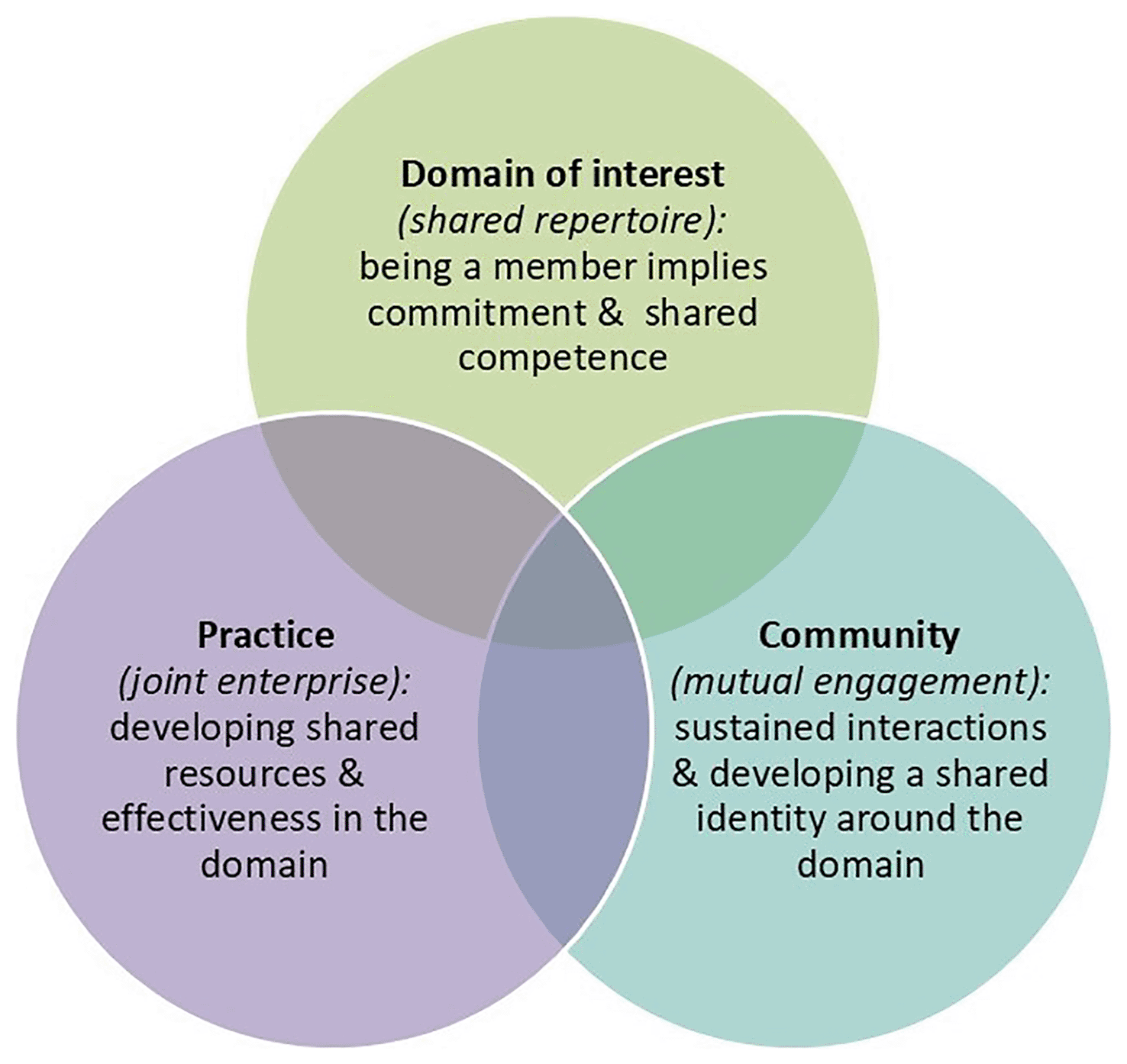
Wenger and colleagues later defined a CoP as a set of people who “share a concern, a set of problems, or a passion about a topic, who deepen their knowledge and expertise in this area by interacting on an ongoing basis” (Wenger, McDermott and Snyder, 2002). CoPs have an inherent predisposition to deepen learning in a professional context, enabling learning to be embedded into the goals of an organisation (Wenger, 1998). They become organisational assets, aimed at generating knowledge and being hard-wired into the fabric of an organisation, despite not being formal entities themselves. The renaissance of CoPs over the last 15 years, as a way for improving organisational performance, is apparent in areas including healthcare (Ranmuthugala et al., 2011), nursing (Gullick and West, 2016), social work (Gray et al., 2010) and academic-practice partnerships (Padilla and Kreider, 2020).
Later work emphasises that CoPs vary widely in purpose, formality, facilitation and organisational anchoring, understood as the formal support and alignment that embed a CoP within an organisation (Wenger, McDermott and Snyder, 2002). The landscapes of practice framework further highlights that individuals participate in multiple overlapping communities and learn not only within them but also at their boundaries through brokering, translation and negotiation (Wenger-Trayner and Wenger-Trayner, 2015). These ideas are relevant to adult social care, where responsibilities span statutory, voluntary, independent and community sectors, and where CoPs increasingly involve members of the public and people with lived experience. These inclusive configurations expand understandings of legitimate knowledge but also introduces challenges such as accessibility, remuneration and power sharing, which influence whether shared repertoires become genuinely collective.
Although CoPs are often viewed positively, recent evidence cautions against assuming inherent benefit. Elbrink et al.s (2024) realist synthesis in public health demonstrates that CoPs support knowledge translation only when mechanisms such as psychological safety, credible facilitation and opportunities for iterative reflection operate within supportive organisational contexts. Without these conditions, CoPs may stall or reproduce hierarchies.
Against this backdrop, we examine the benefits and impacts of two CoPs co-developed in adult social care in South East England to build research capacity: one focused on complex needs and the other on strengthening the workforce.
The CoPs evaluated in this paper were initially established to help build a research culture, inform ongoing research, and foster networks and collaborations that bring together research ideas across adult social care. This was an integral part of the Kent Research Partnership project (2021-5) based in South-East England, a collaboration with the local authority (a two-tier county council) which aimed to foster adult social care partnerships and build research capacity. It was funded by National Institute for Health and care Research (NIHR)’s Health and Social Care Delivery Research programme (HSDR; NIHR131373).
The process in which the CoPs were formed is outlined elsewhere (Hashem et al., 2024) but included three engagement exercises with stakeholders, including informal carers and people using care and support (abbreviated to ‘care experienced’), to identify the focus (July and November 2021, and March 2022). Three key concepts underpinned the COPs: co-production; equality, diversity, inclusion and intersectionality; and practice-oriented approach. The formation and operationalisation of the CoPs were planned in-person but due to the COVID-19 pandemic, the engagement exercises took place exclusively online and set the direction for the CoPs to be an entirely online forum over the next three years. However, all COP members were invited to join a mid-point (September 2023) and final event (May 2025) for the overall Kent Research Partnership which were held in-person; following the mid-point event, new participants joined the CoPs. Two CoPs were established: (a) Supporting people with complex needs throughout the lifespan (shortened to ‘Complex Needs’), and (b) Enhancing, diversifying and sustaining the social care workforce (shortened to ‘Workforce’). Both CoPS co-developed aims and anticipated outcomes ( Table 1).
Fifty-one meetings, including three joint ones where members of both CoPs were invited, took place between June 2022 and April 2025. They were initially chaired by academics but this role was transferred to practitioners and a member of our Lived Experience Working Group, as part of democratising and trying to engage practitioners. Both CoPs had the same format of a speaker on a specific topic relevant to its domain, followed by discussion. Initially, CoPs were 1.5 hours, with two speakers but later were reduced to one hour and one speaker, aimed at increasing the attendance of frontline staff. Topics for discussions were initially driven by all participants, including care-experienced members (Hashem et al., 2024), stipulating what topics would be helpfult. However, over time members’ inspiration for topics and speakers reduced and speaker organisation fell to the Researchers in Residence - researchers embedded within the local authority partner’s adult social care team (Smith et al., 2025) - to find speakers.
Topics ranged widely, with both CoPs providing a forum for presentations from experts by experience, practitioners/social care professionals and researchers. For researchers, the CoPs offered an opportunity for wider consultation of prospective project ideas. Examples of presenters at the Workforce CoPs included representatives from strategic organisations including Skills for Care, East Kent Health and Care Partnership, National Care Forum and Kent Integrated Care Alliance. The Complex Needs CoP had a wider remit including different groups (e.g. homelessness, dementia, young people leaving care, older people, learning disabilities) and a range of projects (e.g. social prescribing, footcare in care homes, enhanced technology, exercising).
Membership numbers remained high throughout, with 115 people signed up to the Complex Needs CoP and 122 in the Workforce CoP (with some individuals participating in both). To facilitate communication among CoP members in between meetings, we also used a cloud-based platform (‘Glasscubes’) that enabled CoP members to share communication and resources in one place, allowing discussion, and making it easy for CoP members to contact each other. It had fewer members, 64 for Complex Needs and 69 for Workforce CoP. Monthly meeting attendance was smaller, between 7-23 attendees per meeting for Complex Needs and 8-28 for Workforce meetings; joint CoPs had larger attendance of 30-35. Numbers varied over the life of the CoPs, rather than tailoring off over time.
The study aimed to evaluate the Kent Research Partnerships CoPs and their impact on research capacity building in adult social care in Kent. Objectives were to:
1. Describe both CoPs including aims, membership and format.
2. Explore members’ views on being part of the CoP and the benefits/opportunities this afforded.
3. Identify tangible short- and longer-term outcomes that contribute to research capacity building in adult social care.
4. Identify facilitators and barriers to successful implementation, running and sustainability of CoPs in adult social care.
We adopted a pragmatic research methodology, selected for its close alignment with the values of social work and the ethos of our CoPs. Pragmatism in social science is grounded in the belief that knowledge is generated through action and experience, and that ideas must be tested and refined through their practical application (Morgan, 2014). It embraces methodological flexibility, allowing researchers to draw on both qualitative and quantitative approaches to address complex, real-world problems. This aligns with the dynamic nature of social care settings and services, where contextually relevant and actionable insights are essential. Pragmatism also acknowledges that reality is both socially constructed and evolving, shaped by individual and collective experiences (Morgan, 2014; Creswell and Clark, 2017). These principles resonate strongly with social work’s emphasis on experiential learning, reflection, and action for social justice (Kaushik and Walsh, 2019), making pragmatism an appropriate paradigm for this evaluation. Reflecting this approach, several methodological decisions were shaped by what would work best in a busy social care setting, such as our approach to recruitment, to maximise participation (see below); holding interviews online rather than in person to reduce burden on busy practitioners; allowing flexibility in the topic guides to elucidate contextual and actionable insights; and using accessible language based on PPI feedback.
Kent Research Partnership had active PPI involvement and engagement throughout all aspects of the project, stemming from the overall project’s inception in 2021. In the United Kingdom, PPI refers to the active partnership of people with lived experience in shaping and conducting research; although terminology varies internationally, it broadly aligns with co-production and participatory approaches used in other countries. A vibrant Lived Experience Working Group (Mikelyte et al., 2025) met monthly and remained active throughout, providing ongoing guidance at every stage. For example, the research questions were informed by their involvement in running and attending the CoPS, and they contributed to decisions about the study design. As the study progressed beyond the design stage, the group continued to inform key elements of the evaluation through monthly discussions. This included input on the choice of interviews, recruitment strategies, and approaches to data analysis. Members of the Lived Experience Working Group also played an important role in disseminating findings through their connections with allied social care organisations and linked communities, such as the local authority’s PPI body. The study’s public co-applicant co-led the Working Group and chaired many of the Complex Needs CoPs. In addition, our care-experienced co-author (CT), a regular COP member, was integral to sustaining and evaluating the CoPs.
A qualitative study design was employed to understand how the CoPs operated, what influenced their functioning, and how participants experienced their impacts in their own (organisational) setting. The design focused on the individual practitioner as the primary unit of analysis, while also attending to collective processes within the CoPs, and the wider aim of building research capacity. Interviews formed the central method within this design, providing in-depth accounts suited to unpacking the ‘black box’ of how CoPs worked in practice and for whom. This approach aligned with the pragmatic orientation of the evaluation, allowing methods to be adapted to the realities of busy social care environments. Online interviews were the preferred format for most participants (Bryman, 2016) due to accessibility and feasibility (Bryman, 2016).
We used a purposive sampling strategy and participants were chosen based on predefined criteria that aligned with the purpose of the study (Bryman, 2016). We wanted a balance of settings (e.g. social care, university, third sector) and disciplines including members of the public (those already involved in Kent Research Partnership and/or regular attendees, and less frequent attendees); practitioners who attended regularly, and/or have presented, or who stopped attending; researchers who attended regularly and/or presented at the CoP; those in strategic roles. We emailed individuals using our mailing list (as we had prior consent to do so) with an invitation to participate as well as the participant information sheet and consent form (Abrahamson, 2025) to complete and return by email. Written informed consent was taken from each participant and a time/date for interview was arranged, with the option of online or face-to-face.
The topic guide ( Table 2) was adapted from a previous study on CoPs as the context was similar, in that both involved partnerships across several organisations (Abrahamson, Richardson and Brookes, 2025). The topic guides were split into three versions for practitioners, researchers and public contributors (Abrahamson, 2025), and refined for each participant group. Overall, 21 interviews were carried out (by Author 1) in January and February 2025, with 16 online and five in-person. Online interviews were transcribed using Microsoft Teams automated transcription and reviewed by Author 1; face-to-face interviews were recorded with a digitally encrypted Dictaphone and transcribed by a transcription service.
Interview transcripts were imported into NVivo 14 (Lumivero, 2025) by author one and coded using an inductive-deductive approach using reflexive thematic analysis (Braun and Clarke, 2021), following the standard six stages: familiarisation with the data; generating and refining initial codes; searching for themes; iteratively refining and defining themes; and writing up.
Listening to the audio/MS Teams recordings enabled familiarisation with the dataset. We (author one and two) kept reflective notes (e.g. thoughts, feelings, questions per interview and across the dataset) and tabulated the main points per interview including context (e.g. work setting), learning (e.g. topic specific) and outcomes (e.g. networking opportunities).
This led to generating initial codes in NVivo whereby we (authors one and two) independently coded three transcripts, using a hybrid process of inductive (based on the data) and deductive coding (literature and topic guide) (Fereday et al., 2006). Coding decisions were compared before all relevant data from the remaining transcripts were coded. Each code and sub-code were given a main label and a descriptor in NVivo. Refining, describing and organising codes was an iterative process, pausing with each iteration to interrogate coding decisions and uncertainties. Each iteration was exported as an MS Word document, maintaining an audit trail (Bazeley, 2013).
Comments on coding decisions were recorded using the annotations feature of NVivo; memos were used to record reflections linked to a particular interview and/or (sub-) code. This led to developing themes and theoretical understanding across the dataset. We continued until we reached a level of coding saturation, when no additional issues were identified (Hennink, Kaiser and Marconi, 2017) and the framework appeared to capture all data.
Thirdly, generating themes, moved the focus from coding each interview to exploring meaning across the dataset. Codes were grouped into potential themes, with some ‘collapsing’ of codes to develop broader patterns of meaning. This involved interpreting the significance of the codes and how they related to each other. For example, we explored within and across different disciplines, roles and settings looking for similarities and differences between researchers, practitioners and care experienced members. We used mind maps to help us interrogate the data and our decisions.
Fourth, reviewing themes involved a recursive review including refining the boundaries of each theme (what was or was not included), in relation to the coded data items and the dataset. This involved combining, splitting and discarding themes to develop a coherent overview of the dataset that accurately reflected the findings and provided the most apt interpretation of the data in relation to the research question.
Fifth, defining and naming themes aimed to capture the essence of each theme and differentiate from other themes. Ongoing analysis refined the focus of each theme, how they interrelated and contributed to the overall narrative. Lastly, writing up the data involved presenting the findings as a coherent whole and in relation to the research question (Braun and Clarke, 2021).
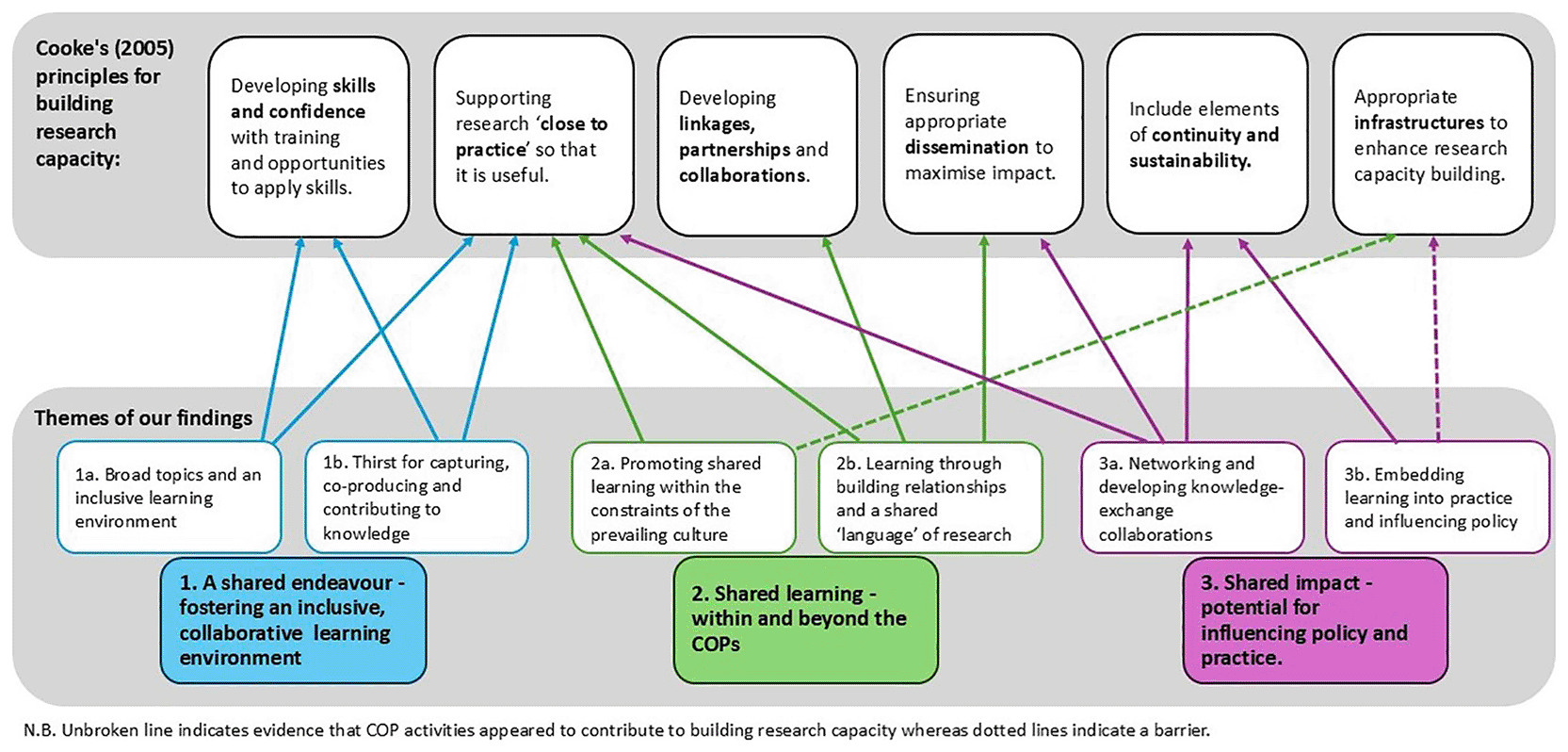
An additional step was to map the results onto Cooke’s (2005) six principles of research capacity building. We tabulated each sub-theme against each principle, looking for supporting (and refuting) evidence and then developed this into a diagram to illustrate the relationships.
To ensure rigour, Guba and Lincoln’s (1982) concepts of trustworthiness were used. Strategies included maintaining an audit trail; regularly questioning analytical decisions; using reflexivity to challenge assumptions and expectations; comparing across transcripts; analysing instances that did not appear to fit with the majority (Bazeley, 2013); and discussing coding and thematic development within the research team. Peer de-briefing was not used; however, the combination of independent scrutiny of coding, reflexive note-keeping, constant comparison, and documentation of analytic decisions provided equivalent opportunities for critical reflection and enhanced credibility.
Twenty-one interviews, including one care experienced dyad (married couple, E03) were carried out, 16 online and five in-person; participants appeared equally confident to express their opinions online or face-to-face, perhaps reflecting the non-sensitive nature of the topic. Of those, some had more than one role, for example researcher/practitioner and family carer. Table 3 provides an overview of who was interviewed, which CoP they attended, regularity of attendance and who presented at a CoP.
1. A shared endeavour – fostering an inclusive, collaborative learning environment
This theme captures how the CoPs fostered an inclusive, collaborative space for learning. Participants described the CoPs as genuine communities where diverse voices, including researchers, practitioners, and care-experienced individuals, were equally valued. The broad range of topics and flexible structure enabled engagement across disciplines, roles and settings.
Both CoPs were regarded as communities and the ‘community element’ remained at the core of both groups (P03). Most respondents liked the variety of topics and noted that it allowed flexibility to invite a wide range of speakers and to address a wide range of topics within the theme’s remit. We expected a clear differentiation between the CoPs but this was not evident in the data. Many participants regarded the CoPs as two interlinked areas, with blurred boundaries:
It’s very difficult to categorise them either as complex needs or the workforce, they straddle both areas (E02)
More importantly, the CoPs brought researchers, practitioners and care experienced members together as equal partners:
It’s good we all get a chance to speak (…) so we can share the points of view. So yeah, it’s not dominated by one person (…) there’s an opportunity for people to participate and that’s what I think is inclusive. (E05)
Practitioners and researchers commented on the benefits of an inclusive space:
I think particularly for some of the people with lived experience that attended, it was amazing how involved everyone was and you always gave people so much time and showed so much respect (…) it felt like a very safe and inclusive forum, which I think is a really special thing in its own right (R04)
Care experienced members also commented on feeling valued, as equal partners, without sense of hierarchy:
That group, it does stop everyone not to have a badge saying we are social workers and we are doctors and we are disabled people, we are same in that group that is [a] beautiful thing itself (E04, uses a computer to communicate)
This sub-theme illustrates a strong appetite for learning despite the challenges of capturing such personal and context-specific insights. Participants described taking ideas beyond the CoP, demonstrating how learning extended into everyday practice and relationships. There were different views about how to capture topic specific learning ranging from suggestions that we should have kept a log to the individuality of learning, depending on context, discipline and personal perspectives:
We move on from one angle to another very easily, and many people might find different elements in that session useful, or find different sessions useful, so I feel it will be very hard to capture it as a log or something like that. (R03)
Practitioners also reflected on how the CoPs helped them connect ideas, make sense of learning and build links between theory into practice:
It’s been really fascinating sometimes because I’ll sit there and I’ll listen […] I’ll hear something in one of these cops and I think, oh, that’s amazing [..] it really kind of puts the academic and the kind of real life together. (P02)
Care experienced members were explicit in their quest for knowledge, sharing learning and desire to contribute to improving practice:
I always come away finding that I’ve taken something away of something interesting or something else I could read about (…) I think it is making a difference because people are talking about things and if they’re going to different places of work or groups wherever they are discussing. (E05)
This led to examples of how topic specific information was shared beyond the CoP with colleagues, family and friends. Examples demonstrated how the CoPs were closely linked to practice, for example passing on information to staff in a care home, and ‘discussions about the moral injury’ (E05) with a social work friend/colleague.
2. Shared learning - within and beyond the CoPs
This theme explores how learning generated within the CoPs was shared and transferred across organisational boundaries, highlighting both the opportunities for collaborative growth and the cultural and structural barriers that inhibited wider dissemination and uptake.
a) Promoting shared learning within the constraints of the prevailing culture
This sub-theme highlights participants’ enthusiasm for learning and their desire to contribute to knowledge creation, even when learning was highly individual and difficult to capture formally. There were several comments around the ‘immense pressure time wise’ (P06) staff were under, such that even essential continuing professional development was hard to manage. This was in the context of an organisational culture not conducive to attending CoPs:
Overall, it needs to be more of a culture change within social care organisations that practitioners feel they have permission and are encouraged to do this. It’s hard enough to break down that wall of them knowing about it, but then once they do, it’s that idea of permission and the idea of, “I’ve got too much work to do.” (P03)
Attendance reflected these pressures, but of note was that people felt able to attend the sessions that most interested them and were relevant to their experience:
I think the attendance has been more selective … that the people we’re getting … each of them are specifically interested in the topics on the agenda for that meeting, as opposed to in the early days –‘well, let’s go along and see what happens’. (E01)
Despite these constraints, participants highlighted the need to learn and innovate and demonstrated the impact of tacit learning. Practitioners valued the opportunities that the CoPs provided but lack of hard outcomes made it difficult to challenge the status quo:
There might be mechanisms to take tangible outcomes and actually implement those but I think a lot of the time, it’s that kind of softer influence that it has around just a raising awareness maybe […] develop [ing] a bit more of kind of an innovative mindset? […] It’s almost about changing the culture, isn’t it? (R04)
Practitioners echoed the challenge of evidencing this ‘soft’ learning in organisations accustomed to measurable outcomes:
It might be very difficult for them [management] to understand the value that I might be directly getting from spending an hour, hour and a half in such a place because literally nothing can appear to come out of it for them. […]I might believe that I have that the quality of my experience or understanding and therefore practice would have improved but how can I show that and how do they know that? (P10)
Even so, the prevailing view was that senior management needed to explicitly endorse and prioritise research (and CoP attendance) but did not:
They’re always in crisis management, aren’t they? But it’s a false economy not to find time to do it. So I just think it should come down from the higher managers downwards. So it should be, you know, we need to find a time to do this, to build the evidence, need to have applied and embedded research. (P07)
However, there were practitioners who attended CoPs regularly and the local authority’s Practice Development Team for Adult Social Care explicitly stated that they were developing a CoP for social care practitioners to promote continuing professional development, modelled on our CoPs (P09).
Care-experienced members contributed less directly to this theme, as they tended to focus more on relational dynamics than organisational constraints. However, their comments reflected the commitment to shared learning, as with E01 who Chaired some of the CoPs:
I have two objectives really, a) to learn what I wish to learn and b) create the environment for everybody to get the maximum benefit from the meetings. (E01)
b) Learning through building relationships and a shared ‘language’ of research
Reflecting on each other’s experiences helped develop relationships across roles and settings, providing opportunities to bridge silo thinking:
Well, as a result of these CoPs, I think that certainly relationships between academia, frontline delivery and people, experts by experience, I think that there is a better relationship there, which is vital (…) it gives another perspective (P04)
There were discussions around the importance of challenging each other’s attitudes and how this (tacit) learning was important, albeit hard to evidence:
I would have felt that I had a really good experience in there and that I know it would have an impact on my thinking and my practise going forwards, yeah. I might find that difficult to quantify and explain to my immediate manager or my grandparent manager, or anyone higher up. (P10)
Many participants, researchers included, commented on the need to avoid using jargon within CoP meetings (and more widely) because each sector (health, social care and research) used different terminology, with health and social care being ‘two very different worlds’ (P06):
I think sometimes that’s about language and about not understanding each other. I don’t think we always understand research speak and I think researchers don’t always understand social care language, and it’s a very difficult sector to communicate with. (P01)
While not explicit, this relates to avoiding language that excludes and suggests epistemic superiority. Other comments reflected on the need to learn the terminology of the other ‘camp’ reflecting an ongoing silo between health and social care:
I can’t explain it and it’s really hard to put a finger on it but having a foot in each camp right now and it does feel like two separate camps, it shouldn’t, but it does. (R05)
Linked with this was ensuring the CoPs catered to everyone’s level of research understanding, relating back to inclusivity:
There needs to be enough of a kind of shared understanding and where you’ve got individuals who’ve got different levels of prior research, knowledge and experience, it’s quite difficult to do that. (R02)
All participants were asked what research skills they had learnt from the CoPs but most were unable to identify specifics. Some, including care experienced members, already had research training (e.g. Masters) and/or were learning research skills through another strand of the Partnership (e.g. Fellowship funding for research/training) so were unable to directly attribute learning to CoPs. Care experienced members identified learning about research terminology, using research to learn about a topic and how to write a lay summary.
3. Shared impact - potential for influencing policy and practice
This theme explores how CoPs foster opportunities for networking, validating research ideas, and embedding learning into practice, with aspirations to influence policy and service delivery, even when such impacts are difficult to evidence in traditional ways.
a) Networking and developing knowledge-exchange collaborations
Networking was frequently cited as an outcome, with practitioners valuing better connections whether any tangible outcomes were identified or not:
It was also good for networking opportunities. So getting to know peoples’ names, contact details (…) when I came back from maternity leave, I did touch base with a few people just to, you know, get my head back in the game (P05)
For presenters, it was an opportunity to raise awareness of their role, or ‘brand awareness’ (P08) as well as networking:
Being part of the CoPs introduced me to individuals and organisations that I can then refer to, let’s say, a care home who’s interested in doing some research and partnering them up (P08)
Similarly, researchers valued networking opportunities across disciplines and settings, within and beyond the CoP, enabling them to make new contacts:
I met also, I’d say, a good and collaborative community, which is rare to find, because these collaborations between practitioners, members of the public and academia are not easy to build. (R01)
Researchers also valued feedback from care experienced members to ensure that ideas were relevant and meaningful to them. This was reflected in comments about having research ideas validated, or endorsed, by CoP members:
It was a validation and the endorsement. This is important, you have your own research questions and you think this is the right thing to do (…) but you do in isolation, so you don’t really have a chance to talk about it with other people too much (…) that’s [an] important thing for me, is together validation that we are on the right tracks (P07).
Care experienced members also commented on knowledge sharing across networks, especially when involved in several PPI groups or projects:
It’s that information again and the knowledge we take away and we feed it into all the other groups that we work with where it’s appropriate. (E03)
b) Embedding learning into practice and influencing policy
There were concrete examples of how information was shared beyond the CoP with partner organisations, with the potential to influence practice at both individual and a service level:
I personally found the community of practice really useful (…) I was afterwards able to, decide (…) whoever was presenting at that particular webinar, whether it was relevant for me to share information on that with the sector because it may be useful for them. (P06)
From care experienced members’ viewpoint, the CoPs enabled researchers to focus on what mattered in a more tangible sense, with aspirations of changing practice:
The CoPs were about real issues and how important it was to face up to some of the issues in them and analyse them. You had the motivation to see it all the way through and to be trusted in it. (E02)
Although too early to evidence, participants had long-term aspirations that what happened within the CoP would reach further into partner organisations and potentially inform policy:
The outcome of the CoPs meant that I was able to share information and it is, bringing things to people’s forefront of their mind, that in time (…) does start to inform policy. (P06)
Participants acknowledged how hard it can be to evidence changes in practice or policy but that this did not preclude the need to try:
Sometimes you just have to do things because they’re good in themselves and it’s a drip, drip, drip. You’re not going to be able to measure things in a quantitative way because there is no way to do that. (P09)
However, linking to sub-theme 2a, the limited support of senior management, largely due to heavy workloads, several practitioners also commented that they did not feel senior management necessarily supported CoP attendance, particularly given the difficulty of evidencing tangible outcomes of social learning. Most evidence related to individual and team-level capacity, such as increased confidence, knowledge exchange, and collaborative opportunities. Organisational-level impact was less evident, reflecting broader challenges in embedding learning cultures within adult social care settings. Figure 2 demonstrates the inter-relationships between Cooke’s (2005) principles and the findings.
This paper described the co-development and delivery of two CoPs within the Kent Research Partnership, exploring members’ experiences, perceived benefits, and the CoPs’ contribution to research capacity building in adult social care. It also identified key facilitators and barriers to their implementation and sustainability. A central strength of the CoPs was their inclusive and egalitarian ethos, which empowered care-experienced members to contribute meaningfully across a broad range of topics. Participants expressed a strong desire to share learning beyond the CoPs, demonstrating a commitment to improving practice and achieving the aims they had initially anticipated (see Table 1).
While the COPs were structured around two thematic domains - ‘Complex Needs’ and ‘Workforce’ - care-experienced members found these boundaries somewhat artificial. This suggests that although the domains reflected practitioner concerns, what sustained the CoPs was the social space they created for enriched, less formal learning (Pyrko, Dörfler and Eden, 2017). For practitioners and researchers, the distinction between the two COPs was meaningful, reflecting familiar categorisation of need, client groups and professional issues. In contrast, care experienced members did not experience this divide as clearly, arguably because the workforce engages holistically with individuals who have social care needs, making these issues inherently interconnected.
Explicitly evidencing learning proved challenging due to its tacit and contextual nature, yet participants described how they applied and disseminated knowledge informally within their workplaces, families, and wider networks. This resonates with Reed et al.’s (2010) argument that to be considered social learning, a process must: demonstrate that a change in understanding has taken place in the individuals involved; demonstrate that this change goes beyond the individual and becomes situated within wider social units or communities of practice; and occur through social interactions and processes between actors within a social network. We found evidence of all three aspects, particularly in participants’ reflections on challenging assumptions, sharing insights, and building networks.
Pyrko et al. (2017) emphasised that the vitality of CoPs lies in their ability to “think together” about real-life problems that people genuinely care about. This collective thinking was evident in our data, where mutual engagement and shared purpose sustained the CoPs beyond their original thematic boundaries. Drawing on Wenger’s original discourse (1998), Iverson and McPhee (2002, 2008) argue that CoPs require nurturing to embed knowledge exchange processes. Our findings support this view: although CoPs evolved beyond their initial domains - developing malleable boundaries and allowing flexible, though still relevant, topics within adult social care - they continued to function as vibrant, inclusive learning communities.
The CoPs created a valuable space for practitioners to develop relationships across settings and foster ‘soft’ learning skills. However, sustaining momentum proved challenging and many practitioners perceived that senior management struggled to recognise the value of dedicating time to CoP participation, particularly within a culture shaped by significant time and resource constraints and long-standing workforce shortages. This perception echoes Howlett, Arthur and Ferreira’s (2016) evaluation of CoPs in education, where poor morale and a sense of institutional indifference led academics to disengage from CoPs (Howlett, Arthur and Ferreira, 2016). Attendance fluctuated, with the joint CoP sessions attracting the highest numbers, possibly because they offered broader perspectives and reduced duplication of effort for busy practitioners. This suggests that consolidation or collaboration between CoPs may help maintain participation, particularly in resource-constrained environments.
Our findings suggest that project-initiated CoPs can thrive when they cultivate shared purpose and practical relevance. Yet sustaining them beyond the funded period requires attention to both organisational infrastructure (e.g., protected time, visible managerial endorsement) and relational continuity (e.g., retaining a core group of committed members) without which momentum is likely to dwindle once external facilitation is withdrawn. Conversely, time-limited CoPs can be appropriate, particularly for a specific project with a clear end-point (Abrahamson, Richardson & Brookes, 2025). A time-limited structure can enable realistic commitment and reduces the risk of CoPs losing energy when organisational conditions become too strained to support participation.
At the same time, the wider social care context continues to shape practitioners’ ability to sustain learning communities. As in other studies (e.g., Gray et al., 2010; Howlett, Arthur and Ferreira, 2016), our participants perceived limited senior management support for continued engagement, even though senior leaders expressed enthusiasm for the CoPs and invested in extending the Research Facilitator role. This disconnect likely reflects broader systemic pressures—including restructuring, new regulatory standards (Care Quality Commission, 2023), and long-standing underfunding—rather than an absence of commitment to learning. These conditions complicate the sustainability of CoPs, not because practitioners lack interest, but because the organisational ability to support such activities is constrained. Our findings indicate that sustaining CoPs in adult social care requires a pragmatic balance: maintaining momentum where possible, recognising when time-limited structures may be more feasible, and embedding CoPs within existing organisational processes so that they do not rely solely on project funding (Care Quality Commission, 2023).
A key strength of the CoPs was their potential for bringing in connections through networking, and developing opportunities for shared learning and collaboration, and consequently increasing the prospect of introducing new ideas into practice. There was evidence supporting all bar one (infrastructure) of Cooke’s (2005) principles to enhance research capacity building. Since the data was collected, the local authority has committed to sustain the Researcher in Residence’s role as a research facilitator within the organisation and established an internal CoP for practitioners.
Practitioners described the CoPs as hubs for expanding their research engagement and building partnerships. This mirrors findings from El-Amiri et al. (2023), Padilla et al. (2022), and Gullick & West (2021), who highlight the role of CoPs in fostering interdisciplinary collaboration across sectors and enhancing research capacity across sectors. In our study, CoPs provided a platform for practitioners to connect with others, share ideas, expand their networks and initiate research-practice partnerships.
Participants noted that while CoPs influenced individual and service-level practice, evidencing their impact, particularly at policy level, remained challenging. This reflects broader critiques of CoPs’ evidence base, especially regarding how new knowledge is embedded into practice (James-McAlpine, Larkins and Nagle, 2023). Evidencing impact of the CoPs is not a phenomenon isolated to adult social care but is prevalent in assessing their impacts more broadly for instance in the healthcare sector (Ranmuthugala et al., 2011; Barbour et al., 2018; Auer et al., 2020). Ranmuthugala et al. (2011) argue that measuring CoPs’ impact requires baseline indicators and tailored evaluation strategies yet identifying quantitative indicators is challenging. Our findings suggest that while CoPs hold promise for capacity building and practice improvement, there remains a gap in robust methods to assess their long-term impact.
This is a small qualitative evaluation of two CoPs in a region of South-East England and thus lessons learned may have limited generalisability. We are not claiming data saturation and may have identified further nuances had we been able to interview more widely – it was particularly hard to recruit frontline staff and researchers. Some participants found it hard to remember the specifics of the CoPs they attended, such that their comments were generic and analysis had to take this into account. We were unable to interview the few care experienced members who had presented at a CoP and acknowledge this limitation.
This study demonstrates the value of CoPs in building research capacity and fostering inclusive, collaborative learning in adult social care. The CoPs were well-regarded as vibrant and collegial forums for sharing learning, developing ideas for practice and research, and strengthening connections across roles and sectors. Care-experienced members played a central role, offering unique perspectives that helped practitioners connect with their social awareness and reflect more deeply on their practice.
To maximise the potential of CoPs, it is essential to carry out preparatory work to assess interest, clarify expectations, and co-design the structure, including format, frequency, and aims. Establishing shared understanding of what a CoP can deliver is key to ensuring relevance and engagement. However, sustained participation requires organisational support, both in enabling attendance and in promoting the wider dissemination of learning. While practitioners and first-line managers appreciated the informal, experience-based learning that occurred within the CoPs, they felt that senior leadership did not actively support their participation. Given that senior managers from the local authority had invested in the Kent Research Partnership, this perception may reflect broader issues such as low morale or a disconnect between frontline staff and leadership, rather than a lack of support in principle.
The findings also highlight the wider contextual pressures that shape the sustainability of CoPs in adult social care. Chronic underfunding, workforce shortages, and the cumulative impacts of the COVID-19 pandemic create conditions in which reflective learning spaces are difficult to prioritise. These structural challenges cannot be fully mitigated at the level of individual projects; however, CoPs can still be supported through targeted and feasible organisational actions. These include protecting time for participation, integrating CoP activity into existing supervision and team development structures, and ensuring visible senior-level endorsement. Such measures do not resolve systemic pressures but can help maintain CoP momentum and signal that reflective learning is a valued part of practice.
A key strength of the CoPs was their ability to foster networking and collaboration, support shared learning and thus increase the likelihood of introducing new ideas into practice, potentially influencing policy. Yet, as in other sectors such as healthcare and the voluntary sector, there remains a gap in robust methods for evidencing the impact of CoPs. Future initiatives should consider how to embed CoPs within service structures and develop meaningful ways to assess their contribution to practice, policy, and organisational learning. In resource-constrained environments, demonstrating such impact is increasingly important for securing long-term organisational commitment.
The qualitative data gathered during this evaluation has not been deposited in any public data repository. Thus, access to the interview transcripts is restricted: the institutional ethical body that reviewed this study did not grant consent to public archiving of the data, and therefore participants in the study were not asked to consent to public archiving of their data. However, should any researchers be interested in accessing the data, they may contact the corresponding author via written request (Dr Vanessa Abrahamson, v.j.abrahamson@kent.ac.uk), clearly outlining the intended use of the data, the expected duration of their research, and the institution that will oversee governance procedures for the project. Requests must be accompanied by documentation of ethical approval relevant to the proposed study. Access may be provided depending on the specifics of the request and following review by our institutional ethical body.
This contains the following extended dataset: Topic guides for CoP facilitators, practitioners and researchers, and care experienced members; participant information sheets; and consent form.
Data are available under the terms of the Creative Commons Attribution 4.0 International license (CC-BY 4.0). Available at: https://figshare.com/projects/Kent_Research_Partnership_-_Communities_of_Practice_article_NIHR_Open_ Nov_2025/268040 [Dataset].
Provide sufficient details of any financial or non-financial competing interests to enable users to assess whether your comments might lead a reasonable person to question your impartiality. Consider the following examples, but note that this is not an exhaustive list:
Sign up for content alerts and receive a weekly or monthly email with all newly published articles
Register with NIHR Open Research
Already registered? Sign in
If you are a previous or current NIHR award holder, sign up for information about developments, publishing and publications from NIHR Open Research.
We'll keep you updated on any major new updates to NIHR Open Research
The email address should be the one you originally registered with F1000.
You registered with F1000 via Google, so we cannot reset your password.
To sign in, please click here.
If you still need help with your Google account password, please click here.
You registered with F1000 via Facebook, so we cannot reset your password.
To sign in, please click here.
If you still need help with your Facebook account password, please click here.
If your email address is registered with us, we will email you instructions to reset your password.
If you think you should have received this email but it has not arrived, please check your spam filters and/or contact for further assistance.

Comments on this article Comments (0)