Keywords
Participatory arts research; Youth mental health; Inclusion and equity; Public involvement; Underrepresented young people

Participatory arts research; Youth mental health; Inclusion and equity; Public involvement; Underrepresented young people
 How to cite: Parry S, Gray P, Mahyoub A et al. My Voice Matters in Research: Co-producing Inclusive Mental Health Research Approaches with Underrepresented Young People [version 1; peer review: 1 not approved]. NIHR Open Res 2026, 6:104 (https://doi.org/10.3310/nihropenres.14368.1)
First published: 22 Jul 2026, 6:104 (https://doi.org/10.3310/nihropenres.14368.1)
Latest published: 22 Jul 2026, 6:104 (https://doi.org/10.3310/nihropenres.14368.1)
How to cite: Parry S, Gray P, Mahyoub A et al. My Voice Matters in Research: Co-producing Inclusive Mental Health Research Approaches with Underrepresented Young People [version 1; peer review: 1 not approved]. NIHR Open Res 2026, 6:104 (https://doi.org/10.3310/nihropenres.14368.1)
First published: 22 Jul 2026, 6:104 (https://doi.org/10.3310/nihropenres.14368.1)
Latest published: 22 Jul 2026, 6:104 (https://doi.org/10.3310/nihropenres.14368.1)
My Voice Matters was the theme of Children’s Mental Health Week 2024 and provided the impetus for the development of the My Voice Matters in Research participatory arts study. The study was conceived at a My Voice Matters event held in February 2024 and hosted by the Young People’s Advisory Group of the NIHR Applied Research Collaboration Greater Manchester (ARC-GM). The project responds directly to young people’s calls for their voices, experiences and perspectives to be meaningfully included in mental health research, particularly those from communities that are routinely underrepresented.
Mental health research in the UK has historically focused on majority populations, resulting in the systematic underrepresentation of certain groups of young people. This includes young people from Global Majority backgrounds, neurodiverse young people, justice-involved youth, and young people of the LGBTQIA+ community. Such underrepresentation perpetuates structural inequalities and contributes to disparities in access to, and engagement with, mental health services. When research evidence does not adequately reflect the diversity of young people’s lived experiences, services are less likely to meet their needs, reinforcing cycles of exclusion and disadvantage.
Evidence consistently demonstrates that young people from Global Majority communities are less likely to access or remain engaged with mental health services, often due to experiences of culturally insensitive care, mistrust, stigma, and a lack of perceived cultural humility and skill among providers (Clark et al., 2018; Kapadia et al., 2022). Neurodiverse young people, particularly those who are not white British, encounter additional barriers in UK health services related to cultural bias within diagnostic frameworks and limited cultural competence in service provision, leading to delayed or missed diagnosis and support (Kerns et al., 2020). Justice-involved young people represent one of the most vulnerable populations for mental health difficulties, yet they are frequently excluded from research and face substantial barriers to accessing appropriate care, compounded by stigma and a lack of tailored services (Ford et al., 2007). Similarly, young people of the LGBTQIA+ community often report feeling unsafe or unwelcome within mainstream mental health services that fail to recognise or affirm their identities, resulting in reduced engagement and poorer experiences of care (McDermott et al., 2018). Collectively, these challenges mean that when marginalised young people do access mental health services, they often report low satisfaction and poor outcomes (Crane et al., 2019). Addressing these disparities requires research approaches that do not replicate the inequalities experienced within services themselves, but instead actively work to redress them and embrace the intersectionality of identities. In particular, there is a need for research that values experiential knowledge, engages young people as active contributors, and adopts methods capable of capturing the complexity of intersecting identities.
The My Voice Matters in Research study addresses these gaps through an intersectional, participatory approach. Drawing on theories of intersectionality (Collins, 2019), principles of co-production and community-engaged research (Israel et al., 2012), and inclusive methodological innovation (Nicolaidis et al., 2019), the project seeks to enhance the representation of marginalised young people within mental health research. Central to the study is meaningful Public Involvement, positioning young people as co-creators rather than participants. Participatory arts methods are used to provide accessible, creative and culturally responsive ways for young people to express their experiences in their own terms, supporting the development of research that is relevant, inclusive and grounded in lived experience.
By embedding these approaches within the research design, the study aims to inform future collaborative mental health research and contribute to the development of services that are more equitable, culturally competent and responsive to the needs of all young people.
Children and young people were meaningfully involved throughout the My Voice Matters in Research project, from its initial conception to the interpretation of findings and development of outputs. The study originated from discussions with young people associated with the NIHR Applied Research Collaboration Greater Manchester, where exclusion from mental health research was identified as a shared concern. Young people contributed to shaping the research aims, advising on inclusive workshop design, refining participatory activities, and sense-checking emerging findings during interpretation workshops. Their insights directly informed the project outputs, including co-produced resources and training materials.
Equality, diversity, inclusion and accessibility (EDIA) were embedded as core methodological principles. The study focused explicitly on groups underrepresented in mental health research, including young people from Global Majority backgrounds, neurodiverse young people, justice-involved youth, and young people of the LGBTQIA+ community, using an intersectional approach to recognise overlapping identities and experiences. Accessibility was addressed through flexible, creative and youth-centred methods, offering multiple ways to participate beyond verbal discussion, and by adapting environments, communication and facilitation to support safety, cultural sensitivity and diverse needs. Reflexive practice was used throughout to attend to power dynamics and ensure that quieter or marginalised voices were actively supported. Together, these approaches ensured that public involvement and EDIA considerations were integral to the design, conduct, analysis and dissemination of the research.
The use of participatory arts in mental health research with young people is an emerging and increasingly recognised methodological approach for creating inclusive, engaging and collaborative research environments. Participatory arts methods are particularly well-suited to research with marginalised and underrepresented groups, as they provide flexible, creative and accessible platforms through which young people can communicate experiences that may be difficult to express using conventional research techniques. In the context of mental health research, these methods enable the exploration of complex, sensitive and intersectional experiences while actively valuing young people’s expertise and lived experience.
Transparency and methodological rigour are essential to ensure the validity, credibility and usefulness of research findings (Fredericks, et al., 2015; Moher et al., 2009). This is especially important within participatory research, where approaches and practices can vary widely (Bazeley, 2006). By publishing this account, the research team aims to support scrutiny of the study’s methods and procedures, encourage methodological reflexivity, and contribute to the development of good practice in participatory arts research with children and young people. This transparency supports trust-building between stakeholders and researchers, and helps ensure research is aligned with the priorities, needs and expectations of young people, practitioners and partner organisations (Nind & Vinha, 2016).
This study adopted a qualitative participatory arts design to co-produce innovative solutions and actionable recommendations for enhancing engagement in mental health research among underrepresented young people. The primary objective was to identify and address systemic and embedded barriers to research participation, with a particular emphasis on culturally sensitive, inclusive and youth-centred approaches.
Young people were positioned as co-producers throughout the study, actively shaping the research process, interpretation of findings and development of outputs. The study focused on four priority groups: young people from Global Majority backgrounds, neurodiverse young people, justice-involved young people, and LGBTQIA+ young people. An intersectional lens underpinned the design, recognising that many participants held multiple, overlapping identities that shaped their experiences of mental health research.
Young people were informed about the study through youth groups, advisory groups, partner organisations, social media and professional networks. Interested individuals contacted the research team directly and were provided with an age-appropriate participant information sheet. All participants completed two consent processes: one specific to the research study, and one relating to participation in the participatory arts activities delivered in collaboration with Made by Mortals, who were a collaborator on this study. Made by Mortals are an award-winning, not-for-profit arts and social enterprise based in Greater Manchester that co-creates films, theatre, audio stories and participatory workshops to bring lived experience to life and support learning and change in health, social care and research.
Young people aged 16 years and over provided their own informed consent. Children and young people aged 13–15 years provided assent alongside parental or caregiver consent. Participation was entirely voluntary, and young people were reminded that they could withdraw at any point without providing a reason.
A total of 25 children and young people took part across the four participatory workshops. Participants ranged in age from 13 to 20 years and were recruited to reflect groups of young people who are underrepresented in mental health research.
Demographic information was collected sensitively and voluntarily to inform analysis and ensure that findings reflected the diversity of participants’ lived experiences. Participants represented a range of genders, ethnic backgrounds, sexual orientations and neurodivergent identities. Self-reported characteristics indicated an age range of 13–20 years, with participants identifying as male or female. Ethnic backgrounds included Asian, Asian British, Pakistani, Black African British, Black Caribbean British, Indian, White and Black Caribbean, and White British. Sexual orientations reported included heterosexual, homosexual, and bi-sexual. Participants also reported a range of neurodivergent identities and additional needs, including attention deficit hyperactivity disorder (ADHD), social, emotional and mental health needs, special educational needs, autism, dyslexia, anxiety, and depression. Many young people held multiple, intersecting identities, which shaped their experiences of research participation.
The My Voice Matters in Research project engaged a wide range of stakeholders across its development, delivery, interpretation and dissemination phases. Stakeholder involvement extended beyond workshop participation to include consultation events, interpretation activities and co-production processes. In total,157 stakeholder engagements were recorded across children and young people, parents and caregivers, and professional stakeholders. Children and young people formed the largest stakeholder group, with 89 engagement instances across workshops and consultation events.
A total of 61 professional stakeholder engagements were recorded, including researchers, clinicians, educators, youth workers, third-sector practitioners, policymakers, and creative facilitators. Professional stakeholders spanned a wide age range, with reported ages from 18–24 years to 65+ years, though most were aged 25–44 years. Gender identities included female (75%), male (23%), and non-binary (2%), with a substantial number preferring not to disclose.
Professional stakeholders identified across a range of ethnic backgrounds, including Black African British, British Asian, Eastern European, Jewish, mixed Asian and White, and unspecified ethnic minority, though many opted not to provide ethnicity data. Limited sexual orientation data were disclosed, with most professionals preferring not to answer. Some professional stakeholders self-identified as disabled or neurodivergent.
All demographic information was collected on a voluntary basis and is reported in aggregate to protect confidentiality, particularly where numbers were small. Stakeholder engagement totals reflect instances of participation rather than unique individuals, as some stakeholders contributed across multiple activities. This breadth of involvement supported rich, multi-perspective insights while maintaining ethical and inclusive research practice.
Each of the four priority groups of young people participated in a half-day workshop comprising a series of participatory arts activities designed to actively involve young people as co-producers. Workshops were delivered jointly by the research team and Made by Mortals, with the interpretation workshops hosted and conducted by the research team.
Young people selected which workshop they wished to attend based on their existing group memberships and intersectional identities. The findings from all four workshops were subsequently analysed collectively to inform project outputs.
Participants attributed protected characteristics (such as race, gender identity, neurodiversity and sexual orientation) to fictional characters and explored how these characteristics shaped the characters’ journeys through mental health research, based on the cumulative experiences of members of the groups. This activity was designed to identify perceived barriers and facilitators to participation while creating emotional and narrative distance from personal experiences. Narrative and visual metaphors have been shown to support reflection and communication among young people when discussing mental health challenges (Woodgate et al., 2021). Over the course of the activity, fictional characters became vehicles for cumulative narrative building, self-reflection, and the exploration of alternative outcomes and inclusive research pathways.
An adapted ‘Tree of Life’ method (Jacobs, 2018; originally developed by Ncube-Mlilo and Denborough) was used to support young people in redesigning what inclusive mental health research participation could look like. Participants co-created a root-to-branch model to identify the foundations, processes and outcomes required to ensure research is accessible, representative and meaningful for diverse communities of young people.
Drawing on previous applications of this method within mental health research (Dunn et al., 2018), the ‘Facing Shadows’ activity focused on co-creating actionable innovations for improving research participation. Participants used creative practices to surface challenges, confront systemic barriers, and articulate practical solutions for researchers and institutions.
Across activities, outputs included thematic summaries, journey maps, ‘trees of reform’ and co-produced recommendations for inclusive practice. These outputs were collaboratively refined by the research team, Made by Mortals, youth advisors and stakeholders. They were subsequently translated into three short digital training modules in the form of interactive PDFs designed to support researchers, practitioners and policymakers to enhance inclusive engagement with young people in mental health research.
Workshop discussions were observed with the researchers taking field notes, including participant quotes. Creative outputs, including character profiles, journey maps, ‘trees of reform’ and visual artefacts, were developed by the young people in the workshops and collected as data. Qualitative analysis followed a reflexive thematic analysis approach (Braun & Clarke, 2019; Gleeson, 2020; Trombeta & Cox, 2022), involving familiarisation, coding, theme development and interpretation. Analysis focused on identifying barriers and facilitators to research participation and synthesising co-produced recommendations for inclusive practice.
A structured prioritisation framework was used to support the systematic analysis and ranking of co-produced ideas and recommendations emerging from the participatory workshops. The purpose of this framework was to ensure that decisions about which recommendations to take forward were transparent, equitable, and grounded in the values and priorities of young people, while also accounting for feasibility, impact and implementation considerations.
Participatory research frequently generates a wide range of ideas, insights and proposed actions. While this breadth is a key strength, it also requires a clear and transparent approach to prioritisation to avoid reproducing existing power imbalances in decision-making. The prioritisation framework was therefore designed to balance youth-defined importance, ensuring that recommendations reflected what mattered most to young people, with considerations of potential impact in reducing inequalities in mental health research participation, feasibility and deliverability (including ethical, organisational and resource constraints), and longer-term sustainability and scalability beyond the life of the project. Qualitative and pictorial insights from participatory workshops were translated into a structured comparative process, with ideas and recommendations assessed collectively against defined criteria, including relevance to underrepresented young people, contribution to inclusivity and equity, practical feasibility, potential reach and influence across research contexts, and alignment with young people’s lived experiences. Using an explicit framework supported collective reasoning rather than individual judgement, strengthening the transparency, rigour and accountability of the prioritisation process. Each recommendation was discussed collectively and assessed against these criteria, allowing areas of convergence and divergence to be explored explicitly.
The prioritisation exercise was conducted collaboratively with young people, researchers and creative partners. Recommendations generated during the workshops were first thematically grouped, ensuring that overlapping or closely related ideas were combined without losing nuance.
Importantly, the framework did not rely solely on numerical scoring. While structured rating approaches were used to support comparison, qualitative discussion was prioritised to capture context, values and ethical considerations that could not be reduced to scores alone. This ensured that recommendations with high significance for marginalised groups were not deprioritised simply because they appeared more complex to implement.
Throughout the overall analysis, the research team engaged in reflexive practice to consider how professional expertise, organisational constraints and institutional norms might influence decision-making. At least two members of the research team worked on the analysis and prioritisation framework at any one time. Maintaining youth leadership within the process was essential to preventing the dilution of recommendations that challenged existing research paradigms. The framework therefore functioned not only as an analytic tool, but as a mechanism for redistributing power within the research process.
Ethical approval was obtained from the Manchester Metropolitan University research ethics and governance committee prior to participant involvement (approval reference ID 73605). All participants remained anonymous in research outputs, and each workshop group collaboratively agreed a code of conduct emphasising confidentiality, mutual respect and peer support.
Given the potential for sensitive discussions related to mental health and experiences of exclusion, an advisory distress protocol was in place. This operated alongside existing support systems, and support staff were present where appropriate. Activities were designed and facilitated in culturally sensitive ways, prioritising inclusion, accessibility and respect for diverse identities and backgrounds.
Lack of relational safety, trust and clarity
Across all workshops, young people highlighted a lack of trust in research processes as a key barrier to participation. This mistrust was often rooted in previous negative experiences with institutions or authority figures, particularly among justice-involved and neurodiverse participants. Unclear referral pathways and perceived pressure to attend research activities further undermined trust, with justice-involved young people emphasising the importance of understanding how and why they had been invited to take part.
A consistent issue was the lack of clarity in communication from researchers. Long or indirect questions, unfamiliar terminology, and vague explanations were experienced as exclusionary, reducing young people’s confidence to engage. Participants repeatedly emphasised the need for researchers to “be clear about what you are asking” and to provide detailed, accessible information about what participation would involve.
Environmental and logistical barriers
Physical environments played a significant role in shaping engagement. Enclosed or cramped spaces, poor ventilation, lack of natural light, and limited freedom of movement were reported as contributing to discomfort and disengagement. In the justice-involved workshop, spatial constraints amplified social tension and reduced sustained engagement, while more spacious, private settings supported greater comfort and participation in later workshops.
Location and accessibility were also highlighted as barriers, particularly reported by Global Majority and LGBTQIA+ young people. Participants noted that research taking place in unfamiliar, distant or highly visible settings could deter involvement, especially where there were concerns about safety, privacy or being recognised. Timing also mattered, with young people describing how sessions outside school hours or during times requiring explanation to family members could be difficult to attend.
Anxiety, vulnerability and power dynamics
Across all groups, visible signs of anxiety were commonly observed, including withdrawal, avoidance of eye contact, reduced speech and reliance on comfort objects or trusted adults. These responses were particularly pronounced among neurodiverse young people and LGBTQIA+ participants, signalling underlying concerns about safety, judgement and being misunderstood.
Group dynamics further shaped participation. More outspoken or confident group members often dominated discussions. This uneven distribution of voice risked privileging certain communication styles and reinforcing existing power imbalances. Importantly, facilitators and support workers occasionally spoke on behalf of young people to encourage engagement, which both enabled participation and raised questions about whose voices were ultimately being represented.
Facilitators of engagement and participation.
Creative and participatory methods as access points
Creative, arts-based methods emerged as one of the most consistent facilitators of engagement across all workshops. Activities involving music-making, character creation and visual storytelling supported participation among young people who found verbal discussion challenging or intimidating. These methods appeared to reduce pressure, increase enjoyment and enable alternative forms of expression.
In multiple workshops, young people who were initially withdrawn or disengaged became more involved during creative activities, suggesting that participatory arts can act as equalisers within group settings. One observer noted that “music activities offered a rare moment of collective engagement,” bringing together participants with otherwise divergent levels of confidence or interest.
Familiarity, predictability and supportive relationships
Prior familiarity with researchers or facilitators, or with the research process itself, enhanced engagement. In the neurodiverse workshop, providing advance information and short biographies of researchers (“social stories”) helped reduce anxiety and increase comfort. The presence of familiar adults, such as teachers or youth workers, also played a crucial role in supporting participation, particularly for those seeking reassurance or assistance in navigating group discussions.
Engagement was further facilitated by predictable structure, clear transitions between activities, and flexibility to take breaks or move in and out of sessions as needed. Allowing young people to self-regulate, through movement, stimming, or the use of comfort items, was particularly important for neurodiverse participants. In the interpretation workshops, researchers and stakeholders reflected on the need to explicitly state ‘school rules’ shouldn’t apply, so that young people felt they had the permission to move around, take time out, bring comfort objects, ask questions, and generally engage in a more comfortable way for them.
Safety, inclusion and affirming identities
For young people of the LGBTQIA+ community, feelings of safety and affirmation were central to engagement. Participants emphasised the importance of visually and culturally safe research environments, noting that inclusive symbols, language and behaviours signalled acceptance and reduced fear of judgement or being outed. One participant highlighted the need to “create a visually safe space, it would make queer people a lot more open to expressing themselves.”
Young people across groups stressed that researchers should avoid assumptions and stereotypes, recognising the diversity of experiences within shared identities. Intersectional considerations, such as race, religion, neurodivergence and sexuality, shaped how safe and comfortable individuals felt engaging in research. Participants valued small group formats, and one-to-one options, which were sometimes perceived as more conducive to vulnerability and meaningful contribution.
Patterns across workshops
Despite differences in context and group composition, several cross-cutting patterns were evident. First, engagement was strongest where young people felt respected, informed and emotionally safe. Second, creative methods consistently outperformed discussion-only approaches in enabling inclusive participation. Third, structural factors, including environment, facilitation style and institutional context, often mattered as much as individual motivation or interest.
At the same time, important differences emerged. Justice-involved young people expressed heightened sensitivity to perceived coercion and incentives, with concerns about participation feeling like a “chore” or charity, specifically in relation to the vouchers that were offered to all young people who took part through the study, as participants and stakeholders. Global Majority young people emphasised cultural relevance, proximity and community-based research. Neurodiverse young people highlighted accessibility, sensory needs and communication preferences, while LGBTQIA+ young people prioritised privacy, anonymity and affirmation of identity.
This study set out to explore barriers and facilitators to participation in mental health research among underrepresented young people, using a participatory arts approach to centre young people’s lived experience and expertise. The findings highlight that barriers to research participation are not solely practical or logistical, but relational, cultural and structural, shaped by power, trust, identity and past experiences of institutions. By working collaboratively with young people from Global Majority, neurodiverse, justice-involved and LGBTQIA+ communities, this research demonstrates how inclusive methodologies can both surface these barriers and model alternative, more equitable research practices. Across workshops, young people generated a set of shared priorities for improving mental health research participation. These included the need for clear and transparent communication, flexible and accessible research spaces, inclusive and creative methods, opportunities for relational trust-building, and research practices that recognise and respond to intersectional identities. These insights directly informed the development of thematic summaries, journey maps, ‘trees of reform’ and digital training resources aimed at supporting more inclusive mental health research with young people ( Figure 1).
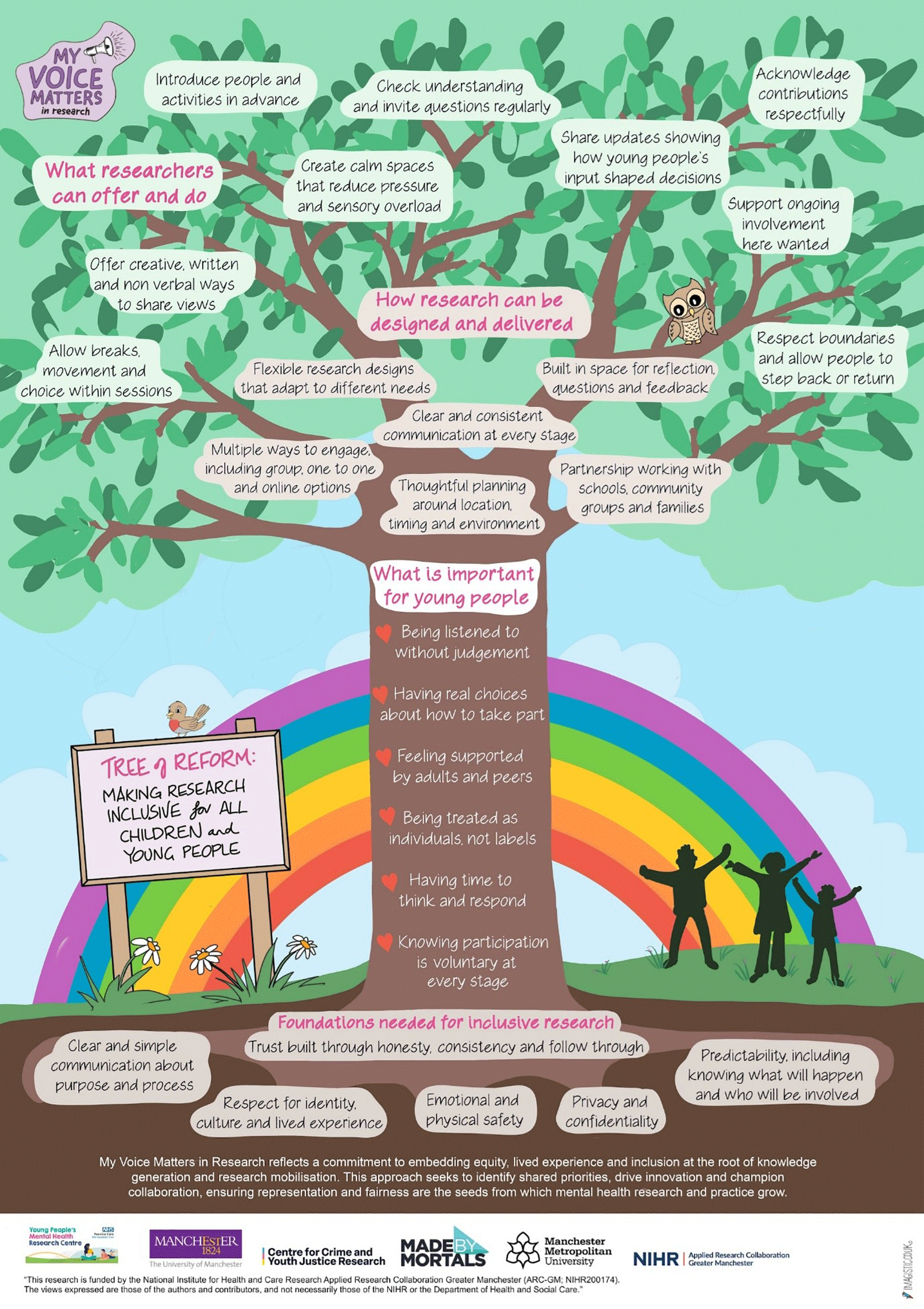
Across all workshops, young people described research participation as something that is emotionally and socially situated, rather than a neutral activity. Mistrust of professionals, unclear communication, perceived pressure to participate, and fear of judgement or exposure created significant barriers, particularly for young people whose previous interactions with services had been experienced as coercive or stigmatising. These findings align with existing evidence showing that marginalised young people’s disengagement from research often reflects systemic histories of exclusion rather than individual disinterest.
Importantly, barriers were experienced differently across and within groups. Justice-involved young people were particularly sensitive to referral pathways and incentives, highlighting how power and coercion can be reproduced unintentionally through research practices. LGBTQIA+ young people emphasised risks related to privacy, disclosure and being outed, indicating that ethical safeguards alone may be insufficient without visible and felt safety. Neurodiverse participants highlighted sensory, communicative and emotional barriers that are often overlooked within conventional research environments. Taken together, these findings reinforce the need for intersectional research designs that account for overlapping identities and differential risks.
The findings demonstrate that engagement was strongly influenced by environmental and facilitation factors. Physical spaces that felt cramped, overly formal or exposed were associated with withdrawal and disengagement, while environments that offered privacy, familiarity and flexibility supported participation. Similarly, facilitation styles that relied heavily on verbal discussion or indirect questioning disproportionately excluded some participants, while clear, direct communication improved accessibility.
Power dynamics within groups also shaped whose voices were heard. More confident participants often anchored discussions, unintentionally marginalising quieter voices. While facilitators sometimes mediated on behalf of withdrawn participants, this raised tensions between enabling engagement and preserving authenticity of voice. These dynamics underline the importance of skilled facilitation that actively redistributes participation, rather than assuming inclusion will occur organically.
Participatory arts methods emerged as a key facilitator of engagement across all groups. Creative activities such as music-making, character creation and visual metaphor allowed young people to contribute in ways that felt safer, more enjoyable and less exposing than direct verbal disclosure. These methods supported non-linear, embodied and relational forms of expression, particularly benefiting young people who experienced anxiety, communication differences or discomfort with traditional research formats.
However, the effectiveness of participatory arts methods was contingent on sensitive facilitation and contextual adaptation. Where creative activities were rushed, simplified or poorly integrated, their potential to increase engagement was reduced. This finding cautions against the tokenistic use of participatory methods and emphasises the need for careful design, preparation and reflexivity when employing arts-based approaches.
A central contribution of this study lies in demonstrating how public involvement can move beyond consultation toward genuine co-production. Young people were not only contributors of data, but collaborators in shaping methods, interpreting findings and developing outputs. Interpretation workshops enabled young people to validate themes, challenge assumptions and refine recommendations, ensuring that analysis remained grounded in lived experience rather than researcher interpretation alone.
This approach supports calls within participatory research for greater transparency, reflexivity and power-sharing, particularly in studies addressing health inequalities. By making the protocol and analytic processes explicit, this study contributes to methodological clarity in a field where participatory approaches can vary widely.
Inclusion requires more than targeted recruitment; it demands structural change in how research is designed, communicated and delivered. Additionally, flexibility should be understood as an ethical necessity, not an optional adaptation. Participatory arts methods should be considered core tools for inclusive engagement, rather than supplementary activities. Finally, feedback and transparency are critical to sustaining trust; young people repeatedly emphasised the importance of knowing how their contributions were used.
The co-produced outputs developed through this study, including practical guidance, visual tools and digital training resources, translate these insights into actionable recommendations for researchers, practitioners and policymakers.
A key strength of this study lies in its depth of engagement, reflexive transparency and participatory integrity. Rich qualitative data were collected across multiple contexts, and visual and creative outputs were analysed as central data sources rather than illustrative material. The integration of youth interpretation strengthened analytic credibility.
However, recruitment relied on partner organisations and gatekeepers, which may have excluded young people who are not connected to services. Relatively small group numbers limit breadth of perspectives while nonetheless offering valuable depth. The flexible, responsive nature of participatory workshops meant that activities differed slightly across groups, which may have influenced comparability. Additionally, the co-creative approach meant that verbatim transcripts of sessions were not gathered, and time was a limited resource across the co-creation workshops. Rather than undermining the findings, these limitations illuminate the very barriers the study sought to explore. Further research should test and refine inclusive approaches with more groups of underrepresented young people, such as cared for children, to provide further guidance on inclusive research and representation in the clinical evidence base. Longitudinal follow-ups at an individual, community and service level could investigate the long-term impact of inclusive research processes in the creation, development, feasibility, acceptability and efficacy of innovations in mental health provision.
This study demonstrates that inclusive mental health research with young people requires attention to power, trust, environment and identity, alongside innovative methodological approaches. Participatory arts methods offer powerful tools for engaging underrepresented young people, but only when embedded within genuinely co-produced, reflexive and ethically attuned research designs. By foregrounding young people’s expertise and documenting the methodological processes involved, this study contributes practical and theoretical insights for researchers seeking to address inequalities in mental health research participation.
Written informed consent was obtained from all participants prior to their involvement in the study. For participants aged under 16 years, written assent was obtained from the young person alongside written consent from a suitable trusted adult. Participants were provided with age-appropriate information about the study and were informed of their right to withdraw at any time without consequence. Consent procedures were approved as part of the study’s ethical approval process.
Translational outputs available at: https://arc-gm.nihr.ac.uk/my-voice-matters-in-research-2024-2026
Provide sufficient details of any financial or non-financial competing interests to enable users to assess whether your comments might lead a reasonable person to question your impartiality. Consider the following examples, but note that this is not an exhaustive list:
Sign up for content alerts and receive a weekly or monthly email with all newly published articles
Register with NIHR Open Research
Already registered? Sign in
If you are a previous or current NIHR award holder, sign up for information about developments, publishing and publications from NIHR Open Research.
We'll keep you updated on any major new updates to NIHR Open Research
The email address should be the one you originally registered with F1000.
You registered with F1000 via Google, so we cannot reset your password.
To sign in, please click here.
If you still need help with your Google account password, please click here.
You registered with F1000 via Facebook, so we cannot reset your password.
To sign in, please click here.
If you still need help with your Facebook account password, please click here.
If your email address is registered with us, we will email you instructions to reset your password.
If you think you should have received this email but it has not arrived, please check your spam filters and/or contact for further assistance.

Comments on this article Comments (0)