Keywords
Disease outbreak, genomics, epidemiological modelling, stakeholder engagement, surveillance

Disease outbreak, genomics, epidemiological modelling, stakeholder engagement, surveillance
Emerging and re-emerging infectious diseases remain a persistent global public health threat, driven by dynamic pathogen spread, and amplified by increasing global connectivity, resulting in significant morbidity, mortality, and socio-economic disruption across both developed and developing regions. These threats underscore the need for timely and actionable epidemiological data to guide public health actions (Spina et al., 2025). To strengthen surveillance capacity in Africa, the World Health Organization (WHO) introduced the Integrated Disease Surveillance and Response (IDSR) framework, which promotes the integration and coordination of surveillance and laboratory functions across all levels of the health system (Fall et al., 2019; Muyembe et al., 2024; WHO, 2010). While the IDSR framework has improved national surveillance, many countries still experience delayed detection, fragmented data systems, and limited translation of surveillance findings into policy and practice (Mremi et al., 2021; Muyembe et al., 2024).
Despite these challenges, advances in genomic technologies and epidemiological modelling have begun to transform pathogen monitoring, offering tools to complement traditional surveillance (Tiwari et al., 2025). For example, during the Ebola Virus Disease outbreak in the Democratic Republic of the Congo (2018–2020), genomic analysis showed that the causative Zaire ebolavirus was distinct from the 2018 Equateur outbreak, indicating a separate zoonotic spillover, and identified transmission linkages between new infections and distant clusters driven by movement of viral lineages across health zones (Kinganda-Lusamaki et al., 2021). Epidemiological and mathematical modelling complements genomics further by characterising disease spread, forecasting trends, and evaluating interventions, providing actionable insights for timely response and policy formulation (Overton et al., 2020; Shankar et al., 2024). However, despite their demonstrated potential, routine integration of genomic and modelling data into IDSR remains limited, constrained by limited technical capacity, inadequate stakeholder awareness, fragmented communication systems, and the absence of practical frameworks for data integration (Aruhomukama et al., 2024; Konono et al., 2024).
To address these gaps, the NIHR-funded Global Health Research Group on the Virus Genomics for Outbreak Response (ViGOR) in East and Central Africa project seeks to explore the potential for, and support the integration of, genomic and modelling data into routine IDSR activities through stakeholder engagement, knowledge translation, and system strengthening.
The larger ViGOR project is organised into five interlinked work packages (WPs) linked through iterative data flows and capacity strengthening activities (See Figure 1).
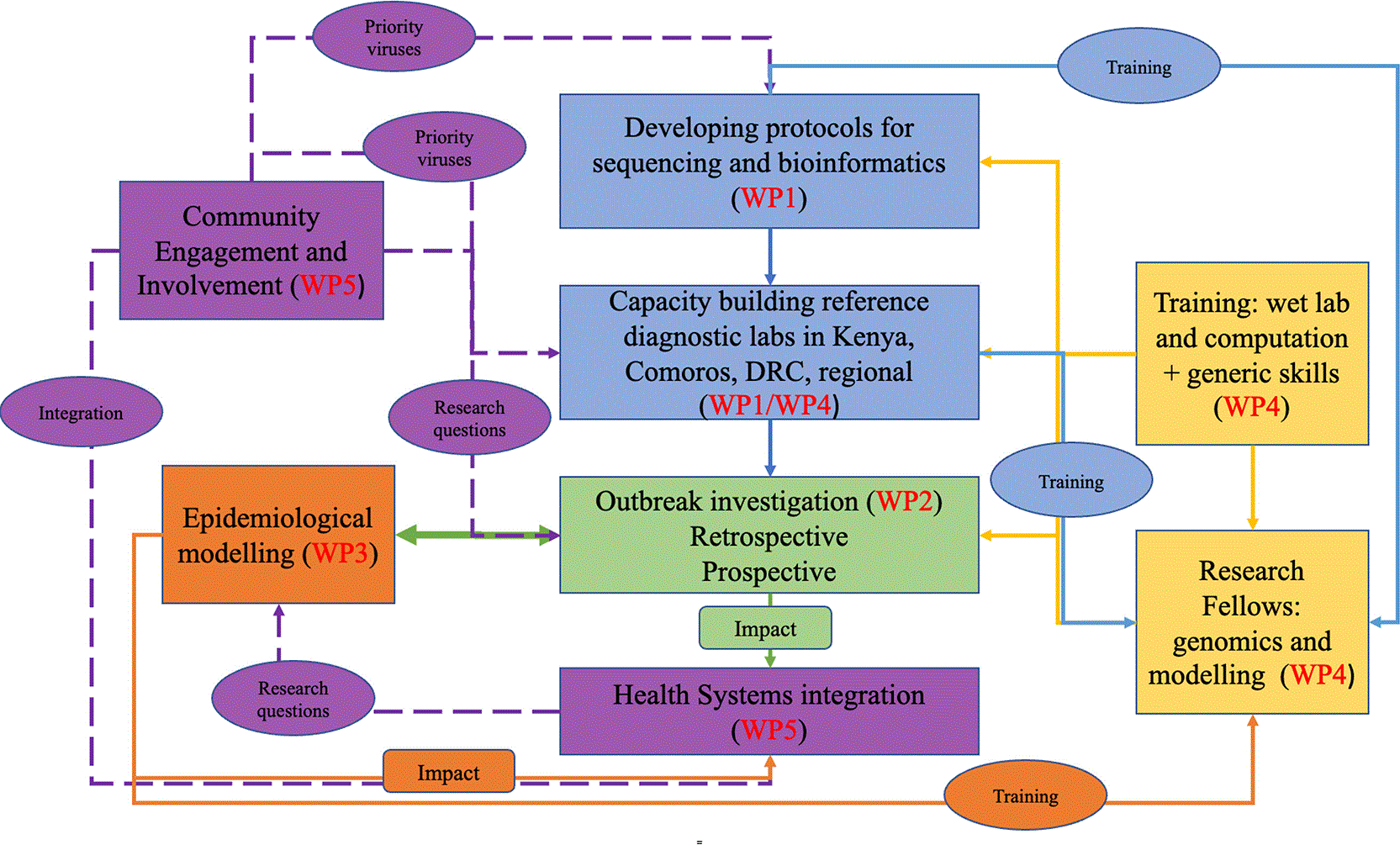
WP1 develops and transfers sequencing and bioinformatics protocols to partner laboratories, underpinning regional diagnostic capacity. WP2 applies these protocols to generate genomic evidence on the origin, spread, and evolution of outbreak viruses using both retrospective and real-time data. WP3 integrates genomic and epidemiological data from WP2 to produce transmission models and decision-support tools. WP4 provides cross-cutting training in wet lab methods, bioinformatics, and modelling, alongside research fellowships, to support implementation across all WPs. WP5 facilitates community and stakeholder engagement, defines priority pathogens and supports the integration of outputs into routine surveillance systems. The WPs are connected through feedback loops, whereby research questions, priority pathogens, and insights from modelling and outbreak investigations iteratively inform protocol development (WP1) and implementation. These interactions ultimately support translation of findings into public health impact and health system integration.
This protocol focuses on WP5 component of the broader ViGOR project.
The aim of the WP5 of the ViGOR study is to explore the potential for and support the integration of genomic and modelling data into routine IDSR activities, through stakeholder engagement, knowledge translation and system strengthening.
The specific objectives are:
1. To facilitate stakeholder engagement throughout the project life cycle.
2. To examine stakeholders’ views on the application and integration of genomic and modelling data into routine outbreak control across the 3 countries.
3. To develop an actionable framework for integration of genomic and modelling data into routine IDSR activities.
4. To conduct a costing analysis of the proposed framework to strengthen routine IDSR systems.
The study will adopt a qualitative mixed-methods approach grounded in participatory action research (PAR) implemented across the three ViGOR countries. The study will combine multiple data sources and engagement strategies to promote co-creation, learning and evidence translation. Data will be collected through document reviews, key informant interviews (KIIs), focus group discussions (FGDs), and participatory dialogue sessions. The iterative approach allows emerging insights to continuously inform strategies for integrating genomic and modelling data into disease surveillance and response systems.
The study will be conducted in Kenya, the Democratic Republic of Congo (DRC), and the Union of the Comoros representing diverse surveillance contexts. The participants will include national and sub national level policy stakeholders, response teams, reference laboratories, and local community representatives.
Participants include local community representatives, government stakeholders, policy makers, senior public health official, and technical experts from the ViGOR partner institutions: Kenya Medical Research Institute (KEMRI)-Wellcome Trust Research Programme (KWTRP), KEMRI-Centre for Virus Research (CVR), the National Institute of Biomedical Research (INRB) in DRC, and the National Molecular Biology Laboratory (NMBL) under the National Institute of Research in Agriculture, Fisheries and Environment (INRAPE) in Comoros. Sub national participants include outbreak rapid response teams (RRTs), surveillance officers, laboratory personnels and health facility representatives. In Kenya, the study will focus on Nairobi and Kilifi counties, including at two sub counties in each, to capture urban-rural contexts, variations in outbreak experience, and differences in health system capacity. Community representatives include local administrators, community health workers (CHWs), and civil society representatives, drawn from areas served by partner institutions. In the DRC, the study will focus on regions that have experienced outbreaks of Ebola and other viral haemorrhagic fevers, mpox, with a particular emphasis on regions with low vaccination coverage and high disease burden. Examples of these regions include Lubutu, Beni, Butembo, Goma and the Eastern regions. In Comoros, the study will focus on the Ngazidja, Mwali and Ndzuani regions which have been experiencing arboviral infections, acute respiratory infections, including pandemic-pathogen related cases.
Community and stakeholder involvement is central to the study and embedded throughout the project life cycle to strengthen partnerships and support real-time application of genomics and modelling outputs.
Engagement activities will include:
1. Engagement meetings with national and sub national surveillance teams, policymakers, community leaders, and laboratory staff to co-develop strategies across all the three countries.
2. Leveraging existing KWTRP engagement network including open days, community dialogues, webinars, laboratory tours, and genomics animations in Kenya.
3. Feedback meetings with the ViGOR Management Committee, and Independent Advisory Group, to refine methods, and outputs.
4. Translation of findings into policy briefs, communication materials, and other dissemination tools to support evidence-informed decision-making in the three countries.
The study is grounded in PAR approach emphasizing participatory engagement, iterative learning, and system strengthening. Integration of genomic and modelling data into IDSR is guided by four interlinked components: stakeholder engagement, knowledge translation, participatory co-learning, and system sustainability. Inputs such as technical capacities, institutional structures, stakeholder networks feed into cyclical PAR processes of planning, action, observation, and reflection generating evidence to continuously refine the framework and implementation strategies (see Figure 2).
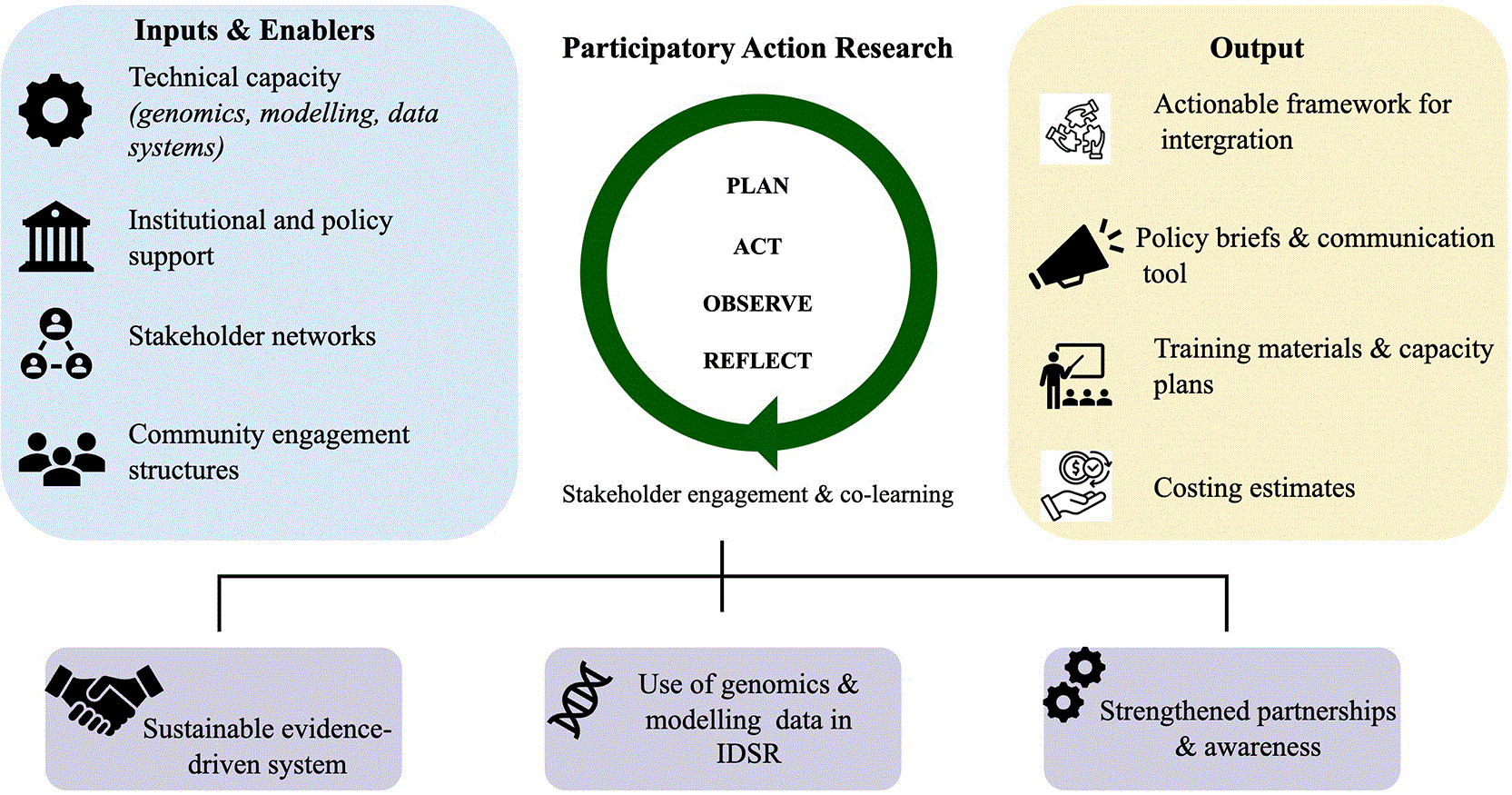
IDSR: Integrated Disease Surveillance and Response.
Data collection methods
The following data collection methods will be used: systematic documentation of all the community and stakeholder engagement activities, document and literature review, Key Informant Interviews (KIIs), Focus groups discussion (FGDs) with community representatives, and policy dialogues with policy makers and health managers at national and sub-national levels.
Systematic documentation of stakeholder engagement activities (Objective 1).
Engagement activities will include open days, community dialogues, meetings with local leaders, and community health workers, webinars, laboratory tours and dissemination of genomics animation videos. These activities aim to enhance public understanding of the project’s public health relevance, strengthen partnership with diverse stakeholder audiences, support identification of priority pathogens, and promote awareness on real time application of genomic and modelling data in public health practice.
Field diaries will be used to document insights from the activities, while structured feedback forms and short reflection surveys will be used to capture participants’ views during open days, webinars, and laboratory tours. The research teams will also maintain reflexive field journals documenting learning, challenges encountered, and adaptations throughout the engagement cycle.
Key Informant Interviews (KIIs) (Objective 2).
KIIs will examine the stakeholders’ views on the integration of genomic and modelling data into the routine disease surveillance and response. This approach will generate in-depth insights from individuals directly involved in disease surveillance, outbreak response, laboratory diagnostics and policy formulation.
In each country, 16–24 interviews will be conducted to explore decision-making processes, data use and system bottlenecks, drawing on participants’ institutional knowledge and experience. Data collection will continue until thematic and meaning saturation are reached, typically after 20–40 in-depth interviews (Wutich et al., 2024).
Focus group discussions (FGDs) (Objective 2).
Two to four FGDs will be conducted per country, each with 6–10 participants, including community health workers, and other key gate keepers in the community such local administrators, village elders, religious leaders, women and youth group leaders.
The FGDs will identify priority pathogen to inform genomic and modelling applications in surveillance and assess community understanding and acceptance of these approaches. This is intended to support trust building, address misconceptions, and ensure ethical acceptability of data use.
Policy dialogues and Framework Development (Objective 3).
Building on findings from objective 1 and 2, policy dialogue sessions will co-develop an actionable framework for integrating genomic and modelling data into routine IDRS system. The dialogues will provide an iterative, collaborative and reflexive process for stakeholders to reflect, plan, act and evaluate interventions in real world contexts (Baum et al., 2006).
The study adopts a Community-Based Participatory Research (CBPR) - oriented PAR approach, emphasizing equitable stakeholder participation co-learning, and translation of evidence to action (Huffman, 2017; Israel et al., 2019). This approach supports adaptation to complex health systems and has been applied in low and middle income countries (LMICs) to integrate community and institutional knowledge into policy and practice (Gilson et al., 2014).
A facilitated policy dialogue will be conducted in each country to develop and translate the framework into implementable guideline for integrating genomic and modelling data into the routine IDRS. Iterative feedback loops embedded in the PAR process will ensure the framework is evidence- informed and adaptable to evolving surveillance needs.
The framework development process will be guided by the Good Governance of Evidence paradigm (Parkhurst, 2016), which emphasizes on quality, appropriateness, representation, transparency and contestability (Hawkins & Parkhurst, 2016; Parkhurst, 2016). These principles will ensure the framework is scientifically robust, ethically grounded, contextually appropriate.
Costing Component (Objective 4).
A detailed costing analysis will estimate the direct costs of generating genomic and modelling data, and implementing the integration framework, to assess the system level sustainability. The analysis will adopt a provider perspective, capturing health system costs related to sample collection, laboratory processing, analysis, interpretation, and data use, while excluding patient-incurred expenses costs.
Direct costs will include hardware (e.g., sequencing equipment), reagents, and laboratory consumables. The analysis will combine ingredients-based costing (itemising inputs) and top-down costing (allocating aggregate expenditures) (Drummond et al., 2015). Top-down costs will be derived from institutional financial records and apportioned using criteria such as patient volume, floor space, staff time, and programme overheads. This dual approach will enable comprehensive estimation of total and unit costs and enhance accuracy in resource allocation analyses.
Sampling strategy and sample size
Purposive, iterative sampling will be used to recruit participants involved in surveillance, response and policy process, as well as those representing community perspectives. Sampling will be guided by the study objectives. For community and stakeholder engagement we will maintain a flexible sample size to allow the inclusion of both institutional and community stakeholders in a range of engagement activities. A combination of purposive and snowball sampling will be used to recruit KII and FGD participants.
Policy dialogue participants will be purposively draw from stakeholders already engaged in earlier study phases, including ministries of health, public health institutes, laboratory and modelling teams, policymakers, and key community representatives.
Sample size
Sample size will be guided by the principle of information saturation, where data collection will continue until no new themes emerge. Given that data collection approaches, participant groups, and sample sizes are standardised across countries, the anticipated sample sizes per country are summarised in Table 1.
| Data collection approach | Type of participants | Sample (n) |
|---|---|---|
| KIIs | Frontline RRTs | 16–24 |
| FGDs | Community representatives | 2–4 FGDs (6–10 participants each) |
| Policy dialogues | Policy makers & Key RRT | 10–15 |
FGD and Interview process
Each KII will last approximately 45–60 minutes, while FGDs will last 60–90 minutes. All interviews and discussions will be audio-recorded with participants’ consent and supplemented with detailed field notes and reflexive journals. Regular debriefing sessions will be held to review emerging insights and adjust data collection strategies as necessary.
Policy dialogues
Following synthesis of qualitative findings, facilitated policy dialogue sessions will be convened in each participating country to present and deliberate on preliminary findings, validate interpretations, and refine the draft framework for integrating genomic and modelling data into routine IDSR systems.
Each policy dialogue will follow a semi-structured format, beginning with a plenary presentation of key findings and proposed framework components, followed by small groups discussions (4–6 participants) focused on feasibility, policy alignment, resource requirements, and implementation pathways. Outputs from the group discussions will be presented in a plenary enable cross-group deliberation and consensus-building.
The proceedings will be documented to capture key decisions, areas of agreement, and recommendations for policy uptake and sustainability. These insights will inform the finalization of the integration framework and development context specific policy recommendations.
Data management and analysis plan
Audio recording from KIIs, FGDs and policy dialogue sessions will be transcribed verbatim in English and analysed using framework analysis approach guided by a Aragón framework, as applied by Elloker et al, for integrating evidence into policy and practice (Aragón & Giles Macedo, 2010; Elloker et al., 2012). Data from the policy dialogues will be analysed drawing from the good governance of Evidence framework (Parkhurst, 2016).
Costing data will be collected using a standardized template capturing direct costs. Cost will be recorded in local currency, converted to USD and adjusted for inflation using the World Bank’s GDP deflators. Both ingredients-based (bottom-up) and (top-down) costing approaches (Cunnama et al., 2016) will be applied to estimate total and unit per genomic sequencing activity, modelling exercise, or policy implementation event.
Qualitative data will not be publicly available due to potential identifiability. De-identified data may be made available upon reasonable request, subject to ethical approval, data sharing agreement, and local regulatory. Interview guides are available as extended data in an approved repository. Costing data will be shared in aggregated, non-identifiable form where permissible.
Ethical approval was obtained from the Kenya Medical Research Institute (KEMRI) Scientific Committee, the Scientific and Ethics Review Unit (SERU) (Ref. No. EMRI/SERU/CGMR-C/338/5278, dated 8th October 2025), and the National Commission for Science, Technology and Innovation (NACOSTI), (NACOSTI/P/25/4182053). Ethical approvals were also obtained from the relevant national research ethics authorities in the Democratic Republic of the Congo (DRC) and Comoros, and all study procedures complied with applicable national regulations and international ethical guidelines for research involving human participants.
All study participants will provide written informed consent prior to participation. Data will be anonymised using unique identifiers, with not personal identifiers included in transcripts. FGD participants will use pseudonyms, and any identifier information will be removed during transcription. Data will be securely stored on password-protected computers and encrypted, servers accessible only to authorized personnel. Anonymized datasets will be stored within participating institutions and securely shared for cross-country analysis.
Public and patient involvement
Public and patient representatives were involved from the early stages of the study through stakeholder engagement meetings. Ongoing engagement will include key stakeholders such as community representatives, Rapid Response Team (RRT) members, public health practitioners, researchers, and policymakers. These stakeholders will participate in activities including community advisory group meetings, open days, laboratory tours, and project initiation meetings at both local and national levels. In addition, they will participate in key informant interviews (KIIs) and focus group discussions (FGDs) to explore experiences, perceptions, and the potential application of genomic and modelling data in outbreak preparedness and response. Findings from these engagements will subsequently inform participatory policy dialogues (PDs) with national and sub-national stakeholders to co-create a framework for integrating genomic and modelling outputs into routine Integrated Disease Surveillance and Response (IDSR) systems. Stakeholders will also contribute to interpretation of findings and dissemination planning to support communication of study outputs to participating communities, public health institutions, and policymakers.
Dissemination
Findings will be disseminated through policy briefs, technical reports, peer-reviewed publications, conferences and stakeholder engagement platforms targeting policymakers, health practitioners, and community representatives. All dissemination activities will follow institutional guidelines to ensure ethical and responsible communication.
This study is part of the larger ViGOR Central/East Africa initiative, which examines how virus genomics and mathematical modelling can strengthen detection, understanding and control of infectious disease outbreaks in the DRC, Comoros and Kenya. Using mixed qualitative methods within a PAR design, the study aims to develop a practical framework to guide the integration of genomic and modelling data into the public health response systems. The framework is intended to address gaps in data use and support embedding of these approaches within the national and sub national surveillance structures.
The study will also generate evidence on the barriers and facilitators influencing routine use of genomic and modelling data in disease surveillance and response. A key strength is its PAR approach, which promotes collaboration among researchers, policymakers, rapid response teams and community stakeholders to identify challenges, co-develop solutions, and reflect on implementation. This iterative process enhances contextual relevance, stakeholder ownership and the potential for sustained integration.
By engaging stakeholders across system levels, the study supports the development of a feasible and contextually appropriate framework for integrating genomic and modelling data within existing IDSR systems, contributing to more responsive and resilient public health systems.
Using a holistic methodological approach, this study will support co-development and operationalization of a sustainable, stakeholder-driven framework for integrating of genomic and modelling data into national IDSR systems. This will enhance evidence-based decision-making, strengthen health system responsiveness, and improve prevention and control of infectious disease outbreaks across the participating countries.
Provide sufficient details of any financial or non-financial competing interests to enable users to assess whether your comments might lead a reasonable person to question your impartiality. Consider the following examples, but note that this is not an exhaustive list:
Sign up for content alerts and receive a weekly or monthly email with all newly published articles
Register with NIHR Open Research
Already registered? Sign in
If you are a previous or current NIHR award holder, sign up for information about developments, publishing and publications from NIHR Open Research.
We'll keep you updated on any major new updates to NIHR Open Research
The email address should be the one you originally registered with F1000.
You registered with F1000 via Google, so we cannot reset your password.
To sign in, please click here.
If you still need help with your Google account password, please click here.
You registered with F1000 via Facebook, so we cannot reset your password.
To sign in, please click here.
If you still need help with your Facebook account password, please click here.
If your email address is registered with us, we will email you instructions to reset your password.
If you think you should have received this email but it has not arrived, please check your spam filters and/or contact for further assistance.

Comments on this article Comments (0)