Keywords
Scottish Child Payment; child health; health inequalities; natural experiment; interrupted time series

Scottish Child Payment; child health; health inequalities; natural experiment; interrupted time series
Income has a powerful influence on children’s health. The Scottish Child Payment (SCP), introduced in 2021, has led to a rise in family incomes and has slowed the rising rates of child poverty, with signs of declines. Its impacts on health and health inequalities are unknown.
This protocol describes a natural experiment evaluation to estimate the impacts of the SCP on health and health inequalities.
This will provide much needed evidence to Scottish policymakers to inform future decisions around the SCP, as well as for decision-makers from other countries where similar payments might be introduced.
Child poverty is damaging to children’s health and wellbeing. It has been linked to a range of child health outcomes, including unintentional injuries, mental health, limiting longstanding illness, overweight and obesity.1,2 It affects brain development, in turn influencing cognitive development and academic achievement.3 Numerous systematic reviews have confirmed a link between family income and child/maternal health, including with birth outcomes and infant mortality, breastfeeding, physical/cognitive development, and child/maternal mental health.4–10 These reviews included quasi-experimental evaluations of cash transfers and other similar policies. However, a recent evaluation of the US cash gift trial, Baby’s First Years, showed fewer benefits than expected.11 The OpenResearch Unconditional income Study (ORUS), found that children (and particularly those aged 5–10) saw increases in socio-emotional difficulties and stress (which the authors suggest may be due to increased monitoring). More positively, parents spent more on their children, displayed improvements in parenting behaviours and, in the lowest income families, increased their use of quality non-parental childcare.12 Thus, the evidence is mixed, with the preponderance of experimental studies in high income countries coming from the US,4 limiting its applicability to the UK. Furthermore, few studies have examined the differential impacts of income supplementation policies or their effects on population-level health inequalities.
In 2021–22, 4.2 million children, or 29%, were living in poverty in the UK.13 In Scotland, the prevalence is slightly lower at 24% (amounting to 250,000 children). Regardless, rates are considerably higher than pensioners (15%) and slightly more than working age adults (21%) and there has been a shocking rise in severe child poverty since austerity measures were introduced in response to the Global Financial Crisis.14 Child poverty is highest in the early years, with UK figures showing that in 2018/19, 36% of families with a child under 1 and 31% with a child aged 2–4 were experiencing poverty (compared to 25% in families with children aged 5–15).15 The Universal Credit uplift introduced during the COVID-19 pandemic created temporary relief for some families, with small resultant declines in poverty.16 This shows that child poverty is a political choice and one which governments can change.17
In 2017, Scotland used its devolved powers to introduce The Child Poverty (Scotland) Act 2017. A child poverty strategy that set targets (including reducing relative income poverty to 10% by 2030), articulated the key drivers of poverty in Scotland (employment, social security, the cost of living), and identified priority family types at highest risk (lone parent families, mothers under 25, households with 3+ children, households with a child under 1y, families with a disabled adult or child, and minority ethnic families).18 A range of initiatives have been introduced to help achieve the targets.
Evaluations of the SCP have considered reach, acceptability and changes to subjective financial wellbeing,19 and modelling studies have been used to forecast the impacts of the SCP on child poverty. All show positive signs, such as reduced parental stress and improved financial wellbeing,19,20 and no indication that it acts as a disincentive to employment.21 However it has been noted that greater payments will be required to meet child poverty targets22). Given existing evidence around the toxic consequences of poverty for child health, it would seem logical to assume that the SCP will have also led to better health than would have otherwise been expected had it not been introduced. However, this requires formal evaluation to consider whether the dose of the SCP has been sufficient to produce observable changes on overall population health and for health inequalities. This should include an understanding of how well the SCP is working for the different priority family groups and according to depth of poverty. An evaluability assessment23 (EA) of the SCP, carried out in 2024 with a range of national stakeholders, reinforced that there is need for a health evaluation and has informed the selected outcomes and evaluation design24 .
The Scottish Child Payment (SCP) is considered the Scottish Government’s flagship policy for tackling child poverty. The stated aim of the SCP is to improve the incomes of families, to enable them to live dignified lives and meet their basic needs, and to ultimately tackle child poverty in Scotland.
Introduced in February 2021, it offered a weekly payment of £10 for every child under the age of six whose parent(s)/carer(s) were receiving Universal Credit, Child Tax Credit, Working Tax Credit, income-based Jobseeker’s Allowance, Pension Credit, Income Support, or income-related Employment and Support Allowance. It was doubled in April 2022, and in November 2022 payments were increased to £25 and extended to 6–15 year-olds. Small increases, in line with inflation, have occurred since.
As of April 2025, cash payments to the value of £27.15 were made to eligible families on a four-weekly basis, via the existing Social Security Scotland benefits system. There are no obligations around employment, and receipt of the SCP does not affect receipt any other UK or Scottish Government benefits. Figure 1 details the changes in the value and eligibility criteria since its introduction in 2021.
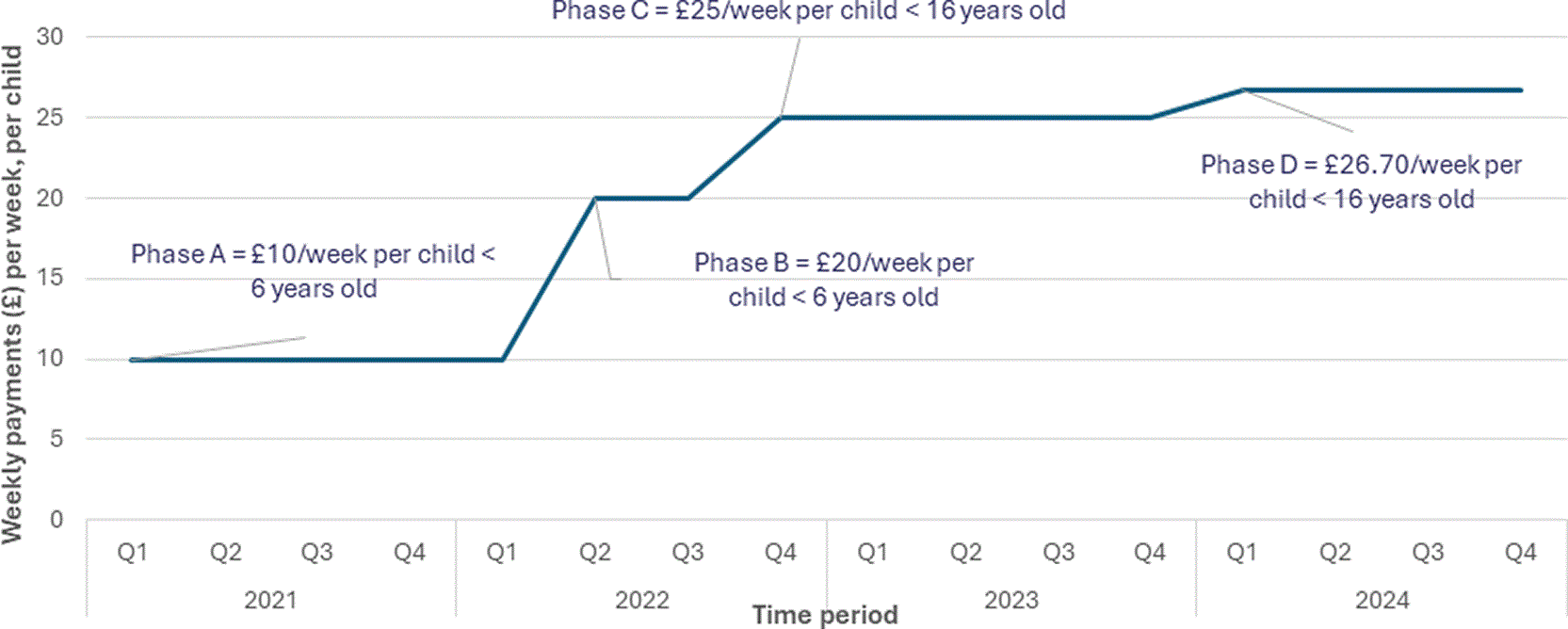
Notes:
• February 2021 – Scottish Child Payment introduced, at £10 for every child <6 years
• April 2022 – doubled to £20
• November 2022 – increased to £25 and extended to 6–16 year-olds
• April 2024: increased to £26.40
Not shown in figure: subsequent increases in line with inflation; proposal to increase to £40 for infants (expected in 2027).
Applications are made online and should take 10–20 Minutes to complete. People who do not have a bank account, are managing someone else’s affairs, or do not have a permanent address can apply over the phone or via a postal application. Social Security Scotland offer help with completing applications over the phone (including provision of interpreters for over 100 languages) and the Citizen’s Advice Bureau can also provide face-to-face support.
Alterations to the payments, which have included increases in payments and a widening out of the age eligibility criteria, have been enacted under The Scottish Child Payment Amendment Regulations (2021) and The Social Security (Miscellaneous Amendment) (Scotland) Regulations 2022.
The Scottish Government’s social security benefit take-up strategy25 seeks to maximise uptake of all benefits, by taking person centred approaches, engaging effectively with families, and making services more accessible. This includes the use of marketing campaigns, tailored to different audiences, and the use of income maximisation infrastructure (e.g. signposting of the SCP by child professionals). Uptake has improved with time. There remains geographic variation, ranging from 84% in Aberdeenshire, East Dunbartonshire and East Renfrewshire, to 94% in Falkirk in 2024.26
Scottish Government, in their own modelling study, estimated that in 2025/2026 the SCP will be keeping 40,000 children out of relative poverty (translating into a relative poverty rate four percentage points lower than it would have otherwise been).27
We aim to understand the population-level health benefits of the SCP on health and health inequalities among children up until the age of six.
Our primary objectives are to estimate the impacts of the introduction (A) and doubling (B) of the SCP on:
i. average population health among children <6 years in Scotland
ii. socio-economic health inequalities (relative and absolute, using the relative and slope indices of inequality [RII, SII])
iii. health among those who were most likely to have received the SCP (average treatment effect among the likely eligible)1
Our secondary objectives are to estimate whether the impacts of the SCP differed by:
iv. Scotland’s local authorities (there are 32)
v. priority family types (lone parents, infants, large families, young mothers, ethnic minority families, families with a disabled person)
vi. additional population groups (e.g. unemployed households, deep poverty (vs. just below threshold)) identified as important by stakeholders representing Scottish Government, Public Health Scotland, third sector organisations (including children’s charities) and local councils
The SCP is suitable for a natural experiment evaluation study design, using its well-defined implementation date. Uptake has been high and continues to increase.28 Relevant data are available on the study population and we can predict likelihood of exposure to the intervention, based on year and age, as well as levels of child poverty and SCP uptake at the small area level and individual characteristics such as parental social class and relationships status. A policy like the SCP could theoretically be implemented in any country with the appropriate welfare system structures and these findings are of interest outside Scotland.
The MRC/NIHR framework on natural experiment evaluations lays out options for analysis.29 Guided by this, and the EA workshops,24 an interrupted time series (ITS) will form our primary analysis; this is appropriate because the timing of SCP was clean-cut,30 there are regular time points available before and after the intervention, and there are health outcomes which we expect to be responsive to the policy over relatively short periods.29
We will test changes in trends in the prevalence or rate (as appropriate) of outcomes and absolute and relative health inequalities in these outcomes before and after the SCP was: A) introduced, and B) doubled. Subgroup analyses will consider differential effects according to local authority, the priority family types, and depth of poverty. A series of sensitivity analyses will be considered to test key assumptions and biases, such as bias introduced due to the COVID19 pandemic, including controlled ITS (using other areas of the UK as controls) and the use of negative control exposures and outcomes.
➢ SCP will have led to small and sustained improvements in population level health and small reductions in health inequalities than would have been expected in the absence of the intervention/policy
➢ These improvements will be observed in changes to prevalence and trends in outcomes after the policy change
➢ The effect estimates associated with the doubling of the SCP will be almost equal to its introduction for any outcomes measured beyond infancy2
➢ Greater health benefits will be observed in areas with higher uptake rates of the SCP
➢ The health benefits of the SCP will be greater for families experiencing deeper levels of poverty and for priority family groups
Whole child population (1y-6y) of Scotland, 2014–2025. In secondary analyses the study population may also be extended to selected local authorities in England and/or Wales, which are socio-demographically similar to Scotland and could be used to create a synthetic control (using publicly available, unlinked data).
The following records will be linked by Public Health Scotland using the community health index (CHI) for individual-level data:
Child health surveillance programme (CHSP), SMR02, SMR01, Scottish Immunisation Recall System (SIRS), and the Prescribing Information System (PIS), birth and death registrations held by National Records Scotland (NRS).
The following area-level variables will be linked in using postcode, at the data zone level: Scottish Index of Multiple Deprivation (SIMD), the Children Living in Low Income Families (CILIF) index (proportions of children living in relative and absolute low-income families). There are currently 7,393 data zones in Scotland, with an average population of 500–1000. Ward-level prevalences of the six priority family groups will be sourced from the Scottish Priority Family Groups Dataset, which has created using the Scottish 2022 Census.31 There are 355 wards in Scotland.
The main policy interruptions of interest are phase A (£10, February 2021 – March 2022) and phase B (£20, April 2022 – November 2022) of the SCP, shown in Figure 1. We will also explore later uplifts to £25 and £26.70, introduced April 2024 and 2025, respectively, although for brevity these are not reported in detail in this protocol.
For objectives 1 i-ii (population-level impacts on health and health inequalities) we will examine the population level benefits of the SCP, examining whether population-level trends in health and health inequalities were measurably altered after Phase A and again after Phase B.
For objective 1 iii we will also consider health changes among the likely eligible. The analysis will be limited to those children most likely to have received the SCP based on socio-economic and demographic characteristics. To do this we will use propensity scores for receiving the SCP, informed by separate analyses of the Millennium Cohort Study and Understanding Society (which hold information on household incomes and benefits receipt as well as socio-economic and demographic information). The creation of this score and its application to identify likely SCP eligibility will be made available prior to the publication of this evaluation. This will allow us to estimate average treatment effects (ATE).
The start of the pre-intervention period will be based on a visual inspection of pre-intervention trends (as recommended30), starting from 2014, as well as a consideration of statistical power. The post-intervention period will be determined by data availability, with an anticipated follow-up to June 2026.
Objectives 2 i-iii are described in the Differential Effects section.
ITS evaluations are best suited to outcomes which would change relatively quickly in response to the intervention or that would be expected to change after a fairly defined lag period.30 Preventable hospitalisations (0-5y), hospitalisations for unintentional injuries and respiratory illness (0-5y) (separately), and depression and anxiety medications dispensed to mothers (0-5y) are episodic outcomes and are sensitive to change.
We also expect fairly immediate changes in immunisation behaviours. We will measure immunisation uptake in two ways: 1) full, partial or no immunisation status at WHO target ages (primary immunisations at 12 m, MMR at 24 m and preschool booster vaccines at 5y); and 2) timing of uptake of the three vaccines (average age that 95% uptake is met among different groups). We expect a lag before we see any impacts in 1), due to timing of measurement, and more immediate impacts for 2).
For child development (27–30 months) and thinness, overweight and obesity (27–30 months and 4–5 years) we expect to observe longer lag times, of around 6 months, for the impacts of the SCP to manifest (although sensitivity analyses will explore longer 12-month lags also). We expect to observe changes in the trend as the benefits of SCP accumulate across the early years. For example, the cumulative amount of SCP at the time of measurement will have been £258 for those being measured in July 2021 (who only received the SCP for 6 months prior to their 27–30 month check (at the lower level of £10)). The cumulative amount of SCP received will increase, with each calendar month, reaching £2,902 for children being measured in January 2025. For this reason, we would expect population-level benefits to increase, month on month, between July 2021 and January 2025, with a levelling out from that point onwards, since by this point all eligible children will have received the SCP (at the higher level of £25) since birth.
We have proposed two falsification outcomes – outcomes for which we would expect to see no policy impacts because they occurred before receipt of SCP: birthweight and smoking in pregnancy. Both of these will be considered only in first born children, since we might expect the SCP to improve pregnancy outcomes for children who had older siblings eligible for the SCP.
The datasets pertaining to the different outcomes and age of measurement are shown in Table 1.
| Outcome | Age of measurement | Dataset |
|---|---|---|
| Immunisation status | 12 months, 24 months, 5 years | SIRS |
| Child development | 27–30 m | CHSP |
| Thinness, overweight, obesity | 27–30 m | CHSP |
| Hospitalisations for unintentional injury | Continuous | SMR01 |
| Hospitalisations for respiratory infections | Continuous | SMR01 |
| Preventable hospitalisations ^ | Continuous | SMR01 |
| Maternal mental illness | Continuous | PIS |
| Falsification outcomes | ||
| Birthweight (first born children) * | Birth | SMR02 |
| Smoking in pregnancy (first born children) * | Antenatal booking | SMR02 |
We will consider health inequalities, for all outcomes, using two markers of socio-economic circumstances (SECs): neighbourhood deprivation (Scottish Index of Multiple Deprivation [IMD] deciles and mother’s social class (NS-SEC) at birth registration. Absolute and relative inequalities in health outcomes will be summarised using the slope and relative indices of inequalities, for both SEC measures.
Where possible, we will examine differential effects of the SCP across Scotland’s local authorities (objective 2 i) and the Scottish Government priority family groups (objective 2 ii).
We will use child-level indicators for the priority family groups, where available in linked health records: lone parenthood (at birth), young maternal age at birth, and large families (using parity). Ethnic minority status (which has high rates of missingness, although improving over time) will be explored if the data can be multiply imputed. Additionally, we will use ward-area level indicators derived from the Scottish 2022 Census, which provide the proportion of children falling into all of the priority family groups: living in lone parent families, living in large (3+ children) families, family reference person3 is under the age of 25, from an ethnic minority background (Non-White vs, White), living in a households with a disabled person.31
For objective 2 iii, we will explore the impacts of the SCP among children more likely to be living in severe poverty, by comparing analyses using the prevalence of children living in absolute low-income families at the small area-level (since absolute income is a more extreme measure than relative income). We will also consider stratifying results by other characteristics priorities by stakeholders, such as workless households.
Consideration of differential effects will primarily focus on the absolute scale although we will also report findings on the multiplicative scale for completeness.34
We will create scatter plots of the outcome data over the pre-intervention time series, to visually consider stability of the pre-intervention trends, seasonality and variability. This will help to inform the analysis periods. The frequency of outcome measurement (quarterly, monthly or fortnightly) will vary from outcome to outcome. Trends in time-varying confounders will also be considered. Descriptive statistics will compare averages in poverty, health outcomes, and time varying confounders in the pre- and post- intervention periods.
Segmented regression will be used, where Y is the health outcome measured at each time point (t), T represents time since the start of the study, X represents the policy period (before/after interruption) and an interaction between T and X is included to consider whether the trend was altered after the SCP was introduced (including an appropriate lag where relevant). β0 represents the intercept (or starting level of the outcome variable). β3 is the main effect estimate of interest.
We will use Poisson models for count data (e.g. hospitalisations), linear or quantile regression for continuous outcomes (e.g. BMI), Poisson regression (with robust standard errors) for binary outcomes (e.g. presence of child developmental concerns).
We will account for ethnicity, mother’s age at birth, NS-SEC, parent relationship status at birth, gestational age, birthweight, parity and smoking in pregnancy (these are considered covariates, as they have all potential to influence health but are unlikely to be influenced by the SCP).
We expect some outcomes (e.g. respiratory hospitalisations) to display seasonality. To account for this, we will either include an interaction with quarters or use of Fourier terms.30
Accounting for seasonality and adjusting for time-varying confounding should reduce the likelihood of autocorrelation. Nevertheless, we will examine residual plots and the partial autocorrelation function and use the Breusch-Godfrey test where data are normally distributed. If autocorrelation remains, we will adjust for this using methods such as Prais regression or autoregressive integrated moving average (ARIMA).30
Sample sizes will vary according to outcome measure and any relevant stratification variables.
There have been, on average, 53,000 births a year across the study period. Over a 12-year timeframe, this amounts to around 640,000 children.
Based on CILIF data across a similar period, an average of 17.9% of children were living in low-income families in relative terms and 14.5% were living in low-income families in absolute terms. Therefore, we can expect that in any one annual birth cohort, in any one year, around 7,685 children would be experiencing absolute low income and 9,487 would be experiencing relative low income. Prevalence of the outcomes varies over time but on average sits at, for example, 5–10% for experiences of obesity (at age 5.5 years), 13% for anxiety and depression medication dispensations to mothers during infancy mothers, and 6% low birthweight (negative control).
Hospitalisations for unintentional injuries is a rare outcome, with an average incidence of 1% per year throughout the first five years of life. We estimate 530 children to experience this outcome per year. Assuming roughly equal distribution of outcomes throughout the year, we would expect 45 hospitalisations per month. Given known inequalities in this outcome in Scotland, we would expect around 15 of these injuries to occur in low-income groups each month.
Stratified results may be underpowered for these rarer outcomes, if the stratification groups are also rare. For example, according to 2022 Scottish Census data, around 12% children are from ethnic minority groups. We would expect at least 1–2 injuries per month in ethnic minority, low-income groups. Other stratification groups are more prevalent – e.g. 24% for lone parents – would have greater power.
Statistical power depends on a range of factors in ITS analyses – the number of data points, the distribution of data points before and after the interruption, whether a test for trend, level or both is being carried out, size of the anticipated effect and autocorrelation between time points.35
The number of expected (monthly) time points pre and post the introduction of the SCP and its doubling varies by outcome. This is due differences in timing of measurement (for example, some outcomes are captured at age 12 months, some 27–30 months, and others at 5 years) and differences expected lag times (we expect to see changes in immunisation behaviours fairly quickly, whereas longer periods of exposure to the SCP will be required to see benefits in child development and overweight and obesity outcomes). With data on all births up until December 2025, and follow-up up until June 2026, the total number of (monthly) time points ranges from 82 to 134 depending on the outcome (with an estimated range of 26–74 and 56–60 for pre-intervention and post-intervention timepoints respectively). Given previous work using similar data, we expect there to be minimal autocorrelation after adjustment for seasonality.36 Based on Lui et al’s simulation study,37 our estimated number of time points and the expectation of relatively low levels of autocorrelation, we anticipate having at least 80% power to detect an effect size of 0.25 in slope and level change. Fortnights (for example) may be deemed appropriate upon inspection of the data and would provide a greater number of data points.
The COVID-19 pandemic was ongoing when the SCP was introduced. Child and family health was negatively impacted by the pandemic, with indications that experiences varied across different socio-economic groups,38,39 although not always in the directions anticipated.40 To reduce the likelihood of bias from this (and other prevailing trends, such as the cost-of-living crisis, which may also not be comparable between lower and higher income families), we will consider a number of sensitivity analyses to supplement the primary analysis:
• Controlled ITS (sensitivity analysis for objective 1 i): we will explore the use of synthetic controls (using data combined across local authorities in England and Wales, using weights to maximise comparability). We may make comparisons only to Southern Scotland if a suitable synthetic control for the whole of Scotland is not achievable. Variables used to create controls may include CILIF, the indices of multiple deprivation and age structure. Before proceeding with the controlled ITS we will first check that pre-intervention trends were comparable in the control groups.41
• Dose response according to likelihood of having received the SCP (sensitivity analysis to objective 1 iii): we will repeat analyses using differing thresholds of likely eligibility
• Limiting analyses to first born children only (sensitivity analysis to objective 1 iii): to isolate the direct benefits to SCP-eligible children, as opposed to (for example) older children who were not eligible for the SCP but indirectly benefited from SCP for a younger sibling.
• Negative controls (sensitivity analysis for objectives 1 i-iii): we will run our main analyses using the negative outcomes described in the Outcomes section. In addition, we will consider using older children (= > 6 years) as a negative exposure group during the period that only under 6-year olds were eligible for the SCP. This analysis will be limited to outcomes which are measured in this older age group (e.g. hospitalisations) and where we would not expect there to be important differences due to life course effects.
We expect low levels of missing data for most outcomes. The highest levels of missingness are for overweight and obesity at age 27–30 months, at around 30%, although we have shown there is minimal socio-economic bias in this for a particular cohort of children.42 Of the remaining variable types, we expect ethnicity to have the most missing data and will take this into account in the interpretation. For all variables, we believe that missingness at random (MAR) is a reasonable assumption (after adjustment for measured covariates).
The objectives for the economic analysis are to extrapolate the health effects from the quantitative analysis into longer-term outcomes through an existing simulation model, for example LifeSim or SimPaths. This will cover outcomes such as crime, academic achievement, employment, and mortality and their associated economic costs. A separate protocol for this work will be published.
Ethical approval has been granted from the College of Medical, Veterinary, and Life Sciences Ethics Committee at the University of Glasgow, for “research involving already available data” (200250051). Data will be provided by the eData Research and Innovation Service (eDRIS) within Public Health Scotland, after ethical and data control criteria have been satisfied via a Public Benefit and Privacy Panel for Health and Social Care (PBPP) application. All data will be accessed and analysed by approved researchers in a safe haven provided by The eData Research and Innovation Service (eDRIS) within Public Health Scotland. Additional ethical approvals may be required for sensitivity analyses (for example if using English and Welsh data); these will be applied for as appropriate and details provided in the publication of findings.
The research has been shaped by conversations with members of the public, including primary school children living in areas of high social disadvantage, who helped us in the selection of our outcomes and our plans to look at differential effects of the welfare grants according to area-level deprivation and family size.43 Focus groups with families with lived experience of income insecurity in Scotland highlighted the importance of examining differential effects among families with a disabled household member, new mothers, lone parents. The details of this protocol have been informed by early stakeholder workshops via the Maternal and Child Health Network, who noted a clear need for policy evaluation, with grants and cash payments in the early years rated as highest priority.44 The details of this proposal were subsequently informed by a SCP Evaluability Assessment, carried out with representatives from Scottish Government, Public Health Scotland, Poverty Alliance, Child Poverty Action Group, Glasgow City Council, and Research Data Scotland. Public and stakeholder input will continue to be sought throughout the project, to aid additional analytic decisions and the interpretation and dissemination of findings.
Provide sufficient details of any financial or non-financial competing interests to enable users to assess whether your comments might lead a reasonable person to question your impartiality. Consider the following examples, but note that this is not an exhaustive list:
Sign up for content alerts and receive a weekly or monthly email with all newly published articles
Register with NIHR Open Research
Already registered? Sign in
If you are a previous or current NIHR award holder, sign up for information about developments, publishing and publications from NIHR Open Research.
We'll keep you updated on any major new updates to NIHR Open Research
The email address should be the one you originally registered with F1000.
You registered with F1000 via Google, so we cannot reset your password.
To sign in, please click here.
If you still need help with your Google account password, please click here.
You registered with F1000 via Facebook, so we cannot reset your password.
To sign in, please click here.
If you still need help with your Facebook account password, please click here.
If your email address is registered with us, we will email you instructions to reset your password.
If you think you should have received this email but it has not arrived, please check your spam filters and/or contact for further assistance.

Comments on this article Comments (0)