Keywords
Stakeholder engagement, public health, evidence synthesis practice, evidence synthesis methods, systematic review

Stakeholder engagement, public health, evidence synthesis practice, evidence synthesis methods, systematic review
Engaging stakeholders in health-related systematic reviews can provide many benefits, including improving reviews’ quality, relevance, usefulness and uptake,1,2 and supplying important contextual insights. There now exists the ACTIVE framework to guide researchers through the process of stakeholder engagement in systematic reviews.3
Terminology is seldom neutral. Whilst we have retained use of the term ‘stakeholder’ due to its common use and wide scope, we are aware that its use is problematic due to colonial connotations.4 Alternative terms, such as ‘actor’, ‘interest-holder’ and ‘knowledge user’ have been proposed,4,5 although these terms have a narrower focus and do not encompass the full range of functions.
In 2012, a seminal paper within outcomes research proposed a 7P model to characterise different stakeholders.6 By privileging alliteration over nuanced categories, the framework presents as user-friendly rather than scientifically rigorous. Nevertheless, it offers a useful backdrop to our own exploration ( Table 1).
Table 1 has been adapted for a UK, rather than North American, focus and, within this table, category 1 has been broadened to include producers of the review, rather than just other interested research teams, the categorisation generally resonates within the context of public health evidence synthesis activities.
Notwithstanding this expansive categorisation, literature on the process of stakeholder engagement and its benefits has largely privileged the views of researchers and their funders (category 1), seen in the enhanced relevance and credibility of the review product. Recent years have witnessed increased interest in the perspectives of patients and the public (category 2), and how their involvement can benefit them individually and the public collectively.
As a funded and bespoke evidence synthesis team for the National Institute of Health and Care Research (NIHR) Public Health Research (PHR) Programme, it was our perception that benefits for stakeholders in categories 3 to 6, for example, for providers/practitioners (Category 4), have received very little consideration around the benefits of engagement in evidence synthesis.3 We identified these categories collectively as ‘stakeholders by role’ to differentiate them from those in category 2, who are 'stakeholders (or experts) by experience'. Potentially, omission of this perspective could result in the unique contribution and value of professional experts being underestimated. Conceivably, it could also lead to challenges in promoting the benefits of involvement in the review process and/or in recruiting necessary representation to synthesis projects.
Due to the benefits to researchers listed above, stakeholder engagement in public health evidence synthesis is becoming increasingly common, however there is little broad understanding of stakeholders as people, with motivations, needs and interests in the way that there is with patients and the public. The use of patient and public involvement and engagement is well-established in health research generally and systematic reviews specifically.7,8,9 Benefits to patients and members of the public include empowerment and gaining knowledge about the topic and methods, however poor communication from researchers, excessive/additional time demands, and low self-esteem and self-doubt can be challenges to involvement among lay people.7
To date, there has been little effort to articulate the benefits and positive experiences of stakeholder engagement for these stakeholders themselves, and, aside from the role of public involvement, the stakeholder perspective on public health evidence synthesis engagement is largely missing. We have therefore undertaken an evidence synthesis to identify, assemble and synthesise data from the research literature on the perspectives of professional stakeholders (‘stakeholders by role’) regarding the challenges and benefits of engagement in public health evidence synthesis.
No patient or public involvement was undertaken in this study. This study is a secondary analysis of publications reporting existing data and did not involve primary data collection. The target population comprised professional stakeholders, not patients and the public. Stakeholder input came primarily from an accompanying primary study to investigate the views of stakeholders by role on their engagement with public health evidence synthesis. We factored in these findings when conducting the current review. In addition, we reflected on our own experiences of stakeholder engagement as a public health evidence synthesis team.
This review was registered with the International Prospective Register of Systematic Reviews (PROSPERO, reference number CRD42024564721). Reporting adheres to the Preferred Reporting Items for Systematic Reviews and Meta-Analyses (PRISMA) Guidelines.10
Research originating from the United Kingdom and other OECD countries was eligible. Specifically, quantitative, qualitative, observational, and case studies pertaining to perceptions and optimisation strategies relating to stakeholder engagement, including the benefits and challenges, were eligible for inclusion. Literature reviews, books, and dissertations were excluded, although their reference lists were examined for potentially relevant evidence. Studies published in languages other than English were excluded.
A comprehensive search strategy was developed and implemented across multiple bibliographic databases in July 2024. MEDLINE, Embase, and PsycINFO (via Ovid); Social Sciences Citation Index and Science Citation Index (via Web of Science); International Bibliography of Social Sciences and Applied Social Sciences Index and Abstracts (via ProQuest); Scopus; and the King’s Fund Library Catalogue were searched. Searches were constructed around the three facets (“stakeholders”, “engagement” and “review”) using synonyms. Search strings are available from https://doi.org/10.15131/shef.data.31492525. Search parameters were limited to publications from 2012 onwards and those published in the English language.
Supplementary citation searching was conducted using key ‘pearl’ references to ensure a thorough retrieval of relevant literature. Given the likely clustering of candidate papers due to the specific focus on benefits to non-patient and public stakeholders, we decided to employ a technique known as CLUSTER searching.11 This technique uses seven different routes of inquiry (Citations, Lead authors, Unpublished materials, [Google] Scholar, Theories, Early examples and Related projects) leading from a seminal reference to identify both directly (‘sibling’) and indirectly related (‘kinship’) papers to increase the richness of data on specific projects or initiatives.
Retrieved records were imported into EndNote reference management software for deduplication. The remaining records were subject to a two-stage screening process against the predefined inclusion criteria using Rayyan software. First, two reviewers (EH and LB) independently screened title and abstracts of those records. In the second stage, full-text articles of the potentially relevant records were retrieved and assessed for eligibility by two reviewers (EH and LL). Disagreements at either stage were resolved by discussion between reviewers.
Data relating to study design, perspective, definition of stakeholder involvement, stakeholder types, themes and study data relating to benefits and challenges were extracted by one reviewer and checked by another, using a standardised form.
The study quality was evaluated using the criteria of rigour, relevance, and richness, applied hierarchically. First, rigour was prioritised, followed by the relevance to UK context, and then the richness based on the detail of the strategies. Whilst not using formal realist approaches, stakeholder explanation regarding ‘what works and when’ was considered, drawing on a framework for relevance, richness and rigour.12 For rigour, the suitability of the methods used and the justification of the conclusions by the represented data were assessed. For relevance, the fit of the data to the context of the review was considered. For richness, the depth and detail of the descriptions of the strategies and experiences were evaluated, using definitions of conceptual richness and contextual thickness provided.13 Conceptual richness refers to the extent to which data have been analysed and interpreted, and the degree of theoretical abstraction, whereas contextual thickness relates to the level of detail provided in the description of the study context, including descriptions of relevant policies and systems as well as details of the study setting.
1085 records were identified through database searches following removal of duplicates, of which 1027 were excluded at title and abstract screening, leaving 58 to be examined at full text. Fifty-seven studies were excluded at full text screening and one study (reported in one paper) was included (see Figure 1).
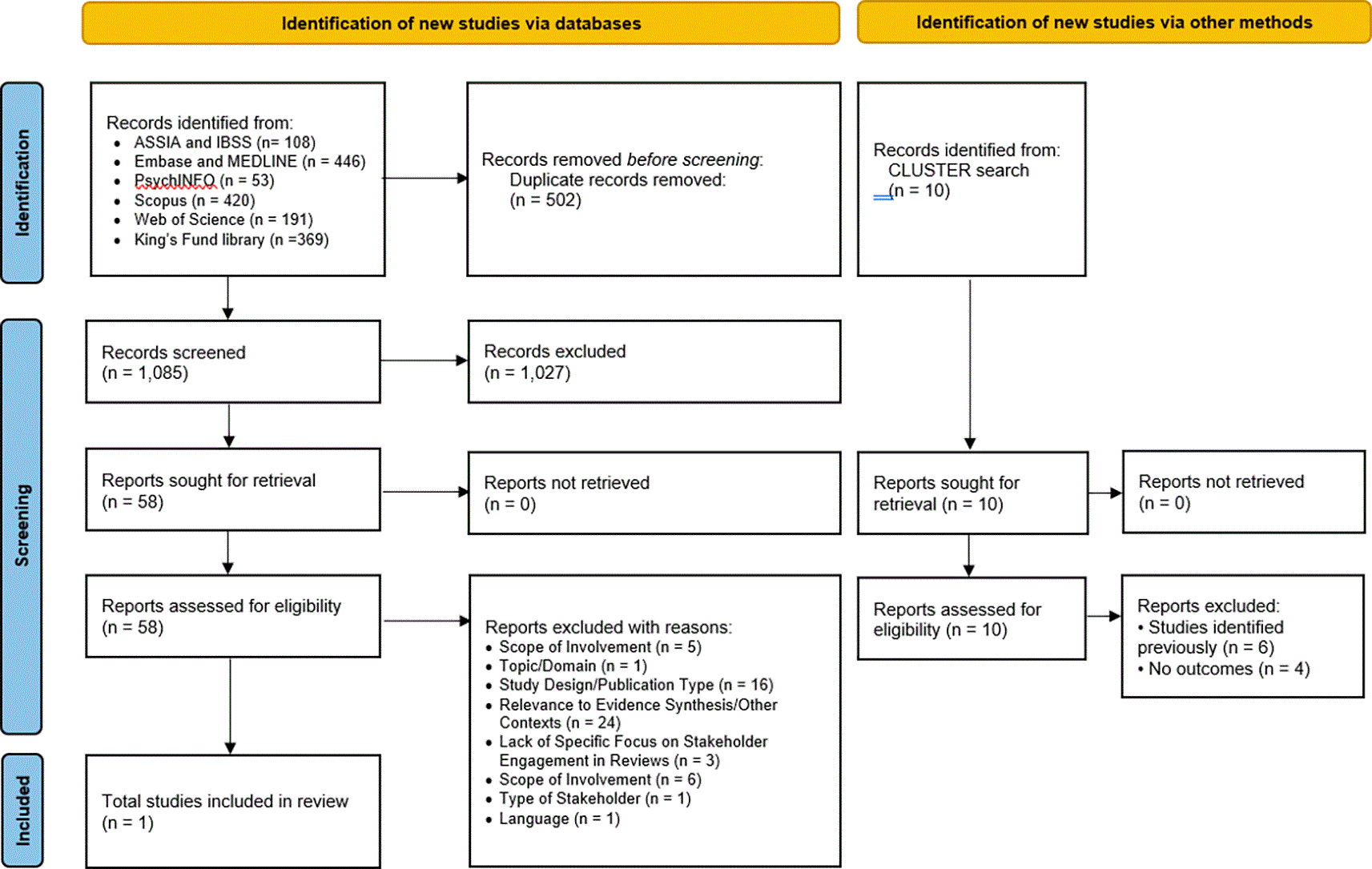
Subsequently, CLUSTER searching11 originating from one key included study,14 using the full-text search capabilities of Google Scholar, scite and LitSense, identified 10 potentially relevant references; six had already been identified from the database searches but four were additional yields.
Studies excluded at full text screening and reasons for exclusion are available from https://doi.org/10.15131/shef.data.31492525. Most commonly, records were excluded because the involvement described was not related to evidence synthesis. The second most frequent reason centred on study design limitations, including review articles where references were simply checked, documents that did not constitute actual studies, study protocols rather than completed research, and publication errata. Additionally, a notable proportion of records were excluded because they were not related to optimising stakeholder involvement or perspectives, while a smaller number failed to examine stakeholder engagement specifically within reviews.
Less common exclusions included non-health-related content, studies focused on patient and public involvement (stakeholders by experience) rather than stakeholders by role, and materials in non-eligible languages. These exclusions highlight the specialised nature of the review’s focus, suggesting that literature on stakeholder engagement in evidence synthesis represents a relatively narrow subset of the broader stakeholder involvement literature.
The one study we included examined key factors for stakeholder engagement based on the experiences of stakeholder engagement in three Cochrane editorial groups using case study methods, with no detail on the methods, aside from mentioning the use of the ACTIVE framework to describe the elements of stakeholder involvement, and identification/reporting of lessons learned, which incorporate barriers and facilitators14 ( Table 2). Between 11 and > 300 stakeholders were involved in each review activity, although numbers of stakeholders were not reported for some activities in two case studies. Types of stakeholders included policymakers, health decision-makers, health professionals, consumers patients, caregivers, their representatives, and the public), guideline developers, and research funders.
| Study | Study design | Methods | Sample | Stakeholder types | Stakeholder involvement definition | Stakeholder involvement |
|---|---|---|---|---|---|---|
| Merner 202114 | Case studies (N = 4) | ACTIVE framework used to describe key elements of stakeholder involvement in each project, and authors presented lessons from collective experiences on four major research activities in systematic review prioritisation, production and dissemination. No particular methods stated. Authors state the lessons cover barriers and facilitators. | Case Study 1: Cochrane review priority setting
4 stages:
18-member stakeholder panel, reflecting key end users of the review. Case study 3: Cochrane reviews guideline process Guideline development group consisting of key stakeholder representatives and people with relevant specialist knowledge (n = NR). Survey participants with topic expertise (n > 300). Case study 4: Translating Cochrane Review findings Members of Cochrane Public Health Europe (CPHE) and public health decision-makers (n = NR). | Policymakers, health decision-makers, health professionals, consumers (meaning patients, caregivers, their representatives, and the public), guideline developers, and research funders | “Any role or contribution of stakeholders toward the development of a review protocol, completion of any of the stages of a systematic review, or dissemination of the findings of a review” (p.1210) | Case Study 1: Cochrane review priority setting
Stakeholder panel provided guidance throughout a qualitative evidence synthesis, predominantly in terms of decision-making relating to review procedures (‘controlling’ level of input). Case study 3: Cochrane reviews guideline process The guideline development group of stakeholders collaborated with the WHO and researchers to design the reviews and select the interventions to inform the guideline. Views of those in related fields were elicited in a survey and fed into prioritisation of questions and outcome measures, for the final protocols. Case study 4: Translating Cochrane Review findings Decision-makers collaborated with CPHE to develop a German language summary for Cochrane Reviews, including feedback that influenced the final summary format. |
Rigour
The included study used a case study method and was written up as an editorial with the aim of sharing experiences of stakeholder involvement. This necessitated a focus on process description and lessons learned, with little methodological detail. No information was reported on how stakeholders and researchers were recruited and selected, nor on how researchers identified ‘lessons learned’. Little contextual information is reported, which makes judging applicability to other contexts challenging (e.g., there is little detail on country reported, and yet public health practice can vary considerably between countries).
Relevance
We only identified one paper that was directly related to the topic area, as judged by the eligibility criteria.14
Richness
For conceptual richness, we rated the data from the included study as having very little transformation and interpretation, with little or no attempt to explain patterns. For contextual thickness, we rated the data as having mostly thin contextual description.
In the included study,14 the main findings of relevance related to key factors for successful stakeholder involvement, which included: (1) addressing power dynamics; (2) providing financial support to the process; (3) undertaking and providing training; (4) maintaining flexible engagement methods; and (5) allocating sufficient time for meaningful engagement. These are examined in Table 3 below.
| Addressing power dynamics |
| The researchers used a few techniques to reduce power differences between stakeholder groups. These included deliberately engineering the workshop participant constitution such that at least half of participants were consumers and hiring an independent facilitator skilled in seeking consumers’ opinions. |
| Providing financial support |
| The researchers obtained financial support through the funder and additional small grants to support the process. This included paying for a professional workshop facilitator, food and participants’ involvement, employing two part-time researchers, and co-producing a professional report. |
| Undertaking and providing training |
| The researchers identified the need to undertake training in working with stakeholders, including varying involvement levels and decision-making methods. Where stakeholders were involved in reviewing, researchers identified a need to train stakeholders in particular review methods (e.g., a specialised training package for study selection, developed within Case Study 2).14 |
| Maintaining flexible engagement |
| Despite advance planning of involvement and decision-making methods, once stakeholder engagement had begun, researchers negotiated with stakeholders to determine the nature of involvement rather than strictly following plans, noting “Listening to stakeholder needs is key to engagement”14 (Case Study 2, p.1212). |
| Allocating sufficient time |
| Researchers learned that the time originally allocated was insufficient: We also learned that we needed more time than originally anticipated to involve stakeholders in different tasks. For example, after publication of the protocol we realized that several of the stakeholders were still unsure of the process for conducting a Cochrane Review … Next time, we would factor in more time and resources to help stakeholders engage in different review tasks.14 (Case Study 2, p.1212) Researchers amended the timeline for guideline processes to incorporate the different stages of stakeholder feedback, which ensured sufficient time for researchers to consider and incorporate stakeholder into the development of the reviews. Time for translation and dissemination involving stakeholders was seen as a worthwhile investment to improve stakeholder access to review findings, with the goal of translating to policy. |
Despite including some data relevant to our review question, the findings of the included study privilege the researcher perspective. It is noteworthy that we did not identify any research specifically designed to explore the benefits and/or challenges of engagement in public health evidence synthesis from the perspectives of the stakeholders.
Studies of stakeholder involvement in evidence synthesis are more plentiful, although still scarce when compared with the perspectives of principal investigators/providers or patients and the public (see Table 4). In qualitative research by the Agency for Healthcare Research and Quality (AHRQ) Effective Health Care (EHC) Program,15 a wide range of stakeholders reported developing “a sense of investment in the process and findings, as opposed to feeling that the results were simply 'announced' to them at the end”.16 As with findings from our own review, time was a key consideration for systematic reviewers and stakeholders alike.16 Additionally, review teams should be mindful of the stress and pressure that stakeholders may feel, including pressure to contribute unique insights or serve as representative voices for large populations.16 However, it is noteworthy that Cottrell’s study specifically excluded any ‘personal benefits’ for stakeholders as outside the scope of their inquiry.
| Personal | Professional | Organisational |
|---|---|---|
| Benefits | ||
| Feeling included18 Given a voice19 Feeling opinions are valued18 Ability to influence19 Potential impact on policy20 Sense of investment in process and findings16 Greater understanding of others17 Development of new perspectives17 Training14 Preferential access to information16,19 | ||
| Personal growth17 | Personal growth17 | |
| Challenges | ||
| Competing responsibilities16 Pressure to contribute16 | ||
| Time for participation14,16 | Power dynamics14 | Time for participation14,16 |
| Time for training14 | Time for training14 | |
| Work schedules14 | Work schedules14 | |
| Financial support14 | ||
Perspectives of stakeholders categorised by their professional roles or knowledge contributions remain particularly underexplored. Sharma and Bansal offer insights on this dimension, identifying benefits in three key areas for managers operating as research partners in systematic reviews: changes to self, understanding others, and developing new perspectives.17 Managers reported gaining knowledge on topics, drawing personal satisfaction, experiencing personal growth, and having their assumptions challenged. They valued seeing the topics and their own work in a different light through engagement with researchers. Furthermore, both researchers and managers in Sharma and Bansal’s study developed deeper insights regarding differences in perspectives; managers appreciated hearing multiple evolving opinions throughout projects and systematic research processes, whereas researchers developed nuanced understandings of managers.17
Haddaway et al. proposed a framework for stakeholder engagement during systematic reviews in environmental management that offers useful ways to conceptualise stakeholder engagement success.18 Their taxonomy includes three key elements: stakeholders feeling included; stakeholders feeling their opinions are valued; and stakeholders supporting the review. This framework aligns with Lemke et al.’s (2024) three related categories for procedural justice in stakeholder identification: inclusion (who is given a voice); influence (to what extent participation affects outcomes); and information (availability of materials and transparency throughout the process).19
Findings from our included study,14 though privileging the researcher perspective, identified key factors for successful stakeholder involvement that relate to these frameworks. Addressing power dynamics through careful workshop constitution and facilitation, providing financial support, undertaking appropriate training, maintaining flexible engagement methods, and allocating sufficient time all contributed to creating conditions where stakeholders could feel included, valued, and supportive of the review process.
Kuhn et al. contributed a useful process diagram for involvement, highlighting the systematic nature of effective stakeholder engagement in marine ecosystem management that may have broader applications to public health contexts.20
Despite these insights, it remains noteworthy that we did not identify any research specifically designed to explore the benefits and challenges of engagement in public health evidence synthesis from the perspectives of the stakeholders themselves. This represents a significant gap in the literature that future research should address, particularly as stakeholder engagement becomes increasingly recognised as an important component of evidence synthesis methodology.
However, we found ourselves looking sideways at the proximal field of environmental science, which is considerably more advanced in documenting stakeholder perspectives. Environmental science has developed robust frameworks for stakeholder engagement that acknowledge the complex socio-political contexts in which environmental decisions are made. Adherents have pioneered approaches that recognise stakeholders not merely as data sources but as partners with legitimate interests in both process and outcomes.18 This corresponds with a shift from ‘tokenistic’ to ‘empowering’ participation, where stakeholders’ knowledge contributions are valued on their own terms rather than being subordinated to scientific expertise.21
The environmental science literature offers valuable insights for public health evidence synthesis. First, environmental researchers have extensively documented how stakeholder engagement enhances the legitimacy of evidence by incorporating diverse forms of knowledge and expertise.22 This recognition that legitimacy stems not only from methodological rigor but also from inclusive processes could strengthen public health evidence synthesis, particularly when addressing complex social determinants of health. Second, environmental science has developed sophisticated approaches to managing stakeholder conflicts and power differentials,23 acknowledging that stakeholders bring competing values and interests to the table. These approaches could inform nuanced stakeholder engagement strategies in public health evidence synthesis.
The environmental science literature also highlights the importance of reflexivity in stakeholder processes, arguing that researchers should critically examine how their engagement practices constitute particular types of ‘publics’ and ‘stakeholders’, rather than assuming categories are pre-given.24 This reflexivity is largely absent in public health evidence synthesis, where stakeholders are often engaged according to predetermined professional categories without consideration of how these categorisations might influence the knowledge produced. Adopting this reflexive stance could help public health researchers develop equitable engagement practices that recognise stakeholders as complex actors with multiple identities and commitments.
The contrast between environmental science and public health approaches to stakeholder engagement reflects deeper epistemological differences. Environmental science has been influenced by constructivist and post-normal science perspectives that emphasise the value-laden nature of knowledge production.25 These perspectives have led to greater attention to the benefits stakeholders derive from engagement and to the democratic aspects of knowledge co-production. Public health evidence synthesis, despite its commitment to addressing health inequities, has prioritised methodological considerations over democratic ones. This explains, in part, why the perspectives of stakeholders by role remain under-explored in public health evidence synthesis.
Learning from environmental science approaches would require public health evidence synthesis to embrace a more symmetrical relationship between researchers and stakeholders; one that acknowledges both groups as knowledge producers with legitimate insights and interests. This would necessitate attention to the ‘social life’ of evidence26 – the ways in which evidence is shaped by and shapes social relationships. Such approaches would require public health researchers to move beyond seeing stakeholder engagement primarily as a way to enhance the quality or relevance of evidence, and instead to recognise engagement as an inherently political process with implications for whose knowledge counts and whose interests are served.
In our experience as researchers involved in evidence synthesis, it is relatively unusual to encounter topics with such a stark absence of directly relevant evidence. This was a particularly surprising finding given that it was the specific perspective as evidenced by full-text examination, not the overall topic, that remains relatively underexplored. However, evidence synthesis is equally about seeking potential answers and, by casting our attention to the adjacent field of environmental science, we have unearthed some potentially valuable insights. Collectively, these might be useful in presenting benefits of engagement to stakeholders by role or by function and in suggesting potential routes to overcoming possible obstacles to such involvement.
In the interim we have been able to deliver against our subsidiary objective through complementary work, to be published elsewhere, that has interviewed professional and non-public stakeholders (stakeholders by role) associated with our Public Health Review Team outputs over the course of our NIHR contract 2019–2025.
Provide sufficient details of any financial or non-financial competing interests to enable users to assess whether your comments might lead a reasonable person to question your impartiality. Consider the following examples, but note that this is not an exhaustive list:
Sign up for content alerts and receive a weekly or monthly email with all newly published articles
Register with NIHR Open Research
Already registered? Sign in
If you are a previous or current NIHR award holder, sign up for information about developments, publishing and publications from NIHR Open Research.
We'll keep you updated on any major new updates to NIHR Open Research
The email address should be the one you originally registered with F1000.
You registered with F1000 via Google, so we cannot reset your password.
To sign in, please click here.
If you still need help with your Google account password, please click here.
You registered with F1000 via Facebook, so we cannot reset your password.
To sign in, please click here.
If you still need help with your Facebook account password, please click here.
If your email address is registered with us, we will email you instructions to reset your password.
If you think you should have received this email but it has not arrived, please check your spam filters and/or contact for further assistance.

Comments on this article Comments (0)