Keywords
,Falls, long lie, ambulance services, mixed methods, older adults

,Falls, long lie, ambulance services, mixed methods, older adults
Falls and fall-related injuries are a major global public health problem, contributing significantly to mortality and morbidity, particularly among older adults. The risk of falling increases with age, with 30% of people over 65 and 50% of those over 80 experiencing at least one fall annually.1–3 Falls are a leading cause of hip fractures, hospitalisations, and long-term care admissions, with associated costs to the NHS estimated at £2.3 billion per year.4,5 In Yorkshire Ambulance Service NHS Trust (YAS), falls account for 8% of 999 calls, with over 50,000 on-scene responses annually.6 Emergency admissions for falls in England have risen by 13% over the past decade, highlighting the growing burden of this issue.7,8 Despite significant investment in falls prevention strategies, there is limited evidence on the optimal management of people after a fall, particularly those who remain on the floor for an extended period. This situation is commonly defined in clinical literature as a “long lie”, generally recognised as a person being unable to get up and remaining on the floor for over an hour. Prolonged time on the ground is associated with severe complications, including hypothermia, pressure injuries, dehydration, and psychological trauma, yet the evidence base to quantify harms and support the subsequent management of these cases remains weak.9–11
Current ambulance call-handler advice for individuals who have fallen is to avoid giving oral fluids until assessment, due to the risk of requiring immediate surgery for a suspected fractured neck of femur. However, this advice may be inappropriate for the majority of people who do not require surgery, potentially leading to dehydration and acute kidney injury.12–14 While some organisations recommend sips of water, guidance is inconsistent across the UK. The focus of existing falls management guidelines is on prevention and inpatient falls, with little attention given to falls that occur outside hospital settings.15–17 This gap is particularly concerning given the increasing pressure on ambulance services, with response times for low-priority calls (Category 3 and 4) rising significantly in recent years.18 Community-based falls response services have been introduced to address delays, but the evidence supporting these interventions is limited.19
Published evidence on the impact of long lies is sparse and outdated. A systematic review by Blackburn et al.9 highlighted the lack of understanding of the physical, clinical, and psychological consequences of long lies. Only two cohort studies have explored long-term outcomes, with Fleming et al.11 finding that people experiencing a long lie were more likely to suffer serious injury, hospital admission, or move into long-term care. Scott et al.20 noted that individuals with a long lie were more likely to re-contact ambulance services within six months. Kubitza et al.10 identified a paucity of research on treatment options for long lies, with much of the existing evidence dating back to the 1980s and 1990s. While some studies suggest an association between long lies and increased mortality, the evidence is inconclusive due to small sample sizes and varying definitions of long lies.21,22 Psychological impacts, such as reduced activity from a fear of future fall, are also poorly understood, despite their potential to exacerbate morbidity and reduce quality of life, alongside increased social isolation.23–25
The lack of robust evidence on the consequences of long lies limits the development of evidence-based guidance for managing these cases. This study aims to address this gap by exploring the characteristics, outcomes, and potential interventions for people who experience a long lie after a fall. By integrating quantitative and qualitative data, the study will provide new insights into the scale, impact, and care trajectory of long lies, informing the development of interventions to mitigate their harmful effects and improve outcomes for individuals.
This study seeks to include patient and public involvement (PPI) at multiple stages of the research process, beginning in the early phases of study development. Two public contributors were included as co-applicants at the grant application stage and contributed to development of the study protocol, including the lay summary and dissemination strategy. The research question(s) were informed by lived experience perspectives, with priorities, experiences, and preferences shared during protocol development.
Involvement will continue throughout the study. A PPI representative is a member of the study oversight steering group, which will meet four times during the study to provide ongoing advice and input. In addition, a PPI group, alongside the public co-applicants, will contribute to the design, conduct, and interpretation of the study through regular meetings and discussion. Guidance will be provided on recruitment and sampling strategies, and research materials will be reviewed to support inclusivity and accessibility.
Patients and the public will also be involved in agreeing plans for dissemination and will co-produce materials to share findings with participants and relevant communities. With permission, involvement will be acknowledged, and those meeting ICJME authorship criteria will be invited to be co-authors.
Study design
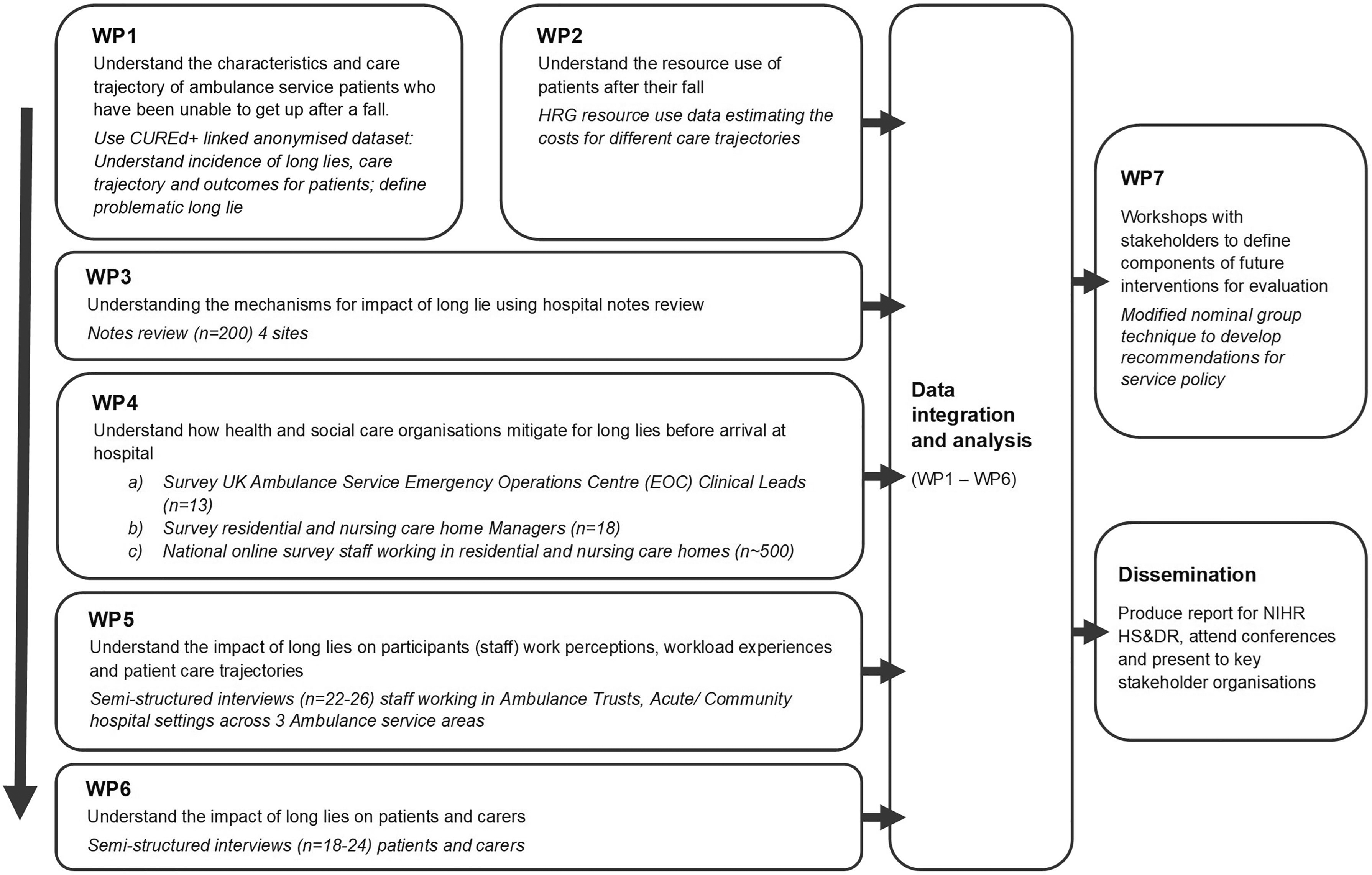
We will conduct a comprehensive mixed-methods study, structured around seven interconnected work packages (WPs). We report this protocol in line with the GRAMMS guideline, which is designed to enhance the quality of mixed-methods studies in health services research.26
The primary purpose of using a mixed-methods approach is to achieve a deeper, triangulated understanding of the clinical, social, and economic impact of long lies after a fall. Quantitative data will establish the scale, trajectory, and costs of the problem, providing statistical evidence of harm. This evidence is then integrated with qualitative data, which provides essential context, lived experience, and professional perspectives on current care pathways and decision-making. This synthesis is crucial for developing practical and acceptable guidance that is grounded in both statistical and human reality.
The study WPs follow a clear priority and sequence, displayed in Figure 1, where initial quantitative work informs subsequent qualitative exploration:
1. Quantitative data analysis (WP1 & 2): To establish the national scope, costs, and identify the ‘harmful long lie’ threshold.
2. Clinical/service investigation (WP3, 4 & 5): To investigate the specific clinical consequences and current service delivery protocols.
3. Qualitative exploration (WP6): To explore the personal impact on individuals and their carers.
4. Integration and co-development (WP7): National workshops with key stakeholders to integrate all quantitative and qualitative findings and co-develop clear, practical guidance and policy recommendations to improve immediate care.
The study was prospectively registered in the UK’s Trial Registry, ISRCTN (International Standard Randomised Controlled Trial Number), under the registration number ISRCTN17206336. The date of registration was 10th February 2025. The study start date is April 2024 until June 2026.
The full protocol is available on the NIHR website (https://fundingawards.nihr.ac.uk/award/NIHR158676). A detailed statistical analysis plan will be developed and stored according to the University of Sheffield standard operating procedures and guidance documents within the study master file and are available upon request.
The study received ethical approval for the different WPs as follows:-
• WP1 and WP2. School of Medicine and Population Health Research Ethics Committee, University of Sheffield on 11/03/2025 (ref: 066991)
• WP3 and WP6. North East - Newcastle & North Tyneside 2 Research Ethics Committee on 28/02/2025 (Ref: 25/NE/0005); Confidential Advisory Group (CAG) on 06/06/2025 (ref: 25/CAG/0063); HRA & HCRW on 16/07/2025 (Ref: 336914).
• WP4 and WP5. School of Medicine and Population Health Research Ethics Committee, University of Sheffield on 16/08/2024 (Ref: 061049); HRA & HCRW on 28/03/2025 (Ref: 350537).
Any amendments to the protocol will be submitted to the NIHR by email for approval. If an amendment is substantial, then we will also update the Clinical Trials Registry with new information.
To gain a comprehensive understanding of the scale, impact, and care trajectory for patients who experience a long lie after a fall, and to identify potential interventions to mitigate the harmful effects of long lies. Specifically, we seek to:
1. Characterise the frequency, duration, mortality, outcomes and healthcare resource use of long lies among ambulance service patients.
2. Explore the factors associated with long lies to understand who is most likely to experience them.
3. Explore the impact of long lies on care trajectories and health outcomes.
4. Identify current practices and interventions used by health and social care organisations to manage long lies.
5. Understand the perspectives of key stakeholders, individuals who have experienced a long lie, and carers on the impact of long lies.
6. Co-produce evidence-based guidance to improve the management of long lies and reduce their harmful consequences.
While the study is primarily exploratory and does not formally test hypotheses, it is guided by the following assumptions:
Frequency and Impact of Long Lies: Long lies are a common occurrence among older adults who fall, with a significant proportion of fallers experiencing a long lie (>1 hour on the ground). These are likely to be associated with worse health outcomes, including higher rates of hospital admission, longer hospital stays, and increased mortality, compared to falls without a long lie.
Mechanisms of Harm: The length of time spent on the ground after a fall is a key determinant of harm, with longer lie times leading to greater risk of complications such as hypothermia, pressure injuries, dehydration, and psychological trauma. The harm caused by long lies is not solely due to the initial fall injury but is exacerbated by delayed intervention and prolonged immobility.
Current Practices and Interventions: There is significant variation in how health and social care organisations manage long lies, with inconsistent advice and practices across different settings (e.g., ambulance services, care homes). Current guidance on managing long lies is inadequate, particularly in relation to fluid intake, movement, and communication with individuals who have experienced a long lie and their carers.
Individual and Carer Perspectives: People who experience long lies and their carers report significant psychological and social impacts, including fear of falling, loss of confidence, reduced quality of life, and social isolation. Improved advice and support for managing long lies could reduce the psychological and physical harm experienced by individuals and carers.
Interventions to Mitigate Harm: Evidence-based interventions, such as revised triage protocols, community-based falls response services, and improved communication strategies, can reduce the harmful effects of long lies. Co-produced guidance, developed in collaboration with stakeholders, individuals with lived experience of a long lie, and carers, will be more effective and feasible to implement than top-down recommendations.
Inclusion and exclusion criteria
Table 1 outlines the inclusion and exclusion criteria for the study.
Sampling and recruitment strategy
WP1 and WP2 (Routine data analysis): These WPs utilise the CUREd+ database,27 a linked routine dataset that includes YAS, emergency department (ED), hospital admissions, mental health and death registry data. The study focuses on approximately 115,000 YAS calls (estimated 16,000 involving a documented long lie) covering the period from April 2019 to March 2023, ensuring a minimum of 12 months of follow-up for all cases.
WP3 (Patient case note review): This WP will prospectively identify a sample of 200 patients from ambulance records, with 50 patients recruited at each of the four participating hospitals with an ED in the Yorkshire and Humber region. Hospitals are selected based on an expression of interest and the highest incidence of long lies. Patients will be sampled consecutively to ensure a mix of short and long lies, and they will be recruited by a member of their usual care team within two weeks of hospital attendance.
WP4 (Professional interviews and survey): This WP has two interview components followed by a large-scale national survey. WP4a will recruit 13 NHS 999 Emergency Operations Centre ambulance service clinical leads from across the UK via direct email. WP4b will recruit approximately 18 residential and care home managers in the UK, contacted via direct email, NIHR ENRICH (Y&H), and networks known to the National Care Forum (NCF). All interview participants will receive a shopping voucher and be offered a CPD certificate for completing the interviews. Interviews will be followed by an online survey (WP4c), recruiting up to 500 residential and care home workers, including home care assistants across the UK. Dissemination will be supported by NIHR ENRICH, NCF, and other organisations to ensure coverage of not-for-profit care providers and home care associations. Survey participants will be entered into a draw to win one of four shopping vouchers.
WP5 (Professional interviews): This WP will recruit 22–26 key stakeholders by initially approaching the National Ambulance Research Group to identify three diverse regions in the UK (including consideration of rurality). NHS Trusts in the participating ambulance regions will be invited via the Regional Research Delivery Networks (RDNs), alongside recruitment via ENRICH, NCF, and local organisations. Key stakeholders will include professionals from the ambulance service, Urgent Community Response (UCR) teams, Frailty or falls services (both in community and acute settings), ED, and other relevant roles. Interested individuals will be asked to contact the research team directly to ensure anonymity from their organisation. All participants will receive a shopping voucher and be offered a CPD certificate.
WP6 (Individual and carer Interviews): This WP will recruit up to 24 individuals with lived experience of a long lie and carers. Recruitment will initially target WP3 participants who have expressed an interest in further involvement. A range of existing networks and registries (e.g., Care75+ cohort, Patient Experience Network) will be used to expand recruitment. Sampling will be purposive, with specific efforts made to include traditionally minoritized groups, supported by networks such as the Ethnic Minority Research Inclusion (EMRI Network). Carers may participate without the individual they support. All participants will receive a shopping voucher for each interview undertaken.
WP7 (Stakeholder workshops): This WP will recruit up to 40–60 stakeholders to take part in four workshops (three online and one in-person) to co-develop guidance for managing long lies. Participants will be a combination of those who have already participated and new stakeholders, recruited by approaching organisations and networks already in contact with the study (e.g., NIHR ENRICH, NCF, RDNs). This ensures representation from acute and community healthcare professionals, social care, and individuals with lived experience of a long lie and their carers. All participants will receive a shopping voucher and be offered a CPD certificate (where applicable).
The consent process for WP3 will be managed by a member of the patient’s usual care team at the hospital site within two weeks of initial hospital attendance. This team member will confirm eligibility, assesses the patient’s mental capacity, and manage the consent process. Capacity for consent will involve the following stages:-
1. Patient with Capacity: The care team member will provide verbal and written study information and seek informed consent (written or electronic) to access patient notes from the initial ambulance contact up to 90 days after the fall.
2. Temporary Lack of Capacity: If the patient temporarily lacks capacity, the care team member will periodically check the patient until capacity returns, at which point the standard consent procedure is followed.
3. Sustained Lack of Capacity: If the patient lacks capacity and it is not expected to return quickly, the care team member will seek consent from a family member and/or legal representative. If no representative is available, approval will be sought from a nominated or professional consultee in the patient’s medical care team. The study team has Confidentiality Advisory Group (CAG) approval to access medical records where consent cannot be obtained (either from the patient or a representative/consultee) due to the patient being seriously ill, having no representative, or dying during the care episode.
During the consent process, patients will also be informed about WP6 with those interested asked to complete an Expression of Interest (EOI) form. This cohort of patients will be followed up by the study team based at the UOS using the preferred contact method (phone, email, postal). Individuals who contact the study team directly regarding participation in an interview or workshop (WP4–7) will be followed up using the same contact method unless otherwise informed. The study team will then send a study invite including the consent form and information sheet. Dates and methods of interviews will be agreed in conjunction with individuals.
For all WPs where applicable, the information sheet and consent form will be provided in different accessible formats (large text, easy to read) and hospital translators (including British Sign Language interpreters) will be utilised to avoid exclusion of patients due to language barriers. If a patient is discharged before the clinical member of the research team can speak to them in the hospital, up to two attempts will be made to contact the patient by telephone (WP3). Similarly, non-responding individuals that registered an interest to participate in WP4-7, will be followed up a maximum of two times. For all interviews and workshops, consent will be re-confirmed verbally at the start. The interviews and workshops will be recorded using in-built applications (if online) or encrypted digital recording devices, with recordings deleted once transcribed and detailed notes are complete.
Electronic consent will be obtained at the start of the survey for WP4c. Potential participants will be asked to confirm that they have read the information sheet and provide consent prior to proceeding with the online survey. The survey will remain open for up to two months.
Individuals who withdraw will be asked to choose between two options:
a) allowing data collected up to the date of withdrawal to be used, or
b) withdrawing from future data collection and having all data collected to date removed.
For individuals with lived experience of a long lie and carers, withdrawal is possible at any time up to 90 days after the initial fall, after which the data will be aggregated and cannot be removed. For participants in WP4 and WP5, withdrawal is possible at any time up to anonymisation of transcripts.
WP1 and WP2 (Routine data analysis): Data will be drawn from CUREd+ which includes demographic data, medications, prescriptions, and ambulance electronic patient records. Key variables to be extracted will include time of injury/illness (used as the lie start time), crew arrival time, patient condition upon initial assessment (e.g., hypothermia, suspected fracture, frailty), environmental/geographical factors, and a range of 12-month outcomes (mortality, service use, hospital resource use). WP2 will estimate healthcare resource use and costs by assigning Healthcare Resource Group (HRG)28 unit costs to events (ambulance journeys, ED attendances, admissions, outpatient events).
WP3 (Patient case note review): This will involve a detailed review of hospital notes. Data will be extracted for the 90 days following the fall, including: evidence of injury from the fall (e.g., fractures, surgery), complications from the long lie (e.g., acute kidney injury, pressure injuries), changes in patient care needs (e.g., outpatient appointments, discharge to care homes), and demographic data, including frailty scores and comorbidities.
WP4, WP5, WP6 and WP7 (Interviews and workshops): WP4a and WP4b will involve structured surveys by interview to understand current interventions, local guidance, and practices for managing long lies. WP4c will be an online national survey, developed in Qualtrics (https://www.qualtrics.com), designed to gather broader insights from care home, home care, and social care staff. WP5 will use a single semi-structured interview with key stakeholders who encounter patients following a long lie. WP6 will use two semi-structured interviews with individuals and carers. The first interview will be shortly after the fall and the second within 3–6 months. The topic guide will explore the impact of advice, experiences of long lies/ambulance wait, dignity, confidence, social functioning, and consequences of subsequent care changes. The final WP (WP7) will take the form of workshops which will serve as a consensus mechanism to present findings from WPs 1-6 and co-develop guidance for managing long lies, with separate group discussions for individuals/carers, ambulance services, and hospital staff.
WP1 and WP2 (Routine data analysis): The research data collected and used from the CUREd+ database will be held in the University of Sheffield (UoS) Secure Data Service, which is the RONIN IG-compliant research cloud computing environment. Access is restricted to specific, authorised researchers via UoS computer account username, password, and multi-factor verification, and is subject to additional training and strict confidentiality conditions.
WP3 (Patient case note review): The research data collected in WP3 will be deposited in a restricted access study folder on the NHS and YAS shared network filestore. This will only be accessible to specific researchers with a need to access the data. Online forms will be submitted by each research site for the ambulance, hospital, and community phases of the patient journey; these will only be accessible by NHS staff and stored securely by YAS. Electronic and written consent (including the EOI) will be scanned and stored securely by participating hospital sites. Data is stored according to the NHS and YAS Information Governance Policies. Completed EOI forms will be sent via secure NHS email to the study team at the UOS, where they will be appropriately stored on the UOS shared network filestore.
WP4, WP5, WP6 and WP7 (Interviews and workshops): For qualitative research work packages, confidential information will be stored appropriately on the UOS shared network filestore, along with completed consent forms. Recordings of interviews will be given unique identifying numbers and deleted once transcription has been completed. Data is automatically backed up by the UOS data server and stored according to the Division of Population Health ScHARR Information Governance Policy. All study members will comply with the Data Protection Act 2018 and the individual UOS and YAS Information Security and Data protection policies.
WP1 (Routine Data Analysis): Analysis will involve descriptive statistics to characterise the frequency and duration of long lies, stratified by patient demographics and call characteristics. Regression models (logistic, Poisson, and others) will be used to explore the relationship between the length of lie and key outcomes (e.g., ambulance conveyance, hospital admission, 12-month mortality). The analysis will also explore the impact of environmental, geographical, and seasonal variables on the length of lie. Sensitivity analyses will account for the COVID-19 pandemic. The findings will help refine the definition of a “harmful long lie” and inform future interventions.
WP2 (Economic Analysis): The analysis will use two-part Gamma regression models to estimate the influence of the length of lie on urgent healthcare costs in the 12 months following the fall. The models will include length of lie as both a continuous and dichotomous variable, adjusting for demographic and clinical covariates. The primary outcome will be monthly cost per patient. Sensitivity analyses will explore different date alignments for the index fall event to ensure robustness. The results will provide insights into the economic burden of long lies.
WP3 (Patient case note review): The analysis within this exploratory work package will use descriptive statistics to identify patterns in care trajectories and complications attributable to the long lie. The findings will be used to develop typologies of patient trajectories and example summary cases. The results will help identify mechanisms by which long lies impact care trajectories and inform potential interventions (e.g., revealing that longer hospital stays are due to complications like dehydration or pressure injuries, rather than the initial fall injury).
WP4a, WP4b, WP5, and WP6 (Qualitative Interviews): Interviews from WP4a (clinical leads), WP4b (care home managers), WP5 (key stakeholders), and WP6 (individuals with lived experience of a long lie and carers) will be audio-recorded and transcribed verbatim. All transcripts will be analysed using Framework Analysis to systematically manage, chart, and interpret the data across multiple cases. Analysis for WP4a, WP4b, and WP5 will focus on identifying themes related to current practices, interventions, challenges, and barriers to long lie management across different settings. Analysis for WP6 will specifically explore the psychological and social impact of long lies on patients and carers, including fear of falling, loss of confidence, and changes in care needs. The collated qualitative findings will provide rich contextual insight to inform the development of patient-centred recommendations.
WP4c (Survey): The analysis of the national online survey will employ descriptive statistics (e.g., frequencies and cross-tabulations) to characterise the broader scale of insights from care home and social care staff. The analysis will use the same thematic areas identified during the WP4a and WP4b interviews. This quantitative data will inform the final recommendations for improving long lie management.
WP7 (Stakeholder Workshops): The workshops will use structured consensus methods, specifically process mapping and the Nominal Group Technique, to collaboratively identify practical and feasible interventions. The findings from WPs 1-6 will be presented, synthesized, and integrated into co-produced guidance and infographics for dissemination. The final output will be a set of evidence-based recommendations for reducing the risk of harm from long lies.
The aim of this study is to provide new insights into the scale, impact, and care trajectory of patients who experience long lies after a fall. By integrating quantitative and qualitative data, the study will inform the development of evidence-based interventions to mitigate the harmful effects of long lies. The findings will have implications for ambulance triage systems, falls prevention strategies, and the management of fall-related injuries in older adults.
The study’s strengths primarily stem from its mixed-methods design. This approach integrates multiple stakeholder views and complementary work packages to maximise understanding of the impact of a long lie after a fall and help health and social care professionals identify and reduce potential harms. Furthermore, the use of multiple stakeholder workshops ensures practical guidance and policy relating to the management of long lies after a fall is co-produced and relevant for frontline use. Finally, data analysis utilises linked data across health services and in-depth records, providing a more complete view of long lies than previous research.
Despite these strengths, the study has certain limitations. While some work packages will recruit nationally and seek to be representative of marginalised groups, data-focused work packages will be limited to one ambulance service region, which may affect the generalisability of some quantitative findings. This regional limitation increases the reliance on the national qualitative work to ensure broader relevance. Additionally, some cases in the routine data may not be linkable with follow-up data and/or may not be correctly identified as a long lie, limiting the statistical strength of the conclusions of the initial analysis. This data quality limitation is mitigated by the in-depth review of clinical notes and qualitative data to validate and contextualise the routine data findings.
Dissemination
The dissemination strategy aims to translate the robust findings from the study directly into policy and practice, improving the management and outcomes for individuals experiencing a long lie after a fall. The multi-faceted approach targets academic, clinical, policy, and public stakeholders.
Findings will be published in high-impact, open-access, peer-reviewed journals across disciplines, including emergency medicine, geriatrics, and health service delivery. The study team will present results at national and international conferences, such as the International Conference on Falls and Postural Stability (ICFPS). All generated data will be catalogued and made available through the UOS research data repository, adhering to governance and ethical constraints.
A critical output is the co-produced, evidence-based guidance (WP7) for long lie management, developed with clinical and policy stakeholders, including representatives from Association of Ambulance Chief Executives, the Royal College of Emergency Medicine, Integrated Care Boards, and NHS England. Tailored reports detailing the scale, care trajectory, and resource use will be actively presented to commissioners and leaders in ambulance services, acute hospital trusts, and social care organisations to inform future service design.
Continuous engagement with our PPI group will be maintained throughout the study, especially during guidance co-production (WP7). A concise, plain-English summary of the study’s findings and implications will be developed, hosted on the study website, and disseminated through national patient and carer organisations, social media, and local media.
FS and FB conceived and led the overall design of the study. FS is the study PI, drafted the initial NIHR study protocol and contributed to the drafting of this manuscript. FB is sponsor representative, and contributed to the design and writing of the initial NIHR study protocol and drafting of this manuscript. JL and RP drafted WP1 and WP2, with methodological advice from SM and SD. RP and LW drafted WP3, supported by SM and VN. FS drafted WP4-WP7 with support from FB, LJ, LW, MK and JC. JC drafted the PPI section in collaboration with PPI co-apps SE and PG. SE and PG advised on all aspects of the protocol, in particular the lay summary and dissemination strategy, overseen by JC. MK and CC prepared the first draft of the protocol publication from the NIHR approved protocol and oversaw revisions following feedback. All authors read, provided feedback and approved the final manuscript. FS acts as guarantor for the paper.
Provide sufficient details of any financial or non-financial competing interests to enable users to assess whether your comments might lead a reasonable person to question your impartiality. Consider the following examples, but note that this is not an exhaustive list:
Sign up for content alerts and receive a weekly or monthly email with all newly published articles
Register with NIHR Open Research
Already registered? Sign in
If you are a previous or current NIHR award holder, sign up for information about developments, publishing and publications from NIHR Open Research.
We'll keep you updated on any major new updates to NIHR Open Research
The email address should be the one you originally registered with F1000.
You registered with F1000 via Google, so we cannot reset your password.
To sign in, please click here.
If you still need help with your Google account password, please click here.
You registered with F1000 via Facebook, so we cannot reset your password.
To sign in, please click here.
If you still need help with your Facebook account password, please click here.
If your email address is registered with us, we will email you instructions to reset your password.
If you think you should have received this email but it has not arrived, please check your spam filters and/or contact for further assistance.

Comments on this article Comments (0)