Keywords
Medication Adherence, Blood pressure, Qualitative research, Semi-structured interviews, Digital intervention, Pharmacy setting

Medication Adherence, Blood pressure, Qualitative research, Semi-structured interviews, Digital intervention, Pharmacy setting
Hypertension is an important risk factor for cardiovascular diseases including coronary heart disease and stroke.1 Worldwide, it is the leading global risk factor for cardiovascular mortality and morbidity. Hypertension affects an estimated 1.4 billion people globally, representing approximately 33% of the adult population between the ages of 30 and 79.2
The global burden of hypertension is expected to increase to more than 1.5 billion people by 2030.3 In addition, the clinical management of hypertension accounts for up to £2.1B in healthcare expenditures in England.4 Recent research has shown a decline in the prevalence of hypertension, but there have been limited improvements in the proportion of adults achieving target control.5 Achieving blood pressure control using antihypertensive medications can reduce the burden of cardiovascular risk, thus preventing morbidity and mortality.6 However, the efficacy of blood pressure-lowering medicines is dependent on the patient taking these medicines as directed. This is termed medication adherence and is broadly defined as the extent to which a patient takes their medication as prescribed by their healthcare provider.7
Adherence to blood pressure medicine is suboptimal, with approximately 50% of patients with hypertension not taking their medicines as required.8 A UK meta-analysis to explore adherence to cardiovascular medications and the risk of cardiovascular disease and all-cause mortality in almost 2 million participants reported that 40% did not adhere to medication,9 while further evidence suggests that the proportion of patients in whom hypertension is controlled is between 20-50%.10 Poor adherence to medication is associated with adverse health outcomes and increased mortality among older adults.11 Complex medication regimens, perception of medication effectiveness, poor awareness, lack of support for medication taking, and forgetfulness are known to contribute to medication non-adherence, including antihypertensive therapies.12 Supporting patients to take blood pressure medicines as prescribed is important for the successful self-management of hypertension and for establishing effective blood pressure control.
The availability of smartphone applications (apps) to support medication adherence has significantly increased in recent years. This technology has gained recognition for its role in the self-monitoring of health and the management of chronic diseases.13 In a review of interventions for medication adherence, mobile apps were considered an appropriate and satisfactory method for managing medicines and had the potential to improve adherence.14 Smartphone applications offer a low-cost and potentially scalable method for delivering support for medication adherence. Nevertheless, they vary widely in their appeal, quality, and effectiveness, with many considered to be of low quality, lacking healthcare professional involvement in their development,15 and few have been tested to explore their efficacy in supporting medication adherence.16 In one review of 300 mobile apps for medication management incorporating pill reminders and medication self-management features, the authors concluded that the availability of information on the content source and an evaluation of suitable apps by health professionals was important to help users decide on which app to use.17 Available medication management apps vary in their performance and characteristics; thus, a greater understanding of those features that directly facilitate medication adherence is needed.18
The delivery of digital interventions via mobile apps has the potential to support self-management and improve medication adherence in long-term conditions including hypertension.19–21 A recent review concluded that such interventions could support self-management of chronic conditions such as hypertension and have the potential to enhance communication between patients and their healthcare providers.22 In a study offering a retrospective analysis of a medication management app for hypertension, the results showed that the inclusion of multiple components, such as a medication reminder and a chat function, were effective at improving adherence in patients with chronic conditions.23 Additional functionality, such as the use of prescription refills, is less common, with one review of apps supporting the self-management of medication reporting that less than 10% of the apps identified had a function allowing users to order refills.24
Community pharmacists can play an important role in primary care and support patients in the self-management of hypertension medications.25–27 One systematic review on the use of telehealth and digital technology by community pharmacists found that interventions to improve public health were predominantly telephone-based.28 Pharmacy delivered interventions to improve adherence to hypertension medication, and blood pressure control have shown promise.29,30 However, there remains a paucity of research on the use of digital smartphone apps applied to medication adherence within the community pharmacy setting. A recent systematic analysis of app user perspectives found positive support for app technology, including the ability to customise medication regimens, set up reminders, and monitor medication information.31
Exploring the functionality of medication management apps and their acceptability within community pharmacy settings can help in understanding their practical value and potential for future use. To investigate this, we conducted qualitative interviews with patients living with hypertension and community pharmacy staff involved in a randomised feasibility trial. Conversations explored users’ experiences and perceptions of three different smartphone apps designed to support management and improve adherence to blood-pressure-lowering medications. Our aim was to gain insight into how these apps are used, the attitudes of patients and pharmacy staff, and the acceptability of integrating these digital tools into community pharmacy practices.
This research was delivered with the support of the Cambridge University Hospital Patient and Public Involvement (CUH PPI) panel. Members of the panel reviewed and provided comments on study materials, including the participant information sheet and study consent form. The PPI panel also contributed to the development of the questions on the interview topic guides.
Face-to-face and telephone-based semi-structured interviews were used to explore patient and pharmacy staff views on three smartphone apps (Healthera, BSG Research, and Medisafe) for the self-management of medication tested in the pharmacy setting. This qualitative study was completed as part of a randomized feasibility trial (ISRCTN: 96168767). Interviews explored patient use and experiences as well as pharmacy staff perspectives on the acceptability of the three smartphone apps used in the community pharmacy setting. Consolidated criteria for reporting the qualitative research studies checklist (COREQ) were used.32 See Appendix 2 for further details.
The interview participants were purposively selected for maximum variation from a sample enrolled in a feasibility trial undertaken in eight community pharmacies in East England. Research sites were selected from a list of pharmacies currently using the Healthera app and who were willing to participate in the research. The sites were recruited on a rolling basis from both rural and urban locations. Eligible participants were randomised to one of three trial arms (Healthera App, BSG App, or Medisafe App) and completed the 3-month trial follow-up. Inclusion criteria for recruitment to the trial were: >18 years old, having access to a smartphone, using any type of blood pressure-lowering medication, willing to provide informed consent, and to be approached to participate in a follow-up interview. Participants were selected for interviews for variation across age, gender, and app groups. Pharmacy staff were eligible for the interviews if they were involved in delivering the feasibility trial at a participating pharmacy site. The participants were contacted directly by the researcher (JJ) and invited to participate. Qualitative interviews were conducted until data saturation was reached.
Patients attending a participating pharmacy to collect a prescription for blood pressure medications were recruited at the counter by pharmacy staff. Before the study procedures commenced, the participants were given a study information sheet to read, and written consent was obtained. Demographic information was collected and the participants’ blood pressure was recorded. A member of the pharmacy team randomised the participants to one of the three app groups. Participants were invited to download the app, upload their medication information, and use the app for 12 weeks, after which follow-up measures were collected at another appointment, and blood pressure was recorded.
Healthera33 is a medication management platform consisting of an advanced smartphone-based app connected to a web-based desktop portal, permitting user communication with the pharmacy. BSG Research was a study that developed an app version of the Healthera app, but with a deactivated communication channel. Medisafé34 is a widely used and highly ranked medication management app16 that supports self–reported medication adherence.35 In the feasibility trial, both Heathera ( Figure 1) and BSG Research ( Figure 2) were the intervention apps, and Medisafe was the comparison app ( Figure 3).

Screen 1) App login and setup.
Screen 2) Scan/upload medicine.
Screen 3) Messaging feature.
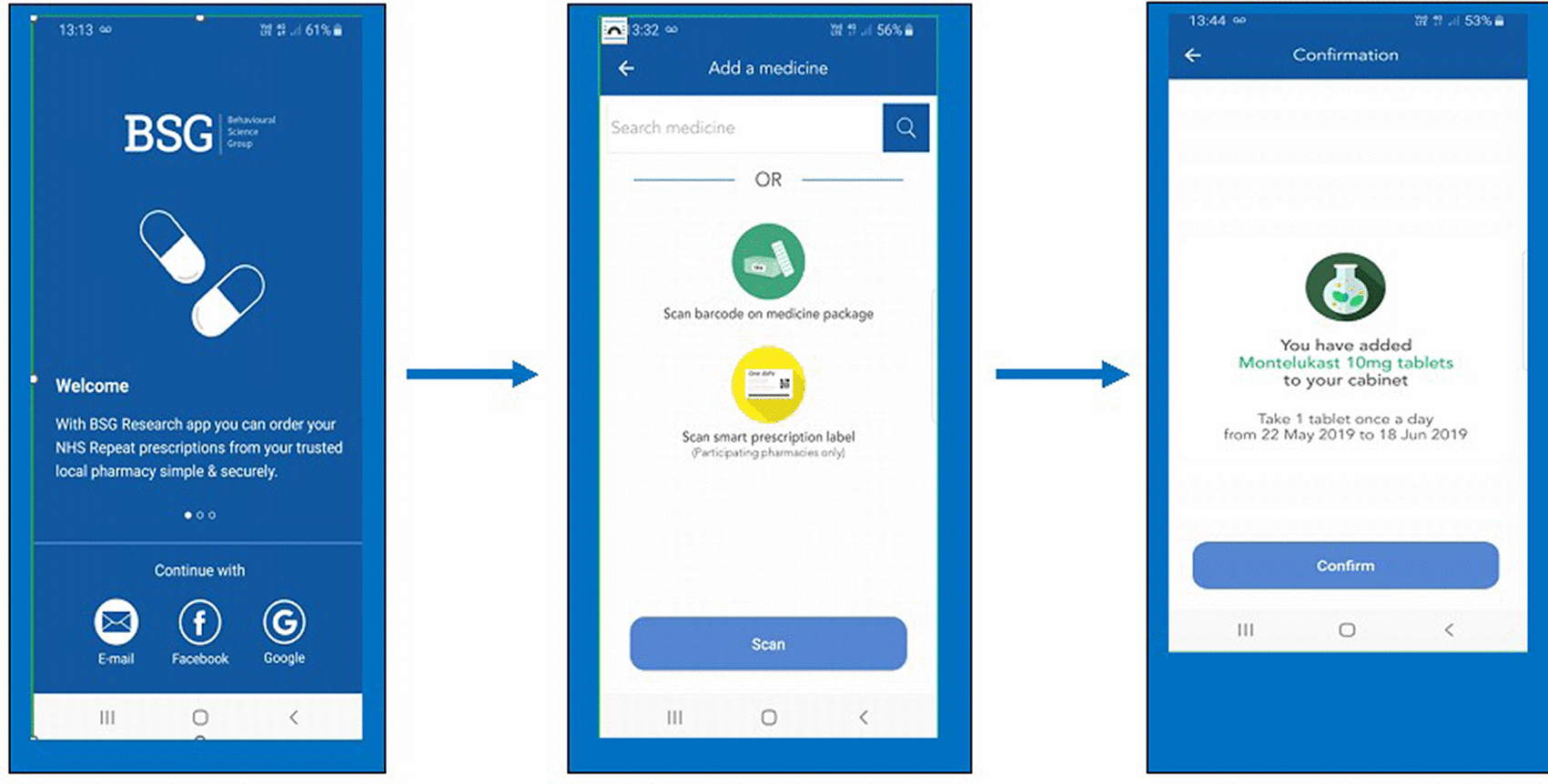
Screen 1) App login and setup.
Screen 2) Search/scan medicine.
Screen 3) Confirm reminder.
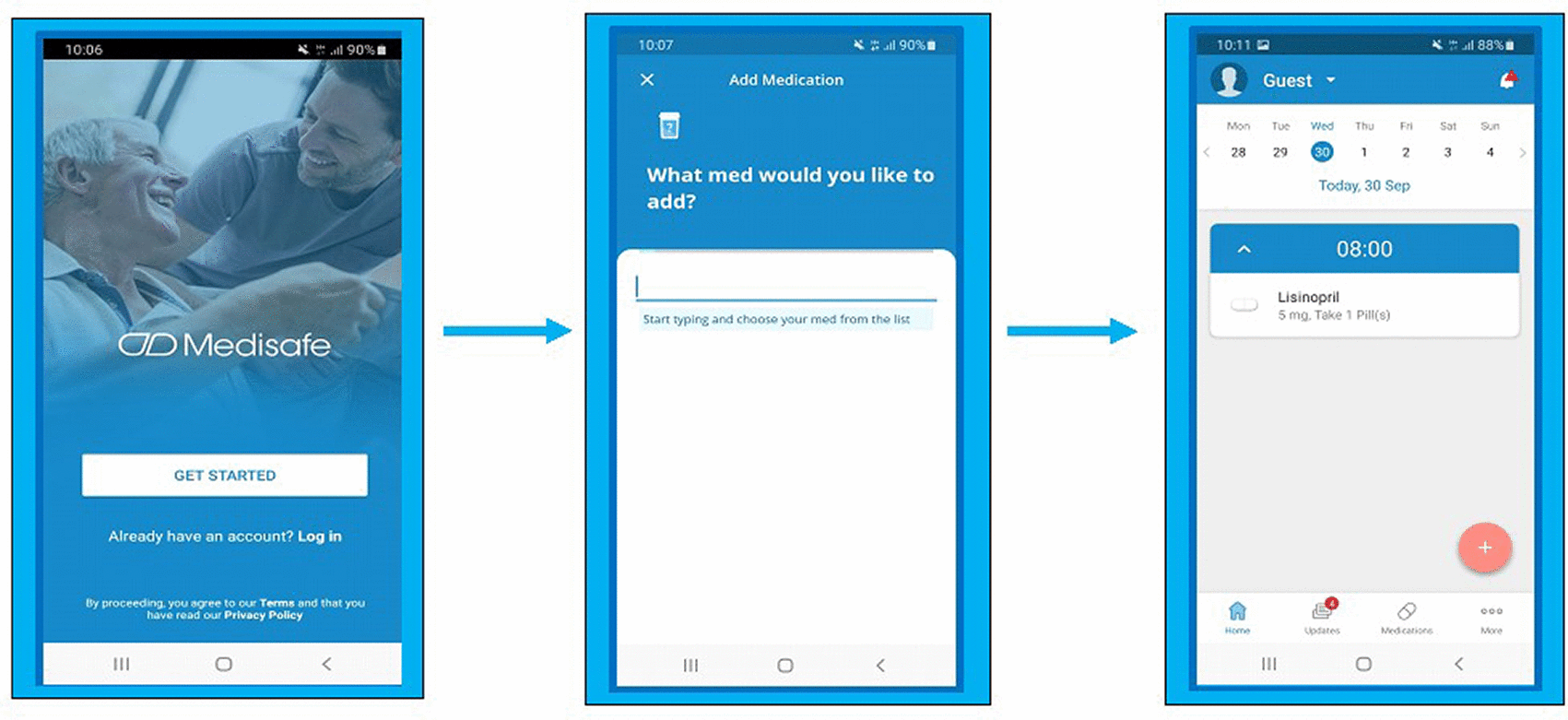
Screen 1) App login.
Screen 2) Add medicine.
Screen 3) Medicine alert active.
All interviews were facilitated by JJ, a primary care health researcher who was not known to the participants and was experienced in qualitative research methods. Interviews were completed in two phases: face-to-face in the patient’s own home or place of work for pharmacy staff and by telephone due to social distancing restrictions. Two topic guides (Appendix 1) were developed to facilitate discussions with patients and pharmacy staff. For patient participants, the topic guide explored the acceptability of the app technology and performance as well as recommendations for app development and future use. For pharmacy staff participants, the topic guide explored attitudes towards the apps and views on using this technology in the pharmacy setting. Topic guide schedules were developed with the aim of understanding views and perspectives on app acceptability by delivering probing questions and prompts in a semi-structured format, based on discussions within the study team and guidance from the Cambridge University Hospital Patient and Public Involvement (CUH PPI) panel. The first two interviews were used to pilot the topic guides, which were then revised accordingly to reflect the emerging ideas. All interviews were audio-recorded, lasted up to 60 min, and were transcribed verbatim by an external professional transcription service. Field notes taken by researcher-supplemented interview recordings.
Data analysis followed a constant comparative approach,36 with concurrent data collection and data analysis. To gain a preliminary understanding of the data, the transcripts were initially read and then re-read. Key points in the data or ‘chunks’ were identified, examined, and individually coded. Following an iterative process, units of data were subsequently compared with previously collected data and analysed. A coding framework was developed, and, as the analysis progressed, the framework was expanded and further refined. Similar themes were combined before the broad categories were formed. The refinement of categories and comparisons between groups of themes continued until the final, overarching key themes emerged from the data.
The first author (JJ) checked the paper transcripts for accuracy against the interview recordings and corrected all errors. The interview transcripts were analysed by JJ. To enhance the validity of the findings and ensure consistency, one-third of the interview transcriptions were double coded by a second member of the research team experienced in qualitative research (JS). Final themes were compared by both team members until agreement was reached, and inconsistencies were resolved through discussion. NVivo version 12 (QSR International) facilitated the analysis of the transcripts and was used to organise, code, and manage the data. Verbatim quotes were presented to reflect participants’ views.
We completed 30 interviews, consisting of 22 patients with hypertension and eight community pharmacy staff members, including four pharmacists, three dispensing technicians, and one counter assistant. The interviews were conducted face-to-face (n=12) and via telephone (n=18). Patients ranging in age from 42 to 77 years were predominantly male (n=14) and exclusively white British, with the majority prescribed one blood pressure medicine (64.2%). Half of the pharmacy staff interviewed were male (n=4, 50%). Three staff members had been practising for five years or less, 1 for to 5-10 years and two for over 15 years. ( Table 1).
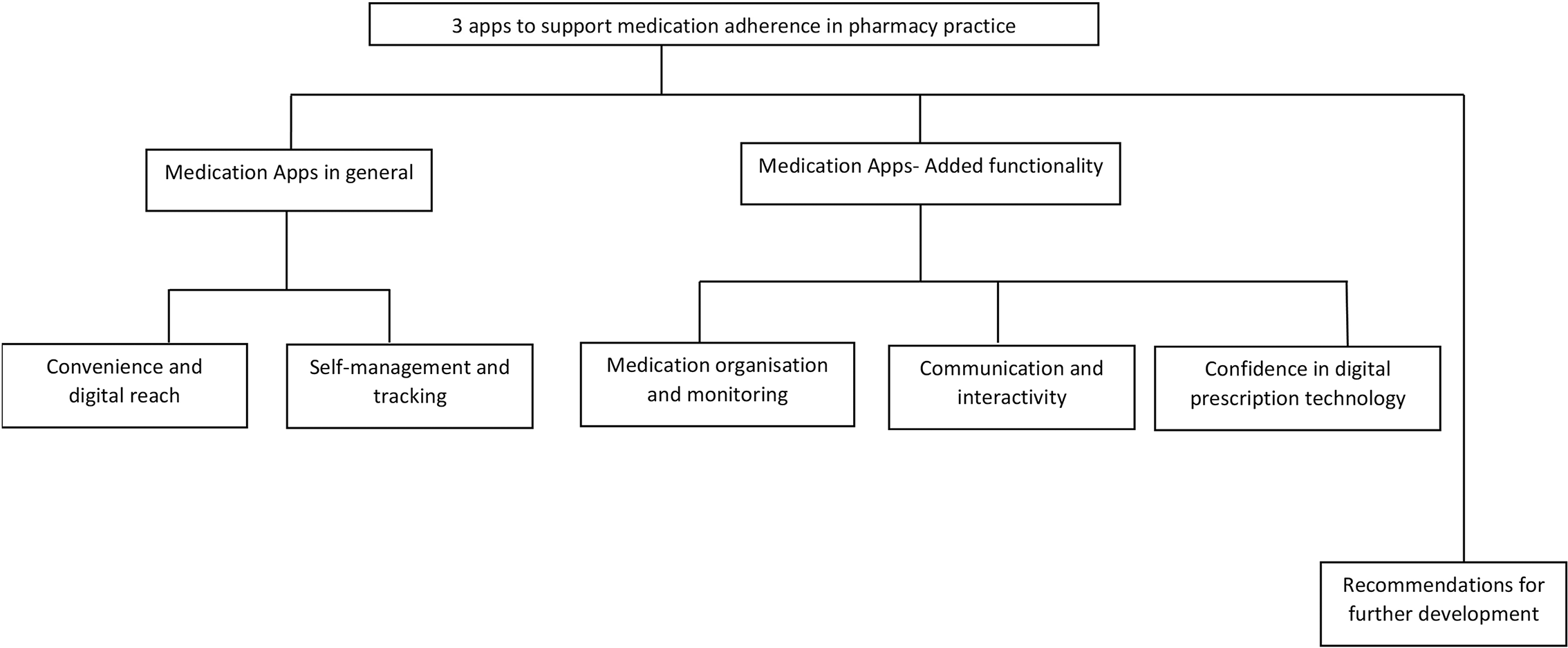
Qualitative analysis identified five overarching themes across two broad categories: two themes were associated with the characteristics of medication apps in General: Convenience and digital reach; Self-management and tracking. Three further themes described medication apps with added functionality: Medication organisation and monitoring; Communication and interactivity; Confidence in digital prescription technology. Recommendations for further development and future use have also been reported. Figure 4 shows the themes presented in the coding tree.
Convenience and digital reach
Overall, participants were supportive of using digital technology to manage their hypertension medication, describing the apps as ‘straightforward,’ ‘uncomplicated’ and ‘easy to use.’ Many participants expressed support for technology and the ability to navigate within the apps, appreciating the convenience of the tools offered for medication management. Several participants welcomed simplicity and highlighted the straightforward functionality of the apps. For others, receiving a digital reminder was considered a step ahead of relying on pill boxes or a spreadsheet to manage medication intake.
The portability of mobile phones and their ease of access combined with the benefit of accessing reminders at any time made the apps especially appealing. Users welcomed the suitability of reminder apps given their availability in everyday life. The reminder notifications fitted their daily routines and helped maintain consistent medication-taking habits, providing timely prompts to take their medicines even outside regular daily schedules.
I think what I like most is it is easy to use and set up for me anyway and that it’s portable, we all carry phones around with us and, so it doesn’t matter it’s not like it’s on your laptop (LD06, Male, Healthera)
Actually, it was quite helpful, I went on holiday to Malaysia for a couple of weeks… it worked for me because it would flash up in the morning and say it’s time to take your medication (KU03, Male, BSG)
Among several users, the convenience of synchronising the app with other digital devices was welcomed, which increased the visibility and reach of the reminder, offering greater accessibility and further reinforcing the effectiveness of the medication alert.
Yeah it does, it all links through your watch as well, yeah it’s a good thing. So like yeah if I’ve got a jacket on or whatever and I've got my phone on it and as I say it’s on silent or whatever it’ll still ping up on my watch (HA02, Male, BSG)
Participants welcomed regular medication reminders from the apps and valued the flexibility of tailoring the frequency of these reminders. The reminders benefited those with less structured daily routines or without a consistent schedule, prompting medication use, and supporting adherence. In addition, reminders to take medicines were viewed as supportive for those with busy daily lives who could forget to take medicines occasionally. Even for those who took their medicines reliably, reminders provided added reassurance, reinforcing existing medication taking habits and highlighting the importance of good medication taking behaviour.
I think yes, it does have a reinforcement effect even if you’re not actually using it to its full extent. I was quite happy with it, it’s useful, it does actually help. As I said it’s a reinforcement. Even if I leave it to the afternoon or evening, it is a reminder and it reinforces the fact to take these medicines (KU13 Male, Healthera)
Forgetting to take prescribed medicines contributed to poor medication-taking practices, with participants relying on other methods to ensure adherence. For example, the use of a dossette box helped patients manage medicines more effectively. In addition to contributing to better adherence, reminders increased personal responsibility over medication, thus reducing the burden on other family members to remember the medication schedule.
When I was not taking my tablets, it was probably because I wasn't reminded to take them if that makes sense, and I think the wife probably got bored of telling me to take them and yeah, I just got down a route of not taking tablets (HA02, Male, BSG)
Pharmacy staff also welcomed the reminder functionality of digital apps to support medication-taking behavior among patients. This feature was well received and viewed as particularly helpful for patients who struggled to take their prescribed medicines. The ability to order medicines through the app also improved the reordering process and contributed to better medicine-taking and self-management practices, particularly among older patients who were more likely to struggle with adherence.
Because a lot of patients come in and say ‘oh I've forgotten my medication’ or ‘I've ran out, I’ve ordered it, I've run out’ so you try to use the app features that would help them in that sense, so like the reminding feature for various things, taking their medication for one, but that would be for more elderly patients. (PH19-I, Male, Pharmacist)
Self-management and Tracking
For many participants, the apps supported broader self-management of medicines, allowing users to easily check the medication dosage and monitor their history of taking medications. Information visible on the app home screen also highlighted the most recent medications through monitoring of daily behavior, offering reassurance, and confirming that tablets had not been missed. In addition, reminder features within the app precisely indicated the number of days remaining until their next prescription was due and helped to ensure more consistent self-management and better awareness of medication schedules.
It makes it so that I can check when I don’t remember whether I’ve taken them or not, I can check and see if I have. And the only thing you have to do in order to do that is play the game, dare I say it. Which is go into the app and tick it when you've taken your tablets and then you’ve got your failsafe. (WA04, Female, BSG)
The storage and easy retrieval of medication-related information, including details of the prescription and precise regimens being followed, supported better health management more broadly. This also improved participants’ understanding of their medication regimens and increased their personal control over their health.
It’s good. Particularly like if you go to the dentist or anywhere like that, they want to know your medical history and what medication you’re on and it’s just so easy to show them that. (KU12, Male, Healthera).
The capacity to log multiple medication regimens simultaneously for themselves and on behalf of others, while also assigning reminders, was viewed favorably, offering additional flexibility. This functionality provides practical convenience and extends the app’s utility beyond the individual, enabling users to actively support medication adherence among other family members.
It’s quite easy once you’ve done it a couple of times because as I say I set my wife’s up as well and she's got about seven items on there and I found it very straightforward putting- entering in all her information (KU12, Male, Healthera)
The functionality of the intervention apps improved user engagement by enabling interactions to confirm that medicines had been taken or to provide additional information if the user had missed any tablets. Several participants viewed this feature positively, noting that confirmation of tablets taken enabled more precise monitoring and provided greater insight among health care practitioners in patients’ medication taking behaviour. This, in turn, could be helpful in identifying any patient struggling with medication adherence and help promote more effective medication management strategies.
If it goes back to a doctor, if it’s something that’s making somebody feel sick and they're not going to the doctor or the pharmacist to say so then yeah keep that on the app but if it’s not then I can't see the point of it. But if somebody’s seeing it, if you're seeing it that makes sense. Because then you could raise an alarm, you could say look a lot of these old people are not taking their medicine. (PE01, Female, Medisafe).
Medication organisation and monitoring
A novel feature of the intervention apps was their ability to support better medication organisation by managing prescriptions using the medication reorder function of the app. This feature enables users to automatically upload details of individual medications by scanning the barcode on the side of the medication box or adding these details manually, if necessary. This was particularly helpful when the barcode on the box was obscured by the pharmacy sticker or when the medication brand name was not recognized by the app.
I have scanned some items with that and it is useful because sometimes you’ve got long words and they're not words you're familiar with the spelling of so yeah I think that’s a useful feature. (KU12, Male, Healthera)
Participants welcomed the ability to order medicines directly through the intervention apps. One user highlighted the convenience and ease with which repeat prescriptions could be ordered through the app and the ability to do so without the direct involvement of the GP practice. Current medication reordering practices were less convenient and required visits, while some participants reported experiencing delays in obtaining medicines and longer wait times. Some participants described waiting days for a paper prescription with no update on its progress, only to attend the pharmacy, and found that it was not ready. The app functionality provided more oversight for the patient when reordering a prescription, with fewer difficulties experienced when requesting medicines, including unnecessary pharmacy visits when medicines were not ready for collection or when the quantity of medicines requested was not available. Other participants welcomed the availability of digital reordering, with one remarking that they would consider buying the app if it was made available.
Before I had the app I would have to tick on my repeat prescription form physically and take it over to the doctors and put it through the letterbox and then wait four or five days and then go and see if it was in and it wouldn’t always be. (WA04, Female, BSG).
Pharmacy staff were also supportive of digitally supported medication management, provided that it enhanced their own processes within the pharmacy. The staff acknowledged the convenience of ordering medication prescriptions remotely and the opportunity for better self-management. However, it was important that the app technology for reordering worked seamlessly with established pharmacy processes and improved the delivery of the medication reorder process.
Our whole aim is not only to make the patient’s life easier it has to work for us as well. It has to make our life easier for us to take it up. I'm not going to pay x hundred pounds every month if it’s making my life harder (PH19-I, Male, Pharmacist)
I can see some benefits especially from the patient point of view … Reordering is perfect because you can sit at home at midnight and order. (PH06, Male, Pharmacist)
Obtaining prescriptions through the app also provided greater additional oversight around the reordering process, prompting open communication between the patient and pharmacy, and confirming the status of prescriptions from submission to receipt of medication. The ability to track the prescription as it progressed through the app streamlined the reordering experience and offered greater reassurance. By facilitating direct communication, the tracking feature enabled direct feedback from the pharmacy to the patient, offering real-time updates on the status of the ordered prescriptions.
If that patient’s obviously gone on the app and done (reordered) we can track every stage, so it’s gone to the doctors, the prescription’s now ready with us, we then obviously have to alert the patient that we've received it, that we’re processing it, so we get to track… tell that patient we’re processing it, tell that patient it’s ready. (PH02-I, Female, Pharmacist)
Some participants said that the apps would benefit from enhanced monitoring functionality, particularly the ability to automatically log quantities of unused or leftover medicines remaining on a prescription once a new prescription was added to the app. This could further support individual self-management and streamline the reorder process by tracking surplus tablets and reconciling the combined total days’ supply of tablets available in the app.
Sometimes you pick up your prescription when you’ve got a few days left of your old one but it didn’t seem to give you any ability to sort of say right I've got five days left, I've just picked up another 28 days so now I’ve got 33 days of prescription left. (WB02, Male, Healthera)
Although many participants recognised the benefits of digitally reordering prescriptions through apps, some participants expressed a preference for continuing with existing digital reorder solutions. Familiar methods offered reassurance and provided greater certainty that prescriptions had been received and processed correctly. Several patients reported being satisfied with established practices and expressed concerns that adopting a new reordering system could lead to confusion and uncertainty.
I already use something called patient access. You can order your prescriptions online, and you can book appointments with the doctors sometimes, the system works well if you’re ordering medicines, I put the order in. I can leave notes as well…. I didn’t want to start confusing things; I didn’t want to have multiple requests suddenly turning up. There was nothing I could see that was going to immediately tempt me to an unknown system (KU13, Male, Healthera)
Communication and interactivity
One of the intervention apps (Healthera) supports a novel communication feature incorporating direct text messaging between the user and pharmacy. While the availability of this feature was broadly welcomed by participants, it was rarely used to communicate with pharmacy staff about their medications or prescriptions. Several participants highlighted a lack of awareness and knowledge about communication functionality within the app as barriers to engagement, which undermined the user experience of this feature. Nevertheless, the potential for direct communication with the pharmacy was considered valuable and particularly beneficial for those not conveniently located and facing difficulties in accessing the pharmacy in person.
Yeah, I suppose, especially if you're housebound or something. Yeah, that would be handy, especially- you know if you lived a long way from, you're out in the country and you wanted, it’s five miles to get to the nearest pharmacy then that would be good. (RU03, Female, Healthera).
Pharmacy staff were generally positive about the app communication function and its ability to facilitate prescription submission, organisation, and collection. This feature offered greater reach for the pharmacy across their patient group, allowing the site to develop a database of patient contacts and communicate directly with their patient population. In addition to allowing for the sharing of prescription information, this functionality enables patient details to be updated more easily. Additionally, it permitted the delivery of messages and information from the pharmacy to multiple recipients simultaneously and helped promote other resources and services available in the pharmacy.
We can send out … messages to people as well so like we can do one message to all, for instance, and we tend to send a message to all Healthera patients to let them know we’re offering the free vaccine and things like that, (send them out) banner messages as such to all people. (PH02-I, Female, Pharmacist)
One pharmacist questioned their reliance on a system that required additional resources or pharmacy personnel to operate effectively. They cautioned against replacing established communication processes with a new untested system and highlighted the need for an effective management strategy to ensure that any regular communication function in practice remained practical and did not place an undue burden on the pharmacy staff.
We haven't got time to constantly go back and answer one question.
Communicating is great for the patient, right, but it’s not constructive in the way that we work every day, it’s not very constructive for us, yeah (PH06, Male, Pharmacist).
Several pharmacists have highlighted that greater integration between emerging digital reordering platforms and GP surgeries could facilitate more streamlined prescription reorder procedures. Greater engagement by GP practices in the use of new systems was essential to ensure that prescription requests through the system were equally prioritised alongside those received through established routes.
I think that would be very good, or some way that they could get pharmacies and surgeries integrated together that would be very helpful because one issue as well, for example, what does take up a lot of our time is if they have sent a request through the app and we’re not doing it, a few days later the patient contacts us and says ‘we've not had it’ and then we have to chase it up with the surgery. (PH04, Male, Pharmacy Manager)
Confidence in digital prescription technology
Pharmacy staff expressed mixed views on the implementation of new digital technology for the management of prescriptions. Staff welcomed the role of apps in facilitating better medication taking behavior, offering greater ease of obtaining prescriptions, and streamlining procedures around the organisation and dispensing of medications within the pharmacy. However, sites expressed some uncertainty around fully adopting a new technology over established practices and felt there was a need to build trust in the system to ensure it was efficient in delivering prescriptions to patients while also supporting best practices in the delivery of services across the wider pharmacy network.
I found that it didn’t direct me to my pharmacy quick enough. It gave me so many options of other pharmacies to go to. It gave me literally well here’s your mile radius so you can choose from 11, I was like no, I want ‘named’ Pharmacy and that’s what I would have expected. (PH02-I, Female, Pharmacist)
Technology featuring digital prescription reordering also increased the likelihood of greater reliance on remote pharmacy services, thus reducing the need to attend pharmacy in person. Pharmacy sites offered an important face-to-face role for the patient but also recognised that the availability of digital technology for reordering prescriptions presented a growing challenge to current pharmacy practice and to the maintenance of walk-in counter services.
We’re a standalone pharmacy, (if they) want to come in and see us. Because our whole, the biggest fear for us at the moment is Amazon Pharmacy. I think lockdown has shown us that (face to face) is not needed, patients may want it or like it, but it’s not needed. (PH19-I, Male, Pharmacist)
Pharmacies have questioned the operation of apps as standalone facilities for obtaining prescribed medicines. As a relatively new technology in early development, there was uncertainty regarding whether the app reordering feature worked as intended and was effective in processing prescription requests. Some pharmacy staff expressed doubts that further undermined their confidence in the technology and highlighted the need for staff intervention to ensure that prescriptions were accurately tracked and dispensed.
Without my intervention, No I am not confident … if they're requesting prescriptions through the app and we are not getting them, it reflects badly on us if patients are waiting four, five, and six days for prescriptions that they have sent because we have put our faith in the app to send the request. (PH04, Male, Healthera. Pharmacist).
App users recommended further development of the technology to improve user experience. A stronger, more visible, on-screen medication reminder and notification to capture the user’s attention were suggested, while an app reminder that could override the phone’s silent function was also recommended. Further suggestions for improvement include a video demonstrating the app features and functionality. Improving login procedures could also minimise the inconvenience if the password is forgotten when accessing the apps at the log on point.
One of my bugbears and the other one was when the app updated itself, a couple of occasions it kicked me out and I had to re-sign in again, one of the occasions it was like ‘oh what's my password, I can't remember’ and if it wasn’t for being in the middle of a study I wouldn’t have probably bothered. (WB02, Male, Healthera)
Participants suggested widening the scope of the app to encompass a broader health management system, with the ability to input more information, enabling further personalisation of app content to reflect current health status and medication-taking habits. The inclusion of additional features offering a more comprehensive medication-oriented app is suggested. These include added functionality that permitted the user to log practitioner visits, accessibility of health information for sharing with other professionals, and the ability to store clinical readings within the app to facilitate broader health management and self-monitoring.
Somewhere to put appointments, you know for the doctors that might be a useful little feature on there so it’s a complete sort of medical app rather than just for your medication (KU12, Male, Healthera).
Yeah, no I put all mine in, I was just wondering whether if there was an encouragement to enter your blood pressure readings or something (NU03, Female, BSG).
Fully implementing a new digital app platform for medication management across current pharmacy practices is also considered challenging in the face of established digital practices. One pharmacist highlighted the growing competition with online platforms already being widely used and established GP relationships providing a challenging environment for new and emerging platforms to succeed.
Because the NHS one (App) is a nationalised one. You kind of get the feeling it’s not going anywhere, that’s the way forward and therefore patients still, I don’t think they worship their doctors but ultimately, they need them, that loyal- they're tied in, once you're with your GP they're tied in (PH02-I, Female, Pharmacist).
This qualitative interview study examined patient and pharmacy staff perspectives on three smartphone apps to improve adherence to hypertension medication tested in community pharmacies in the East of England. The patients appreciated the convenience and portability of smartphone apps, allowing them to be used at any time. The apps improved medication self-management through the use of the reminder feature, and participants appreciated being able to track medication taking activities as well as reviewing and monitoring progress. The ability to manage multiple medicines simultaneously and store information that could be shared with other health professionals was also welcomed. A scanning feature allowing the rapid upload of medication information and a feature enabling automatic prescription reordering were well received by the app users. However, direct 2-way pharmacy communication was only used intermittently. Suggestions for improving future app capabilities included the ability to store information related to GP appointments and log clinical information such as blood pressure readings.
A key strength of our study was the use of a qualitative semi-structured interview methodology, facilitating an in-depth examination of the topic area and offering maximum scope to explore perspectives on app operation and usability. Interviews with patients who had actively used the app for up to three months provided feedback on lived experiences and a detailed understanding of app functionality. With the inclusion of community pharmacists and dispensing technicians, we were able to provide a unique perspective on intervention delivery as well as insight into the application of the digital platform in day-to-day pharmacy care. Investigating apps in a real-world environment could inform the future development of this technology and attitudes around their use within the pharmacy setting.
This study has several limitations. The results presented here may not be generalisable to the wider population with hypertension or be representative of the views expressed across all community pharmacies. With the restricted geographical spread of pharmacies and the relatively small number of participants interviewed per app group, these findings may not reflect the views of other patient groups or users of mHealth technology and medication reminder apps more broadly. The views expressed were limited to hypertensive patients who visited pharmacies using the Healthera app technology platform.
We recruited trial participants who were exclusively white with a mean age of 61 years. The prevalence of hypertension is increasing in younger adults and is higher among ethnic minorities. Increased recruitment is needed from underserved and ethnic minority groups, who may have the greatest need for medication support and may benefit most from a digital self-management approach. Despite our efforts to recruit a varied sample of participants, it is possible that they were self-selected individuals who were generally more positive about the use of smartphone app technology. Understanding the perspectives of those participants who stopped using the apps or dropped out of the feasibility trial before follow-up could further inform our understanding of the acceptability of this digital technology. We completed a mix of face-to-face and remote interviews due to social distancing restrictions. The team acknowledges that subtle nuances evident in participants’ body language communicated during face-to-face interviews can be lost during remotely conducted interviews, which may have limited the richness of the data obtained.
Our investigation sheds further light on the acceptability of smartphone apps for medication management in patients with chronic conditions. It also provides a unique insight into the use of multifunctional app technology comprising a reminder, a medication reorder function, and an app communication portal from the understudied perspective of the community pharmacy setting. The findings reported here add to a growing body of evidence in support of the role of digital app interventions in adherence and self-management of antihypertensive medication.37
Patient perspectives on the convenience of application technology for monitoring medications, simplicity of medication reminders, ease of use, and positive impact on medicine-taking behavior are in line with the findings of a previous investigation of a smartphone app to support the self-management of hypertension.38 An important observation from our study was that some users did not engage with the app features because of a lack of awareness and understanding. Qualitative research exploring patient attitudes towards digital apps for improving medication adherence has highlighted competence and degree of uncertainty as factors among users regarding app operation.39 Our results further validate these conclusions, suggesting that users who are unfamiliar with new technology to support medication use may require additional support and instruction from the pharmacist to fully engage with the features of the app. With pharmacists having a limited understanding of mHealth apps, more work is needed to improve their perceptions as well as patient awareness.40 Offering a multi-component app consisting of a medication reminder, reordering feature, and chat support may have contributed to the positive support for the digital platform among the hypertensive patients we investigated.
The ability to log GP appointments and input blood pressure readings was proposed by users, suggesting that patients would welcome broader support for managing their health. A content analysis review of self-management apps in the literature found that monitoring blood pressure and charting logs were common features in apps designed to support the self-management of hypertension medication.41 With apps increasingly being designed to deliver a broader medication management platform, additional features could make these more inclusive and increase their relevance among other patient groups with different health conditions.
An important yet seldom used functionality of one of the intervention apps (Healthera) was the ability of users to communicate directly with the pharmacy via a messaging portal on their desktop PC. The pharmacy staff welcomed the ability of this feature to facilitate increased communication, send appointment reminders, and update personal details. Direct engagement between pharmacies and patients using mobile communications can contribute to health promotion and improve the understanding of medication-taking issues.42 Further research on the benefits of this function for patients and their understanding of its use in self-management is needed.
A review of user perceptions of the use of mHealth apps identified engaging patients in their own health and increasing patient empowerment as two key strengths of this technology.43 Support for prescription reordering and tracking of medication refills through the app, reported here, suggests that patients were confident in using this technology and were happy to assert greater individual control over the management of their medicines. However, the lack of engagement with the prescription reorder feature among some participants with an established medicine reordering system in place may reflect potential uncertainties when adopting new technology and trust in its effectiveness, while also highlighting the importance patients place on the medication reorder processes they are accustomed to. Research is needed to further inform our understanding and implementation of this digital functionality, including its implications for use in other patient groups and treatment conditions.
Medication refill reminders have been identified as an important feature of medication adherence apps that can help people take medicines.18,44 However, there remains a lack of evidence around the direct ordering of medication refills. Further research emphasising the convenience and acceptability of this function may provide greater reassurance to users over time.
The role of the pharmacy in providing healthcare services has also expanded in recent years with recognition of the pharmacist’s role in the self-management of hypertension,45 indicating a growing acceptance of pharmacies for dispensing healthcare support. While public opinion towards pharmacies and the services they provide, such as dispensing medicines and health signposting, is generally positive, awareness of the services community pharmacies provide is generally low.46,47 Pharmacy use of mHealth technologies is relatively new and there remains a paucity of research highlighting the evaluation of these technologies by community pharmacies, particularly in the area of hypertension management.28 Further work should aim to understand the best practices for implementing digital technologies within pharmacy care.
Digital apps for the management of hypertension medication were largely acceptable to patients attending community pharmacies and staff working in pharmacy practice. Further research is needed to understand how this technology can be implemented across a wider pharmacy network and among underserved and ethnic minority groups, where the need for better medication adherence may be greatest. While our research focused on patients using blood pressure medicines, this digital technology could be applied to other health conditions and patient groups. Further work is therefore needed to examine the potential of this technology among the wider clinical population attending community pharmacies and primary care settings who struggle with nonadherence and poor medication self-management.
This research offers important insights from pharmacy staff regarding the use of a digital medication management platform in everyday practice. Support for the digital intervention reported here is in line with previous research, which indicates that community pharmacists accept technology and express confidence in the use of new technologies.48 Our findings also suggest that further development of digital technology is warranted, including strengthening the reminder feature and streamlining the medication reordering capability to better understand how the technology can be embedded within established pharmacy systems. Further work to increase app user awareness of the communication feature between the patient and pharmacy staff is also needed to better understand its role in medication self-management and to utilise its potential for delivering additional pharmacy-related services including reminders to have vaccinations or prompts to attend appointments.
Pharmacy staff considered digital interventions acceptable for the management of hypertension medications. Research has shown that the time available to pharmacists, staff training, and improved communication with GP practices are important factors for the successful implementation of hypertension management practices.49 Providing training and support to pharmacists can facilitate the delivery of research procedures within everyday pharmacy practice.50 With approximately 1.6 million people in the UK known to make a visit every day,51 pharmacies have become a key point of contact for promoting healthcare at the community level52 and can therefore play a potentially important role in the management of chronic health conditions such as hypertension. By developing GP practices and community pharmacy relationships, novel digital platforms that facilitate greater medication self-management and increase operational efficiency may become more widely accepted.
Our findings contribute to the growing evidence on the use of smartphone apps to support the self-management of medication. In particular, we found strong support within community pharmacies for the use of medication management apps among patients with hypertension, with users recognising their potential to streamline and simplify the management of long-term treatment. This study also highlights the value of digital apps offering more developed functionality to support broader medication management within the community pharmacy setting. In addition to providing medication reminders, there is growing potential for innovative platforms that incorporate digital prescription reordering and facilitate direct communication between patients and pharmacy teams. Such capabilities illustrate how digital tools can complement pharmacy services and strengthen engagement in patients who routinely use medications. Further evaluation and development are needed to establish the effectiveness of these digital technologies and determine the best practice for future implementation across the community pharmacy setting.
This study was part of an ethics feasibility trial. Ethical approval for this research was provided by the Northwest – Liverpool East Research Ethics Committee (REC: 19/NW/0120) and by the Health Research Authority and Health and Care Research Wales (IRAS:230685). Written informed consent was obtained from the participants for this qualitative interview study.
Provide sufficient details of any financial or non-financial competing interests to enable users to assess whether your comments might lead a reasonable person to question your impartiality. Consider the following examples, but note that this is not an exhaustive list:
Sign up for content alerts and receive a weekly or monthly email with all newly published articles
Register with NIHR Open Research
Already registered? Sign in
If you are a previous or current NIHR award holder, sign up for information about developments, publishing and publications from NIHR Open Research.
We'll keep you updated on any major new updates to NIHR Open Research
The email address should be the one you originally registered with F1000.
You registered with F1000 via Google, so we cannot reset your password.
To sign in, please click here.
If you still need help with your Google account password, please click here.
You registered with F1000 via Facebook, so we cannot reset your password.
To sign in, please click here.
If you still need help with your Facebook account password, please click here.
If your email address is registered with us, we will email you instructions to reset your password.
If you think you should have received this email but it has not arrived, please check your spam filters and/or contact for further assistance.

Comments on this article Comments (0)