Keywords
Physical activity, public health, local authority, natural experiment, difference-in-differences estimator

This article is included in the Policy Research Programme gateway.
Physical activity, public health, local authority, natural experiment, difference-in-differences estimator
 How to cite: Andrade LF, M. Borzadaran H, Easter C et al. Protocol for a natural experiment study of a physical activity programme aimed at children and young people living in an English city (Wolverhampton) [version 1; peer review: awaiting peer review]. NIHR Open Res 2026, 6:20 (https://doi.org/10.3310/nihropenres.14235.1)
First published: 26 Feb 2026, 6:20 (https://doi.org/10.3310/nihropenres.14235.1)
Latest published: 26 Feb 2026, 6:20 (https://doi.org/10.3310/nihropenres.14235.1)
How to cite: Andrade LF, M. Borzadaran H, Easter C et al. Protocol for a natural experiment study of a physical activity programme aimed at children and young people living in an English city (Wolverhampton) [version 1; peer review: awaiting peer review]. NIHR Open Res 2026, 6:20 (https://doi.org/10.3310/nihropenres.14235.1)
First published: 26 Feb 2026, 6:20 (https://doi.org/10.3310/nihropenres.14235.1)
Latest published: 26 Feb 2026, 6:20 (https://doi.org/10.3310/nihropenres.14235.1)
Physical activity (PA) is associated with a range of health and well-being outcomes and not achieving sufficient levels is a risk factor for the development of diseases such as cardiovascular disease, colon cancer, and depression.1 In the UK, it has been estimated that the costs from not meeting the minimum recommended amount of PA are around £7.4 billion a year.2
A social gradient exists with levels of PA, with people living within more deprived areas and having lower levels of education being less likely to be regularly active and therefore at a higher risk of diseases associated with sedentary behaviours.3–5 In addition, there is strong evidence that sedentary behaviours track from early life to adult life, with more active children being more likely to become more active adults.6–8
Sedentary behaviours among children and young people (CYP) are a major concern, and interventions to encourage CYP to become more physically active are required.9 Interventions that target the early years can lead to later important health and economic benefits, helping to prevent population obesity levels, and other chronic diseases and reducing direct and indirect healthcare and societal costs.10
There is increasing recognition of the need for a whole-system approach to increase population PA levels, which means a synergistic approach between local communities, local government departments, the private sector and voluntary associations to tackle the factors associated with low levels of PA.11 National initiatives are important but, in many cases, need to be adapted to local contexts with the support of local partners and stakeholders.12 Local Authorities (LAs) in England are responsible for a range of local services within a defined area such as social care, schools, housing and planning. They are therefore well placed to develop actions to encourage and enable local people to be more active. These actions can include investments in infrastructure to build a better local environment that promotes PA (such as walkways, parks, cycleways) and offering activities in the recreational and leisure sector.13 LAs can act simultaneously at different levels (schools, leisure centres, built environment, parks, active travel) to better support CYP to achieve healthy lifestyle behaviours.14 They can also leverage on their established local partnerships which are fundamental to the successful implementation of these programmes.15,16
Recent evidence from the UK has demonstrated positive results from LA-led interventions providing free access to leisure centres located in deprived areas.17 One study evaluating the cost-effectiveness of a programme that removed access costs to leisure centres provided evidence of value for money, but the results were highly dependent on the uptake and compliance to the scheme, as well as on the impact of PA on mental wellbeing.18 More research evidence is needed to explore how population-level strategies impact the PA levels of young people, and to assess the distributional effects within population subgroups that are known to otherwise have low levels of PA.
This research protocol outlines the methods for evaluating the Yo! Active PA programme, a multi-dimensional intervention developed by the City of Wolverhampton LA providing free PA activities to CYP within community and leisure centres 52 weeks a year, in addition to the Holiday Activities and Food (HAF) Programme and #YES activities provision during school holidays.19
The overall aim is to estimate the impact of the Yo! Active strategy on the PA levels of CYP who live in Wolverhampton.
The objectives are:
The study was designed as an eight-year natural experiment using a controlled before-and-after design. The pre-intervention period consists of 6.5 years (September 2017 to December 2023; 75 months), providing baseline data for the trend analysis. The post-intervention period will span 18 months (January 2024 to June 2025), during which the effects of the intervention will be assessed.
The intervention site is Wolverhampton City, a metropolitan city with a total population of 263,700 residents located in the West Midlands region in England. Wolverhampton has a fast-growing population and is ethnically diverse.20 Twenty five percent of the resident population are aged less than 19 years old,21 resulting in an eligible population of an estimated 67,404 CYP who have the potential to be impacted by the intervention.
The control sites are three LAs with similar population size and demographics, and to the best of our knowledge, are not providing similar programmes aimed at removing the cost of PA activities for CYP. These control sites are also located within the West Midlands region in England and include Dudley, Sandwell and Walsall, which together with Wolverhampton form the Black Country region. Specifically, these comparator sites have a total population of 341,900 (Sandwell), 323,496 (Dudley) and 284,100 Walsall residents, and a population of 92,313(27%),22 77,639 (24%),23 and 71,025 (25%)24 CYP, respectively.
Patient and public involvement (PPI) has been embedded throughout the development of this study. The research is led by the Centre for Economics of Obesity, which is supported by an established Public Advisory Group (PAG) comprising members of the community. The PAG meets several times a year and provides advice across the Centre’s wider research programme, including this project. Early engagement with the PAG helped the research team to understand the relevance and importance of the research topic from a public perspective.
The research questions were developed and refined through regular face-to-face meetings with the PAG. During these meetings, initial ideas were presented and discussed, and PAG members were invited to share their views based on their lived experiences. Some PAG members have direct experience of obesity, and their insights were particularly valuable in shaping research priorities and ensuring that the questions addressed issues of relevance to affected populations. These discussions also informed the team’s understanding of potential inequalities and how they might be considered within the analysis.
PAG members contributed to the design of the study by providing feedback on the proposed research approach and methods. While the choice of primary and secondary outcome measures was largely determined by the availability of secondary data, the PAG helped the research team to identify and reflect on the limitations of this approach, which will be acknowledged in the interpretation and reporting of results. As the study uses secondary data, the PAG was not involved in participant recruitment.
Patients and the public have also contributed to the development of dissemination plans. The PAG has advised on how findings should be communicated to non-academic audiences and on identifying relevant community groups and stakeholders who may be interested in the results, including in relation to the Wolverhampton study. This input will help ensure that outputs are accessible, meaningful, and relevant beyond academic audiences.
The wider Yo! programme is designed to provide CYP living in Wolverhampton with the best possible start in life. It is aimed at building confidence, creating opportunities, and giving children the tools they need to succeed. Yo! is a brand and a place that promotes young opportunities across the city and is delivered by both the Council and local providers. Yo! Active is a new addition to the wider Yo! offer and focuses on offering a range of PA opportunities to CYP in Wolverhampton.
Table 1 outlines the range of activities that are included within Yo! Active together with how it compared to what was previously on offer across the city.
| Range of activities | Original offer (pre-January 2024) | New Yo! Active offer (from January 2024) | What is different? |
|---|---|---|---|
| Free swimming | 0-15 years | 0-18 years or under 25 if the young person is a care leaver or has Special Educational Needs and Disabilities (SEND) | Expanded age group |
| Free use of leisure facilities | 8-15 years and only on school holidays | 0-18 years or under 25 if the young person is a care leaver or has SEND | Expanded age group and extended across the whole year, rather than solely school holidays |
| At least 40 hours a week of LA led PA sessions (to be fully achieved in June 2025) | x | 0-18 years or under 25 if the young person is a care leaver or has SEND | New activities offered to expanded age group |
| Commissioned providers to deliver activities | x | 0-18 years or under 25 if the young person is a care leaver or has SEND | New activities offered to expanded age group |
| HAF (Holiday Activities Fund) | Central government-funded offering activities during holidays | Central government-funded offering activities during holidays | No change |
| #YES ** | Wolverhampton funded activities during holidays not covered by HAF | Wolverhampton funded activities during holidays not covered by HAF- gradually phased out | From May 24, #YES will only fund creative activities in non-HAF school holidays. From October 24, there will be no #YES activities taking place as all PA will be through Yo! Active |
| Digital booking system | Activities booked through web and app | Use of EEQU booking system for community-based provision25 | Two booking systems in place. One for activities at all Yo! Active sites and EEQU for community-based activity. EEQU is the same platform that HAF and Family Hubs use for their activities |
| Venues | 4 Yo! Active leisure centres: Central Bilston Bert Williams Aldersley Wolverhampton swimming and fitness centre | 4 WV Active leisure centres: Central Bilston Bert Williams Aldersley Free swimming is still offered at Wolverhampton Swimming and Fitness Centre although it remains on the old age range |
* HAF is central government funded offering day opportunities in the summer, Christmas and Easter school holidays, including the provision of food for children who are eligible (reception – year 11 (inclusive)), and who are in receipt of benefits-related free school meals. This programme is also open to: those receiving free school meals from households with No Recourse to Public Funds (NRPF); Children and young people aged 5 – 25 years with an Education, Health, and Care Plan (EHCP) and/or children and young people aged 5 – 25 years with Special Educational Needs and Disabilities (SEND) or additional needs; Children aged 5 – 18 years known to local social services within the last three months.
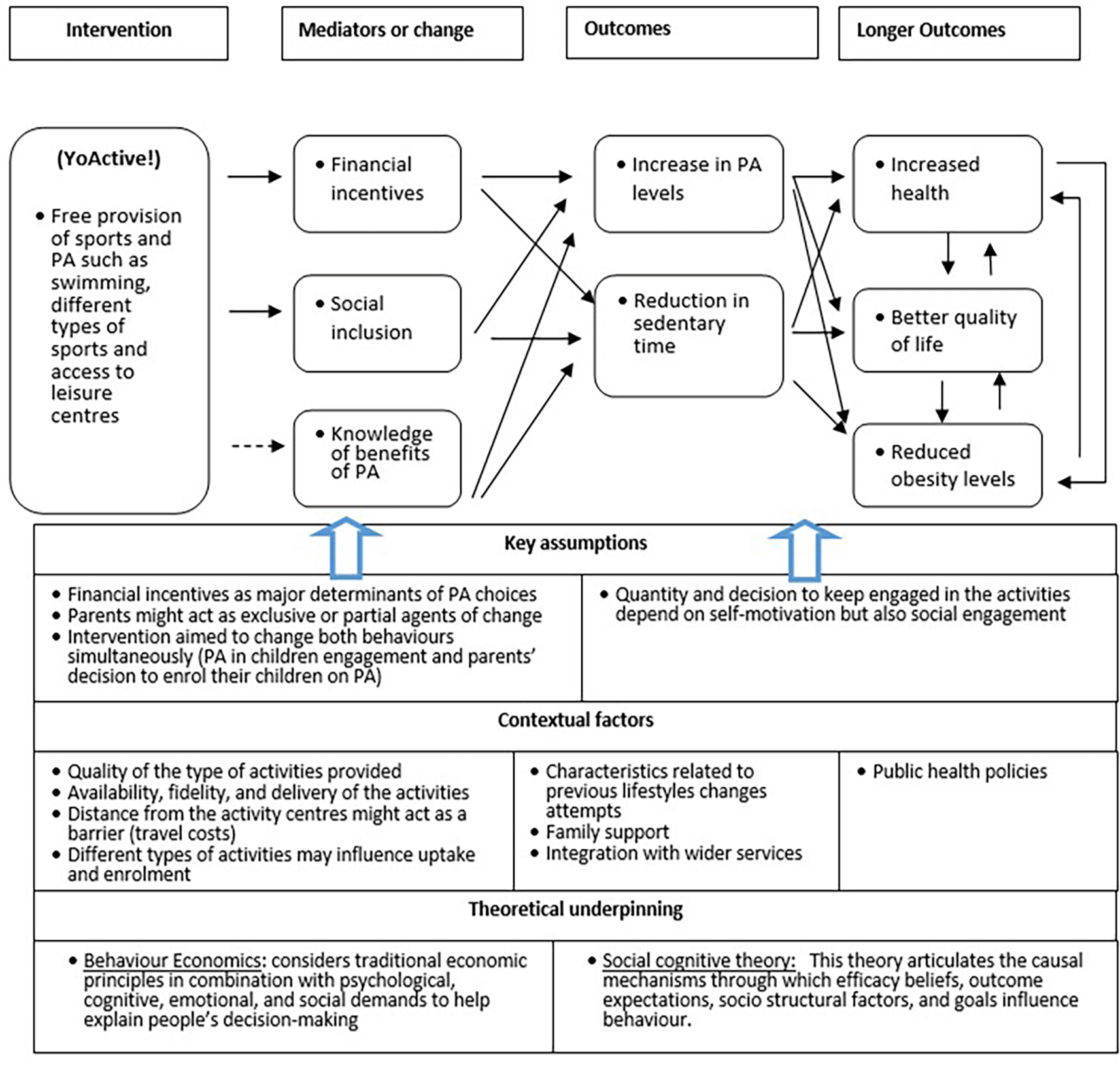
The programme focuses on improving the affordability and accessibility of leisure centres and other community facilities and encouraging CYP to engage in different forms of PA. The Yo! Active programme will address these cost-related barriers to promote PA. The theoretical underpinning of the programme is that CYP engagement in PA can be modified using influences such as financial (subsidies) and social incentives. In this case, the financial incentive is a free-cost offer for sport and PA access that will lower the financial burden for young people and families participating in PA. In consideration of how financial incentives (or subsidies) may affect health behaviour, behavioural economics is increasingly providing insightful evidence for how population-level health programmes can be implemented.25,26
Using the TIDIeR (Template for Intervention Description and Replication),27 the Yo! Active programme will potentially impact population behaviours as detailed in Table 2.
| TIDieR criterion | Study description |
|---|---|
| 1. Brief name | Yo!Active |
| 2. Why | To improve PA and sports participation among CYP by removing cost barriers |
| 2.1. Theoretical underpinning | Behavioural economic theory on how incentives can be used to influence healthy behaviours |
| 2.2. Intervention core components | Removal of cost barriers to access leisure and sports centres and activity sessions in Wolverhampton City |
| 3. Materials used in the intervention | Sport and PA delivery services |
| 3.1. Intervention overview | Free access to municipal sports and leisure centres and the delivery of other PA by commissioned providers |
| 3.2. Website | https://www.yowolves.co.uk/
Yo! Active | WV Active |
| 3.3. Sessions |
|
| 3.4. Tools |
|
| 3.5. Support |
|
| 3.6. Messaging (email and/or SMS) |
|
| 4. Description of expertise, background, and training given to intervention providers | The commissioned provider, Wolves Foundation, are a registered charity who have expertise in delivering a range of health and wellbeing initiatives in Wolverhampton. All providers are able to access further training and support via networks in Wolverhampton including Connect ED, Street Games, CWC support etc. |
| 5. Mode of delivery | In-person in the sports and leisure centres described in item 6 of the checklist |
| 6. Location of intervention and any necessary infrastructure or features | The intervention will be delivered in Wolverhampton in the following Active leisure centres, or community centres and other facilities determined by the commissioned providers:
|
| 7. Number of times intervention delivered and over what period | Evaluation period: 18 months from January 2024 |
| 8. Tailoring the intervention | Universal access for Wolverhampton residents aged 0-18 years or under 25 if the young person is a care leaver or has SEND |
| 9. Intervention modifications during the study |
|
| 10. Adherence and fidelity procedures | To be determined |
| 11. Actual adherence and fidelity | Pending results/ongoing |
In addition to providing the right incentives for sports and PA, it is important to implement policies that help increase people’s motivation and abilities to become more PA. The decision to engage in PA does not occur in isolation and is influenced by socio-economic, environmental, psychological and contextual factors. One important challenge of the programme will be, given the wider economic and social context, to ensure the intervention is sustainable over the long term. Due to several factors such as fiscal constraints, incentives may be withdrawn in the future. The question about the sustainability of PA after incentives are removed will need to be considered.
A logic model indicating the pathway for PA behaviour change during the implementation of Yo! Active is presented in Figure 1.
Anonymised individual-level data from a nationally representative repeated cross-sectional survey will be used for data on PA levels of CYP in Wolverhampton and the control sites, before and after the introduction of Yo!Active. The survey, the Active Lives Children and Young People Survey (CYP), measures the involvement of CYP in PA and different sports and is conducted annually by Sport England.28 The online survey is conducted among schools in England and depending on the young person’s age, the survey is completed by pupils or pupils with parents/guardians. The survey captures responses among pupils during the academic year from September to June.
The CYP survey dataset is available in two versions:
• Data collected from a short simple questionnaire for pupils in school year 1-2 (age 5 to 7 years). Questions are focused mostly on attitudes towards PA with some extra questions for parents/guardians to complete about the child’s PA levels.
• Self-completed questionnaire for pupils in school year 3-11 (age 7 to 15/16 years).
Within the CYP surveys, moderate and vigorous PA is defined as follows:
• “Moderate activity: an activity where you raise your heart rate and feel a little out of breath (pupils were asked whether it made them breathe faster).”
• “Vigorous activity: defined as when you are out of breath or are sweating - you may not be able to say more than a few words without pausing for breath (pupils were asked whether it made them hot or tired)”.
Table 3 illustrates how the data from the CYP survey is recorded as PA parameters.
The CYP survey was first conducted by Sport England during the academic year 2017-2018 (September 2017 to July 2018). During the COVID-19 pandemic, the survey was altered slightly to make completion easier at home and at school, and some additional questions were added to reflect PA during the lockdown periods.
As an illustrative example, Figure 2 reports the proportion of less active CYP, i.e., not reaching at least 30 minutes per day of moderate or vigorous PA across the Black Country LAs between 2017 and 2023 using data from CYP Active Lives Survey (before YoActive!).
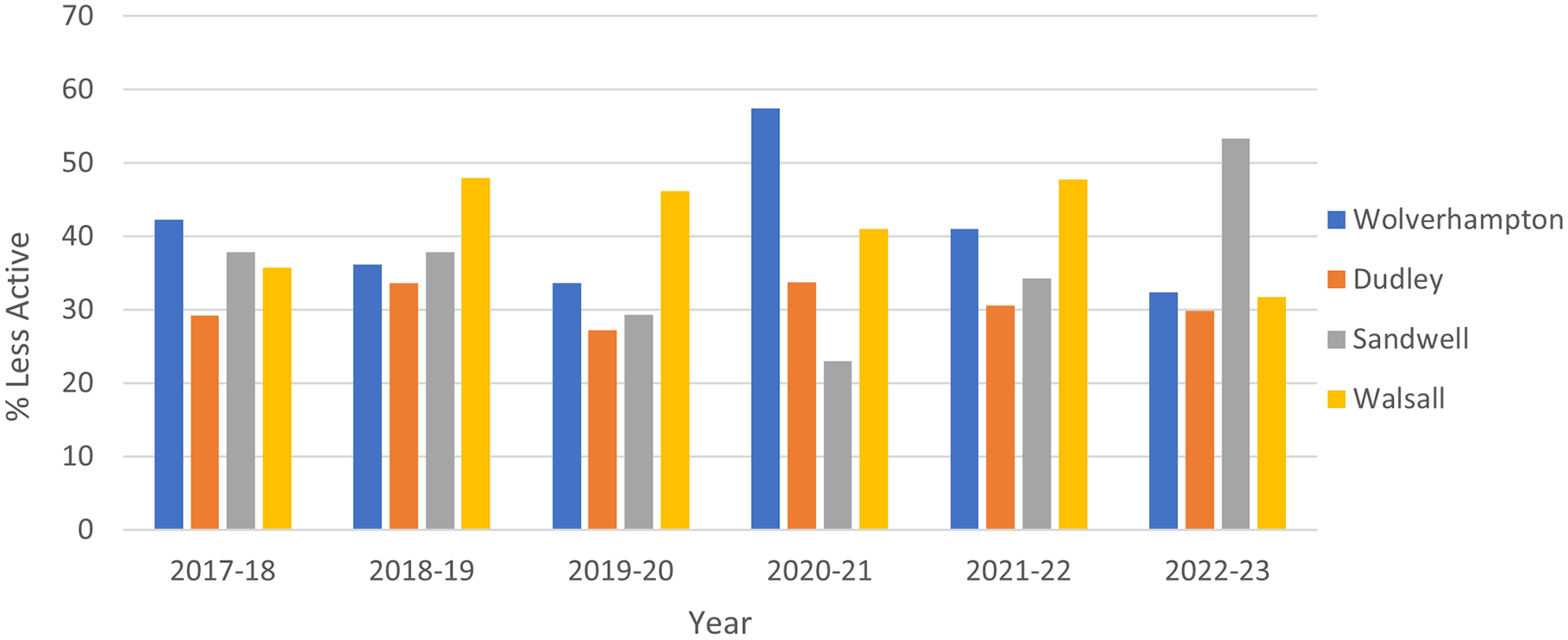
Source: CYP Active Lives Survey.
To evaluate the impact of Yo!Active, we will use population annual measures of PA starting from the academic year 2017–2018 (five years before implementation). CYP data from the academic years 2017–2018, 2018–2019, 2019–2020, and 2022–2023 will therefore represent the pre-intervention period, while data up to June 2025 will represent the post-intervention period. Data from 2021–2022 will be excluded due to unusually low response levels during the COVID-19 pandemic.
Table 4 outlines the survey timelines, including data collection, data release from Sport England, and the point at which the research team will receive access to the data. As the dataset becomes available to researchers several months after each school year ends, the evaluation will cover the first 18 months of implementation. Outcomes will be compared before and after the intervention to account for temporal trends and isolate its effects.
The primary outcome will be the percentage of less active children defined as those engaging in less than 30 minutes of PA per day.29 This aligns with the objective of LAs to reduce the proportion of less active children. From a public health perspective, societal gains from converting inactive children into more physically active individuals are higher than just making active children more active. This can include activities such as physical education, active travel, activities taking place after school hours, play and different types of sports. So, the primary analysis will be to understand how Yo! Active is impacting the proportion of CYP not reaching the minimum of 30 minutes of moderate or vigorous PA in a day within Wolverhampton, when compared to the control sites.
Additional PA outcomes will be explored in the analysis such as the propensity to not engage in PA. Other PA measures such as the number of days in a week being PA and the number of PA sessions in the last 28 days will be used as secondary outcomes. Categorical variables using the World Health Organisation (WHO) recommendations of at least 150 minutes of moderate PA, or 75 minutes of vigorous PA, or the combination of both intensities per week, will be used to explore the effects of the intervention on PA.29 Moderate and vigorous physical activities can be combined to estimate total activity levels using a standard equivalence rule, in which minutes of vigorous activity are weighted double those of moderate activity. In other words, one minute of vigorous activity is considered equivalent to two minutes of moderate activity. For example, an individual engaging in 60 minutes of vigorous activity and 30 minutes of moderate activity would accumulate 150 moderate-equivalent minutes of physical activity.29
The evaluation will also consider reported attitudes towards PA as these are fundamental drivers of the propensity and quantity of PA. The CYP survey includes questions about attitudes towards PA, such as finding sports enjoyable, satisfying, and easy. Responses to these attitudinal questions will be analysed using thematic analysis to understand if increasing access to leisure and sports activities affects attitudes towards PA, which in turn influences overall PA levels.
The average effect of Yo!Active, on levels of PA in Wolverhampton will be estimated using a synthetic difference-in-differences (DiD) approach. This method aligns with a quasi-experimental study design particularly useful to estimate the impact of exposure to an intervention when observations are recorded in a repeated cross-sectional or panel data.30 We will use this approach to estimate the effect of the Yo! Active programme, by comparing the variation in PA outcomes over time in Wolverhampton (intervention group) in comparison to Sandwell, Dudley and Walsall (control groups). This approach is suitable when randomisation of individuals is not possible, and when data is recorded pre/post-intervention. The synthetic DiD approach overcomes some constraining assumptions in the classic DiD method such as the constant parallel trends assumptions that is required, in the absence of treatment, for the difference in the treatment and control group to be constant over time.31,32
For the synthetic DiD modelling approach, the dependent variable (main outcome) will be the percentage of CYP not reaching at least 30 minutes of moderate or vigorous PA in a day. Confounding factors will include characteristics of the CYP and household/school (school year, gender, age, ethnicity, disability, family affluence score (FAS), free school meals, urban/rural, measures of deprivation (IMD), and pupil-teacher ratio).
Wellbeing indicators such as life satisfaction, happiness and worthiness will also be included in the model as covariates. These variables are presented in the dataset as mean scores out of ten and are asked in the survey as follows:
▪ Life satisfaction: “How satisfied are you with life nowadays?”
▪ Happiness: “How happy did you feel yesterday?”
▪ Worthwhile: “To what extent are the things you do in your life worthwhile?”
Interaction terms will be included to assess if there are differential effects of the Yo! Active according to age, sex and deprivation levels.
To control for variation in PA levels throughout the academic year, if the data allows, we will control for seasonal effects.33
Sport England specifies that annual CYP survey data at the LA level can only be used if the total annual sample exceeds 200. Given this, the analysis will include only the “main” survey data conducted with pupils in years 3-11 (age 7-5/16). Data collected from pupils in years 1-2 (aged 5-7) will not be considered since the number of observations are too small.
Table 5 illustrates the number of observations available for the main survey (years 3-11). Data for the academic year 2020-21 will therefore be excluded due to low number of observations (during the COVID pandemic).
| LA | 2017-18 | 2018-19 | 2019-20 | 2020-21 | 2021-22 | 2022-23 |
|---|---|---|---|---|---|---|
| Wolverhampton | 336 | 446 | 621 | 134 * | 457 | 1427 |
| Dudley | 315 | 512 | 414 | 447 | 1088 | 669 |
| Sandwell | 280 | 532 | 307 | 253 | 691 | 1442 |
| Walsall | 319 | 298 | 353 | 117 * | 368 | 410 |
| Total | 1250 | 1788 | 1695 | 951 | 2604 | 3948 |
Using the PA levels for the four LAs (Wolverhampton, Dudley, Sandwell and Walsall) recorded annually from 2017 to 2022, the following method was applied to determine a sample size.
In total across years 2017 to 2022 (excluding 2020-2021 due to COVID), 7337 physical activity questionnaires were completed on school age children across all local authorities. Furthermore, 2640 (36%) of these completed questionnaires on children were deemed to be “less active”.
After the intervention has been implemented within the Wolverhampton area, it is anticipated that a total of 2752 responses to the questionnaire on children’s activity will be collected over an 18-month period. Accordingly, approximately one quarter of the responses (n = 698) are expected to come from the intervention area (Wolverhampton), with the remaining responses (n = 2,054) coming from the control areas (Dudley, Sandwell and Walsall).
With a power of 80% and alpha set to 0.05, we can expect a minimal difference in detection of 5.79% between the intervention and the control groups, i.e. a minimally important decrease to 30.19% in the intervention group for children being deemed “less active”. This is a conservative estimate as we assume independent observations rather than paired comparisons in this calculation. Additionally, we have 4 years of baseline data that is to be used in the analysis and so providing conservative measures within this calculation.
We will assess robustness to outcome definition and model choice by (a) using alternate PA thresholds (e.g. <20 min/day, WHO weekly equivalent), and (b) analysing continuous measures (days active/week; sessions in last 28 days). Consistency across these specifications will strengthen inference and divergence will be explored and reported.
In addition, instead of pooling Dudley, Sandwell, and Walsall into a single control group, we will re-estimate effects using each comparator LA separately (Wolverhampton vs. Dudley; Wolverhampton vs. Sandwell; Wolverhampton vs. Walsall). This will test whether results are being driven by one particular comparator and ensure robustness to differences in baseline characteristics or unobserved shocks across areas.
Local strategies such as Yo! Active in Wolverhampton aim to remove financial constraints and make PA opportunities more accessible to all CYP. Evaluating such initiatives is essential to help LAs develop a business case for investment. Traditional randomised trials are often not feasible for city-wide programmes, and so natural experiment designs provide an opportunity to generate robust evidence on real-world interventions. The use of repeated cross-sectional survey data and comparative analyses across neighbouring LAs ensures that the evaluation captures both overall impact and equity effects.
The evidence generated from this study will help demonstrate the effectiveness of Yo! Active and inform broader policy and practice. By understanding whether and how removing cost barriers influences activity levels across different groups, future LAs will be better equipped to design, implement, and scale sustainable policies to tackle inactivity. In this way, the evaluation addresses both an immediate local need and contributes to the national and international evidence base on promoting active lifestyles among CYP.
The findings from the Yo! Active evaluation will be disseminated to a range of academic, policy, practitioners, and public audiences to maximise impact and ensure the evidence informs future decision-making around PA interventions for CYP.
To better understand the wider context for decision making we plan to conduct follow-up interviews with key stakeholders. These interviews will happen towards the end of the evaluation to gather information on what actions are needed to improve interventions within “complex systems” for PA engagement.
Provide sufficient details of any financial or non-financial competing interests to enable users to assess whether your comments might lead a reasonable person to question your impartiality. Consider the following examples, but note that this is not an exhaustive list:
Sign up for content alerts and receive a weekly or monthly email with all newly published articles
Register with NIHR Open Research
Already registered? Sign in
If you are a previous or current NIHR award holder, sign up for information about developments, publishing and publications from NIHR Open Research.
We'll keep you updated on any major new updates to NIHR Open Research
The email address should be the one you originally registered with F1000.
You registered with F1000 via Google, so we cannot reset your password.
To sign in, please click here.
If you still need help with your Google account password, please click here.
You registered with F1000 via Facebook, so we cannot reset your password.
To sign in, please click here.
If you still need help with your Facebook account password, please click here.
If your email address is registered with us, we will email you instructions to reset your password.
If you think you should have received this email but it has not arrived, please check your spam filters and/or contact for further assistance.

Comments on this article Comments (0)