Keywords
Strengths, Strengths- based practice, older people, ethnic minority, wellbeing

Strengths, Strengths- based practice, older people, ethnic minority, wellbeing
 How to cite: Sobo-Allen L, Miller R and Bond L. An understanding of ‘strengths’ and ‘strengths based practice’ within older people from ethnic minorities in the UK. A qualitative systematic review [version 2; peer review: 2 approved, 1 approved with reservations]. NIHR Open Res 2026, 6:26 (https://doi.org/10.3310/nihropenres.14218.2)
First published: 19 Mar 2026, 6:26 (https://doi.org/10.3310/nihropenres.14218.1)
Latest published: 08 Aug 2026, 6:26 (https://doi.org/10.3310/nihropenres.14218.2)
How to cite: Sobo-Allen L, Miller R and Bond L. An understanding of ‘strengths’ and ‘strengths based practice’ within older people from ethnic minorities in the UK. A qualitative systematic review [version 2; peer review: 2 approved, 1 approved with reservations]. NIHR Open Res 2026, 6:26 (https://doi.org/10.3310/nihropenres.14218.2)
First published: 19 Mar 2026, 6:26 (https://doi.org/10.3310/nihropenres.14218.1)
Latest published: 08 Aug 2026, 6:26 (https://doi.org/10.3310/nihropenres.14218.2)
Revision changes includes The 2021 Census reported followed by search was designed in consultation with and undertaken by a professional librarian based at the University of Birmingham. We recognized that chronological age is only one measure of ‘older age’ and that those from black and minority ethnic communities may experience ageing more rapidly due to the inequalities which they face, and were open to articles taking different stances on how they defined ‘older’.Table.4 description formatted. and limitations of the study added.
See the authors' detailed response to the review by Jill Manthorpe
See the authors' detailed response to the review by Madeleine Stevens
Strengths-based practice (SBP) is a generic term used to denote a shift from a ‘deficit approach’ based around professionals focussing primarily on what people cannot do and associated risks, to one which is based around what matters to the person and their families and builds around their informal and community networks and resources (Caiels et al., 2021). The role of professionals and services under this approach is to complement people’s own resources and develop greater openness and trust through relational practice. The term has become more common place in the UK over the last decade, with its core elements outlined in social work in the 1980’s through the movement for a strengths-perspective in the Kansas School of Social Work (Saleebey, 2009). There are also connections with previous attempts to embed more person-centred and preventative approaches in adult social care and whilst the term ‘strengths-based’ does not always feature (asset-based working is a common alternative), its aspirations and principles are reflected in policy and practice guidance of all the home nations of the United Kingdom (Miller & Mahesh, 2025).
Whilst the values of SBP generally resonate with social care professionals and practitioners, there can also be ‘wooliness’ about what it actually entails (Tew, 2025) and how to best embed at a practice and system level (Mahesh et al., 2024). There also exists a marked heterogeneity of what may be termed ‘assets’ (Tew, 2025), with Foot (2012) describing assets as; “any resource, skill or knowledge which enhances the ability of individuals, families and communities to sustain their health and wellbeing” (p. 6). This can include such things as supportive family and friendship networks and community cohesion (Tew, 2025). There have also been concerns raised that the reliance on informal and community supports could lead to a withdraw of funding from public services and concomitant transfer of responsibilities to families and charities (Slasberg and Beresford, 2017). The evidence on impacts is growing (see for example Prunty et al., 2024) but reviews highlight that at present it is difficult to draw ‘definitive conclusions about the role and impact of strengths-based approaches’ (Caiels et al., 2021, p. 420). This is in part related to the complexity of a evaluating a preventative approach which has multiple associated practice models that are often applied concurrently in the same locality. Price et al. (2020) suggest that use of programme theory would help to identify ‘core’ and ‘peripheral’ aspects of implementation and make explicit the expected outcomes for different populations.
As an underpinning philosophy for adult social care, SBP must be relevant for those with a wide range of needs and situations (Caiels et al. 2021). However, Miller & Mahesh (2025) highlight that the current evidence base does not sufficiently engage with the diversity of populations and contexts within the UK. This must be seen as a major issue for an approach which seeks to respond to ‘what matters to people’ and have an understanding of, and engagement with, related community resources. SBP inherently requires social care practitioners and services to be sensitive to people’s cultures and norms and to design support which complements their existing networks. The 2021 Census reported that there was an increase of 80% of people aged 50 and over from black, Asian and minority ethnic communities in England from a decade earlier – a total of 2.17 million people, with some communities such as Bangladeshi and Pakistani much more likely to be in poverty and to be living in poor housing conditions) (Centre for Ageing Better, 2023). Combined with the long-standing inequalities in health and care access, experience and outcomes for many black and minority ethnic groups and the intersectional discrimination faced by older people from such communities, such structural and cultural challenges need to be proactively and positively considered for inclusive SBP (Booth et al., 2021; Kapadia et al., 2022).
This qualitative systematic review seeks to respond to these gaps by considering the evidence relating to SBP and older people from black and minority ethnic communities.
The review team collaborated with the Lived Experience Panel of the Social Care Cluster at Birmingham University. This diverse group of individuals have experience of accessing care and support directly and/or as a family care, and includes those from South Asian and African-Caribbean communities. The Panel as a whole (approximately 12) were initially consulted on the outline of the overall purpose and questions of the research in relation to SBP within black and minority ethnic communities. There was then a second discussion with three panel members to share the findings of the evidence review (this included those from Sikh, Pakistani and African-Caribbean backgrounds), the research teams’ initial interpretations of these, and the related implications for future research and practice. Both discussions took place on line and all lived experience participants received financial recognition of their contribution.
To conduct a systematic review and synthesis of qualitative studies to explore what older people from black and minority ethnic communities understand as strengths and assets within their day to day lives, consider how these strengths map against core elements of SBP in social care, and identify implications for practice and future research.
The overall methodology was qualitative systematic review which reflected the aim of presenting current understanding of participant experiences and perceptions of strengths and assets within their day to day to lives (Butler and Hall, 2016).
The search was designed in consultation with and undertaken by a professional librarian based at the University of Birmingham. The following databases were searched between February and March 2025: Social Policy and Practice, MEDLINE, SSCI and ASSIA. We were interested primarily in the formal evidence base and therefore searched on academic databases, although did not exclude articles which were published by non-research bodies if they met the inclusion criteria. Search terms ( Table 1) reflected our interest on older people from black and minority ethnic communities in the UK, and a strengths (or equivalent) based approach. We recognised that chronological age is only one measure of ‘older age’ and that those from black and minority ethnic communities may experience ageing more rapidly due to the inequalities which they face, and were open to articles taking different stances on how they defined ‘older’.
Articles published after 2010 were included to reflect the timeline of the focus across the UK governments on strengths (or asset based) working and those outside of the UK were excluded Table 2). We were interested primarily in the formal evidence base and therefore search on academic databases.
The search identified 3396 potentially relevant publications. After removal of duplicates, 2590 articles were screened based on title and abstract, which led to the exclusion of another 2501. The remaining 49 articles were read for eligibility, and a further 28 articles were excluded for not meeting the inclusion criteria. Two of the authors (LS-A and RM) then conducted a full screening of the remaining 21 articles, resulting a further 9 excluded studies. Searching of the references lists from these included papers led to a further 19 articles. As the purely quantitative articles provided little relevant data to respond to the aims of the research, the initial inclusion criteria was amended to those in Table 2 to only include studies with a qualitative component (including mixed method studies which deployed qualitative methods). This resulted in the further exclusion of 14 articles using quantitative methodology. This resulted a final inclusion of 16 articles that were then critically appraised. The PRISMA flow diagram demonstrates the screening process (Figure 1).
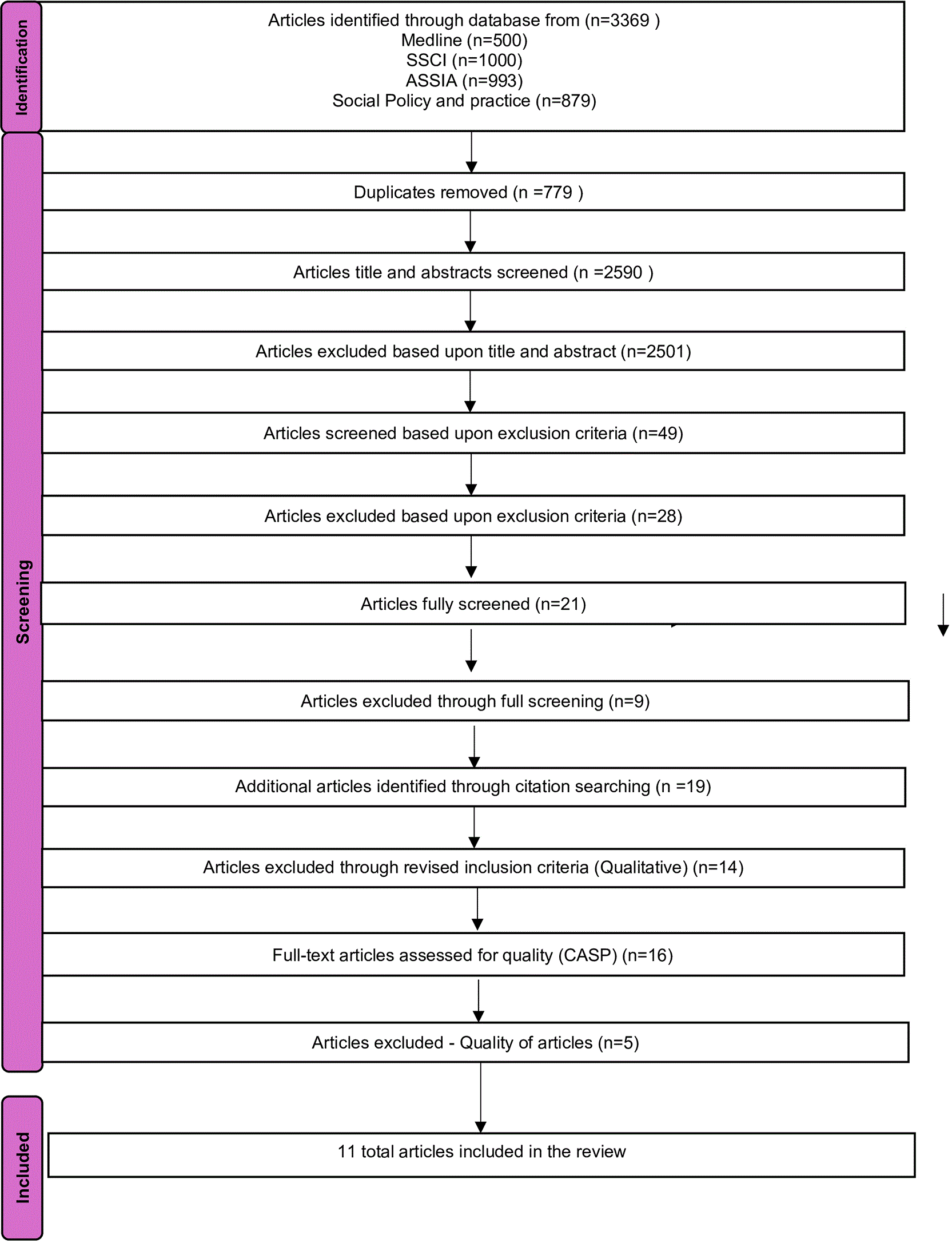
Two of the authors (LSA and LB) separately assessed the methodical quality of the included studies using the Critical Appraisal Skills Programme (CASP) (CASP, 2022). A sample was then jointly considered, with any discrepancies between the reviewers resolved through discussion, or by consulting with the third reviewer.
The CASP checklist used considered the studies design, methods and reporting for reliability, relevance and validity. High quality was ‘Yes’ on 8 or more of the questions in the CASP. It was finally agreed that 1 study was of moderate and 10 studies of high methodical quality ( Table 3). A total of 5 studies were excluded due to low quality leaving the total of 11 studies.
| Author | 1 | 2 | 3 | 4 | 5 | 6 | 7 | 8 | 9 | 10 | Assessment |
|---|---|---|---|---|---|---|---|---|---|---|---|
| 1. Baghirathan et al. (2020) | Y | Y | Y | Y | Y | U | N | Y | Y | Y | High |
| 2. Ellins and Glasby (2016) | Y | Y | Y | Y | Y | Y | Y | Y | Y | Y | High |
| 3. Giuntolia and Cattan (2012) | Y | Y | Y | Y | Y | Y | Y | Y | Y | Y | High |
| 4. Herat-Gunaratne (2020) | Y | Y | Y | Y | Y | U | N | Y | Y | Y | High |
| 5. Joshi (2020) | Y | Y | Y | Y | Y | U | U | N | Y | Y | Moderate |
| 6. Manthorpe et al. (2012) | Y | Y | Y | Y | Y | U | Y | Y | Y | Y | High |
| 7. Parveen (2017) | Y | Y | Y | Y | Y | U | Y | Y | Y | Y | High |
| 8. Sidhu et al. (2016) | Y | Y | Y | Y | Y | Y | Y | Y | Y | Y | High |
| 9. Victor (2012) | Y | Y | Y | Y | Y | Y | Y | Y | Y | Y | High |
| 10. Victor (2019) | Y | N | Y | Y | Y | Y | Y | Y | Y | Y | High |
| 11. Victor (2024) | Y | Y | Y | Y | Y | Y | Y | Y | Y | Y | High |
An abductive approach was taken to the data extraction and synthesis. As the primary interest was in generating insights relating to the experience, impacts and improvement of SBP, the analysis began with deductive themes that reflected the overall research aims, and core elements of contemporary SBP (Miller & Mahesh, 2025) (See Table 4 below). Although they denote theory-based premises, the themes also represent an incomplete observation of the likeliest explanation of how strengths may be understood and experienced in the lives of older people from minority ethnic communities. This ‘space’ allowed the generation of novel insights and the development of the most plausible inferences about the data (Barrett and Younas, 2023).
| Themes | Description |
|---|---|
| Wellbeing | What matters to older people in relation to their quality of life |
| Person-centred | Starts with what matters to the person concerned in relation to what would constitute a good life for them |
| Relational | Develops a relationship of trust and respect between practitioners and people in which their different perspectives are heard and valued |
| Asset based | Builds on people’s personal and family skills, experience, knowledge and networks with professionals and services seeking to complement and enhance, not replace or duplicate, their contribution |
| Community orientated | Bases itself within people’s physical and digital communities, including those orientated around place, culture, activities, faith and other interests |
| Collaborative | Collaborates with other professionals and services to provide a coordinated and holistic support to people and their families |
| Social justice | Promotes social justice through addressing inequalities on an individual and structural level (Miller & Mahesh, 2025) |
The process involved engaging with the data and themes, then standing, and reengaging with the data, ensuring, throughout the process, that the initial themes were considered flexible and open to review (Harding, 2019; Gibson and Brown, 2009). Consideration was given to their relevance, whether they are too broad or should be merged, or the need to add another code through the emergence of new themes from the data. All members of the research team were involved throughout the analysis process.
The review only included studies from within the UK – widening to countries with similar health and social care system may be incorporated additional evidence which could be transferable to a UK context. More active searching for grey literature may also have produced additional sources and whilst we are confident that the included evidence is thorough, for additional robustness it may have been helpful to specifically include all of the ethnic groups within the current census. Through focussing on articles which have connected themselves with the concepts of ‘strengths’ and ‘assets’, the review may not have included studies which were investigating aspects of community life and connected practices related to the principles of SBP within social care but not identified as such. Future studies may wish to consider exploring if this is the case and if so including these in future updates of the review.
Table 5 below outlines the 11 included studies that were published between 2010 and 2024. The studies utilised individual interviews and focus groups as their primary method of data collection, with the majority adopting a thematic analysis of the data.
| Author (year) | Country | Focus | Topic | Participants | Qualitative method |
|---|---|---|---|---|---|
| 1. Baghirathan et al. (2020) | England | Caribbean, South Asian Chinese | The experience of carers for people living with dementia from black and minority ethnic communities | Carers, volunteers and professionals | Interviews and focus groups |
| 2. Ellins and Glasby (2016) | England | South Asian Black British Gypsy travellers | The experiences of older people from minority ethic communities discharge from hospital | Older people and carers | Interviews |
| 3. Giuntolia and Cattan (2012) | England | Pakistani, Bangladeshi, Polish, Indian, African Caribbean Ukrainian, Hungarian | The experiences and expectations of care and support among older migrants in the UK | Older people and carers | Interviews and focus groups |
| 4. Herat-Gunaratne et al (2020) | England | Bangladeshi Indian | The caring experiences of people supporting older people with dementia from Indian and Bangladeshi communities in their own home | Carers | Interviews and focus groups |
| 5. Joshi (2020) | Scotland | Indian, Pakistani, Chinese, Bangladeshi, Malaysian Vietnamese | Identifying and understand the issues and challenges facing ageing ethnic older people in Scotland | Older People | Interviews Focus groups |
| 6. Manthorpe et al. (2012) | England | South Asian community, Gypsy and Travellers Community | Exploration of how rural areas promote mental and well-being among older people from black and minority ethic communities | Older people, Carers Professionals | Interviews |
| 7. Parveen et al. (2017) | England | Indian, African/Caribbean East and Central | The perceptions of dementia and use of services in minority ethnic communities | Older People | Focus groups |
| 8. Sidhu et al. (2016) | England | Punjabi Sikhs | Exploration of health beliefs and practices of long-term conditions of older people from a Sikh community | Older people | Interviews |
| 9. Victor et al. (2012) | England | Bangladeshi Pakistani | Exploration of the understand and experiences of care and care described by older people from Pakistani and Bangladeshi communities | Older people | Interviews |
| 10. Victor et al. (2019) | England Wales | Black Caribbean, Black African, Indian, Pakistani Bangladeshi, Chinese | Exploration of intergenerational, intra-generational and transnational patters of family caring in minority ethic communities | Older people Carers | Interviews |
| 11. Victor et al. (2024) | England | South Asian, Black Caribbean, Black African | Exploration of how older people from minority ethic groups experience ageing and dementia | Carers, Community Leaders | Interviews |
Although the primary aim of the study is to explore what older people from minority ethnic communities understand as strengths and assets within their day to day lives, full screening revealed that most studies also included the reflections and experiences of the carers of, and practitioners that support older people from these communities. These insights were seen as relevant to the overall aims and were therefore also included in the analysis but were identified as being the views of carers and/or practitioners rather than the older people.
Several of the studies focused specifically on older people with dementia – these were included as the experiences of older people with dementia are important to understand in relation to SBP (McGovern, 2015; Peacock et al., 2010), and where relevant findings are specifically connected with those who have dementia. It is also important to include these studies when consideration is given to the prevalence of dementia in older people living with dementia from Black, Asian and other Minority Ethnic origins. In 2017 this was approximately 25,000 and is expected to increase by 2026 to 50,000, and 172,00 by 2051 (Parveen et al., 2017), with people from Black, Asian and other Minority Ethnic communities likely to be diagnosed at a more advanced stage of the illness, and have a lower consumption of mainstream dementia services than older people from White British communities (Baghirathan et al., 2020).
Whilst reflecting the general principles of SBP, none of the articles referred to specific strengths-based interventions in social care within black and minority ethnic communities. Although, to some extent, this was anticipated by the authors, it was still surprising to see the dearth of studies that have sought to explore such models within these communities when they are such a priority with adult social care policy and practice and the challenges of access and inclusion for such communities to social care support are well recognised.
As could be expected given the structural and intersectional nature of the challenges faced by older people from black and minority ethnic communities, and the often lack of culturally appropriate support within social care and health services, there is frequently greater profiling in the studies on those factors which negatively influence people’s wellbeing rather than strengths per se. Whilst the focus on this review is on the strengths, findings include challenges where relevant as addressing these will potentially both reduce negative factors and/or suggest what a positive would be (i.e. practice which demonstrates a strengths-approach). Furthermore, recognising the difficulties which people face, and the structural nature of these, was from the outset a core aspect of SBP (Saleeby, 2009).
As discussed in 2.7 there was a premise during the data analysis to adapt the initial deductive themes if necessary, and consequently Person Centred and Relational were merged, and Asset Based was merged with Community Orientated.
Where possible and relevant, findings are differentiated by the communities involved in the research but otherwise ‘black and minority ethnic communities’ is used as a generic term (with no common term being used by all studies of multiple communities).
3.2.1 Wellbeing
A strong finding across several of the studies was the importance of faith and religion to the wellbeing of older people (Sidhu et al., 2016; Parveen et al., 2013, 2017; Victor et al., 2024) and this was particularly significant in the studies of older people form the South Asian communities. Faith and religion is seen to provide a system of ongoing support, where ritual prayer or the demonstration of spiritual belief, highlights the significance of having faith within the Sikh community (Sidhu et al., 2016). Additionally, other than simply an acceptance of Gods will, prayers were experienced as increasing emotional resilience, and a coping mechanism to manage distress, partly through the recognition of the limited control individuals have over aspects of their well-being (Sidhu et al., 2016). Similarly, Parveen et al. (2017) in her study of perceptions of dementia in minority ethnic communities, found that Indian and African/Caribbean groups used religion and spirituality as a form of personal control to cope with the negative effects of dementia. Alongside faith, another common strength in respect to wellbeing, is the deeply rooted relationships that exist within a number of communities, where the family was found to be the primary source of emotional and practical support (Sidhu et al., 2016; Victor et al., 2012). This theme will be further explored in 3.2.3 as an asset in the lives of older people from minority ethnic communities.
For a number of older people across the studies, dignity and self-respect were crucial aspects of their wellbeing, with Giuntolia and Cattan (2012) suggesting that dignity was a “central expectation for all older people” (p. 1) however, the studies found that the diagnosis of, and living with dementia was a threat to these aspects of a person’s wellbeing. Parveen et al. (2017) found that older people from Indian communities felt that dementia was damaging to their self-respect whilst Manthorpe et al. (2012) reported that older people from black and minority ethnic rural communities often experienced a lack of control and poor wellbeing when faced with declining health. The negative stigma often associated with dementia was prevalent for a number of South Asian participants in the study by Baghirathan et al. (2020), where dementia was framed within a context of superstition, coupled with a lack of knowledge and information of dementia as a distinct health condition, but making dementia ‘visible’ was only possible in settings that the older people were familiar with, and run by their own community members. Developing the theory of diminishment, Baghirathan et al. (2020) not only found that older people experience diminishment through experiencing the effects of cognitive impairment, but also potentially through the provision of statutory services that did not meet their cultural needs.
A sense of security was an important theme in several studies, and for a number of older people isolation and loneliness was a was found to have a detrimental impact on wellbeing (Manthorpe et al., 2012). Often this was connected with the loss of a loved one, or valued companions (Giuntolia and Cattan, 2012) or through separation from their country of origin. Despite the fact older people may have resided in the UK for a substantial period of their lives, Victor et al. (2024) they still experienced an emotional sense of not quite ‘belonging’ and not feeling fully ‘at home’, where a feeling of being an outsider was described as marginalising and was linked to experiences of hostility. The studies also revealed a need for financial well-being related to feelings of security, including being in control of finances and having the freedom to make choices (Joshi, 2020). However, Victor et al. (2012) found that black and minority ethnic communities often experience high levels of financial disadvantage and emotional stress, particularly women, which impacted on their wellbeing.
The challenge of meeting the cultural and religious needs of older people through statutory health and social care services was a common finding in several studies and will therefore feature throughout this findings section. An issue which was found to directly affect an individual’s wellbeing, is where services failed to take into dietary choices, which were often linked to cultural and religious needs, in a range of settings such as hospitals and care homes (Joshi, 2020; Manthorpe et al., 2012; Victor et al., 2024; Ellins and Glasby, 2016).
3.2.2 Person-centred and relational practice
Sidhu et al. (2016) found that the accounts of first generation Sikh migrants contained little evidence of a patient-centred approach from health professionals (Sidhu et al., 2016) but identified in the same accounts was a desire from older people for professionals who derived from their own community, because of cultural understanding and linguistic reasons (Sidhu et al., 2016; Parveen et al., 2017). Similarly, in studying of the experiences of hospital admissions of older people from black and minority ethnic communities, Ellins and Glasby (2016) found that language barriers, and a lack of information created intense feelings of anxiety and left patients feeling helpless and vulnerable. Participants reporting of having their dignity undermined through being left in a soiled bed for a long time, and a failure to meet their cultural and religious needs, such as the poor provision of vegetarian meals. In addition, participants reported as wanting to be seen “as a person with needs, wants and feelings, rather than as a problem to be fixed” (p. 50) with many feeling they were part of a conveyor belt.
In the study exploring the experiences of older people living in supported living in Scotland, Joshi (2020) found a lack of a shared language between residents and staff prevented any meaningful social interaction or relationship from forming, with the study arguing for housing and care options that meet specific social, language, and dietary requirements. Similarly, the study by Victor et al. (2024) on the professional understanding of dementia within Black African/Caribbean and South Asian communities, found services were found to be not culturally appropriate, with a lack of personalisation in care homes around crucial aspects like food and skincare (Victor et al., 2024). Contrary to this Manthorpe et al. (2012) found in their study of practitioners supporting older people in social care and housing, examples of providing person-centred care in care homes such as providing female staff for a female’s personal care and listening to culturally specific needs such as foods.
It was identified in a number of studies a need to challenge the collectivist ethos that all members of the same black and minority ethnic communities organise their health and social care according to their cultural principles, and individuals who decline services on cultural grounds as viewed as not needing or wanting support, instead each individual needs to be considered in their own right (Joshi, 2020; Giuntolia and Cattan, 2012). Similarly, Parveen et al. (2017) purport the need for a person-centred Dementia awareness work with older people in order to challenge harmful misconceptions around the causes of dementia, aggression and the needs of people living with dementia. The study also recognised that this work also needs to be extended to the wider family, where participants reported a “lack of support and understanding from extended family members following a dementia diagnosis” (Parveen et al., 2017, p. 738).
Good communication that included understanding and compassion was seen as important to older people (Giuntolia and Cattan, 2012) the most effective way for professionals to engage to engage with older was to through introductions by a trusted intermediary (Manthorpe et al., 2012). Trust was found to be an important factor for older people when having carers in their home. The study showed this was something which took time to develop regardless of ethnic background (Giuntolia and Cattan, 2012).
3.2.3 Asset based and community orientated
Developing on the importance of family on the wellbeing of individuals introduced in the previous section, the family feature in a number of studies as a core asset across communities (Giuntolia and Cattan, 2012; Sidhu et al., 2016; Manthorpe et al., 2012; Victor et al., 2012, 2019), with family members often called upon to act as informal interpreters by older people when communicating with professionals (Ellins and Glasby, 2016). For many Sikh older people the family is viewed as consisting of immediate and extended family members living in one household or nearby, and embodies a system of support, whose members were trusted to show empathy, maintain confidentiality, and mitigate any fear of exposure of their personal issues to the wider community (Sidhu et al., 2016) as well as the most trusted source for emotional, physical, and spiritual care (Manthorpe et al., 2012; Victor et al., 2012; Herat-Gunaratne et al., 2020). There also exists clear distinctions between strong, reliable relationships with close family and weaker relationships with friends (Victor et al., 2012).
The support from families in South Asian communities in particular was found to be based upon on cultural values such as intergenerational “filial piety” and a sense of “familial duty” (Sidhu et al., 2016; Victor et al., 2019; Herat-Gunaratne et al., 2020). Gender plays a key role within these values, with the spousal relationship viewed as the most important, with wives typically caring for husbands (Victor et al., 2012), and daughters also playing a significant role in helping older relatives to self-manage their condition on a daily basis (Sidhu et al., 2016). Older people are themselves often an asset themselves to families, often caring for children and grandchildren (Victor et al., 2012). In South Asian communities the family is found to be transnational, with networks spread across the UK, North America, Europe, and their countries of origin. Providing important social engagement and support during major life events, health information and traditional medicine from their countries of origin (Sidhu et al., 2016; Victor et al., 2012). However, it is found that these communities offer little in terms of direct care needs and support (Victor et al., 2012).
Drawing on the previous point made in 3.2.2 in reference to the need to develop a nuance understanding as to why some families from minority ethnic communities may be reluctant to or decline formal care services. Potential insights from the studies in this review, include the familial duty to care, carer guilt, and the expectation and reluctance of the older person to accept nonfamilial care (Victor et al., 2012; Herat-Gunaratne et al., 2020). The acceptance of professional care in Pakistani and Bangladeshi communities in the UK perceived as being the ‘last resort’ (Victor et al., 2019), with a preference to care for your own and not wanting strangers in their homes (Giuntolia and Cattan, 2012; Baghirathan et al., 2020; Manthorpe et al., 2012). It has been identified that an unwillingness to accept care emanates from previous experiences of culturally insensitive care (Herat-Gunaratne et al., 2020). Similarly, in respect of older people with dementia it was found that life course experiences of negative and hostile social and policy environments and services can be profound and long-lasting, and provide a prism through which accessing dementia care is experienced for many older people from minority ethnic communities (Victor et al., 2024).
Converse to the stance on accessing statutory support, several studies revealed that older people were more than willing to utilise community-based resources, like lunch clubs and day centres. They were considered to be a lifeline, and a key to ease the loneliness of older people from black and minority ethnic communities, with a significant cause of loneliness was the loss of contact with members from their own community of origin (Giuntolia and Cattan, 2012; Yarker, 2020). The proximity and physical location of community support was important, with older people from minority ethnic backgrounds in rural areas at heightened risk of isolation because they often lack the physical infrastructure of belonging, such as living near to a place of worship or a purpose-built community centre (Manthorpe et al., 2012). Religious group membership is also seen as a key system of support, with older people within Sikh communities volunteering, and enjoying being able to give, and value the opportunity to contribute to society (Sidhu et al., 2016).
For many older people from black and minority ethnic communities, as discussed previously, as well there being a lack of awareness and knowledge of dementia, there also exists a considerable stigma around the condition, with it considered a “taboo subject”, with that people ashamed to speak about (Manthorpe et al., 2012). In these instances community leaders were found to be important assets and recognised as “known and trusted individuals active in their respective communities” (Victor et al., 2024, p. 1174). Because of this lack of knowledge and stigma these leaders are a key source of support and information about all aspects of dementia, as well as allowing older people to access this trusted source, who are entrusted to keep the diagnosis of dementia confidential and contained from the wider community (Victor et al., 2024).
3.2.4 Collaborative
Collaboration within strengths-based practice involves care providers and professionals cultivating a collaborative relationship with the service user, with regular communication and involving service users in all decisions in order to provide a co-ordinated and holistic support to people and their families (Au and Mahesh, 2025). It requires professionals to be open in negotiation, and appreciate the authenticity of the of the views and aspirations of those who they collaborate with (Saleebey, 2009).
The studies identified in this review provided limited data for this theme. What they did outline was a problem with communication with professionals, services and older people. There was a need for a need for an ongoing dialogue within and between service and between services and the people receiving care (Giuntolia and Cattan, 2012). Ellins and Glasby (2016) found that for older people admitted to hospital, the wish of family members to be kept up to date with health and discharge plans was ignored, the older people’s own wishes were often not listened to, and decisions were made about their care without consultation with family members.
3.2.5 Social justice
An aspect of SBP lost within a social care system orientated around individualistic care management approaches is the active promotion of social justice through addressing inequalities at both an individual and structural level (Miller & Mahesh 2025). Studies in the review found that older people from some minority ethic communities, for example Pakistani, Bangladeshi and Black Caribbean experience high levels of inequalities in health including high rates of chronic illness, physical and mental health (Centre for Ageing Better, 2021). With barriers preventing access to services these including a lack of familiarity with available services, cultural stereotypes that influence the attitudes and behaviours of health and social care professionals, a lack of culturally aware services and language difficulties (Victor et al., 2012, 2019; Manthorpe et al., 2012). The latter was found to negatively affect the quality and experience of care and present a formidable obstacle to the delivery of good quality care (Ellins and Glasby, 2016; Victor et al., 2024). The study by Joshi (2020) identified systemic failures with language barriers leading to delayed medical diagnoses, missed appointments, and access to vital care and benefits.
A number of studies in the review identified solutions to address these issues; These included removal of language barriers through access to professional interpreters to ensure equitable access to care and support (Giuntolia and Cattan, 2012). Sidhu et al. (2016) found evidence of health care services being reorganised, where self-management and preventive health care practices are locating outside of traditional health care settings and into community settings. They argue that providers and commissioners need to engage with the diverse minority ethnic communities to plan and manage this transition.
The Care Act 2014 was a key policy driver for the adoption of the strengths-based approach to care and assessment in adult social care across England, with similar legislative support in the other home nations (Caiels et al., 2021). There has also long been recognition across the UK that, whilst the picture is complex and there is variation between populations, that older people from black and minority ethnic communities face inequalities in relation to their overall health and wellbeing and access to social care support (Breeze et al., 2021). But surprisingly over a decade on, this review has identified a dearth of research considering the SBP perspective with older people from black and minority ethnic communities. This raises concerns regarding the priority given by research groups to better understanding the challenges faced by older people within these populations and the effectiveness of health and social care support to meeting these challenges. It also questions what evidence is being used to inform policy and practice when there is such little research available to inform decision making (Kayani et al., 2024; Farooqi et al., 2023). The review has also highlighted how research with older people from black and minority ethic groups was generally framed to look for deficits within their lives and communities, rather looking at what they do well, in contrast to the concept of SBP which focuses on a person’s inherent strengths, resources, and resilience rather than their problems or deficits (Mahesh et al., 2024; Saleebey, 2009).
From the evidence that is available, factors shared by older people within black and minority ethnic communities as important to their wellbeing had many similarities with that of the general population. These included dignity, self-respect, security, and social connection, with these often built on a personal, familial and community strengths. There was though considerable diversity across communities both in relation to the centrality of for example faith, and their ability to access related assets due to example the size of community in their local area. This point was underlined by the lived experience group with frustrations raised regarding blanket statements regarding ‘South Asian’ and ‘African-Caribbean’ communities. A common aspect across many ethnic minority communities was the need to have a sense of purpose and a valued role (Victor et al., 2012; Manthorpe et al., 2012). Common avenues for achieving this included caring for family members or volunteering in the local community (Joshi, 2020). Seva (self-less service) at the Gurdwara was for example highlighted as important to older people in from Sikh communities where it integrates their faith and community.
With older people from South Asian communities in particular, there was found to be a familial duty to care for relatives. Whilst this was largely seen as beneficial for many older people themselves through enabling them to retain connection with families and enabling support to reflect their individual and cultural histories and preferences, it could result in tensions for the caregivers who are still predominantly female (Herat-Gunaratne et al., 2020). Whilst caring for family members could enhance the wellbeing of certain individuals, for others it was a significant contributor to negative wellbeing (Victor et al. 2019). Parveen et al. (2013) found that the negative impacts of being a carer impacted British South Asian caregivers more in comparison to their White-British counterparts. In relation to people with dementia, although the family represents a core asset and a fundamental factor in their overall wellbeing in relation to this condition there can be a lack of understanding and acceptance, which can often lead to late diagnosis (Baghirathan et al., 2020; Victor et al., 2024). The lived experience group supporting the review highlighted that family ties were changing over time as more women enter the workplace and people move for employment, meaning that the supports older people may have expected were not going to be available.
In relation to practice, alongside the importance of culturally appropriate practicalities such as language, personal care and nutrition, the review highlighted the need for a deeper understanding by professionals of the histories, beliefs and traditions of different communities and what gives them purpose and resilience in their lives. This research also this contributes to supporting practitioners to be flexible and curious in their approaches to people from different cultural communities. Faith appears to be a more central social and emotional asset for many older people within black and minority ethnic communities than in the majority population but is an aspect of life which many social care professionals feel less comfortable in exploring (Furness, 2003). Community assets provide a wealth of support and opportunities for people and families, more than just a physical location, they base themselves within people sexuality, culture, disability, faith and other interests (Miller and Nel, 2025). The lived experience panel members shared examples of the benefits of communal supports being inclusive of multiple faiths and culture, even if they originated within one community. Community development is increasingly seen as a missing component of strengths-based initiatives to address disparities in assets between localities and respond to current gaps in wellbeing support. However, it is likely that the lack of cultural practice competence encountered in an individual basis will be amplified in relation to engaging with communities on a more collective basis, including in advocating for system reform to address structural inequalities. A much more explicit emphasis on the challenges and strengths of different communities, the cultural bias inherent within current practices, and community co-produced education to develop relevant competences will be vital within health and care professional training to address the current gaps.
This qualitative systematic review explored studies conducted within the United Kingdon, whereas the recent scoping review from Iwuagwu (2026) into the experiences of caregivers and service among ethnic migrant older people explored studies conducted across several Western Countries. Their findings mirror those found in this study in terms of a dearth of research and evidence of the experiences of ethnic older people and their carers, the negative experiences and perceptions of statutory service provision, with a lack of culturally appropriate services viewed as a major barrier to accessing care among ethnic older adults in Western countries.
It is highly likely that the principles and aspirations of strengths-based practice will remain a focus for social care services due to their correlation with underpinning values of the professionals and practitioners, older people’s aspiration to maintain connections and autonomy, and the recognition that state funded services will not be able to meet increasing demands due to ageing populations with multiple health and care needs. The evidence outlined in this review suggest that current principles of strengths-based practice should have relevance to older people from black and minority ethnic communities but only if there is sufficient emphasis on the community-orientated and social justice aspects. Twinned with the increasingly diverse nature of older people populations in the UK, this means that a better understanding of what contributes to their wellbeing will be crucial if services are to build on their strengths and provide culturally appropriate support. Furthermore, there is undoubtedly considerable learning that can be shared from how such communities have responded to the structural injustices and discrimination through building their individual and collective resilience which could benefit the older people’s population in general. These insights may also in turn lead further refining of the principles on which SBP is currently based.
Provide sufficient details of any financial or non-financial competing interests to enable users to assess whether your comments might lead a reasonable person to question your impartiality. Consider the following examples, but note that this is not an exhaustive list:
Sign up for content alerts and receive a weekly or monthly email with all newly published articles
Register with NIHR Open Research
Already registered? Sign in
If you are a previous or current NIHR award holder, sign up for information about developments, publishing and publications from NIHR Open Research.
We'll keep you updated on any major new updates to NIHR Open Research
The email address should be the one you originally registered with F1000.
You registered with F1000 via Google, so we cannot reset your password.
To sign in, please click here.
If you still need help with your Google account password, please click here.
You registered with F1000 via Facebook, so we cannot reset your password.
To sign in, please click here.
If you still need help with your Facebook account password, please click here.
If your email address is registered with us, we will email you instructions to reset your password.
If you think you should have received this email but it has not arrived, please check your spam filters and/or contact for further assistance.

Comments on this article Comments (0)