Keywords
Homelessness, End of Life care, Palliative care, Realist evaluation, Community of Practice, Access to care, Patient and public involvement in research, Health inequalities

Homelessness, End of Life care, Palliative care, Realist evaluation, Community of Practice, Access to care, Patient and public involvement in research, Health inequalities
 How to cite: Hudson B, Shulman C, Kupeli N et al. Protocol for a mixed methods realist evaluation of the Intervention to optiMise Palliative caRe for peOple with liVed Experience of homelessness (IMPROVE) [version 1; peer review: 1 approved, 1 approved with reservations]. NIHR Open Res 2026, 6:28 (https://doi.org/10.3310/nihropenres.14021.1)
First published: 25 Mar 2026, 6:28 (https://doi.org/10.3310/nihropenres.14021.1)
Latest published: 25 Mar 2026, 6:28 (https://doi.org/10.3310/nihropenres.14021.1)
How to cite: Hudson B, Shulman C, Kupeli N et al. Protocol for a mixed methods realist evaluation of the Intervention to optiMise Palliative caRe for peOple with liVed Experience of homelessness (IMPROVE) [version 1; peer review: 1 approved, 1 approved with reservations]. NIHR Open Res 2026, 6:28 (https://doi.org/10.3310/nihropenres.14021.1)
First published: 25 Mar 2026, 6:28 (https://doi.org/10.3310/nihropenres.14021.1)
Latest published: 25 Mar 2026, 6:28 (https://doi.org/10.3310/nihropenres.14021.1)
People experiencing homelessness (PEH) exhibit some of the poorest health outcomes in society, with standardised mortality ratios estimated to be 8-12 times higher than the general population.1 The average age of death for people experiencing homelessness is 51.6, compared with 71.5 for those in the most deprived 20% of the population.1 The presence of ‘tri-morbidity’, the co-occurrence of poor mental health, physical health and substance misuse disorder, is known to be causational factor of these outcomes, with mental health issues and addictions frequently relating back to significant past psychological trauma. Such trauma frequently stems from adverse childhood experiences.2,3
Such experiences contribute to the barriers that people experiencing homelessness face when accessing all types of health and social care. People experiencing homelessness may delay seeking care until they are very unwell, due to a mistrust based on past negative experiences, and a fear of stigma, judgment and discrimination.4 In addition, there are a range of systemic barriers including the frequent need to provide identification to register at a GP, a lack of an address for letters and follow up, and a lack of the digital skills or an inability to call at certain times to get an appointment.5 People may also not meet the criteria for certain services (e.g. due to the cooccurrence of an addiction).6 These high health needs and the lack of access to primary care often results in more use of emergency healthcare.7
These barriers in accessing health care, persist towards the end of life. Barriers to the identification of palliative care need and referrals to palliative care services include a lack of a formal diagnosis, the early age at which conditions are experienced, and the underlying differences in the way this population access health care and uncertain trajectories. Many conditions which are potentially reversible or could be stabilised (with behaviour change) are common among this population, such as liver disease, and this can make the prediction of outcomes and illness trajectories difficult.8–10 This can result in a lack of consideration of whether someone needs palliative care support. In addition, traditional palliative care services such as hospices, home care or General Practitioners can be unsure how to support people experiencing homelessness who could be at the end of life, due to the complexity of their needs and a lack of established pathways. Many homelessness services also have limited awareness of the role and potential benefits of a ‘palliative approach’.11 A palliative approach focuses on improving the quality of life for individuals by managing their symptoms, providing emotional, social, and spiritual support, and helping with their practical needs, but can be delivered by multiple partners, and not just specialist services.
NICE guidance (NG214)12 on integrating health and social care for people experiencing homelessness recognises the need for multi-agency, integrated trauma-informed services for this group, and cites some of the earlier work of the co-applicants within the guidance.12 Models of care that link up homelessness hostels and hospices have previously shown benefit and promise in improving access to palliative care for this group. However, there remains an evidenced need for the involvement of other professional groups, including primary care, addiction, mental health, and social care services to improve care.13–17
Communities of Practice been found to be beneficial for professionals supporting people with complex needs, for example nurses supporting patients with concurrent mental health issues and substance disorders.18 Communities of Practice are formed by people who engage in a process of collective learning in a shared domain of endeavour. They are made up of people who share a concern or a passion for something they do and aim to learn how to do it better as they interact regularly with each other.19 Within complex areas of care, Communities of Practice have been shown to effective in providing professionals with the service connections, peer support and resources they need.20
As a result, a Community of Practice intervention was designed by the Dr Caroline Shulman and Dr Briony Hudson in 2020. This is now called IMPROVE. IMPROVE has been used in 9 places in the UK so far. This realist evaluation will now seek to maximise the potential of the resources to support the programme, and then to understand how, why, where and when the intervention works.
Research has consistently demonstrated that the end of life experiences of people affected by homelessness are often unplanned, with minimal opportunities for choice or support from palliative care services.9,21 The identification of palliative care needs in general is already known to be challenging,22 but the homelessness context is known to introduce extra complexity.11
A key issue is that most homelessness services focus on helping people to move out of homelessness. As such, considerations of how to support people with advanced ill health is not something homelessness staff are expecting to manage or have been trained for.23 Furthermore, staff working in homelessness services have described feeling isolated and unsure about how best to support people in their services who are very unwell.23
Interventions that aim to facilitate the development of relationships between palliative care and homelessness services have however shown promise in delivering systemic change.13 Face-to-face training developed by the authors for homelessness hostel staff focusing on palliative care was found to improve knowledge and confidence in supporting people with advanced ill health, but on its own, the evaluation concluded that local training was not sufficient to deliver the systematic change that is needed to address the barriers to good end of life experiences described above.24 Similarly, a homelessness and palliative care toolkit that is freely available online has been created by the authors and is a very useful training tool for staff working in hostels25 but has not been able to deliver systemic change.
Overall, it was felt that to truly improve experiences towards the end of life for people experiencing homelessness, greater collaboration was needed between all homelessness, health and social care services, and greater flexibility was needed within services to offer choices and options towards the end of life. This view is supported by the 2022 Fuller review,26 which identified an urgent need for more proactive, personalised care for those with complex healthcare needs and sets out a new vision for integrated primary care with a blended generalist and specialist workforce.
The IMPROVE intervention was designed to provide a potential route for achieving this local integration of services. It aims to help reduce inequalities and smooth the transition across services for people experiencing homelessness as health needs are identified and supported, within a multi-disciplinary, multi-agency context.
It is hoped that this will reduce the burden on services and ultimately improve end-of-life experiences for a group that have likely experienced exclusion across their life course. This realist evaluation will aim to understand whether this has been achieved.27
The Community of Practice intervention (now called IMPROVE) was developed with the core objectives of increasing staff knowledge, bringing together and improving integration between relevant services, increasing front line staff resilience, and improving patient outcomes.
The initial Community of Practice intervention included:
• Training provided to facilitators.
• The running of a stakeholder event locally, to increase awareness of the project.
• The delivery of a set programme of 8 x 1.5-2 hour sessions supported by web-based resources (videos, discussion questions and guides). The 8 sessions comprised:
1. Setting the scene - overview of homelessness, health, and palliative care
2. Working and living in a hostel – understanding the complexity of need, frailty and multimorbidity
3. Complex trauma, complex needs, and person-centred care
4. Communication considerations with additional materials provided on Autism, Attention Deficit Hyperactivity Disorder and Dementia
5. What helps: identifying people of concern, support from palliative care (twinning project), care act assessments
6. Mental capacity act
7. Palliative and end of life care planning and bereavement
8. Bringing it all together
The original vision specified that the 8 sessions should be delivered over 8 separate occasions, probably monthly, most likely online. The idea was that the Communities of Practice would then continue to meet after the completion of the 8 sessions.
It was suggested that facilitators should contact representatives from range of health, social care and homelessness services to ask them to be involved such as: Homelessness hostel and outreach service staff, GPs and primary care services, District nursing services, Mental health services, Addictions services, Adult Social Care and Safeguarding services, hospital discharge services and Accident and Emergency staff.
Figure 1, below, summarises the structure of the original Community of Practice Intervention.
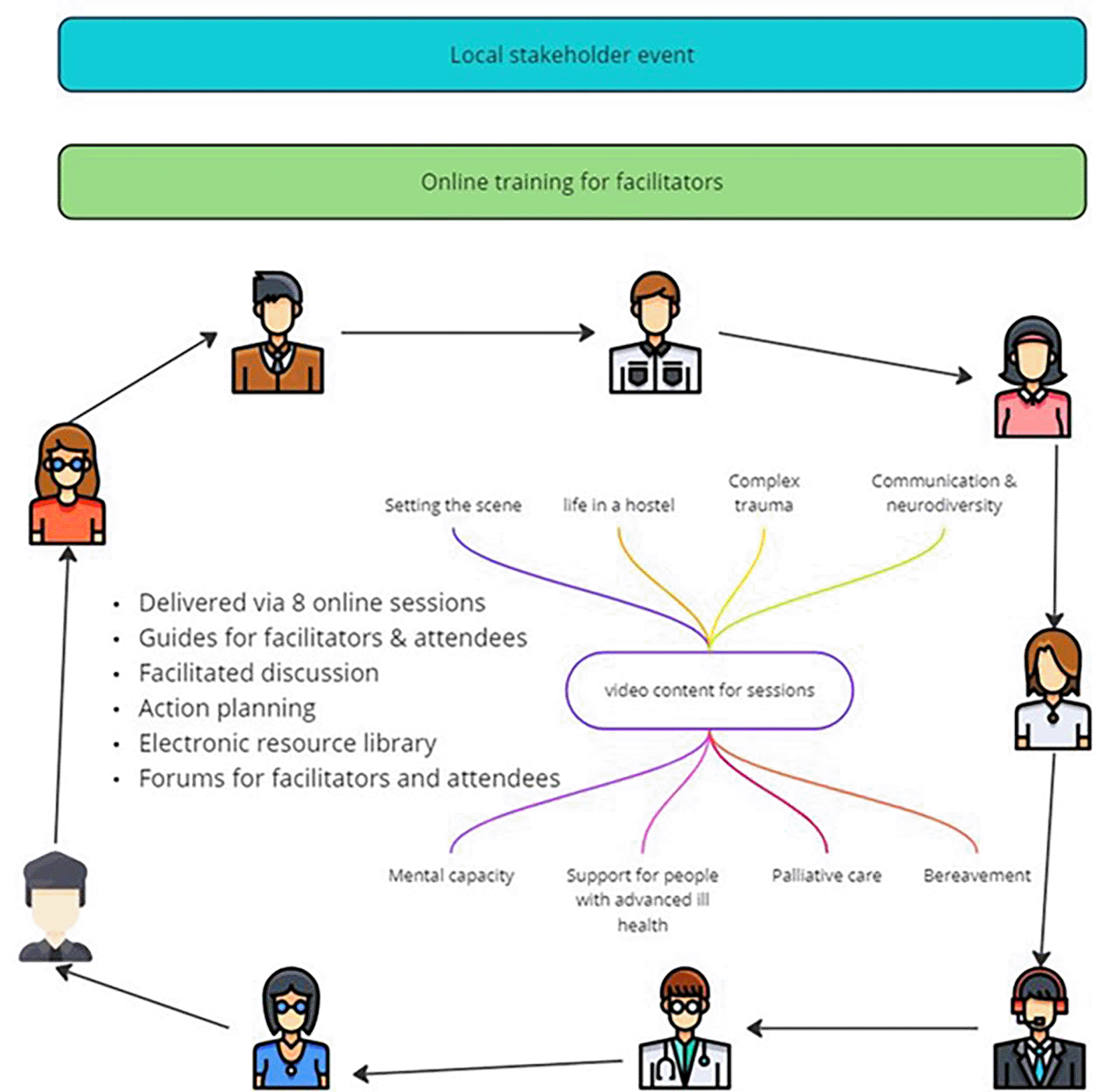
This realist evaluation aims to inform the development of IMPROVE and explore how it’s working may differ in different locations, so we can maximise the potential for widespread implementation.
1. Refine a programme theory to explain whether the Community of Practice Intervention has an impact, for whom, why and in what contexts, using a qualitative study.
2. Optimise the intervention based on the refined programme theory – to create an optimised IMPROVE intervention.
3. Test the programme theory using a realist evaluation of the optimised IMPROVE intervention in 10 new locations across England.
4. Coproduce recommendations, to maximise the potential for using IMPROVE to facilitate multiagency working with the aim of supporting people experiencing homelessness with advanced ill health and palliative care needs, in other locations.
1. What are the mechanisms by which the Community of Practice Intervention works to facilitate multiagency approaches to supporting people experiencing homelessness with advanced ill health and palliative care needs?
2. What are the contexts which determine whether the IMPROVE intervention produces the intended or any unintended outcomes?
3. In what settings is IMPROVE most likely to be effective?
This project will be delivered using realist evaluation methodology informed by The Medical Research Council guidance28 and reported in line with the Rameses II guidance.29
Realist methodology was chosen as it acknowledges that what works in one setting, may not work in another. Through our piloting of the Community of Practice Intervention, we have seen this to be the case with several potential factors effecting outcomes. Realist evaluation also recognises how the thoughts and feelings of people accessing the intervention can be the inherent mechanisms that shape outcomes. Given that the acceptability and effectiveness of intra-professional education and the development of relationships are likely to play key roles in how IMPROVE works, realist methodology is particularly well suited.
Realist research begins with theorising, then testing and refining context, mechanism and outcome configurations. Drawing upon feedback from people that have already used IMPROVE, we have initial insights regarding the context (C) and mechanisms (M), which could be activated to produce outcomes (O) in relation to palliative care for people experiencing homelessness, which forms our starting point for the current study.
An example of an initial programme theory configuration, based on our pilots is:
Creating space (C) to connect different professional groups, working in the same locality can create shared understanding about optimal palliative care for people experiencing homelessness, and the roles of different professional groups within that (M) and enable the collaboration needed to facilitate access to better support towards the end of life for people experiencing homelessness (O).
Throughout the programme the research team will iterate Context – Mechanism – Outcome configurations to support the understanding of what works, why, and in what circumstances.30,31 NVivo will be used to support this process.32,33
The research project is split into 3 phases as per Figure 2.
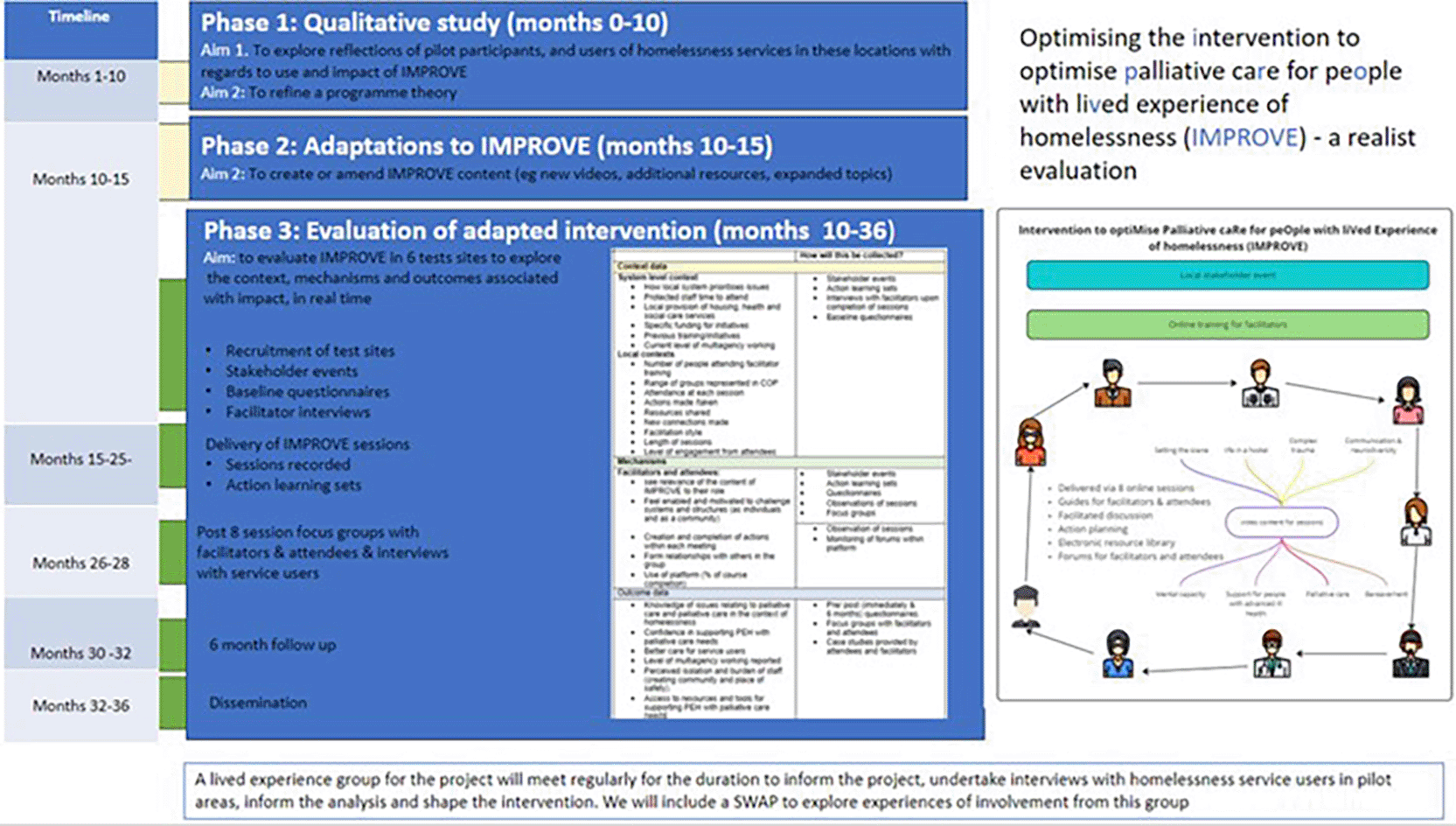
Interviewees will be recruited from the following groups:
• People that have previously received training and used the Community of Practice intervention resources to facilitate a group.
• People that have attended a Community of Practice.
• Service users that were supported by a service that was involved in a Community of Practice. Practitioners within these services have been asked to advertise the opportunity to be involved. These service user participants will be asked to think about what they think practitioners should learn about, as well as about their own experiences of accessing health care generally. They will not be directly asked to talk about palliative and end of life care issues.
We will circulate an invitation via email to the mailing list of people that previously attended the facilitator training or attended a Community of Practice session. The email will contain an information sheet about the study and contact details for the research team for them to express an interest in participating in the study. Potential participants who respond to this email will be sent a link to an online consent form using UCL’s REDCAP system and a link to an online calendar to select a time that suits them for an online interview.
Service users will be recruited through keyworkers within homelessness services; a method used in our previous research.9,21
Online interviews with facilitators and attendees will take using a realist approach34 to explore interviewee perspectives on if, how, why and for whom the Community of Practice intervention has had beneficial effects. They will also explore challenges of using this intervention or sustaining engagement with people that attended. We will use the ‘teacher – learner cycle’ in which the interviewer alternates between learner role (learning from participants about their perceptions of the initial CMO configurations) and teacher role (the interviewer teaches the participant about the initial programme theory).35 We will seek participants ‘stories’ about the intervention and case studies about its impact on practice and/or service user experiences to help us understand the mechanisms and outcomes operating in their context.36 For those that attended facilitator training but have not yet implemented the Community of Practice intervention, barriers to implementation will be explored.
Interviews with service users will explore experiences of accessing health and social care support, and what they feel practitioners should learn about in the Community of Practice intervention. Interviews with service users will be undertaken with a Groundswell Research Officer. A £20 voucher will be offered in recognition of people's time and participation.
All interviews will be recorded directly into the UCL One Drive and transcribed using TP Transcription services. They will then be analysed using NVivo.
Following analysis of interview data, we will hold an online workshop to present back the interview findings and proposed adaptions planned to create IMPROVE, to all interviewees (up to 40 people) for sense checking and feedback. If services users are unable to attend the online workshop, they will receive a short report outlining what action we will take as a result of their input, and they will also be invited to feed back on this.
We will also invite a selection of people that participated in Phase 1 (up to 10 people) to refine the programme theory. Both meetings will be audio recorded and used to further develop the programme theory.
We will use realist analysis methods to examine the interview transcripts and identify participants views on the contexts, mechanisms, outcomes involved and their interactions, to expand our initial thoughts about CMO configurations (from previous pilot work) and to ultimately develop a programme theory. We will use NVivo and the approach put forward by Bergeron & Gaboury33 to identify CMO configurations that explain interactions and impacts in different settings.
The transcripts of the workshop and programme theory meeting will also be analysed using realist analysis, and further refinements will be made to the programme theory if necessary.
In Phase 2 adaptations will be made to create IMPROVE. These will be based on the results from Phase 1.
Examples of changes that may be made include the total number of sessions recommended, the format of the sessions, the content in each session (i.e. the video content, discussion points and resources), and the facilitation training.
We will work with both our steering group and our lived experience group to develop IMPROVE and we will present revised ideas back to them and other interested and relevant partners. We will use our professional connections, and the National Palliative Care and Homelessness Network (which the authors developed through a previous NIHR grant)15 to identify experts who could be involved in developing additional material.
A short informational video will also be created which could be used by potential facilitators to advertise and raise awareness of IMPROVE for both commissioners of services in their local area, and people that may want to join IMPROVE sessions in their area.
We will also recruit sites in which to deliver IMPROVE for Phase 3.
In Phase 3 IMPROVE will be delivered at ten test sites across England in partnership with the research team.
IMPROVE will start with a stakeholder event. The stakeholder event will be required to raise awareness and get local buy-in for the project and to explore the local context. Interested staff from homelessness services, health and social care services including addiction workers, palliative care staff, mental health professionals and commissioners of local services will be invited. Facilitators will be supported to arrange these events through the provision of a slide deck that they can adapt for a local audience, and guidance around which professional roles should be represented at the event.
Following the stakeholder event, facilitators will convene a multidisciplinary, multiagency group of practitioners who will commit to attending the community of practice regularly, starting with the core IMPROVE sessions. The 8 core sessions will be recorded at each site. Questionnaires will be given to facilitators and attendees at the beginning and end of the sessions, and 6 months after completion of these sessions. A focus group of attendees will be held following these sessions within each site. Consent will be sought for all research interventions from everyone involved.
The facilitators from the ten sites will also come together as an Action Learning Set bi-monthly facilitated by the Clinical Research Associate.
Service user interviews will be completed at each test site, following completion of the core sessions to explore their views on care they receive.
We aim to recruit ten diverse test sites, with at least 2 facilitators for each location.
Information about the project will be circulated via the National Palliative Care and Homelessness network mailing list. It will also be circulated by the organisations involved in this project via newsletters and social media.
Interested sites will be asked to identify potential facilitators and complete an Expression of Interest. Chosen sites will be asked for a letter of support from the organisations that employ the facilitators.
We will then support and train the facilitators with a view to holding their stakeholder session in January 2026 and commencing IMPROVE sessions in February 2026. Facilitators will then be required to deliver the recommended sessions on an approximately monthly basis (the recommended format and timing of sessions will be informed by findings from Phase 1), completing before December 2026.
• Working within a homelessness, health, palliative care, drug and alcohol or social care service
• Through their role, interacting with people with lived experience of homelessness who may have advanced ill health and palliative care needs, either directly or indirectly
• Agreeing to attend information meetings between September - December 2025 and complete the online IMPROVE facilitator training in November and December 2025
• Willing and able to approach and convene attendees for the stakeholder meeting and Community of Practice intervention
• Able to deliver the stakeholder session in January 2026 and deliver monthly sessions from February 2026
• Willing to participate in all aspects of data collection and reporting for the study and facilitate sessions on a regular basis
Facilitators will be responsible for recruiting the people to attend their IMPROVE sessions. They will be provided with information sheets about IMPROVE and the proposed study and a link to an online consent form to share with people attending their sessions, although the research team will attend the first sessions to support this. People that are recruited as facilitators within the test sites should already be embedded in services in their location.
• Working in a role, or planning to be working in a role, in which they interact with people experiencing homelessness, or those who support them, e.g. from any of the following groups: homelessness services, palliative care services, health and social care, mental health services, addiction services.
• Willing to commit to attending regular IMPROVE sessions.
• Willing to complete baseline and follow up questionnaires and attend a final focus group.
We will recruit service users via the services that participated in the test sites for interviews following the delivery of the core IMPROVE sessions.
We will collect data on an ongoing basis in each location through a range of methods as outlined in Figure 2 and Table 1. The precise data collected may change based on findings from Phase 1, but the included outcomes are based on feedback received from the first Community of Practice programmes. These focus on the potential for IMPROVE to raise awareness of palliative care in the context of homelessness, facilitate connections between different services working in the same location to enable joint working, provide the tools and resources needed to deliver care, increase staff confidence in supporting this group towards the end of life, and ultimately facilitate better access to person centred care for people experiencing homelessness who may have advanced ill health and palliative care needs.
Stakeholder event
Discussion and exploration of the contextual factors, specific to the location that could influence the impact of IMPROVE will be facilitated and audio recorded. This will include discussion about homelessness and service provision relating to inclusion health, palliative care, housing, and social care and information about any previous initiatives targeting palliative care for this group.
Policy and practice context
The strategic plans of the test site ICBs will be reviewed for mentions of ambitions or plans to tackle health related inequity in general, and in regards specifically to homelessness and/or palliative care. We will ask sites what previous interventions (if any) in this field have occurred as part of the recruitment process.
Questionnaires at baseline, immediately post intervention and 6 months post intervention for facilitators and attendees
Questionnaire will be completed at the start of the intervention by both facilitators and attendees, immediately post intervention, and 6 months post intervention. All facilitators and attendees will be encouraged to complete the questionnaires by the research team.
The questionnaire is based on a questionnaire developed to measure practitioner perspectives on how the Communities of Practice programme improves outcomes for people experiencing multiple exclusion homelessness.20
The questionnaire aims to understand the participants’;
• Professional background
• Experiences of multiagency and multiprofessional working with regards to supporting people experiencing homelessness
• Confidence in supporting people experiencing homelessness who may have palliative care needs
• Perceived level of support in their professional role (isolation)
• Access to tools, resources and training for supporting people experiencing homelessness with palliative care needs
• Confidence in advocating for support from other services
Observation of sessions
Each IMPROVE session will be audio recorded. A standardised form will be used to record details of the following, which will be completed after reviewing the recording.
Data points will include:
• Number of attendees
• Professional background of attendees
• Actions made/taken
• Resources shared
• New connections made
• Notes on how the sessions were facilitated
• The length of the sessions
• Level of engagement from attendees
The transcripts from the sessions will also be analysed using realist analysis to identify CMO related evidence.
Focus groups with attendees after recommended number of sessions
Focus groups of IMPROVE attendees will be held after completion of the 8 sessions, to explore experiences of attending the sessions, any potential outcomes for attendees, and also to gain specific feedback and suggestions for further improvement. There will be an option for interviews for those who cannot attend the session but would like to contribute.
Service user interviews
At the end of the intervention, we will interview people accessing the homelessness services that have participated in IMPROVE at each site. We will not ask specifically about IMPROVE but will explore their views on care they are receiving and what could be done to improve this. We intend to interview 2 service users at each of the 10 locations. Service users will be recruited in the same way as outlined in Phase 1 - via key workers within participating homelessness services.
Action learning sets
The cohort of facilitators from the 10 test sites will meet bimonthly online. These meetings will be facilitated as Action Learning Sets and recorded. An action learning set is a meeting in which facilitators from all test sites can work through challenges they identify in relation to implementing IMPROVE.37
The Action Learning Sets will be used to collect data about potential contexts, mechanisms and outcome associated with IMPROVE. They also provide facilitators an opportunity to learn from each other and solve problems relating to IMPROVE in real time. These will be facilitated by the Clinical Research Associate who is a nurse with 25 years' experience of working with this client group and the associated challenges. These sessions will be audio recorded.
In this evaluation, each test site will be a separate case. Through direct observations, and questionnaires, focus groups and interviews we will capture different perspectives and explore insights into context, mechanism and outcome related factors and their interactions, to create a case study at each site. Data from each case will be compiled and analysed, using deductive and inductive approaches. We will use realist analysis, using the programme theory developed in Phase 1 as the initial codes, within NVivo.
New codes will be created to capture new ideas about CMO configurations (CMOc's) that emerge during Phase 3. Findings from each case will then be synthesised to map context-mechanism-outcome configurations, using retroductive logic. We will do this by comparing CMOc's from across different locations to help with the development of transferable explanations to refine and modify the overall programme theory.
Where relevant, data from facilitators and attendees will be analysed together; however, data from both groups will also be compared during the development of themes to identify similarities, differences and disagreements.
Throughout the programme data will be coded by BH and SDS but discussed at key points by the wider research team including the lived experience group to shape key themes, interpret meaning and ensure credibility and authenticity. Memos and reflective diaries will be used by BH and SDS throughout the analysis process to reduce the subjectivity of the qualitative results.
The five steps of thematic analysis will be applied as follows:
1. Familiarising with the data: BH and SDS will read and re-read all the transcripts from action learnings and focus groups and interviews. During this process, concepts and ideas (‘codes’) will be proposed. BH and SDS will discuss the selection, labelling and meaning of codes to inform the next stage of the analysis.
2. Generating initial codes that represent the data. These will be discussed regularly with the project group and the lived experience group before applying the agreed codes systematically across the dataset using NVivo software.
3. Searching for themes within the data. Using the coded data, BH and SDS will identify themes by combining groups of codes. A thematic map will be produced to illustrate the links between themes and codes.
4. Themes will be reviewed and refined with support from the lived experience group and the wider project team.
5. The final themes will be defined and described using quotations to illustrate meaning and relationships between themes.
Quantitative data gathered through questionnaires and session observations will be collated and described using descriptive statistics with IMB SPSS (Statistical Package for Social Science) version 25. Pre, post and 6-month post scores of variables measures in the baseline questionnaire (levels of multiagency working, confidence, perceived level of support and access to resources) will be compared using Wilcoxon signed rank test.
There is considerable patient and public involvement in this project, informed by the TIFFIN recommendations.38,39 Specific attributes of the PPI programme include:
• One of the original co-applicants for the project has a lived experience of homelessness.
• We have a 0.2 wte Research Officer from Groundswell, an organisation which supports people with a lived experience of homelessness to share their experience of services with practitioners and providers and get involved in research. This Research Officer will be involved in collecting interview data from people experiencing homelessness and will also be involved in data analysis, and providing training to our lived experience volunteers
• We have recruited a group of six people with lived experience who will advise on and steer the project. This group will be supported by Pathway, a charity that also supports people experiencing homelessness to get involved in research. The group will meet for bi-monthly 2-hour research meeting throughout the project.
• All the lived experience volunteers will also be able to get involved in research interviews in Phase 3 of the project alongside the Groundswell research officer if they want to do this. Groundswell will provide any training that is needed for this. Potentially each one of the 6 lived experience steering group participants can be assigned one of the 10 study sites and then be a link for that site. They will be able to undertake the lived experience interviews there, and facilitate the practitioner focus groups with supervision at the end. We will track hours and activities so that their learning can be evidenced.
• Lived experience volunteers are also being invited to take part in creating resources for IMPROVE.
• To support the lived experience volunteers to manage any thoughts and feelings raised by the topic area, the lived experience volunteers are being provided with a reflective practice session delivered by a senior Psychologist that runs about a week after each research meeting.
• Lived experience volunteers are being recompensed for their time using vouchers distributed using the Prezzie voucher App.
Running parallel with this programme a ‘study within a project’ (SWAP) will then aim to explore the experiences of co-producing palliative and end of life care research with people with a lived of homelessness, by asking them to complete reflective diaries on a bimonthly basis and interviewing them about their experiences at the end of the project. Researchers will also complete reflective diaries.
In addition, two researchers (CS and SDS) have extensive clinical experience of providing outreach primary care to people experiencing homelessness and will remain alert to any clinical concerns presenting in the lived experience group as needed.
It is recognised that involving people with a lived experience of homelessness in palliative and end of life care research is potentially sensitive and could present ethical issues. However, the research team have considerable experience in this area, and the research is being conducted in line with the Tiffin recommendations38,39 for involving people with a lived experience of homelessness in palliative and end of life care research.
People with a lived experience of homelessness are also being directly interviewed for this project, and the subject matter of the project is potentially highly sensitive. However, although the people with lived experience of homelessness who are being interviewed will be people who have advanced health care problems, they will not need to be near the end of life, and they are not being asked about palliative or end of life care issues specifically. They are being asked about what they think practitioners should learn about, along with their experiences of health care generally. Trying to find people experiencing homelessness at the end of life to ask them about their experiences of end-of-life care safely, and with adequate support, was felt not to be possible within the confines of this study.
Being asked about general health care experiences can still be challenging for people experiencing homelessness, who have often had difficult experiences of health care. The Groundswell Research Officer has been recruited to help people to feel safe opening up about their experiences. The Clinical Research Associate is also senior inclusion health nurse with considerable experience of providing signposting, guidance and support to both patients and support staff. She will be able to provide this advice and support if circumstances warrant at the end of interviews.
People with a lived experience of homelessness may be less comfortable with online interviews. As such we are going to conduct interviews with people experiencing homelessness face to face as needed.
Professional attendees to IMPROVE are being asked to engage in emotional and potentially distressing content. However, all these professionals already work in fields where they are coming across these issues every day. Facilitators chosen for this programme will need to be suitably experienced and able to fully understand the potential impact of these conversations and sensitively support the discussions.
Practitioners in health care and homelessness services are currently very stretched. They may find it difficult to engage with requirements of the IMPROVE Community of Practice programme in Phase 3. In particular, the Community of Practice programme facilitators will need to take on a lot which may be challenging in terms of time and effort. This is a risk for the programme throughout delivery. The Action Learning Set will support the IMPROVE Community of Practice facilitators to share their concerns. To try to mitigate potential issues individuals who sign up to be facilitators of Phase 3, will be asked for a letter of endorsement from their employer at the start. There will also be clear discussions at the beginning regarding the extent of what is needed. Despite this obviously it may be that a site or sites has to drop out due to unforeseen circumstances. If this is very early in the programme, we will explore at the time how realistic it would be to find a replacement site (or sites) and bring them in and adapt the protocol in line with this. If this is much later, we will not attempt to replace any sites due to the time commitments of the overall study.
The following outputs will be produced from this project:
1. An optimised version of IMPROVE which will be accessible on a publicly accessible website.
2. A short video about IMPROVE that can be used for future promotion. This video may be used by people who are interested in using the intervention in their area as a way of recruiting attendees or securing funding to sustain the project.
3. At least 4 academic papers describing:
4. Conferences presentations at national and international conferences, for a range of audiences including palliative care, inclusion health and general practice.
5. A webinar to launch the revised IMPROVE intervention.
6. A final project report for the NIHR.
7. Social media content using the social media channels of the research teams organisation.
8. Blogs for a range of audiences will be produced and widely shared, targeting different audiences.
Ethical approval for the project was received on 04/02/2025 from the UCL Research Ethics Committee. The project ID is 0234.
We will circulate an invitation via email to the mailing list of people that previously attended the facilitator training or attended a Community of Practice session. The email will contain an information sheet about the study and contact details for the research team for them to express an interest in participating in the study. Potential participants who respond to this email will be sent a link to an online consent form using UCL’s REDCAP system and a link to an online calendar to select a time that suits them for an online interview.
This study complies will comply with consensus-based reporting guidelines for qualitative research (COREQ; SRQR).
Emma Casey, Research Manager, Groundswell, was fully involved in the Conceptualisation of this project protocol, and was the lived experience lead for the project at the protocol stage. However, during the time that the research proposal was being considered, she left her employment at Groundswell. We have been unable to contact her prior to the publication of this article, but we want to fully acknowledge her contribution to this protocol.
1. Professor Michelle Cornes – Professor of Health and Social Policy Inequalities, University of Salford, Manchester
2. Dr Ryan Young - Specialist homelessness and inclusion health GP, Brownlow Health, Liverpool
3. Dr Dana Beale – Specialist homelessness and inclusion health GP at Great Chapel Street Medical Centre, Westminster
4. Dr Laura Chapman – Marie Curie Hospice Medical Director, Liverpool
5. Dr Gary Witham – Nurse and Senior Lecturer at Manchester Metropolitan University
6. Dr Zana Khan – Specialist homelessness and inclusion health GP and researcher in inclusion health education
7. Mary Kneavesy - Assistant Director of Client services for Providence Row Housing Association
8. Heidi McIntyre - Homeless Palliative Care Coordinator, St Anne’s Hospice, Manchester
9. Dr Natasha Bradley – Marie Curie/UCL advisor on realist methodology
10. Dr Emma Williamson - Consultant Clinical Psychologist / CEO, Aneemo
11. Mandy Pattinson – Lived Experience Programme Manager, Pathway
12. Gareth Davis – Lived experience group member
Provide sufficient details of any financial or non-financial competing interests to enable users to assess whether your comments might lead a reasonable person to question your impartiality. Consider the following examples, but note that this is not an exhaustive list:
Sign up for content alerts and receive a weekly or monthly email with all newly published articles
Register with NIHR Open Research
Already registered? Sign in
If you are a previous or current NIHR award holder, sign up for information about developments, publishing and publications from NIHR Open Research.
We'll keep you updated on any major new updates to NIHR Open Research
The email address should be the one you originally registered with F1000.
You registered with F1000 via Google, so we cannot reset your password.
To sign in, please click here.
If you still need help with your Google account password, please click here.
You registered with F1000 via Facebook, so we cannot reset your password.
To sign in, please click here.
If you still need help with your Facebook account password, please click here.
If your email address is registered with us, we will email you instructions to reset your password.
If you think you should have received this email but it has not arrived, please check your spam filters and/or contact for further assistance.

Comments on this article Comments (0)