Keywords
Homelessness; programme theory; realist approach; severe mental illness

Homelessness; programme theory; realist approach; severe mental illness
 How to cite: Abayneh S, Asher L, Smartt C et al. Developing community-based programme theories to address unmet needs of people experiencing homelessness and severe mental illness: protocol for a realist review [version 2; peer review: 2 approved, 1 approved with reservations]. NIHR Open Res 2026, 6:3 (https://doi.org/10.3310/nihropenres.14151.2)
First published: 07 Jan 2026, 6:3 (https://doi.org/10.3310/nihropenres.14151.1)
Latest published: 29 May 2026, 6:3 (https://doi.org/10.3310/nihropenres.14151.2)
How to cite: Abayneh S, Asher L, Smartt C et al. Developing community-based programme theories to address unmet needs of people experiencing homelessness and severe mental illness: protocol for a realist review [version 2; peer review: 2 approved, 1 approved with reservations]. NIHR Open Res 2026, 6:3 (https://doi.org/10.3310/nihropenres.14151.2)
First published: 07 Jan 2026, 6:3 (https://doi.org/10.3310/nihropenres.14151.1)
Latest published: 29 May 2026, 6:3 (https://doi.org/10.3310/nihropenres.14151.2)
Amendments added:
Title: community-based
Under background:
Paragraph 4: Mechanism-based middle-range explanations
Objective paragraph: Our guiding research question is: in interventions addressing the unmet needs of people who are homeless and have severe mental illness, what works, for whom, in what contexts, through what mechanisms, and with what outcomes, and to what extent?
Step1. Paragraph three: Findings from the formative sources will inform the development of IPTs. Data from these sources will be …support early analysis 58, 64. Interventions will be grouped functionally to surface shared context-sensitive programme assumptions across heterogeneous intervention forms about how mechanisms are triggered through interaction between interventions, actors, mechanisms, and contexts to generate outcomes(1-5). These assumptions…At this stage, these provisional, under-specified ICAMO configurations …, rather than a fully specified analytic framework. They will then be iteratively tested and refined against … using abductive and retroductive reasoning in … review stages (2, 3, 5, 6).
Study design: The systematic reviews support efficiency and explanatory depth by synthesizing broad evidence to test IPTs (3, 7-10). We will then undertake targeted purposive searches (e.g., realist reviews) to capture contextual and mechanistic insights (4, 11-13). Searches will continue until theoretical saturation is reached (11, 14)
Outcomes: Outcomes will include both improvements and persistent unmet needs within ICAMO configurations. Evidence of intervention functioning will explain how intervention-context-actor-mechanism interactions generate these outcomes.
Under screening: We anticipate that a full document double-screening will be impractical.
End of the first paragraph: The 10% double-screening threshold aligns with realist approaches and reflects pragmatic balances between feasibility and rigor, supporting early discrepancy detection and consistent screening decisions (3, 4, 15). Given the iterative nature of realist reviews, ... strengthened through periodic calibration, targeted additional double-screening where disagreement is high, third-reviewer adjudication, ongoing team discussions, and reflexive memoing (2-4, 14).”
Under next: toward mechanism-based middle-range explanations
See the authors' detailed response to the review by Geoff Wong
See the authors' detailed response to the review by Rasmus Handest
Homelessness is an increasing global public health and human rights crisis.1 It is estimated that 150 million people worldwide are homeless,2 and approximately 1.8 billion people lack adequate housing.3 This is likely underestimated because of variations in how homelessness is defined between contexts and due to the lack of data. There is heterogeneity in the homeless population over time and across societies.4 Generally, homelessness refers to a broad range of housing exclusion and precarity that ranges from living in unsuitable or inadequate housing to sleeping on the streets.5,6 Evidence, mainly from the Global North, has shown that people who are homeless experience a wide range of health inequalities including disproportionately higher all-cause mortality,7 discrimination and stigma,8 and higher risk of ill-health mental9–11 compared to the general population.
Co-occurrence of homelessness and mental health conditions has substantial negative consequences, including an increased risk of suicide and substance abuse, poorer physical health and wellbeing, increased personal and structural barriers to accessing and utilizing services, challenges in finding secure accommodation, and reduced life expectancy.7,9 People who are homeless and have a severe mental illness (SMI), e.g., schizophrenia, bipolar disorder, and major depressive disorder12 are at especially increased risk of unemployment, and poor retention in employment, severe poverty, lack of social support, stigma and discrimination,1,8,13 lack of access to healthcare,14,15 worse quality of life, and complex unmet needs.16
There are systematic reviews of several interventions for people who are homeless and have SMI, including critical time intervention,17 “case management” interventions that involve collaborative process where people with a lived experiences of health condition assigned professionals who assess, plan, facilitate, monitor and advocate for option to meet their needs,18,19 housing support and income assistance,20,21 “assertive community treatment”, i.e. specialized long-term community-based individualized, holistic models of treatment and support services delivered by multi-disciplinary team,22 peer support, and life skills training.23 These reviews suggested a range of positive impacts e.g., reducing homelessness, reducing hospitalizations, and improving quality of life. However, these systematic reviews have largely involved studies conducted in high-income countries, with no meaningful suggestions on how to address the varied needs of people who are homeless in diverse low-and middle-income countries (LMICs). Furthermore, systematic reviews provide little consideration of the contextual complexities, and non-linear causal interactions between interventions, contexts, actors, mechanisms, and outcomes in complex social interventions.24–27
However, to the best of our knowledge, few existing reviews have used theory-driven (e.g., realist) approaches to account for the complexity of interventions for people who are homeless and have SMI, and how to implement such interventions in particular contexts that may differ in important ways.25–27 The proposed review, therefore, aims to fill this gap through a realist synthesis of evidence to inform the development of a contextualized and transferable programme theory of interventions to address the needs of people who are homeless with SMI in LMICs. Realist review, or realist synthesis, is an interpretative, theory-driven, explanatory approach to evidence synthesis that investigates how a particularly complex intervention or programme functions in complex environments.28,29 Realist theory enables contextualization and transferability of findings across settings through unearthing the underlying causal mechanism and construction of abstract mid-range theories by augmenting with formal theories (See Table 1 for definitions of key realist concepts).30,31 The proposed review is being conducted to inform a wider study nested within the National Institute for Health and Care Research (NIHR) Global Health Research Group on Homelessness and Mental Health in Africa (HOPE) in Ethiopia, Ghana, and Kenya. In HOPE, we will use participatory methods to develop and evaluate community-based interventions to address the unmet needs of people who are homeless and have SMI living in LMICs in ways that are rights-based, contextually grounded, scalable, and sustainable.32 The current study will occur in three phases: development of initial programme theories (IPTs) through the proposed realist review outlined in this protocol (Phase1); testing and refining the IPTs (Phase2); and generating mechanism-based middle-range explanations (Phase3).
| Intervention (I): a combination of policy or programme components, implemented activities, strategies, and resources to bring change.37 |
| Context (C): elements in the background environment of the intervention that may have an impact on outcomes, including individual characteristics and capacities (demographic factors, knowledge, attitudes, health status, motivation, etc), interpersonal relationships between stakeholders, institutional/organizational factors (structures, policies, rules, norms and culture of the organization), and the wider social, economic, political, geographic, cultural conditions and policy infrastructures external to the interventions that trigger the mechanism, which then determine the programme outcomes.28,29,38 |
| Actors (A): individuals, groups, and institutions who are addressed by the intervention, and who play key roles in the implementation and uptake of an intervention.37 |
| Mechanisms (M): underlying causal or hidden generative forces that lead to outcomes, which often denote resources, reasoning, and decisions that actors make due to the resources provided by the programme. Mechanisms are not interventions or strategies themselves (e.g. training courses), but rather the response (e.g. why training changes behavior or does not) that is created as a result of the strategy or resource.37 |
| Outcomes (O): short-, medium- and long-term changes (both intended and unintended) resulting from mechanisms activated within specific contexts when actors received interventions.37 |
| Formal/substantive theory: existing theories that have been well-established within certain disciplines that help identify mechanisms or features of context and explain how overall sets of findings fit together.39 |
| Programme theory: a set of explicit or implicit assumptions summarising how the programme is organized and works.40 |
| Mid-range theories: more abstract and generalizable than ‘programme theories’ but do not constitute a ‘grand social theory’ themselves; instead, they are considered adaptive and cumulative explanations.40 |
| Abductive thinking: an interactive process of examining evidence and developing hunches or ideas about the causal factors linked to that evidence, for example, potential mechanisms to be investigated, based on what feels right, logic, what ideas surface based on data or clues.40 |
| Retroductive thinking: a form of inference that aims to uncover the underlying (hidden) causal mechanisms or structures that give rise to observed phenomena. This process requires the use of common sense, expertise, and imagination to build and test theories about underlying causal processes.40 |
| Demi-regularities: the idea that there are patterns in the world that tend to occur under certain conditions or contexts, but these regularities are not fixed and invariant and are sensitive to contextual factors.40 |
Our guiding research question is: in interventions addressing the unmet needs of people who are homeless and have severe mental illness, what works, for whom, in what contexts, through what mechanisms, and with what outcomes, and to what extent? The general objective of the proposed review is to conduct a realist synthesis of theoretical and empirical evidence, combined with formative work completed as part of the HOPE project, and to develop a programme theory explaining what interventions work, how, why, for whom, and in what circumstances to address the unmet needs of people who are homeless and have SMI in Ethiopia, Ghana, and Kenya. The specific objectives are to:
• Identify outcomes linked to interventions;
• Explore mechanisms through which community-based interventions address unmet needs;
• Identify key contextual individual, organization, community, and structural influences likely to determine whether the mechanisms produce the intended outcomes; and
• Describe the causal links between the intervention, context actors, and mechanisms, leading to improved outcomes for people who are homeless and have SMI.
Patient and Public Involvement, defined as research being carried out ‘with’ or ‘by’ members of the public, rather than ‘to’, ‘about’ or ‘for’ them,33 is a key feature of realist approaches. Extensive and interactive engagement with relevant stakeholders helps to ensure authentic, contextually relevant evidence, clarity, and the transferability of findings.34–36 The HOPE project, in which the current research protocol was nested, has been working with a multi-stakeholder partnership of researchers, policy makers, practitioners, and people with lived experience of mental illness (Lived Experience Advisory Group-LEAG) starting from the HOPE project proposal development. Each HOPE country team (Ethiopia, Kenya, and Ghana) established a multi-sectoral Community Advisory Board (CAB) that meets at key stages to guide and inform the project.32 Similarly, during the development of this realist review protocol, key stakeholders including multidisciplinary professionals and people with lived experiences of mental illness (n = 7) involved throughout the protocol development process and included as co-authors. We will draw on patient and public involvement as part of our active stakeholder engagement throughout the actual study phases.
Accordingly, we will convene a separate Research Advisory Group (RAG). The RAG members will comprise multidisciplinary professionals and researchers with combined relevant expertise in the area of people who are homeless and have SMI, complex intervention design, and people with experiential knowledge of homelessness and SMI. The members will be selected from the HOPE multi-stakeholder consortium members, including investigators from each HOPE project country, all members of the LEAG, and other relevant professionals. The RAG will provide methodological guidance and feedback throughout the study phases. In addition to the RAG, we will actively involve and work with the LEAG throughout the review process. The LEAG and RAG will meet online at least three times (along with continuous e-mail exchanges) during the review process. Key findings of each phase of the review will be presented, and feedback will be obtained from the LEAG and RAG. Notes of the meetings will be kept on programme theory to maintain an audit trail of the decisions made and improvement of the findings.
Homelessness is often described as a “wicked problem”, which refers to a complex problem resulting from multilevel and interacting individual, interpersonal, organizational, and systemic factors, which require a coordinated solution from many stakeholders, including social and political actors.41–43 Co-occurrence of homelessness and SMI requires approaches for evidence synthesis and intervention development which are able to account for complexity.1,26,44 Theory-driven approaches such as realist review is appropriate for a deeper understanding of complex social programmes within heterogeneous social contexts.26,35,45
Unlike traditional systematic reviews that focus on whether interventions work, realist reviews focus not only on “what works” or the effectiveness evaluation of interventions but also on the underlying theories and mechanisms. This offers an opportunity for generating context-sensitive causal explanations about how, why, for whom, and in what contexts interventions work or do not work.24,29 Realist reviews bring together evidence and insights from multiple sources, allowing synthesis and triangulation of theoretical and empirical evidence. This approach promotes stakeholder engagement, optimizes learning and generates accessible recommendations for policy and practice that can be applied in different settings.28,40,46
Furthermore, realist reviews aim to recognize and account for the complexity and non-linear causal relationships of social systems at multiple levels: macro-level (systemic external situations that influence the function of the programme), meso-level (organizational culture, rules, regulations, structure and functioning of services), and micro-level (knowledge, attitudes, skills, values, health, and behaviour of individuals involved in the programme).29,40,47 In realist approaches, the social world is understood by identifying underlying causal mechanisms using generative causation through realist logic. Realist logic includes inductive, deductive, abductive, and retroduction reasoning (See Table 1 for definitions of key realist concepts).48–50
As a theory-driven approach, realist review begins with IPTs and ends with a refined programme theory that explains how a complex intervention or programme works.29,34,40 Programme theories are typically expressed as context-mechanism-outcome (CMOs) configurations.29,38,51 For the proposed review, we will use the expanded model of intervention-context-actors-mechanisms-outcome configurations (ICAMOs).37,49,52 The ICAMO approach postulates that “outcome(O) is produced by mechanism(M) activated in context(C) through actors(A) when interventions(I) are implemented”.53 Realist approaches recognize that interventions and actors interact within their social reality, which also influences how the intervention is implemented and how the actors respond (or not) to the resources offered by the intervention.39,54 The ICAMO configurations make programme resources more explicit (i.e. differentiate intervention from context), and seek to clarify actors’ roles, perspectives, and reasoning in designing and implementing interventions.37,49
There are several ways to conduct a realist review, each with a different number of iterative steps.35,55 This review will be informed by the iterative stages set out by Pawson et al.,29,56 and recent realist review methodological papers that provide further depth and information regarding searches, data extraction, analysis, and synthesis approaches.48,55,57,58 The findings will be reported according to established realist quality and publication standards: Realist and Meta-narrative evidence syntheses–Evolving standards (RAMESES).24,59 Each stage will incorporate stakeholder consultations. The review protocol for this study was preregistered with the International Prospective Register of Systematic Reviews (PROSPERO, CRD420251067136); and the Preferred Reporting Items for Systematic Reviews and Meta-Analysis Protocols (PRISMA-P)60 checklist can be found online on Open Science Framework, https://doi.org/10.17605/OSF.IO/G432U.61 The stages of the review are illustrated in Figure 1, and detailed below.
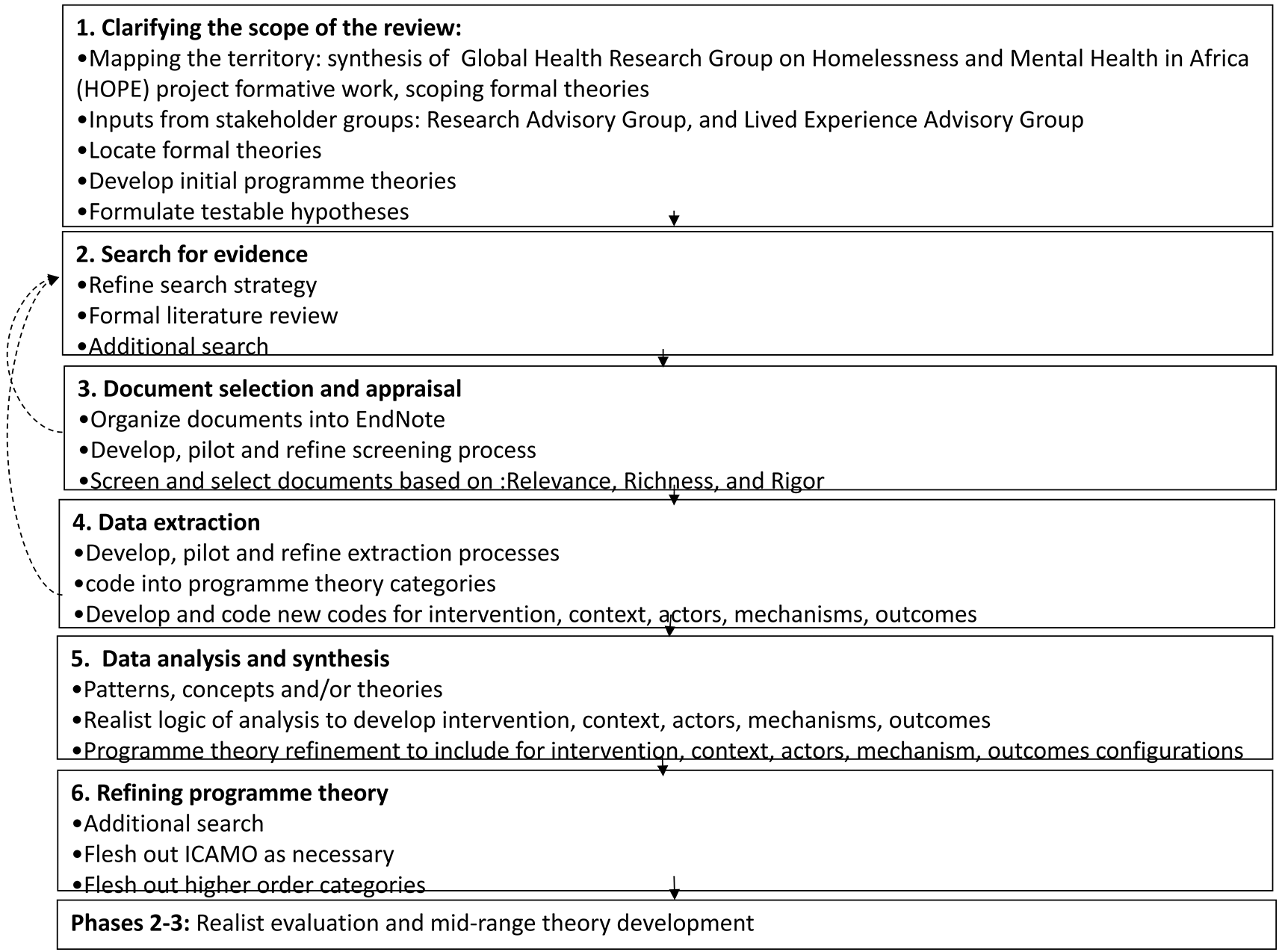
1. Step 1. Clarifying the scope of the review
Different approaches can be used to clarify the scope of the study and identify/develop IPTs; for example, informal scoping reviews, programme documents, systematic reviews of scholarly articles, and interviews or focus groups with stakeholder groups.62 In this study, we will use multiple data sources. We will conduct a preliminary informal literature search to identify existing literature about interventions for people who are homeless and have SMI.
More importantly, we will synthesise findings from formative work conducted in the HOPE project.32 This includes a systematic review,63 a global expert consultation exercise, and ethnographies, surveys, theory of change workshops and intervention mapping within the study sites in Ethiopia, Ghana and Kenya. The HOPE systematic review aims to identify interventions for people who are homeless and have SMI in LMICs, as described elsewhere.32 Findings will provide information on the scope of existing evidence, types of interventions, and implementation strategies in LMICs, which can inform the scope of the proposed review.
Findings from the formative sources will inform the development of IPTs. Data from these sources will be deductively extracted and coded using an ICAMO framework to support early analysis.58,64 Interventions will be grouped functionally to surface shared context-sensitive programme assumptions across heterogeneous intervention forms about how mechanisms are triggered through interaction between interventions, actors, mechanisms, and contexts to generate outcomes.24,35,57,65,66
These assumptions will be formulated as early working hypotheses structured in the format “if … then … because” statements, which make tentative links between ICAMO elements and explanations of which interventions address the unmet needs of people who are homeless and have SMI, for whom, how, why and in which contexts.59,67 At this stage, these provisional, under-specified ICAMO configurations will serve to organize evidence, make programme assumptions explicit, and help for stakeholder sense-making, rather than as fully specified analytic framework. They will then be iteratively tested and refined against global empirical evidence using abductive and retroductive reasoning in subsequent review stages.24,31,35,66
We will conduct a scoping review of literature to locate existing formal theories (also called substantive theories) to provide a framework to inform the development of the IPTs.39 Formal theories are pre-existing theories within a range of disciplines, such as behavioural sciences, social sciences, at a higher level of abstraction than programme theories, which provide a bridge to a wealth of existing research and knowledge about a topic.39,49,68 Formal theories help interrogate IPTs about how an intervention brings about change at multiple levels (individual, interpersonal, institutional, infrastructural, and structural).24,39,69 We will conduct a scoping review using the BeHEMoTh approach (behaviour of interest, health context, exclusions, models or theories) to locate existing formal theories in studies for people who are homeless and SMI.70 The identified formal theories will be presented for stakeholder groups (described below) to select and prioritize relevant theories which inform IPT development.
2. Search for evidence
Relevant academic literature will be used to refine the IPTs and test the hypotheses formulated in Stage 1.24,58 The process of searching, screening and analyzing relevant material in a realist review is not a single-point exercise and has no one prescribed method. Rather, the process requires ongoing multiple iterations, and different search methods to support the different components of the realist synthesis process (See Figure 1).24,55,58 In the proposed review, formal and additional searches will be conducted. Details of the search process and record of any subsequent alterations will be documented in a research logbook to provide transparency and enhance the quality of the review.24,55
A formal search for published documents will be conducted in databases, which include MEDLINE, PsycINFO, EMBASE, the Cochrane Central Register of Controlled Trials (CENTRAL), Global Health, Cumulative Index to Nursing and Allied Health Literature (CINAHL), PsycARTICLES, Web of Science, Global Index Medicus; Applied Social Sciences Index and Abstracts (ASSIA), and International Bibliography of the Social Sciences (IBSS). Many of these sources are chosen due to their use in the HOPE systematic review related to this study.71 The search terms will be adapted from the HOPE systematic review, but increasing the scope by not restricting the search to LMICs.
Where necessary, we will use complimentary search techniques such as ‘CLUSTER’ searching (Citations; Lead author; Unpublished materials; Scholar searches; Theories; Early examples; Related projects), to identify associated additional documents that might add to the conceptual and contextual richness of documents identified in the formal search.72 This search will be purposive, directed by emerging programme theories using search techniques such as searching for “sibling” (i.e., directly linked outputs from a single document) or “kinship” (i.e., associated papers with a shared contextual or conceptual pedigree) papers associated with included documents.55,72,73 We will also conduct forward and backward citation searches, using Google Scholar to identify further related papers from the wider literature. Searching will continue until sufficient data are found (‘theoretical saturation’) to conclude that the refined programme theories are sufficiently coherent and plausible.24,55
We will apply pre-determined inclusion and exclusion criteria, which will likely be refined in light of the emerging data and theoretical development as the review progresses.24 The eligibility criteria will be broad and include the following:
Study designs: In keeping with RAMESES guidelines,24,59 there are no restrictions on the types of study designs. However, given that there is a large body of systematic reviews available on various intervention types for people who are homeless and have SMI, to limit the scope of our review and be pragmatic due to time constraints, a systematic review of reviews (quantitative as well as qualitative) will be considered. The systematic reviews support efficiency and explanatory depth by synthesizing broad evidence to test IPTs.27,35,59,74,75 We will then undertake targeted purposive searches (e.g.., realist reviews) to capture contextual and mechanistic insights.34,36,55,57 Searches will continue until theoretical saturation is reached”.34,76
Population: The population of interest for this review is adults aged 16 years or above who are homeless and have SMI. Homelessness is operationalised as “(a) literal (street) homelessness, (b) residence in a homeless shelter, squatting, (c) admission in a psychiatric facility, jail or religious healing facility with no place of residence to go post-discharge, and (d) previous street homelessness. This definition excludes the following groups: (a) individuals described as “unstably housed, which include people living in overcrowded homes, living in substandard places with inadequate amenities)”, (b) “landless” individuals, or those living in accommodation with insecure tenancy, (c) individuals living in slum/shantytowns but in stable accommodation, (d) internally displaced people, (e) child homeless populations”.16
SMI will be operationalised as “diagnosis of schizophrenia, schizoaffective disorder, bipolar disorder with psychotic features, and major depression with psychotic features according to ICD-10/DSM-V guidelines or clinical assessment. We will also include studies that use the broader terms of SMI, psychosis, psychosocial disability, mental disability, people who are homeless with comorbid SMI and alcohol/substance use disorders”.16 We will exclude people with substance use disorders without SMI; people with SMI who are at risk of homelessness, and people living in substandard housing.
Intervention(s): The main interventions identified from the HOPE intervention mapping exercise and co-produced ToC include, but are not limited to, are community-based interventions intended to address the multifaceted complex unmet needs of people who are homeless and have SMI. These include: housing interventions (including supported living, community-based residential interventions), self-help, peer support, drop-in centres (e.g., day centres), empowerment interventions (i.e. interventions to strengthen exercise of human rights and/or to increase involvement of people who are homeless and have SMI in their own care and/or service improvement and/or system strengthening), recovery or rehabilitation (e.g., community-based rehabilitation), family-based interventions, substance use interventions, physical health interventions, non-governmental organization-based interventions, livelihood/vocational interventions (i.e. any interventions to improve economic status or livelihoods at the individual and/or family level), interventions to increase engagement in education, interventions designed to increase social inclusion of people with lived experience of homelessness and SMI, psychological interventions, other support interventions (such as provision of food/clothing/other basic needs), service models for delivery of care, and studies to support medication adherence or to safely manage discontinuation. However, we will exclude efficacy studies of pharmacological interventions, and studies of long-term institutionalization.
Contexts: We are looking for evidence about interventions in largely community-based settings (excluding humanitarian settings) for people who are homeless and have SMI. Intervention settings may include residential settings (including temporary or long-term shelters/hostels), the health system (primary, secondary and specialist mental health care levels), and traditional or religious facilities. The review will have no restriction by geography. We will thus extend the HOPE systematic review, which focused solely on LMICs.
Outcomes: The outcomes of interest include, but are not limited to those prioritised by people who are homeless and have SMI as identified from the HOPE ethnographies and surveys in Ethiopia, Ghana and Kenya, and identified by the HOPE global expert consultation and systematic review. Domains of relevant outcomes include basic needs (water, food, self-care, clothing, shelter), social needs, clinical outcomes (mental and physical health, mortality), livelihood (economic outcomes at the individual and/or household levels), social inclusion, empowerment (i.e. strengthening of human rights, support or advocacy for people who are homeless and their caregivers), and quality of life/well-being. Outcomes will include both improvements and persistent unmet needs within ICAMO configurations. Evidence of intervention functioning will explain how intervention-context-actor-mechanism interactions generate these outcomes.
Language: English.
Publication dates: We will restrict our focus to studies published within the past 10 years (2015–2025) to ensure the findings reflect the relatively contemporary landscape of programmes for people who are homeless and have SMI.
3. Document selection and appraisal
Screening
All data sources will be exported to Endnote X7 reference manager. Selection will be accomplished in stages. We anticipate that a full document double-screening will be impractical. First, author SA will screen all potentially relevant documents retrieved by title and abstract for relevance against inclusion and exclusion criteria detailed above. Second, the full-texts of documents deemed to meet the inclusion criteria will be read in detail and assessed for relevance, richness, and rigor as detailed below.24,36,48 A random sample of 10% of documents at the two screening stages will be checked by another reviewer for consistency of application of screening criteria. Any disagreement will be resolved through discussion or if necessary, by consulting with the rest of the team. The 10% double-screening threshold aligns with realist approaches and reflects pragmatic balances between feasibility and rigor, supporting early discrepancy detection and consistent screening decisions.35,57,77 Given the iterative nature of realist reviews, rigor will be strengthened through periodic calibration, targeted additional double-screening where disagreement is high, third-reviewer adjudication, ongoing team discussions, and reflexive memoing.24,35,57,76
Appraisal of the studies will use the criteria of relevance, richness and rigour.48 The relevance of a document refers to its ability to provide information related to theory building, testing, and the review’s aims and objectives.24,35,48 Rigor in realist approaches refers to the credibility, plausibility, and trustworthiness of the methods used to generate the relevant data or a theory.24,48 Assessment of rigor will focus on the extent to which a document/study provides a detailed description of their methods (e.g., sample size, data collection, data analysis), whether specific inferences drawn have sufficient support to make a methodologically substantial influence when developing/testing IPTs, and how reliable and generalizable their findings are based on those methods.24,35,48 This traditional assessment of rigor should be balanced, as “nuggets of wisdom” for realist review can be found in methodologically weak studies according to the conventional hierarchy of evidence.36,78 Hence, in line with realist review practices, we will not exclude any study based on rigor; rather, studies providing relevant evidence will be included, and results of appraisal of rigor will be included for transparency.79 Richness refers to the level of theoretical and conceptual depth and detail provided in a document.24,48,72 This help to assess the extent to which texts could provide in-depth explanation of how and why an intervention worked.72 Sources can have ‘conceptual richness’ and/or ‘contextual thickness’.72 Contextual thickness entails sufficient detail that enables the reader (i) to establish what is occurring in the intervention and the wider context and (ii) to infer whether findings can be transferred to other people, places, situations, or environments. Appraising for richness ensures only sources that can meaningfully contribute to the research question are included, making the review manageable and the findings more relevant.48,80
For all studies that meet our eligibility criteria and are included in the review, data quality appraisal will be undertaken using predefined criteria for assessment of relevance, richness, and rigor adapted from published studies (See Table 2).81 Each article will be appraised and classified into high, medium and low ratings for each appraisal category depending on its contribution to IPT development and established methods used in previous studies.35,48,81 No article will be excluded or included based on just one criterion, judgement will be made based on the overall value added to the research question.
4. Data extraction
SA will design and pilot a bespoke data extraction form in a Microsoft Excel spreadsheet to extract text segments across each full-text study deemed to be relevant, rich, and rigour congruent with realist review guidelines.35,58 First, studies classified as high according to our appraisal will be extracted followed by those rated medium/moderate and finally low richness papers will be extracted for any additional data or insights that could contribute to the refinement of IPTs. Data extraction will stop when theoretical saturation is reached (until the literature no longer contributes novel insights).48 SA will independently complete the extraction of data. Information will be captured on each document a characteristic includes: author(s), publication year, methods/design, population/participant demographics, setting, and key findings. In addition, elements of ICAMO will be extracted separately for each included study using the coding framework. For quantitative studies, rather than extracting numerical data, description of key findings and author’s interpretation will be captured. A random 10% sub-sample of data extraction documents will be reviewed independently by one other reviewer for accuracy. Any disagreement between the reviewers will be recorded and resolved through discussion or in consultation with a third reviewer.
5. Data analysis and synthesis
Data analysis and synthesis are intended to find and align evidence using realist logic to make sense of the different data contributions and refine the IPTs.29,36 For the proposed study, these will be informed by the processes outlined by realist methodological papers, which will involve formulating ICAMO configurations at multiple levels, consolidating recurring patterns or demi-regularities, and conceptual mapping/theory building.35,57,82
First, we will conduct a deductive thematic analysis of extracted data from each article and categorize them into the ICAMO components using a coding framework developed based on the IPTs in Step 1. The extracted data will be organized into an evidence table of ICAMO elements. The ICAMOs will be linked to the earlier IPTs to iteratively refine them into programme theories (PTs) by testing them against the ICAMO using a retroductive approach to uncover the causal mechanisms behind observed outcomes.50,83,84
Secondly, we will consolidate recurrent ICAMO configurations into demi-regularities (statements of what works, for whom, and in what circumstances).57,82,85 We will explore patterns within the ICAMO configurations and apply thematic labels based on similarity (categorizing conceptually similar ICAMOs).57,86,87 The consolidation process helps manage and reduce large amounts of data through grouping or categorizing conceptually similar IPTs.57
Finally, we will use the process of configurational mapping to create a visualization of the findings framed within the ICAMO model to explain the programme theory.37,57,85 We will use a conceptual map, such as feedback loop diagrams/causal loops, as an analytical strategy to map out pathways to identify and represent the elements of ICAMO and to illustrate the links between these constructs. This will help us to develop refined programme theories for people who are homeless and have SMI.57,83 Realist scholars contend that interventions are influenced by various levels of contexts (individuals, interpersonal, institutional settings, infrastructures/structural).88 We will inform the refined IPTs with relevant formal theories that support theorizing at these multilevel contexts39,89 and construct conceptual maps depicting their relationships systemically.57,82,85 This analysis will enable us to understand the most relevant and important mechanisms that work at different levels and build more transferrable IPTs across various settings.83
The refined IPTs will be presented and discussed with the RAG and LEAG for further feedback and to ensure an appropriate interpretation of results, contextual sensitivity, rigor, trustworthiness, coherence, and plausibility of the refined IPTs.24,67
The findings from this review, namely the refined programme theories, will be evaluated through realist evaluation of the intervention using a multiple case study design in Ethiopia, Ghana, and Kenya. The realist evaluation will enable further refinement of the programme theories through real-world testing. Then, the findings of the realist evaluation will be supported by relevant formal theories to substantiate the inferences made, make sense of the patterns of findings (demi-regularities) of emerging ICAMO configurations from HOPE pilot evaluation empirical studies, toward mechanism-based middle-range explanations, which will be transferable to wider contexts.24,31,34,39,49,90 This greater clarity on ICAMOs can further enhance transferability of the HOPE programme across different settings and usefully inform efforts to meet the needs of people who are homeless and have SMI.
This paper describes the protocol of a realist review that aims to explore what interventions work for people who are homeless and have SMI, for whom, in what circumstances, how, and why in diverse LMIC settings. The proposed review forms the first phase of a wider study intended to develop a theory-driven programme to address this population’s unmet needs, which will be tested and evaluated through realist evaluation using multiple case studies in Ethiopia, Ghana, and Kenya. To our knowledge, this is the first realist review aiming to use theory-driven evidence synthesis of interventions and develop programme theory for people who are homeless and have SMI to be evaluated in LMICs.
There are several systematic reviews of various interventions for people who are homeless and have SMI, mainly from the global North.17,18,21–23 Nevertheless, these reviews have focused on what works, and little is known about underlying causal mechanisms, and how findings are applied in different contexts. There is little theory-driven evidence synthesized that takes into account the complexity of the interventions, mechanisms underlying effective interventions and in which contexts the desired outcomes are most likely to be achieved.1,26 The conventional systematic review approach does not support transferability of findings to diverse contexts.91
The realist methodological approach described in this protocol paper adds to existing knowledge, and complements it by developing programme theory that enables theoretical transferability and applicability of findings in different contexts.35,38 Several strengths of the realist approach make it well-suited to consider developing programme theory for complex interventions for people who are homeless and have SMI.35 The realist review will provide the opportunity for synthesizing different pieces of evidence and working with a diverse group of stakeholders, including people with lived experiences, which will enhance a range of perspectives, the rigor and transparency of the evidence, and will improve the practical utility of the findings and accessible outputs that meet local needs.24,29 The diverse data sources and methodologies allow for examining interventions, contexts, actors, and mechanisms that lead to outcomes to develop programmes with wider context transferability.38,92 Further, a realist review can produce important information about the relative effectiveness of intervention components, thereby enabling practitioners, researchers, and service providers to design and implement interventions comprising only effective components for particular contexts.93
The proposed realist review will comply with evidence-based practices,29,94 hence the findings will inform a further evaluation of programme theories in a realist evaluation. We systematically outline each step including IPT development, the search strategy, extraction and analysis procedures, including coding methods and evidence synthesis to ensure replicability.35
Ethical approval is not needed for this protocol because this is a review and synthesis of literature in the public domain, and stakeholder groups will be involved to provide feedback and guidance based on their expertise and experience, but no data will be collected from them.
No data are associated with this article.
Abayneh S, Asher, L., Smartt, C., Mutiso, V., Yaro, P. B., Misganaw, E., … Hanlon, C. Developing programme theories to address unmet needs of people experiencing homelessness and severe mental illness: protocol for a realist review. 2025. https://doi.org/10.17605/OSF.IO/G432U.
This project contains the following underlying data: PRISMA-P checklist.
Data are avaliable undert terms marked CC0 1.0 Universal Public Domain Dedication.
Provide sufficient details of any financial or non-financial competing interests to enable users to assess whether your comments might lead a reasonable person to question your impartiality. Consider the following examples, but note that this is not an exhaustive list:
Sign up for content alerts and receive a weekly or monthly email with all newly published articles
Register with NIHR Open Research
Already registered? Sign in
If you are a previous or current NIHR award holder, sign up for information about developments, publishing and publications from NIHR Open Research.
We'll keep you updated on any major new updates to NIHR Open Research
The email address should be the one you originally registered with F1000.
You registered with F1000 via Google, so we cannot reset your password.
To sign in, please click here.
If you still need help with your Google account password, please click here.
You registered with F1000 via Facebook, so we cannot reset your password.
To sign in, please click here.
If you still need help with your Facebook account password, please click here.
If your email address is registered with us, we will email you instructions to reset your password.
If you think you should have received this email but it has not arrived, please check your spam filters and/or contact for further assistance.

Comments on this article Comments (0)