Keywords
Disability; Co-creation; Participatory approaches; Health Services Accessibility; Randomized controlled trial; Process evaluation; Economic evaluation; Uganda

Disability; Co-creation; Participatory approaches; Health Services Accessibility; Randomized controlled trial; Process evaluation; Economic evaluation; Uganda
Globally, approximately 1.3 billion people live with disabilities, most of whom live in Low and Middle-Income Countries (LMICs) such as Uganda.1,2 Disability is the result of an individual’s impairment - whether physical, mental, intellectual or sensory - interacting with social and environmental barriers to limit full participation in society.3 People with disabilities in LMICs experience worse health outcomes on average, including a two-fold higher mortality rate and a life expectancy gap of nearly 14 years.4,5 These disparities arise from intersecting factors such as poverty and stigma, the presence of an underlying health condition or impairment, and barriers to health services (e.g. due to inaccessible infrastructure and limited provider training).1,2,6–9
Improving healthcare access for people with disabilities is critical to closing this health gap and achieving Universal Health Coverage. However, evidence on effective interventions in LMICs is scarce. Systematic reviews and Evidence and Gap Maps have identified few robust strategies to improve healthcare access for people with disabilities in these contexts.6,10–13 Efforts to improve disability-inclusive healthcare require both system-level changes (e.g. improved policy) and service-level improvements (e.g. training healthcare workers on disability) in order to remove physical and financial barriers and provide comprehensive services.1,2 However, “top-down ” approaches may not address context-specific challenges, and active participation of people with disabilities is essential, in line with the “Nothing about us, without us” principle.14
Participatory approaches are increasingly used in global health to co-develop low-cost, scalable solutions.15–17 One such approach is Participatory Learning and Action (PLA), which uses a four-phase cycle to identify and tackle health access issues: identifying barriers, developing solutions, implementation, and evaluating impact. PLA has been effective in reducing maternal and neonatal mortality and is WHO-recommended for community health improvement in rural settings.18–21
A PLA-related participatory programme in the Philippines showed qualitative benefits for women with disabilities accessing reproductive health services.22,23 However, PLA has not been widely applied or evaluated for disability-inclusive healthcare. To address this gap, we adapted PLA to develop the Participatory Learning and Action for Disability (PLA-D) intervention. We pilot-tested PLA-D to assess the feasibility of implementing this approach for people with disabilities in Uganda. Five pilot PLA-D groups were established in one sub-county of Luuka district and met every 2–3 weeks over nine months to identify and implement solutions to healthcare barriers. Groups were led by a facilitator (a person with disability from the local community or a caregiver to a person with disabilities) and supported by trained supervisors and managers, coordinated by the NGO Amref Health Africa in Uganda. In parallel, we pilot tested two health system interventions to address supply side barriers: healthcare worker training and a healthcare facility accessibility audit. The pilot PLA-D groups demonstrated acceptability and improvements in participants’ knowledge and confidence to seek care (Smythe et al., manuscript under review, 2025). The training enhanced healthcare workers’ skills and interactions with patients with disabilities.24 The accessibility audit tool also functioned well, revealing low accessibility scores in the pilot facilities.25
This trial now seeks to evaluate the effectiveness of PLA-D, in combination with disability-focused health system strengthening, to improve health access and outcomes for people with disabilities, compared to disability-focused health system strengthening activities alone.
The aim of this cluster-randomized controlled trial (cRCT) is to assess whether PLA-D, combined with disability-focused health system strengthening (i.e. healthcare worker training and facility audits), reduces mortality and unplanned hospitalizations among people with disabilities in Uganda. Informed by the PICO in Supplement 1,26 the specific objectives of the study are:
1. To evaluate the impact of PLA-D plus disability-focused health system strengthening versus disability-focused health system strengthening alone on mortality, unplanned hospitalizations, and other secondary outcomes.
2. To estimate the set-up, implementation costs and incremental cost-effectiveness of PLA-D.
3. To examine intervention implementation, including facilitators and barriers, any adverse events from group participation, mechanisms of impact, and contextual factors influencing implementation of all interventions.
The primary hypothesis is that risk of mortality and unplanned hospitalizations will be lower among people with disabilities in the intervention arm (receiving PLA-D groups and disability-focused health system strengthening) than those in the control arm (disability-focused health system strengthening alone). Secondary hypotheses are that people with disabilities in the intervention arm will have improved health, quality of life, social participation, perceived attitudes of others towards people with disabilities, and increased health-related expenditure in order to meet unmet healthcare need compared to those in the control arm.
This is a pragmatic, two-arm cRCT with a 1:1 allocation ratio and a closed cohort. The study will evaluate the effect of the PLA-D intervention plus disability-focused health system strengthening, compared to disability-focused health system strengthening alone on the risk of mortality and unplanned hospitalization among people with disabilities over 24 months. A cRCT design was selected due to the village-level implementation of PLA-D and limited resources preventing universal rollout.
Clusters are defined as villages in Luuka district, Uganda. Fifty clusters per arm are included, with approximately 50 people with disabilities per cluster (total n ≈ 5,000). All clusters receive disability-focused health system strengthening (training for healthcare workers and facility accessibility audits), while the intervention clusters also receive PLA-D.
Baseline data collection occured in May–September 2024, prior to intervention implementation. Interventions were implemented for 12 months. Endline data collection is scheduled for May–July 2026.
A nested economic evaluation will assess cost and incremental cost-effectiveness of PLA-D. A process evaluation will explore implementation, including facilitators and barriers, mechanisms of impact, and contextual factors for intervention implementation.
The trial is taking place in Luuka district (figure 1), Eastern Uganda (>95% rural, pop. 238,000). Of 309 villages in Luuka district, we excluded those too small (<250 residents), too large (>1500), insecure (as judged by implementation and data collection teams at Amref Health Africa in Uganda and Makerere University School of Public Health), and urban areas known as Town Councils. Villages included in the PLA-D pilot were also excluded. Villages were then selected from those that met the aforementioned criteria to maximise distance between villages within Luuka district and reduce the likelihood of contamination.
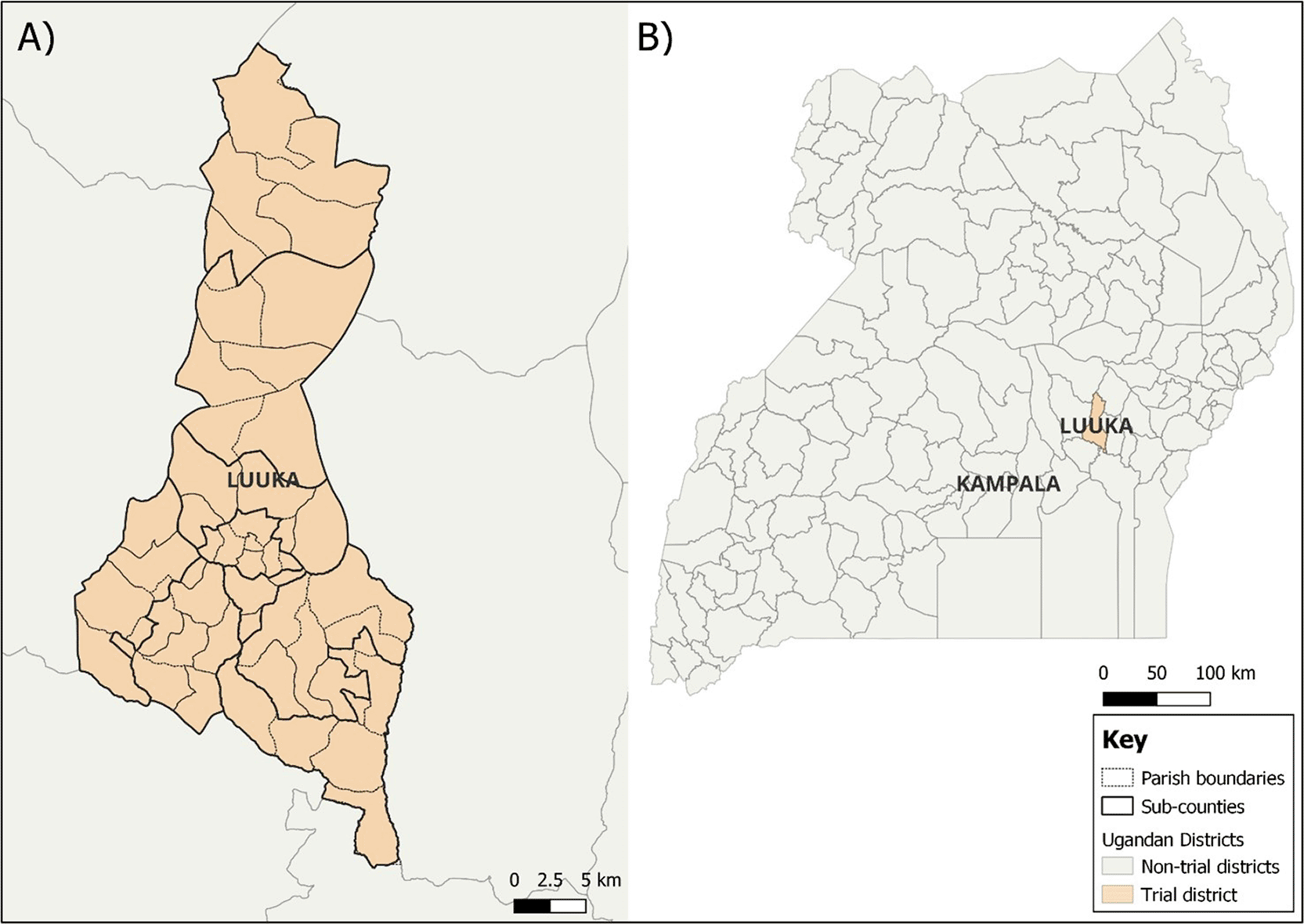
A total of 100 eligible villages were selected and randomly assigned to two arms by an independent statistician using a 1:1 ratio.
Restricted randomization was used to ensure balance between the two arms on key criteria, including cluster population size, location (sub-county), prevalence of disability in ages ≥5 years, 2–4 years, and < 2 years, prevalence of disability in men and women, mean age of people with disabilities and prevalence of unplanned hospitalization in the past two years amongst people with disabilities (one of the composite primary outcomes).
Study participants are residents of trial villages with a disability at baseline, defined using the Washington Group Short Set on Functioning – Enhanced (for adults and children 5–17 years) or the Washington Group/UNICEF Child Functioning Module (for children 2–4 years).27,28 Locally recognized disability categories, such as albinism and short stature, are also included. Children <2 years are classified by disability status via caregiver report.
PLA-D is implemented via the establishment of community groups of approximately 20 people with disabilities and 10–15 carers, family members, or community members. PLA-D participants are not recruited through the trial, but by Amref Health Africa in Uganda through village leaders using community outreach methods such as village meetings, key informant recommendations, and snowballing. This recruitment approach reflects how recruitment to the intervention may occur outside a research context. Group membership is open and inclusive, with discussions targeted at people with disabilities. Unlike recruitment for the trial, disability status within the PLA-D groups is self-identified rather than based on standardised assessment.
The content of the group discussion is centered around health and access to health for people with disabilities, but specific content and discussion topics are brought up by group members. The groups meet in-person and are governed internally by a committee of members, including a chair, vice-chair, secretary, vice-secretary, and treasurer to oversee the organization of the group. The group meetings are led by a facilitator and a co-facilitator. The facilitators are selected from the group by the members and are ideally a person with disabilities themselves, or a carer/relative of a person with disabilities. Each sub-county also has group supervisors (Health Assistants or Parish Chiefs who oversee 4–5 groups) and group managers (a Community Development Officer who oversees 2 group supervisors) who support the facilitators and are overseen by Amef Health Africa in Uganda.
The facilitators, supervisors and managers attend a week-long training workshop led by Women and Children First, Amref Health Africa in Uganda and MRC/UVRI & LSHTM Uganda Research Unit. During the training, they learn about health, disability, the use of participatory facilitation techniques, the PLA-D cycle, and how to conduct and manage group meetings (e.g. safeguarding, managing expectations, progress recording and reporting). Facilitators are provided with a facilitator manual and are supported by a supervisor. There is monthly monitoring of facilitators by supervisors.
The groups work together to choose the timing and location of the meetings, to promote accessibility. The groups are convened for a period of at least one year. Facilitators lead groups through a cycle of regular monthly meetings to help them collectively participate in the design and implementation of activities to address shared concerns. The groups work together to identify the key problems in relation to health and healthcare access facing people with disabilities in the group, and then prioritize these issues. Facilitators use discussion prompts, picture cards and other accessible tools to stimulate discussion and develop their solutions. Groups create action plans to implement their solutions and communicate progress, encouraging wider community dialogue and advocacy to support action. These activities may include those directly related to health (e.g. improving awareness on healthcare needs, access and rights) or indirectly (e.g. supporting income generating activities with the aim of reducing poverty and improving capability for seeking healthcare). In the pilot study, all five groups established Village Savings and Loan Association (VSLA) schemes, and so we anticipate that this will be a commonly implemented solution in the trial. After identifying and implementing agreed solutions, the group meets to evaluate how effective their identified solutions have been in addressing priority issues.
Accommodations are made to support the meaningful and safe involvement of people with a range of impairment types. For instance, meetings are held in physically accessible locations that are quiet, and facilitators are trained on the use of simple and appropriate language. Large scale picture cards are also used.
A theory of change for PLA-D is presented in Supplement 226 outlining how the intervention is anticipated to achieve its expected impact.
Both arms received disability-focused health system strengthening comprising healthcare worker disability training and health facility accessibility audits. This ensures any additional benefit observed in the intervention arm can be attributed to PLA-D. Moreover, healthcare facilities often serve a large geographical area and so it was not practical to restrict delivery of disability-focused health system strengthening activities to intervention villages only.
Healthcare worker training
The disability training was co-developed with healthcare workers, and pilot-tested.29 It covers topics of communication, disability rights, accessible services, and facility auditing of disability access.
All 42 health facilities across the 12 sub-counties in Luuka district are included – irrespective of ownership (public or private not-for-profit) or health facility level. For each health facility, 2–4 healthcare workers (irrespective of cadre type) are invited to participate in the disability training (target n = 84–168). A one-day disability training is then delivered during the trial by the trainers to groups of 12–14 healthcare workers. Training is delivered twice in each sub-county (24 trainings in total), so that each health facility has two opportunities for their healthcare workers to attend. Each training is delivered by a pair of trainers – one trainer with a disability and another trainer who is a healthcare worker. There are 10 trainers in total, purposively selected as they work/live in the area, and took part in piloting of the training intervention in September and October 2023.29 All trainers received refresher training prior to the roll-out of the disability training for healthcare workers under the trial.
Accessibility audits of health facilities
An accessibility checklist, adapted from the Disability Awareness Checklist (DAC) and pilot tested in 2023, is used to assess 42 health facilities across 12 sub-counties.30 It includes 50 core items across four domains: Universal Design and Accessibility, Reasonable Accommodation, Staff Capacity, and Service Linkages, with up to 20 additional items triggered by responses.30 Measurements (e.g. ramp slope, doorway width) are taken using a standard tape measure and angle measure (Angle Meter Pro Android App as recommended by the DAC tool developers). All length measurements are taken in a straight line (180°) at the narrowest point of the infrastructure under investigation as this is the useable length for the patient. For long ramps (over 2 m), 2–3 measurements are taken at various points along the length and the steepest is recorded. GPS coordinates are also recorded for key access points: a) the facility; b) the nearest public transport drop off; and c) the nearest private taxi drop off. Two trained facilitators with disabilities administer the checklist using Research Electronic Data Capture (REDCap) on encrypted devices,31 conduct facility visits, and collect feedback from staff. Data is scored (yes = 1, no/not sure = 0), summarised by module and overall score, and shared confidentially with each facility. Aggregate results identify priority areas for improvement and support disability-inclusive planning.
The primary outcome for the study is a composite measure: risk of mortality or unplanned hospitalization among people with disabilities in the study clusters measured 24 months after baseline. A participant is considered to have experienced the primary outcome if they died or experienced one or more unplanned overnight hospitalizations at any point during follow-up. This outcome was selected to be consistent with previous PLA trials, and because the ultimate aim is to reduce the life expectancy gap experienced by people with disabilities.
Secondary outcomes include: quality of life; healthcare expenditure; morbidity; healthcare access and quality (including domains of healthcare need, care sought, number of consultations and satisfaction with care); perceived attitudes of others towards people with disabilities; and participation.
For mortality and unplanned hospitalization, all participants with disabilities identified in the baseline survey will be revisited after 24 months. Vital status and any unplanned overnight hospitalizations during the follow-up period will be established for all participants through household visit and interviewing family members and neighbours if participant is not available. Any participant deaths will be confirmed through an additional source e.g. death certificate or neighbour if a death certificate is not available. Verbal autopsy will be conducted for all deaths in the preceding 6-months and a verbal autopsy-type approach undertaken for at least 10% of unplanned hospitalizations in the preceding 6-months at follow-up to further understand cause.
For the secondary outcomes, we will randomly select a sample of 2000 people with disabilities identified in the baseline short survey (approximately 20 people with disabilities per cluster for 100 clusters). They will be visited at baseline and undergo an in-depth questionnaire including information on the secondary outcomes and contextual factors (e.g. employment and marital status). A proxy respondent will be used, if needed. The questionnaire will be repeated at endline in the same sample, with additional items on participation in the PLA-D groups.
Economic evaluation
Resource use data will be collected from the provider and client perspective.32,33 This will include financial and economic costs of start-up and implementation, such as staff (e.g. programme staff, facilitators, supervisors), materials, other recurrent (e.g. transportation, communication), and capital costs. We will estimate direct costs of accessing healthcare (both study arms).
Process evaluation
For the process evaluation we will examine 1) the implementation of PLA-D, including facilitators and barriers, 2) the implementation of the disability-focused health system strengthening intervention, 3) the mechanisms of impact of PLA-D, and 4) the context and how this interacts with PLA-D delivery to enable or hamper impact. Information will also be collected on perceived benefits and harms of PLA-D, for example, changes in self-confidence and community perceptions of disability, as well as any adverse outcomes from PLA-D group participation.
The trial has a composite primary outcome of mortality or unplanned hospitalization risk. The sample size was conservatively calculated based on mortality because the 24-month risk of death is expected to be substantially lower than the 24-month risk of unplanned hospitalization.
Each cluster consists of one rural village, selected to include 250–750 people (typically equating to one enumeration area (EA), which is 617 people on average). With an expected all-age prevalence of disability of 8% (conservative estimate), each village would include approximately 50 people with disabilities. Assuming ~50 participants with disabilities per cluster followed for 24 months, and an underlying mortality rate of 50 deaths per 1,000 person-years (approximately a 9.5% two-year risk),34–37 we require 50 clusters per arm to detect a 25% relative reduction in the 24-month risk of mortality, with 80% power. This equates to a sample size of 2500 people with disabilities in the control arm and 2500 in the intervention arm. The calculation allows for an intra-cluster correlation (ICC) of 0.001 (equivalent to an coefficient of variation of 0.1), reflecting the expectation that adult mortality is only weakly clustered.38 Achievement of a 25% reduction in mortality rate over 2 years is realistic, as it is consistent with the mortality reductions observed in existing PLA trials.18 Moreover, existing evidence shows an at least two-fold difference in mortality rates between people with and without disabilities, consistent across age-ranges, which supports our assumed mortality rate.5 Under this sample size, we have more than 95% power to detect a 25% reduction in un-planned hospitalization from 0.42 per person-year (assuming ICC of 0.001). This estimate was derived from hospitalisation data from the PLA-D pilot study. The pilot survey measured general hospitalisation rather than specifically unplanned admissions, general hospitalisation was used as a proxy for unplanned hospitalisation in the sample size calculation.
In-depth quantitative data for the secondary outcomes will be collected on a subsample of the total participants, because of restricted budget availability. The reduced sample size has been calculated based on the secondary outcome of quality of life. With 20 participants with disabilities per cluster (i.e. 1000 participants per arm) we will have 95% power to detect a 10% improvement in the quality of life score from a baseline of 43.19 (based on pilot data). The calculation assumes a standard deviation of 13.6 and an ICC of 0.05 (based on pilot data).
Villages were selected by Amref Health Africa in Uganda and Makerere University School of Public Health teams. A door-to-door short survey identified people with disabilities. In villages with >100 households, a random sample of 100 households was taken. In each village, 20 participants with disabilities were randomly selected for the in-depth survey. Trial participants receive 15,000 UGX (~4 USD in 2025) for participating in each of the baseline and endline surveys and 20,000 UGX (~5.50 USD in 2025) for participating in qualitative interviews or focus group discussions. This is compensation for time spent answering the survey, interview or focus group discussion questions and is conducted in accordance with Ugandan Government research guidelines.
PLA-D group participants will be recruited independently of the baseline survey, using local meetings and peer outreach - mirroring real-world implementation pathways.
A participant timeline is provided for reference in Supplement 3.26
Informed written consent will be sought from all participants by trained data collectors. For children under 18 years and adults lacking capacity, written consent will be provided by their caregiver. In this study, the term “caregiver” is used to reflect the local context, where primary responsibility for the person’s day-to-day care may rest with a recognised adult guardian within the household or extended family, rather than a biological parent. This approach is consistent with guidance from local partners and ethics committees, which recognise caregivers acting in a guardian capacity in settings where formal legal guardianship documentation may not be available. Children aged 8–17 years and adults lacking capacity will additionally provide written assent.39 For household-level data, an alternate respondent will be sought if the head of household lacks capacity. The data collector will check the prospective participant’s understanding of the information given, and their ability to provide informed consent using a set of pre-identified questions (see Supplement 4,26 Evaluation to sign consent form). Model consent and assent forms are available in Supplement 5.26
Engagement in PLA-D is voluntary. Participants may join or withdraw without consequence. Group facilitators may conduct additional community engagement. Where groups have prioritized VSLA, Amref Health Africa in Uganda provides support by connecting them with a trained mentor, and providing 110,000 UGX (~31 USD in 2025) to support the procurement of VSLA savings boxes and kits. At the end of the meeting cycle, Amref Health Africa in Uganda provides 100,000 UGX (~28 USD in 2025) to each group as seed funding to help support the sustainabilty of the groups beyond the trial. No changes will be made to allocation post-randomization; the primary analysis will be by intention-to-treat.
No restrictions on access to other healthcare services. PLA-D facilitators will refer participants to local services as needed. No specific post-trial care is planned.
Participants will be asked for consent to collect GPS coordinates (for follow-up) and to allow their anonymized data to be archived for future research. No biological sample collection is planned.
No masking will be used. Participants and data collectors will not be explicitly informed of allocation, though it may be apparent due to the nature of the intervention. However, the statistician will remain masked to group allocation until the primary analyses are complete. The allocation code will be held separately from the statistician by the trial cooridinator and revealed only after statistical analyses are finalized. A detailed statistical analysis plan was published prior to randomization under the ISRCTN trial registration.
All data will be collected by experienced and trained data collectors, overseen by Makerere University School of Public Health for the baseline and endline surveys and MRC/UVRI & LSHTM Uganda Research Unit for the process evaluation.
The composite primary outcome of mortality or unplanned hospitalization will be reported by the participant/household member (as appropriate) at 24 months follow-up. Self-reported unplanned hospitalization will be confirmed through the respondent’s hospital book or family member, and death confirmed by two sources (e.g. family member, neighbour or death certificate). A verbal autopsy will be undertaken at follow up for all reported deaths occurring within 6 months of the follow up visit and a verbal autopsy-type approach undertaken for at least 10% of unplanned hospitalizations occurring within 6 months of the follow up visit. A doctor/clinical officer will interview a relative of the deceased using a verbal autopsy questionnaire or for unplanned hospitalizations, the participant (or their caregiver). Two clinicians will review the questionnaires and classify the likely cause of death or hospitalization, with input from a third clinician in case of non-agreement.
For the secondary outcomes, participants with disabilities (or their proxy) will complete a structured questionnaire with a trained researcher covering:
The majority of the questionnaire has already been tested during the pilot with 88 adults and 28 children, and takes approximately 45 minutes to complete.46 Additions to the questionnaire from the pilot will be pre-tested to check understanding and all procedures will be piloted with the data collectors post-training.
Economic evaluation
Direct costs of implementing the interventions will be collected prospectively from the Amref Health Africa in Uganda and MRC/UVRI & LSHTM Uganda Research Unit project accounts, and input into a customized excel-based standardised costing tool designed for this purpose. Data on utilization of healthcare services and costs of seeking care will be collected from the study participants during baseline and endline surveys and used to estimate direct costs incurred when seeking healthcare.
Process evaluation
The process evaluation will be undertaken through the collection of qualitative data and analysis of monitoring data collected by Amref Health Africa in Uganda. Relevant data collected from the quantitative surveys will also be used. Qualitative data collected under the process evaluation will include:
• Observational assessments of a sample of the meetings held for 5–10 PLA-D groups
• In-depth interviews with: 1) at least 20 disabled people who lived in PLA-D implementation areas (including participants, drop-outs and non-participants), 2) 5 PLA-D facilitators/supervisors, 3) 5 implementers (e.g. Amref Health Africa in Uganda, DHO)
• Focus group discussions with: 1) PLA-D group members (4 groups, 8 participants per group)
Routine monitoring data collected by Amref Health Africa in Uganda will be used in the process evaluation including: Number of people attending groups (people with disabilities, caregivers, other community members), number of facilitators attending groups, number of district stakeholders reached, number of community meetings held, number of community members reached by groups, number of people trained in PLA-D as supervisors, facilitators, managers). Additionally, the facilitator’s meeting log will be scanned and shared each week, which will include notes of key decisions made, key barriers and solutions identified. The VSLA group logs of the reasons given for borrowing money will also be recorded.
A sample of 15 groups (out of a total of 50) were randomly selected for a Midline Survey conducted by MRC/UVRI & LSHTM Uganda Research Unit. All members of each of the 15 selected groups were surveyed to record their disability status as per the functional difficulty screening questions used in the baseline and endline surveys of the trial, and to obtain additional information regarding their role in the PLA-D group. This survey was undertaken to provide a comparable means of determining the disability status of people attending the PLA-D groups to that of population-based survey used in the trial. Due to resource constraints, we are not able to survey all 50 groups.
Data has also been collected on the disability-focused health system strengthening interventions that were implemented across Luuka district. For the disability training, this includes data on training attendance, pre- and post-training questionnaire scores on knowledge and confidence in managing patients with disability for all training participants, and follow-up semi-structured interviews of 10–15 purposively selected participants at 6 months to examine changes that have been made following training. For the accessibility audits, data includes accessibility modifications made to the health facility 6-months following the audit.
All data collection tools are available in Supplement 6.26 Questionnaires and data collection procedures may be further refined based on findings from pre-testing and piloting.
To support follow-up, GPS coordinates, household descriptions, and phone numbers were collected at baseline. If participants are not reachable in person at endline, data collectors will attempt to obtain mortality and hospitalization data via phone or by visiting the household and neighbouring households. No in-person follow-up will occur for participants who have moved out of the village.
Baseline and endline survey data will be collected electronically using REDCap on password protected tablets.31 Data is stored on a secure password protected server at MRC/UVRI & LSHTM Uganda Research Unit. Cleaned anonymized data is shared with LSHTM and stored securely on LSHTM servers.
Economic evaluation
Data will be recorded in an Excel based template and stored on password protected computers.
Process evaluation
PLA-D group observational data and questionnaires for disability training and accessibility audit follow-up are recorded and stored on password protected tablets and servers respectively. In-depth interviews are audio recorded, and afterwards transcribed and translated into English. Audio recordings are securely stored on a password protected tablet in the field prior to transfer onto a password protected computer, after which the recording device is wiped. Audio recordings are only kept until transcription and translation has been completed and the transcript has been quality-checked. People’s names are removed from the transcript during the transcription process, and the transcripts stored on a password protected computer. Anonymized process evaluation data is shared with LSHTM in the UK using a secure data transfer protocol, where they are stored securely on LSHTM servers.
The composite primary outcome - mortality or unplanned hospitalization - will be assessed over 24 months. The primary analysis will follow the intention-to-treat principle, with participants analysed by their randomized group irrespective of participation in PLA-D group activities. Baseline balance will be examined for socioeconomic and other implementation-relevant factors.
The primary composite outcome (mortality or unplanned hospitalization over 24 months) will be analysed using mixed-effects logistic regression, with a random intercept for cluster (village) to account for within-cluster correlation. The primary analysis will estimate odds ratios with 95% confidence intervals comparing intervention and control arms. The model will be adjusted for pre-specified covariates, including age, sex, disability type, prior unplanned hospitalization at baseline, and baseline morbidity (total number of reported conditions). Continuous secondary outcomes will be analysed using random-effects linear regression models, with cluster included as a random effect. Each model will adjust for the baseline value of the outcome and the same covariates used in the primary outcome analysis. Treatment effects will be reported as adjusted mean differences with 95% confidence intervals. Sub-group analyses will be conducted by age (<18 years vs ≥18 years), gender, and disability type (noting potential power limitations).
Economic evaluation
Incremental cost-effectiveness ratios (ICERs) will be calculated (e.g., cost per death averted, per unit of quality of life gained), with sensitivity analyses using 95% CIs to assess robustness. Other measures may also be considered during the development of the analysis plan.
Process evaluation
Thematic analysis of translated transcripts will be informed by PLA-D theory and the MRC Framework.47,48 A comparative case study approach will explore differences between participants and non-participants. Qualitative findings will be triangulated with monitoring, observational, and trial data to assess fidelity, dose, adaptation, and reach.
No formal interim analyses of effectiveness are planned. The trial does not include statistical stopping rules for efficacy or futility. Baseline data will be analysed to inform restricted randomization regarding demographic characteristics and cluster size, as outlined previously. Pre-specified subgroup analyses for the primary outcome will be conducted by age group (children <18 years vs adults ≥18 years) and disability type. Interaction terms between study arm and subgroup variables will be included in regression models to assess evidence of differential intervention effects.
The primary analysis population will include all participants with disabilities identified during the baseline survey whose vital status at 24 months is known. Participants whose vital status cannot be ascertained at follow-up will be excluded from the primary analysis.
Missing outcome data will not be imputed. For missing covariate data, continuous variables will be imputed using the mean value, and categorical variables will include an additional category indicating missingness.
A per-protocol sensitivity analysis will be conducted among participants in intervention clusters who report attending at least 50% of PLA-D group meetings. The per protocol analysis will be used to assess the effect of the intervention on unplanned hospitalisation, and secondary outcomes, among participants who received the intended exposure and were alive at 24-month follow-up.
Anonymized survey data and statistical code will be made available via LSHTM Data Compass (datacompass.lshtm.ac.uk), with participant consent obtained for data sharing.
An advisory committee in Uganda provides input on trial design, implementation, interpretation of findings, dissemination, and scale-up. It ensures inclusivity for people with disabilities. The 15-member committee includes representatives from civil society, academia,organisations of persons with disabilities, and government/health sector.
The trial is led by LSHTM in collaboration with Makerere University - School of Public Health, MRC/UVRI and LSHTM Uganda Research Unit, and Amref Health Africa in Uganda. Representatives (1–2 per institution) form the Trial Management Group (TMG), which meets monthly (or more frequently during key phases) to oversee implementation. The LSHTM-based PENDA group meets weekly and receives regular trial updates.
The Trial Steering Committee includes Ugandan health researchers, a PLA trial expert, a health economist, a Ministry of Health representative, an Organizations of Persons with Disabilities (OPD) representative, and a lay representative with disabilities. It meets at least annually to monitor trial progress.
An independent Data Monitoring Committee (3–4 members, including a statistician) oversees safety monitoring. The committee operates under agreed terms of reference and report recommendations to the Trial Steering Committee, prioritising participant wellbeing.
PLA-D group delivery will be monitored by Amref Health Africa in Uganda; health system interventions by MRC/UVRI and LSHTM Uganda Research Unit. While adverse events are not expected due to the participatory approach, social tensions (e.g. exclusion-related resentment) may arise. Any such events will be recorded by Amref Health Africa in Uganda and reviewed by the DMC.
Field supervisors will ensure data collection follows protocol. Daily quality checks will be conducted during baseline and endline surveys by the data manager, with team debriefs held regularly. Quality assurance will be led by Makerere University - School of Public Health, with checks from MRC/UVRI and LSHTM Uganda Research Unit. LSHTM may also conduct audits under its role as sponsor.
Any protocol changes affecting trial conduct will be approved by all implementing partners and relevant ethics committees (UVRI, UNCST and LSHTM) before implementation. Major amendments will also be reflected in the trial registry.
Ethical approval has been obtained from Uganda Virus Research Institute (Ref: GC/127/904), the Ugandan National Council of Science and Technology (Ref: SS1348ES), and LSHTM (Ref: 29927).
The trial will produce evidence on disability and health in Uganda through impact evaluation, process evaluation, and economic evaluation. The finalised PLA-D intervention package, accessibility audit tools, and healthcare worker training materials will be shared. A stakeholder workshop will inform a scale-up strategy, drawing on lessons from Women and Children First.
Tailored engagement and communication strategies will be developed for key audiences, leveraging strong national and international networks to influence policy and practice. Planned activities include community dissemination meetings; meetings with key national and international organisations, and production of evidence briefs; contributions to WHO activities; peer-reviewed publications; presentations at academic conferences; and incorporation into educational materials.
Provide sufficient details of any financial or non-financial competing interests to enable users to assess whether your comments might lead a reasonable person to question your impartiality. Consider the following examples, but note that this is not an exhaustive list:
Sign up for content alerts and receive a weekly or monthly email with all newly published articles
Register with NIHR Open Research
Already registered? Sign in
If you are a previous or current NIHR award holder, sign up for information about developments, publishing and publications from NIHR Open Research.
We'll keep you updated on any major new updates to NIHR Open Research
The email address should be the one you originally registered with F1000.
You registered with F1000 via Google, so we cannot reset your password.
To sign in, please click here.
If you still need help with your Google account password, please click here.
You registered with F1000 via Facebook, so we cannot reset your password.
To sign in, please click here.
If you still need help with your Facebook account password, please click here.
If your email address is registered with us, we will email you instructions to reset your password.
If you think you should have received this email but it has not arrived, please check your spam filters and/or contact for further assistance.

Comments on this article Comments (0)