Keywords
Atopic dermatitis; Eczema; Randomised controlled trial, Topical corticosteroids; Citizen science; Self-management

Atopic dermatitis; Eczema; Randomised controlled trial, Topical corticosteroids; Citizen science; Self-management
 How to cite: Thuma L, Harrison EF, Bradshaw L et al. The Rapid Eczema Trials’ Keep Control of Eczema Study: Specific advice on topical corticosteroid treatment duration for eczema flares versus usual care in adults and children. Protocol of an online, randomised controlled trial [version 1; peer review: 2 approved]. NIHR Open Res 2026, 6:50 (https://doi.org/10.3310/nihropenres.14264.1)
First published: 29 May 2026, 6:50 (https://doi.org/10.3310/nihropenres.14264.1)
Latest published: 29 May 2026, 6:50 (https://doi.org/10.3310/nihropenres.14264.1)
How to cite: Thuma L, Harrison EF, Bradshaw L et al. The Rapid Eczema Trials’ Keep Control of Eczema Study: Specific advice on topical corticosteroid treatment duration for eczema flares versus usual care in adults and children. Protocol of an online, randomised controlled trial [version 1; peer review: 2 approved]. NIHR Open Res 2026, 6:50 (https://doi.org/10.3310/nihropenres.14264.1)
First published: 29 May 2026, 6:50 (https://doi.org/10.3310/nihropenres.14264.1)
Latest published: 29 May 2026, 6:50 (https://doi.org/10.3310/nihropenres.14264.1)
Eczema (syn. atopic dermatitis) is a chronic-relapsing itchy skin condition, that is characterised by periods of flare-up and remission. People with eczema are usually able to self-manage their condition with a combination of topical treatments. These include topical corticosteroids (TCS) to get control of flares, and emollients to manage dry skin and to help prevent future flares. Even though TCS have been in use for over 50 years, the optimum way to of using them is still uncertain.
NICE and MHRA guidance recommends that people with eczema are given advice by healthcare professionals about how long to use their TCS treatments for1,2 but clinical guidelines vary in their recommendations and people are often given vague or unhelpful instructions, such as “use sparingly” or “use as required”.3 Insufficient or conflicting advice may increase concerns about treatments and decrease confidence in self-management.4
This lack of clarity is partially driven by the lack of evidence to inform clinical practice. A recent Cochrane review of strategies for the use of TCS in eczema found no RCTs that addressed how long to apply TCS for during an eczema flare.5 Similarly, a systematic review of international guidelines for eczema highlighted variable recommendations for using TCS in practice, including selection of the potency, how long to apply TCS for, how often to apply and how to reduce dosage at the end of a flare.6
“How best to use topical corticosteroids?” was identified as the top priority for future research in the eczema James Lind Alliance Priority Setting Partnership,7 and the Rapid Eczema Trials project was established to answer patient-driven questions such as this.
This trial is part of the Rapid Eczema Trials project and has been co-designed in partnership with members of the public (known as “citizen scientists”). The co-production group determined the research question, eligibility criteria, defined the intervention and comparator, selected the outcome measures and frequency of data collection, determined the trial’s duration, developed the recruitment strategy and intervention materials, and planned the process evaluation. Co-producing this trial took 7.5 months, consisting of 14 online meetings: three to prioritise the topic and 11 to design the trial. This required 6 hours of time commitment from each public member involved in prioritisation (n = 12) and 22 hours from each public member involved in trial development (n = 9). Citizen Scientists were paid for their time (£50 per 2-hour meeting). The project is co-led by a researcher (KT) and a patient with lived experience of eczema (AR).
Citizen scientists contributed to the development of study materials and tested the trial database; ensuring that processes were streamlined, and materials were inclusive and accessible. They also helped inform decisions about when and how to collect photos of the eczema during the trial, provided training to trial staff on handling follow-up phone calls, provided guidance on how to handle safeguarding concerns, helped with decisions around trial branding, advised on collecting information on current TCS-use, and are supporting efforts to boost follow-up rates and adherence to the intervention during trial delivery.
Prioritisation of the research question and development of the trial was also informed by 3 online surveys of the whole Rapid Eczema Citizen Science Community (n = 135, n = 333 and n = 136 respectively) and 2 online workshops to prioritise the topics (n = 22).
The aim of this trial is to compare different strategies for using TCSs for the self-management of eczema over a period of 4 months in children and adults with eczema. Specifically, the study will:
1. Assess the impact of providing specific advice on how long to apply TCSs for during an eczema flare, compared to treatment as usual.
2. Explore barriers and facilitators in using the two different strategies for controlling eczema flares and to understand the impact of trial processes on trial participation.
3. Explore feasibility of using photos to assess eczema severity in online clinical trials
This trial is a pragmatic, two-arm, parallel group, superiority randomised controlled trial, with nested process evaluation and feasibility study to test use of photographs to assess eczema signs.
This is an online trial with no face-to-face assessments. Participants can join the study from anywhere in the UK.
Inclusion criteria
• Aged ≥1 year with self-report of eczema
• Used topical corticosteroid (either prescribed or purchased over the counter) on a total of at least 3 days to manage eczema flare up in the last 8 weeks
• Willing to change how currently using TCS treatments whilst in the trial
• Usual residence in the UK
• Able and willing to give informed consent (or parent/legal guardian able and willing to give informed consent for children under 16 years)
Exclusion criteria
• If using a TCS preparation that includes antibiotics or antifungal, as these products are not intended for long-term use.
• Diagnosis unlikely to be atopic eczema: only present on hands (likely to be hand eczema or contact dermatitis); limited to locations where skin exposed to nickel e.g. jewellery (likely to be contact dermatitis); eczema only around varicose veins (likely to be varicose eczema)
• Taking part in another ongoing eczema intervention trial
• Member of household already participating in this trial
• Eczema only present on the scalp (as this requires different topical steroid formulations) and/or only at sensitive body sites (e.g. groin, armpits or face (as the advice being tested is not applicable to treatment at sensitive sites, which may require a different potency and duration of treatment))
• Using clobetasol propionate 0.05% (trade name Dermovate), a very strong TCS. This is to ensure participant safety.
This trial is an “advice trial”. Whilst both treatment strategies align with current practice and guidelines, advice varies, and people are often given conflicting or vague advice.
For the purposes of this trial, two advice strategies will be tested:
Specific advice on duration of applying TCSs (treat flare-ups for longer):
• Use TCS during a flare, and for 2 days after the skin looks and feels eczema free. To ensure safety in this online trial, participants are advised to treat eczema on the face as they usually would, regardless of their group allocation.
No specific advice on duration of applying TCSs (treat flare-ups as usual):
The proposed “treat flare-ups for longer” advice has been taken from the NICE Clinical Knowledge Summary (last updated May 2024),1 which states that for flares on the body, people should be advised to continue treatment for 48 hours after the eczema has cleared. This is based on clinical opinion and without good research evidence. The advantage of doing so could be that it treats non-visible inflammation (“eczema under the skin”) and so may prolong remission; a disadvantage is that it may lead to use of more TCS than is needed.
Participants in both groups will be advised to use their usual TCS (either prescribed or bought over the counter) and will remain under the care of their usual healthcare professional. Information will also be provided to explain what an eczema flare-up is, how to apply their treatments and how to order repeat prescriptions.
Following randomisation, participants are provided with instructions as to how long they should treat their eczema flare-up for according to their group allocation. Participants are asked to follow this advice whenever they experience a flare-up during the 16-week study period. A copy of the intervention materials will be available via Figshare on completion of the trial.8
Participant reported outcomes include those recommended by the Harmonizing Outcomes for Eczema (HOME) initiative’s core outcome set validated instruments for symptoms, quality of life and eczema control. The trial is testing the feasibility of using photographs uploaded by participants to assess clinical signs (using EczemaNet artificial intelligence tool, as there are no in-person clinic visits). Itch intensity in the last 24 hours was not included to minimise responder burden in this online trial. Members of the co-design group wanted to minimise repetition and questionnaire burden in the weekly questionnaires and felt that there was little value in asking this question at baseline and end of study only.
Primary outcome
Eczema control measured by Recap of atopic eczema (Recap).9 Includes 7 items, scored 0 to 28. Assessed weekly over 16 weeks.
Secondary outcomes
• Eczema symptoms (Patient Oriented Eczema Measure,POEM).10 Includes 7 items, scored 0 to 28. Assessed monthly.
• Total days of TCS used (days of TCS use each week 0 to 7 days) – collected weekly
• Skin-specific quality of life (Infants’ Dermatitis Quality of Life Index (IDQoL)11 (under 4 years), Children’s Dermatology Life Quality Index (CDLQI)12(from 4 years to 15 years) or Dermatology Life Quality Index (DLQI)13(16 years and over) depending on age) – 10 items, scored 0 to 30. Assessed at baseline and week 16.
• Number of weeks when TCS not used (based on the use of TCS questions- assessed weekly)
• Number of well controlled weeks (defined as number of weeks with Recap score < 6).
• Global change in eczema compared to baseline. Assessed at week 16.
• Safety outcomes:
Photographs of the eczema will be collected at week 4 and week 16 as part of the nested feasibility study.
The sample size for the trial is based on Recap scores assessed weekly for 16 weeks and is designed to detect a difference of 2.2 in Recap scores between the two groups. A small difference of 2.2 has been chosen as this trial is evaluating a simple advice strategy. In this context, even a small improvement could be important to people living with eczema and could help them to self-manage their eczema more effectively. Although 2.2 is a small change, it is likely to be beyond measurement error.14
Assuming a standard deviation in weekly Recap scores of 6.5 and a correlation between repeated measurements of 0.8 (based on data from previous eczema RCTs15–18), a sample size of 150 per group is required to detect this difference with 90% power and 5% two-sided significance level. Randomised participants will follow their allocated treatment strategy when they have a flare-up during the trial, however some participants may join the trial and not have an eczema flare-up. Based on previous online trials,18,19 we assume 80% of participants randomised will have at least one flare up and need to use TCS over the 16-week follow-up period. Inflating for this and allowing for 15% loss to follow-up, a total sample size of 450 is required.
Recruitment started on 15th July 2025 and will continue for up to 12 months. Participants are recruited through a variety of online and offline channels, including:
• Database search and mailout or text messages from GP practices serving as participant identification centres
• Eczema Citizen Science Community: newsletters sent to people on the Rapid Eczema Trials mailing list with encouragement to promote the trial via their personal networks using snowballing recruitment.
• NIHR Be Part of Research (https://bepartofresearch.nihr.ac.uk/)
• Social media: via paid advertisements on Facebook and Instagram and non-paid social media promotion through existing groups and using a variety of platforms (e.g. X, Bluesky, Linked In).
• Communication channels of partner organisations and eczema charities (e.g. social media accounts, website, existing consented mailing lists and newsletters).
• Posters and flyers: displayed in e.g. libraries, community pharmacies, clinical settings, community centres, grocery stores
Participants identified through General Practitioner (GP) practices have a recorded diagnosis of eczema on their medical records and have been issued a prescription for emollients or topical corticosteroids in the last 2 years.
Potential UK participants are guided to the trial website (https://rapideczematrials.org/keep-control-study/), where they are provided with online information about the trial. Information is provided in a variety of engaging formats appropriate for all ages.
Potential participants are encouraged to contact the trial team if they have any questions prior to registering for the trial online.
The INCLUDE framework20 was used during trial development to explore barriers and facilitators to including people from diverse backgrounds in terms of ethnicity, skin tone, socio-economic status, language abilities, neurodiversity and geographical location. Changes made at the study design stage included: ensuring that all patient-facing materials were accessible and in varied formats (including videos); adding a question at baseline about sensory issues and use of topical treatments; informing development of the intervention materials, including signposting to prescription pre-payment certificates.
Efforts were made to encourage involvement of people from diverse cultural and socio-economic backgrounds. We are purposefully selecting GP surgeries to conduct search and mailout in areas that serve people living in areas of high deprivation, are working with ‘Deep End’ practices in Nottingham and Yorkshire to promote the trial, and are prioritising mailshots to ethnically diverse potential participants registered with Be Part of Research.
Following an initial self-reported eligibility screening completed by the potential participant online, electronic consent (e-consent) is taken prior to completion of trial procedures and questionnaires. There is an optional consent section for providing photos for the feasibility study. Choosing not to provide photos does not affect participation in the main trial. For children under 16, consent is obtained from the parent/carer but there is an optional assent section for the child to complete if they wish. In addition to providing e-consent, parents/carers are asked to confirm that they have discussed participation in the trial with their child (if appropriate) and that their child is willing to take part.
If eligible for the trial and consent is provided, participants are asked to complete the following:
• Demographic data, UK Diagnostic criteria for atopic eczema, use of eczema medications, prior belief on the duration of TCS use and eczema control, potency of TCS currently used on body, number of days TCS used to treat last flare, use of TCS to prevent flare, strategy for starting TCS, attitudes towards use of TCS, sensory issues that might influence use of eczema treatments, use of systemic eczema medications (not including antihistamines) and use of other steroid formulations (for any condition).
• Patient-reported outcomes, adherence to strategy (intervention group only) and safety (changes in eczema treatments and contacts with healthcare professional due to worsening eczema or concerns over side-effects.
All assessments are carried out online through secure, bespoke weblinks to questionnaires sent via email/text. Participants receive email, text message or phone call reminders as appropriate if questionnaires have not been completed.
For children who are unable to complete patient reported outcomes themselves, proxy reporting by a parent/carer will be accepted, but, where possible, participants are encouraged to complete patient-reported outcomes in discussion with their child. Parents/carers are advised that this should be the same adult throughout the trial if possible.
Participants are invited to take photos of their/their child’s eczema and, if they choose, to upload them via a secure link to a platform hosted by Imperial College London. The uploaded photos are used to assess eczema severity using an artificial intelligence (AI) tool, called EczemaNet.21 Eczema severity scores and photos will be securely transferred to the Nottingham Clinical Trials Unit for assessment and archiving.
Participants who complete the final questionnaires at week 16 will be offered the opportunity to enter a free prize draw to win £20, a child-friendly book about eczema, or both, according to their preference.
Any participants who do not provide consent during the recruitment process, prior to randomisation, are not randomised, and no further data is collected.
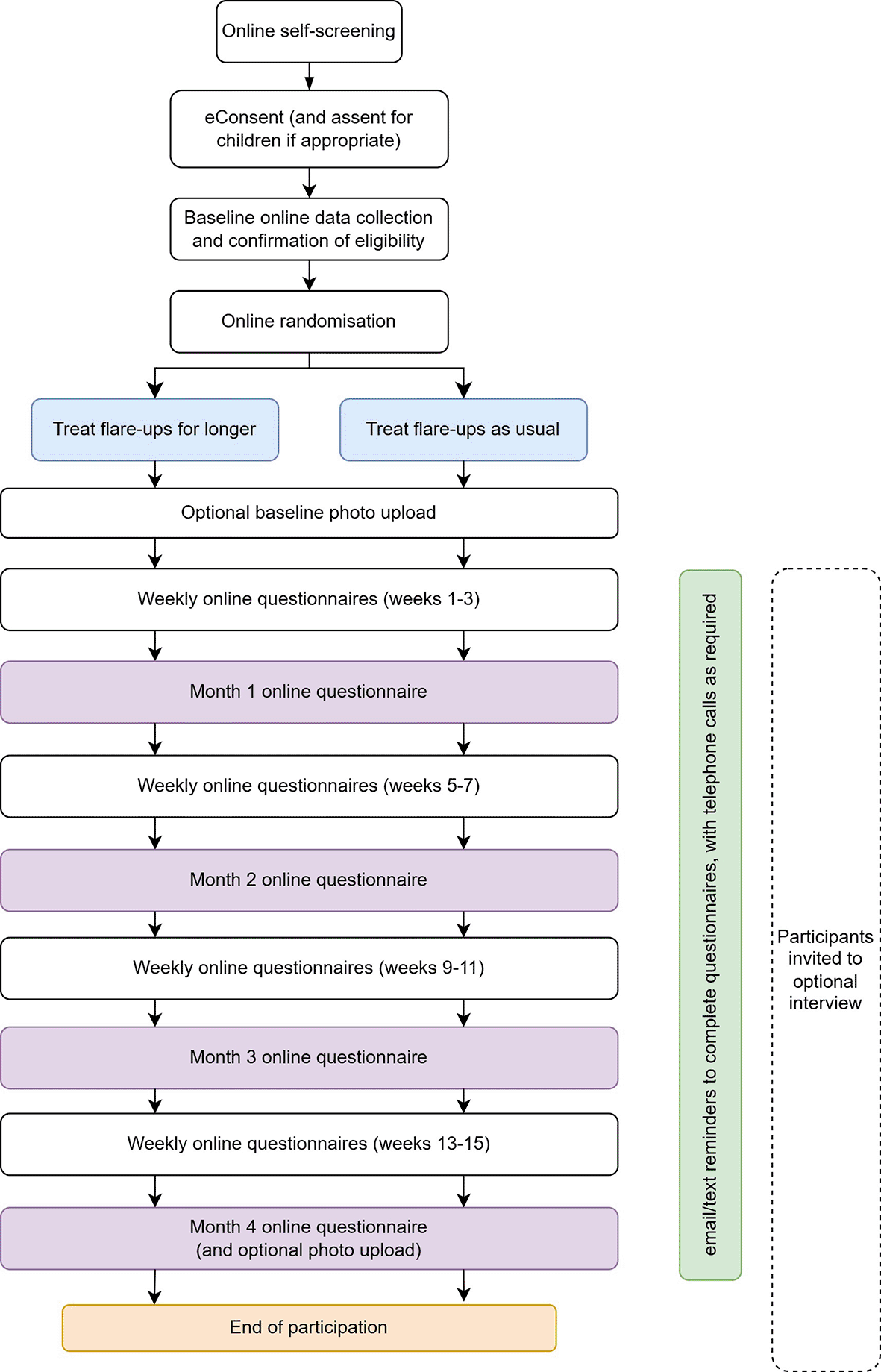
A summary of assessments is shown in Table 1. The trial flow chart is provided in Figure 1.
Participant verification
The trial database includes validation checks to prevent duplicate entries and ensure eligibility criteria are met.
To guard against imposter participants and bots joining the trial, the database uses reCAPTCHA technology to confirm human status during the screening process. Participants are not paid for contributing to the trial, to minimise incentives for people to take part solely for financial gain. The trial team also centrally monitor for sudden and unexpected spikes in recruitment, or activity at unusual times of the day.
Withdrawal procedures
Participants may withdraw their consent for follow-up and/or other trial related activities or receiving trial related communications, at any point. If participants do not contact the trial team asking to withdraw from the trial, participants will continue to receive links to the trial questionnaires and phone reminders until the end of their planned follow-up.
Randomisation
Potential participants are randomised online once consent has been provided, they have submitted their baseline information, including the outcomes specified above, and eligibility confirmed.
Randomisation, data collection and data management is provided by a secure online system at NCTU: REDCap (Research Electronic Data Capture).22,23
Participants are randomised 1:1 to either the intervention group (advice to treat flare-ups for longer) or control group (treat flare-ups as usual) using a minimisation algorithm with a probabilistic element balancing on the following factors:
• Symptom severity POEM score (0–7 mild, 8–16 moderate, 17–28 severe).
• Age (<4 years, 4–11 years, 12–15 years, 16–25 years, 26–55 years, >55 years)
• Highest potency of TCS used (mild, moderate, potent)
The randomised allocated group is not released to participants until after baseline variables have been entered and stored on the trial database.
Masking
As this is an advice trial, it is not possible to mask trial participants to their randomised allocation. To mitigate the potential bias caused by lack of masking, we collect prior belief in the impact of intervention strategy at baseline and explore this in a sensitivity analysis.
The trial statisticians, trial team at NCTU and members of the Trial Management Group will be masked to treatment allocation until the database is locked, prior to analysis.
The analysis and reporting of the trial will be in accordance with CONSORT guidelines, with the primary comparative analyses being conducted according to randomised allocation regardless of adherence to allocated TCS strategy during a flare-up. The primary estimand for the trial is shown in Table 2. A statistical analysis plan will be finalised and made publicly available prior to database lock and release of the treatment allocations.
The primary analysis will use all available longitudinal outcome data and will use a linear mixed effects model to estimate the difference in mean RECAP score over the 16-week trial period with 95% confidence interval. The model will include fixed effects for the minimisation variables (age, baseline POEM score and potency of TCS) and baseline RECAP score. The following potentially prognostic variables will also be included as fixed effects if technically possible: UK Diagnostic criteria, number of days TCS used to treat last flare-up, attitudes towards use of TCS, use of TCS to prevent flares and use of topical, oral or nasal steroids (for a condition other than eczema). It will allow for observations nested within participants over time using random effects. If there is evidence of a differential effect over time, the difference in mean RECAP score each week will be reported.
Sensitivity analyses for the primary outcome will use multiple imputation for missing outcome data.
Subgroup analyses for the primary outcome will be performed according to age, potency of TCS, eczema severity, diagnosis of eczema according to UK Diagnostic Criteria, prior belief and route of recruitment (added during SAP development) by including an appropriate interaction term in the mixed effect model. The trial is not powered to detect any interactions hence the subgroup analyses will be treated as exploratory. Additional sub-group analyses may be considered as outlined in the statistical analysis plan.
Between-group comparison of secondary outcomes will use an appropriate regression model for the outcome (linear for continuous outcomes, logistic for binary) with adjustment as described above for the primary outcome and baseline outcome measure for continuous variables if available. For secondary outcomes assessed weekly or monthly, mixed effects models will be used to allow for observations nested within participants over time using random effects.
A nested, qualitative study will consider questions of acceptability, feasibility, and adherence regarding different strategies for using TCS for the treatment of eczema flares. Data collection will also consider trial procedures, including taking and uploading photos of eczema.
Data collection will include both free-text questions in the 16-week questionnaire and more detailed qualitative interviews with a purposive sample of trial participants. Approximately 20 participants will be recruited, to capture diversity in age, gender, ethnicity, prior belief in the impact of length of flare-up treatment and acceptability of the interventions.
Only adults (aged 16+) will be included in the interviews (either as people with eczema or as parents/carers of children with eczema). Children who took part in the study may accompany their parent/carer during the interview if they wish to.
E-consent is be taken prior to the interview and consent re-affirmed verbally at the start of the interview.
Interviews will be undertaken online or by telephone, at a time convenient to the participant. Data will be digitally recorded if participants consent to this. Recordings will be transcribed and destroyed once transcripts have been approved as an accurate record. If a participant declines to be recorded, then the researcher will take notes during the conversation and these will be used for analysis purposes.
Interviews will explore the participants (i) experience with the provided treatment advice; (ii) any difficulties or challenges that they experienced in this; (iii) any difference that this made to their eczema; (iv) their willingness to continue with their allocated treatment advice; (v) their assessment of the effectiveness of the intervention and vi) their experience of taking part in the trial.
Qualitative data (both interview data and free-text questionnaire responses) will be analysed using NVivo14 software24 and MS Excel respectively. Data will be analysed using framework analysis.25 Themes will be described and will help to understand the trends and findings in the quantitative trial data.
Feasibility of using photos to assess eczema signs in future online trials will be assessed based on the number and quality of images uploaded at weeks 4 and 16; responses to the 16-week questionnaire (acceptability and barriers); and feedback provided in the process evaluation interviews.
Scores generated from photos using EczemaNet will be used to evaluate the feasibility, validity and responsiveness of eczema severity assessments based on EczemaNet assessment of clinical images. This will include summarising descriptively the proportion of participants uploading photos and whether they were of sufficient quality to generate EczemaNet scores and assessing the association between EczemaNet severity scores and patient-reported outcomes from the trial.
Data collection
All trial data are collected via secure platforms managed by University of Nottingham, or in the case of photo uploads, by Imperial College. Trial data are collected using the REDCap platform, photo uploads using a bespoke photo upload platform and interview data using MS Office. Data collection interfaces are usable on a range of digital devices, including smartphones.
Data management and data entry
All data for the Rapid Eczema Trials will be via participant report through electronic questionnaires and stored directly into the trial database, or uploaded to the photo upload platform hosted by Imperial College. Data provided by participants in response to online questionnaires are assumed to be source data with no additional data cleaning requirements. Participants’ medical records will not be accessed.
If outcome data are collected over the phone during follow-up phone calls, or the trial team become aware of any withdrawals or protocol deviations, these will be entered into REDCap by a member of the trial team.
Programmed validation and data quality rules are used to identify data anomalies.
Checks include missing data (including missing forms), out of range values, illogical entries and invalid responses.
Further data handling details are provided in the Rapid Eczema Trials Data Management Plan, which can be found in the extended data of the online repository.8
Data access
The Trial Statistician, Trial Manager and Data Manager will have access to the exported datasets via a secure log-in to the database to download the datasets.
Datasets are available in REDCap in real time for a user with the appropriate permissions to download at any time.
Once all data has been locked, the final exported dataset in csv (raw) format will be subject to a quality control check to check numbers of records and fields are correct.
Oversight and monitoring
The trial is managed by Nottingham Clinical Trials Unit (NCTU). Data will be monitored by NCTU in accordance with an agreed Data Monitoring Plan.
The Trial Management Group (TMG) is responsible for overseeing the conduct and progress of the trial and consists of the CI, other co-applicants, PPI representatives, and representatives from NCTU Trial Management, Data Management, IT Programming and Statistical teams. The TMG will meet on a regular basis throughout the study and act in accordance with the Rapid TMG terms of reference.
Recruitment, retention, the proportion of participants reporting flare-ups and changes in eczema medication use during the trial will be monitored by the TMG. To maintain masking to treatment allocation, an independent statistician will produce reports to monitor adherence to the intervention advice by group allocation.
The TMG report to the Programme Management Group (PMG), who in turn report to the independent Programme Steering Committee (PSC). The PMG has oversight of the whole Rapid programme ensuring key milestones are met, and consists of the CI and co-applicants. Other researchers, staff and citizen scientists may attend PMG meetings as appropriate. The PSC provide overall supervision of the Rapid programme and advise the CI and PMG. The PSC consists of independent members, including a clinical chair, statistician, clinician and PPI members. The role and membership of the PMG and PSC are outlined in their respective charters.
Since the Rapid Eczema Trials programme includes only low-risk trials, it was agreed with the sponsor and funder that a Data Monitoring Committee was not required. The Trial Master File and evidence of audits will be made available upon request for regulatory inspections.
Confidentiality
Personal data recorded on all documents will be regarded as strictly confidential and will be handled and stored in accordance with the Data Protection Act 2018 and the UK General Data Protection Regulation (GDPR).
All participants will be assigned a unique trial number on randomisation into the trial. Names will be stored to allow personalised messages to individual participants when sending questionnaires and reminders. Details of ethnicity and other protected characteristics will be stored to enable monitoring of inclusivity.
Text messages and emails will be used to send participants reminders about trial procedures and to provide links to the required questionnaires using a unique personalised link. Participants who do not complete follow-up questionnaires will be sent text/email/phone reminders by the trial team as appropriate.
NCTU will maintain the confidentiality of all participant’s data and will not disclose information by which participants may be identified to any third party (except where this is required for trial purposes e.g. to send interventions or text reminders to participants) or organisations for which the participant has given explicit consent for data transfer (e.g. competent authority, Sponsor).
Participants wishing to receive update newsletters will be added to the trial mailing list. All participants will be sent a summary of the results that will not include personal identifiers.
Reports of qualitative data findings may include direct quotes from participants, but these will not be identifiable to individuals.
Participants will be asked not to upload images of sensitive body sites.
Ethics and consent
The study has received ethical approval by the London – Surrey Research Ethics Committee (2 Redman Place, London, E20 1JQ, United Kingdom) on 30/05/2025 (approval number: 23/PR/0899). The trial was prospectively registered before it opened to recruitment: ISRCTN29214215; 06/05/2025. This study will adhere to the Declaration of Helsinki.
ISRCTN29214215 Rapid Eczema Trials master protocol_v4.2_14Jan2026.
Protocol amendments.
This protocol summary is based on Rapid Eczema Trials master protocol_v4.2_14Jan2026.
Since the start of recruitment, the protocol was amended in September 2025 to revise the Keep Control of Eczema study–specific search criteria used by the GP Participant Identification Centres (PICs). The requirement for a TCS prescription within the previous 12 months was removed after the first seven PICs identified fewer potential participants than anticipated. This indicated that the original criterion was overly restrictive and may have excluded eligible individuals who had not received a recent prescription or because TCS were obtained over the counter. The search criteria were reverted to those specified in the master protocol, identifying individuals who had been issued a TCS prescription within the last 2 years.
In January 2026, a further protocol amendment was implemented in response to lower than anticipated follow-up questionnaire completion rates, with the aim of improving data completeness and ensuring sufficient data to address the research question. Additional details were added to the existing optional prize draw, specifying that completion of each questionnaire would result in one entry into the prize draw.
In the Trial Procedures section, flexibility in data collection methods was introduced, allowing follow-up data to be collected via alternative means (e.g. telephone) in addition to online completion.
Sponsor
The sponsor of this study is the Nottingham University Hospitals NHS Trust (nuhnt.researchsponsor@nhs.net mailto:Researchsponsor@nuh.nhs.uk).
Dissemination
This trial is part of the wider RAPID programme with a parallel knowledge mobilisation workstream aiming to accelerate meaningful uptake of new knowledge. Results of this trial will be submitted for publication in a peer-reviewed journal. Findings will be released as quickly as possible on completion of the trial, using lay-friendly formats. Trial participants and members of our Eczema Citizen Science Community will be sent a copy of the results. Summaries will be posted on the Rapid Eczema Trials website. Where relevant, findings will be incorporated into Eczema Care Online https://www.eczemacareonline.org.uk which is a NICE recommended resource26 and shared widely with professional bodies and patient organisations.
Prior to release, results will be quality checked according to the NCTU statistics standard operating procedure, and interpretation of the trial results will be discussed with members of the co-design groups, the Trial Management Group and the Programme Steering Group. Since this is a citizen-science project, copies of the trial materials including the trial protocol, analysis plan, database code and analysis code will be made freely available on the Rapid Eczema Trials website for others to use. Academic journal manuscripts will be prepared by the research team and members of the coproduction groups and authorship will be determined by mutual agreement.
It is hoped that this trial will provide robust evidence to understand whether using TCS for slightly longer during an eczema flare leads to longer remission between flares. This topic has not been addressed by research, despite being an important question for people with eczema.
This study benefits from a large sample size that has been inflated to account for loss to follow-up and the fact that not all participants will experience a flare during the trial period. Randomisation is minimised based on key prognostic variables, validated outcome measures which are a part of the HOME core outcome set27 are used, and the trial has a clearly defined estimand for the primary outcome.
The main limitation of this trial is that it is not possible to mask participants to their allocated intervention. Participants’ prior beliefs about TCS use are being collected to explore the impact of this in the analysis.
This trial is the second in a series of online trials to be delivered through the Rapid Eczema Trials project, following the Eczema Bathing Study, which was the first in the programme.15,28 By using a master protocol, a standardised analysis plan, and a template database with core eczema outcome measures, this approach allows these online trials to be run rapidly and efficiently. The Rapid Eczema Trials project seeks to answer patient-driven priority questions about the self-management of eczema. This research question was prioritised by the Eczema Citizen Science Community and co-designed by patients, healthcare providers and researchers.
Provide sufficient details of any financial or non-financial competing interests to enable users to assess whether your comments might lead a reasonable person to question your impartiality. Consider the following examples, but note that this is not an exhaustive list:
Sign up for content alerts and receive a weekly or monthly email with all newly published articles
Register with NIHR Open Research
Already registered? Sign in
If you are a previous or current NIHR award holder, sign up for information about developments, publishing and publications from NIHR Open Research.
We'll keep you updated on any major new updates to NIHR Open Research
The email address should be the one you originally registered with F1000.
You registered with F1000 via Google, so we cannot reset your password.
To sign in, please click here.
If you still need help with your Google account password, please click here.
You registered with F1000 via Facebook, so we cannot reset your password.
To sign in, please click here.
If you still need help with your Facebook account password, please click here.
If your email address is registered with us, we will email you instructions to reset your password.
If you think you should have received this email but it has not arrived, please check your spam filters and/or contact for further assistance.



Comments on this article Comments (0)