Keywords
Self-help groups, SHGs, sustainability, health

Self-help groups, SHGs, sustainability, health
 How to cite: Choudhury S, Ilozumba O, Shrestha D et al. Sustainability of economic self-help groups in Low- and Middle-Income Countries (LMICs): a scoping review [version 1; peer review: 2 approved with reservations]. NIHR Open Res 2026, 6:53 (https://doi.org/10.3310/nihropenres.14265.1)
First published: 02 Jun 2026, 6:53 (https://doi.org/10.3310/nihropenres.14265.1)
Latest published: 02 Jun 2026, 6:53 (https://doi.org/10.3310/nihropenres.14265.1)
How to cite: Choudhury S, Ilozumba O, Shrestha D et al. Sustainability of economic self-help groups in Low- and Middle-Income Countries (LMICs): a scoping review [version 1; peer review: 2 approved with reservations]. NIHR Open Res 2026, 6:53 (https://doi.org/10.3310/nihropenres.14265.1)
First published: 02 Jun 2026, 6:53 (https://doi.org/10.3310/nihropenres.14265.1)
Latest published: 02 Jun 2026, 6:53 (https://doi.org/10.3310/nihropenres.14265.1)
A striking development over the last three or four decades has been evolution of the concept of community groups providing peer support and encouraging self-care. Perhaps the best known of these groups are women’s groups designed to promote maternal and newborn care.1–4 These groups have a health focus and can be described as self-care groups. However, over a similar period, groups have been formed with the purpose of empowering poor people economically. These groups seek economic development at grass root levels using the tools of development economics such as formation of savings syndicates, micro-finance, and education (for example regarding the value of improved seed varieties in agriculture).5–7 In addition, the groups provide mutual support and share resources.8,9 Given the strong bidirectional relationship between health and wealth,10 it is not surprising that groups have come into existence with the twin aims of improving both economic status and health; a combined model in which collaborative groups are used as a vehicle to improve health and empower poor people economically.11–13
While there is no consensus on the use of the term, we shall refer to groups with the dual-purpose of promoting both health and wealth as ‘self-help groups’ (SHGs).14 Membership in these SHGs is voluntary and generally determined by disease status or vulnerability. Mutual assistance (often referred to as peer support) is a central element, with members supporting each other in achieving better health14 and economic security.15
Although SHGs are organized and implemented at community level, they are typically brought into being (initiated, motivated and mentored) by external agencies such as governments and non-government organisations (NGOs).15 The external agency provides managerial, technical and often financial support. However, the support is typically time limited. The (usually implicit) assumption is that the SHGs, once formed, will become self-sustaining.
The sustainability of externally supported interventions has been a longstanding concern in global health, with no universally accepted method for its measurement.16 This is because sustainability can relate to 1) the self-help activities themselves, 2) the effect (if any) of the activities or 3) both of the above.17–21 Put another way, sustainability can relate to the core processes and/or the outcomes of those core processes. To make the situation yet more nuance, Schell and colleagues18 observed that processes may need to change as SHGs mature or in response to a changing social environment. Since it is difficult to be confident of the causal relationship between a process and its intended effects, we shall follow Das et al. and define the sustainability of SHGs as the continuation of their core activities beyond the period of external support provided by governments or NGOs accepting that these core activities may evolve.22 The purpose of this scoping review is to assemble such evidence as may exist on the sustainability of SHGs in low- and middle-income countries (LMICs).
We conducted a scoping review of studies on SHGs in LMICs and examined them for discussions around sustainability. We utilized the adapted scoping review framework of Levac et al. (2010).23 This framework expands on the initial work introduced by Arksey and O’Malley for conducting scoping studies (2005).24
The search strategy can be found in Table 1 below. The term ‘sustain’ turned out to be extremely non-specific because the word appeared as a general descriptor (e.g., in phrases such as “sustainable development”) rather than a description of something that was examined empirically. Additionally, relevant studies often described sustainability-related issues – such as programme continuity, long-term functioning, financial self-reliance, or institutional integration – without explicitly using the term ‘sustainability’. To ensure that our search captured a broad and relevant range of studies, we therefore relied on conceptual and contextual terms rather than keyword dependence on ‘sustainability’.
SC and OI systematically searched PUBMED, Web of Science, EconLit and Google Scholar for all peer reviewed studies published up to January 2022. Additionally, reference lists of included articles were manually reviewed to identify further relevant studies. The search was subsequently updated on 30 May 2025 to capture any newly published articles up to that date.
We searched for all articles on i) SHG programmes with a health component (first Boolean connection and articles from LMIC); ii) then examined the titles and abstracts to see if they mentioned sustainability (or any synonym for sustainability); iii) articles selected on the grounds that they covered SHGs in LMIC and mentioned sustainability were placed in two groups – they a) mentioned the concept but did not make any attempt to examine whether the SHGs were maintained or b) made observations before and after the original SHG funding had been withdrawn.
Screening of titles and abstracts was performed by one of two independent reviewers (SC and OI) following the described inclusion and exclusion criteria, using the Rayyan Systematic Review software. Full text screening of selected articles was carried out by at least two of three independent reviewers (SC and OI or DS). At both stages, conflicts were reviewed and resolved by discussion. If a study met the inclusion criteria, we looked for evidence of or discussion on a plan or steps towards sustainability in terms of continued activities and/or any wealth, well-being or health gains.
A data extraction tool was developed in Excel to extract relevant information from the articles included in the review. To test our extraction tool, all three reviewers (SC, OI and DS) independently read and extracted information from two articles and consensus of extracted information was established. Data extraction from each included study was then conducted independently by at least two of the three reviewers (SC and OI or DS).
The characteristics extracted from each study were: citation (including authors, title, year of publication), country and setting (rural or urban), study design, study objective(s), as well as:
1. Description of the ongoing SHG intervention
2. Outcomes of the intervention
3. Any specific mentions of sustainability
4. Any observations on sustainability as defined beyond the duration of external funding and/or support in terms of:
We considered all relevant manuscripts irrespective of quality.
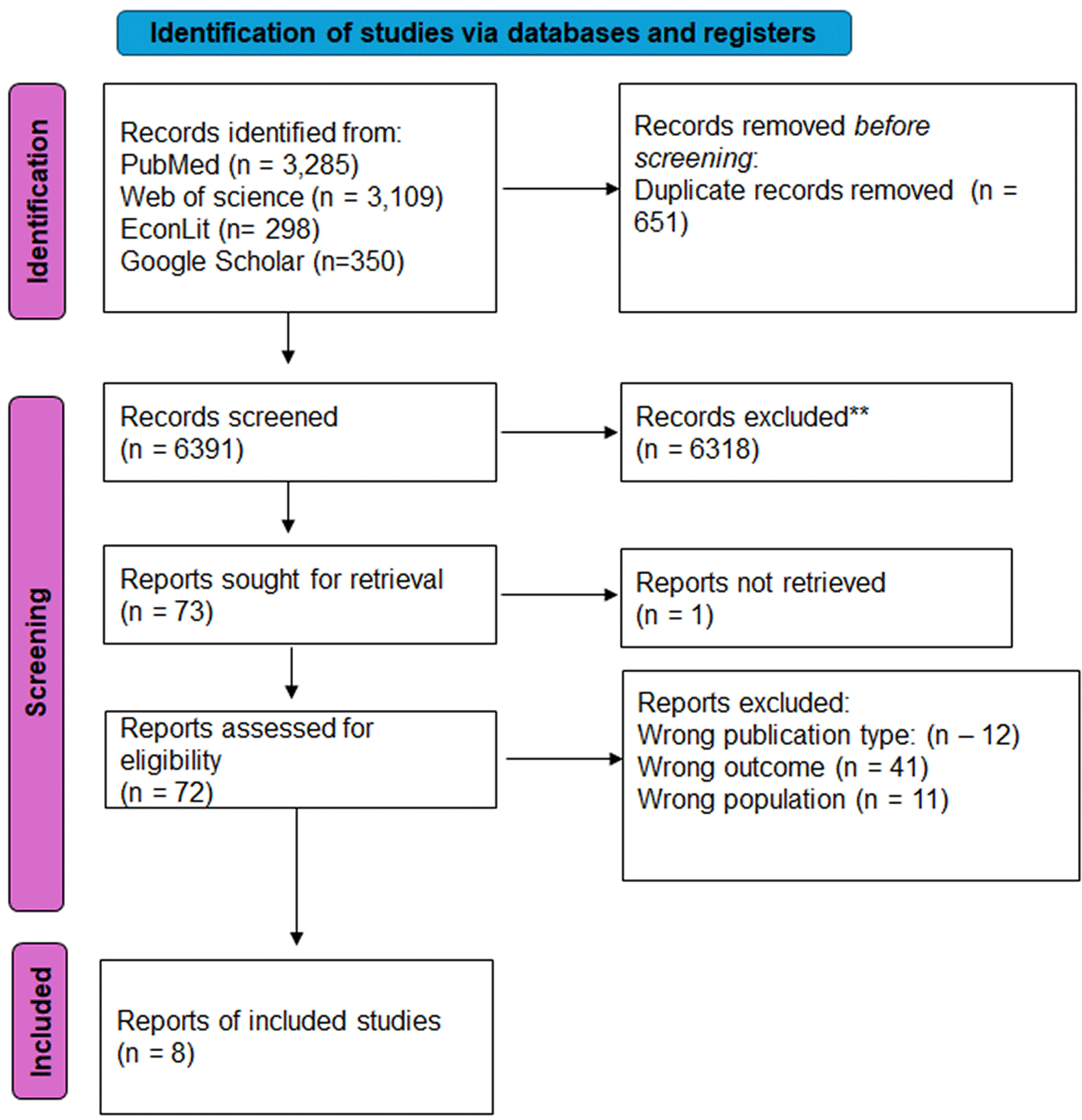
After discarding 637 duplicates, SC and OI reviewed titles and abstracts of 5479 articles. Following an updated search, and the removal of 14 additional duplicates, a further 916 titles and abstracts were reviewed. Seventy-two articles were selected for full text screening. Eight of these studies met the inclusion criteria following full-text review. We hand searched the bibliography of included studies for additional references, but none were identified, leaving a final list of eight articles for analysis. The PRISMA flow diagram is presented below in Figure 1.
We found two articles, Sondaal et al.25 and Bunning et al.,26 that made empirical observations of sustainability beyond the period of external support and 6 others that, although not observing the post-support/funding stage, commented on the concept of sustainability.27–32 These eight studies are listed in Table 2.
| Authors (year) | Study aim | Intervention Sample | Study Sample | Study setting | Outcome measure (s) | Role of SHG | |
|---|---|---|---|---|---|---|---|
| Target area for SHGs | Maternal, new-born and child health | ||||||
| Sondaal AEC, Tumbahangphe KM, Neupane R, Manandhar DS, Costello A, Morrison J (2019)25 | To evaluate the effectiveness of women’s participatory learning and action (PLA) groups on new-born mortality. | Pregnant women, women of all ages and some men. | i. cross sectional survey (n = 239 groups) ii. Focus Group Discussions (n = 30) with group members iii. Key-informant interviews (n = 30) | Nepal (Rural) | Sustainability of the intervention. Explored the barriers and facilitators to sustaining the group meetings and their activities | 24 facilitator led meetings from 2001 to 2003. Home visits to pregnant women who did not attend groups, especially younger first-time mothers. | |
| Saggurti N, Porwal A, Atmavilas Y, Walia M, Das R, Irani L (2019)28 | To assess the effects of a new-born care intervention through SHGs in improving new-born healthcare practices in rural India. | 10–12 women of reproductive age belonging to the most marginalized communities. Each SHG had about 1–2 pregnant women, and an additional 1–2 women with children below 2 years of age. | Surveys: i. with 2407 women in 2013 ii. with 2237 women in 2014 iii. With 2974 women in 2016 | India (Rural) | Outcome analyses used an intention-to-treat approach and assessed the effects of new-born health intervention within SHGs on practices. | Health “integration” within intervention SHGs included eight weekly cycles of participatory behavioural communications using different thematic modules. The intervention session was delivered by a trained community worker. | |
| Maldonado LY, Songok JJ, Snelgrove JW, Ochieng CB, Chelagat S, Ikemeri JE, et al. (2020)32 | To evaluate the association between Chamas (community health volunteer facilitated program) participation and facility-based delivery. | Pregnant and postpartum women | Data collection forms at enrolment and follow-up 6–12 months post-partum. Intervention (n = 211) Control (n = 115) | Kenya (Rural) | i. Primary- Facility based delivery Secondary- the relative proportion of women who ii. attended at least four ANC visits, ii. received a community health volunteer home-visit within 48 h postpartum, iii. Exclusive breast feeding to 6 months, iv. adopted a modern family planning method, v. adopted a long-term or permanent family planning method. Additionally assessed the relative proportion of infants that received Oral Polio Vaccination at birth across cohorts. | Deliver health and microfinance education in a safe and familiar setting by Community Health Volunteer. | |
| Ruducha J, Hariharan D, Potter J, Ahmad D, Kumar S, Mohanan PS, et al. (2019)29 | To assess how the health coordination and emergency referral networks between women’s SHGs and local health systems changed over the course of the 2-year learning phase of the SHG programme. | The SHG programme began in 2012 with a learning phase in 100 administrative villages, called gram panchayats, located in 10 blocks within 8 districts with a goal to scale up the intervention to 120 blocks over the 5-year project period. | The total sample was 596 (including SHG members, village-level and block-level government health workers, and other key members of the community). 316 respondents data was collected at baseline and 280 in the endline. | India (Rural) | Social network analysis to measure degree centrality, density and centralisation to assess changes in health services coordination networks at the village and block levels. | Poor and lower caste women were encouraged to access financial products, and to advocate for government health services and entitlements through capacity building and leadership training. | |
| Mehta KM, Irani L, Chaudhuri I, Mahapatra T, Schooley J, Srikantiah S, et al. (2020)31 | To assess the impact of SHGs and their scale-up on reproductive, maternal, new- born, child health, nutrition and sanitation outcomes | N/A | 62,690 women who had a live birth in the past 12 months. | India (Rural and urban) | 66 Indicators grouped into antenatal care and birth preparedness, delivery, postnatal care, nutrition, immunisation, family planning and sanitation. Indicators were further classified into delivery platforms, facility care and outreach service delivery, frontline worker performance and behaviour and mother’s behaviour. | Access to microfinance and information on health, nutrition and sanitation. | |
| Bunning K, Gona JK, Wanjala SW, Hartley S (2025)26 | To investigate the sustainability of self-help groups (SHGs) for caregivers of children with disabilities in a changing context, including the COVID-19 pandemic. | Caregivers of children with disabilities | i. Focus group discussions (n = 42 caregivers across 3 SHGs) ii. Monitoring questionnaires (n = 56 across 9 SHGs) iii. Quality of Life (QoL) questionnaires (n = 21 caregivers vs. n = 11 control; plus n = 8 pre- and post-pandemic) | Kenya (Kilifi County, rural) | Sustainability of SHGs assessed through livelihood continuity, social contact, empowerment, and QoL scores (AC-QoL domains: support for caring, money matters, personal growth, ability to care). | SHGs provided psychosocial support, facilitated income-generating activities, maintained social ties, and empowered caregivers. They acted as a buffer against adverse conditions (COVID-19, environmental challenges), improving resilience and quality of life. | |
| Empowerment | |||||||
| Vijayanti (2002)27 | To study women’s levels of awareness and decision making in the family and community, and to quantify their self and group empowerment as a result of membership in SHGs. | Women | 1018 women: 10%- 102 women (every 10th women) were selected. | India (Urban) | Factor analysis to assess the nature of the relationships between awareness creation, decision making, self and group empowerment, and to reduce the effect of variables that run through them as a common thread and have a high bearing in explaining interdependency among variables. | In SHG formation and operationalisation women learned from each other through exposure, visits to similar programmes implemented in neighbouring states, group discussions and case examples. | |
| General health | |||||||
| Nichols C (2021)30 | To investigate the efficacy and equity of SHGs as platforms for development programs | Women from low-caste and indigenous people in 8 pilot block sites | i. Semi-structured interviews (n = 64) ii. Focus Group Discussions (n = 6) | India (Rural) | To investigate how social capital and socioeconomic conditions interact to enable or hinder the use of SHGs as platforms to impart health messages in terms of efficacy and equity. | SHGs formed for saving and lending activities where women make small weekly deposits (e.g. 10 Indian Rupees, or 15 US cents) into a group account, which enables them to take reasonable interest loans, and become connected to banks and governmental organizations to leverage additional benefits. | |
We present first the findings from the article by Sondaal et al. and Bunning et al. that observed sustainability beyond the period of external support.25,26 We then briefly comment regarding sustainability across all eight articles including those that mention the concept but do not observe it.
Sondaal et al.’s study was based on a cluster randomised controlled trial (RCT) of a SHG intervention implemented in rural Nepal and conducted by Manandhar et al.33 Forty-two geopolitical village development committees (encompassing 239 SHGs) were matched into 21 pairs in this trial ( Figure 2). A list of random numbers was then used to select 12 pairs (from the original 42). These formed the trial clusters. Each member of each of the 12 pairs were then randomly assigned to intervention or control cluster by tossing a coin. In the intervention phase of the RCT, which took place between 2001–2003, 111 SHGs across the 12 intervention clusters were mentored to develop participatory learning and action cycles to improve maternal and newborn survival. This participatory learning and action cycle consisted of a four-phased cycle: problem identification; development of strategies to address identified problems; working together with their community on implementation; and evaluation of strategies. The most common strategies implemented by the groups during the intervention were: (1) pooling of money to form an emergency maternal and child health fund, (2) production and management of stretchers for transportation of women who encounter problems during childbirth at home, (3) locally produced clean home delivery kits, and (4) awareness raising through plays and video shows. Following the intervention period of the RCT (2003–2008), the SHG intervention continued in the intervention clusters, and was rolled out to control clusters comprising of a further 129 SHGs in 2005. The sequence of events is represented in Figure 2.
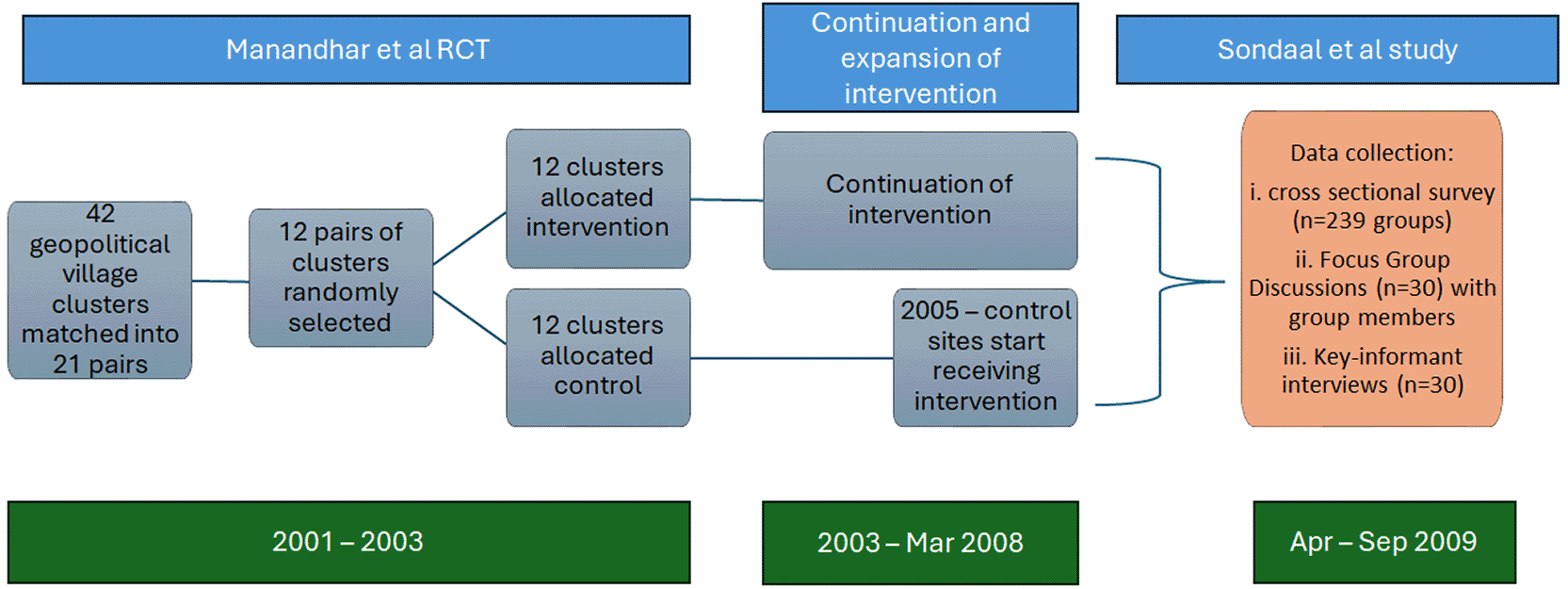
This evaluation of sustainability described by Sondaal et al. took place 12 to 17 months after the conclusion of mentoring support and encompassed all 239 of the 240 SHGs (one large ward comprised of two SHGs, one of which was part of the analysis).
Sondaal et al. conducted a mixed methods study, starting with a cross-sectional survey involving one representative from each of the 239 groups using convenience sampling. The study of long-term sustainability focussed specifically on continuation of the participatory learning and action cycles described above. The survey collected data on the nature of activities and meetings, factors impacting their participation and the support required to sustain the group.
These cross-sectional surveys enabled Sondaal et al. to categorise sustainability after support was withdrawn into three groups. The three groups were identified as:
1. Active groups (n = 183) that continued to conduct meetings, work on strategies to address identified problems and kept meeting minutes.
2. Less active groups (n = 49) that did not meet regularly, and their strategies were sporadically implemented or completely dissolved.
3. Merged groups where seven groups had merged into two.
Assuming the merged groups were active, then 190 of the original 239 groups (79%), remained active at 12 to 17 months. Sondaal et al. did not break their results down according to whether the groups had had a longer intervention period (intervention group) or a shorter intervention period (control group).
The surveys then informed subsequent qualitative investigations, enabling Sondaal et al. to pinpoint and purposefully select groups based on their level of activity and delve into the reasons behind it. The qualitative investigations included:
1. focus group discussions with purposively sampled group members. This consisted of twenty groups that were active, six groups that were less active, and four groups that had merged with other community groups (n = 30,) Group members were asked about the nature of activities and meetings, factors influencing their activeness, and the support they needed to continue the group.
2. individual interviews with key-informants who were local individuals who did not participate in the group activities but possessed knowledge about the previous and current status of SHGs (n = 30).
Sondaal et al.’s study was large, and the authors were able to identify factors that influenced the sustainability of the groups. These factors were grouped in 3 themes (more details in Table 3): i) intervention development, i.e. leadership capacity, acquiring knowledge, unifying activity; ii) context, i.e. local importance, the social environment; and iii) outcome, i.e. financial support.
Bunning et al.’s study built on an earlier intervention in Kilifi, Kenya (2015–2018), which aimed to establish 20 SHGs to support caregivers of children with disabilities and improve their overall quality of life.34,35 The intervention is described in Table 4. Seven groups dissolved during the early intervention stages due to a range of factors. This left 11 SHGs that were successfully formed, comprising 154 caregiver members. The intervention was delivered to active groups over a six-month period between 2015 to 2018 – see Figure 3. Sustainability was observed over three phases between 2018 and 2023: pre-pandemic; inter-pandemic and post-pandemic. Two further SHGs were dissolved during the COVID pandemic, leaving 9 SHGs where long tern observations could be made.
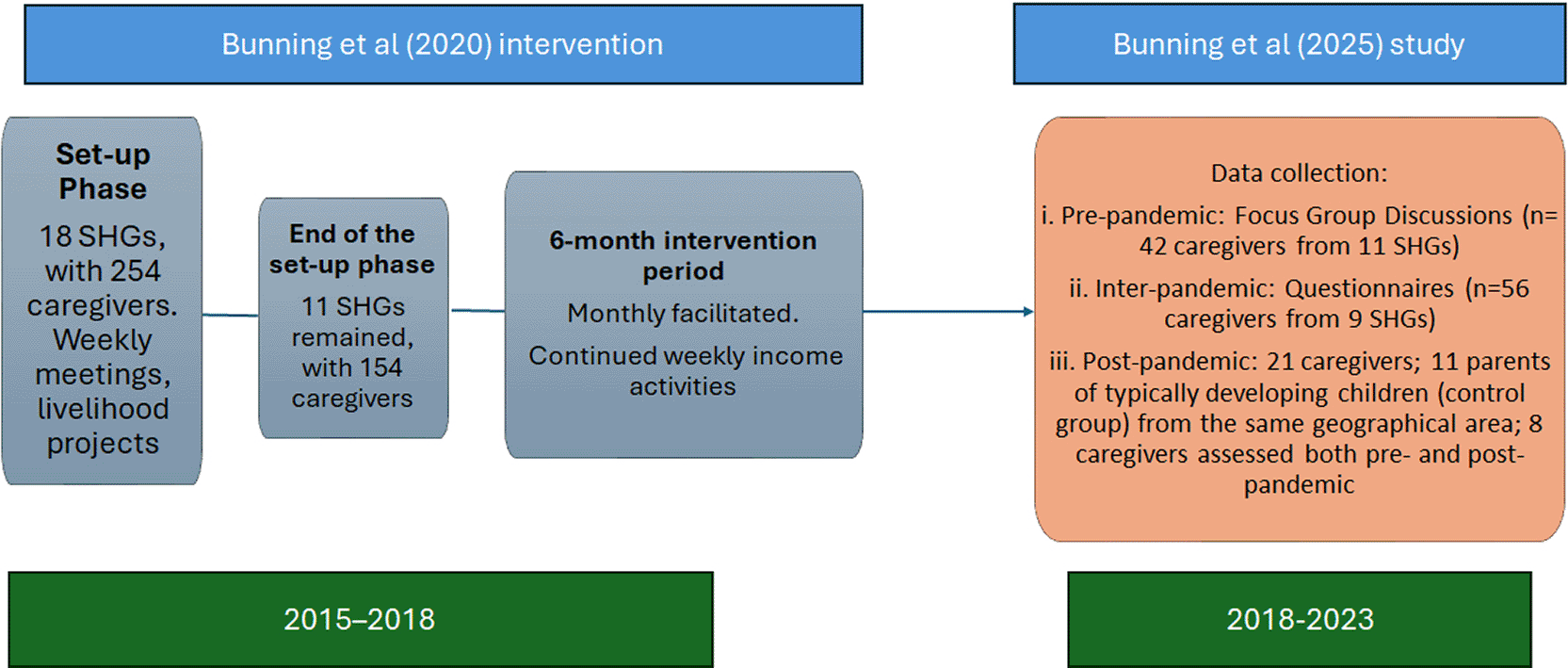
Of the nine SHGs that had participated in the end-line observations, four remained active, two were semi-active, and three had become dormant. Active groups had adapted their activities to pandemic-related challenges, such as shifting to smaller, informal meetings and focusing on low-cost, home-based income-generating initiatives. These groups also demonstrated strong internal leadership and maintained links with local support networks. Semi-active groups showed signs of recovery but struggled with inconsistent attendance and reduced financial contributions. Dormant groups had ceased all activities, citing loss of momentum, leadership fatigue, and competing post-pandemic priorities such as food security and healthcare access.
Bunning et al. concluded that while the pandemic posed significant challenges to SHG sustainability, it also underscored the importance of flexible, community-driven approaches and the need for long-term support structures to ensure resilience in the face of future disruptions.
As described above, we also found six studies that did not observe the post-funding phase but mention factors which could impact the issue of intervention implementation and sustainability in the view of the authors. The factors in these six articles aligned with the findings from Sondaal et al. and Bunning et al. These were social environment and trust25,30 acquisition of new knowledge at SHG27 and unifying activity such as contributing to a saving fund.25,27,30 Time spent in SHGs27,31 was also identified as a factor.
This review aimed to assemble existing evidence on the sustainability of SHGs, with a health component, beyond their external support period. To our knowledge our review is the first on this topic. We found only two articles that made empirical observations of sustainability beyond the period of external support (Sondaal et al. and Bunning et al.). Sondaal et al.’s article was large, including 239 SHGs and showed a high rate of sustainability of 79%. The observation that such a large proportion of groups maintained their activity at a high level after the withdrawal of support is noteworthy. It supports the theory that after an intervention period of four to seven years, the intervention was embedded in the social fabric of communities. In short, it had become self-sustaining. That said, the observations of sustainability were made 12 to 17 months after the withdrawal of support and longer follow-up periods would be highly desirable in future studies. It would have been interesting to examine the hypothesis of whether a longer intervention period was associated with greater sustainability, but this data was not provided.
Bunning et al.’s study focused on 11 SHGs supporting caregivers of children with disabilities in Kenya. Although smaller in scale, the study was notable for its longitudinal design, capturing data across pre-pandemic, inter-pandemic, and post-pandemic phases. This allowed for an assessment of sustainability under changing and challenging conditions. Of the nine SHGs that remained contactable, four were still active three years after the initial intervention ended. Bunning et al.’s findings reinforce the importance of adaptability, leadership resilience, and external support in sustaining SHGs, particularly in the face of external shocks such as the COVID-19 pandemic.
Sondaal elicited views on barriers and facilitators of sustainability and six further articles also commented on this concept on the basis of observation studies of SHGs during the implementation phase. Their conclusions were similar and can be summarised by saying the factors that also determine the success of the original programme are: the social environment and trust25,30; leadership presence25; acquisition of new knowledge27; unifying activity such as a saving fund25,27,30; as well as time spent in SHGs.27,31 These factors are not specific to SHGs and resonate with those in the broader health service and policy literature.18,36,37
Bunning et al. identified similar themes, with additional emphasis on the importance of adaptability in response to external disruptions. Their study highlighted how groups that modified their meeting formats and diversified income-generating activities were more likely to remain active. Leadership resilience and continued engagement from local support networks were also found to be critical for sustainability.
There may be other factors, not covered in the literature, that affect sustainability of SHGs. One potentially important factor concerns the broader economic and financial frameworks that vary by country. For example, SHGs are able to join and/or form broader co-operatives in some countries, such as Nepal.38 Some countries have a national scheme of non-conditional cash transfers, such as the Self-Help Community Development Project in India and these too may influence sustainability of SHGs, presumably positively.
Given the importance of sustainability and the often time limited nature of donor funding, it is surprising that we can find only one paper on sustainability of SHGs. We note that sustainability is seldom captured in studies of health service and policy interventions, thus the Sondaal et al. trial and Bunning et al.’s longitudinal study are an exception. In our opinion this is a reflection of the funding cycle governing much service and policy research. Research grants seldom extend beyond a five-year funding period and that corresponds to the duration of many implementation programmes. Therefore, investigators struggle to obtain funds to make detailed assessment of sustainability. We and others have advocated for more flexible funding models whereby future funds are allocated according to previous findings.39 There is little or no reason to look for sustainability (or for that matter carry out a health economic analysis) if the results of an evaluation show that an intervention is ineffective (or harmful). Such an evaluation is needed if the initial results are promising; hence the need for a flexible evaluation funding envelope.
A further implication, implicit in our findings regarding factors associated with sustainability, is the importance of good design in the first place – social interventions should be built to last. An additional idea concerns the termination of the support for a project. We are involved in a retrospective study of sustainability of six SHG interventions funded by donor agencies in three LMIC countries. We note the in each case the cessation of support was abrupt, typically with a guillotine at five years. We think it might be better to taper the withdrawal of support according to the progress of the SHG. Such a plan might be open to moral hazard where groups game the system and underperform in order to maintain funding. Therefore, this proposal would need to be designed with this in mind and carefully evaluated.
The findings from Ilesanmi and Afolabi (2022) align with our observations regarding the limited empirical evidence on sustainability.40 Their review identified key factors influencing sustainability, including institutional integration, financial autonomy, and community engagement – many of which resonate with the themes found in SHG literature. However, while their focus was on broader health programmes, our review highlights the unique dynamics of SHGs, such as peer support and savings mechanisms, which may offer additional resilience. Both bodies of literature point to a critical gap: the lack of long-term follow-up and evaluation beyond the funding lifecycle.
Despite the widespread implementation of both SHGs and donor-funded health programmes in LMICs, there remains a notable scarcity of empirical evaluations that assess their sustainability beyond the initial funding period. This gap limits our understanding of long-term effectiveness and scalability. Cross-sector learning is essential – lessons from broader health programme sustainability, such as those identified in the review by Ilesanmi and Afolabi (2022), can inform the design, implementation, and evaluation of SHGs.40 Integrating insights across sectors can help build more resilient community-based interventions that are better equipped to endure beyond external support.
A limitation of this review is that only studies published in English were included.
Our conclusions are limited by what we have been able to find. Since we found only two studies, we cannot generalize with confidence, notwithstanding the large size of one of the studies.
Although we have cited literature outside our field of SHGs, we have not reviewed it systematically for sustainability. We hope our study will stimulate more research into this subject.
There is very little literature observing sustainability of SHGs. The limited research that does exist on sustainability found that some intervention components remained in place after the funding period. Sustainability deserves much more attention and those who commission research should provide funding to examine sustainability in cases where the initial findings are positive.
The parallels between SHGs and donor-funded health programmes suggest a broader systemic issue in global health interventions: sustainability is often an afterthought. As Ilesanmi and Afolabi (2022) argue, sustainability must be embedded into programme design, with flexible funding models that allow for continued evaluation and adaptation.40 Our findings support this view and call for funders and implementers to prioritize long-term viability, especially when initial results are promising.
Provide sufficient details of any financial or non-financial competing interests to enable users to assess whether your comments might lead a reasonable person to question your impartiality. Consider the following examples, but note that this is not an exhaustive list:
Sign up for content alerts and receive a weekly or monthly email with all newly published articles
Register with NIHR Open Research
Already registered? Sign in
If you are a previous or current NIHR award holder, sign up for information about developments, publishing and publications from NIHR Open Research.
We'll keep you updated on any major new updates to NIHR Open Research
The email address should be the one you originally registered with F1000.
You registered with F1000 via Google, so we cannot reset your password.
To sign in, please click here.
If you still need help with your Google account password, please click here.
You registered with F1000 via Facebook, so we cannot reset your password.
To sign in, please click here.
If you still need help with your Facebook account password, please click here.
If your email address is registered with us, we will email you instructions to reset your password.
If you think you should have received this email but it has not arrived, please check your spam filters and/or contact for further assistance.

Comments on this article Comments (0)