Keywords
Key Words: Grenfell, disasters, PTSD, trauma, wellbeing, community engagement

Key Words: Grenfell, disasters, PTSD, trauma, wellbeing, community engagement
The twenty-four storey Grenfell Tower apartment block in North Kensington, London, caught fire and was irreparably damaged in the early hours of the 14th of June 2017. 72 people died. There were mass evacuations of tower residents and some people in adjoining properties. Many people were accommodated in hotels, some for many months. High population density around the tower meant thousands witnessed the fire at close quarters, many had friends and relatives amongst tower residents. Retrofitted inflammable external cladding played a key part in events.1
In the official press release2 summarising the outcomes of the Grenfell Public Inquiry3 the chair of the Inquiry was quoted as saying:
“The Inquiry report finds that the deaths that occurred were all avoidable and that those who lived in Grenfell Tower were badly failed over a number of years by those who were responsible for ensuring the safety of its occupants”. After listing many organisations and individuals he went on to say that they all “contributed to it in one way or another, in most cases through incompetence but in some cases through dishonesty and greed”.
Building industry standards, weak government regulation, poor oversight by the local authority, the Royal Borough of Kensington and Chelsea (RBKC) and a failure to learn from previous fires were major factors. Criminal prosecutions are under consideration.
Kensington and Chelsea is one of the wealthiest boroughs in the UK but the 35,000 residents in North Kensington’s seven wards live in one of the most deprived areas in the UK with high levels of mental and physical ill-health and child poverty. The area is ethnically and religiously diverse. There are expensive private properties mixed withhttps://www.rbkc.gov.uk/housing/finding-home-and-housing-options/applying-councils-housing-register/social-housing-borough social housing which is in short supply.4 In the immediate area of the tower, 71% of households were in social housing in 2011.5 It is a desirable area to live, with neat, tidy streets, and vigorous community organisations. Many residents are proud of their area. But that did not stop many residents feeling that their needs, concerns, and wishes were all too often overlooked.
The Grenfell Tower fire (“Grenfell”) was a centred disaster, one affecting primarily a single local community with extensive social links.6 There was enormous anger amongst local people after the fire, particularly aimed at RBKC and general hostility to “the establishment”, including the press.7 Criticism of disaster responses is common; this was extraordinarily intense. RBKC had lost the trust of the community it served and that had huge implications for the long-term response.
There is a relative lack of studies on structuring delivery of mental health and wellbeing services and on how they fit into wider disaster response systems. Details of delivery systems are often found in “grey” literature and can lack detail about the problems those involved faced, how they went about resolving them and why particular decisions were taken. The exceptions are very illuminating, as for example publications on the Enschede disaster.8 Mental health and wellbeing are sometimes given scant attention in disaster planning textbooks, perhaps partly because they are seen as something separate and distinct, even niche. They need to be integrated into the overall picture. Having appropriate mental health interventions is of little use if you don’t know how to deploy them.
The authors sought the advice and guidance of Grenfell United when developing the project and the grant application. Two service user consultants were involved in discussions about the study aims and objectives. JG and JA presented the main findings to service user groups prior to the completion of this paper. We will involve PPI presenters in planning and delivering public presentations to disseminate the results of this study and to provide context.
The “MILL study” (Major Incident Lessons) is an evaluative case study. Its aim was to look at the mental health and wellbeing response of statutory services to the fire and its aftermath, how they worked together and with VSOs and to draw lessons for future disasters. The study looked at the first two years after the fire, from June 2017 to the end of July 2019.
Study approval was given by the Health Research Authority (HRA) who advised that NHS ethics approval was not required. Ethics approval was granted by the Research Ethics Committee in the School of Healthcare Sciences at Cardiff University on May13th 2021 (reference REC799).
The starting point for the study was two initial sources: an initial pool of 194 publicly available documents, reduced to 137 for further examination, produced by statutory organisations and VSOs including minutes, reports, press releases and plans and 39 confidential anonymised interviews with key informants from RBKC, the NHS and VSOs. An additional interview could not be used because of recording problems. Written informed consent was obtained from all interviewees. No patients were interviewed for the study. Questions were restricted to the professional experiences and observations of interviewees.
Interviewees were in senior positions which gave them an overview of key aspects of the response and were deliberately selected to reflect a wide diversity of experience, organisations, and perspectives. Interviews did not address the first month, the period covered by the Public Inquiry, for legal reasons.
Case studies are inevitably a laborious and iterative process. A preliminary timeline was developed through discussions with groups and individuals involved in the response and from documents. Information from interviews also fed into this process. During the study the number of documents reviewed to inform this paper increased considerably, expanding to include not only additional documentary primary sources but secondary sources such as national and international guidance on disasters, policies, reports by national VSOs and relevant reports from national government and expert bodies. Many documents were discarded because either they repeated information, or they did not bear on the key issues in this paper. We used AI, Chat-GPT v5 (and earlier versions) and Consensus, to extend our range of searches for relevant sources, particularly “grey” literature, and to check the references for accuracy. We did not use AI to construct or write this paper and our analysis of books, reports, scientific papers, documents and other materials and their significance is entirely our own.
In a few cases information on specific facts were missing or needed to be checked to make sure we understood them, for instance on costs and on the dates of some events. Organisations involved were generally responsive, transparent, and helpful in filling in gaps in our understanding. We have included the key documents used as data for this paper as citations in the reference list.
Information on costs was obtained from multiple sources including RBKC reports, NHS commissioner reports, charitable sources, and investigative journalism. Central and North West London NHS Trust (CNWL), the main NHS mental health provider, provided total mental health spend to the study in response to our request. Activity based costing was not feasible because it would have required organisations to have kept detailed timesheets identifying time spent on specific tasks within roles. Indirect costs, such as income loss amongst displaced residents, welfare benefits, impacts on local businesses and costs incurred by central government and the NHS above the level of local commissioning were not estimated.
For this paper interviews were used as a source of information about events and timings, for instance in populating the preliminary timeline. Interviews, and selected documents, were also subject to a qualitative analysis to look for key themes. They were coded by research team staff, using Framework Method Analysis9 with key themes identified in advance but with scope to include emergent themes and subthemes. A report on the qualitative analysis is in preparation.
Information was triangulated from primary and secondary sources to identify key lessons for this paper. It provides an overview of what was done, why, and how the Grenfell response developed as well as a commentary on specific events. The final timeline is included later in this paper ( Table 2). Narratives of disaster responses can provide useful information for those faced with co-ordinating disaster responses but only if they contain specific details. The timeline is a reminder that a disaster response needs to be looked at both cross-sectionally and also as a developing narrative. We have endeavoured to be as accurate as we could be in reporting timings but sometimes there can be gaps between a decision being taken, implemented, and reported. Note that the timeline does not include every action of the many agencies involved. It concentrates specifically on those directed at mental health and wellbeing.
In this paper we start with the overall management for the Grenfell response, moving on to the mental health response and wellbeing, and finally to the community and voluntary sector response.
We refer throughout to the specialist NHS mental health services as the Grenfell Health and Wellbeing Service (GHWS), although this name was not adopted until August 2017.
Terms are sometimes used loosely in descriptions of disasters. We have generally used the WHO definitions10 but where we have diverged, we have defined and explained our usage.
The direct costs of the fire and its aftermath were enormous. Charitable funders raised millions11 mostly distributed or spent by VSOs. RBKC and national government provided large scale funding which provided direct humanitarian aid to those affected, funding for 92 local and national voluntary sector organisations (VSOs) and enhanced statutory services, as well as the purchase of property to rehouse survivors. The NHS set up specialist services to meet the mental and physical needs of bereaved and survivors (BSRs), close witnesses, emergency services personnel, and other helpers. By 2023 partial estimates of overall costs of the fire had reached almost £1.2 billion,12 most of which fell on the public sector. This figure was certainly an underestimate. Indirect costs like loss of income, benefits payments or impact on local businesses were additional to direct costs.
Available information on spend by different agencies was reported for different time periods. From June 2017 to the end of March 2019, RBKC made a total revenue expenditure of £135 million13 on Grenfell (Item A5). Of this £41.2 million was spent on social care and wellbeing including funding many VSOs. RBKC also spent £56.5 million on housing, mainly temporary accommodation for the evacuated. This figure did not include capital costs - £302.3 million - for replacement homes, compensating leaseholders and maintaining the Grenfell site.
Local NHS commissioners reported spend from the fire to December 2018 of £16.4 million14 for all local NHS services including additional Grenfell-specific community, enhanced primary care, acute and mental health costs but did not separate the different elements. Total CNWL mental health and wellbeing spend for the whole two years to end of July 2019 was £11.9 million, which included a small element to reimburse spend by other NHS providers. NHS figures do not include NHS emergency acute care costs, or national or local authority spend on public health and substance misuse services.
Overall spend on specialist mental health was substantial but a small fraction of the overall costs of the disaster, and lower than spend for wellbeing and for humanitarian aid, which in turn was a fraction of overall costs of the disaster.
In the UK, each local authority is responsible for drawing up a local emergency plan15 which includes NHS and voluntary agencies. It is also usually responsible for developing and co-ordinating any longer-term recovery plan. Beyond this, there exists also regional scrutiny and co-ordination. Local authorities and NHS providers have their own emergency planning relating to operations and implementation. These plans mainly focus on the key roles and responsibilities which are necessary to manage a response, rather than on specific actions (because in many cases these will vary between disasters). There are regular local and regional multi-agency “tabletop” disaster rehearsals.
While guidance on the immediate emergency response is extensive, that for the recovery phase16 is less so. Different elements of guidance are updated at various times and published separately by, inter alia, central government, public health agencies, the NHS and local government. Ideally published guidance from different agencies would be brought together in a central site for easy access. We observed that while organisations understood their own roles in the Grenfell response, some important issues were less well understood. For instance, there was no local cross-agency emergency data-sharing protocol in place prior to the fire althoughhttps://www.gov.uk/government/publications/data-protection-and-sharing-guidance-for-emergency-planners-and-responders Cabinet Office guidance17 after the 2005 London bomb attacks had drawn the issue to the attention of agencies. There was initial uncertainty in some agencies about what personal information could, and could not, be shared within and across agencies without individual consent during the early emergency Civil Contingencies Act18 period. Since Grenfell there has been specific guidance from the Information Commissioner19 about data sharing during emergencies. A formal local cross agency agreement also had to be put into place about data sharing in the recovery period after the disaster. Sharing of data was an issue of very significant concern to community members and their legal representatives, reflecting a general lack of trust as well as ongoing litigation for damages for affected people.
Those planning for data sharing should consider not only what is permissible in law, but what is acceptable to service users. Informing communities and individuals if and how their data is shared is not only their legal right; it is vital if trust is to be built and maintained.
Reading pages and pages of guidance is rarely feasible in the emergency phase of a disaster, rapid reference materials like checklists and model Standard Operating Procedures can be very valuable and should be in routine use. We include an example of how these can be structured ( Table 1). Statutory service planning processes can be slow and cautious. In a disaster, rapid decisions are often needed. GHWS operated what was effectively a short cycle Plan Do Study Act (PDSA) approach to developing services, as well as more formal long-term planning. The PDSA approach of planning quickly, acting, and then examining the results rather than trying to achieve perfect plans at first pass is quicker and sometimes better suited to situations of uncertainty.
| JUNE 2017 | ||
|---|---|---|
| ACTION/EVENT | COMMENTARY | |
| MANAGEMENT | ||
| 1 | The immediate response was led by emergency services. Responsibility for the recovery part of the response transferred after a few days to the Strategic Recovery Group (SRG) of the London Resilience Partnership. The SRG was a multi-agency group sometimes referred to as ‘London Gold’. | The recovery phase will often overlap with the emergency phase early on in a disaster. In the UK the local authority will normally be responsible for co-ordinating the immediate and longer-term humanitarian responses. In the case of Grenfell, a lack of trust in RBKC (and sometimes outright hostility from local people) meant it struggled to fulfil this role effectively immediately after the fire. The result was messy. RBKC took over much of the responsibility for co-ordinating the recovery from September 2017, with London Resilience Partnership holding the lead for recovery until that point. Some responsibilities transferred to RBKC later, some never transferred (eg management of the tower site). This was not envisioned in the principles and guidance of response and recovery before the fire and was examined in the Public Inquiry. |
| 2 | Other local authorities provide support for London Gold delivery on as rotational basis under ‘mutual aid’, including providing management assistance and ‘key workers’ for BSRs and other affected. | Mutual aid was necessary but led to some lack of consistency of keyworkers supporting individuals because it was never anticipated that it would last more than a short period of time. Most key workers came from RBKC, Hammersmith and Fulham and Westminster councils. |
| 3 | Family and Friends Assistance Centre ( FFAC) was established by the Police involving social workers and VSOs to serve the specific needs of the bereaved and survivors. Run day to day by local authority social care teams organised through the SRG. | Set up at a ‘confidential’ venue in Central London because of media intrusions. |
| ACTION/EVENT | COMMENTARY | |
|---|---|---|
| MANAGEMENT | ||
| 4 | Police obtain permission from some witnesses to pass on their details to the NHS. | Police lacked capacity to process list given the other pressures on them. |
| RBKC | ||
| 5 | One “official” Rest Centre and two community generated Response Centres established. Many other local organisations opened their doors to affected. RBKC consolidated the Rest and Response Centres into single centre, Westway, (repurposing a local sports centre). | Westway provided a one-stop shop for VSOs, RBKC and NHS services. |
| 6 | RBKC staff arrange hotel accommodation for BSRs, and others evacuated from the Lancaster west estate within the police cordon | Accommodation secured for most evacuated persons by the end of the first day. |
| 7 | RBKC distributed a Humanitarian Assistance Packhttps://sobus.org.uk/wp-content/uploads/2017/06/Humanitarian-Assistance-Guidance-Pack-21-June.pdf? (HAP) which provided an extensive list of available statutory and voluntary services developed with WLCCG. | Initially, while a mine of useful information, this was so comprehensive it was hard for people to know which service they needed. |
| NHS | ||
| 8 | Acute hospitals take casualties brought in by ambulance, mainly tower residents. | London acute hospitals share casualties |
| 9 | Extra input by CNWL community staff facilitate early discharge of existing patients in acute beds. | Frees beds in neighbouring acute hospitals for casualties. |
| 10 | CNWL extends its 24/7 single point of access (SPA) phone system for patients and referrers to provide Grenfell specific service from noon on the first day for direct calls. By day 3 linked directly into the national NHS 111 helpline service for those calling about Grenfell. | SPA provides information, passes patients to correct service, |
| 12 | Neighbouring West London Mental Health Trust (WLMHT) provides extra staff to CNWL, begins to see residents in its own area close to the North Kensington boundary with CNWL. | CNWL is a large provider, but it still needed additional capacity. |
| 13 | CNWL adapts its community NHS Talking Therapies services (then called “IAPT”) to deal with Grenfell affected. Local primary care mental health service (PCLS) also involved. | The K&C IAPT service was part of an existing wider partnership with PCLS (a multidisciplinary CNWL mental health team working with primary care) and three VSOs. |
| CNWL Uses patient lists and postcode searches to identify current and recent mental health patients and those waiting for treatment living close to, or in, the tower. | Proactive wellbeing checks. | |
| 14 | Clinical health psychology (CHP) staff in acute hospitals provided input into casualties, Liaison Psychiatry to those attending A&E. | Acute hospitals had their own disaster plans which included CHP and liaison psychiatry teams. |
| 15 | CNWL staff volunteer unpaid time in the local community and Westway. | |
| 16 | All local schools contacted. Advice and support offered to staff. Link worker provided for each school. CAMHS provide early Grenfell services for affected children. | CAMHS later replaced as main Grenfell provider by specialist GHWS child service. |
| 17 | Advice provided to local GP practices on management of psychological trauma, those closest to the tower visited by Senior GHWS staff. 24 hour on-call advice rota for primary care set up and support offered to primary care staff. | |
| 18 | NHS staff worked with local community volunteers and the British Red Cross (BRC) to provide psychoeducation, support and advice in the streets around Grenfell Tower, community venues and through home visits. NHS trauma leaflet distributed. | Services need to be accessible, proactive, and visible. Later, high visibility jackets, and then distinctive T-shirts and “hoodies” were issued to mental health staff to make it easy for local people to identify NHS staff. Mental health staff in the community in the UK do not normally wear uniforms. |
| ACTION/EVENT | COMMENTARY | |
|---|---|---|
| MANAGEMENT | ||
| NHS | ||
| 83 | The opinion of GHWS is sought by Government as to the impact of the Grenfell Tower remaining in place on the psychological wellbeing of the local community. | In this case, GHWS was being asked for technical advice on the relationship between the Grenfell Tower and psychological trauma/wellbeing, so it could be fed into the considerations of the Grenfell Tower Memorial Commission, set up by the government to advise on the future of the Grenfell Tower site.https://www.grenfelltowermemorial.co.uk/ Advice was that the continued presence of the Grenfell Tower was indeed disturbing to many people and a deterrent for some former residents to return to the area for visits. However, some people in the area were afraid that, if the Grenfell Tower was demolished without firm plans being in place for a memorial, their suffering might be forgotten. Decisions like this one are complex and there are many things which need to be considered. |
| VOLUNTARY SECTOR | ||
| 84 | A VSO offering complementary therapies complains that it is being excluded from The Curve because of building works and their complementary therapists were not being funded. They had been asked to apply for a formal role with RBKC to use the space and, potentially, get paid by RBKC. | This raised a host of complicated issues. What complementary therapies should be funded from public funds? Who ensures standards and protects patients against any risks and harmful practices? How can the public be assured that individual complementary practitioners who usually do not have to be registered have the relevant skills and insurance? Not all complementary therapies are risk free. It is likely that a member of the public could assume that someone being accommodated and paid by the council, and the intervention they are offering, could be trusted. |
| JULY 2018 | ||
|---|---|---|
| 105 | RBKC, CNWL and WLCCG commit to working together on a longer-term recovery plan Despite continuing hostility towards RBKC within the community. it was impossible to design and deliver a long-term plan without the local authority. They had vital financial resources and systems and provided specific services like housing and educational services which complemented and dovetailed with those provided by the NHS. | The importance of involving local people in longer term planning was recognised. |
| RBKC | ||
| 106 | Grenfell Children and Young Peoplehttps://londoncf.org.uk/our-impact/grenfell-children-and-young-peoples-fund Fund (GCYPF) established with the balance of £9.5 million donations raised by The London Community Foundation (LCF) and the Evening Standard Newspaper. Most had been disbursed over the first year. Ultimately just under £1.4 million went into the GCYPF. | There was considerable local concern long-term about possible psychological harm in children. Having a specific plan for children and publicising this is important particularly as the needs of children can get overlooked. |
| 107 | RBKC consulted on a long-term recovery strategy for Grenfell. This was subsequently published (in January 2019) in the form of the Grenfell Recovery Strategy. | Key commitments were:
|
| 108 | The Public Health Department - a part of RBKC -publishes a comprehensive needs assessment. | The full report provides a comprehensive social and health picture of North Kensington and its needs and a preliminary picture of the impact of the Fire on the health of the local population. |
| 109 | Workforce wellbeing strategy formalised. | Workforce wellbeing has to be a major part of the planning for a disaster response for any organisation, preferably before the disaster. |
| OCTOBER 2018 | ||
|---|---|---|
| RBKC | ||
| 111 | 64 organisations have by now received more than £2.8 million in emergency grant funding from RBKC to provide universal or targeted support to the local community. See Costs section in the main body of the paper above. | This is grant funding directed to voluntary sector providers mainly for wellbeing initiatives. |
| NHS | ||
| 112 | NHS England announced a further five years of fundinghttps://www.england.nhs.uk/2018/10/nhs-to-provide-long-term-screening-service-for-grenfell-community/ for physical and mental health services, including enhanced health checks in the community, physical monitoring and ongoing screen and treat for mental health problems. There was provision for further assistance to emergency service workers. | The initial funding for the Grenfell NHS programme was for 18 months. |
Managing a response requires using large amounts of data; external and internal demands for information in the response were extensive. Some NHS patient record (PAS) systems can be inflexible and slow and costly to adapt, and, at the time of the fire at least, some had only very basic analytics built in. A patient’s health record may be split across several systems, as was the case in Grenfell, and systems are not ideal for some tasks, for instance community screening, since they require extensive registration details and that can deter some people from being screened. All this means that managing and sharing information across organisations to provide care becomes challenging.
Data volume can be prodigious. Collection of data is only one part of the problem. GHWS started with one part-time data analyst, which was woefully inadequate; it increased over time to having three busy full-time analysts. CNWL made public information on key aggregate numbers, for instance overall numbers being seen, and it responded where possible to specific press and public queries. Transparency is important or misinformation will spread, and the response was high profile and attracted considerable public interest.
The arrangements for the management of a disaster in London are complex20 and detailed analysis is beyond the scope of this paper. In the Grenfell response once the immediate emergency was contained responsibility for strategy transferred to a Recovery Co-ordination Group (RCG) and associated sub-groups set up within the London Resilience Framework21 of the London Resilience Partnership, a London-wide local government led system22 for the strategic management of large-scale major incidents. A wide range of key agencies including local and regional government, the police and the NHS were part of this system. Usually, responsibility for the co-ordination of the longer-term recovery programme would pass to the local council quickly. However, the intense political and community disquiet meant that, although RBKC was active in providing staff and resources throughout the post-fire period, and was a part of the RCG, the RCG continued to be involved strategically at least until September 2017 and for some specific issues, longer. Central government also set up a Grenfell Recovery Task Force to assist and advise RBKC about (and report back to ministers on) their recovery programme which issued a series of reports on progress23,24 In January 2018 RBKC published a long-term recovery plan after lengthy consultations with the local community.25
Additionally, the Prime Minister convened a central cross-government committee immediately after the fire to ensure people’s immediate needs were met. The resilience arrangements, at least over the first month, were criticised by the Grenfell Public Inquiry26 which did not feel they had worked wellhttps://webarchive.nationalarchives.gov.uk/ukgwa/20250320200236/https:/www.grenfelltowerinquiry.org.uk/report/phase-2/volume-7.html.
A decision was taken that keyworkers, who could provide individual case support to those worst affected, should mainly be local authority professionals, rather than drawing primarily on national organisations like Victim Support.27 Professionals were provided through mutual aid, an agreement under which one local authority will provide staff to another local authority on a short-term basis to meet the demands of a disaster. The unanticipated duration of need challenged this approach. There were complaints from those affected that turnover of management and keyworkers sometimes compromised continuity at a time when stability and relationship building were desperately needed. There was a lack of clarity about who should have a keyworker and why. By November 2017, 1344 individuals had keyworkers, mainly the Bereaved and Tower Survivors (BSRs) and other individuals who had been evacuated. By Spring 2018, this number had risen to almost 2000. Having a keyworker had a symbolic value, even though for some people other resources including the multiagency resource centre, located at a building known as ‘the Curve’, might have met their needs better.
Although recovery guidance often talks of the need to involve the community from the initial days, fractious relationships between RBKC and some existing and emergent community organisations made this challenging. Given the deep lack of trust in RBKC a community-based organisation might have co-ordinated the longer-term recovery programme, but there were none with sufficient scale and acceptability to all local voices which could have taken on such a huge role at such short notice. Grenfell illustrates just how difficult replacing the role of the local authority is in a UK disaster, but it also shows just how important it is to incorporate local communities into the advance planning and ongoing management of disaster responses in a meaningful way.
The role of Director of Public Health (DPH), which lies within the local authority, has an astonishing range of responsibilities28 of which leading on key elements of emergencies is only one. Local authority Public Health departments have shrunk over recent years and the importance of interpreting data has grown. Thought might be given to how realistic it is to expect DPHs to take on such a large role in emergencies without further investment.
A key role of Public Health is the provision of intelligence to organisations, to the local community, and to the public. Within this, the public health needs assessment29 for Grenfell was invaluable and far ranging and there was ongoing public health monitoring. Some public health areas, though, were more problematic. After the fire there was, for example, enormous concern about environmental contamination. A small study using limited data seemed to confirm these fears30 but a large independent study31 did not. There were many anecdotal reports of a “Grenfell cough”, perhaps referencing the WTC cough, reported after 9/1132,33 although levels of contamination in the local area were not comparable. Toxic contamination is a major public concern. It is predictable that these concerns will be magnified after any disaster involving fire, toxic chemicals or, potentially, flooding. Robust rapid proactive public information procedures - and monitoring where necessary - should be part of disaster planning.
In 2017, the NHS operated an internal market system originally established by the Health Service and Community Care Act 1990,34 modified by the Health and Social Care Act 2012.35 The internal market separated purchasing/commissioning and delivery. As in other disasters36 this was too restrictive a model for a disaster. CNWL, the main mental health provider, and West London Clinical Commissioning Group (WLCCG), i.e. the commissioner, shared staff and had joint operational meetings. A partial reversion to an internal market approach did re-emerge over time. Changes in NHS management nationally now stress partnerships.
Many affected people were unhappy with the idea of the NHS and VSOs co-operating with RBKC, but some co-operation was necessary to provide services, since Health and Social Care inevitably overlap. Also, some health services, for instance substance misuse services, are commissioned by local authorities and the latter are key commissioners of VSOs.
Early after the fire Grenfell United (GU),37 the first and largest of organisations representing those affected, was set up by Bereaved and Survivors (BSRs). The importance of GU in shaping and guiding the whole Grenfell response cannot be overstated, the link above shows some but by no means all the ways they were involved. Other organisations representing BSRs and other affected people emerged over time and engagement with these was vital. Statutory services should listen to, encourage, support and involve organisations representing those affected after a disaster. Engagement must be more than merely token. Simply having a member of the public on the committee is not adequate.
The aim of the response was mental health and wellbeing. “Wellbeing” has multiple definitions including those by the American Psychological Association,38 Centres for Disease Control and Prevention39 and the Organisation for Economic Co-operation and Development.40 It overlaps with, and is sometimes treated as synonymous with, “life satisfaction” and “health”.41 But it is distinct and enormously important. By “wellbeing” we mean a broader quality of life, somewhere safe to live, enough income to support a decent life, opportunities for a fulfilling social life, education, and work if appropriate.
Part of the issue in any disaster response is what the tasks are and who should do what. Multiple agencies are involved or potentially involved in the care, treatment, and support for those affected. Figure 1 shows a diagram discussed early in the response to try to address this particular issue. This model was not eventually adopted but it illustrates some key issues that need to be thought through in disasters, particularly what needs there are and how they can be met. Pyramid or triangle models are not infrequent in the disaster literature for instance in WHO emergency guidance.42 The number of steps varies and sometimes percentages are put in although the huge heterogeneity of disasters will often make such an approach misleading. We think such models are a useful reminder of the multiple needs of those affected but of limited value for planning. GHWS staff had been involved in discussions on a more complex (at least from the point of view of mental health) London model43 immediately before the fire. It is worth noting that NHS emergency clinical guidance44 provides a briefer overlapping model which differs in detail in places (p88).
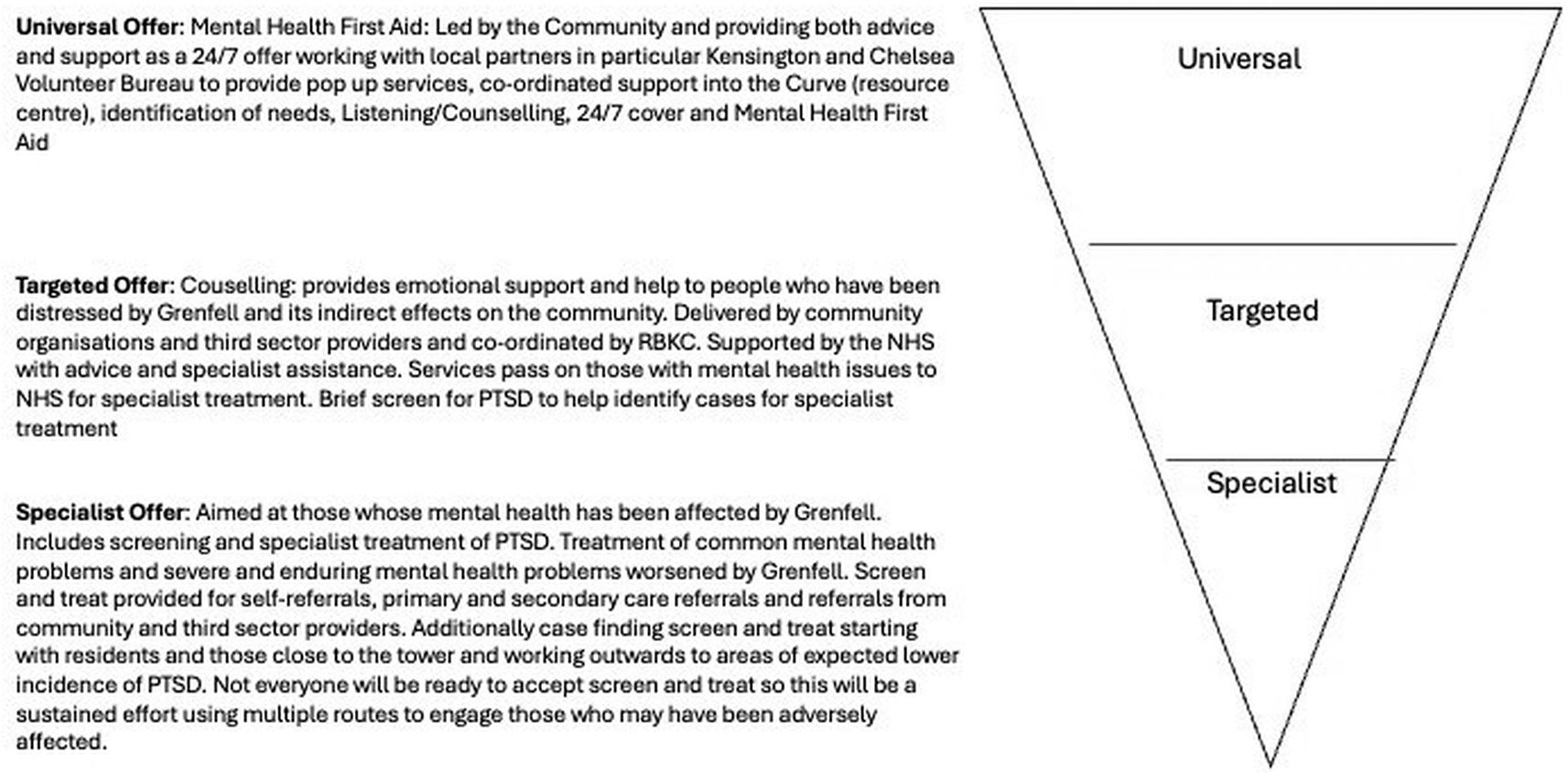
The proposed model was simple and clear and had many virtues, but it was flawed, as early models often are. RBKC found working with the local community challenging early on, because of community anger and mistrust, making a co-ordinating role difficult. That led to the NHS stepping into broader wellbeing issues. For instance, the NHS provided staff time to support over 300 meetings and training events run by VSOs and statutory organisations. It did not seek to coordinate VSOs but to partner and support them. At the Public Inquiry, the NHS also provided support to BSRs, and others affected. Such support has been a common part of UK inquiries since at least the Saville Report.45
Secondly the model should have included wellbeing. Wellbeing and mental health are intertwined. Wellbeing affects psychological treatment outcomes46 including after disasters47 and mental health problems undermine wellbeing. Interventions for these things are not interchangeable, both are needed, but they are linked. And people’s needs are not static; they change over time.
Thirdly the suggested interventions were not ideal. Mental Health First Aid (MHFA) is widely taught and raises awareness but there is little evidence it improves client outcomes48,49 Trauma Informed Care (TIC) training is widespread and aids better understanding of the mental health issues of individuals, but it needs to include the provision of specific evidence-based trauma interventions if it is to affect service user outcomes. Without those, and unfortunately, they are often missing, the impact on trauma symptoms is disappointing50 Psychological First Aid (PFA),51 reduces immediate distress after a traumatic event and so should be provided early on, although there is no convincing evidence that it prevents later PTSD.52
Ultimately the most important problem with the model is that it is a commissioning model not a delivery model, it is about dividing tasks between agencies and that is not always the right approach. For delivery a list of key tasks is needed, and decisions taken about who is best placed to deliver on each task, which tasks can best be delivered in partnership, and what contribution different organisations can make. Lines need not be rigid in partnership working. Evidence-based expert PTSD treatment provision fell mainly to the NHS because that was where specialist expertise mostly lay. However, some specialist mental health VSOs did provide such treatment for specific cultural and religious groups, albeit on a smaller scale, with the NHS providing supervision and support if needed. By contrast, for instance, the NHS did not have the resource to intervene immediately after the fire in the widespread problem of emergent insomnia. There are effective guided self-help packages for insomnia which could with training and supervision have been delivered by non-specialist VSOs at scale53 if they had been planned for in advance. It is important that VSO involvement in mental health after disasters should not be limited to those VSOs which specialise in mental health, as is sometimes assumed.
The NHS needs to think more carefully about where the balance lies between providing treatment itself and sharing skills, supervision, knowledge, and logistic support with VSOs both in disasters and, just as importantly, in everyday service provision.
Senior GHWS staff had been involved in other disaster responses and in London-wide expert discussions immediately before the fire. That was invaluable. Regular update meetings on the clinical care of individuals affected by disaster should be routine at a regional level as well as meetings on overall disaster management.
The mental health response to Grenfell was based on the natural history of psychological responses to disasters.
The public expects a vigorous mental health response to a disaster. Far more people are likely to be injured psychologically than physically. Grenfell attracted considerable media and public scrutiny. Trauma fascinates people; a search for “PTSD” and variants on Amazon books returns thousands of hits with one book a US bestseller for months.54 Not everything the public and professionals believe is accurate.55 Those delivering a mental health disaster response should expect to be challenged as for instance by the findings of the National Emergencies Trust report56 on the Manchester arena bombing response.
Immediately after a disaster many affected will be distressed, although a minority will not. Symptoms like insomnia, anxiety, and low mood are quite common. In some cases, the distress is disabling and some people may meet the criteria for a diagnosis of Acute Stress Disorde r https://www.ptsd.va.gov/professional/treat/essentials/acute_stress_disorder.asp. Many people who are distressed will experience a significant fall in distress over 4–6 weeks even without treatment, although individual symptoms may persist for longer. In a sizeable but variable minority symptoms will not reduce and may even get worse. Some people will later develop PTSD who did not have severe initial distress.57
People need information to understand what they are experiencing and to know what to do and when to seek help. Immediately after the fire, GHWS distributed the excellent NHS trauma leaflet58 widely in the community and, jointly with the British Red Cross (BRC) and community volunteers, went out to talk to people in streets, hotels and their homes. BRC trains its volunteers in PFA. A proportion of those affected will need further advice, assessment, monitoring and – in some cases – treatment if they are severely distressed and functionally impaired. GHWS provided a route for escalation from PFA as well as taking referrals from other referrers, including primary care and self-referrals. CNWL had a telephone single point of access for referrals and for advice to referrers. This also took “warm” transfers (the operator stayed on the line until transfer was complete) from NHS111, the national NHS telephone advice line, arranged through Healthy London Partnerships (now succeeded by Transformation partners in Health and Care59). It was important to have a wide range of entry points into the system.
Having contact details for those most affected greatly facilitates providing rapid help. There was a delay of several days in the NHS receiving a list of tower survivors, and of the hotels they had been placed in. The survivor list was not completely finalised until months later, after police forensic work was completed. Fraudulent claims by individuals clouded the picture. There was no community list. Police were overwhelmed and unable to furnish a list of community witnesses who had agreed to be contacted by the NHS.
The NHS offered walk-in services, initially at the Westway Humanitarian Centre.60 A team included mental health professionals, primary care doctors, and community nurses. It provided information, triage, and onward referral with some treatment of minor injuries and repeat prescriptions for the evacuated, some of whom had lost access to their medication. Over 12 days 473 individuals were seen. Of these many had at least some mental health component, but physical health problems were common. This sort of “one-stop” provision is an important service. Westway (a sports centre) was not physically ideal, it did not have enough private consulting space and with many different services in the same building it could be hard for people to find the service they needed.
Nonetheless there is clearly a demand for a walk-in service early on after a disaster even where, as in Grenfell, there were other options available to people to get help.
PTSD can be diagnosed after one month in the DSM-5 diagnostic system. Usually, a substantial minority with PTSD will recover without formal treatment, mostly in the early months. Recovery rates without treatment then decline over time until they become minimal. There is considerable variability in spontaneous recovery between disasters as there is between different populations affected by a particular disaster. For instance, there is no reason to suppose rates or trajectory will be the same in first responders as in community samples61 and close witnesses. Some people will develop chronic unremitting PTSD,62 a pernicious, potentially severely disabling condition. We cannot predict who will recover spontaneously and there is currently no reliable way of preventing PTSD developing. Treatment for PTSD needs, therefore, to be offered at scale after a disaster.
PTSD is not the only condition common after disasters, including in young people.63,64,65,66,67 Some of the bereaved will experience severe grief which usually eases with time, but which can turn into Prolonged Grief Disorder, which requires treatment. Depression, specific phobias, and increased anxiety are all common after trauma. We refer to diagnoses resulting from trauma as “trauma spectrum disorders” (TSDs). Treatment provision needs to include the range of TSDs, not just PTSD. In intervening it is necessary to consider not only symptoms and diagnosis but also an individual’s cultural, social, and contextual factors and the uniqueness of individual experience and circumstances. In other words, treatment should always be tailored to a particular individual. The basic principles underlying psychological interventions appear to be generally applicable, for instance across cultures68,69 but adaptations will likely need to be made to how they are presented, explained, and delivered if outcomes are to be maximised in different populations. Not only mental health interactions, but all interactions with those affected need to be culturally competent.
Emergency responders are themselves at risk of PTSD and other TSDs70 Delayed onset PTSD is more prevalent in these populations71,72 perhaps because of cumulative exposure.
Existing occupational health arrangements of employers involved in the response met some needs but not all. GHWS provided services to emergency responders, particularly police, but also some firefighters. More than 700 police officers involved in the response were offered screening and/or assessment and, if needed, offered treatment. Most of this work, included in additional NHS England funding,73 was after the period covered by this paper. Fire services personnel74 had attended from across a large geographical area and most were seen by local health services or by the Fire Services own systems. In October 2017 the College of Policing issued joint guidance75 with coroners about the welfare of responders to mass casualty events.
Statutory and voluntary organisations often found staff struggling with stress and in some cases personal trauma (many lived locally). Most large organisations had externally contracted Employee Assistance Programs. These varied in their ability to deal with traumatised individuals. Some were good, others quite limited. They had often been commissioned with a cap on the number of sessions offered initially, typically six, albeit sometimes with an option to extend (usually at extra cost) if needed.
More broadly, organisations sometimes lacked robust plans to provide support to their staff through management structures and to monitor staff wellbeing. Internal resilience needs to be part of organisational planning for possible disasters. GHWS, which had supervisory arrangements in place, did not see any vicarious trauma amongst staff. In planning for disasters, organisations need to make sure they have appropriate systems in place to support staff resilience.
GHWS offered Trauma Focussed CBT, Eye Movement Desensitisation (EMDR) and Narrative Exposure Therapy (NET) as first line treatments for PTSD. It offered a wide range of therapies including CBT, counselling, and various psychotherapies to those with other TSDs and also for PTSD for those who did not want first line treatments. GHWS provided stabilisation and support to those who were not ready to accept specific therapies. Stabilisation is less challenging for the patient and can have some impact on trauma symptoms.76 The hope was that for some people stabilisation and support would be a bridge into treatment. GHWS was able to draw on the Woodfield Trauma Service77 to provide extra specialist treatment capacity, as well as additional training for GHWS staff.
Medication is not as effective as therapy but has a part to play in some cases as an adjunctive treatment or where patients do not want, or benefit from, therapy.
Some BSRs took up offers of insurer-funded private healthcare for mental and physical problems, particularly imaging, respiratory and other acute medical tests. The UK legal system encourages insurers to mitigate any harm caused by the possible negligence of the insured in advance of liability being determined. GHWS met with private providers and established that their mental health offer was similar clinically to that provided by the NHS. Providers (and of course patients) were under no obligation to inform GHWS about use of private services and the split in treatment sometimes made it difficult to follow the treatment pathway of individuals.
GHWS offered treatment for people whose existing mental health problems were worsened by Grenfell, putting trauma therapy time into community mental health teams (CMHTs). However, it also had its own multidisciplinary outreach team. This initially provided urgent community services for those in crisis. It was expected to be a short-term provision but proved invaluable and was retained. It carried out much of the outreach screening and also case management for community members, the latter was the seed for the “Dedicated Service” (DS) for BSRs.
While DS is largely outside the timeframe of this paper it is important to mention. The DS united NHS and RBKC services specifically for BSRs. It was requested by GU. In a less fraught situation that approach might have been considered from the outset because BSRs had particularly complex combinations of social and psychological needs. As it was, the service initially had to run parallel information systems for the two agencies because of user concerns about information sharing.
The therapy parts of the adult GHWS services were developed out of local IAPT (now called NHS Talking Therapy for Depression and Anxiety)78 services. We refer to these services as IAPT because that was the term used at the time, and because it makes it clear to non-specialist readers that it is a specific service. IAPT was invaluable, but its processes and procedures needed significant modification in a large, centred disaster. GHWS patients differed markedly on average from IAPT patient populations with a sizeable proportion of high complexity cases who would likely have been referred on to secondary care by a standard IAPT service. Many patients were seen by both the multidisciplinary outreach and therapy parts of GHWS. Across therapy and outreach, up until the end of July 2019 GHWS services saw 2475 individual adults with new patients still being referred in. Amongst those seen for therapy 550 had already attended more than 20 clinical sessions by July 2019 reflecting the complexity of mental health problems, physical and mental comorbidities, intercurrent social problems and the continuing disruptive effect the aftermath of the fire had on everyday lives.
GHWS screened referrals and self-referrals for PTSD and other TSDs. However it also adopted an active case finding79 “screen and treat” approach for PTSD, part of NHS guidance,44 as have other recent disaster responses in the UK80,81,36,82 and internationally83,84,85 Screen and treat for TSDs other than PTSD has been used in other high prevalence contexts.86 The overall number of adults offered screening by end of June 2019 was 7297.
Screening must be linked directly to treatment to be effective87 screening alone is not effective. Written feedback of screening results was no better than generic advice in encouraging soldiers with probable TSDs to seek help88 although soldiers are often reluctant to seek treatment for cultural reasons and concerned it may affect future deployments89,90,91
Outreach screening was conducted through community meetings held by VSOs, and door to door (D2D) close to the tower where population density was high (e.g. 16400/km2 within 500 m of the tower). Proximity and social links meant likely high TSD prevalence. Cases were taken on by outreach staff (who were also doing the outreach screening) and/or referred to therapy if appropriate. Case-finding can be cost-effective where prevalence is high.92,93,94 A minority of those with PTSD spontaneously seek help.95
The plan was to combine active case finding, particularly close to the tower where prevalence was likely to be high, with encouraging referral and self-referrals in more distant areas. The latter proved unexpectedly challenging in practice. Local residents were being bombarded with communications from multiple agencies and much of the material was probably not being read. It was hard to get a message heard and hard to know whether it was getting through. English was not the main language spoken at home for many families96 in North Kensington. There were many different linguistic groups. As with Covid97 some people trusted news and social media sources based in their country of origin including friends and relatives, rather than accessing local social media or information sources.
GHWS engaged very actively with national and London broadcast and print media to try to get its message heard and inform people about its services and about trauma generally. Local print media are sadly diminished in the UK98 thus reducing options. GHWS provided regular information to the media and public including treatment and screening numbers in press releases and in response to specific queries. Partly this was for transparency but, importantly, it was an attempt to normalise seeking help and to inform people where they could get help.
Other approaches to screening were considered. Return rates from postal questionnaires tend to be less than optimal99 and it was expected to be particularly problematic in an area with high deprivation and a significant proportion of adults who were not first language English speakers. Telephone screening would have needed a list. Digital screening was explored as an option, but there were few models to base a programme on and there were privacy concerns. One recent study analysed natural language to try to predict PTSD100 suggesting it may be an area where there is scope for innovative approaches. We suspect a two-way conversation would be optimal in terms of engagement in any digital system which suggests such a system would need careful planning and testing. It is possible that an AI approach might in the future be one, but only one, element in such a system.
Social media might play a part in contacting and engaging with affected people, but it is not straightforward. One difficulty often overlooked is that there are many social media platforms in the world and their relative market share and the time spent on them101 varies with age, social class, gender and a host of other demographic factors and changes over time. A single platform approach would likely not be enough. It was a limitation that, in disseminating information, statutory agencies tended to concentrate on “Twitter” (now “X”) for much of their social media communication. There was some engagement with other platforms but arguably this could have usefully been extended.
Inviting people to come in for screening for other health conditions like cancer fails to engage a sizeable proportion of people; strategies to improve uptake are less effective in minority and hard to reach populations, sometimes yield modest gains and require a well-planned combination of approaches.102,103,104
A standardised scale is usually used in case finding for mental health problems including PTSD. There are many traumatic stress scales available, in adults at least, each with their merits and drawbacks. GHWS needed a simple quickly completable scale that did not require a high level of English proficiency. It used the Trauma Symptom Questionnaire (TSQ) for adults105 and the CRIES-8106 andhttps://www.michaelscheeringa.com/uploads/1/2/0/2/120202234/ycps_2011_feb.pdf Young Children PTSD Screen107 for children which are simple and widely used. However it is important to note that screening is a systematic attempt to identify people with specific signs or symptoms of a disorder, the term is not synonymous with the use of a questionnaire. PSA screening for prostate cancer does not involve a questionnaire and alcohol risk can be screened for, at a very basic level at least, by asking how many units someone drinks. A standardised set of verbal questions or even a single question can be appropriate for some conditions depending on what one is looking for, but it is important that the reliability and validity of the approach should be known. Screening aims to identify probable cases for further assessment but also to avoid having to carry out lengthy assessments of people who do not need them.
Experience from Grenfell suggested “screening” traumatised populations is conceived too narrowly if the focus is solely on mental health measures. Those affected wanted to talk about a wide range of concerns and wellbeing problems. Screening provided the opportunity for general advice which went beyond mental health to broader wellbeing issues including housing issues, debt, employment, and legal issues. The outreach team were able to signpost people to appropriate agencies.
Screening was a conversation not simply a questionnaire, a systematic extension of outreach work. Embedding screening questionnaires at the end of a conversation when trust had been built was optimal. Early in the screening programme rumours that screening was research rather than care made getting questionnaire data difficult. People wanted help, rather than to be, as they saw it, “guinea pigs”. People were also concerned that results might be misused, perhaps to deny compensation or services. These concerns abated in respect of screening, at least over time, but remained a more general issue.
Subsequently two of the authors (JG and JA) have co-developed multi-agency screen-and-treat programmes for adults and children displaced by war in partnerships with local authorities and VSO partners. “Screening” covered not just mental health but also wider wellbeing including education, family and social problems, accommodation, employment, and general adjustment. As in other programmes108 non-specialists carried out the screening and intervened with psychoeducation, signposting, referral, and low intensity interventions. Embedding screening into the work of staff and volunteers potentially reduces costs and increases access. Screening is applicable across cultures109 but it must always be delivered in a culturally appropriate manner.
Some systematic screening was carried out in primary care but early on GPs sometimes struggled to add it on to their already heavy workload. It was hard to integrate different data sources. Putting specialist staff into primary care has been used in screening elsewhere.110 Organising a primary care screening programme is not straightforward. Most large UK health screening programmes, for instance for bowel cancer and aortic aneurysm, are centrally organised even where, like cervical screening, they are delivered mainly via primary care. Detection of PTSD in primary care without screening is limited111,112,113
Whatever the merits of adult screening, it will not always be appropriate. There is little point in screening if there are no interventions available. If it is conducted in low prevalence populations, it is likely to generate excessive false positives and be more of a hindrance than a help.
In response to a query GHWS reported that 644 children were seen by their services over the period covered by the study. Older children infrequently visit primary care. GPs accounted for less than one in ten child referrals, almost half of referrals came from screening in schools and (to a much lesser extent) local VSOs, with self-referrals, local authority, and referrals from adult outreach screening accounting for the remainder. Children’s primary social links tend to be via schools. GHWS contacted local schools immediately after the fire and offered advice and support to managers and staff. Local authority educational psychologists114 also played an important part in supporting and advising teachers and other professionals.
Referrals for the first eight months went via mainstream Child and Adolescent services (CAMHS). GHWS specialist child services took months to get fully running. A shortage of child therapists with experience in treating external (as opposed to family) trauma was a problem, raising questions about therapist training nationally. For older children and adolescents, PTSD treatments are similar to those for adults. Modification is needed in younger children and a different approach in the very young. Family context is important and other family members may be traumatised. Parental consent is needed for assessment and treatment of younger children115 GHWS took a family-centred approach.
Lack of consistency of approach to mental health between schools was a big problem since each school had to be treated differently. Each school made its own arrangements for counselling and pastoral support. Some schools had their own school counsellors, some contracted third sector or private providers. Provision was fragmented and the trauma expertise of counsellors varied considerably.
PTSD in children is easily missed.116 School based screening has been widely used internationally117,118,119 Schools often believed that they could not provide contact details direct to the NHS. The degree of engagement with screening was variable, some schools reached out to parents and children and actively supported screening, others distributed letters via the children. How many letters reached parents is unknown. The government in England subsequently brought in measures to prioritise and improve consistency of approach to mental health across schools120 and introduced community-based teams to bridge the gap between schools and the NHS. Future responses will, we hope, be easier to conduct.
To maximise use of scarce resources, and to speed access to intervention, GHWS used Teaching https://www.childrenandwar.org/children-and-war-manual Recovery Techniques (TRT)121,122,123,124,125 a brief evidence-based CBT group approach one element of its stepped care approach. It can be delivered by trained, supervised non-therapists. It is not a replacement for expert therapies but can be provided quickly at scale, reduces trauma symptoms, can be sufficiently effective in some children so that they do not require referral for more complex therapy and is positively received by children and parents.
Soon after the fire, rumours of twenty suicides circulated in the community and in the media.
Neither GHWS nor journalists could substantiate these. An independent report commissioned by CNWL126 from Professor Louis Appleby concluded that “suicide rates have not risen as a result of the Grenfell fire” but that “in a small number of cases the fire may have been a contributory factor in an individual suicide”. Boroughs are required to have clear and up to date cross-agency suicide plans, as RBKC had, and they need to publicise these arrangements after a disaster to reassure the public.
We did not set out to measure the activity and impact of VSOs in the Grenfell response. The scale was unfeasible, and many organisations funded by RBKC had been reluctant to report activity or sometimes even admit having received council funding. Small VSOs often, although not always, keep minimal records. Few international accounts of disaster responses go beyond the anecdotal in their descriptions of community level VSO involvement. That is a huge gap in our understanding. The contribution of local and national VSOs to public wellbeing is vital,127 Some UK national VSOs like BRC are emergency first responders. We think the contribution of VSOs to health and wellbeing generally, and to disasters in particular, merits further systematic research.
“Community” is a vague term that can mean many different things; people in a geographical area (“local community”), shared interests (“bird watching community”), characteristics (“deaf community”), ethnicity (“black community”), beliefs, shared skills, even not in hospital (“care in the community”). Some usages assume social connections, others do not. Depending on definition, people who are part of a “community” may not know each other, come in contact with each other, live in the same area, share culture, views or opinions, or agree what should be done after a disaster. Most people are likely to be part of several communities and one local community will have many different communities within it. There is a tendency for those writing about communities to unconsciously blur elements of one definition into another.
In this paper we use “community” simply to mean people living in North Kensington. “Public” means anyone acting outside statutory services. Voluntary Sector Organisation (VSO) means charities and other legally incorporated organisations, but also unincorporated organisations like tenant organisations, sports and arts clubs and social clubs. The latter are frequently overlooked.
VSOs are involved in local and national disaster (and service) planning in the UK. Specialist VSOs tend to be the first port of call for statutory organisations and NHS commissioners wanting public representation on specific topics. That is entirely understandable but it can lead to a circularity in which people interested in depression end up talking solely to other people interested in depression. A little thought shows that is a seriously limited view if your objective is to promote public health objectives and to build partnerships with maximal reach. If you want to increase diabetes detection and prevention in local communities you need to look more widely than just specialist diabetes VSOs alone, invaluable though they are. Other VSOs are likely to be engaged with people who do not yet know they have diabetes.128 and may well have members who would be willing to get involved in any initiative. Similarly, if you want to help a community with high rates of mental health problems you need to engage more widely than simply specialist mental health VSOs.
Here are some of the many ways in which the public and community were active in the early days of the response:
• Local people took in, fed, and supported friends, families and strangers displaced from their homes. They were first on the scene.
• Many VSOs opened their doors to provide rest centres for the affected. Some had a planned role, others responded spontaneously. Local faith organisations were particularly active, they had premises, people to call on, local esteem, structure, and leadership.
• People from all over London arrived with clothes, food, drinks, and household goods. Formal and informal rest centres rapidly ran out of storage space.
• Existing community volunteers, the “Community Champions”https://www.rbkc.gov.uk/health-and-social-care/public-health/community-champions129 were called on.
• Individuals turned up from a wide area to volunteer their time including some doctors and nurses.
• Therapists from across England and as far away as France and Germany volunteered their skills. However, the immediate need for specialist therapy is limited and a longer-term therapy service needs a stable staff who can make a significant time commitment. A few of those who volunteered had questionable qualifications.
• Staff from statutory organisations, including the NHS, volunteered unpaid overtime.
• National VSOs played a key role. These included the BRC130 (which provided over 630 volunteers over the first six weeks as well as raising £7.3 million for those affected), CRUSE131 (a bereavement charity), Victim Support132 (for the victims of crime) andhttps://www.actionforchildren.org.uk/ Action for Children.133 Their role was not always understood134 by the community and they were seen as “outsiders” by some local people and organisations.
• Some VSOs involved in distribution of hardship funding and other resources found it a bruising experience. Few things offer as much scope for conflict, misunderstanding and resentment.135 This is an issue that needs clear transparent guidance.
There is a need to incorporate managing a large influx of volunteers into emergency plans. People want to find a way to help. Excessive attempts to control individual generosity would be inappropriate. However, an unmanaged influx of volunteers can become overwhelming. RBKC failed to take control early on, partly because it lacked the moral authority to exert effective control beyond statutory safeguarding requirements.
In the post-emergency phase VSOs had many roles:
• Grenfell United37 played a key role in advising, guiding, and sometimes pushing statutory organisations to deliver the sort of services that the affected needed. In time other, smaller, organisations representing those affected were set up. Their influence went far beyond mental health and wellbeing.
• Some local VSOs were specialist mental health organisations such as Kensington and Chelsea MIND, now Allkind,136 and Hestia.137 They extended and expanded their functions to meet the need.
• Most VSOs involved in the response were not specialist mental health providers. Both the NHS and RBKC had extensive contacts with e.g. faith organisations, tenant organisations and social clubs prior to the fire, which proved invaluable.
• Many VSOs expanded existing wellbeing services (e.g. faith groups who hosted food banks).
• RBKC invited VSOs to bid for funding, mainly small grants. Those funded included activities for children in school holidays, trips for those in hotels, arts activities, and group activities for specific populations – for instance for hard-to-reach ethnic minority women. These were mainly, of their nature, time limited. Many start-ups underestimated the difficulties of running such programmes. Provision of basic organisational advice and support to new organisations is essential.
• While many start-up VSOs closed once their immediate programmes were complete, a small number of new grassroots VSOs established ongoing programmes which endured including Our Power Hub138 (OPH), Latimer Community Arts Therapy.139 (LCAT) and Kids on the Green .140 OPH is an example. Led by a survivor and a community volunteer it provided, and continues to provide, a range of programmes boosting wellbeing and health, arts, advice, activities and sport. Initially this was mainly aimed at BSRs and their families, but it expanded to serve the wider local community. For some of its programmes it requested, and got, support from NHS staff. Start-ups face many challenges but can provide long-term value and should be encouraged and partnered where appropriate.
• Commercial organisations with community arms like QPR football club, gyms and boxing clubs contributed particularly to sports-related support for children and others affected.
Cornish, Long and Belson have developed an invaluable Grenfell Community-Public Timeline.141 It vividly illustrates the sheer diversity of activities and initiatives. A significant element involved the wider public, particularly for fundraising. Most VSO activity was aimed at wellbeing rather than mental health. Most of the health activities were complementary therapies. Arts in their broadest sense are very prominent, including as a mode of fundraising. The volume of new activities, not surprisingly, reduced over time.
There was joint working between the NHS and VSOs which went beyond that expected in the local and national models. NHS mental health services worked with the BRC and community volunteers, going out into hotels and the local area and visiting people in their homes. The NHS received many requests for training and meeting support from local VSOs which it met wherever possible.
For the NHS, having pre-existing cross-sector networks in place before the fire, and a tradition of co-operation and good relations with a large number of organisations and individuals was crucial to the Grenfell response.
This paper draws lessons from Grenfell with a view to contributing information for the planning and delivery of future recovery programmes, particularly but by no means exclusively after centred events. We have tried to draw out principles which might be adapted to fit a wide range of disasters. We do not pretend that these principles are exhaustive or that any one principle is applicable to every disaster.
Our aim was to look at how statutory organisations worked together and with the voluntary sector to promote mental health and wellbeing to inform planning and perhaps policy. Inevitably the paper addresses many disparate issues. Mental health and wellbeing responses are a key part of wider disaster responses.142 Reports of mental health responses often give scant detail of context and how the mental health response was integrated into the wider recovery programme. At the same time excellent disaster handbooks cover multiple aspects of disaster responses but sometimes pay less attention to mental health than it perhaps deserves.143
An effective mental health response is expected by the public. Services are likely to be asked “what are you doing for those who have been harmed psychologically by the disaster?” A recovery plan needs to address both mental health and wider wellbeing, the two are complementary but not the same. A plan needs to say what treatments and wellbeing interventions will be offered, to whom and how people can access them. It needs to specify how physical health care, rehousing or refurbishment of properties and restoring environment and infrastructure will be achieved. There needs to be an overarching plan as well as a plan for each element. Planning is a dynamic process in a disaster. Plans may need to be changed quickly if necessary, however much time was spent on developing them.
Communicating these plans to the public in an accessible way is vital.
Grenfell illustrates the fundamental importance of trust between local communities and statutory and voluntary services. Once trust is lost, it is hard to recover. RBKC brought in new senior leadership. That did not rapidly restore trust but without it, RBKC could not have moved forward. A different model, like a community collaborative, might work in such a situation. It is hard to see how that could realistically work if it excluded local and perhaps national government as major partners. Whatever the model, the local community must be central in key decisions about recovery. It is they who have to live with the results. A key issue to consider in planning is how the community will be involved practically, vague goodwill is not a substitute for a plan. For instance, how will representatives from the local community be identified and how will the broader community be consulted? Local and national elected politicians were often mistrusted in Grenfell. However not everyone who claimed to speak for “the community” was widely accepted by local people.
Clear concise communication is central to trying to re-establish trust in a disaster. Distribution of money, goods and assistance and provision of housing in an area with a severe housing shortage and high social deprivation added to mistrust. Some people, inevitably, felt it was unfair. Sometimes it was. Some found themselves on the wrong side of arbitrary lines of entitlement. Receiving aid is not only a practical issue, but also a sign that one’s suffering is recognised. Having clear rules, communicating, and explaining the rationale for these, and opening rules to potential challenge, is necessary. That is as true of keyworker provision as it is of financial aid.
In a disaster the bereaved are likely to outnumber those who have lost their lives. The difficulty is to say who should be classed as bereaved; there is no internationally agreed definition. Bereavement is a state of mind which has to be operationalised if it is to affect eligibility for resources. The criteria applied for Grenfell covered partners and close relatives of the deceased and their immediate households. That did not always mirror degree of emotional attachment and loss. Services took a flexible view to avoid unreasonable exclusion, but flexibility can potentially tip over into unfairness. Whatever definition is used it needs to be clear and clearly communicated to the local community and those who have lost friends and family.
Any recovery programme will eventually come to an end. That needs to be made clear early on, because the local community and organisations need to be prepared and have a say. Abruptly cutting off a substantial support programme makes people fear being abandoned and forgotten. Any trust gained during a response can potentially be lost. Some parts of a recovery programme may need to be retained long term, others absorbed into everyday services, and some will cease to be needed. The impact of a centred mass casualty event is long-lasting, and it may not be as simple as just going back to business as usual. It is hard to plan long term while a disaster response is ongoing, but it is essential to start as early as possible. Not starting earlier on considering the longer term was a mistake in the Grenfell response, albeit an understandable one given other pressures.
Large, centred events like Grenfell require levels of resources which it is unlikely that routine services in any one area of the UK, or of most other countries, will be able to provide. In a dispersed event demand for treatment is spread more thinly over a wide geographical area. Even in dispersed events some elements like screening may need to be centralised, as for the 2005 London tube bombings (p35).144
In a large disaster, local health (and potentially local government) services will need additional funding as soon as possible. If funding is available, they will need that early because they will have to hire additional staff. WLCCG commissioners and CNWL decided at their own risk to recruit additional staff in advance of additional central government funding being confirmed. They received some interim reimbursement, and it was unlikely that government would refuse to assist further. But they still had to wait months for the final sums to be agreed. Providing certainty about funding as early as feasible is important in health, as it is for humanitarian funding of local authorities and funding for VSOs.
In the Grenfell response statutory and voluntary mental health and wellbeing services received extra funding from central and local government. Substantial additional wellbeing funding came from huge public generosity. That level of funding can’t be taken for granted. In many international disasters extra resources are extremely limited. Some of the lessons from Grenfell have broader implications for mainstream healthcare. Countries around the world struggle to meet demand for mental health provision, including richer ones. Specialist services are essential, but alone cannot completely meet need either in a disaster or in everyday service provision.
Finding additional human resources is also an issue. Recruitment procedures in the NHS and other statutory organisations are slow in the UK; they had to be streamlined for Grenfell. There was no obvious adverse impact on quality of new staff. Mutual aid might fill the gap until services can be built up. Within the NHS mutual aid is usually assumed to be short-term (except in war) but therapy is not short-term. While GHWS had welcome help from a few trusts, most felt unable to assist. CNWL is a large trust with large therapy services, including six IAPT services. Most smaller trusts would likely struggle to meet the needs from a large, centred event without a clear agreed assistance framework. Services at a regional, and in some areas supra-regional, level need to develop joint plans which include helping others in their local region.
One way of potentially making the most of available resources is through partnerships. There was a considerable amount of partnership working in Grenfell, but more could have been done. Cross sector partnerships need to be reimagined. VSOs could benefit from technical advice, training, and support like clinical supervision from the NHS, and sometimes sharing resources. The NHS could benefit from the human capital, flexibility, and community reach of VSOs. That needs a commitment on both sides to partnership building. Local opposition to co-operation between the NHS and VSOs and RBKC hampered partnership building in the specific context of Grenfell, but that only serves to illustrate just how crucial co-operation is to running the best service possible. Of necessity, some joint working across sectors occurred at all levels in Grenfell. There are already successful examples of partnership nationally, for instance Recovery Colleges145 - the local one was important in Grenfell, but they are too often add-ons rather than core parts of service delivery systems. Some of the most innovative approaches to the use of scarce resources in partnerships come from poorer countries where necessity drives innovation. There is much that richer countries can learn from these146,147,148
Partnerships are ideally built into everyday health and wellbeing delivery and then developed further in response to disasters. Effective delivery partnerships are not simply a matter of one-off paper agreements at a senior level; they have an organic element, and they take time to establish. They are maintained and developed through day-to-day joint working by front line staff and volunteers. Front line staff and volunteers need to be involved from the outset because that is where the everyday expertise lies, and key relationships are forged and maintained.
It would be naïve to believe that partnerships are easy to achieve, given differences in cultures, aims, history and lines of accountability between organisations. Some competition for scarce resources is inevitable. However, implementation issues don’t negate potential value, and don’t always occur; such partnerships can operate with remarkably little friction. Within the statutory sector it may sometimes be appropriate to pool resources and implement at least some joint commissioning.
Part of planning for disasters is building resilience. Centred mass casualty disasters are rare in any one area of the UK. Emergency planning includes such events. But organisations are not going to invest vast amounts of time and resources in planning for rare events. The UK ran down PPE stores prior to Covid-19149 even though a pandemic at some point was known to be inevitable. There are no votes in stockpiling masks. Capacity to respond to disasters needs to be built into routine working rather than treated as an exception, even if some additional funding and resources will always be needed for a large disaster. And the effort needed to build resilience has to be of benefit to mainstream provision.
Mass casualty disasters are uncommon in the UK; lesser disasters are not. Flooding does not typically cause mass casualties, but severe flooding causes an increase in PTSD and other TSDs and a loss of wellbeing150,151,152 Smaller scale casualty disasters are common. Traumatic events, PTSD and other TSDs are common in everyday life.153,154,155,156 Staff and volunteers dealing with the public will regularly encounter recently traumatised people, and many will have personal trauma experience.157 Frontline staff and volunteers need to know how to respond to people with recent trauma for their everyday work as well as for disasters. Training about trauma needs to be practical, aimed at what staff and volunteers can do from the outset and laying out subsequent steps like how and where to refer.
PFA is recommended in the national emergency guidance, but more people need to be trained in it. MHFA and TIC are of value in promoting understanding, but they are of limited value for recent trauma unless they include practical interventions. There is a need for trauma action as well as trauma awareness. PFA needs to be part of a wider, integrated, system. If people are very distressed, they have to be referred on and so have somewhere to be referred to; that is part of the model. Training for something like PFA is quick but it is not a one-off event, it needs to be refreshed and people applying it need guidance and to be able to access advice and refer onwards specific cases. There needs to be a system. That system needs to be able to provide appropriate input to people with diverse levels and types of need and to utilise existing resources as efficiently as possible.
However, PFA cannot be the limit of ambition. One way to increase overall capacity in the system and to bring services to the user, rather than the user to services, is by training more people to provide evidence-based interventions. Some trauma interventions can be delivered by trained, supervised non-experts with access to expert advice and an escalation pathway into higher intensity therapy. For example, TRT was used with children in Grenfell as part of a stepped care model and more recently by two of the authors (JA and JG) with Ukrainian children fleeing war via a cross-sector partnership. Other manualised group interventions are also effective in children.158 There are evidence-based interventions for trauma which can be delivered in groups for adults including by non-experts159,160,161 These do not replace individual expert delivered therapies, but a proportion of people show significant improvement or recover, and they can be deployed at low cost and at scale. They can also reduce the need for interpreters and help involve more people from minority groups in providing care.
Interventions for common mental health conditions which can be applied by non-therapists are not limited to trauma. In an RCT of health anxiety, a condition regarded as particularly difficult to treat, brief treatment was effective when delivered by trained and supervised acute hospital nurses with no therapy background, and graduate psychologists with no formal therapy qualifications.162
Expert PTSD treatment and treatment for other TSDs is necessary for some people and so needs to be part of a system. The NHS is the main UK provider for expert delivered therapies. Some VSOs may wish to recruit their own therapists and provide specialist interventions, particularly for hard to-reach populations or where they can provide therapy in specific languages. They are more likely to succeed if the NHS provides help to them in setting up a service, with clinical supervision and an escalation pathway for complex cases.
NHS IAPT in England has revolutionized access to therapy and is necessarily a part of any system to deal with emergencies. It has trained many additional therapists at two levels, low intensity practitioners using mainly guided self-help, and more extensively trained high intensity therapists for more complex cases. It has developed specific additional training for PTSD treatment in specific populations. The underlying principle was stepped care,163 matching intensity of care to need and escalating if necessary, rather than starting with the most expert therapists for every case. Having sufficient trained therapists available is obviously a key element of preparedness and IAPT was a crucial resource as a base for Grenfell services, albeit with considerable modification to processes. However, there is a need for “step 4” (specialist) therapists and supervisors for IAPT to refer particularly complex cases to. These are often in short supply in mainstream clinical services. And IAPT services run close to capacity in everyday service provision, most have extremely limited spare capacity if any.
There is no exact equivalent of adult IAPT in children’s services. There was a particular shortage of child therapists with experience in “simple” PTSD at the start of the Grenfell response. Reports on disasters tend to concentrate on adults. The limited data available suggests that many children are likely to be acutely disturbed by a disaster and that some children will develop long-term mental health problems as a result164,165,166 UK CAMHS services are hard pressed, have long waits and are often divorced from adult services. That is a major concern in terms of disaster resilience and for mainstream mental health care. A wider system with evidence based brief interventions delivered by non-experts and an escalation pathway could ease some of the pressure on CAMHS services.
There is an obvious potential gain to be made by directing more research effort into modifying psychological treatments with a good evidence base to be used by trained non-experts in group and individual settings, as well as to test modified interventions through high quality RCTs. But they do need to be tested. The faith of some therapists and other health professionals that they know what works based on experience is to be treated with a degree of caution. Bloodletting was the treatment of choice for medical problems for more than 2000 years and Semmelweis’s difficulties167 in getting doctors to wash their hands are notorious. Expert supervision and escalation pathways are vital to the success of non-expert interventions and the most commonly used packages require them (for instance the WHO’s Problem Management Plus168 and Self-Help Plus169).
There is an appetite to address issues around trauma. Many statutory and voluntary sector organisations have implemented TIC training, showing an enthusiasm for building trauma care into everyday practice, although the training could sometimes be more practical. Widening the range of evidence-based interventions organisations can offer is an obvious extension. The approach would also have the likely advantage of having a workforce familiar with, and representative of, the local community.
There are other ways to enhance access. Remote video and phone consultations are now well established, increasing potential flexibility in using available resources.
Digital interventions are a promising area of research.170,171 AI offers a huge, albeit largely untested, paradigm shift from earlier digital interventions which were sometimes just self-help books online. Unfortunately, few digital apps currently have a satisfactory evidence base. Independent evaluations of efficacy, uptake, drop-out rates, onward referral rates, adverse effects, costs and quality of life are needed172https://www.nice.org.uk/guidance/hte9/resources/evidence-generation-plan-for-digitally-enabled-therapies-for-adults-with-anxiety-disorders-13254223069/chapter/1-Purpose-of-this-document Given their growing use, and the marketing of apps directly to the public, this research is urgent. With AI systems, which respond flexibly to users and can be overly eager to please, monitoring of the safety of advice offered is particularly important.
Mental health is only one part of a recovery programme. The importance of wider wellbeing must not be ignored. It is striking how little hard data there is on wellbeing initiatives despite the vast number of organisations, usually VSOs, trying to improve it nationally. Little is known about which wellbeing interventions are of most value.
VSOs are experienced in delivering care and support; this is not to be discounted, but as with medicine and psychological therapies, not everything people believe in is necessarily effective. To help VSOs to evaluate their wellbeing interventions, and to help organisations monitor the effects of their programmes on individual service users, a more thoughtful approach to measurement is needed. Subjective wellbeing measures are often highly intercorrelated with mood scales173 which raises questions about relative utility. Quality of life measures like EQ-5D174 are rather narrow (and often incorporate mood explicitly or implicitly in their total score). They are also several steps removed from important things organisations are trying to change, like improving housing, getting people into work, and improving people’s social lives.
Some measures of wellbeing like the Work and Social Adjustment Scale175 a social functioning measure, break down wellbeing into specific practical domains which may be a more useful approach, although the means of calculating change can and should be improved. The UK Office for National Statistics uses a menu of measures176 which not only cover overall subjective wellbeing but also a wide range of specific wellbeing domains.177 These might be better suited to measuring wellbeing in a disaster. Better measurement is a key issue if we are to stimulate research into how best to support wellbeing.
A case study of a single disaster will inevitably have limitations. Disasters are highly variable and the nature of the disaster, the population affected, social and political situation and availability of resources vary hugely. Grenfell is a centred event. The dynamics of a dispersed disaster are different, even though there are some common issues. In a dispersed disaster those affected are scattered geographically, usually socially unconnected before the disaster, and demands on any single local service likely to be lower. We have attempted to separate general themes from issues specific to Grenfell, but we cannot be certain that we have wholly succeeded.
The division between emergency and recovery phases of a disaster is an arbitrary point on a complex evolving picture with different parts of the system at different points at any one time.
This project is a study of planning for and responding to disasters. It is not, and was not intended to be, a study of the outcomes of particular interventions for specific psychiatric conditions, important though such studies are. There is a great deal of information available on the outcomes of specific interventions for TSDs, including after disasters178,179,180 but much less on the structures and systems needed to deliver those interventions and about the provision of wider wellbeing services in large scale centred disasters.
Some potential informants refused to be interviewed, sometimes on advice from lawyers, because they might be called to give evidence at the public inquiry, or even be prosecuted. Some were concerned that they might be accidentally identified and subject to harassment on social media. Some professionals and volunteers found the whole experience so painful they did not wish to go over what happened. We do not believe that has had a major impact on our findings, but it is a limitation.
Key recommendations are:
Many of the issues identified below have implications for everyday clinical practice in an era when demand outstrips supply worldwide for mental health services. There is a need for:
• More research on adapting evidence based mental health treatments for TSDs (and other conditions), particularly but not only group treatments, which non-therapists can be trained to use within a wider integrated stepped care system. Not only would such an approach provide a platform to respond quickly to disasters, but it could have a potentially major impact on mainstream mental health services.
• Further research on how VSOs, local communities and statutory organisations can work together practically in partnership to achieve gains in mental health and wellbeing with particular emphasis on utilising the strengths and identifying the weaknesses of each party and quantifying impacts.181 Worthy celebrations of the virtues of community engagement are not misplaced but more solid practical information about how to do it and how well it works is needed.
• A review on ways in which communities can best be involved in steering recovery programmes after disasters. The goodwill is there but the details of how to do it most effectively is missing.
• Development or adaptation of simple measures of wellbeing, particularly social functioning, which can be used routinely by voluntary and statutory organisations to measure overall outcomes and progress of individual service users as well as potentially the overall impact of services. These must be more than indirect measures of depression and anxiety.
• Exploration of digital methods for mental health screening and treatment, and of digital approaches to improve two-way interaction between service users and providers in health and local authority services. Robust independent trials of promising digital mental health interventions are needed. AI will likely be at the heart of many new digital interventions. There are alarming reports of AI offering inappropriate advice on mental health to individuals, many anecdotal, but with some emerging research based182 findings being consistent with these. Safety needs to be carefully considered.
• After a disaster people who are very distressed often do not seek help or delay doing so. Screening – which must be linked to treatment - is a commonly used approach to identifying who needs further assessment and intervention (and as importantly, who does not). In children at least, we see little practical alternative. Screening can be cost-effective after disasters in high prevalence adult populations. Simply hoping people will turn up for treatment is not likely to be either successful or acceptable after a mass casualty event. However, screening carries a cost, may not always be practicable or affordable and it is most applicable to high prevalence parts of a population. There will be some severely affected individuals after any disaster who are part of low prevalence sub-populations where the base rate limits the usefulness of screening. There is a need to explore and evaluate alternatives to screening including ways of enhancing the ability of people to identify their own needs and ways of encouraging them to refer themselves to services.
• Finding people with health problems is of general importance in healthcare, including in other mental health problems. In recent parallel reviews of routine screening for depression in non-mental health settings, a US task force supported it183 a UK committee184 and a Canadian task force185 were opposed to it. The latter defined screening narrowly in terms of the use of a standardised questionnaire but suggested that doctors should ask their patients more often about their wellbeing. Many studies in mental health look at screening in isolation but, as noted earlier in this paper, there is ample evidence that screening needs to be linked to a specific treatment pathway to have an impact. Many mental health conditions are associated with deterioration in social functioning and occupational performance. Further research might more clearly break down the issue of identifying people with health needs and intervening. Three elements need to be distinguished, identification (or self-identification) of possible disorders, encouraging engagement with appropriate further assessment and treatment, and achieving high levels of adherence with treatments of known effectiveness. Each presents different problems, but each needs to be addressed to achieve effective public health interventions.
• Disasters are uncommon, unpredictable, frantically busy and require a rapid clinical response. Offering research where people are demanding intervention is difficult, particularly where communities already lack trust, as they often do after disasters. We cannot rely entirely on studies of disasters to answer key questions; analogue approaches are needed. Psychological trauma is common and there are many situations other than disasters where prevalence of TSDs is high, but which do not present the same difficulties for planning and delivering high quality trials of how best to identify and help people. Examples of high prevalence populations include forced migrants, those displaced by war, those affected by physical trauma and first responders, but there are others. Such populations might provide valuable information about how best to tackle case finding and encourage uptake of services. It is not necessary to wait for a disaster to address key research issues.
• We think it is likely that there will always be a role for screening after disasters. Costs can potentially be reduced by incorporating screening into the routine work of non-specialists who are already in contact with affected people. Extending screening beyond mental health to encompass a broader based assessment of a range of individual needs after a disaster is an obvious step to take. Screening is often too narrowly focussed, particularly after a centred disaster. In this paper we advocate widening the approach of screening to cover wellbeing as well as TSDs. It is an approach we have used ourselves in other contexts and which we believe merits further evaluation.
• Research on the taxonomy of disasters is needed because the lack of a useful taxonomy is a barrier to cross-disaster comparisons and hence to our ability to compare recovery programmes and extract key predictors.
• A systematic review gathering information across multiple disasters about how best to structure mental health and wellbeing responses and integrate them into wider recovery programmes would be of potentially immense value.
Provide sufficient details of any financial or non-financial competing interests to enable users to assess whether your comments might lead a reasonable person to question your impartiality. Consider the following examples, but note that this is not an exhaustive list:
Sign up for content alerts and receive a weekly or monthly email with all newly published articles
Register with NIHR Open Research
Already registered? Sign in
If you are a previous or current NIHR award holder, sign up for information about developments, publishing and publications from NIHR Open Research.
We'll keep you updated on any major new updates to NIHR Open Research
The email address should be the one you originally registered with F1000.
You registered with F1000 via Google, so we cannot reset your password.
To sign in, please click here.
If you still need help with your Google account password, please click here.
You registered with F1000 via Facebook, so we cannot reset your password.
To sign in, please click here.
If you still need help with your Facebook account password, please click here.
If your email address is registered with us, we will email you instructions to reset your password.
If you think you should have received this email but it has not arrived, please check your spam filters and/or contact for further assistance.

Comments on this article Comments (0)