Keywords
physical activity, public health, interventions, schools, context, settings, complex interventions

physical activity, public health, interventions, schools, context, settings, complex interventions
Public health interventions should be designed for their setting, addressing the needs of the people they are impacting and the systems they work within.1,2 It is increasingly recognised that this means intervention settings should be viewed as complex adaptive systems, and that interventions in turn must adapt to that complexity to be successful.3 In children’s physical activity research, school-based interventions have great potential to support large numbers of children to be active.4–6 However, despite a small number of exceptions, research has shown, in general, that these interventions have not increased children’s moderate-to-vigorous intensity physical activity (MVPA).7–13 This is a critical issue, as physical activity is essential to children’s physical and mental health and wellbeing.14–16 However, the majority of children are not meeting the recommended minimum levels of physical activity17,18 in the UK or globally.19–22 Traditionally, school-based pupil physical activity interventions (as with many public health interventions) take a ‘one-size-fits-all’ approach, designed to deliver an identical programme across all schools or settings with a focus on internal validity. A key aspect that is assumed independent from the active component of an intervention in this approach is the context in which it is implemented, i.e., a schools’ social, cultural, economic, environmental and other characteristics.23 We have suggested that this could be a key factor in the limited success of school-based physical activity interventions,23 and can contribute to low external validity and a lack of intervention sustainability and success when scaled up.24 Contextual variation in school-based interventions should be no different from real-world interventions implemented in other environments. Therefore, this is potentially an issue for public health interventions generally, beyond school-based physical activity interventions.
The PASSPORT (Physical Activity via a School-Specific PORTfolio) project aims to develop and evaluate a context-specific school-based physical activity intervention that attempts to address the problem outlined above. The central question at the outset of this study was to explore and establish what was meant by ‘context’ in relation to primary school pupil physical activity, and what a ‘context-specific’ intervention design could look like.23 We hypothesised that an intervention where content is optimised to its local context would maximise impact on pupil physical activity outcomes and could have population level impact. One way we could design a context-specific intervention is with a portfolio approach that allowed schools to select and deliver tailored intervention content that would be most suitable to their setting.
In this paper we use the development of the PASSPORT intervention as a case study for designing context-specific interventions. To achieve this aim, this paper has four key elements:
1. To provide a brief description of the PASSPORT intervention
2. To outline how the context-specific intervention was developed
3. To outline how the context-specific intervention was pilot tested and the associated findings
4. To highlight how the learning from this project can be applied to context-specific intervention development in public health generally.
Ethical approval
All studies with participants outlined in this paper received ethical approval from the University of Bristol Research Ethics Committee. Their individual references are: school staff interviews (Ref: 15866 19/10/2023), rapid ethnography (Ref: 16095 18/01/2024), school survey (Ref: 20041 06/08/2024), co-design workshops (Ref: 20957 23/08/2024), and pilot study (Ref: 23839 11/03/2025).
Consent
Across these studies informed consent or assent was obtained from all participants.25 All participating schools signed school study agreements. All school staff and wider school community members provided written consent to participate as an individual in a research activity, with the exception of observational data collected in the rapid ethnography, where lead staff members provided verbal consent. This was deemed most feasible in consultation with schools, where observation of lessons is a day-to-day practice. All school staff were provided with study information sheets, consented to arrange an observation, and consented again for the observation to go ahead. In our studies that involved minors, parents provided written consent and pupils written assent. Pupil participants in the creative research activities, part of the rapid ethnography, provided written assent on paper at the start of the activity. Pupil participants in the pilot study provided written assent via the family consent form, through which parents and children consented to participate in the study.
Patient and public involvement
School staff, parents, and pupils have been involved in each study described in this paper from the design stage, commenting on and shaping into data collection plans, information sheets, topic guides and other communication and recruitment processes and materials. As part of the context-specific approach we have taken to intervention design, school staff experience was brought into the research team to lead this work. The intervention was primarily developed through co-design workshops with school staff. Intervention content was further reviewed by primary school PE expertise. And extensive engagement with staff, parents, and pupils was undertaken in the pilot study to inform our recruitment processes. This public engagement is described and detailed throughout the paper, as it played a central role in the development of the context-specific intervention.
The PASSPORT intervention is a flexible, school context-specific portfolio whereby primary schools select a bespoke physical activity programme from a range of recommended activities that builds on their current strengths, acknowledges limitations of the school setting, and identifies opportunities to introduce physical activity across the school day. A digital PASSPORT ‘tool’ supports staff to review and select their bespoke programme, as well as support their delivery of it. The intervention takes a whole-of-school approach to physical activity26 and the intervention and implementation support strategies are aligned to the Consolidated Framework for Implementation Research (CFIR),27,28 to ensure it addresses key determinants of implementation in primary school settings.
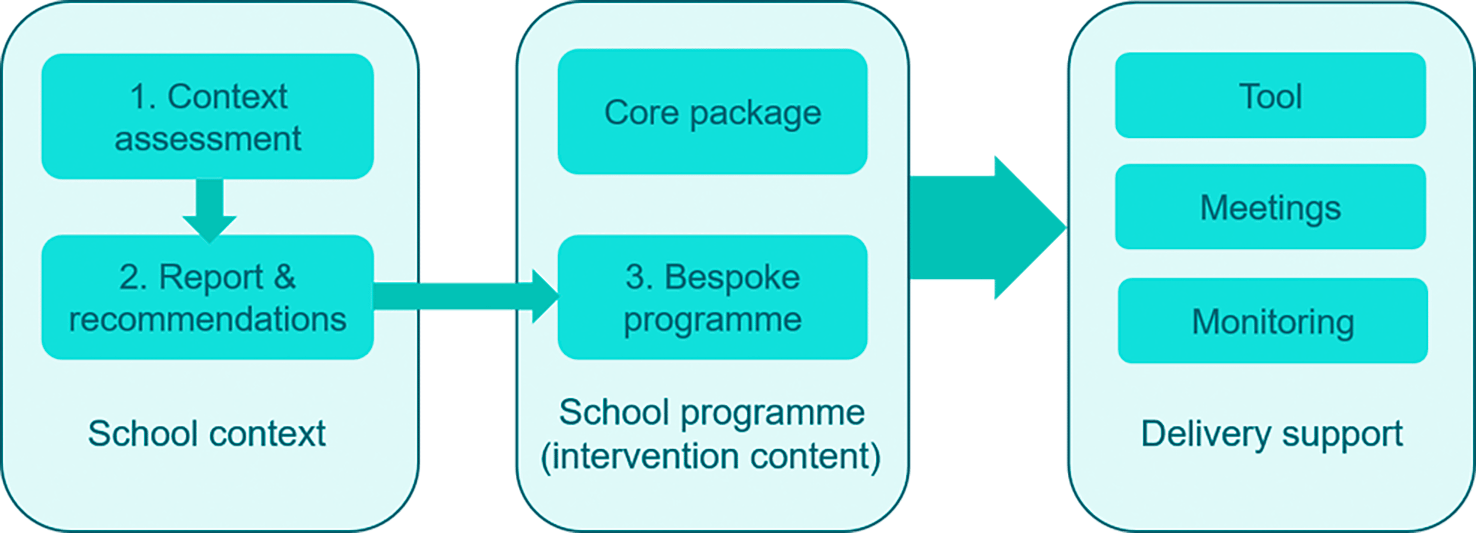
The PASSPORT intervention (outlined in Figure 1) has three main steps: 1) schools complete a baseline context assessment to provide information on their physical activity environment and practices. The context assessment captures the current provision across the school day, as well as their facilities, policies, organisational structure, and physical activity culture. 2) This information is used by the research team to recommend activity options from the portfolio that work for that school, via the tool. 3) Schools use the tool to select and deliver their bespoke programme from the recommendations. To support the delivery of bespoke programmes, a core package of resources support the development of school physical activity culture, staff pedagogy and skills, and alignment to school systems and priorities. The core package resources are identical in all schools.
The content for the portfolio (i.e. the possible activities schools are recommended and build their bespoke programmes from) is designed along six pathways that cover physical activity opportunities across the school day and whole school community ( Figure 2). These pathways are: Physically Active and Outdoor Learning; Active Breaks; Breaktime and Lunchtime; Active Travel; Before and After School Activities; and School and the Wider Community. Schools are recommended activities from priority pathways identified through their context assessment, and activities are designed to build, establishing foundational steps that can be expanded on and deepened. Schools deliver their programmes with the support of PASSPORT staff and the ongoing use of the PASSPORT tool, which has budget, action plan, and milestone tracker functions.

The PASSPORT intervention was developed and iterated across multiple work packages, each designed to establish necessary knowledge that progressively built. This section describes each of these work packages and how it contributed to the development of the context-specific intervention. 3.1) Formative work describes: a scoping review of intervention components to inform the portfolio content; school staff interviews to understand school context for physical activity as well as feasibility and acceptability of the intervention; a rapid ethnography in three primary schools to deepen our understanding of school systems; and a school survey to understand school physical activity at a broader scale and explore the use of a survey method to capture this. 3.2) Intervention design and content development describes: the co-design of the intervention tool with primary school staff, and; how we centred school expertise and experience in intervention design and content. Figure 3 provides an overview of the development of the PASSPORT intervention.
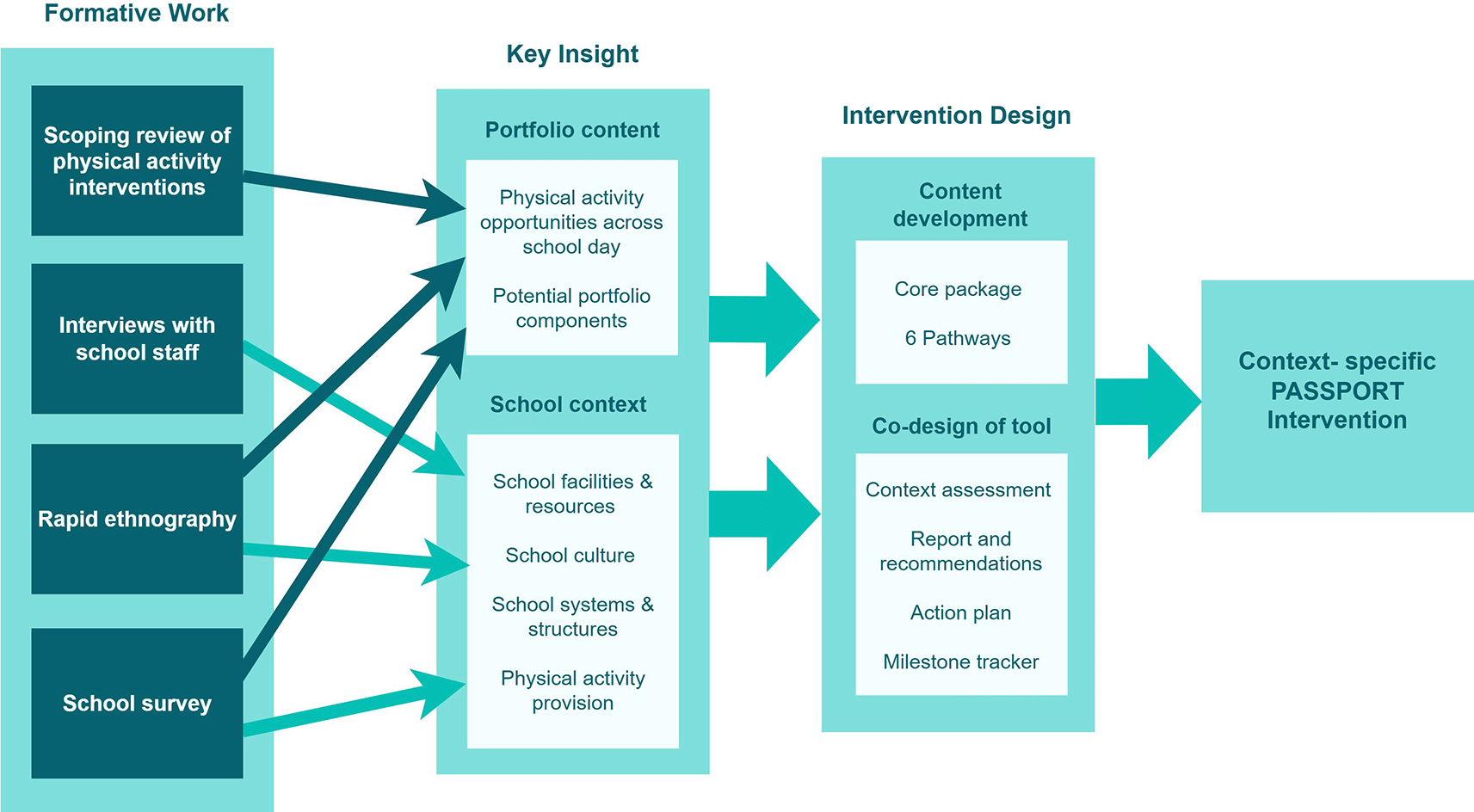
The purpose of the formative work for the PASSPORT intervention was to establish the meaning of ‘school context’ in relation to pupil physical activity, and to have the necessary data and insight to develop an intervention that would be useful and suitable for schools. Key to the formative work was to use a variety of methods capturing a wide range of perspectives. Combined, this work provided a complex but consistent picture of the aspects of primary school context that are key for pupil physical activity, and a strong sense of the policy and structural/organisational context of schools for whom we were designing the intervention.
Scoping review of physical activity interventions in primary schools
We conducted a scoping review to identify previous school-based physical activity interventions that could form the basis of the PASSPORT intervention content.29,30 As we were focussed on the whether it was feasible to deliver each intervention component it was not a requirement that an intervention had been shown to have positively impacted on physical activity. This is important because it may be that an intervention did not achieve a statistical impact on physical activity in all schools because the context was different in each school. The program could still be useful in the right context. European school-based intervention studies aimed at increasing physical activity in children aged 7–11 years published in English since 2015 were included in the review. 79 articles were included, constituting 45 intervention studies. We identified 177 intervention components, which were synthesized into a framework of 60 intervention component types across 11 activity opportunities: six within the school day, three within the extended school day and two within the wider school environment. These intervention components, and particularly the opportunities for activity across the school day, guided the other formative studies and formed a basis for the development of the PASSPORT intervention content, as a first iteration of the pathways.
Semi-structured interviews with school staff
We conducted a study of semi-structured interviews with school staff to establish a foundational understanding of ‘school context’ for pupil physical activity. These interviews explored the elements of school context that impact pupil physical activity and the feasibility and acceptability of a portfolio intervention design. We conducted 33 interviews with staff from 19 primary schools in the wider Bristol area31–33 between November 2023 and January 2024. Staff roles included headteacher/principal or deputy, class teachers, teaching assistants, Physical Education (PE) subject leads, dedicated PE teachers, and a Parent Teacher Association (PTA) chair. Schools were purposively-sampled with a range of sizes, locations, and sociodemographic characteristics. Full school and participant information and study processes are reported in published papers.32,33 Analysis of these interviews brought out the role of facilities and resources for pupil physical activity in primary schools,32 and the role of social context, i.e. the organisational, political, cultural, and sociodemographic characteristics of a school.33
Rapid multi-site team ethnography
In order to provide greater depth and perspectives from within a school system, we conducted a rapid, multi-site team ethnography in three purposively sampled Bristol primary schools between March and July 2024.34–36 This approach prioritises understanding structures, decision-making processes, and culture, as well as the experiences of people, within the settings.37 Documentary, conversational, and observational data collection captured multiple perspectives from the school communities over time, which enabled comparison across the schools, roles, and pupils. The focus for data collection activities was informed by the interview study and scoping review. Participants included staff that have a role in delivering physical activity or broader health programmes, or governance and decision-making, as well as broader school community members such as external providers of active clubs and PE, school Governors, or PTA members. Data on physical activity provision, spend, and participation as well as school demographics were collected and informed further data collection in each school. Observations were conducted throughout the school day to understand when, where, and how pupils were active and where any potential opportunities for physical activity and the intervention lay. Additionally, school meetings and events were observed to understand broader school structures and priorities. Interviews were conducted with a range of key community members in each school, and creative research activities were undertaken with Year 5 pupils to bring in their perspectives and experiences. Detailed information on all study schools, participants, and processes are reported in published papers.35,36,38 This rapid ethnography deepened our understanding of school physical activity and school systems, which provided several implications for our intervention design.35 Across these three schools there were areas of convergence and divergence on pupil physical activity. This highlighted consistent features we could build on in the intervention (e.g. consistency across the roles of different school communities for physical activity), but also where flexibility and difference were key to an acceptable intervention (e.g. building on the schools’ idea of success for physical activity in their school, or the need to provide multiple opportunities across the whole school day to meet the needs of every school context).
School survey
Finally, we conducted a survey to collect data on school physical activity provision, policies, and readiness for change among a broader sample of schools. With this we also aimed to understand how much context differed between schools, and to trial questions to be included in the school context assessment. The school survey was conducted across the wider Bristol area with responses collected between September and December 2024.39 Primary school staff who were either PE leads, dedicated PE teachers, or members of the school Senior Leadership Team (SLT) were asked to complete the survey. The questionnaire consisted of four sections: 1) How physical activity is provided and promoted to pupils outside of PE lessons; 2) The perceived quality of pupil physical activity provision and promotion outside of PE lessons; 3) School culture towards physical activity and level of priority physical activity is given within schools; and 4) School-level readiness to change regarding pupil physical activity provision and promotion. We received 59 unique school responses from 311 schools who were invited to participate (19% response rate). Table 1 presents the demographic characteristics of the schools and participating school staff in the sample. The majority of participating schools were located in urban areas (76%), from areas of lower deprivation (59% with Index of Multiple Deprivation40 of 7–10) and with below national percentages of pupils eligible for free school meals (78%).41 Most school staff completing the survey were teachers with a PE lead role.
| School characteristics | n | % |
|---|---|---|
| Urban/rural classification | ||
| Urban | 45 | 76% |
| Rural | 14 | 24% |
| School Region | ||
| City of Bristol | 23 | 39% |
| South Gloucestershire | 16 | 27% |
| North Somerset | 8 | 14% |
| Bath and North East Somerset | 12 | 20% |
| Free School meal1% | ||
| Below national percentage eligible | 46 | 78% |
| Equal to or above national percentage eligible | 13 | 22% |
| School postcode Index of Multiple Deprivation2 | ||
| 1–3 (most deprived) | 12 | 20% |
| 4–6 | 12 | 20% |
| 7–10 (least deprived) | 35 | 59% |
| Number of pupils in school | ||
| 0–200 | 15 | 25% |
| 201–400 | 24 | 41% |
| 400+ | 20 | 34% |
| School Management | ||
| Local Authority Maintained | 22 | 37% |
| Academy | 37 | 63% |
| Participant characteristics | n | % |
| Participant roles | ||
| Senior leadership team member only | 12 | 20% |
| Senior leadership team member and additional role(s) (i.e., PE lead) | 5 | 9% |
| Dedicated PE teacher, PE Coordinator, or PE Lead | 8 | 14% |
| Teacher and additional role(s) (i.e., PE lead) | 27 | 46% |
| Teacher only | 5 | 9% |
| Other | 2 | 3% |
The school survey highlighted variation across schools in physical activity provision, culture, and readiness for change, suggesting that a contextually-sensitive approach to a physical activity intervention was necessary, i.e., each school had different needs and areas for development. For example, overall, school staff reported their perceived quality of their physical activity provision and promotion was good, however there was varying agreement in areas such as whether their physical activity clubs were oversubscribed and whether it was difficult to timetable pupil physical activity opportunities across the school day ( Table 2). Schools reported a variety of areas in which they planned to spend their PE and Sports Premium funding, with external providers (88% of schools), new equipment (78% of schools), resources/materials (71% of schools), and teaching training (61% of schools) most frequently selected. However, all possible areas of spending had a strong response rate, with subsidising club fees lowest (42% of schools), suggesting all areas needed to be included as options in the PASSPORT intervention. These findings and others informed areas of focus for the intervention content, but of key importance the school survey, combined with previously used measures of school physical activity environments,42,43 formed a basis of the school context assessment tool. School survey questions and results were reviewed to identify key items to include in the first draft of the context assessment. Survey items were included based on their relevance and importance to understanding school physical activity context and how schools had responded. For example, questions were not included if the answers were very similar across all schools and thus did not help distinguish between different contexts.
The next step was to use data and insight from the formative work to undertake a structured approach to intervention design and content development. Key to this was centring school expertise and experience in these processes, to best support the development of an intervention that understood and was designed for school context.
Co-design of the PASSPORT tool
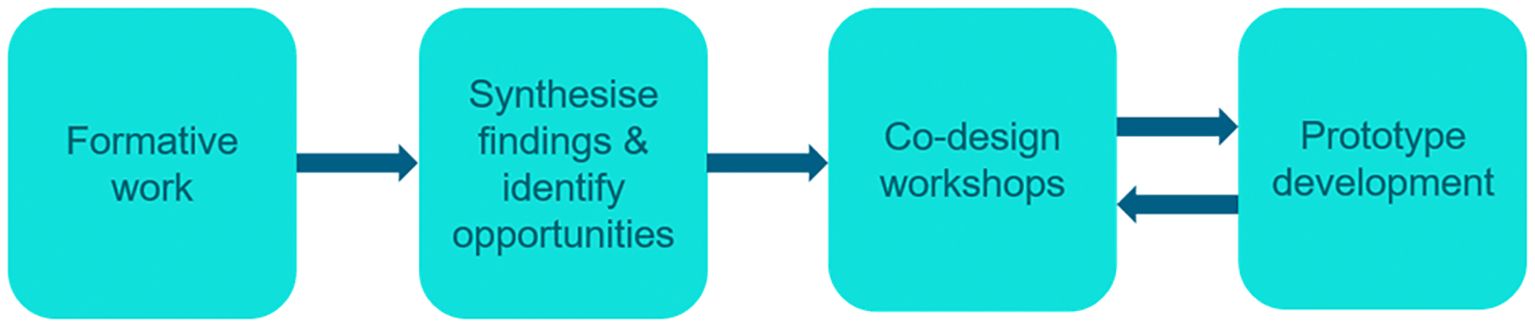
The PASSPORT tool that schools use to assess their context, review and select a bespoke programme, and support programme delivery, was developed through a co-design process with primary school staff,44 to ensure that it was shaped by the experience and insight of the potential users. We held three ideation workshops45 between November 2024 and May 2025. Workshop 1 had 10 attendees, Workshop 2 had 10, and Workshop 3 had 6. This was a total of 11 staff from 11 local primary schools, including head teachers (n = 2), dedicated PE teachers (n = 3), class teachers with a PE lead role (n = 5), and class teachers (n = 1). We used design principles to structure and guide these workshops,46,47 following the double diamond design process48 and applying user-centred design methods described below. The workshops explored and validated the data and insight from formative studies, tested and refined the context assessment, and iterated prototypes of the tool. Figure 4 outlines this design process.
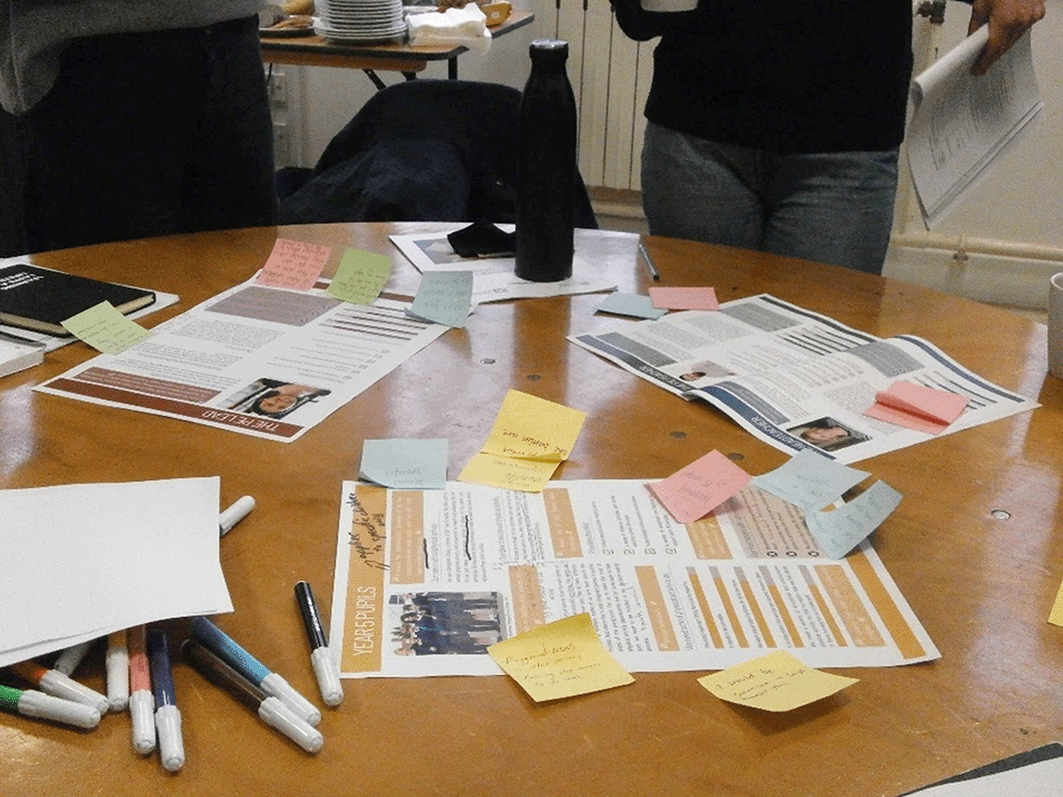
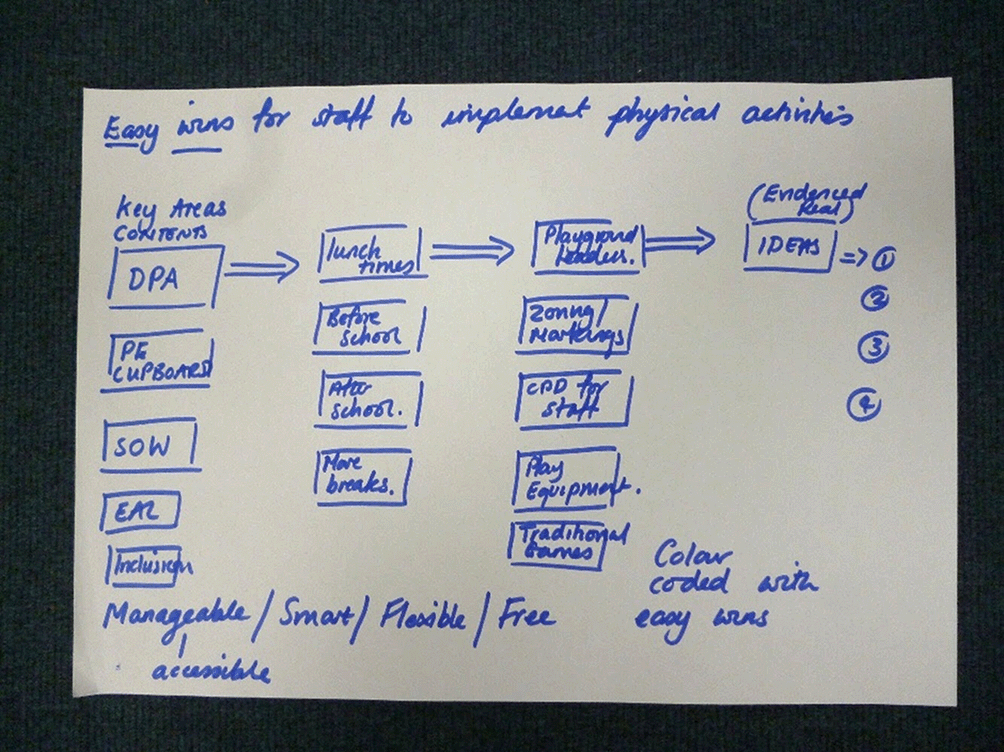
In Workshop 1 (in-person), group members validated and scrutinised our understanding of the school system, different staff priorities, and the general role and landscape of physical activity in primary schools, through several activities. We used insight from the formative work to develop user personas for key school staff and pupils, which workshop members read, annotated, challenged, and validated ( Figure 5), ensuring we understood the position and priorities of each user group. We also used the formative work to create opportunity statements that highlighted key opportunities for supporting pupil physical activity in school which workshop members were asked to prioritise by most important. Improving participation of all pupils and embedding a physical activity culture were identified as areas of highest priority. Members then developed initial design ideas and features for the tool via paper prototyping activities, exploring how information could be organised and the level of detail necessary for decision-making when selecting activities, such as cost, time resource, and target audience ( Figure 6). Following Workshop 1 we developed prototypes of each part of the tool, and the idea of the core package of resources to build physical activity culture and staff also emerged at this stage.
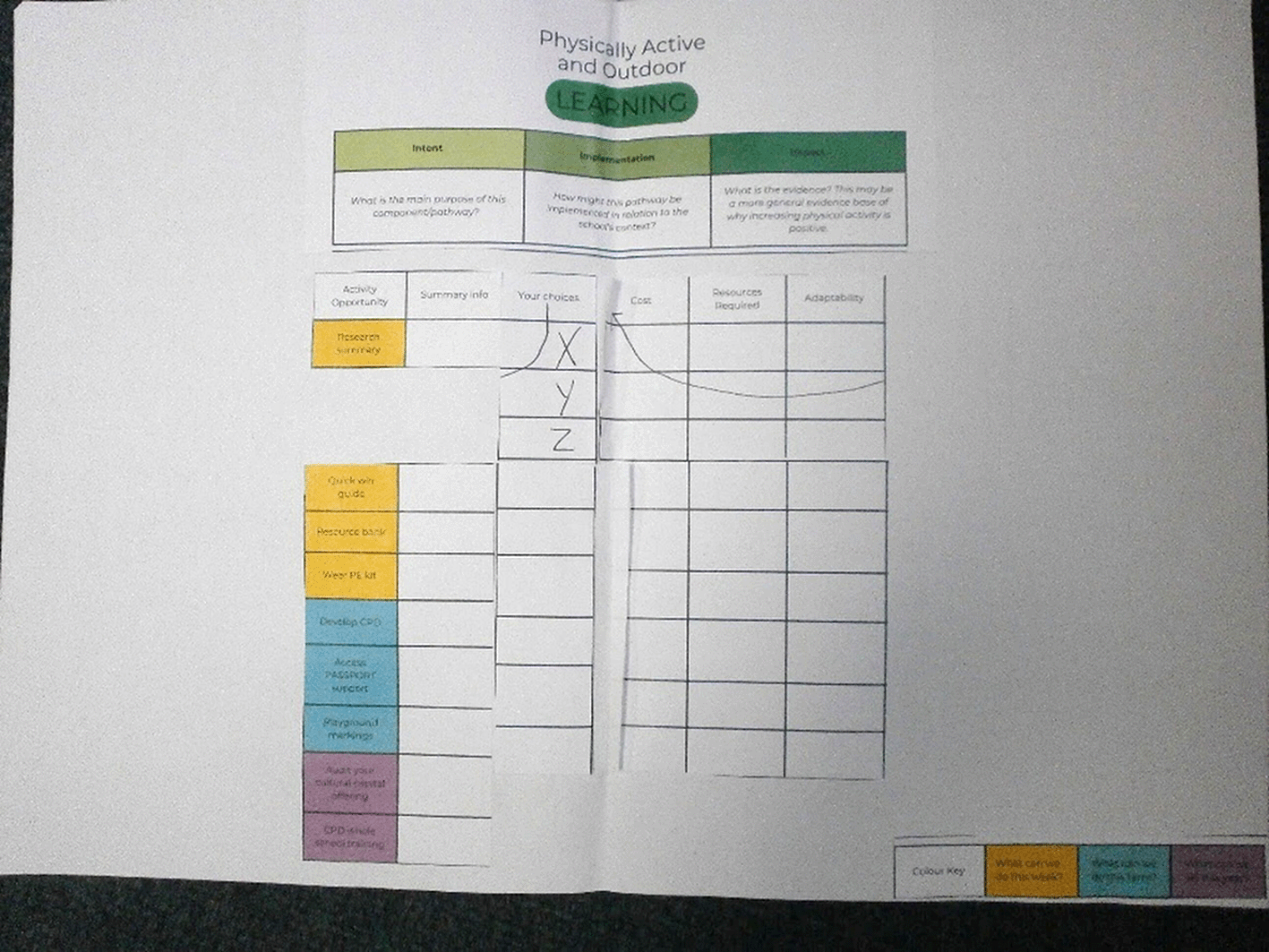
Workshop 2 (in-person) further explored issues and ideas that were identified in Workshop 1 and the core package was introduced, as well as logic models for using the tool. School physical activity culture was explored through a prioritisation activity, and members engaged with several general questions about intervention design and content that had arisen between the two workshops. Members then completed and refined a draft context assessment on paper, advising on what needed to be kept, removed, and expanded on in order to maximise the usefulness for the tool and for schools broadly. Finally, the group explored the updated paper prototypes which they iterated and refined ( Figure 7). The importance of aligning the tool and content to key policy frameworks was communicated by workshop members, namely the Ofsted inspection framework, the national curriculum for PE, and the PE and School Sport Premium, and that this would support schools in a practical and meaningful way to meet their existing demands and reporting requirements. Design features, such as how and where to best include different staff in using the tool, and the inclusion of an action plan, also arose from this workshop. Following Workshop 2 we refined the paper prototypes of the tool and draft context assessment. The context assessment was then translated to Online Surveys (https://onlinesurveys.jisc.ac.uk/) and a digital wire-frame prototype of the tool was developed in the design software Penpot.49
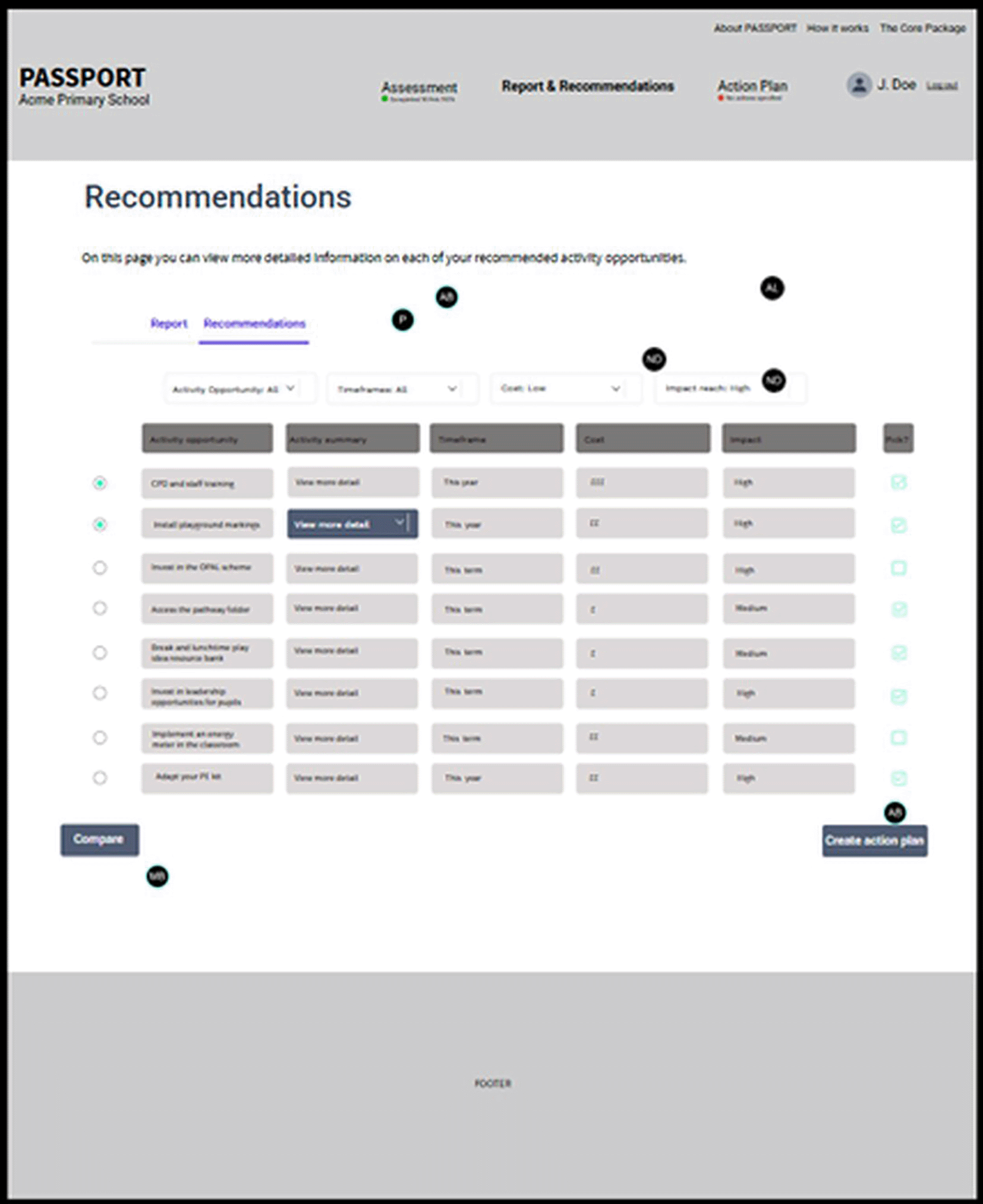
In Workshop 3 (online), members were guided to interact with and ‘use’ the digital prototype, including completing the context assessment digitally and giving feedback on the tools’ design, user journey, and content ( Figure 8). After Workshop 3 the prototype tool was further refined and iterated based on feedback, and the inclusion of a milestone tracker function was added. Then, for use within the scope and limits of the PASSPORT study, we translated the Penpot prototype into a useable system within the MS Office package.
Additionally, workshop activities and conversations informed the portfolio content, i.e. the activities that would be recommended to schools through the tool. Members helped to refine content to the six pathways (see Figure 4) and emphasised how all content needed to provide options for pupils with Special Educational Needs and Disabilities (SEND) and be adaptable to all contexts.
Physical Education and school expertise in content development
Alongside the development of the tool, content was required for the portfolio, i.e. each of the activities that could be recommended across all six pathways. To maximise the relevance of this content to schools, an experienced PE teacher joined the study to lead this work and provide school PE and physical activity expertise, system understanding, and language, as well as lead intervention delivery support. Informed by the formative studies and co-design process, desk research was undertaken to map out activities across the six pathways and develop the materials and resources required for a school to implement each activity. For additional input and scrutiny, all draft content was reviewed by a primary PE specialist and feedback integrated. The Consolidated Framework for Implementation Research (CFIR) was used to further strengthen the intervention content.27,28 CFIR provides a structure to consider factors that influence implementation, including characteristics of the intervention, the school environment, external influences, individual staff factors and the processes used to support change. Using this framework helped ensure that implementation was embedded within design decisions rather than treated as a separate phase. Lastly, a School Advisory Group of teachers, head teachers, and PE leads advised on aspects of our planning and design and provided comment on any documents, queries, or contextualising that was necessary.
To pilot and refine the PASSPORT intervention, a study was conducted with two contextually contrasting schools (inner city and suburban, differing pupil demographics) in the Bristol area as learning partners over a seven-month period (June 2025 – December 2025).50 This pilot was also used to pilot and improve plans for school and pupil recruitment, communications, and physical activity data collection for a main evaluation, and so did not aim to estimate the impact of the intervention on physical activity outcomes.
Pupil recruitment and quantitative data collection
Alongside the intervention delivery and evaluation, physical activity data were collected from pupils to monitor recruitment and retention rates, and amount of valid data. Parent consent and pupil assent was provided, along with pupil demographic information. All Year 4 pupils were eligible to participate, and physical activity data were collected via wrist-worn Axivity AX3 triaxial accelerometers worn for six days on three occasions (once at T0, T1, and T2). Pupils completed a paper questionnaire in school time which they completed twice (T0 and T2). Pupil absence data was collected for the study cohort year group (T0 and T2). Data collection in the schools was successful, and demonstrated our plans a future trial and evaluation are feasible. A total of 46 pupils were recruited at baseline from a potential total of 57 across the two schools, with high levels of data provision across the three measurement points (64–85%). At each measurement point (T0, T1, T2), two weekdays of valid accelerometer data were required to calculate a pupil’s mean weekday MVPA. Nearly all (45; 98%) pupils provided a valid weekday MVPA from at least one measurement point and over half (25; 54%) had measurements for all three. Table 3 provides school and participant demographic information, and Table 4 summarises data provision by time point.
| School 1 | School 2 | |||
|---|---|---|---|---|
| n | % | n | % | |
| School data | ||||
| % pupils in receipt of Pupil Premium | - | 49% | - | 40% |
| % girls | - | 48% | - | 63% |
| % non-white ethnicity | - | 27% | - | 95% |
| Participant data | ||||
| Total pupils in year group | 27 | 100% | 30 | 100% |
| Total pupils recruited | 17 | 63% | 29 | 97% |
| Pupil Premium * | 4 | 33% | 8 | 30% |
| Pupil Premium missing/prefer not to say | 5 | 29% | 3 | 10% |
| Girls * | 9 | 64% | 10 | 53% |
| Gender missing/prefer not to say | 3 | 18% | 11 | 37% |
| T0 Baseline (Term 6 24/25) | T1 (Term 1 25/26) | T2 (Term 2 25/26) | ||||
|---|---|---|---|---|---|---|
| n | % | n | % | n | % | |
| Pupils recruited | 46 | 45 | 46 | |||
| Pupil questionnaires returned | 45 | 98% | - | 46 | 100% | |
| Valid wellbeing scores | 37 | 80% | - | 39 | 85% | |
| Accelerometer measurements | 41 | 89% | 40 | 89% | 34 | 74% |
| Weekday MVPA * scores (which included at least 2 weekdays) | 40 | 87% | 35 | 78% | 30 | 65% |
Intervention and evaluation
Schools completed a school-study agreement to consent to the study, which included providing school demographic data. At T0 (baseline, Term 6 of the 2024–25 school year, June–July 2025), both schools completed the context assessment and received their reports and recommended activities via the PASSPORT tool, as well as the core package resources. At T1 (Term 1 of the 2025–26 school year, September–October 2025) each school received £3,000 to spend on their bespoke programme, as well as their action plans and milestone trackers via the tool. They began delivery of their bespoke programmes which continued into T2 (Term 2, November–December 2025). A process evaluation was conducted to understand implementation and user experiences and further improve the overall intervention. Semi-structured interviews with intervention leads (in both schools this was the Head Teacher) at T0 and T2 (four interviews in total) explored experiences of using the tool and selecting their programme, delivering the programme, any successes or barriers, and key learning for us to take forward to improve the intervention. At the start of T2, schools completed an intervention implementation form to provide an update on progress, thoughts about the programme and the support given, as well as the response of the wider school staff and pupils. At the end of T2 schools completed an intervention component form to assess their bespoke programme, associated costs, and the engagement of staff and pupils.
Findings
The delivery of the intervention and use of the PASSPORT tool was well received. Quotes have been used to illustrate points in the text below. These quotes are identified by the school ID (S1, S2), data collection method (interview = I, intervention implementation form = IIF, and intervention component form = ICF), and where interviews, the interview number (I1, I2). For example, S1I2 is school 1 interview 2, or S2IIF is school 2 intervention implementation form.
Both schools made progress on the delivery of their bespoke programmes, although progress varied between the schools. The intervention implementation forms indicated that after one term of implementing their bespoke programmes (the start of T2), schools were still in the early stages, but delivery was progressing, with early engagement from pupils and staff alongside organisational and contextual factors that shaped the pace of implementation. For example, one school noted that “some staff have already begun to try […] movement breaks in classrooms,” (S1IIF), and they were in the planning stage for further activities. Several factors were highlighted that influenced early implementation and explained some difference between the schools, including competing priorities for school staff and practical challenges linked to environmental changes such as school procurement rules.
Interviews indicated that the intervention process, including completing the context assessment and using the tool to select and deliver their bespoke programme, was generally viewed as acceptable and appropriate. The context assessment was perceived as manageable and useful for reflection, with one participant noting that it “didn’t […] feel really onerous” and could help schools “reflect on where you are or what your priorities are” (S1I2). The programme selection part of the tool was also viewed positively, with one respondent describing it as “easy to use … and not overly time consuming”, adding that “it flows absolutely fine” compared with other reporting systems used in schools (S2I2). Participants spoke positively about the support provided by the research team, describing the overall process as “a very supportive process throughout” (S1I2).
Despite this, some implementation planning and support features of the tool were used less frequently than intended. Schools reported limited engagement with the action plan and milestone tracking elements because of competing demands on staff time. As one headteacher explained, “you had to spend a bit of time doing it … it [lack of engagement] was more of a time thing” (S1I2). Additionally, the intervention component forms showed mixed progress with allocating the programme budget which indicated that this could be better supported.
Participants described the activities recommended to them as practical and relevant to their school contexts, with one noting that “they were all things that could be useful” (S1ICF) and that the recommendations reflected areas where schools were already seeking to increase activity opportunities. The structured presentation of options was also viewed as helpful for decision making, with one headteacher explaining that the process helped move ideas “from just having it in your head” (S2I2) towards planned implementation. Pupils in school 1 were reported to respond positively to the opportunities for movement, and staff attitudes were generally supportive. The school reported one lunchtime activity was “very inclusive … [and] suit children with a variety of needs” (S1IIF). They explained that they saw early positive behavioural impacts from this activity, stating “lunchtime incidents have dropped dramatically and there is less [pupil] dysregulation after lunch” (S1IIF), and described it as engaged in by “many children who weren’t otherwise as active” (S1IIF).
Taken together, the responses suggest that the bespoke programme activities selected by the schools were suitable and appropriate to each school, and were integrated into existing school priorities and routines, with perceived benefits for pupil engagement and behaviour alongside increased opportunities for movement during the school day. The pilot and evaluation also brought out key learning and feedback to further develop the intervention. This included improving budget planning support in the tool at the activity selection and delivery stages, planning for an additional support meeting between the research team’s intervention delivery lead and a school to support using the action plan and milestone tracker, developing a video and information sheet to support the use of the tool, and the inclusion of questions to explore suggested areas for potential impact beyond MVPA in a future trial process evaluation, namely for pupil behaviour and attainment as well as attendance.
Public health research is increasingly seeking to design complex interventions that are sensitive to different setting and community needs. This paper has outlined how the PASSPORT intervention, a school-based physical activity intervention, was developed, as a case study of designing a context-specific intervention. This section outlines key learning from the PASSPORT study to support putting context at the centre of public health intervention design broadly, beyond schools and physical activity. Table 5 summarises the key learning.
Ground intervention design in a range of data and insight
Grounding the intervention development in a range of data and insight generated through the formative work and co-design supported context-specific design. For example, from the outset a central research question was what was meant by ‘school context for pupil physical activity’. Initial exploration of this in the interviews, deeper exploration in the ethnography, broader insights in the school survey, and then validation of the insights in co-design, established which aspects of schools needed to be considered and included in the intervention, which communities needed to be involved, and highlighted practical design and implementation issues such as how decision-making takes place and where physical activity sits within broader school priorities. As demonstrated in Figure 3, the interconnectedness of the data and insight has been key to understanding school physical activity context. None of the formative work studies or intervention development processes alone provide the whole picture, and the strength is in their combination. For example, the breadth and depth of the formative work enabled identification of which aspects of pupil physical activity diverge across school settings and which are broadly consistent, to feed into the intervention design.35 Designing a context-specific, and in our case flexible, intervention is complex; creating a structured approach to capture this complexity and richness is valuable.
Centre user experience
Centring user experience in the design of a context-specific intervention works to ensure it will meet user needs, be suitable and appropriate, and be more likely to work within systems and priorities. Specifically, using user-centred design methods and processes carefully, and designing with school Physical Education and physical activity expertise (both within and outside of the research team), has made the PASSPORT tool more user friendly through understanding the level of information needed to use the tool effectively, how and where content needed to be adaptable, and which broader regulatory and statutory reporting systems it could support and align with. The co-design process of the PASSPORT tool brought forward insight and design decisions that would not have been apparent otherwise. Examples of this include: understanding the context assessment could meet a current gap in primary schools as a physical activity audit tool and expanding areas school staff identified; identifying the need for the core package to support school physical activity culture and the delivery of bespoke packages; designing for activities and areas of work to start with foundations and build, allowing a school at any stage in their physical activity provision to have relevant content; the importance of adaptability for pupils with SEND; and the addition of delivery tools such as the action plan and milestone tracker. Bringing context-specific expertise within a research team developing an intervention can provide further insight and contextual implementation support. Therefore, including user-centred design methods such as ideation workshops with key stakeholders, and bringing in contextual expertise, is valuable in developing public health interventions.
Design for intervention flexibility and user autonomy
A key mechanism for making the PASSPORT intervention ‘context-specific’ was to design a process for schools to select their own bespoke intervention, i.e. schools could have choice over a bespoke intervention that would differ in each setting. Across the development of the PASSPORT intervention school communities expressed their support for this premise, having experienced resources and programmes that were not be suitable for their particular setting.32 A central question throughout the intervention design was identifying where flexibility needed to be built in and the balance of autonomy and guidance that was necessary at each step. For example, in the PASSPORT intervention completed context assessments are reviewed by a school physical activity expert in the research team and recommendations provided based on it. This is a structured process to focus priorities and avoid school overwhelm, but it takes place in conjunction with a meeting to discuss the recommendations, and schools can advise if adaptations are needed. Schools are then expected to select the activities they think are most suitable and ideal for their school, and therefore have autonomy over their choice, with support from the research team. Another area where flexibility has been intentionally designed is that the structure of the tool is easily extendable to accommodate additional intervention activities or pathways as the work develops. Designing for flexibility and user autonomy, therefore, centres context in the intervention by being responsive and adaptive.
Build in processes to test and iterate
The context-specific intervention developed in the PASSPORT study involves a set of steps that alone are simple but is it essential they work together and that appropriate support is provided throughout. It is therefore helpful to build in processes and time to test and iterate the intervention, as with any intervention development process, but with attention on keeping the intervention design focused on setting context, usability, and acceptability. The ideation workshops were a structured process for this, with the aim of developing and iterating prototypes of the tool, but this was further explored by delivering and evaluating the intervention in the pilot study. Across these processes aspects of the intervention that were initially included or developed were dropped or adapted. One example is after Workshop 1 the tool paper prototypes organised intervention activities by time frame, actioned ‘this week’, ‘this term’, and ‘this year’, to break down intervention delivery into more manageable steps and deliver some ‘quick wins’. However, during Workshop 2 and in iterating the prototype afterwards it became clear this approach did not account for the immediate actions necessary to deliver longer term activities. Ultimately, this iteration and co-design led to the action plan and milestone tracker features of the PASSPORT tool. This highlights that the successful design of context-specific interventions requires not just evidence-based or co-design elements, but an interactive testing process to ensure that it works in practice and meets the needs of all involved. This is particularly the case for complex interventions with multiple components or stages that need to work together.
Designing context-specific public health interventions has the potential to improve intervention success across the field. In this paper we have outlined the steps we took to design a portfolio intervention that supports schools to select and deliver tailored intervention content that would be most suitable to their setting. These steps included undertaking a range of formative studies to generate a breadth of contextual and practical insight, and then taking this insight into intervention design and content development, via co-design, school expertise, and piloting. Each of these studies or steps provided useful insight and information on the setting context and for intervention design. However, combined they provide a rich and complex grounding from which to develop a non-traditional intervention approach.
Provide sufficient details of any financial or non-financial competing interests to enable users to assess whether your comments might lead a reasonable person to question your impartiality. Consider the following examples, but note that this is not an exhaustive list:
Sign up for content alerts and receive a weekly or monthly email with all newly published articles
Register with NIHR Open Research
Already registered? Sign in
If you are a previous or current NIHR award holder, sign up for information about developments, publishing and publications from NIHR Open Research.
We'll keep you updated on any major new updates to NIHR Open Research
The email address should be the one you originally registered with F1000.
You registered with F1000 via Google, so we cannot reset your password.
To sign in, please click here.
If you still need help with your Google account password, please click here.
You registered with F1000 via Facebook, so we cannot reset your password.
To sign in, please click here.
If you still need help with your Facebook account password, please click here.
If your email address is registered with us, we will email you instructions to reset your password.
If you think you should have received this email but it has not arrived, please check your spam filters and/or contact for further assistance.

Comments on this article Comments (0)