Keywords
community health workers, multiple long-term conditions, multimorbidity, interventions, primary care

community health workers, multiple long-term conditions, multimorbidity, interventions, primary care
Multiple long-term conditions (MLTCs), also referred to as multimorbidity, are defined as the coexistence of two or more conditions in an individual. MLTCs are a challenge globally, with approximately one in three adults living with MLTCs.1 In high-income countries (HICs), multimorbidity is mostly due to non-communicable diseases (NCDs), whereas in low and middle-income countries (LMICs), multimorbidity is often due to the combination of NCDs and chronic infectious diseases.2
MLTCs affect individuals, their caregivers, and health services.3 People with MLTCs experience polypharmacy, defined as the use of multiple medicines,4 reduced quality of life, and increased risk of disability. In addition, they are more likely to have chronic pain, impaired mental well-being, and reduced social networks.5 They are also more likely to have frequent hospital and clinic visits and greater reliance on emergency care.5,6 With the rising burden and complexity of managing the health of people living with MLTCs, the demand for healthcare workers with skills to manage these conditions is growing. Yet, the World Health Organisation (WHO) predicts a shortage of 10 million healthcare workers by 2030.7 As a result of the shortage of healthcare workers, there has been a focus on task shifting and task sharing, in which responsibilities conducted by formally trained healthcare professionals are shifted to other healthcare cadres, such as CHWs, who are defined as frontline public health workers. CHWs are trusted members of, and/or usually have a close understanding of the community.7,8 They have limited or no formal medical education, but receive training to enable them to provide support and services to the community.9 CHWs have different job titles, including lay health worker, community health advocate, promotor, and titles that refer to special training or knowledge in a particular area, such as an HIV educator.10
Previous studies have established that CHWs can successfully provide care for maternal and child health and infectious diseases such as HIV, TB, and COVID-19.10,11 Based on this, there is potential for CHWs to play a vital role in the context of MLTC care.8,12–14 While CHWs see people with MLTCs, they are often not sufficiently equipped to provide care for multimorbidity simultaneously. In some countries, like South Africa, CHWs have been trained across the conditions; however, this is not the same as training to manage multimorbidity. Responsibilities are mostly focused on addressing single conditions with duties that include case finding and tracing, promoting treatment adherence, conducting health assessments, and linking communities with healthcare.9,10,15–17 Even though CHWs have the potential to strengthen primary health care for people with MLTCs, most MLTC care is currently driven by doctors and nurses, and little is described about MLTC interventions involving CHWs.
CHWs use various tools to provide support and manage people in their communities. These include paper-based resources such as pamphlets, booklets, and digital clinical decision tools, which are apps designed to assist in the assessment, diagnosis, or treatment of clinical problems that are specific to a patient18 and which might be useful for MLTC care. Whilst there is evidence that the use of mobile phones improves CHWs’ productivity and assist them to enhance patient education, improve reporting, and provide healthcare services, challenges are encountered, such as the lack of proper training, inadequate technical support, and unreliable internet access.19,20 Although this evidence shows that CHWs can use digital tools to provide support in managing single conditions, it does not clarify the role of tools for managing people living with MLTCs.
To date, the evidence shows what CHWs can do and what they cannot do, but there is limited involvement of CHWs in the management of people living with MLTCs. Thus, this scoping review was undertaken to address this gap in evidence: the scope of practice of CHWs in managing people with MLTCs around the globe. In addition, the evidence from this review was conducted to inform intervention development for ENHANCE, a randomised controlled trial being conducted in 32 clinics in the Western Cape and KwaZulu-Natal, South Africa. ENHANCE is evaluating a multi-faceted intervention that includes using an integrated MLTC clinical decision support tool for clinicians in primary health care facilities, a treatment literacy pamphlet, and a personal health diary to support CHWs managing people living with MLTCs during home visits.
This scoping review employed the five-stage methodological framework proposed by Arksey and O’Malley, and Levac.21 We developed a protocol for the scoping review using the Joanna Briggs Institute (JBI) approach for clarifying the question.22 Reporting was guided by the Preferred Reporting Items for Systematic Reviews and Meta-Analyses (PRISMA) Extension for Scoping Reviews (PRISMA-ScR).23 The checklist can be viewed on the Zenodo repository (DOI 10.5281/zenodo.18908846). The figures, tables, and appendices referred to throughout this article can be found on the Zenodo repository using the following DOI 10.5281/zenodo.18908846
This study did not use patients or the public. The findings of this scoping review will inform the development of interventions for patients living with multiple long-term conditions.
We searched PubMed, Scopus, EBSCOhost, Cochrane, and CINAHL databases from January 2013 to January 2025, and we re-ran the search from November to December 2025. Our search strategy was developed with the assistance of a university librarian and included controlled vocabulary and free text terms, informed by previous literature. We used a variety of Medical Subject Headings (MeSH) and free text terms to refer to community health workers, such as aid workers, support workers, and advocate workers (Appendix 1a PubMed Search Strategy). We further manually searched and identified articles from the reference lists of two systematic reviews.24,25 These reviews were not included in the analysis because articles that were identified from the reviews are already included. We used the Participant, Concept, Context (PCC) approach proposed by the Joanna Briggs Institute (JBI) to develop the inclusion criteria, as detailed in Table 1.22 We targeted the population of CHWs; the concept was health interventions, defined as any treatments or strategies that improve outcomes and make a difference in the MLTCs.26 Studies that use interventions that involve CHWs in the management of people who are living with MLTCs. The context included all studies that were conducted globally in communities or primary health care. The type of sources included all types of original studies. We limited our studies to those published in English, and we excluded study protocols, systematic reviews, conference abstracts, opinion pieces, and editorials. We reviewed reference lists of relevant systematic reviews.
Before undertaking title and abstract screening, one reviewer (OM), piloted the screening criteria on 10 articles and refined them. Then the titles and abstracts of studies identified in Step 2 were independently screened by two reviewers (OM and LV) to identify those that1: involved CHWs (defined as individuals who did not have tertiary education, such as volunteers, support workers and lay workers),2 included interventions that addressed MLTCs (two or more chronic conditions including mental health conditions). Differences between reviewers’ assessments were discussed and resolved by consensus. For included studies, the full text was extracted by one reviewer (OM). The screening of titles, abstracts, and full texts was conducted and completed on Rayyan software for systematic reviews (https://new.rayyan.ai/).
An Excel data extraction form was developed and pilot tested by one reviewer (OM) on 10 articles and subsequently revised by two reviewers (OM and NL). The form can be viewed here https://zenodo.org/records/18908847 (DOI 10.5281/zenodo.18908846.) It included study title, author, published year, study design (quantitative, qualitative, mixed methods), article type (peer-reviewed, original article, guidelines, unpublished reports/grey literature), aims and objectives, location or setting (e.g. country where the study was conducted, communities, clinics), population (adults), research methods (e.g. sample size, methods of data collection), and description of interventions.
The PRISMA flowchart of the study is shown in Figure 1:PRISMA flow Diagram. We identified 149 articles based on the abstract and title, of which 41 duplicates were removed. The remaining 108 articles were screened by title and abstract, and of these, 86 articles were excluded with reasons. The remaining 22 articles that met the inclusion criteria were included for a full text review, after which 14 of the articles were excluded. We identified 10 other articles from the two systematic reviews that met our inclusion criteria, of which four were excluded after reviewing the full articles, and six articles were added to the other included articles. We excluded the systematic reviews from the analysis. Therefore, in total, we selected 14 relevant articles for analysis. The 18 articles that were excluded reported interventions that did not use CHWs (n = 6), studies with interventions that used CHWs, but the intervention focused on single conditions (n = 4), conference abstracts (n = 4), study protocols (n = 2), as well as the two systematic reviews.
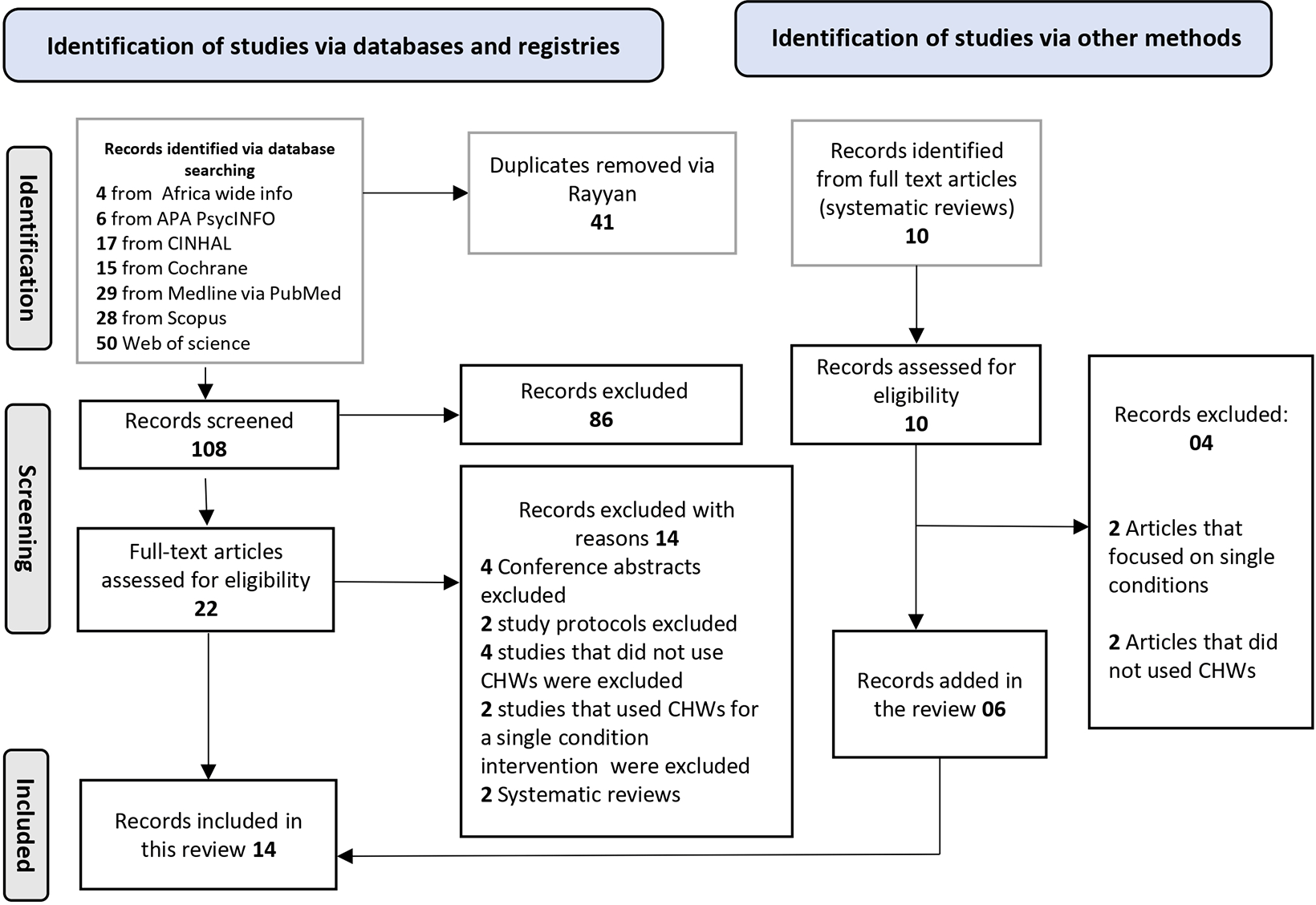
Table 2 (refer to extended data)shows the characteristics of the included studies, including the countries, the settings where the studies were undertaken, study designs, and participants’ mean age. Three qualitative studies, six randomised controlled trials (RCTs), three mixed-method studies, a cross-sectional study, and one quasi-experimental study. More than half (57%) of the studies were conducted in primary healthcare centres and communities; six studies were conducted in the United States of America (USA), one in England, and one in Australia. The remainder were conducted in India, China, and Nepal. The studies in high-income countries focused primarily on rural settings (37%) or urban areas where most people had low socioeconomic status. Most of the participants of the included studies were females (3721), but two studies did not report the gender. Their ages ranged from 15 to 78 years. The studies reported conditions that participants had; participants in three studies had diabetes, hypertension, depression in addition to heart-related conditions such as myocardial infarction, heart failure, coronary heart disease, and ischaemic heart disease. Three studies reported patients with hypertension and diabetes, plus other diseases such as obesity, stroke, arthritis, chronic pulmonary disease (COPD), and tobacco dependence. Three studies did not report the conditions, and the five remaining studies reported other MLTCs. Across all the included studies, approximately 5788 participants were enrolled, including professionals such as CHWs, doctors and nurses.
As detailed in Table 3 (refer to extended data), CHWs had a range of roles in the selected studies in managing people living with MLTCs. The CHWs’ roles were then categorised and subcategorized as follows:
Patient care management
Patient care management involves the coordination and oversight of patients’ treatment plans to ensure they receive comprehensive and effective care. Six studies reported management of physical health, treatment compliance, and retention. Physical health management involves monitoring patients’ physical well-being and coordinating care that addresses both their physical health and other health needs.27 During these visits, CHWs provided patients with blood pressure machines and digital scales and developed a care plan with each patient.28–31
Education and empowerment
Five studies reported that CHWs promoted self-management behaviours, which involved empowering patients to take responsibility for their health, such as being able to set goals in a health diary and monitor weight and blood pressure.24,28,32–34 In four studies, CHWs promoted treatment literacy and health literacy among patients and their families.24,30,33,35 Treatment compliance involved supporting patients in adhering to treatment plans, and adopting dietary changes and healthier behaviours.25,29,30,34,35 Health education focused on chronic condition risk factors and exercise advice, which included checking of joints. Additionally, CHWs delivered family-based education aimed at addressing social taboos and fostering a healthy family environment30,36–38 . Four studies focused on reinforcing healthy lifestyles, such as providing support to quit tobacco use and to engage in physical activity and meditation.27,30,37–39
Coaching and support
Two studies reported that CHWs also served as health coaches, providing guidance and support to patients in managing their health. This role included helping patients to develop healthier habits and make informed choices about their wellbeing.34,39 CHWs provided tailored health coaching, supported patients in areas related to social welfare, and offered counselling services.27,39
Coordination and follow-up
CHWs served as liaisons between health systems, patients, and families, provided appointment reminders to ensure patients stay engaged with their care, and assisted patients with health system navigation, and acted as patients’ advocates.24,36,39 The frequency of home visits conducted by CHWs in delivering the interventions varied. Three studies reported interactions at their homes, by telephone, and via video contacts.28,31,33 The number of home visits varied from one to 12 in the studies; One study reported (n = 2) home visits34 and two studies reported (n = 3) home visits31,35 The studies did not specify whether the visits were conducted weekly or monthly. One study noted that CHWs provided up to four visits daily for six weeks.32 Four studies reported more than 12 home visit sessions; some of these sessions were conducted bi-weekly.29,33,36,38 Three studies did not report on CHWs’ home visits.37
Of the included studies, six reported collaborative or interprofessional interventions ( Table 3- refer to extended data), which comprised healthcare providers from different disciplines, including CHWs. Four studies reported coaching programs, one reported a self-management intervention, one study reported a health literacy intervention, one intervention involved an exercise program, and one study reported a care coordination intervention.
Collaborative interventions included: (i) the Transition Clinic Network (TCN) that used former incarcerated CHWs to provide support to patients returning from imprisonment with health and social needs27; (ii) the Healthier Options through Empowerment (HOPE) intervention in which female CHWs partnered with nurses, doctors, and psychiatrists to diagnose and treat depression in patients with co-morbid diabetes and cardiovascular conditions36; (iii) The HOPE qualitative study highlighted the perception of CHWs who provided the intervention29; (iv) The Secondary Stroke Prevention by Uniting Community and Chronic Care Model Teams Early to End Disparities (SUCCEED) intervention used advanced practice clinicians (APC), nurse practitioners, or physician assistants together with the CHWs to address lifestyle factors, health literacy, medication adherence and obstacles to behaviour changes in patients with stroke and history of hypertension31; (v) The Chinese Older Adults Collaborations in Health (COACH) tested the effect of the collaborative care approach, consisting of the COACH team: a village doctor, a CHW referred to as an aging worker, and a psychiatrist, to treat comorbid hypertension and depression30;(vi) and an interprofessional model of Bridges Self-Management (SMS) intervention supported clinicians to integrate self-management.32
The coaching intervention was community-based, where CHWs promoted medication safety and mentored discharged adults in following self-care plans and improving disease self-management.27,28,31,33–35,39 Only one intervention focused on exercise for people with arthritis and co-morbid COPD.38 A health literacy intervention was delivered by CHWs to educate and support self-management of health.33 Lastly, the care coordination and support intervention explored the impacts of training design to enhance the role of CHWs.40
CHW Training
Thirteen studies reported the training of CHWs, which ranged from 1 hour to under four weeks in duration, including some details of the training, excluding four that did not include details on training duration.27,29,36,38 One study did not report training.37 The training of CHWs was conducted in universities, colleges, and community centres. Training covered various topics, which included educating, coaching, conducting assessments, risk factor screening, and motivational interviewing.
Tools used by CHWs
Seven of the studies reported tools used by the CHWs; of these, three studies reported both digital tools and paper-based tools, three studies reported the use of paper-based tools only, and one study used a digital tool only. The paper-based tools included: (a) a health activity log, which was used to report the interaction with the patient, such as the mode of communication and the purpose of the interaction.27; (b) a health literacy booklet with a self-management tool that included health information, using pictures, colours, and symbols to engage with illiterate participants; nutrition and immunity building, chronic ailment management that included dosage/equipment management and follow-up visits, as well as hygiene, sanitation, and coronavirus prevention management33; (c) the 10 keys™ tool provided participants with ten keys to healthy aging and gave the participants the type of questions that they can ask their clinicians and ways to ask those questions38; and (d) a medication safety guide (MSG) tool containing medication safety principles, attitude reinforcement, consultation resources, and medication schedule reminder35 .
Digital tools included: (a) Activities of daily living, Weight and nutrition, Awareness, Condition, Cognition, and social activities (AWACCS). This tool was used to identify any important changes in weight, eating, and drinking habits. It also captured changes in general conditions, including walking, strength, and endurance, as well as changes in memory and social activities.40 (b) Health literacy videos were used as an addition to the health literacy booklet.
This scoping review identified 14 relevant studies that describe the scope of practice, activities of CHWs, and the tools used when managing individuals with MLTCs. Our review also described interventions that tested strategies for CHW management of people living in MLTCs. Eight of the 14 studies were conducted in high-income countries in rural areas and community centres, and six in LMICs. The interventions included a collaborative or interprofessional model. Studies reported various roles of CHWs, which we categorised as patient care coordination, education and empowerment, coaching and support, as well as coordination and follow-up.24,25,27–40 Our findings reported that CHWs used digital and paper-based tools to manage and support individuals with MLTCs. The duration of the CHWs’ training ranged from an hour to five days.
This review concurs with other studies that have established that CHWs serve their communities by bridging the gap between the community and the health system, particularly in under-resourced areas.14,41–43 CHWs found in LMICs have improved in reducing childhood undernutrition, maternal and child health, and contributing to the control of HIV and malaria, as well as health promotion. In HICs, they contributed to reducing disease burden by participating in the management of hypertension, in the reduction of cardiovascular risk factors, in diabetes, HIV, and cancer screening44 . Understandably, more than half of the interventions in this review were from HICs in rural and community settings. This could be because MLTC research has been conducted in HICs for years45 while in the LMICs, the focus has been mostly on single conditions.3 This implies that the interventions that seek to address MLTCs in LMICs are fairly new, and the development and testing of these interventions are often complex and take time.
In LMICs, the health system is fragmented, with a high prevalence of chronic infectious diseases and NCDs46,47 compared to the health systems in HICs, which are generally better resourced. This suggests that some of the collaborative interventions that use CHWs but require the support of doctors and other health care providers might not be as possible to implement in LMICs. This is particularly applicable to interventions involving medical specialists such as psychiatrists, who are often based in tertiary hospitals in urban areas.
Just under half of the interventions utilised collaborative and/or interprofessional models in which CHWs worked with different professionals from diverse disciplines, each contributing distinct expertise.27,29–32,36 This has the potential to enhance care through the opportunity to refer patients for clinical intervention when needed.48,49 It has been reported that CHWs make an impact in the field of mental health, HIV, and TB when they receive support from other health care providers with adequate training.50,51–52 Even though the collaboration of CHWs with other clinicians can be effective, the limitation would be that when the support is minimal from other healthcare providers, CHWs may struggle to provide sufficient care to their communities.
The reported roles of CHWs for MLTCs identified in this review were similar to those reported for single conditions such as HIV and TB.9,10 However, a notable difference was that CHWs played multiple roles when managing individuals with MLTCs. They provided education, conducted home visits, and performed different functions for different conditions. It is recognised that CHW programmes often lack effective training and supervision.12,13,53,54 Effective training of CHWs improves their professionalism and, quality of their performance.53 With the complexity in providing care for individuals with MLTCs, adequate training for CHWS is essential. While most of the included studies reported that CHWs received training, the duration of the training was short.
In the studies of this review, CHWs used a range of digital tools and/or paper-based tools to support their functioning. Digital tools have been used in different settings for different purposes, such as a health literacy intervention that was conducted in Pakistan and a mobile application management and reporting tool used in the USA.31,33,39 Digital tools used by CHWs can improve the performance of CHWs in providing care, particularly in LMICs.19,55 These tools play a crucial role in the management of individuals with different conditions by enhancing care coordination, enabling remote monitoring, and promoting patient engagement and surveillance data.19,20,56 The use of digital tools received a lot of attention during the COVID-19 pandemic, which can be leveraged and tailored to manage individuals with MLTCs.54 There were no specific tools that provided CHWs with guidelines for managing people with MLTCs. Both paper-based and digital tools were primarily tailored for each study and were not intended for a broader application beyond their specific research contexts. As a result, these tools are unlikely to be adapted for wider use in different populations and settings. Furthermore, none of the studies commented on the safety of the use of digital tools in the community, this may be a problem in countries with high rates of community violence as the CHWS can face theft of digital devices.
Our search was comprehensive, ensuring we captured a wide range of studies that reported interventions that evaluated CHWs’ roles in the management of people with MLTCs. A limitation is that the review only included publications/studies in English; therefore, we may have missed publications in other languages. Notably, however, the review has highlighted the limited literature in which interventions have involved CHWs in the management of people with MLTCs. While several studies reported on the tools that CHWs used to manage people with MLTCs, most of these were paper-based and did not provide instructions or algorithms for CHWs to follow.
CHWs can play diverse roles in managing MLTCs, including educating and assisting patients with self-management. Given CHWs’ unique relationship with communities, with adequate training and support from other healthcare providers, can enable them to lead certain tasks in the management of patients with MLTCs. Studies that were conducted in LMICs in this review were few compared to HICs. This highlights a critical gap in the literature but also suggests a significant potential for expanding CHW-led interventions in LMICs. With rigorous content-specific research, such interventions can be effectively adapted and scaled to manage and support people living with MLTCs.
Provide sufficient details of any financial or non-financial competing interests to enable users to assess whether your comments might lead a reasonable person to question your impartiality. Consider the following examples, but note that this is not an exhaustive list:
Sign up for content alerts and receive a weekly or monthly email with all newly published articles
Register with NIHR Open Research
Already registered? Sign in
If you are a previous or current NIHR award holder, sign up for information about developments, publishing and publications from NIHR Open Research.
We'll keep you updated on any major new updates to NIHR Open Research
The email address should be the one you originally registered with F1000.
You registered with F1000 via Google, so we cannot reset your password.
To sign in, please click here.
If you still need help with your Google account password, please click here.
You registered with F1000 via Facebook, so we cannot reset your password.
To sign in, please click here.
If you still need help with your Facebook account password, please click here.
If your email address is registered with us, we will email you instructions to reset your password.
If you think you should have received this email but it has not arrived, please check your spam filters and/or contact for further assistance.

Comments on this article Comments (0)