Keywords
Randomised controlled trial, psychosis, serious mental illness, parenting, intervention, children, mothers, fathers

Randomised controlled trial, psychosis, serious mental illness, parenting, intervention, children, mothers, fathers
Lifetime prevalence of psychosis (schizophrenia and related psychotic disorders) is around 14.5 per 1000 people, or one in 69 people.1 Psychosis is a severe and enduring mental health problem, with a high global disease burden and economic cost.2 Over half of the people with psychosis are also parents and their children are at increased risk of significantly poorer outcomes including poor mental health in adulthood.3–5
Caring for children is difficult for many parents with psychosis.6 Symptoms such as hallucinations and delusions can interfere with a parent’s ability to establish important family routines, maintain boundaries and assert discipline consistently7–10 creating a stressful home environment. In turn, stress can worsen psychosis11–13 whereby a reciprocal cycle of effects is created. Poor outcomes are not inevitable, however. Appropriate and timely parenting support may be an important form of early intervention, improving outcomes for both parent and child.
Adult mental health services are ideally placed to support parents with psychosis with their parenting, but parenting interventions have not yet been evaluated for their use.14,15 Research has shown that adult mental health practitioners would be willing to deliver parenting interventions if they were available16 and if training was available and organisational support in place.17–19 Thus, there is a clear need for feasible and acceptable parenting and family-based interventions that can be delivered in adult mental health services.
One candidate intervention with a substantial evidence base is the Triple P Positive Parenting Programme.20 Triple P is highly acceptable to parents in general population samples21 and has been shown to reduce parenting stress, increase parental confidence and improve parent-child interactions.22,23 Triple P is underpinned by five guiding principles of positive parenting, which are: 1) encouraging a safe, interesting environment (for children to grow up in), 2) creating a positive learning environment (being available for the child and motivating them to be interested in learning), 3) using assertive (not punitive) discipline if necessary, 4) having realistic expectations (of their child’s behaviour and of themselves as parents) and 5) taking care of yourself as a parent (which includes the promotion of mental wellbeing and resilience).
The online self-directed version of Triple P has been successfully evaluated in parents with bipolar disorder,24 and the self-directed workbook version was assessed in a small pilot case series with ten parents with psychosis.25 The workbook led to clinically significant improvement in parental mental health, including reduced psychotic symptoms for those who completed it. In-depth interviews with five ‘completers’ revealed Triple P to have been transformative: parents reported positive changes in parenting style; they felt empowered regarding their parenting and had a greater sense of control over their mental health.25
We aim to build upon these findings by establishing the feasibility of introducing and evaluating the Triple P Parenting intervention in adult mental health services, exploring if parents with psychosis engage with it sufficiently and what additional support they may need to derive any benefit. We will use the self-directed version of Triple P, accessed either online or via a printed workbook since this permits the parent to work through the programme in their own homes, and at their own pace. Online and workbook versions work equally well in general population samples,26 and both have been found to be equivalent to other Triple P modalities in terms of their effects.27
We will compare Triple P plus treatment as usual (TAU) to TAU in this feasibility trial. Participants allocated to Triple P will choose the version they prefer, thereby ensuring delivery in the most accessible format for them.
The trial aims to evaluate the feasibility and acceptability of delivering a rater-blind randomised evaluation of self-directed Triple P in NHS adult mental health services and to optimise intervention delivery, study design, parameters and procedures by resolving several specific uncertainties prior to a definitive full-scale RCT.
To achieve these aims, the trial will assess:
1. Participant consent rates, recruitment, and retention
2. Engagement with Triple P
3. Degree of support required for parents to engage with intervention successfully
4. Reasons for non-participation and for non-adherence
5. Reasons for preference for online or workbook version, and differential engagement
6. Likely barriers and facilitators of implementation in adult mental health services
7. Feasibility and acceptability of collecting proposed primary, secondary, and economic outcomes
8. Appropriateness of candidate outcomes, and prognostic variables to adjust for and/or balance over in a definitive study
9. If there is a signal of a clinically important effect on parenting stress and parental mental health.
Extensive patient and public involvement and engagement (PPIE) consultation was undertaken prior to commencing a pilot case series with parents with psychosis.25 For this feasibility trial, additional focus groups and interviews were conducted with health care professionals and parents with psychosis who had not contributed to the case series. These PPIE consultations, combined with the findings from the case series, informed the design of the current study. Various aspects of the study, such as our approach to recruitment and engagement; wording and appearance of participant information sheets, and content and wording of interview topic guides have been co-produced with a PPIE group convened specifically for this study. The group will meet regularly throughout to troubleshoot issues as they arise, and to provide feedback and guidance on any amendments to the study. The PPIE group will also co-design dissemination materials (such as newsletters and lay summaries) and guide our dissemination strategy more generally.
Following the Medical Research Council (MRC) framework for the development and evaluation of complex interventions,28 this study includes both quantitative and qualitative assessment of feasibility and acceptability. It is designed as an individually randomised, rater-blind feasibility randomised controlled trial (RCT) comparing the self-directed version of the Triple P Positive Parenting Programme plus treatment as usual (TAU) with TAU alone.
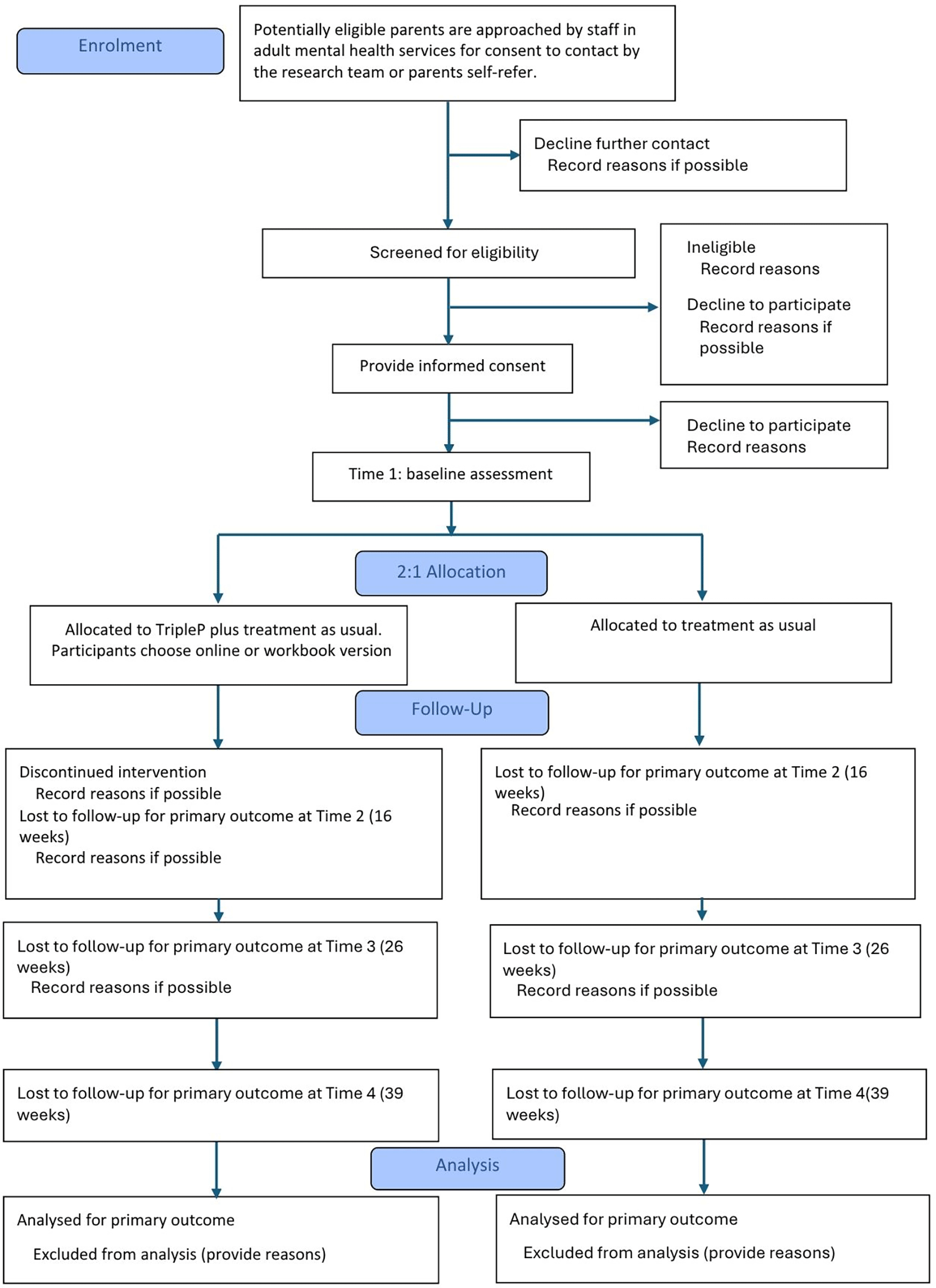
A maximum of 50 participants will be recruited and randomised after completion of baseline measures. Participants will be allocated 2:1 to Triple P plus TAU or TAU alone. Participants will have 15 weeks to complete the Triple P programme, and all participants will be followed up at 16 weeks post-baseline, and again at six months. Participants recruited prior to 1 February 2026 will also complete assessments at nine months post-baseline.
Figure 1 provides an overview of the trial design based on CONSORT guidelines.29,30 The protocol is reported in line with the SPIRIT checklist for protocols of randomised trials.29 The recommendations for interventional trials (SPIRIT) checklist31 and the TIDieR checklist for the reporting of interventions32 have been completed and are available online.33
This feasibility study is being conducted in two mental health trusts in the Northwest of England, UK: Greater Manchester Mental Health NHS Foundation Trust and Pennine Care NHS Foundation Trust. Recruitment will primarily be via community mental health teams and early intervention services. Combined, these two trusts serve an ethnically and socio-economically diverse population of approximately 2.5 million people.
Trial participants will be men and women aged 18 or over who have experienced at least one episode of non-affective psychosis and who are parents of a child aged between 2 and 12 years old with whom they live, or for whom they have parental responsibility. They must also have a named care coordinator in one of the participating trusts to be able to take part. The intervention was designed to be universally applicable to parents and caregivers; therefore, all eligible participants can take part irrespective of their specific diagnosis or their experiences of parenting, i.e. they do not need to be experiencing, reporting, or be perceived to be having difficulties in their parenting to be able to take part. Participants must be able to comprehend written English and provide written informed consent.
Participants will be excluded if they do not possess sufficient English to reliably complete assessments or access the Triple P programme, if they lack capacity to provide informed consent, if they are inpatients, and if their children have been removed from their care. Participants whose current symptoms compromise their ability to consent or participate may be considered for inclusion when their symptoms have stabilised, as judged by their care team.
The self-directed Triple P Positive Parenting Programme consists of eight online modules or ten workbook ‘weeks’ to be worked through at home by participants in their own time and at their own pace. Triple P supports parents to understand causes of child behaviour patterns and problems and to use behaviour monitoring tools to track triggers. Strategies that promote social competencies and new skills, including quality time, affection and becoming a role model for positive behaviours are facilitated early on. Later, strategies to manage misbehaviour are fostered and competencies in behaviour monitoring of self and child are developed. Finally, skills that encourage learning consolidation when responding to difficult child behaviour in stressful situations are promoted alongside parental self-efficacy to empower parents.
The tasks covered week by week in the self-directed workbook version of Triple P are outlined in Table 1. The online self-directed version is similar but organised into eight modules. Based on pilot work25 and PPIE consultations, it is assumed that 15 weeks will be sufficient time to allow completion. All participants allocated to receive Triple P will be asked to choose their preferred format, and the reason for that choice will be recorded. Participants who choose the workbook will be given the workbook to keep. Those who choose the online programme will be granted access via any internet-enabled device (e.g. laptop, smartphone or tablet) for one calendar year from first login. Since Triple P was designed to allow parents to learn the core parenting strategies in the first four sessions (see Table 1), with subsequent sessions allowing parents to practice these skills, the intervention could be considered to have been ‘completed’ by session 5. However, because we wish to ensure that parents are given adequate opportunity to practice the strategies they have developed, parents allocated to the intervention arm will be given 15 weeks to complete the programme.
The intervention will be facilitated by care-coordinators rather than the research team. The project manager will distribute either access codes to online Triple P or send copies of the workbook to those allocated to receive self-directed Triple P plus TAU after randomisation has taken place, but thereafter, all discussions about self-directed Triple P will fall to the care-coordinators of the parents involved. Care-coordinators will receive training in facilitating self-directed Triple P prior to referring participants to the study including guidance on avoiding contamination of the TAU group. Training for practitioners is in the form of a hosted webinar with embedded videos provided by Triple P UK. Staff will also be given access to the programme and provided with written materials describing it.
Conversations facilitating self-directed Triple P will take place as part of scheduled care-coordination visits. In these conversations, staff have been asked to act as ‘interested and curious observers’ enquiring into progress with Triple P and talking through activities and practising skills if required.
Treatment as usual has been chosen as a comparator to enable comparison against usual clinical care. All participants will receive usual NHS care which typically includes pharmacological, social and psychological interventions. To be eligible to take part in the study, all participants must have a named care coordinator at baseline. Care-coordinators who refer a participant who is subsequently allocated to the treatment as usual group will be asked to complete a brief questionnaire at the end of the intervention period to determine whether and how parenting has been discussed since allocation. We will explore this further in interviews conducted as part of the nested process evaluation. This will help us determine if there is any contamination, and what form it takes.
Feasibility
Four aspects will be examined to determine feasibility, namely 1) recruitment to target (50 parents recruited and consented), 2) adherence to the Triple P programme (minimum of five sessions completed), 3) a retention rate (completion of assessments at week 16) of ≥75% and 4) minimal adverse events/reactions.
Pre-determined progression criteria for proceeding to a full-scale trial will focus on retention to 16- week follow up:
• Green [Progress] > = 75% retained to 16 week follow up
• Amber [Review and revise] > = 60% - <75%
• Red [Do not progress] <60%
Participants will be asked to detail their preferences for treatment allocation at baseline, prior to randomisation. After randomisation, they will be sent a link to a brief post-randomisation question hosted via REDCap, which will ascertain how satisfied participants are with their allocation. These data will help us understand the impact of preferences for allocation and satisfaction with allocation on subsequent engagement and adherence. Participant characteristics (e.g., age, sex and marital status of parent) and socio-demographic variables identified as potentially predictive of attrition and outcome (e.g., literacy, family support, employment status) will also be recorded.
Acceptability
At the end of the intervention (16 weeks) all participants allocated to self-directed Triple P will be sent a link to a brief standardised satisfaction measure ‘The Client Satisfaction Questionnaire’34 which was developed to determine acceptability of Triple P. A reminder prompt will be sent two weeks after the initial request. Qualitative exploration of acceptability will be conducted via interviews with subgroups of parent participants, children and care-coordinators as part of the nested process evaluation, described separately below.
Clinical and economic outcomes
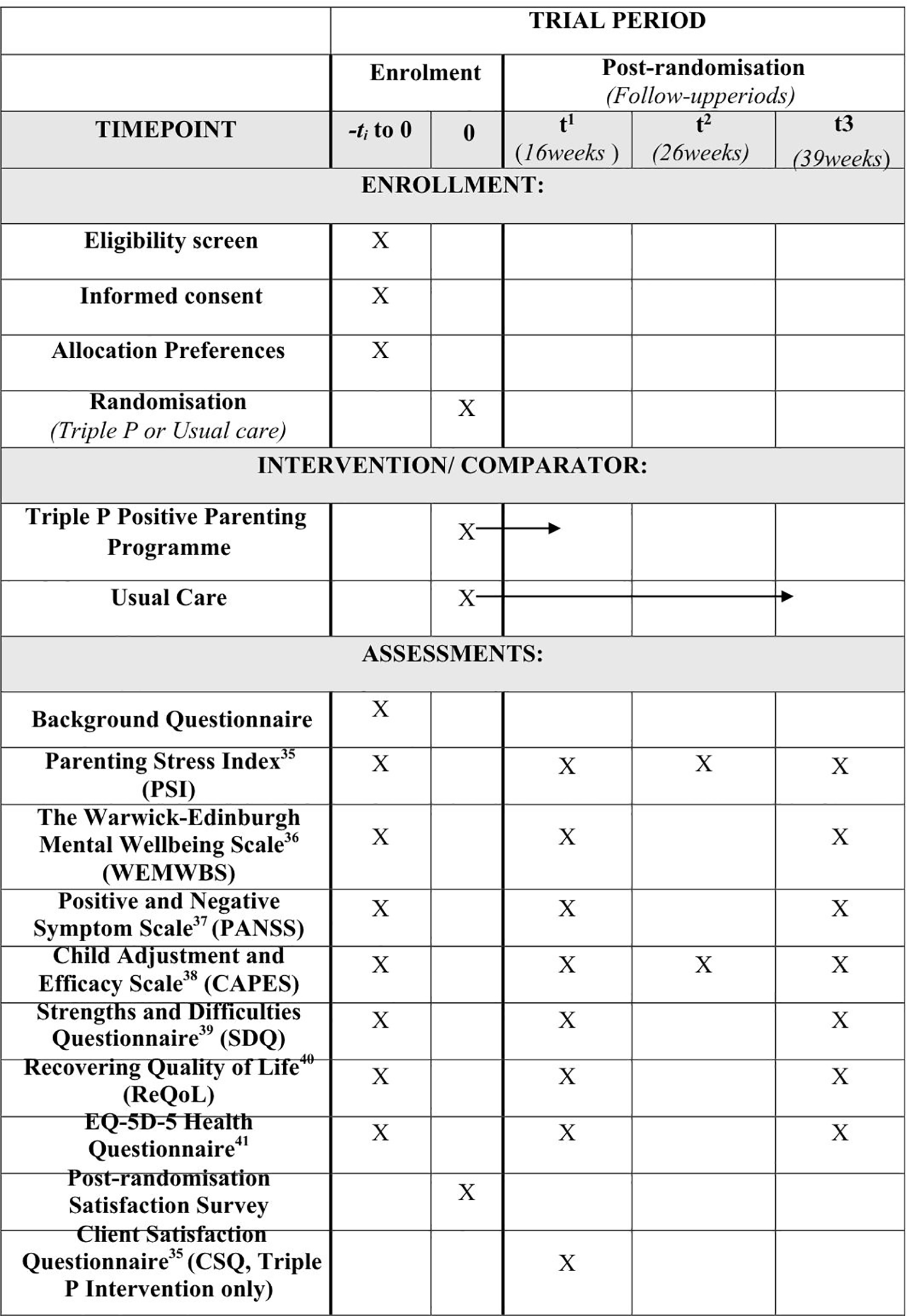
Seven validated questionnaires and assessment tools, chosen according to their psychometric properties and widespread use in relevant research, will be completed at baseline, 16 weeks (all participants) and 39 weeks post-randomisation (those randomised by 31 January 2026 only). See Table 2 for details.
| Outcome measure | Construct(s) | Format and structure | Scoring |
|---|---|---|---|
| 1. Parenting Stress Index (PSI)35 | Measures parental distress and parent–child dysfunctional interaction. | 36 item self-report questionnaire – unidimensional structure | Scores range from 36 to 180 with higher scores indicating greater parenting stress |
| 2. Warwick Edinburgh Mental Wellbeing Scale (WEMWBS)36 | Measures subjective well-being | 14-item self-report questionnaire – unidimensional structure | Scores range from 14 to 70. Higher scores indicate greater well-being |
| 3. Positive and Negative Syndrome Scale (PANSS)37 | Observer rated assessment of psychopathology | Structured interview with three subscales assessing positive (7 items), negative (7 items) and general symptoms (16 items) of psychosis. | PANSS negative and positive subscale scores range from 7–49. General symptoms range from 16–112. A total score can be computed. Higher scores indicate more severe symptoms |
| 4. Child Adjustment and Parenting Efficacy Scale (CAPES)38 | Measures parental self-efficacy in managing specific child problem behaviours | 27 item self-report questionnaire. 27 items measure children’s behaviour and emotional adjustment (intensity scale); 19 of these items include a ‘self-efficacy’ question measuring parental confidence in managing these problem behaviours (efficacy scale) | Parenting self-efficacy subscale scores range from 19–190 with higher scores indicating greater efficacy |
| 5. Strengths and Difficulties Questionnaire (SDQ)39 | Measures child behaviour, mental health and strengths | 25-item self-report questionnaire – five subscales measuring emotional symptoms, conduct problems, hyperactivity, peer relationship problems and prosocial behaviour | A total difficulties score (sum of the first four subscales) can be computed. Scores for Internalising behaviour (sum of emotional and peer problems) and externalising behaviour (sum of conduct and hyperactivity) can also be used. Higher scores indicate greater difficulty |
| 6. Recovering Quality of Life (ReQoL)40 | Quality of life measure for people with mental health conditions | 20 item self-report questionnaire assessing QoL for people with mental health conditions and recommended for use in people with psychotic disorders | An index value can be derived by applying value set to each of the levels in each dimension. Index values range from 0 to 1. Higher scores represent better quality of life |
| 7. EQ-5D-541 | Measures health related quality of life (QoL) | 25 item self-report questionnaire assessing QoL in five dimensions – mobility, self-care, usual activities, pain/discomfort and anxiety/depression | A total score can be calculated by summing the scores of the 20 questions. Total scores range from 0 to 80. An index score can be derived by applying ReQoL-Utility Index to the responses. Index scores range from 0 to 1. Higher scores represent better quality of life |
Recruitment and consent procedures
Recruitment began in April 2024 and will conclude by May 2026. The trial was prospectively registered with a target sample of 75, but the target was reduced to 50 with funder approval in November 2025. A sample size of 50 is consistent with previous pilot and feasibility studies with two arms42 and will allow us to test the key retention and adherence progression criteria using the approach of Lewis et al. (202143) using 80% power (minimum) and a relaxed 10% significance level, maintaining the relative balance between Type I and Type II errors. This sample size will also give a reasonable degree of precision to estimate the standard deviations of the outcomes at the primary follow-up timepoint and further evidence of ‘promise’ of the intervention (via the Standardised Effect Size).
Staff in the participating trusts are asked to identify potentially eligible participants and offer them brief details of the study in the form of a flyer. Interested potential participants are required to give verbal ‘consent to contact’ for the research team to be able to contact them to discuss the study further. Alternatively, using local trust standard operating procedures, service-user caseloads are screened by research assistants. In the case of a service-user meeting the inclusion criteria being identified via screening, the research assistant will contact the allocated care coordinator to further assess suitability and if consent to contact can be obtained. Parents are also able to self-refer using contact information provided on recruitment posters in waiting rooms in adult mental health services.
Parents who provide consent to be contacted will be telephoned by the researcher who will a) provide them with a Participant Information Sheet outlining the study procedures and requirements via email, text or post, according to preference; b) explain the research to them and c) give them the opportunity to ask questions. Potentially eligible participants will be given at least 48 hours to consider their participation, after which, in-person written informed consent will be obtained. A copy of the consent form will be given to the participant to keep, one will be placed in the clinical notes and another in the investigator site file. Baseline assessment will be conducted or started at this appointment. Participants who complete the assessment will be reimbursed with a £20 shopping voucher for their time. If a potential participant does not wish to take part, or is discovered to be ineligible, they will be thanked for their time and reimbursement will not be made. Those who decline will be asked to share their reasons for doing so. Reasons for ineligibility and declining will be anonymised and used to inform feasibility and acceptability. Baseline data will be entered into a REDCap (Research Electronic Data Capture) database44,45 hosted at The University of Manchester.
Capacity for on-going consent will be monitored throughout the study. Should participants lose the capacity to consent to on-going participation in the study after being enrolled their involvement in the study will be temporarily stopped. They may re-enter the study at the appropriate time-point if capacity to consent is regained.
The REDCap randomisation module will be used to allocate participants to the trial arms according to a randomisation list produced and uploaded by a statistician independent of the research team and trial steering committee according to a randomisation algorithm determined by the trial statistician. This algorithm will provide allocation on a 2:1 basis to maximise information collected on self-directed Triple P. Randomisation will be stratified by scores on baseline Parenting Stress Index and use permuted blocks of random length. Randomisation in REDCap will be requested by the project manager once baseline assessment and data entry is complete. The research assistants enrolling participants and the project manager allocating participants will not have access to the randomisation list. Once a participant has been randomised, the project manager will inform the participant of the randomisation outcome and provide them with a leaflet outlining what they can now expect. Participants will also be provided with psychoeducation material in the form of a leaflet which normalises family challenges and discusses links between parenting and mental health. Participants’ general practitioners and care-coordinators will be advised of their participation and allocation once randomised.
Neither participants nor care co-ordinators will be blind to allocation, but outcome assessors (research assistants) will be blind. Statisticians will be blind until the Statistical Analysis Plan is approved and prior to any outcome data analysis. Final unblinding will take place after the final follow-up assessment is completed and the data entry is complete.
Procedures for maintaining blindness have been developed to minimise the risk of the research assistants (RAs) becoming unblinded to treatment allocation. Participants will be reminded before and at the beginning of follow-up assessments not to reveal their treatment allocation to the research assistants. The project manager, not blinded to treatment, will be in a separate office space to RAs to minimise the risk of accidental unblinding while assessments are being conducted. The project manager will manage all follow-up assessments including initiating contact with participants before the research assistants arrange follow-up assessments. The project manager will check continued consent and remind participants not to reveal their treatment allocation. The project manager will also monitor breaches to blindness. If breaches occur prior to follow-up appointments, an alternative blinded research assistant will undertake subsequent data collection when possible.
Participant adherence to self-directed Triple P will be assessed via care-coordinators recording progress via brief checklists that will be emailed to them every four weeks throughout the intervention period (four times in total). For online Triple P this will be triangulated with website usage recorded online. The checklist will allow us to determine the degree to which care-coordinators are discussing Triple P with participants and will also serve to prompt care-coordinators to provide opportunities to discuss the intervention.
Responses to these checklists will also be used to purposively sample appropriate staff to take part in the qualitative interviews that will be conducted as part of the nested process evaluation (according to their degree of engagement with participants about Triple P).
Participants will be withdrawn if they contact the project manager to request to withdraw, or if the care-coordinator makes contact on their behalf to make this request. The project manager will seek to establish whether the participant is withdrawing from the intervention, assessment, or both. Data collected up to the date of withdrawal of consent will be used in the analyses unless the person requests that their data is not used. Exiting participants will be invited to take part in an optional qualitative interview about their experiences, and their reasons for discontinuing if they are happy to do so. This interview will be in the format of a brief online or telephone interview with the project manager or another researcher who was not involved in study recruitment or assessment. We will also give participants the option to provide information on reasons for withdrawal via an online questionnaire hosted on REDCap. Participants will be informed in the participant information sheet that the withdrawal interview/questionnaire is optional and will be used for research purposes only.
All trial participants will continue to receive usual clinical care unless they are discharged from services during or after the study. Participants in the intervention arm whose choose to access Triple P online will retain access to it for up to six months after their final follow up. Those who select to access it via the workbook can keep it indefinitely. Participants in the TAU arm will be offered a Triple P workbook at the end of the study: nine months after randomisation for participants randomised by 31 January 2026 and six months after randomisation for those randomised on or after 1 February 2026. Giving the TAU group access to the intervention at the end of follow up may also aid retention.
Baseline assessments will be conducted by a trained research assistant face-to-face in the participant’s home or in a community setting. Follow up assessments at 16 and 39 weeks will be conducted by a research assistant blind to treatment allocation. To aid retention, participants will be offered a choice about how to provide their data: either in person at home or in a community setting, via MS Teams or over the telephone. The primary clinical outcome measure (parenting stress index) and one other clinical measure (child adjustment and parenting efficacy) will be collected at 26 weeks but remotely (by telephone or MS Teams). Participants may also choose to be sent a direct link to the REDCap database for online completion of the two questionnaires. Figure 2 provides an overview of study data collection points.
In addition to participant choice of mode of outcome data completion, and location for assessments and interviews, being central to our inclusion and retention strategy, all parent and child participants will be offered a shopping voucher as a ‘thank you’ for their time completing interviews and assessments which should also aid retention.
To preserve participant anonymity, participants will be allocated a unique study identity number (ID). This will be used for clinical and economic outcome measures, case report forms (CRFs) transcripts and audio recordings. Data collected using paper copies of standardised outcome measures and CRFs will be inputted to databases by authorised members of the research team (study research assistants). Paper copies of consent forms and outcome measures will be kept securely in locked NHS premises. Electronic databases will be password protected and only authorised members of the study team will have access. Individual participants’ data will only be identifiable through their study ID. Any data that could lead to the identification of individual participants will be stored separately and only the immediate research team will have access to it. A data management plan has been created in DMPonline.
Procedures will be put in place to promote data quality (e.g., by ensuring data coded and entered in databases are double checked).
Recruitment and retention (both overall and by intervention group) rates will be presented as point estimates (proportions or means, as appropriate) with 95% confidence intervals (using exact binomial methods). The level of missing data for each instrument will be reported as an indication of acceptability. This approach will inform the choice of instruments for the full-scale RCT.
All other feasibility and clinical outcomes will be analysed descriptively, as mean (standard deviation), median (inter-quartile range) or frequency (percentage), as appropriate. Exploratory analyses of clinical outcomes will be performed ‘as randomised’ (intention to treat), but without any imputation of missing data. This analysis will involve the use of ANCOVA to compare groups, as randomised, on key outcomes, adjusting for the baseline value of the respective key outcome and other baseline covariates believed a priori to be predictive of outcome (these will be detailed in the SAP); this will help confirm factors to balance for in the randomisation and potential reductions in sample size due to adjustment when planning a fully powered trial. For consideration of ‘promise’, we will report adjusted point estimate and confidence intervals (CIs), ranging from 75% to 95% confidence (steps of 5%, following Lee et al.46), for the adjusted between-groups differences in means for the 16-week-parenting stress index. This approach is based on a minimally important difference (MID) between trial arms and is therefore more appropriate than formal hypothesis testing for feasibility studies. A MID between arms is generally around an effect size of 0.3–0.45; however, we will consider CIs in relation to MIDs documented in the literature and, if necessary, will explore the perceived size of MID during this study.
Quality-adjusted life years (QALYs) will be estimated from the EQ-5D-5L41 and the ReQoL.40 Whilst disease-specific patient-reported outcome measures are an essential aspect of health technology assessment and decisions around funding services, they do not provide sufficient information alone on questions of allocative efficiency when considering funding services across different disease groups. Economic evaluation using cost per quality-adjusted life-year (QALY) is recommended internationally, including by the National Institute for Health and Care Excellence (NICE) for England.47 These evaluations use generic preference-based measures, such as EQ-5D, to generate these QALYs. There is an argument that current generic preference-based measures, such as EQ-5D, focus more on physical health domains, so do not cover adequately all quality of life domains relevant to people living with mental health conditions.48 There is some evidence for validity for EQ-5D-3L in schizophrenia when compared with PANSS and BPRS-E (correlations 0.05–0.43), but responsiveness was unclear.49 The EQ-5D-3L showed significant ceiling effects compared with PANSS and BPRS-E, reducing its ability to respond to changes in health status as measured by these tools. Barton et al. (2009) have suggested that EQ–5D scores do vary in ways that reflect different levels of psychosis symptomatology,50 and a large European study of the cost-utility of treatments for psychosis found it an acceptable method51 EQ-5D-5L may be more sensitive than EQ-5D-3L as it is less prone to ceiling effects.52 EQ-5D-5L is known to be more sensitive than 3 L in stroke.53,54 Overall, this suggests that EQ-5D-5L has the potential to be sufficiently sensitive to detect change in the population under consideration here.
Recovering Quality of Life (ReQoL) was designed with a mental health cohort as a short, self-report measure based on the outcomes service users identify as being most central to them in recovering their quality of life and is available in a 10- and 20-item version (ReQoL40). It is suggested to be a more sensitive and responsive measure than the EQ-5D in people with mental health conditions. It is possible to generate QALYs from ReQoL.55
However, there is some evidence that EQ-5D-5L and ReQoL produce utility estimates that are quite different from one another, due to both conceptual and statistical differences, so it may be that these measures are complementary rather than alternatives.55 At the time of writing, EQ-5D-5L is NICE’s preferred measure, but as evidence develops for ReQoL, this position may change for mental health conditions. For this reason, we are using the PIPPA study to examine which of these measures is completed better and is more acceptable to participants. This will inform the choice of measure for the definitive trial.
QALYs will be calculated by attaching available utility weights to the health states generated from the two tools, using area under the curve methods with an assumption of a linear change between time points. Since the very recent publication of the new EQ-5D-5L value set,56 NICE now supports the direct use of EQ-5D-5L, rather than cross-walking to EQ-5D-3L.57 Summary statistics will be reported for QALYs derived from both tools. The distribution of the EQ-5D-5L and ReQoL will be described in terms of, as appropriate, frequency, mean, and standard deviation. The level of missing data for each tool will be reported as an indication of acceptability. We will examine which of these measures is completed better and is more acceptable to participants. This will inform the choice of measure for the definitive trial.
Following Medical Research Council guidance,28 we will use mixed methods to determine contextual factors affecting outcomes as follows for parents, care co-ordinators and children.
Parents: All parent participants will be asked to complete a brief post-randomisation questionnaire to determine satisfaction with allocation and for those allocated to Triple P, a standardised satisfaction measure34 following intervention completion. Preference for online or workbook formats will be evaluated by the percentages choosing each and followed up in qualitative interviews following completion or disengagement from the intervention.
A subgroup of no fewer than 12 parents will be invited to take part in semi-structured interviews between the first follow up assessment and the end of the study (i.e., 17–39 weeks post randomisation). These interviews will follow a topic guide focused on understanding the acceptability of the intervention and participant experiences of taking part. The topic guide has been co-developed with the PPIE group. The interview is optional and, therefore, separate consent will be sought. Participants will be purposively chosen according to key characteristics, such as engagement with the intervention and relevant demographic details to ensure inclusion of both mothers and fathers, both single and married parents, parents who engaged well with the intervention, as well as those who did not complete it.
Each interview is anticipated to be completed within a single meeting, lasting up to 60 minutes, and will be audio-recorded. To support analysis, interviews will be transcribed verbatim. During transcription, all participant identifying information will be removed to protect participant confidentiality. Resultant data will be analysed using framework analysis,58 informed by Sekhon et al.’s theoretical framework of acceptability.59
Care coordinators: All care-coordinators who referred a participant who was subsequently allocated to Triple P will be asked to complete a brief checklist designed for the study which will be emailed to them every four weeks during the intervention period. The checklist will document if they are discussing the intervention with participants in the way they have been requested to and record progress with the intervention. Care coordinators who referred a participant who was subsequently allocated to TAU will be asked to complete a brief questionnaire at the end of the intervention period to determine whether and how parenting had been discussed since allocation.
No fewer than 12 care coordinators will be asked to take part in a qualitative interview to explore their decision making around referrals to the study and for those who referred a participant who was subsequently randomised to Triple P, their experiences of facilitating it. Interviews will follow a topic guide focused on understanding the barriers to and facilitators of successful staff involvement, which was informed by consultation with the PPIE group.
Care coordinators will be purposively recruited from a range of services and job roles across the two sites taking part. A separate PIS and consent form have been developed for this aspect. We will ask participants to complete a demographic questionnaire which will collect information about their sex/gender, age, ethnicity, role, length of time in role and whether they themselves are a parent. Interviews are anticipated to be completed within a single online meeting, lasting up to 60 minutes, and will be audio recorded. Interviews will be transcribed verbatim, de-identified and analysed using framework analysis.58
Findings will be combined with the quantitative indicators of feasibility already outlined to determine the contextual factors necessary for Triple P to function in adult mental health services and for a full-scale trial to be successful.
Children: We aim to interview no fewer than five children whose parents completed the programme to ascertain whether they discerned any changes in family life. Only children aged 8–12 will be invited to participate. Interviews will be informed by a topic guide that was co-produced with the PPIE group. The interview will focus on the child’s recent experiences of the parent, aiming to find out whether they noticed any changes in their parent during their participation in the study to understand what impact it had on them, if any.
Potentially eligible children will be provided with an easy-read PIS. To take part, the parent must first provide written consent or audio recorded verbal consent. Verbal consent will be requested only when interviews are conducted remotely via MS Teams. In addition, the child must provide written or audio-recorded verbal assent which must be willingly given. Interviews are anticipated to be completed within a single meeting, lasting up to 60 minutes, which will be audio recorded. Interviews will be transcribed verbatim and de-identified. Interpretative phenomenological analysis60 will be used to analyse the data due to our focus on understanding the lived experience of children; how they make sense of their family life and any change in their parent’s behaviour.
The study is hosted by Greater Manchester Mental Health NHS Foundation Trust and sponsored by the University of Manchester. The trial has been approved by the NHS National Research Ethics Service via the East of England – Cambridgeshire and Hertfordshire Research Ethics Committee (reference number 23/EE/0273) and by the Health Research Authority (IRAS ID: 330481). Approval for the interviews with children was granted by the Office for Research Ethics Committees Northern Ireland (reference number 26/NI/0010; IRAS 266680). Modifications to the protocol will be submitted to the relevant REC for approval and communicated to participating suites by the project manager.
Trial monitoring will be carried out by an independent Trial Steering Committee (TSC) consisting of academics, clinicians, a service user, and independent statistician. The TSC will report to the Project Management Team, Sponsor and Funder, as appropriate. Due to the low-risk nature of this feasibility trial, there is no Independent Data Monitoring Committee (IDMC), but the TSC will fulfil key, relevant aspects of an IDMC’s role, including monitoring of harms.
Assessments conducted in participants’ homes will be subject to a risk assessment with a member of the clinical team and conducted in adherence with lone working protocols. Study measures enquire about parent participants’ mental health and current symptoms, their parenting and their children and for some participants, these will be sensitive topics. The researchers will be alert to this possibility. If participants find the questionnaires, interviews or taking part in the parenting programme distressing or stressful, they are free to discontinue. Participants can also request breaks during assessment and for appointments to be rescheduled if they wish. Researchers will be sensitive to the needs of participants. All researchers will be trained in good clinical practice, how to obtain informed consent, and monitor continued capacity to consent and how to manage participant distress. Researchers will receive regular supervision with a senior researcher and will follow approved distress, risk and safety protocols. Interviews with children will involve a debrief with a senior researcher immediately post-interview to discuss any distress or safeguarding concerns.
If researchers become aware of a risk of harm to the participant or others, this information will be shared with their care coordinator or another member of the clinical team. We will typically seek the consent of the participant to share information, but when this might increase risk, or endanger the researcher, a decision may be made to breach confidentiality. If a disclosure is made that involves a child or vulnerable young person, relevant NHS Trust safeguarding policies will be followed, and any concerns will be raised with the local safeguarding team, and their guidance will be followed. Participants will be fully informed about the study procedures with regards to the limits of confidentiality prior to giving consent or assent.
Adverse events (AEs) will be monitored and reported throughout the study in line with sponsor and site reporting systems. A log of all adverse events will record events occurring during the study from consent to date of final contact in three main categories: 1) mental health deterioration (as evidenced by more severe/frequent psychotic symptoms, worsening of mood, increased suicidality, acts of self-harm); 2) behavioural disturbance including aggression or harm to or from others, police attendance, minor injuries, ambulance calls and A&E contacts; 3) parenting and safeguarding concerns such as harsh parenting/physical punishment of child, neglect. Events in these categories graded as severe will be reported as serious adverse events in addition to those designated serious according to regulatory definitions.
AEs will primarily be identified by the clinicians (care coordinators) working with participants but may also be self-reported to the research team or identified by the research team as part of their routine assessments. Enquiries about AEs will be made by the unblinded project manager when possible, to maintain the blind. To ensure that all AEs have been detected, once a participant has reached the end of the study, their medical records will be screened by an unblinded member of the research team to identify unreported AEs. The intervention and study procedures are considered low risk, and we do not anticipate stopping the study but may do so if any serious adverse events are attributed to participation in the study.
Study assessments and qualitative interviews will be arranged to accommodate participants’ needs; and consideration will be given to time, location, working hours and child-care responsibilities to remove barriers to participation. Based on our earlier work,25 we anticipate difficulties with literacy for a substantial number of participants which may render the study and intervention less accessible to them and may discourage care coordinators from referring them.61 Written materials will therefore be in an easy-read format, and researchers will adapt assessments to accommodate any difficulties (e.g., by reading questionnaires aloud). Materials may also be translated /interpreted for users of other languages (e.g., British Sign Language) if this is required for inclusion. The workbook version of Triple P cannot be adapted/translated but the online version utilises short video clips and will be more readily accessible to parents with literacy difficulties or who do not have English as a first language. To encourage gender, religious and racial diversity (i.e., inclusion of global majority participants; non-gestational parents) staff in participating trusts will be asked to give all parents with psychosis and a child in the right age range equal access to the study. Their reasons for referring (and not-referring) potential participants will be explored in qualitative interviews.
This research will be the first study to examine the feasibility and acceptability of conducting a randomised controlled trial (RCT) of a manualised parenting intervention for parents with psychosis. It is also the first RCT to assess the potential benefits of a manualised parenting intervention in adult mental health services. The intervention will be offered to all eligible parents in two NHS trusts in the Greater Manchester area of the UK and parents will be supported to access the intervention by their care coordinators. The extent to which the support offered by care coordinators varies will be assessed as part of the nested process evaluation.
This feasibility study allows for the exploration of pragmatic issues that will inform a larger RCT. It will allow us to assess the suitability of the Triple P Parenting Programme for this group of parents and, if necessary, identify how it can be refined and tailored to meet participant needs in terms of both its content and practicalities of its delivery. Interviews with both parents and care coordinators will determine the amount of support that is required for parents to access and engage with Triple P and inform any changes that need to be made for them to derive benefit. In-depth interviews exploring the lived experiences of participants’ children will help us determine whether the intervention led to any meaningful changes for them in their daily lives, and the broader impact of that change.
The information gained from this study will also provide an indication of what recruitment methods work or do not work in this setting and with this population, enabling us to identify any participant-, staff or service-related barriers to recruitment alongside solutions to overcoming them. It will also help us to determine if it is possible to recruit a large enough sample for a full-scale RCT and in what timescale.
Analysis of responses to the questionnaires assessing satisfaction with treatment allocation and satisfaction with the intervention, combined with interview data and data regarding number and type of adverse events will provide important insights into potential reasons for lack of engagement with the intervention and attrition.
It will also be vital to identify the most appropriate, effective and sensitive outcome measures in order to detect meaningful changes resulting from the intervention in a future RCT. Exploration of ease of completion and overall assessment burden will be explored in the qualitative interviews with parent participants and will enable us to establish which assessments are meaningful, relevant and appropriate.
The research team intends to disseminate outcomes from this study in peer-reviewed open access journals, at relevant conferences, via University and NHS seminars and research websites, and at public engagement events. Parent participants and the teams that referred them will be provided with a lay summary of the findings. The PPIE group will contribute to this dissemination.
The trial has been approved by the NHS National Research Ethics Service via the East of England – Cambridgeshire and Hertfordshire Research Ethics Committee (reference number 23/EE/0273) and by the Health Research Authority (IRAS ID: 330481). Approval for the interviews with children was granted by the Office for Research Ethics Committees Northern Ireland (reference number 26/NI/0010; IRAS 266680). Written consent to participate in the trial will be obtained from all participants. Verbal consent or assent (in the case of children) will be audio recorded for participants in interviews.
Provide sufficient details of any financial or non-financial competing interests to enable users to assess whether your comments might lead a reasonable person to question your impartiality. Consider the following examples, but note that this is not an exhaustive list:
Sign up for content alerts and receive a weekly or monthly email with all newly published articles
Register with NIHR Open Research
Already registered? Sign in
If you are a previous or current NIHR award holder, sign up for information about developments, publishing and publications from NIHR Open Research.
We'll keep you updated on any major new updates to NIHR Open Research
The email address should be the one you originally registered with F1000.
You registered with F1000 via Google, so we cannot reset your password.
To sign in, please click here.
If you still need help with your Google account password, please click here.
You registered with F1000 via Facebook, so we cannot reset your password.
To sign in, please click here.
If you still need help with your Facebook account password, please click here.
If your email address is registered with us, we will email you instructions to reset your password.
If you think you should have received this email but it has not arrived, please check your spam filters and/or contact for further assistance.

Comments on this article Comments (0)