Keywords
Antimicrobial exposure/resistance, Bloodstream infections, Disparities, Equality, High-income countries, Inequalities, Risk factors, Sepsis, Socioeconomic deprivation, OECD

Antimicrobial exposure/resistance, Bloodstream infections, Disparities, Equality, High-income countries, Inequalities, Risk factors, Sepsis, Socioeconomic deprivation, OECD
• To the best of our knowledge, this will be the first systematic review synthesising sparse evidence on disparities in AMR BSI in socio-economically deprived populations in high-income countries.
• The large number of papers returned by the initial search limits ability to independently screen and review all papers by more than one human-reviewer.
• The use of an Large Language Model (LLM) as a second reviewer at the abstract screening stage has the potential to reduce risk of bias while improving efficiency and contributing to the wider evidence around artificial intelligence-assisted evidence synthesis.
• It may be difficult to employ meta-analysis and calculate valid measures of effect due to likely high heterogeneity (clinical, methodological, or statistical) across studies.
While antimicrobials are considered a lynchpin of modern medicine, their unnecessary and inappropriate use has driven the emergence of resistant pathogens in humans, animals and the environment.1 Antimicrobial resistance (AMR) is a global crisis, resulting in infections that are more challenging to treat and lead to greater morbidity and mortality. Over five million deaths annually are associated with AMR bacterial infections, with treatment costs estimated at US$412 billion; however, the effects of these infections are not felt evenly across all regions, populations and communities.2,3 Within high-income countries (HICs) like the UK, such disparities in the incidence, prevalence and the consequences of drug-resistant infections are a product of avoidable, inequitable differences between various groups and communities.4 These health inequalities result from—and may in turn exacerbate—a complex intersection of systemic societal inequalities, including structural racism, gendered disparities and socioeconomic deprivation.5,6
Evidence describing the effect of socioeconomic disadvantage—whether defined in relation to income, employment insecurity, inadequate housing or other indicators—on the burden of AMR remains limited.7,8 Housing and living conditions have been associated with AMR in clinical and community settings within HICs,9–13 and similar evidence exists for income status,14,15 education level,13,16,17 and deprivation index score, although findings relating to the latter are inconsistent.10,18 Data exploring socioeconomic influences on antibiotic exposure are also sparse.
There is emerging evidence of both increased rates of infection and resistant infection,4 as well as higher levels of antimicrobial exposure, in individuals with factors commonly associated with health inequalities.19 For example, increased prevalence of hepatitis C/B and tuberculosis has been observed in homeless populations, individuals with substance use disorders, sex workers and individuals in contact with the justice system.20 Furthermore, ethnic minorities, individuals experiencing deprivation and inclusion health groups–including vulnerable migrants such as asylum seekers, refugees, unaccompanied children, trafficked individuals and people with insecure immigration status–also face higher risk of infections including tuberculosis, sexually transmitted infections and MSSA.21–24
Higher levels of antibiotic use have been reported among older adults, primarily those in residential care or living in more deprived areas.19 Furthermore, structural barriers to healthcare access mean that some vulnerable migrants rely on alternative routes of antibiotic supply, potentially increasing the likelihood of inappropriate antibiotic use.19 Data published in the 2022–2023 English Surveillance Programme for Antimicrobial Utilisation and Resistance (ESPAUR) report highlights the difference in AMR burden seen in populations that have several factors commonly associated with health inequalities, including variation by deprivation levels, ethnicity, age and region. Rates of AMR bloodstream infections (BSI) are 41.0% higher in the most deprived compared to the least deprived groups (33.0 versus 23.4 infections per 100,000 population).25 Furthermore, this percentage difference between the most and least deprived groups in AMR BSI has increased by 7% from 2019 to 2022, while the difference in rate of overall BSI has remained constant over this time period, suggesting a specific widening of the burden of resistant infections between least and most deprived groups.26
The 2022–2023 ESPAUR report also highlights a higher burden of AMR BSI within Asian and British Asian compared to White individuals (34.6 versus 18.7%). The rate of Carbapenemase-producing Gram-negative bacteria infection was also higher among Asian and British Asian ethnic groups (7.7 per 100,000 Asian population versus 4.1 per 100,000 White population). AMR burden was also shown to vary by age. The rate of AMR BSI was highest in >74-year-olds (157.0 per 100,000) and lowest in the 10–14-year-olds (1.8 per 100,000). Of note, while the rate of AMR BSI for children in all age groups between 1 and 14 was less than 5.0 per 100,000, the rate for children under one-year-old was comparatively high at 46.5 per 100,000. Finally, regional variation in AMR BSI was reported, with the London region reporting the highest burden (39.2 per 100,000 population) followed by the Northwest (32.9 per 100,000 population). The lowest burden was recorded in the Southwest (22.8 per 100,000 population). This data echoes other findings in the literature that demonstrate higher rates of resistant infections in minority ethnic populations,27–30 with economic deprivation31,32 and within inclusion health groups, such as vulnerable migrants.31,33
Although socioeconomic factors are increasingly recognised as important drivers of AMR, existing systematic reviews have largely examined AMR as a whole rather than focusing on bloodstream infections, which carry some of the highest morbidity and mortality. Recent UKHSA-led reviews highlight this gap: one review mapping social determinants of AMR identified socioeconomic status, overcrowded housing and educational barriers as key contributors to resistant infection risk, but also noted limited evidence for specific disadvantaged groups and for upstream structural drivers.34 A related scoping review in high-income countries found consistent associations between deprivation, ethnicity, age and higher rates of resistant infections—particularly MRSA and resistant E. coli—and showed that adjusting for socioeconomic factors substantially reduced apparent racial disparities.35 Additional evidence demonstrating geographic clustering of AMR in the most deprived areas further reinforces the role of structural disadvantage in shaping AMR risk.36 However, none of these reviews focus specifically on AMR bloodstream infections, despite their severe clinical impact and the documented widening disparity in BSI burden between the most and least deprived groups. This underscores the need for a dedicated systematic review addressing socioeconomic inequalities in AMR BSI across high-income settings.
Taken together, these findings highlight the importance of identifying both modifiable and non-modifiable prognostic factors that contribute to disparities in AMR BSI and antibiotic exposure. A clearer understanding of these factors may support the development of targeted interventions to reduce the incidence of resistant infections and help clinicians better identify and manage patients at elevated risk.
The aim of this review is to ascertain the drivers and risk factors contributing to disparities in the incidence and burden of AMR BSI among socioeconomically disadvantaged populations (defined by income status, education level or other deprivation categories) in HICs. The review will achieve this through the following objectives:
• Primary objectives:
○ To identify risk factors considered to be associated with disparities in the incidence and burden of AMR BSI among socioeconomically disadvantaged populations in HICs
○ To quantify incidence and burden of AMR BSIs among socioeconomically disadvantaged populations in HICs (dependent on quality of literature available)
○ To quantify estimates of association between identified risk factors and AMR BSI incidence and burden among socioeconomically disadvantaged populations in HICs using meta-analyses (dependent on quality of literature available)
• Secondary objectives:
○ To assess within socioeconomically disadvantaged populations in HICs:
▪ which of the risk factors identified are modifiable
▪ health outcomes of AMR BSIs
▪ healthcare utilisation outcomes such as antibiotic usage, disparities in healthcare access, reported direct medical costs associated with AMR BSI treatment
▪ reported interventions to mitigate against AMR BSIs including preventative measures such as vaccination and healthcare infection, prevention and control measures
This protocol has been prepared in accordance with the Preferred Reporting Items for Systematic Review and Meta-Analysis Protocols (PRISMA-P) with principles of PRISMA-Equity integrated.37 The systematic review and meta-analysis will also be informed by the Cochrane methodology for prognosis and equity.38,39 This review was prospectively registered with the International Prospective Register of Systematic Reviews (PROSPERO; registration number: CRD42024601049).40 Registration was completed prior to completion of the literature search. This protocol is submitted after title and abstract screening; before completion of full text screening and data extraction to promote transparency and reduce the risk of selective reporting.
Any amendments in the protocol will be documented in the final review.
Information sources
Five databases (Ovid Embase, Ovid MEDLINE, CINAHL, Scopus, Cochrane Central Register of Controlled Trials) were searched in December 2024 for all relevant studies and the search will be updated in 2026. Grey literature will be searched using Policy Commons. Dissertations and theses will be searched using Core, Researchgate and Academia databases. National surveillance reports of eligible countries on AMR and antimicrobial consumption will be retrieved from manual online searches. Relevant surveillance reports and databases published by World Health Organization (WHO) and European Centre for Disease Prevention and Control (ECDC) will also be included. Snowballing of references and citations of included studies will be used to identify additional studies that meet the eligibility criteria. There will be no publication date or language restrictions.
Search terms
Search terms will be tailored for each database, using MeSH terms where applicable, and will be developed in collaboration with an information scientist (review team member) to ensure the search syntax is correct. A summary of search terms is included in Table 1.
| Concept | Examples of search terms* |
|---|---|
| Bloodstream infections | bloodstream infections OR bacteraemia OR sepsis OR Escherichia coli OR methicillin-resistant staphylococcus aureus (MRSA) |
| Antibiotic resistance | antimicrobial resistance OR antimicrobial consumption OR infection adj (rate or sensitivity) OR resistant adj (infection or organism) |
| Disparities | health care disparity OR inequity OR socioeconomic OR social determinants of health OR SES OR racial OR poverty OR deprivation OR lowest income OR religion OR age distribution OR disability OR vulnerable population |
| Risk factors | risk factors OR relative risk OR prevalence OR incidence OR prognosis OR morbidity OR mortality |
The inclusion and exclusion criteria for studies in this systematic review are outlined below.
Population
Socioeconomically disadvantaged populations in HICs41 with AMR BSI. HICs will be defined by membership of the Organisation for Economic Co-operation and Development (OECD) high-income status group, Figure 1.41 All patient groups will be included where data on patient socioeconomic status (defined by income status, education level or other deprivation categories) is present. Studies conducted in low- or middle-income countries (as defined by non-membership of the OECD high-income status group) or that do not report data on related to socioeconomic disadvantaged populations will be excluded.
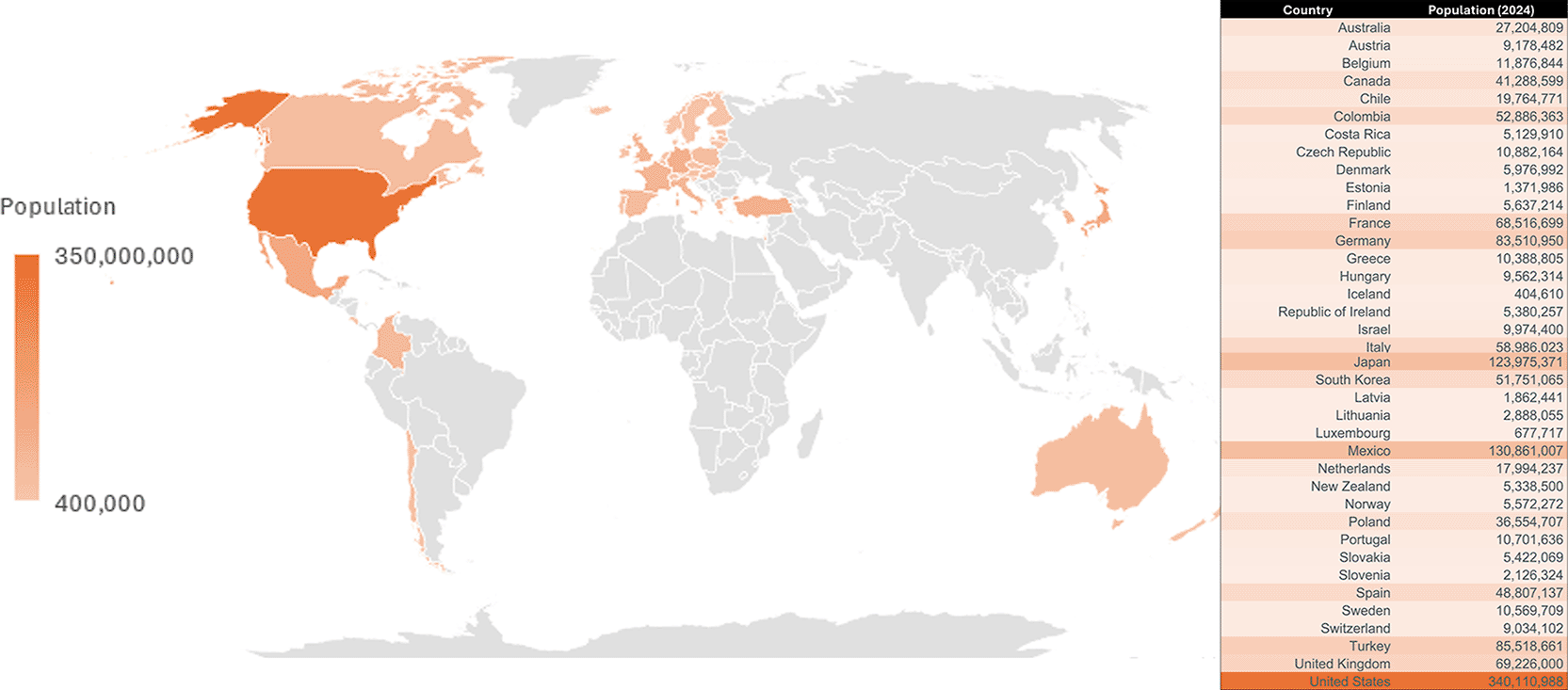
The OECD’s 38 members are: Austria, Australia, Belgium, Canada, Chile, Colombia, Costa Rica, Czech Republic, Denmark, Estonia, Finland, France, Germany, Greece, Hungary, Iceland, Ireland, Israel, Italy, Japan, Korea, Latvia, Lithuania, Luxembourg, Mexico, the Netherlands, New Zealand, Norway, Poland, Portugal, Slovak Republic, Slovenia, Spain, Sweden, Switzerland, Turkey, the United Kingdom and the United States. *Created using Microsoft Excel Map Chart tool.
Intervention(s) or exposure(s)
Exposures will include factors (modifiable and non-modifiable) highlighted to be associated with reported health disparities, such as healthcare access, antibiotic misuse, disability and comorbidity with long-term conditions or non-communicable diseases and reported interventions to mitigate against AMR BSIs.
Comparator(s) or control(s)
Populations not experiencing socioeconomic disadvantage within the same HICs.
Outcomes
The primary outcome of interest for included studies is incidence/burden of AMR BSI.
Secondary outcomes of interest for included studies are health outcomes of AMR BSI (e.g. morbidity and mortality), healthcare utilisation and direct medical costs associated with AMR BSI treatment.
Measures of association
Measures of association (e.g. odds ratios/risk differences) between incidence/burden of AMR BSI and identified risk factors for socioeconomically disadvantaged populations where these are directly reported by included studies.
Study design
Peer-reviewed observational studies conducted in populations living in HICs ( Figure 1) and national and international health surveillance reports of relevant countries/regions containing quantitative data on AMR BSI or antibiotic prescribing by socioeconomic status will be included. Interventional studies (randomised control trials) and mixed-method studies will also be included if they meet the above criteria. Grey literature from PhD and Master’s theses will also be included, provided above criteria are met. Case reports, commentaries, news articles, conference abstracts will be excluded.
Initial title and abstract screening
The title and abstract screening process is summarised in Figure 2. Ten reviewers will be involved in the study selection process via screening of abstracts and titles, and then full text. During initial registration of the study, it was intended that titles and abstracts from all studies from literature searches would be screened for inclusion independently by two authors. On an initial search and retrieval of >16,000 papers, the approach was updated such that a small sample of titles and abstracts (n = 100) will be screened by all reviewers in a validation screening for training and validation to ensure consistent study selection. Based on new internal capability to use large language models for screening, the methodology was adapted to include large language model (LLM) for screening.
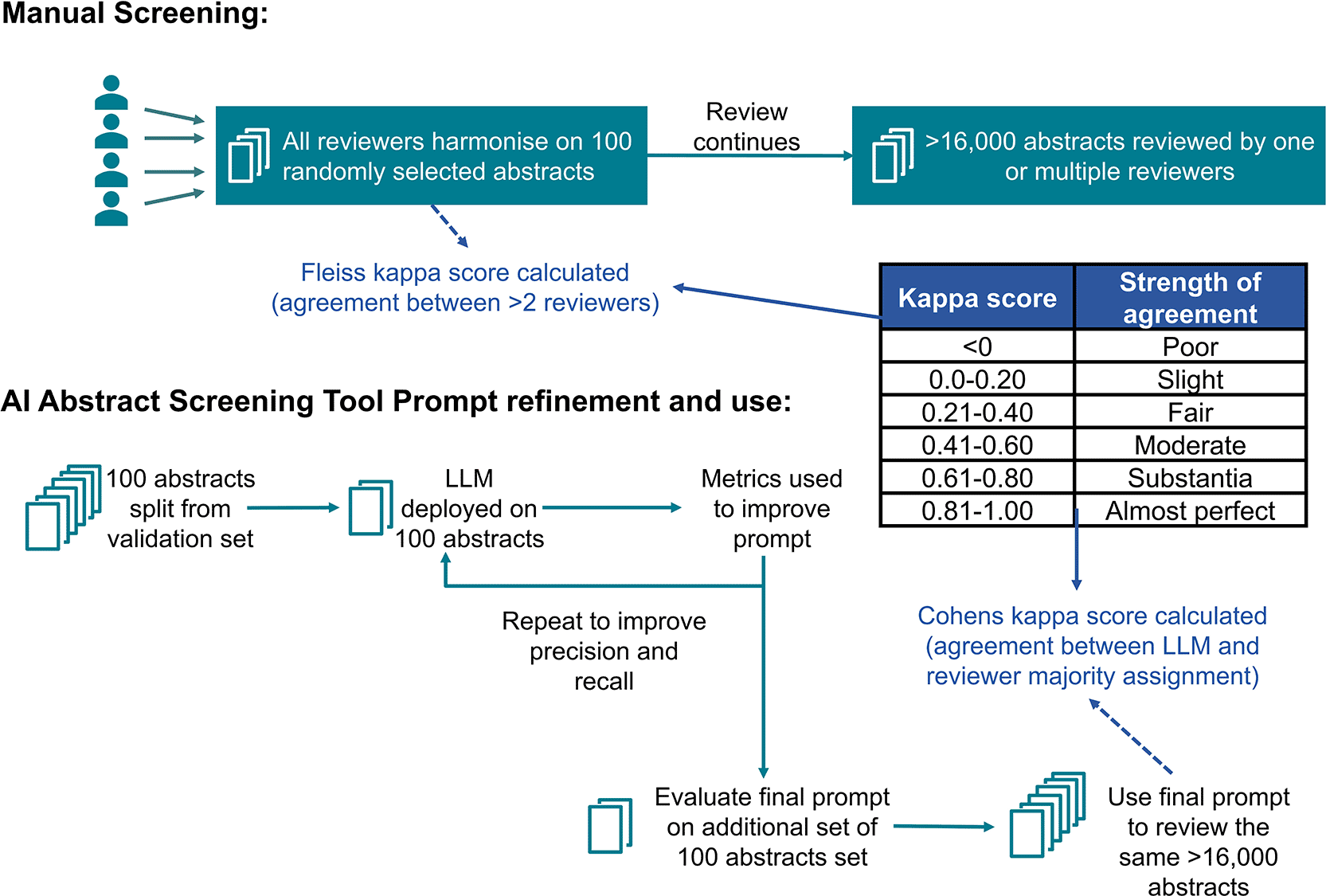
AI, artificial intelligence; LLM, large language model.
We will assess inter-rater reliability using Fleiss’ multi-rater Kappa where a test set of abstracts are independently assessed by three or more reviewers.42,43 Fleiss’ multi-rater kappa can have a value of −1 to 1 where 0 indicates no agreement beyond random chance, 1 indicates perfect agreement and − 1 indicates perfect disagreement (i.e. agreement worse than chance).44
Use of a large language model for screening
Following the completion of manual abstract screening, a secondary review stage will be undertaken using a large language model (LLM). This step has two purposes: first, to identify any abstracts that may have been inadvertently excluded during human review, and second, to contribute to a wider programme of work within UKHSA evaluating the role of LLMs in evidence synthesis.
The analysis will be conducted using a UKHSA internal tool developed to query LLMs. A free-text prompt will be drafted, asking the model to compare the abstract with the pre-defined criteria and assign a classification of either “include” or “exclude” based on the content. The Llama 3.3 70b model will be used for this task.
Prior to large-scale application, we will complete a prompt iteration process to optimise model performance. An initial set of 100 abstracts will be independently reviewed and labelled by multiple senior evidence reviewers. The majority label to include or exclude an abstract will be used as the ground truth for evaluation in prompt iteration. Across successive iterations, the LLM’s outputs will be compared to the majority expert labels, with precision, recall, and Cohen’s kappa calculated at each stage. The prompt will be refined until the model’s performance reaches satisfactory alignment with expert judgement. In line with best practice for systematic evidence review, a recall threshold of 95% is set as the primary target.
Once performance validation is complete, the finalised prompt will be applied to the full dataset of abstracts. An inclusive approach will be taken and all abstracts that are tagged for inclusion by the AI tool will also progress to full text screening.
Full text screening
Before commencing the main full text screening and extraction, each person will independently complete full text screening of a validation screening set.
Following validation, each paper will be reviewed by a single reviewer and 10% of excluded papers will be assessed by another reviewer. If more than 10% of the excluded papers are reassigned to be included, then all the articles from that reviewer will be assessed by another author.
Data extraction will be completed by two independent reviewers. Snowballing of references and citations of included studies will be used to identify additional studies that meet the eligibility criteria.
Data will be managed using the EndNote reference manager, Rayyan45 and Microsoft Excel Office software. Rayyan will be used to store extracted studies and record blinded decision-making throughout the review process. Both quantitative and qualitative data will be extracted from the included reviews to an excel workbook. Data extracted will include first author, year of publication, title, DOI, publication category (observational or interventional), socioeconomic metrics analysed (housing conditions, income status etc), primary and secondary outcomes measured (antibiotic resistance or antibiotic prescribing or both), metric used to measure any outcome (e.g. the prevalence of BSIs, the proportion of each bacteria causing BSIs and AMR rates of bacteria groups), country/region of study and whether the study examines any risk factors (and which one(s) and whether they are modifiable or non-modifiable). Interventions or preventative measures reported in study will also be extracted.
To test useability of the data extraction form, we will run a pilot test using five randomly selected studies: all reviewers will independently extract data from the same studies, followed by a consensus meeting to calibrate extraction. Reviewers will discuss discrepancies and reach a consensus before data is extracted from each paper by two reviewers independently.
Risk-of-bias assessments of each included study will be conducted independently by two reviewers. Disagreements will be resolved via discussion, and if that fails, by consulting a third reviewer. Risk of Bias in Non-randomized Studies of Interventions (ROBINS-I) will be used for cohort studies to comprehensively assess risk of bias across domains, Newcastle-Ottawa Scale (NOS) will be used for case-control studies. For Randomized Controlled Trials (RCTs) Cochrane Risk of Bias Tool (RoB 2) will be used.
For qualitative/mixed methods studies, reviewers will use the Mixed Methods Appraisal Tool (MMAT) to assess the quality of included studies.1 It includes five core quality criteria for each of the following five categories of study designs: (a) qualitative, (b) randomized controlled, (c) nonrandomized, (d) quantitative descriptive, and (e) mixed methods. Finally, we will assess the risk of bias for prevalence studies using JBI Critical Appraisal Checklist for Prevalence Studies.
Narrative synthesis will be conducted for all studies as meta-analysis may not be possible due to likely high heterogeneity (clinical, methodological, or statistical). The narrative synthesis will summarize study characteristics, populations, risk factors, and outcomes. Where possible we will group studies by types of resistant infections, risk factors, geographic regions or health inequality factors. Tables/figures will be used for explanation as appropriate.
Quantitative Synthesis (Meta-Analysis) will be conducted when there is a sufficient number of studies reporting the same outcome for a similar category of patients and when heterogeneity is low between studies. Possible measures of effect in meta-analyses can include pooled odds ratios (ORs), risk ratios (RRs), or hazard ratios (HRs) to estimate association between risk factors and AMR BSIs, pooled prevalence of resistant BSI. Pooled mean difference (MD) or standardized mean differences (SMD) will be used to combine continuous data across studies where appropriate. Stata, or R will be used to pool effect estimates.
We will report heterogeneity using two measures:
• Cochrane’s χ2 test (Cochran’s Q), which examines the null hypothesis that all studies are evaluating the same effect but may not always accurately detect heterogeneity.
• Higgins’s I2 which represents the percentage of variation between the sample estimates that is due to heterogeneity rather than to sampling error (tells us what proportion of the total variation across studies is beyond chance) will also be considered. It can take on values from 0 to 100%, with 100% being the maximum level of heterogeneity. Often, I2 values below 25% are considered low, 25 to 50% moderate, and above 75% high heterogeneity.
For studies evaluating an intervention, a list of interventions present in the available scientific literature will be prepared, alongside the pooled effect estimates from a meta-analysis of quantitative outcomes where appropriate. These findings will be further discussed with all the relevant stakeholders to frame the appropriate recommendations.
If possible, we will conduct sub-group analyses informed by the PROGRESS-Plus framework, which identifies characteristics across which health opportunities and outcomes may be unequally distributed.39,46 PROGRESS domains include Place of residence/regional variation, Race/ethnicity/culture/language, Occupation, Gender/sex, Religion, Education, Socio-economic status and Social capital. Other characteristics (‘Plus’) such as sexual orientation, age, disability and type of resistant infections will also be considered.
If appropriate we will conduct sensitivity analysis to assess the robustness of subgroup analyses and by excluding studies evaluated to have a high risk of bias. Funnel plots will be visually inspected for asymmetry, and Egger’s test will be used to assess publication bias if more than ten studies are included in the meta-analysis.
Patients with lived experience and patient support team at Antibiotic Research UK (listed under the ARISE Systematic Review Protocol Group or in the acknowledgments) helped determine the relevance and potential benefit of the topic, the priority area as well as helped shape the scope. They also fully contributed to refining the review research question and identifying outcomes of relevance. Feedback from these individuals along with additional people with lived experience of serious infection and healthcare disadvantage will be sought following extraction and synthesis of the findings to inform the interpretation of findings and prioritisation of outcomes. Patients and the public will not be involved in extraction or analysis.
Evidence on risk factors associated with disparities in resistant BSIs is currently sparse. This is partly due to variability in recording and reporting across and within peer reviewed manuscripts and surveillance reports. This impedes comparability of results and utility of available data. We will utilize the collated list of risk factors from this review to investigate their impact within linked UK health databases to model disease burden and impact on severe adverse health outcomes such as mortality. These analyses will be used to inform clinical practice and ascertain intervention targets.
This systematic review is part of a broader project which will also aim to analyse pseudonymised primary care electronic health records, assess the contribution of Pharmaceutical Public Health (PPH) in reducing inequalities with resistant infections and antibiotic use/exposure and Co-design an intervention trial protocol and policy recommendations.
Provide sufficient details of any financial or non-financial competing interests to enable users to assess whether your comments might lead a reasonable person to question your impartiality. Consider the following examples, but note that this is not an exhaustive list:
Sign up for content alerts and receive a weekly or monthly email with all newly published articles
Register with NIHR Open Research
Already registered? Sign in
If you are a previous or current NIHR award holder, sign up for information about developments, publishing and publications from NIHR Open Research.
We'll keep you updated on any major new updates to NIHR Open Research
The email address should be the one you originally registered with F1000.
You registered with F1000 via Google, so we cannot reset your password.
To sign in, please click here.
If you still need help with your Google account password, please click here.
You registered with F1000 via Facebook, so we cannot reset your password.
To sign in, please click here.
If you still need help with your Facebook account password, please click here.
If your email address is registered with us, we will email you instructions to reset your password.
If you think you should have received this email but it has not arrived, please check your spam filters and/or contact for further assistance.

Comments on this article Comments (0)