Keywords
Ethics, Governance, Primary care research, General Practitioners, Electronic health records, NHS Research and Development

Ethics, Governance, Primary care research, General Practitioners, Electronic health records, NHS Research and Development
Regulation of clinical research is essential for producing high quality evidence to inform policy and practice in healthcare. In the United Kingdom (UK), research carried out within the National Health Service (NHS) requires ethical and governance reviews before it can begin. In 2017 the four UK Health Departments and the Health Research Authority (HRA) developed a policy framework1 that committed to establishing a research environment where, ‘applying to do research is simple and getting a decision is quick, with predictable timelines’. Against this backdrop, we present a case study examining the processes involved in navigating the research infrastructure required to implement an investigation of health service use for perinatal mental health in a small cohort of women in England and Scotland that involved accessing individual electronic health records (EHRs) held by General Practitioners (GPs) in primary care.
The National Institute for Health and Care Research (NIHR) recently launched a strategy in England aimed specifically at increasing research activity within primary care.2 The strategy is timely given that less than half of GP practices in England engaged in research with the NIHR’s Clinical Research Network (CRN) during 2022/23.3 Although most GPs acknowledge the importance of research,4,5 studies across the UK, Europe and Australia suggest that administrative burden as well as lack of time, research skills, research mentoring, and career development opportunities act as barriers to GPs’ involvement. Facilitators include financial incentives, feedback on results, and relevance of the topic to GPs’ work.6–9
Researchers planning studies in primary care need to consider not only how to optimise GP engagement but must also obtain various approvals required at both national and local levels before a research study can begin. This process starts with submission of an ethics application via the electronic Integrated Research Application System (IRAS), where researchers provide details of their intended study with supporting documentation. Depending on the nature of the study, the application may require review by an NHS research ethics committee (REC) and the HRA for studies in England, and by similar bodies in the devolved nations, such as the NHS Research Scotland Permissions Coordinating Centre (NRS Permissions CC). Once these approvals have been granted, further approvals from local NHS sites need to be obtained from Research and Development (R&D) offices to confirm arrangements for research and information governance and the site’s capacity and capability to participate.
The regulatory systems overseeing NHS-based research have been criticised for inefficiencies such as delays, duplication of work, lack of proportionality, and inconsistent requirements across sites, which can adversely affect research activity and outcomes.10–13 To address such criticism, NHS research ethics and governance systems have undergone significant revisions, most recently in 2016, with the aim of providing a more streamlined service. However, a recent survey of researchers14 reports that regulatory systems for setting up health research are experienced as ‘overly bureaucratic, unclear, repetitive, inflexible and inconsistent’ (p. 8), suggesting there is still room for improvement.
The few studies that report on ethics and governance processes in UK-based health research have typically focused on large scale projects in secondary care, where most health research takes place.11,12 Others involve primary care research carried out before the 2016 regulatory systems overhaul.15,16 Given the NIHR’s commitment to increasing primary care research, it is important to examine more recent studies carried out within primary care settings to understand the specific challenges this may entail and what could be done to deliver on this aim. We present a case study concerning a recent investigation of health service use among a small cohort of women who provided consent for the research team to examine their GP-held EHRs. This paper identifies the challenges in setting up and carrying out such research, tracking the research process from ethics and governance approvals to contracting with GP practices and gathering EHR data. We also assess the extent to which setting up the research was ‘simple’ and ‘quick’.1
The EHR project was developed with PPI representatives from the National Childbirth Trust in England and the Maternal Mental Health Change Agent, a group of women in Scotland with lived experience of perinatal mental health. The research team also recruited a PPI Research Advisory Group at the Centre for Maternal and Child Mental Health at City, University of London. PPI members reviewed the design of the study and participant materials, methods of recruitment and dissemination of findings.
The case study described below examines the setting up and delivery of an NIHR-funded project that ran from June 2023 to January 2024. The NIHR-funded project aimed to use EHRs to examine (a) health service utilisation and outcomes of perinatal women with anxiety and associated disorders, (b) the trajectory of mental health prior to pregnancy, and (c) concordance of women’s self-report data with medical record data. This EHR study formed part of a programme of research following 2243 women across England and Scotland through pregnancy and birth, who were asked to complete questionnaires about their mental health at four time points. A subsample of 403 women also underwent a clinical interview, and 80 were found to meet the criteria for anxiety or an associated disorder including generalised anxiety disorder, panic disorder, phobias, social anxiety, obsessive compulsive disorder, and post-traumatic stress disorder.17 The large cohort, including the subsample, were invited to a follow-up study (Optimising care for perinatal anxiety: evaluation of health service utilisation, outcomes and costs; MAP ALLIANCE), which involved the women completing questionnaires at three time points for two years postnatally to assess mental health and health service use.18 The EHR study was one of five projects that formed the MAP ALLIANCE study. Among the subsample of 80 women who met the criteria for anxiety or an associated disorder during the clinical interview, 44 took part in the follow-up study, and these formed the sample eligible for the EHR study. The team carrying out the study were highly experienced researchers with many decades of experience in carrying out clinical research.
The plan for the EHR study was to gain the women’s consent to examine excerpts from their EHRs held by their GP, covering the ten years prior to giving birth and for one year postnatally. Once women’s consent was obtained, the research team asked for details of their GP practice. Each participant who enrolled in the study was registered with a different GP practice. The planned procedure was for research network personnel from the CRN in England and Primary Care Network (PCN) in Scotland to make contact with the GP practices to introduce the project on behalf of the research team. If the GP practice responded, the research team planned to send the GP a contract to be signed before secure exchange of patient details and medical records could take place. As the EHR contained the women’s personal identifiable information, we intended to redact such information, then extract information about women’s health service use for mental health leading up to and during the perinatal phase. The sequence of research tasks and planned timeline for the eight-month duration of the project are shown in Figure 1, in addition to the timeline within which the tasks actually took place.
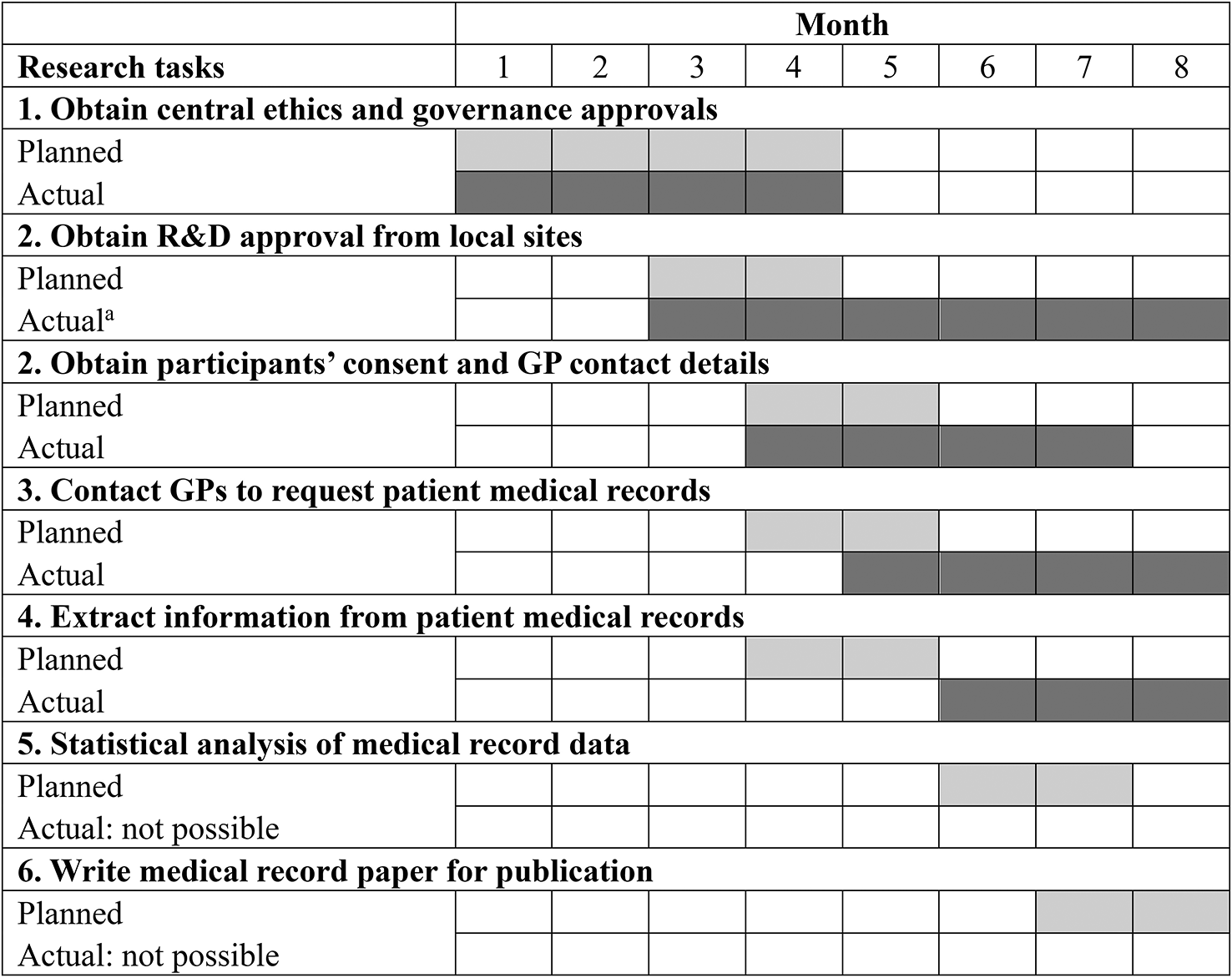
The sequence of research tasks and planned timeline for the EHR study’s eight-month duration and the timeline within which tasks actually took place. R&D: research and development; GP: general practitioner.
The EHR study received ethical approval from City University School of Health and Psychological Sciences REC (ETH2223–2212), NHS West of Scotland REC 3 (23/WS/0096), and the HRA (IRAS 324500). The processes involved in gaining these permissions for the EHR study form part of the results of the case study reported below. Informed consent for participation was obtained via electronic consent. As no personal data were collected for the case study itself, ethical approval was not necessary for the case study according to UK data protection legislation.
This case study draws on several sources of data to provide a detailed, contextual picture of the setting up and delivery of the EHR project. These data were generated by the research team as part of the EHR study and were originally used for tracking that project’s progress rather than for the purposes of the present case study. During the EHR project, we recorded the dates of submissions and approvals to and from the University REC, NHS REC, HRA, NRS Permissions CC, and R&D offices who provided regulatory and governance oversight. We used these dates in the present case study to calculate the number of working days from our submission to gaining approvals from the various bodies, excluding time the research team spent preparing replies to any queries raised by the approving organisation, consistent with ‘clock time’ as defined in similar studies.19 We systematically examined all emails to and from the regulatory and governance bodies to assess the volume of communication and to log their responses. We logged the nature of the requests made by R&D offices (e.g. for further information or for information already sent) and the outcomes of our request for approval (e.g. approval granted, not granted, not needed), and provide counts of requests and outcomes.
Dates of contact with eligible women and their GP practices were also recorded and used to calculate the numbers of women recruited and rates of GP engagement (e.g. GP did/did not respond, did/did not sign research contract, did/did not provide EHR). We also asked the local CRNs and the PCN whether the target GP practices were research active or not, defined as having participated in research via the local CRN/PCN within the last year. This information was used to compare response rates from research active versus non-research active GP practices using Fisher’s exact test carried out using IBM SPSS Statistics (Version 28).
In preparation for completing the IRAS form to apply for NHS REC, HRA and NRS Permissions CC approvals, the research team consulted widely with local CRNs, PCNs, GPs and practice managers, a PPI group, a group of academic collaborators, and other experienced primary care researcher contacts. Our aim was to identify optimal ways to conduct the study and provide these details on the IRAS form. However, we still encountered difficulties in describing the design of the EHR study within the form’s framework. For example, the IRAS form specifies that NHS sites are defined as either research sites responsible for carrying out research activities such as consenting participants, or else as participant identification centres (PICs) that identify research participants by processing personal data but do not carry out research activities. However, in our study NHS GP practice sites functioned as neither because the identity of research participants was already known to the research team as part of the MAP Alliance large cohort project, and it was the research team who would be carrying out all research activities such as gaining participants’ consent.
The research team were advised by the lead CRN to regard GP practices as research sites for completion of the IRAS submission. Consequently, the research team were obliged to submit an Organisation Information Document (OID) as part of the IRAS application. The template OID provided by IRAS is a 27-page document setting out details of research activities and responsibilities, data handling, and finances. It forms the contractual agreement between the research Sponsor (in this case the University responsible for conducting the research) and the GP practice, to be signed by both parties before any data can be collected. This document proved very difficult to persuade GPs to sign, as described later.
Once we had completed and submitted the 41-page IRAS application and 32 accompanying documents, the ethical review and central approvals were relatively efficient. After initial review, the NHS REC requested some minor changes to our participant information sheet which we duly made and resubmitted. Full REC approval was granted 24 working days after our initial submission. Approval by the HRA followed a further 23 days later. The University’s ethics committee granted approval once NHS REC and HRA approval had been granted. In Scotland, the NRS Permissions CC granted approval within 15 working days of HRA approval. Table 1 shows the number of working days taken from ethics submission to approval for each of these organisations, as well as the time taken for local R&D site approvals, described next. Obtaining the centralised permissions of the REC, HRA, and NRS Permissions CC occurred within the researchers’ planned timeline of four months.
| Approving organisation | No. working days |
|---|---|
| Central approvals | |
| NHS REC | 24 |
| HRA England | 23 |
| University REC | 32 |
| General Review Scotland | 15 |
| Local site approvals | |
| England R&D sitesa | |
| Region A | 16 |
| Region B | 43 |
| Scotland R&D sites | |
| Region C | 34 |
| Region D | 43 |
| Region E | 67 |
| Region F b | 100+ |
Once REC, HRA and NRS Permissions CC approvals had been granted, we applied to local sites’ R&D offices for local approvals. The local CRNs informed us that R&D approval for research involving GPs was not required in two of the eight regions where the eligible participants lived. We sent the Local Information Pack and related documents to R&D offices in the remaining six regions. The pack comprised the REC and HRA approval letters, the study protocol, participant information sheet, consent form, letters to GPs, the OID, costings, confirmation of study funding, and university insurance certificate.
Table 1 shows the time taken by the six remaining R&D offices to process our request for local governance approvals once we had sent them the Local Information Pack. The office in Region F had still not provided approval by the end of the study, 100 working days after our request. Processing times varied greatly, ranged from 16 to 67 working days, with a median of 43 working days (excluding Region F). After communicating over a 34 working day period with one R&D office that made multiple requests for additional information, the office decided that the study did not require R&D approval after all (Region C). The R&D delays impacted the timeline for the remaining research tasks, as shown in Figure 1, and led the research team to request a project extension from 8 to 12 months duration, which was unfunded. It also meant that we were unable to approach the GP practice in Region F where R&D approval remained outstanding.
Table 2 summarises the issues encountered in gaining R&D approval, based on the analysis of requests and outcomes from email correspondence between the research team and R&D offices. It indicates considerable variation among their responses. Issues include repeated requests for information already provided, or for documents not required such as an investigator site file, or for documents not available to the research team such as the Information Commissioner’s Office registration for the company providing the digital platform for participant consent.
Three of the six R&D offices requested changes that would have required submission of substantial amendments via IRAS and full ethical review again by the University’s REC, the NHS REC, the HRA, and NRS Permissions CC, as well as review by R&D offices once again. These requests included, for example, re-wording of the consent form and a change of procedure requiring patients rather than the research team to contact their GP for their health record. This would have added to participant burden and potentially have been a further barrier to implementation. As the study documents and procedures had already received approval from the central ethical and regulatory bodies, these changes seemed unnecessary. These amendments were also not possible to implement within the relatively short project timeframe and given delays already encountered. However, a non-substantial IRAS amendment was made on the advice of the lead CRN who suggested that we make subject access requests (SARs) to GP practices to obtain the patients’ EHRs because practices would be obliged to respond under current UK data protection legislation. This change was adopted, though not in Scotland because the research team were advised against this by the Scottish PCN who regarded it as not necessary.
R&D offices in three sites wanted the GP practice address entered on the OID before they would approve the project but would not allow us to ask women for their GP practice information until the R&D office provided project approval. After much negotiation, this stalemate was resolved finally when the R&D offices agreed that we could obtain women’s consent and GP details prior to R&D approval. We therefore contacted women to gain their consent. Of the 44 women eligible to take part, 26 (59%) consented and provided their GP contact details, which we sent to R&D offices who then granted study approval. Communication back and forth between the research team and the six R&D offices who requested the Local Information Pack involved an exchange of 171 emails in the time between our submission of the information and gaining approval. This number excludes email exchanges with the remaining two R&D offices where approval was not required, and exchanges between the research team and the CRN, PCN, NHS REC, and various University personnel in attempting to resolve the issues raised by R&D offices.
After local R&D approvals had been granted and we had obtained women’s consent and GP details, the local CRNs/PCNs teams emailed participants’ GP practices on behalf of the research team. If GPs did not respond, the research team made further attempts by email and telephone. Counting both the research team and CRN/PCN efforts, a minimum of five attempts were made to contact each GP practice. There were often long waits for telephone calls to be answered by GP practices, with researchers positioned in call queues ranging from sixth to twenty ninth place.
As shown in Figure 2, among the 25 GP practices we had R&D approval to contact, seven did not respond, two declined to take part, one of whom would only provide the medical record directly to the patient in paper format, which we did not have ethical permission for the GP to do. Sixteen GP practices responded and we issued OID agreements to them. Only five GP practices signed the OID agreement, and four of the five provided the EHR by the end of the study, representing a response rate of 16% (4/25). The number of EHRs obtained was therefore too small to allow for statistical analysis of patient EHR data as originally planned. While the rich data available in the women’s medical records offered potential for a case study, this was not the EHR project design or analytic approach that we had ethical approval for. Such an approach would require a new research ethics application which there was not funding for in the original study, so these women’s EHR data remain unused.
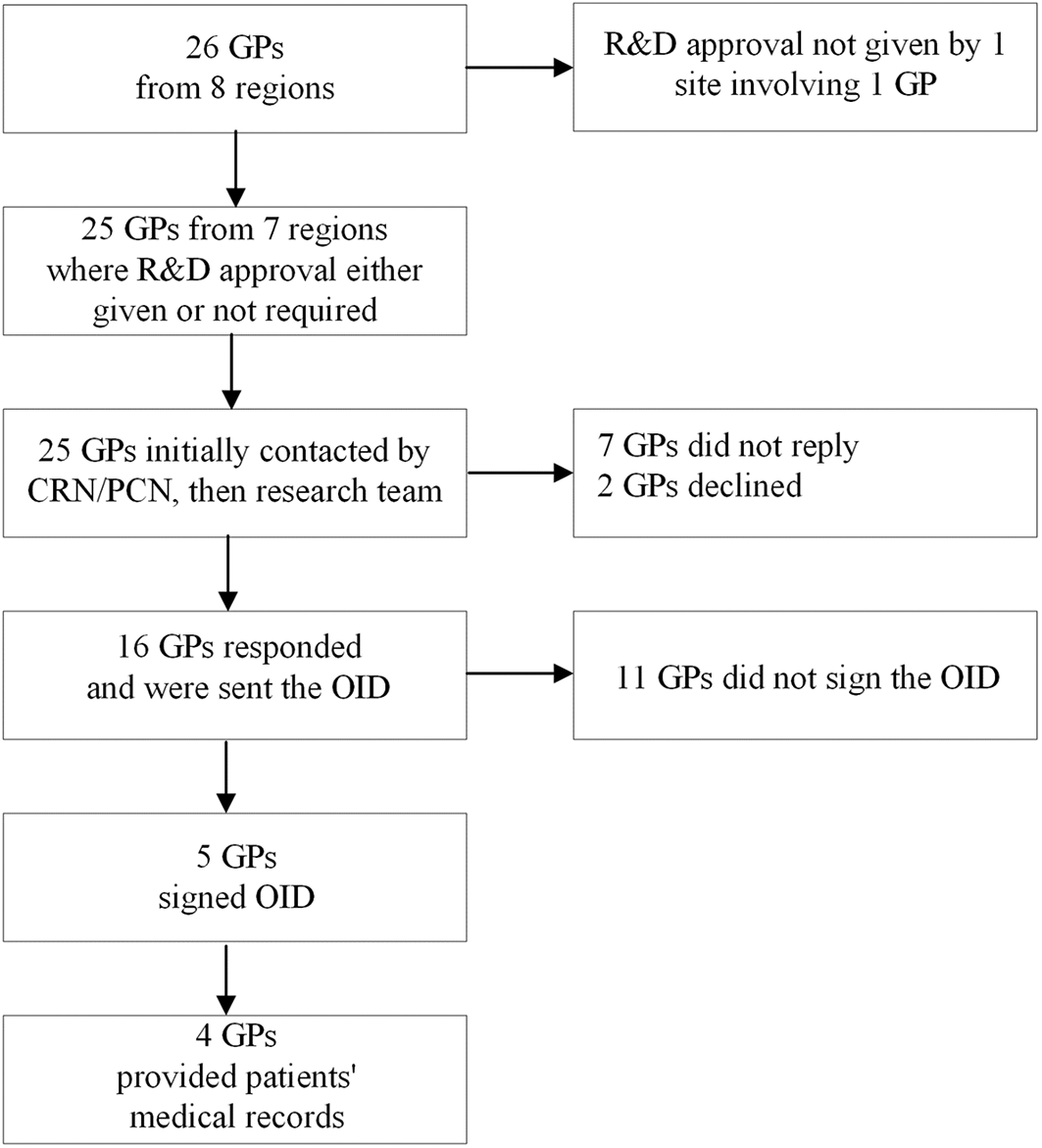
Number of GP practices contacted and GP response rates to requests for patient medical records. EHR: electronic health record; R&D: research and development; GP: general practitioner; OID: organisation information document.
Among the 25 GP practices we had R&D clearance to approach, only 7 (28%) were research active. Compared to non-research active GP practices, a slightly greater proportion of research active GP practices responded to our communication, signed the OID, and supplied the patients’ EHR, although differences were not statistically significant, as shown in Table 3.
At the study end date, the research team informed the NHS REC that it was not possible to provide study findings to participants as originally planned due to the few responses from GP practices. We wanted to inform participants of this outcome of the study, so the REC requested that we submit a substantial IRAS amendment to report this to participants. This required a full ethical review by the REC and review by the HRA. From submission to approval, this amendment took 14 working days for clearance from the NHS REC and a further 23 working days for clearance by the HRA.
This case study illustrates the challenges involved in carrying out a research project involving GP-held EHRs to assess health service use for mental health among perinatal women. We obtained ethical approval and gained consent from 26 women to access their EHRs from their GP practices, so in theory the study should have been straightforward to conduct. However, we encountered difficulties at several points in the study’s implementation. The electronic IRAS form we were required to complete for ethical and regulatory review lacked the flexibility to accommodate the design characteristics of our research study. Local R&D approvals for NHS sites were complex and time consuming to navigate, leading to delays. Contacting GP practices was also difficult and time consuming. Some were unreachable and few were willing or able to sign the research contract required before exchange of patient data could take place. These difficulties meant we were unable to obtain the patient data required to fulfil the project’s aims.
Although obtaining a favourable NHS ethical and HRA review was a relatively efficient process once the extensive IRAS form and accompanying documentation had been submitted, the form itself was more suited for use in setting out the design of clinical trials rather than our study’s design, as other researchers have reported.14,16 The requirements of local R&D offices also failed to fit with our study’s design. For example, they would not grant approval for us to contact participants to begin the study unless we provided details of participants’ GP practices, but we needed to contact participants to ask them for their GP details, which we could not do without R&D approval. Similar ‘Catch 22′ scenarios have been reported by other researchers in relation to ethics and governance approvals in primary and secondary care studies.13,20,21
The NIHR’s CRN Primary Care Strategy2 notes an absence of a clear organisational structure regarding research governance in primary care. Dickson et al.22 also notes that most R&D offices are based in secondary care trusts where personnel have limited experience of working with primary care organisations. This may explain why we found variations across regions in whether R&D approval was required, as well as differences in approach to contractual arrangements, and inconsistencies and inefficiencies relating to documents and information requested. These issues led to extended email exchanges and considerable delays, which many researchers have encountered in both primary and secondary care settings.11,12,14,16,23
The HRA’s current IRAS system claims that it replaces the need for each participating organisation in England and Wales to perform local checks of legal and regulatory compliance.24 This was not our experience. The introduction of the electronic IRAS form as a single portal for ethics and central regulatory approvals has simplified application processes but obtaining local R&D approvals remains a complex and onerous task, which the Academy of Medical Sciences10 described as the most significant barrier to health research in the UK. Unfortunately, our experience is not uncommon. Recent figures available in relation to non-commercial research studies, for example, indicate that less than half are open to recruitment within 60 days of receiving the HRA letter of approval.25 Such delays may lead to disparities in regional research activity if researchers are forced to select only those sites at which they can carry out research that meets funders’ timelines. Added to this is our experience of individual R&D offices requesting changes to the ethical approval obtained. To comply with one R&D site’s request(s) can mean starting back at square one with review by the NHS REC, University REC, HRA, and NRS Permissions CC, and a potential situation where not all R&D sites agree with the other site requirements. It is not surprising to learn that in comparison to several European nations, the UK’s research governance procedures are among the slowest.26
In terms of patient recruitment, we achieved a rate of 59% of eligible participants consenting to take part, indicating a reasonable level of willingness among participants to share their GP-held EHR for our research, which echoes rates found in other patient data studies.27 However, the same cannot be said for their GPs; only 16% of their GP practices complied with our request for their patients’ medical records. Although numbers were small and not statistically significant, we found a greater proportion of GPs responded and provided patient data if the GP practice was already research active. Creating pathways for making contact with GPs via a personal introduction through a local research network may potentially make a difference, as trusted relationships are key in collaborative working. Findings from Germany suggest GPs are more willing to engage in research if they have had prior research experience28 and if recruited via existing research contacts.8 The latter strategy was not suitable for the present study as we were targeting specific GP practices about individual patients. We did, however, adopt several strategies to enhance GP engagement that prior research suggests have been effective. This involved offering financial incentives, enlisting the support of local CRNs/PCNs for initial GP contact rather than cold calling GPs ourselves, making multiple attempts at contact, and minimising the administrative burden where possible.8,29,30 Despite this, the number of GPs providing patient data was too low for us to carry out the health service use analysis we had planned.
We were unable to ascertain the reasons for GPs’ non-response or decision not to sign the OID or provide patient data. Studies suggest that GPs may be less willing to share identifiable data compared to aggregate, anonymised data and that GPs have concerns about data breeches, misinterpretation of data, and risks to patients, healthcare professionals or the practice.5 GPs’ workload and time constraints have frequently been cited as reasons for not being able to engage with research.5–8,30 Figures for England indicate increasing numbers of patients per fully qualified GP over the last decade, with more than half of GPs reporting lack of time available to adequately assess and treat patients.31 Under these conditions, engagement in research is not likely to be a priority for GPs.
If primary care research is to increase in range and capacity, which NIHR has committed to,2 research ethics and governance systems and processes need to change and greater support is needed for GP’s to be involved in research. Changes include the need for revisions to the IRAS form to accommodate a greater range of research designs than currently fit within the form’s framework. A more proportionate contract between researchers and GP practices would be welcome for small studies as GPs appeared unwilling or else did not have capacity to read, comprehend, and sign the 27-page OID contract when being asked to provide data from a single patient registered at their practice. R&D offices need to cover GP practices and primary care services in all regions and employ standardised procedures, with training and support for R&D staff to become more knowledgeable about primary care processes. Greater integration of central and local systems would also reduce local R&D work in duplicating checks already done by the REC and HRA, allowing R&D to focus on confirmation of capacity and capability instead.
Similar suggestions concerning research governance have been made by researchers and governance officers for more than a decade,12,13,32 yet despite revisions to governance infrastructure and processes since then, our recent experience indicates these recommendations have not been fully implemented. These changes would reduce inefficiencies and the workload of researchers and NHS research infrastructure personnel, leading to better use of research time and public funds. Without changes, researchers need to extend their project timeline, which funders may need to finance.
We agree with Dickson et al. (2023) and Evans et al. (2023) in recognising the need for greater governance support and infrastructure for primary care research. It is known that primary care research activity has direct and indirect benefits for GP practices,33 yet it is currently under-resourced and failing to realise its enormous potential.9 Projects such as the EHR research that formed the focus of this case study can provide fine grained analysis of qualitative and quantitative medical record data in a way that large projects using coded, quantitative data cannot. In the context of investigating service use for mental health, the intended analysis of EHR data could have thrown light on the mechanisms by which perinatal mental health problems are detected and treated or missed. Given the significant impact of such problems on women and children,34 barriers to carrying out such research need to be addressed.
This is one of relatively few studies to provide a detailed analysis of the processes involved in setting up research in primary care. This analysis is needed to highlight factors that stand in the way of carrying out such studies, factors which need to be addressed if the UK government is to fulfil its commitment to offer a world-leading environment for undertaking research and to build research capacity in primary care settings.35 Although this is a single case study that may not be generalisable, the challenges we faced in delivering the EHR study align with researchers’ experiences in larger scale projects involving different research designs and healthcare settings.13,16
This study focused on the research and governance processes as experienced by the research team rather than the individuals working within the regulatory bodies overseeing the research. It would be beneficial to gather evidence about the research processes from their perspective. Ideally, we would also have liked to have asked GPs the reasons for their non-engagement with the EHR study. Despite our efforts, we could not reach them to find out. Building on the work of NIHR’s Primary Care Research Network, it would be useful to know more about research active GP practices and the factors that lead to successful engagement with research.
There are considerable challenges and a significant workload involved in navigating the ethical and governance processes and contractual arrangements required for carrying out projects with GP practices in primary care. We found the process neither simple nor quick. In the present case study, the difficulties encountered meant that the project’s aims could not be fulfilled within the project timeline and the opportunity to generate evidence to inform perinatal healthcare was lost. Participants’ desire to contribute their data to perinatal mental health research was thwarted by bureaucratic processes. Researchers’ and regulators’ time was wasted, and as a result, so too were public funds. Petrova et al.16 suggest researchers should provide evidence to make visible the scale of workload involved in navigating ethics and governance systems, thereby building the case for radical change to bring about improved systems. It is hoped that by providing such evidence, this case study has highlighted areas for improvements in relation to the systems and processes supporting primary care research so that future studies may be carried out in an efficient, timely, and cost-effective manner.
Provide sufficient details of any financial or non-financial competing interests to enable users to assess whether your comments might lead a reasonable person to question your impartiality. Consider the following examples, but note that this is not an exhaustive list:
Sign up for content alerts and receive a weekly or monthly email with all newly published articles
Register with NIHR Open Research
Already registered? Sign in
If you are a previous or current NIHR award holder, sign up for information about developments, publishing and publications from NIHR Open Research.
We'll keep you updated on any major new updates to NIHR Open Research
The email address should be the one you originally registered with F1000.
You registered with F1000 via Google, so we cannot reset your password.
To sign in, please click here.
If you still need help with your Google account password, please click here.
You registered with F1000 via Facebook, so we cannot reset your password.
To sign in, please click here.
If you still need help with your Facebook account password, please click here.
If your email address is registered with us, we will email you instructions to reset your password.
If you think you should have received this email but it has not arrived, please check your spam filters and/or contact for further assistance.

Comments on this article Comments (0)