Keywords
Minor stroke, complex intervention, feasibility study, secondary prevention, follow-up care, hidden impairments.

Minor stroke, complex intervention, feasibility study, secondary prevention, follow-up care, hidden impairments.
The size of the problem
Stroke is the leading cause of disability in the UK and there are 1.3 million people living with the after-effects of stroke1. Of the 150 000 strokes occurring per year, a third to a half of these are minor strokes2,3. The incidence and prevalence of stroke are increasing4 and the economic burden of stroke on society, health, social care, and the person and their family is significant5. A large population-based study in the United Kingdom showed a decline in stroke mortality rates6. However, there has been an increase in the event rates in the 35–54 age group6. The total annual societal cost of stroke in the UK is £26 billion; the largest portion of these costs, £20.6 billion, relates to the provision of ongoing care5.
The importance of the problem
Large-scale policy initiatives, such as the NHS Long Term Plan7 and the Stroke Plan for Europe8 have recognised the importance of improving stroke services. They are calling for a focus on improving life after stroke by improving how services work together and empowering people with stroke to manage their risk of further stroke and optimise their quality of life. Stroke shares many risk factors with cardiovascular disease (CVD), one of the largest contributors to health inequality9. One-fifth of the life expectancy gap between the most- and least-deprived communities is attributable to cardiovascular disease. Stroke is more common in people from South Asian and Black communities and they have the highest risk of CVD9. Stroke and cardiovascular disease can often be prevented by leading a healthy lifestyle; however, this requires communities that are supported, informed, and engaged. We also know that evidence-based treatments to reduce recurrence of stroke exist and yet evidence from a large South London Stroke Registry study has shown that the incidence of secondary stroke has not reduced since 200510. These data indicate that the implementation of secondary prevention programmes has not yet been optimised.
The James Lind Alliance research priority setting partnership ensures that the voices of people with stroke carry equal weight to those of clinicians and researchers. Their stroke priority setting partnership report identified priority research areas that align with this research11:
- What can stroke survivors do to reduce the risk of having another stroke?
- What are the best interventions to promote recovery and prevent further stroke in people who have had strokes?
- How can we recognise, assess, treat, and support people who experience hidden impairments (psychological problems, cognitive and communication changes, and fatigue) after a stroke?
What is a minor stroke?
There is no universally agreed definition for minor stroke12,13 and the terminology used, such as minor, mild, mini, and non-disabling, is confusing. In this feasibility study, we will use the tissue-based definition14 for minor stroke (a stroke visible on imaging), and in terms of impairment scores, we will recruit patients with a National Institute of Health Stroke Scale (NIHSS) score ≤ five at 24 hours post-admission. Hyperacute treatments such as thrombolysis and thrombectomy improve survival post-stroke, and increasing numbers of people are discharged home with minimal physical disability. This scenario requires further attention from healthcare services and society. People with stroke say that a life saved is a life worth living, and services need to improve and change the focus from surviving to thriving15.
This feasibility study aims to address a prevalent health issue (minor stroke and recurrent stroke) with significant associated costs to the person, NHS, and society. Improving follow-up care has been identified by policy and by those with stroke as a research priority. This study aims to understand how we could better address the needs of those who have had a minor stroke and currently only receive medical follow-up appointments.
What happens in current practice?
People with minor stroke typically have a very short length of stay in hospital or are increasingly being managed in outpatient clinics and emergency departments16. The clinical team focuses on ruling out obvious physical, cognitive, and communication difficulties. The assessment tools used are generally insufficiently sensitive to pick-up high-level impairments17,18. People consistently report that they receive insufficient personalised information prior to discharge19. The discharge summary is written with the general practitioner in mind and is often difficult for laypeople to understand. On discharge home, the person with stroke describes feeling abandoned and lost19,20. Given the lack of information provision and the inaccessible nature of discharge summaries to lay persons, it is not surprising that up to a third of people with stroke and TIA will have discontinued their medication within a year of discharge21.
Current medical follow-up appointments are brief and focus specifically on medical issues and outstanding medical investigations. Ideally, these should occur 6 weeks post-discharge, but in practice, the wait for these appointments is often longer. These appointments rarely have multidisciplinary input; therefore, other issues relating to hidden effects, adjustment to life after stroke, and secondary prevention are seldom addressed.
We conducted a scoping review to identify follow-up programmes, pathways, and services that have been developed for people after minor stroke22. Twenty-five studies were included in the analysis. Interventions often focused on education, secondary prevention, and exercise after stroke, whereas the management of hidden impairments and adjustment to life after stroke were less likely to be addressed. These complex interventions were often poorly described, and descriptions of family involvement, liaison between primary and secondary care, and underpinning psychological or behavioural theories were lacking. The review revealed that it is still unknown how best to organise services to offer personalised timely support and education to people in the community.
The objective of this feasibility study is to determine if an early, personalised, programme of care involving holistic follow-up of people with minor stroke discharged from the hyperacute stroke unit (HASU) and rapid assessment clinic (RAC) is acceptable and can feasibly be delivered within the NHS.
It will address the following uncertainties:
Recruitment rate (percentage of eligible people agreeing to take part).
Treatment adherence rate (percentage of people attending both follow-up appointments and engaging in agreed actions).
Participant retention rate (percentage of those in the intervention and control groups that complete the final outcome measurement).
Acceptability and accessibility of outcome measures.
Ability to gather self-report data to complete an economic evaluation.
Acceptability and perceived benefit of the follow-up intervention.
If the feasibility objectives meet the predefined progression decision criteria and the intervention and outcome measures are accessible and acceptable to those with minor stroke, then the next stage will be to deliver a definitive multicenter trial to determine the efficacy of this complex intervention.
A patient and public involvement group with experience of minor stroke was instrumental in the study conception and design. Three online group meetings with six attendees and the lead investigator took place to plan and design the study. A further two face-to-face meetings with people from underserved communities who did not wish to attend online group meetings were also held. Their input highlighted the challenges of online meetings, reading study documentation, and completing outcome measures on a mobile phone for those who do not have access to laptops or desktops. In the online and face-to-face meetings, the importance of the research idea was explored, the research question was agreed upon, the intervention was developed and refined, and this included participants’ input shaping the frequency and content of the follow-up appointments. An underpinning theory was presented, and its relevance and understandability were critiqued by the group. Outcome measures originally considered were excluded based on group feedback, and the final measures were agreed upon.
To improve the inclusivity of this research, perspectives and feedback from a diverse range of people were obtained. This included presenting the planned research to a group of ethnic minority women from an underserved community. Through this group, an improved understanding of the barriers and concerns of this community regarding follow-up care was developed, and recruitment processes were adapted accordingly. Our team was exposed to different health belief systems and attitudes towards disease and recovery. In addition, a group member reviewed the information sheet and the consent form. Based on her feedback, an accessible supplementary information sheet was developed, and improvements were made in the consent form.
Engagement with acute and community-based stroke clinicians in localities beyond our own confirmed that the lack of structured follow-up care for people after minor stroke also exists in other services. We learned about clinical services that are attempting to deliver different models of follow-up care to complement the narrow focus of stroke medical follow-up appointments. Addressing secondary prevention, adjustment to life after stroke, and assessment of ongoing therapy needs requires additional multidisciplinary staff in the clinic. Services described difficulties in obtaining substantive funding to enable stroke follow-up clinics to provide more holistic and personalised care. We are also engaged in an international collaboration with other researchers in this field. We are conducting a systematic review to collate the latest evidence on the lasting impairments experienced after minor stroke and TIA23.
The current trial is a two-armed, parallel group, randomised, single-center, feasibility study with embedded qualitative interviews. Participants and the outcome assessor, a specialist occupational therapist (OT), will not be blinded to the intervention. The study flowchart is shown in the Consort Diagram Figure 1.
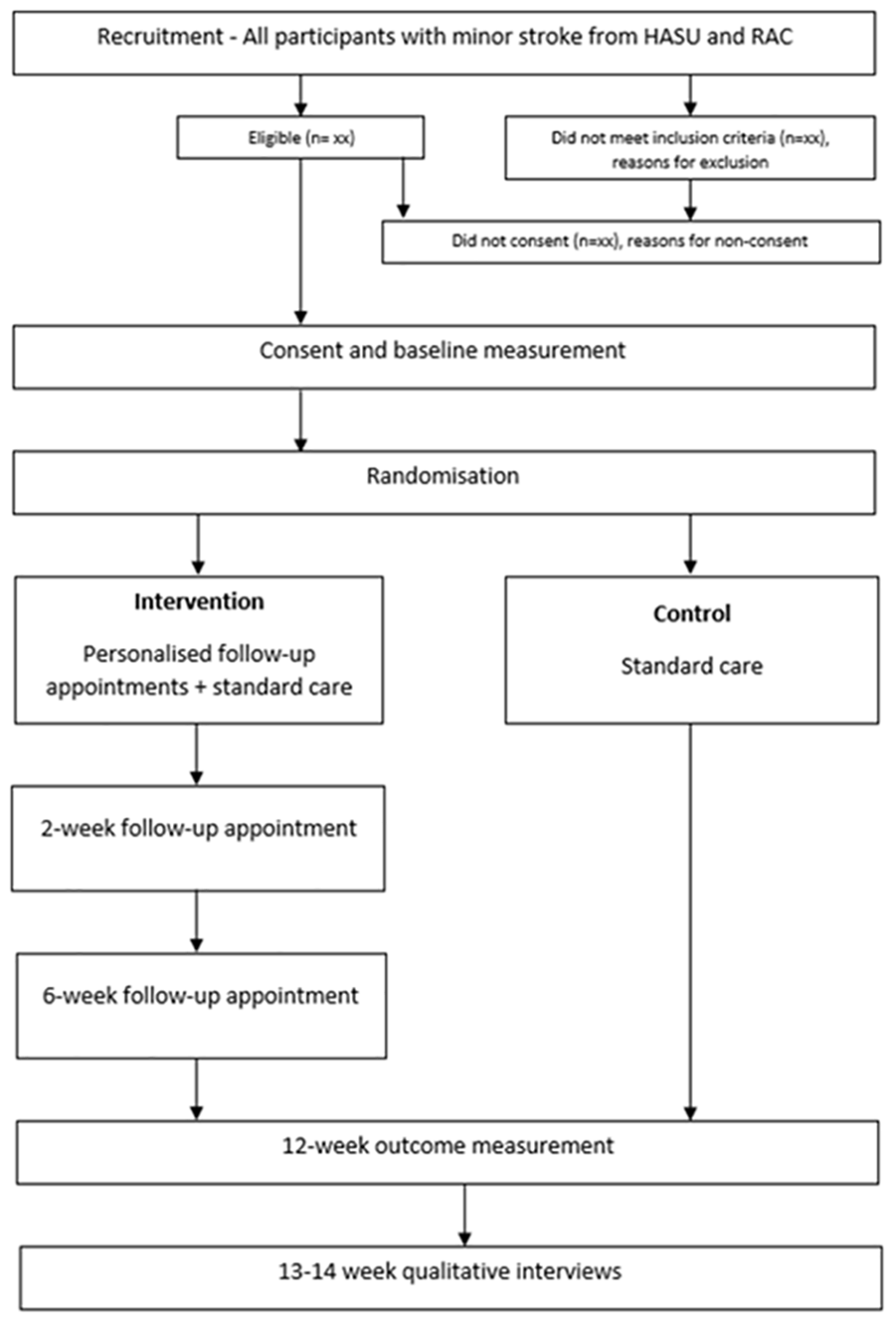
This protocol has been reported in accordance with SPIRIT guidelines24. The template for the intervention description and replication (TIDieR) checklist was used to report the intervention details25. These documents can be found in the Open Science Framework Repository. https://osf.io/gnw57/
Recruitment: Participants were recruited from a HASU and RAC. People attending the RAC are referred to the clinic via their GP or may have been seen in the emergency department and discharged home but with follow-up investigations to be completed in the clinic. Both the HASU and RAC are located in a high-density, ethnically diverse, urban environment.
Outcome measurement: Baseline measures for both groups will be conducted by the OT in the hospital where possible, but if the person is discharged quickly or seen in the RAC, then they will be conducted at the persons home or in the clinic. The final outcome measurement location will be agreed upon by the participant and could be in their home or in the hospital.
Intervention: Participants will determine their preferred location for follow-up appointments. They will be offered in-person appointments in the outpatient clinic at the hospital, appointments over the telephone or video call, or in their home or neutral venue in the community.
This personalised approach is based on PPI input into the study design and aims to increase the inclusivity of the study. Online appointments introduce digital exclusion and favour younger participants. On the other hand, having to travel to the hospital may be a deterrent for older participants or those who are back at work.
ClinicalTrials.gov - NCT05897905 (22/05/2023)
Accessed at: https://classic.clinicaltrials.gov/ct2/show/NCT05897905
Protocol V4 (31/03/2023), approval date 21/07/2023.
Substantial amendment - SA01 – Protocol V5 (26.10.2023), approval date 06/02/2024.
Inclusion criteria
Adult ≥18
Clinical or radiological diagnosis of minor stroke from a stroke consultant.
Admitted to HASU or seen in RAC.
Pre-admission modified Rankin Score (mRS) of 0-3 (see table below), with no formal package of care prior to stroke. Table 1. Modified Rankin Scale scores26
Discharge mRS of 0-3.
No onward referral to community therapy team or for package of care.
Has capacity to consent.
Family member inclusion criteria for qualitative interview (SA-01)
Family members or partners who participated in and/or supported the researcher with the recruitment process, intervention delivery, and outcome measurement.
Exclusion criteria
Any serious comorbidities that would impact a person's ability to participate in follow-up appointments and outcome measurement.
Insufficient English to engage in intervention and outcome measures, and no family or friends to support with this.
Not resident in England.
Pregnant women.
Enrolled in another interventional trial that does not allow co-enrolment or observational studies where the burden of assessment may be too high.
The researcher will review the electronic records of all new admissions to the HASU. If the patient meets the study criteria, eligibility is confirmed by the assessing team. This process is followed for weekend admissions. If the researcher is unable to attend the ward in person prior to discharge, then consent for contacting the patient post-discharge will be obtained and documented. In the RAC, potential study participants will be identified by stroke clinical nurse specialists, and consent is obtained for the researcher to contact the person following discharge. Consent for participation in the study will be completed by the researcher either on the ward or in the clinic or at the participant’s home.
Data will be collected to capture the baseline and clinical characteristics of those approached for study involvement as well as their ethnicity, and level of education (Table 2).
Strategies to promote recruitment: Therapy staff within the stroke service are rotational; therefore, regular study updates will be given to the therapy team by attending their fortnightly team meetings. A template of what to write in the patient record when approaching a potential study participant will be provided, and the study inclusion and exclusion criteria will be clearly displayed on the therapy information board on the ward.
The recruitment target is five participants per month from the HASU. This target is based on pilot data; people with minor stroke were recruited from the HASU over a three-month period to a two-week follow-up study involving online cognitive testing27. No preliminary data gathering was conducted at the RAC, but time was spent in the clinic to understand what a clinic appointment involves for the patient. A smaller proportion of people who attend this clinic will receive a diagnosis of stroke; therefore, the recruitment target is set at two participants per month.
Participants will be randomised to the intervention or control group by simple randomisation using a 1:1 allocation ratio and opaque sealed envelopes to ensure allocation concealment. Randomisation will be stratified by recruitment location to ensure treatment assignment is balanced between the two groups within each location.
Progression criteria related to feasibility outcomes were identified. We plan to recruit 60 participants (30 in the control group and 30 in the intervention group) in line with sample sizes for similar feasibility studies28. Feasibility studies need to be much smaller than full-efficacy trials to be considered worthwhile. The feasibility outcome “participant retention” is the percentage of 60 participants who complete outcome measurements at 12 weeks. Using a binomial probability confidence interval (CI) calculator with a sample size of 60, the 95% CI on proportions will have widths no greater than 37% (based on the 50% proportion having a 95% CI from 37% to 63%. Proportions further from 50% would have narrower CIs; for example, 90% has a 95% CI from 79-96%, so this CI has a width of 17%. Free Binomial Probability Confidence Interval Calculator - Free Statistics Calculators (danielsoper.com)
The width of these CIs provides a reasonable balance between the cost and practicality of patient recruitment. The feasibility outcome “recruitment uptake” would have narrower CIs (since 60 is the numerator with a larger denominator). There is no relevant power calculation because the main outcomes are proportions rather than anything that can be assessed using hypothesis testing.
The progression criteria targets are described in Table 3. They provide a guide through the use of a predefined traffic light system of red (stop), amber (amend, modifications needed), and green (proceed), as to whether the study could proceed to a future definitive trial. The targets may seem ambitious, but due to the limited number of appointments and personalised nature of the intervention, where participants do not need to attend appointments at the hospital, it is anticipated that this may improve recruitment.
It will be made clear to all potential participants through the consent form and discussions that they are free to withdraw from study participation at any point, and that they are not required to provide a reason for this.
The intervention is a personalised, holistic follow-up programme of care. It has been developed for a diverse population with differing stroke aetiologies and social contexts and for this reason was guided by the NIHR/MRC framework for complex interventions29 alongside the framework of actions developed by O’Cathain and colleagues30. The behavioural theory chosen to underpin this intervention is self-determination theory (SDT). This theory aims to increase autonomous motivation, which has been shown to be associated with improvements in initiating and sustaining healthy behaviours31–33. The techniques described by SDT aim to support a person’s three basic psychological needs for competence, autonomy, and relatedness34. It highlights the importance of considering a person’s biological, social, and cultural contexts, which is critical given the diversity of the stroke population. The follow-up appointments will address knowledge gaps, provide support, education, guidance, signposting, and onward referrals as needed. A detailed description as per the TIDieR guidelines for the intervention and control groups is provided in the Open Science Framework (OSF) data repository. https://osf.io/gnw57/
A training manual for those delivering the intervention has been developed and can be found in the OSF data repository in the intervention delivery folder, accessed here: https://osf.io/gnw57/
The manual describes the principles of SDT and how the techniques can be employed during follow-up appointments. It also describes the key knowledge and skills that are required by the person delivering the intervention and outlines the domains of functioning to be covered in the assessment conducted at the follow-up appointments. Topic areas for discussion in each follow-up appointment are listed, and guidance is provided when onward referrals are needed. Links to relevant informational resources that the participant may require are included in this manual, as well as what to consider if referring to local community stroke services. An intervention delivery checklist has been created to check off all the actions that need to be taken from recruitment through to outcome measurement at 12 weeks. This is also available in the extended data.
For this feasibility study, the lead researcher, who is an experienced stroke occupational therapist, will deliver the intervention. The intention, however, is that this intervention could be delivered by other allied health professionals (AHPs) or nurses with experience working with the stroke population. Therefore, the training manual is designed to address the training needs of both nurses and AHPs. This will be reviewed by nurses and AHPs to obtain feedback on the content, layout, and general utility in supporting delivery of the intervention.
The mode of delivery of the intervention will focus on inclusivity. Follow-up appointments will be offered face-to-face in person at the hospital, participant’s home, or a neutral venue in the community, or as a telephone or video call appointment. The preferred modality will be noted and will inform a future definitive trial.
The intervention is composed of two follow-up appointments and telephone access to the researcher to address questions that may arise between appointments. Follow-up appointments will occur at 2 and 6 weeks after recruitment and will last from 30 to 60 min, depending on the need.
Appointment 1 (two weeks after discharge):
- Understand the participant’s priorities and expectations for the appointment.
- Review functional and psychosocial status. This will provide information on the early impact of stroke, determine what support the participant has in the community, and provide insights into how they are adjusting to their new diagnosis.
- Address the participant’s knowledge gaps regarding stroke, medication, and secondary prevention.
- Agree onward referrals if indicated and action plan for participant and clinician.
- Written summary sent to GP.
- Summary of discussion points provided to participant when required or requested.
- Complete an early post-stroke quality of life measure (patient-reported outcome measurement information system, PROMIS10)
Appointment 2 (six weeks after discharge):
- Understand the participant’s priorities and expectations for appointment.
- Review actions from first appointment.
- Address any new or persistent information gaps.
- Review functional and psychosocial status, with a focus on potential hidden impairments that may impact return to work, activities of daily living, relationships, or general well-being.
- Agree onward referrals and action plan.
- Summary of discussion points provided to participant when required or requested.
- Written summary and plan to be sent to GP.
Tailoring
The content and direction the appointment takes is guided by the manual, but will be tailored by the participant’s own priorities, knowledge gaps, and functional difficulties experienced since their stroke. Information delivery will be tailored to general literacy and health literacy. The participants’ family members or partners will be able to join follow-up appointments if they wish.
Baseline and outcome measurement
Both groups will have the option of baseline and outcome measurements being conducted in the hospital, at their home, or a neutral venue in the community. Ideally, baseline measures for those recruited from the HASU will be conducted on the ward prior to discharge; however, due to the short length of stay, this will not always be possible. Measurement will be taken by the OT delivering the intervention. For those in the control group who have unmet information needs or require onward referral or support, the necessary referrals will be made after completion of the outcome measurement. Participants will be invited to participate in qualitative interviews after the 12-week outcome measurement period.
Control group
The participants in the control group will receive standard care. This involves the provision of a printed information sheet on therapy services that exist in their locality and referral to the Stroke Association Connect service, which makes telephone contact with the person after discharge. A six-month stroke review referral is also sent, but currently, this is not consistently provided across all localities.
The time points at which these measurements and secondary feasibility outcomes are taken are presented in the schedule of events table (Table 4).
1. Recruitment rate (Time point 0 = T0): Proportion of participants randomised relative to the total number meeting the inclusion criteria. Reasons for declining participation will be recorded. The ability to gather baseline and EDI data will be noted as will acceptability of randomisation.
2. Treatment adherence rate (Time point 3 = T3): Proportion of participants in the intervention group who attend both follow-up appointments. When people drop out reasons for this will be obtained.
3. Participant retention rate (T4) - Proportion of all participants that complete the follow-up questionnaires.
1. To complete patient reported outcome measures and review their acceptability, accessibility, and responsiveness to inform the primary outcome for a main trial.
i. PROMIS10 - Patient-reported outcome measure information system. This quality-of-life measure was chosen because it has been found to be more sensitive in people who have mild strokes35,36 (T1 and T4).
ii. HCCQ - Health Care Climate Questionnaire Short Form – This is a measure of self-determination, particularly autonomy support in health care appointments37 (T0 and T4).
iii. PHQ9 – Patient Health Questionnaire – measure of depression36,38 (T4).
iv. GAD7 – Generalised Anxiety Disorder – measure of anxiety39 (T4).
v. PEI - Patient Enablement Instrument – measures whether an appointment with a healthcare practitioner impacts a person’s ability to manage their illness40 (T4).
2. To assess stroke knowledge, questions used relate to information that should be provided to patients in their personal stroke record available at: https://www.stroke.org.uk/sites/default/files/professionals/jn_2223-055_-_personal_stroke_record.pdf This document (patient passport) was developed by the Stroke Association in collaboration with stroke survivors, their families, clinicians, and NHS England. The stroke knowledge questions that will be asked are:
i. What type of stroke did you have?
ii. What treatment have you had for your stroke?
iii. Where in your brain did the stroke happen?
iv. How has your stroke affected you?
v. How can you reduce your risk of another stroke?
vi. What new medication are you on?
vii. What are the medications for?
viii. What should you do if you experience symptoms of another stroke?
3. To complete the cognitive screening assessment, the Montreal Cognitive Assessment41,42 (MoCA) will be conducted in person where possible otherwise over the telephone or video call (T-MOCA43) (T0 and T12).
4. To determine the feasibility of gathering self-reported health and social care usage data (attendance at GP and A&E for stroke-related concerns and new packages of care).
5. To complete qualitative interviews (T5).
6. To determine treatment costs based on appointment, administration and travel time.
7. To note which mode of follow-up is most preferred by participants and whether outcome measures can be effectively completed over the telephone.
8. To obtain feedback on the training manual and intervention delivery checklist from therapy and nursing staff.
Participants in the control and intervention groups will be invited to participate in qualitative, semi-structured interviews. The focus of this will be to explore and understand the experience of receiving a diagnosis of stroke and life after stroke for those who received the intervention and those who did not. We will also seek to understand whether the intervention delivered was acceptable and how it could be improved. We will aim to conduct interviews with 15 to 20 participants.
Purposive sampling will be used to ensure that the views of participants from both groups and with a variety of demographic characteristics and experiences after their stroke are obtained. The interviews will be recorded and transcribed verbatim. The interviews will be face-to-face, either on video calls, in the clinic, or at the person’s home. A topic guide will be used, and the interviewer will maintain a field diary to capture reflections and thoughts.
Alongside the study participants, family members that have supported the participant in the research study will be invited to participate in a separate interview. We will aim to conduct at least five interviews with family members.
The data analysis approach will be thematic using the six phases described by Braun and Clarke44. This involves familiarising oneself with the interview transcripts to obtain initial ideas and thoughts and then producing initial codes from the data. Following this, the researcher looks more broadly at the codes to find themes in the data, comparing and contrasting findings across interview transcripts to consider any commonalities, differences, patterns, expected, and unexpected themes. These will be reviewed, using all supporting data to check for credibility and coherence, before refining the final themes and confirming how they interact and relate to each other prior to writing up the findings44. Data will be analysed inductively, but emerging themes will also be considered in relation to Self-Determination Theory to assess the coherence of findings with the theory underpinning the intervention. Computer-assisted qualitative data analysis software (NVivo 14) will be used to support the analysis. Techniques to ensure rigour, such as reflexivity, will be used and reported to understand the researcher’s contextual, personal, and interpersonal influences on the research process45. Peer reviewing of data with a clinical and academic colleague will be conducted, and where perspectives expressed are not clear during data analysis, these will be checked with the participants. Observations and comments noted during the follow-up appointments and the final outcome measure appointment will be referred to during data analysis to add further contextual information to the analysis.
All participants will be assigned a participant ID at the point of consent. Personal data and linking codes will be stored in separate locations using encrypted digital files and password-protected folders. The Case Report Forms (CRF) and questionnaires will only contain participant ID. Paper consent forms, pseudonymised CRFs, and questionnaires will be stored in secure NHS offices in locked cabinets. Scanned copies of the paper consent forms and questionnaires will be stored on secure NHS servers. All data will be collected in accordance with the Data Protection Act 2018 and in line with general data protection regulations (GDPR). Consent will be sought and in place for monitors and auditors from regulatory authorities to have access to identifiable information where relevant.
Encrypted NHS devices will be used to record the interviews. Transcription of qualitative interviews will involve the transfer of voice recordings to a transcription service that has a data-sharing agreement with the sponsor. The participant ID will be used to label the audio files.
All study documentation will be archived in accordance with the sponsor policy. Data will be destroyed after 5 years.
The data obtained will be reported descriptively, and analysis will be conducted using Statistical Package for Social Sciences (SPSS) version 29. The primary analysis will focus on the feasibility outcomes and be presented as proportions with confidence intervals. The monthly recruitment rates will also be noted. Retention data will be noted by group (control and intervention) as well as overall and presented as proportions.
Baseline demographics and clinically relevant data will be reported to enable the understanding of participant characteristics and to enable other services to draw comparisons with their patient demographics.
The responsiveness of the outcome measures to change will be reviewed using confidence intervals for changes from baseline in each group and for between-group comparisons of changes. The numerical results and perceived relevance of the outcome measures used in this feasibility study will be considered. These results will be considered alongside the qualitative findings to illuminate any individual or contextual insights from interviews that help to explain quantitative data. All of these will inform the choice of the primary outcome for a subsequent definitive trial evaluating efficacy.
The economic evaluation and feasibility of self-reported healthcare use will be explored. We will consider the treatment, administration, and clinician travel time to estimate the cost of delivering the intervention. Healthcare usage (GP and A&E attendance for stroke-related concerns) will be obtained from both groups. Self-report data will also capture those that are back at work in their previous capacity, as well as those that have not returned to work or are working in a part-time capacity. We will also capture data where packages of care have been started to support someone at home following their stroke.
The study is sponsored by Imperial College Healthcare NHS Trust (ICHNT) and has been reviewed and received approval by the Imperial College London and ICHNT Joint Research Office. The principal investigator will ensure day-to-day management of the trial and will be overseen by the Chief Investigator. The study management group will have an independent chair and two lay members. It will monitor the progress of the trial, recruitment rate, adherence to the protocol, and completion of outcome measures to ensure that the study is progressing as planned. An independent data-monitoring committee is not indicated.
The study may be subject to audit by Imperial College Healthcare NHS Trust under their remit as sponsor and other regulatory bodies to ensure adherence to Good Clinical Practice (GCP) and the UK Policy Framework for Health and Social Care Research.
Dissemination will be targeted and tailored to different audiences. The findings of this feasibility study will be disseminated in a plain English summary to study participants at two time points: at the end of recruitment and after data analysis. Dissemination to other key stakeholders will occur via team updates and presentations of findings in local, regional, and national stroke meetings. Another avenue for dissemination will be through professional networks and social media platforms. The findings of the feasibility study and qualitative interviews will be shared at relevant conferences and in open-access peer-reviewed journals to gain the maximum impact.
The study received ethical approval from the Hampstead Research Ethics Committee (REC) and the HRA and Health and Care Research Wales on 24/05/2023. REC reference number: 23/LO/0424. The IRAS Project ID is 321584. Documas No: 23CX8211. The NHS confirmation of capacity and capability was received on 21/07/2023.
A substantial request for protocol amendment was submitted on 01/11/2023. This involved adding the Patient Enablement Index to the outcome measures at 12 weeks and including caregivers or family members in the qualitative interviews. If a family member is involved in the recruitment process, baseline measurement, and follow-up appointments, they will be invited to participate in a qualitative interview at the end of the study.
The researcher will go through the participant’s information sheet and address any questions that arise. Time will be allowed if the potential participant wants to talk to the family or needs more time to consider their involvement in the study. Translators will not be used, but for those with limited English proficiency, family members who speak sufficient English will be used to support the consent process.
Feedback from an underserved community highlighted the fear and distrust that existed in these communities when presented with complex participant information sheets. An accessible supplementary information sheet will be used alongside the full participant information sheet and consent form to improve the accessibility of the study information. The consent form, accessible supplementary material, and participant information sheet can be found in the Open Science Framework data repository https://osf.io/gnw57/
Provide sufficient details of any financial or non-financial competing interests to enable users to assess whether your comments might lead a reasonable person to question your impartiality. Consider the following examples, but note that this is not an exhaustive list:
Sign up for content alerts and receive a weekly or monthly email with all newly published articles
Register with NIHR Open Research
Already registered? Sign in
If you are a previous or current NIHR award holder, sign up for information about developments, publishing and publications from NIHR Open Research.
We'll keep you updated on any major new updates to NIHR Open Research
The email address should be the one you originally registered with F1000.
You registered with F1000 via Google, so we cannot reset your password.
To sign in, please click here.
If you still need help with your Google account password, please click here.
You registered with F1000 via Facebook, so we cannot reset your password.
To sign in, please click here.
If you still need help with your Facebook account password, please click here.
If your email address is registered with us, we will email you instructions to reset your password.
If you think you should have received this email but it has not arrived, please check your spam filters and/or contact for further assistance.

Comments on this article Comments (0)