Keywords
Bedrails, Adults, Hospital, Community, Own Home, Nursing Home, Clinical Drivers, Harm, Falls Prevention, Risk, Ethics, UK, US.

Bedrails, Adults, Hospital, Community, Own Home, Nursing Home, Clinical Drivers, Harm, Falls Prevention, Risk, Ethics, UK, US.
In revising the manuscript, we undertook structural and editorial refinements in response to reviewer feedback. These included structural tightening and consolidation of overlapping paragraphs to improve coherence and flow, rephrasing for clarity and precision, and targeted movement of content between sections to ensure that material was presented in its most appropriate analytic context. In addition, references were reviewed and standardised to ensure consistency and compliance with Vancouver style. The changes reflect refinement rather than a change in the substantive findings or conclusions of the review.
See the authors' detailed response to the review by Safiyyah M. Okoye
Bedrails form a barrier along the edge of a bed, and are available in a range of designs, lengths, and materials. In the United Kingdom, when bedrails are prescribed with a clear medical purpose they are classified as a medical device.1 Bedrails are commonly used to support adults by reducing the likelihood of falls from bed due to a slip, slide, or roll.1,2 Bedrails may be considered in situations such as a person transitioning from a double to single bed,3 when undertaking functional tasks while sitting up in bed (e.g. eating and drinking, or communicating), or when bedrails are recommended by the manufacturers of moving and handling equipment. Examples of these include patient repositioning systems that may incorporate slide sheets, lateral turning systems that are positioned beneath or above the mattress, or repositioning systems designed for use by a single carer in combination with an overhead hoist. In the UK, bedrails must never be used as a physical restraint in an attempt to limit or prevent a person’s ability to exit their bed,1,4,5 or as a turning aid where a person pulls on the rails to reposition themselves.2
Despite their intended purpose, bedrails are associated with recognised risks. In August 2023, the UK Medicines and Healthcare products Regulatory Agency (MHRA) issued a National Patient Safety Alert (NPSA) drawing attention to risk of death from entrapment or entanglement in bedrails, particularly in nursing homes and in a person’s own home.4 Between 1st January 2018 to 31st December 2022, 18 deaths and 54 reports of serious injuries related to bedrails and associated equipment were reported to the MHRA,1 highlighting the potential for serious harm associated with bedrail use.
These risks translate into complex decision-making in practice and are further compounded by reports of civil and clinical negligence claims relating to inpatient falls, both when bedrails are used and when they are withheld.6–8 As a result, clinicians are required to reconcile patient safety, autonomy, and risk within specific care contexts, alongside the availability of bedrail risk mitigation strategies such as in-person supervision or observation. These decisions are made while navigating organisational and medico-legal pressures that influence how prescribing decisions and made and justified. The capacity for organisations to learn from adverse events is further constrained by inconsistent documentation and variability in incident reporting, root cause analyses, and patient records.8 Together, these factors may limit reflective learning and contribute to the persistence of established practices, rather than supporting iterative improvement in the quality and safety of patient care.
Nevertheless, the evidence underpinning bedrail use remains limited. A 2007 systematic literature review exploring the use of bedrails in hospitals reported that the majority of included studies were small, descriptive, or opinion based, with no randomised controlled trials identified, resulting in an absence of robust evidence regarding effectiveness or safety.2
In 2023, the NPSA required all UK organisations involved in bedrail use to review and update all bedrail policies and procedures.4 Internationally, ensuring access to safe and effective medical devices is a strategic priority of the World Health Organisation.9 In this context, an up-to-date scoping review was undertaken to identify and map existing evidence on the use of bedrails to support adults and identify gaps in the literature that may inform future research and clinical practice.
This study was informed by concerns raised by family members and caregivers with a lived experience of bedrail use. In August 2023, the NPSA required that all individuals using bedrails in the UK be reviewed and associated risk assessments updated within six months.4 The review of existing bedrail prescriptions prompted significant concern among some stakeholders, including bedrail users and their families, regarding potential impact on care arrangements and personal autonomy.
Throughout this project, individuals who use bedrails, their representatives, and care partners were consulted. They confirmed the importance of this topic, noting that decisions regarding bedrail use may substantially affect 24-hour care planning and financial cost of care, equipment requirements, and perceived restrictions on personal liberty. Contributors also reported that decisions relating to bedrail use could be a source of emotional distress, further supporting the relevance and necessity of investigation.
A scoping review was conducted according to the Preferred Reporting Items for Systematic Reviews and Meta-Analyses extension for Scoping Reviews guideline.10
The review protocol was developed a priori and is available via the Open Science Framework (OSF) repository.11
Informed by the findings of the previous literature review,2 broad search terms were used to capture the diversity of literature on bedrail use. The S.P.I.D.E.R framework12 was selected to support the development of an inclusive search strategy.
Inclusion
Sample: Adults
Phenomenon of Interest: Bedrails
Design: Studies where the primary focus was the use of bedrails. No restrictions were placed on publication date or language.
Evaluation: Any
Research Type: Any
Exclusion
The following electronic databases were searched: MEDLINE and EMBASE (via OVID), EMCARE, Cochrane Library, CINAHL (via EBSCOhost), and the Bielefeld Academic Search Engine. Backward citation tracking of key documents was undertaken. Gray literature13 was identified using Google Scholar with the intention of capturing policy documents, professional guidance, audit reports, theses, and organisational publications not indexed in bibliographic databases. Key authors were contacted to request additional evidence where relevant material was not publicly available. The full search strategy, conducted on 6th March 2024, is provided in the appendices hosted in the OSF repository.14 Searches were updated on 7th January 2026.
“Bed rail*” OR “bedrail*” OR “side rail*” OR “siderail*” OR “cot side*” OR “cotside*” AND “adult*” OR “older person*” OR “elderly” AND “community” OR “dwelling” OR “home” OR “care home” OR “residential home” OR “nursing home” OR “supported living” OR “hospice” OR “hospital” OR “unit*,”
Database search results were exported to EndNote v.21, duplicates removed and records subsequently uploaded to Rayyan15 for screening. Title and abstract screening was conducted independently by two blinded reviewers using predefined eligibility criteria. Owing to time constraints, full-text screening was primarily undertaken by one reviewer, with a second reviewer independently screening 10% of full text articles to assess consistency and reliability. As agreement between reviewers was consistent, this proportion was maintained for the remainder of the screening process. Any discrepancies were resolved through discussion, and involvement of a third reviewer was not required.
Data were extracted from included studies by one reviewer using an a priori data extraction table and checked for accuracy by a second reviewer. In keeping with scoping review methodology, formal quality appraisal of included studies was not undertaken. Given the heterogeneity of study designs and the exploratory, pragmatic nature of the evidence base, extracted data were synthesised narratively. Data extraction was iterative and involved ongoing familiarisation and refinement of analytic categories.
Table 1 Data extraction framework is located in the OSF repository.17
Searches were updated in January 2026 and no additional citations meeting the inclusion criteria were identified.
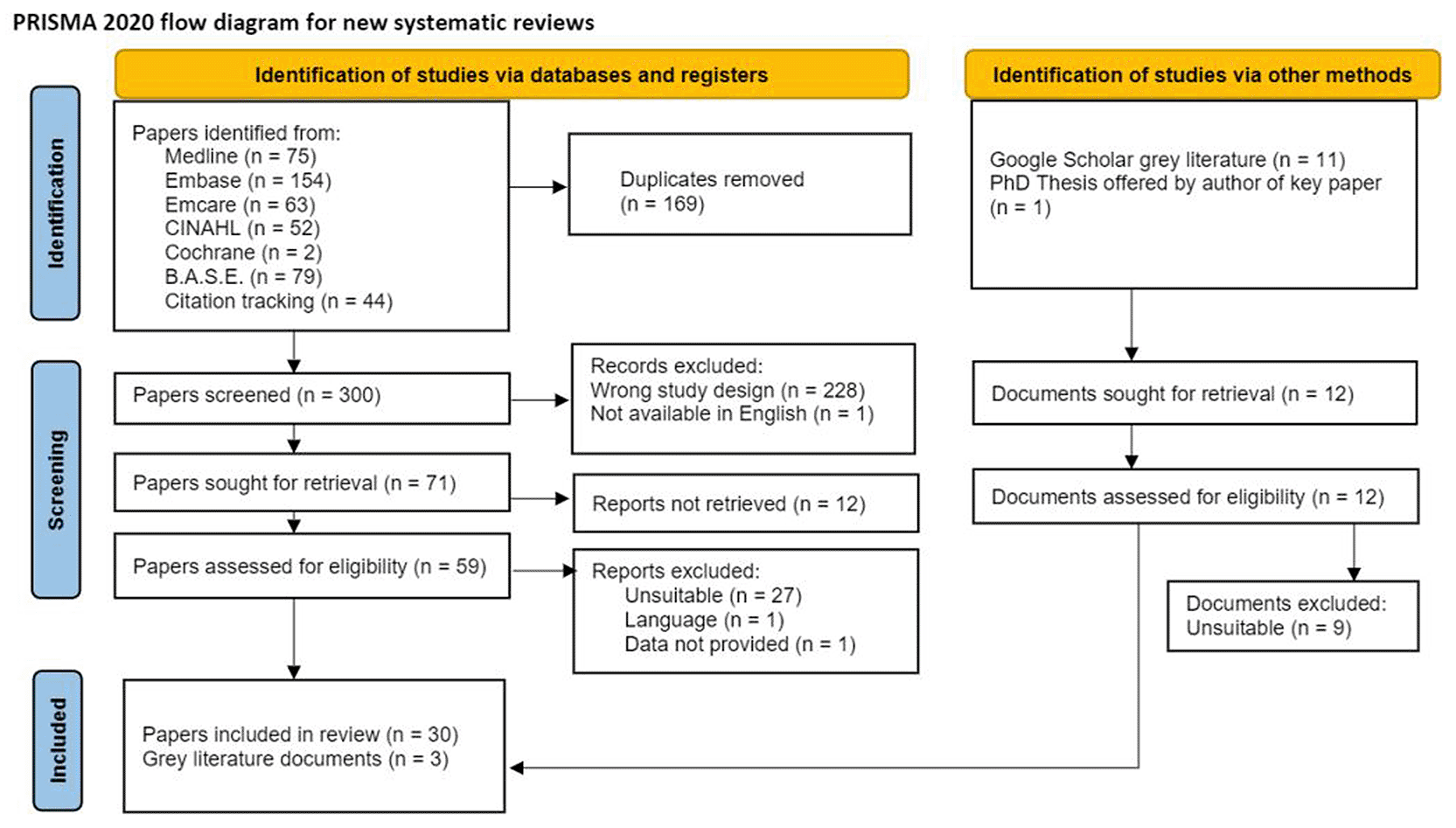
Thirty-three papers were included in the review. Publication dates ranged from 1983 to 2024 and primarily originated from inpatient hospital settings in the UK and United States. Limited information was identified that explored the use of bedrails in a person’s own home. Many of the published papers were reports or opinion pieces made by those working in the care of older adults.
The results section is structured around five themes identified within the literature; clinical drivers of bedrail use, prevalence of use, the impact and reported harm associated with bedrails, experiences of people involved in decisions about bedrails use, and the balancing of competing ethical imperatives when considering whether to prescribe or withhold bedrails. These themes are presented in the sections that follow.
Prescribers of bedrails appeared to draw on factors operating at both micro- and meso-levels when explaining clinical decisions regarding bedrail use. Several studies reported clinical rationales for bedrail use, most commonly falls prevention, prevention of bed exit attempts, use to support turning in bed, or at the request of the patient or family. These rationales were typically captured through staff surveys or audit tools. However, in many cases the underlying survey instruments were not reported, limiting insight into how these concepts were defined, understood, or operationalised. For example, studies citing prevention of bed exit attempts as a clinical rationale, did not report what underlying risks or contexts necessitated the use of bedrails.
Across the included literature, micro-level drivers were the most frequently cited and empirically examined. Several audit-based studies using multivariable analyses reported statistically significant associations between patient characteristics and the presence of bedrails. For example, in a large cross sectional, observational study conducted across seven UK NHS trusts (n = 1092), patients described as immobile were substantially more likely to have bedrails in place when compared with those described as independently mobile (adjusted odds ratio (AOR) 62.5, 95% confidence interval (CI) 27.4 to 142.8), indicating a strong association between immobility and bedrail use, despite the uncertainty in the magnitude of the effect.21
In addition to immobility, cognitive status was also associated with bedrail use in UK based audit studies. Healey et al. reported that patients described as very confused were significantly more likely to have full bedrails raised than those described as not confused (AOR 7.8, 95% CI 3.7 to 16.5).21 Similarly, Hignett et al. identified an increased likelihood of bedrail use among patients described as very confused compared with those described as not confused (AOR 2.62, 95% CI 1.68 to 4.09).22 These findings indicate a consistent association between reported confusion and bedrail use across UK inpatient settings.
Several older studies identified meso-level drivers of bedrail use, including organisational policy, professional culture, and organisational risk management in response to concerns regarding litigation. In particular, some U.S. based literature described bedrail use as culturally accepted or routine practice for new admissions, reflecting established organisational norms rather than individualised clinical assessment.35,38
Few studies explicitly examined macro-level drivers influencing bedrail use, such as national policy, regulatory frameworks or broader political and legal contexts. Where macro-levels were discussed, this was largely confirmed to opinion pieces concerning the limited national or professional guidance, or evidence based frameworks.
Several studies and reports referenced potential alternatives to bedrails or factors that should be considered prior to prescribing, such as environmental modification, enhanced supervision, floor beds, or individual risk assessment that may include medication review and continence care plans. However, these alternatives were discussed descriptively rather than evaluated empirically. No studies were identified that compared bedrails with alternative interventions in terms of effectiveness, safety, or patient outcomes. As a result, suggestions regarding alternatives were largely speculative and not supported by comparative or robust evidence.
Prevalence of bedrail use was most frequently captured using snapshot audit-based studies, defined as observational reviews of occupied inpatient beds, conducted at a single point in time, in hospital or long-term care homes. Many audits explicitly excluded specialist clinical areas such as high dependency units, critical care, cardiac units, emergency care environments, and maternity units, thereby limiting applicability of findings to these settings. Data were reported as a binary outcome of either bedrails in use (raised or partially raised) or not in use and findings presented as a percentage of total occupied beds using bedrails. Across UK and Irish acute inpatient wards, full or partial raised bedrails were observed to be raised in approximately 16% to 52% of total occupied beds.18,20–23
Variation in bedrail use was reported both within and between organisations. For example, Noore et al. identified a lower prevalence of raised bedrails in a geriatric ward when compared with other wards within the same district general hospital (7% occupied beds versus 19% in other wards).18 Healey et al. found significant variation in bedrail use across seven NHS Trusts, with no clear relationship between the presence or content of bedrail policy and observed bedrail use. No interaction effects were detected between organisational bedrail use and patient age, mobility, confusion, bed type, or mattress type. After adjustment for these variables, the likelihood of full bedrails being raised in one NHS organisation was ten times more likely when compared to another.21
Several studies examined the impact of interventions intended to reduce bedrail use on the overall number of falls that occurred within the patient bedspace. These studies were predominately observational and included before-and-after designs implemented within hospital inpatient or long-term care settings and falls outcomes were captured through internal incident reporting systems. Across these studies, changes in bedrail use were not consistently associated with a significant change in falls rates. Some studies reported no change in the number of falls34,35 whilst others had mixed findings.36
Authors frequently acknowledged methodological limitations, including reliance on incident report data, limited control for confounding variables, and variability in how falls were defined and recorded. Across the before-and-after studies, exposure to bedrails was inconsistently reported or not reported at an individual patient level. For example, it was not possible to identify if a person who experienced a fall in the before or after period of the studies were using bedrails at the time of the fall.35
Reports of harm associated with bedrail use were identified primarily through reviews of organisational incident reports38 and reports submitted to national regulatory or governing bodies.1,39,40,43–46 These sources described adverse events including limb entrapment, asphyxiation, and death occurring across a range of care settings. Several authors noted limitations in the available data, including incomplete reporting, lack of independent verification, and absence of denominator data, limiting estimation of incidence or risk. In many cases, contributory factors such as equipment incompatibility, incorrect assembly, use of mattress overlays (that increase the height of the mattress in relation to the height of the bedrails), or inadequate patient monitoring were described.
Evidence relating to harm associated with bedrail use was also identified in a review of NHS clinical negligence claims relating to inpatient falls. Between 1995 to 2006, bedrails were listed as the primary cause of harm in 11.9% of claims, while the absence of bedrails was cited in 10.6% of claims.7 All claims were settled out of court and no legal rulings establishing liability or causation were available. The mean payment per claim was £12945, with authors noting that difficulties in establishing causation were compounded by patient frailty, multiple comorbidities, and limitations in documentation.7
Evidence relating to the experience of bedrail use from the perspective of patients and their families was limited and predominantly descriptive in nature. Where reported, some patients expressed a preference for bedrails, describing feelings of safety. In several studies, family request was cited as clinical rationale for bedrail use, although the context and basis of those preferences were not explored. Family members and care partners were also reported to influence bedrail use, particularly in long-term care and inpatient settings, where bedrails were perceived as contributing to patient safety. Overall, reporting was indirect, relying on staff perceptions of clinical rationale rather than first-hand accounts.
Experiences of bedrail reduction were also reported indirectly through descriptions of implementation challenges in before-and-after studies. Authors described reluctance and scepticism among staff, patients, and families when attempts were made to reduce bedrail use, with particular emphasis on the time and effort required to engage stakeholders on the topic, conduct individual assessments, and discuss alternatives to bedrails.35 In one study conducted across three US nursing homes, routine use of raised bedrails for all new admissions persisted despite multidisciplinary involvement, updated assessments, and targeted strategies such as ‘rail rounds,’ reflecting entrenched practices and resistance to change.36
Ethical considerations relating to bedrail use were discussed in several studies, most often in narrative or opinion-based literature rather than empirical investigations. Authors commonly describe ethical tensions between the perceived need to maintain patient safety, particularly in relation to falls prevention, and the preservation of patient autonomy, dignity, and freedom of movement in pursuit of meaningful occupations of time. Bedrails were inconsistently described as both a supportive device and a restrictive intervention, with few studies providing explicit criteria for distinguishing between these interpretations.
Concerns regarding restraint and restriction in liberty were raised in a number of sources, particularly within UK based literature, where bedrails were explicitly described as inappropriate when used to restrict movement rather than to mitigate specific falls risk.2 Ethical concepts were often described implicitly or presented as opinions expressing concern that ethical considerations should form part of a bedrail assessment. Overall, whilst the literature highlighted ethical complexity and ambiguity surrounding bedrail use, limited empirical insight into how competing ethical imperatives were balanced in clinical practice was identified.
This scoping review aimed to identify and map the literature relating to the use of bedrails to support adults. A heterogeneous and predominantly descriptive evidence base relating to the use of bedrails across inpatient and long-term care settings was identified, originating primarily from the UK and the US. Across studies, clinical rationales for bedrail use, such as falls prevention or prevention of bed exit, were frequently reported. The majority of evidence was developed at the micro-level, where audit-based studies demonstrated strong associations between specific patient characteristics, particularly immobility, and the presence of bedrails. A consistent association was also identified in UK inpatient settings between bedrail use and patients described as very confused. Prevalence of bedrail use varied widely between and within organisations, with variation observed irrespective of the presence of local bedrail policy.
This scoping review has several methodological limitations. Due to time constraints, full-text screening was primarily conducted by a single reviewer, with ten percent of studies independently screened by a second. Data extraction was undertaken by one reviewer with verification by a second rather than duplicate extraction on a subset of studies. These approaches are consistent with a pragmatic scoping review methodology but may have increased the potential for selection or extraction bias. An additional limitation is the inconsistent framing of bedrails within international literature, where bedrails are variably discussed as a falls prevention device or as a restrictive intervention. This lack of conceptual clarity may have affected synthesis, as authors were not always addressing the same underlying purpose or mechanism of use, despite employing the same terminology. A key strength of this review is the integration of patient and public involvement, which informed the focus of the inquiry and ensured that the review addressed relevant issues to those directly affected by bedrail use and prescribing decisions.
The findings of this scoping review are consistent with those reported in 2007 by Healey et al. which similarly identified a limited body of empirical research examining bedrail use, predominantly within inpatient and long-term care settings.2 Challenges in advancing research in this area have been recognised for several decades. As early as 1983, Rubenstein et al. highlighted the need for a randomised controlled trial to evaluate bedrail use but concluded that such a study would be difficult, if not impracticable to design and implement.38 This ongoing methodological challenge may partly contextualise the continued reliance on observational and descriptive approaches within the literature.
The findings of this review suggest that bedrails may function, in part, as a response to perceived falls risk in situations where patients are viewed as vulnerable or unpredictable. Decisions regarding bedrail use are frequently made in the context of limited empirical evidence and in the absence of clearly articulated or defined mechanisms of action. While patient characteristics such as immobility were strongly associated with bedrail use, these associations alone do not explain the clinical reasoning underpinning individual prescribing decisions. Across the literature, rationales for bedrail use were often broad, variably defined, and inconsistently operationalised, with limited links to measurable outcomes. This disconnect between empirically observed patterns of use and the rationales offered to justify them underscores the complexity of decision-making in this area, where clinicians are required to balance the potential for harm associated with bedrails against perceived benefits in the face of uncertainty.
When making decisions about bedrail use and in the absence of robust evidence or explicit decision-making frameworks, clinicians appear to rely on heuristics, risk perceptions, and contextual factors rather than organisational policy. Reports of difficulty implementing bedrail reduction strategies suggest that entrenched local norms of practice, staff and family expectations, and perceptions of risk exert a stronger influence on practice than written guidance. In this context, bedrail use appears to be sustained by local cultures of care and defensive practice, contributing to persistent variation despite awareness of potential harm. These patterns highlight the challenges inherent in individualised decision-making where risk is difficult to assess, articulate, or quantify, and where the intended purpose of bedrail use, its mechanism of action, and associated outcomes remain uncertain.
Ethical and medico-legal uncertainty was also evident across the literature. Evidence from NHS negligence claims indicates that bedrails are cited both in cases when they were used and when they were not, suggesting that they are perceived simultaneously as both protective and harmful devices. This ambiguity is reflected in a 2025 Delphi consensus study examining falls prevention strategies in hospital settings, which concluded that bedrails could not be recommended as a reference standard for falls prevention due to concerns regarding patient safety and routine use.48 This conclusion was informed by the 2022 World Guidelines for Falls Prevention and Management for Older Adults, which explicitly identify bedrails as a form of restraint.49 The framing of bedrails as both a falls prevention device and a restrictive intervention illustrates the ethical and clinical complexity faced by clinicians when considering their use, with implications not only for clinical accountability but also for patients and families who may experience uncertainty and distress regardless of whether bedrails are used or withheld.
A pragmatic, realist evaluation of bedrail use across acute inpatient, long-term care, and home settings may offer a more appropriate approach to understanding how context, mechanisms, and outcomes interact within different care environments. In addition, qualitative research examining clinical decision-making regarding bedrail prescription could provide valuable insight into how organisational policy, cultural norms of practice, contextual variables and ethical, and medico-legal concerns are balanced in situations characterised by uncertainty. Such work could help inform future practice and guide the development of more context-sensitive research.
This scoping review demonstrates that evidence relating to the use of bedrails remains limited, heterogenous and predominantly descriptive. There is little empirical evidence evaluating the use of bedrails as a falls prevention intervention, and substantial gaps persist in relation to user experience and bedrail use within a person’s own home. Decisions regarding bedrail use therefore continue to be made in the context of uncertainty, shaped by patient characteristics, organisational culture and medico-legal considerations rather than robust evidence. This review highlights the need for further research using methodologies capable of addressing contextual complexity, ethical tension, and real-world decision making in order to better inform clinical practice and policy.
Provide sufficient details of any financial or non-financial competing interests to enable users to assess whether your comments might lead a reasonable person to question your impartiality. Consider the following examples, but note that this is not an exhaustive list:
Sign up for content alerts and receive a weekly or monthly email with all newly published articles
Register with NIHR Open Research
Already registered? Sign in
If you are a previous or current NIHR award holder, sign up for information about developments, publishing and publications from NIHR Open Research.
We'll keep you updated on any major new updates to NIHR Open Research
The email address should be the one you originally registered with F1000.
You registered with F1000 via Google, so we cannot reset your password.
To sign in, please click here.
If you still need help with your Google account password, please click here.
You registered with F1000 via Facebook, so we cannot reset your password.
To sign in, please click here.
If you still need help with your Facebook account password, please click here.
If your email address is registered with us, we will email you instructions to reset your password.
If you think you should have received this email but it has not arrived, please check your spam filters and/or contact for further assistance.

Comments on this article Comments (0)