Keywords
stakeholders, evidence synthesis, interviews

stakeholders, evidence synthesis, interviews
The involvement of relevant stakeholders is crucial for ensuring that systematic reviews undertaken in public health meet the information needs of policymakers and practitioners.1 A growing body of literature has identified specific methods and frameworks2–6 for the involvement of stakeholders in the scoping,7 delivery4,5,8 and dissemination9 of evidence synthesis. While there is considerable literature on patient and public involvement in evidence10 and wider stakeholder engagement from health care and environmental science,3,11–13 much less has been reported in relation to the involvement of policymakers, public health practitioners, and other professionals in public health evidence synthesis.14
“Stakeholders” in this context, are defined as “individuals, organisations or communities that have a direct interest in the process and outcomes of a systematic review or research project”3 with stakeholder involvement being” the iterative process of actively soliciting the knowledge, experience, judgment and values of individuals selected to represent a broad range of direct interests in a particular issue.” The use of the term “stakeholder” has recently been questioned because of colonial connotations. The alternative term “interest-holders”15 has been proposed but is not yet in common use. Alternatively, “knowledge users”6 can be used to define stakeholders that are also potential users of a review’s findings.
There is a need for more research and evaluation of stakeholder engagement methods to recognise that such activities have resource implications and opportunity costs. Our associated systematic review (in press) identified one key paper (Merner et al. 2021)16 that shared the stakeholder involvement experiences of three Cochrane editorial groups (although not from the stakeholder perspective). The authors noted that future assessments of stakeholder involvement should include an analysis of attitudinal and practical factors that facilitate or impede stakeholder involvement in reviews.
The main aim of this research was to learn from the experience of stakeholder involvement and engagement in the NIHR Public Health Review Team’s (PHRT) programme of systematic reviews over the last five years to inform and develop stakeholder engagement in public health evidence synthesis. Between 2018 and 2023, the PHRT undertook a programme of policy-relevant systematic reviews on a range of topics, including gambling, employment in later life, working from home, student mental health, housing instability, alcohol licensing, air pollution, and Health Impact Assessment. The related outputs and publications all benefited from stakeholder engagement with national, regional, and local authorities and private sector colleagues using a wide range of approaches and methods, depending on the needs and constraints of specific reviews (https://phrt.sites.sheffield.ac.uk/).
Patient and Public Involvement: No patient or public involvement was undertaken in this study. This was deemed not feasible as the timescale of the work precluded meaningful involvement, and the focus on the involvement of public health professionals in evidence synthesis did not generate meaningful opportunities for members of the public to contribute to the research.
We conducted semi-structured interviews with 12 of our project stakeholders to develop an understanding of what our stakeholders perceived as the benefits gained from their involvement and what facilitated or challenged this involvement. Informed consent was obtained verbally at the beginning of the interviews. Consent was recorded as a separate audio file before commencing the interview recording. Prior to participation, participants were provided with a copy of the consent form and an information sheet. The participants were selected to represent the broadest range of participants from over 100 stakeholders involved in the project. Table 1. summarises the types of stakeholders interviewed. The final number of interviews was determined by data saturation. Interviews took between 30 and 60 minutes and were undertaken by a member of our research team using online meet software Google Meet to conduct and record the interviews. We used a broad topic guide to steer the conversations, which was developed and piloted at the outset of the project.
| Stakeholder type | Number interviewed |
|---|---|
| National government | 3 |
| Regional/local government | 3 |
| Academic team member | 3 |
| Funder | 2 |
| Private sector | 1 |
After obtaining the participants’ informed consent, the interview recordings were transcribed verbatim and anonymised. Anonymised transcripts were then coded and analysed thematically using a coding framework informed by the interview schedule. Codes were then developed into overarching themes to define and explain the data using framework analysis17 to organise the data. The initial coding framework was derived by the research team from an in-depth reading of a small number of transcripts and subsequently modified to reflect the emerging themes. The researchers met regularly to discuss the suitability and validity of the coding framework, including any disagreements, before the framework was finalised. The team then met again to discuss the implications of the final framework and research findings.
The main reported benefits can be categorised into three overarching themes which include facilitating connection, influence, and understanding ( Figure 1).
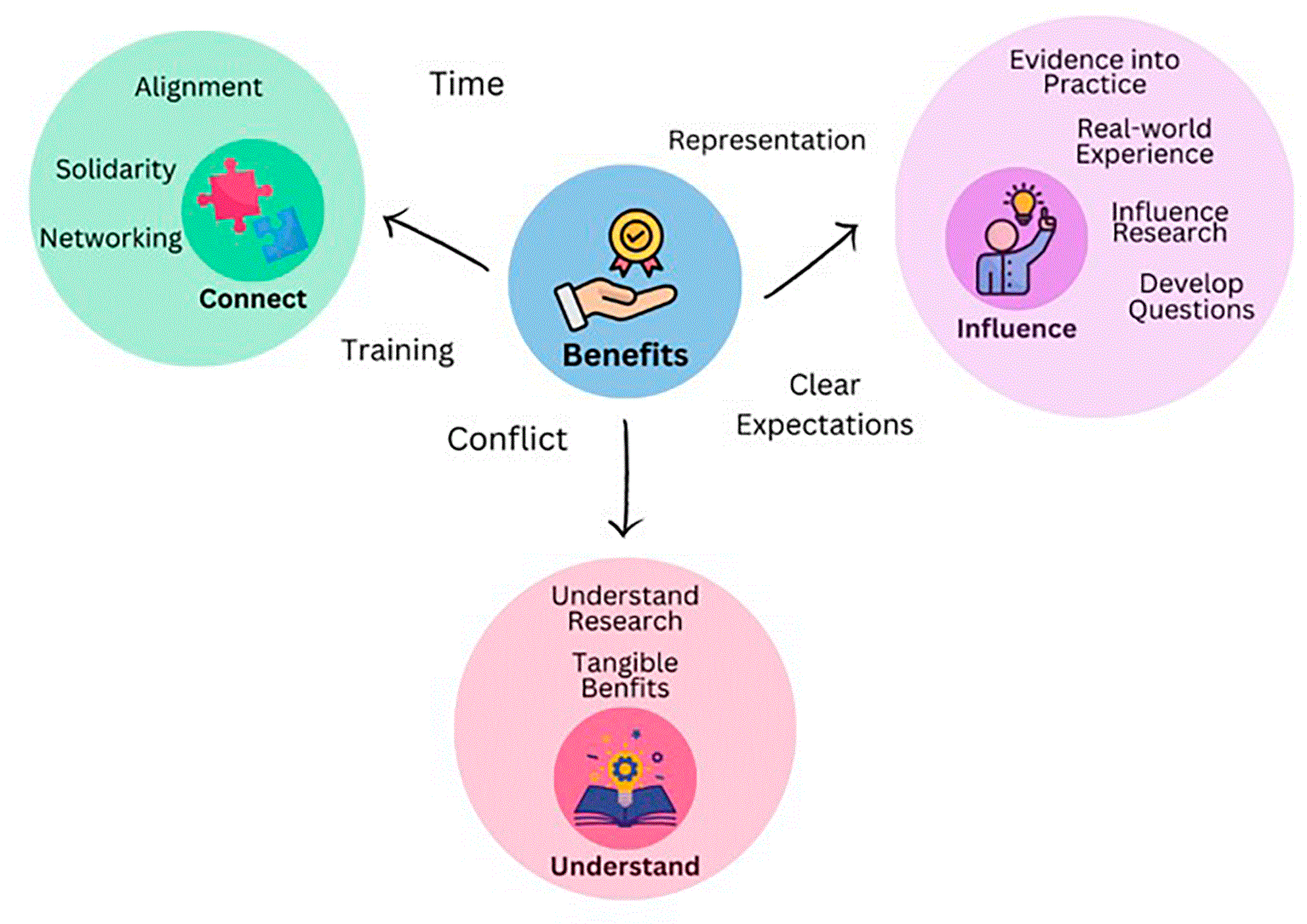
Connection – stakeholders felt that their involvement allowed them to make connections with researchers and practitioners and further to validate their roles and approaches with respect to the topic under review.
One of the most frequently spoken of benefits of being a review stakeholder referred to the networking opportunities. Stakeholder meetings and workshops were seen as an opportunity to make links with other people working in the same area of policy or practice, and to find out about their work in the area. Stakeholder meetings presented opportunities to get involved in more research, as well as to get to know people in the research community. The development of stakeholder networks also increases the visibility of research teams to those working in practice and provides opportunities to develop more formal networking methods.
“I mean, for example, if the review centre was developed in some way, I wonder if we think of a more formalised way of including my networks in, and getting involved. I’ve got networks with lots of different public health professionals and their partners who want to improve health through place”. [SH08]
Feeling that the review had relevance and a clear alignment with their own portfolio of work was an obvious motivator for involvement of stakeholders. There was debate around whether stakeholders felt they were able to meaningfully contribute to discussions, felt they or their organisation would “get something” out of their involvement, and whether they had a personal interest in the topic.
“I suppose whether it’s topical, whether it’s something that we would get value from and learn ourselves, not just the output, but the process of being involved, we will probably learn stuff as well … .. the priority would be where we feel there’s an evidence gap or there’s a gap that we think that would be useful thing to help support” … … … [SH09].
One stakeholder spoke of involvement as being good for their reputation, which was a key aspect of their job role. A couple of stakeholders felt that involvement in research was a responsibility and that practitioners could not complain about a lack of evidence on which to base local policies if they were unwilling to contribute to evidence synthesis projects in their area. The stakeholders also felt a responsibility to be involved because there was not a wide pool of potential stakeholders who could meaningfully contribute to the review.
“No. I think that’s real. I don’t know how we solve that because we’re often and you’ll probably be the same yourself where they often reach out to people who sit on committees and groups and the kind of ask you for what’s important and it’s really hard in that moment”. [SH03]
A further benefit was described as having the ability to reduce the sense of isolation that some felt in their day-to-day work, to feel solidarity with others, and to know others were professionally interested in the same things as them. This was also true when stakeholders felt that their views differed from those of their colleagues.
“Yeah. I think for me particularly, it is thinking that we’re not the only ones in this position, we’re not alone. So it sort of that feeling of solidarity with other organisations and not feeling like an anomaly or an outlier that actually it’s fairly similar experience in other local authorities”. [SH06].
Influence: Second, stakeholders described the opportunity to influence research and contribute to making research meaningful and useable as a significant benefit of their involvement.
One of the main connections to evidence synthesis projects was their real-world experience, with many significant links outside academia throughout their working lives. This extended to the ability to enhance knowledge mobilisation by increasing the visibility of project information and findings. It also allowed those with a passion for a topic to feel that their knowledge was used, and to broaden their reach into other, linked areas of research where stakeholders could also provide important context and widen the reach of the research.
“The real, real world experience. Some academics only ever work in academia, others work in a role and academic research … … in my case, I speak to 36 Local authorities. So obviously, I can pick up things that they’re saying … .. and then I’m not speaking for one person, I’m speaking for many organisations”. [SH11]
Many stakeholders felt that their role actively contributed to getting research findings into practice. They were able to give additional validity to the research and were well placed to contribute to knowledge mobilisation, particularly in terms of influencing dissemination of review findings and in generating recommendations which were meaningful and made sense to those in practice. They also felt able to influence future funding for research as a result of identifying research gaps and priorities for future research funding.
“It identifies gaps in the evidence. And I suppose some of the role has got to be about how do we fill those gaps in a methodical way and that feels a really helpful certainly from my perspective of somebody who is part of the program but also sitting on a prioritisation committee, I can see that gap being filled … , then actually brief to go through the process of is this actually a really important public health issue should we, therefore, actually put this out into the public domain”. [SH03].
Many stakeholders spoke of the need for outputs from a review to be useful for them and their colleagues, and felt that they had a role in facilitating this. It was important to ensure that project outputs were available in accessible languages and formats and available in the places where stakeholders might go to look for evidence. There was a need for outputs to be focused on the “so what” as stakeholders and their colleagues need to know what to do in response to the research.
Stakeholders also felt that being involved in a review was also one of the best ways to influence the research agenda. For one stakeholder with a funding role, this included being able to better contribute to discussions that influenced the development of future research questions. However, this view was not universally held, with one person noting that the benefits were not always clear.
“I would say that my experience of that has been mixed and I would say from probably zero effect through to actually really key … .. Our stakeholder engagement really profoundly shaped the way that we actually did research and meant that the output was taken up by practitioners in a way that I’d never seen outputs taken up before” [SH01].
Additional benefits from the specific aspects of the research process were also evident, including helping influence decisions about managing large volumes of evidence, conceptualising and understanding terms and unfamiliar fields of research.
Most stakeholders felt that it was important to have involvement early on, when developing an evidence synthesis project. Having a clear research question agreed was essential to their understanding. They felt this was also necessary for the research team and that they could make a unique contribution to shaping a review question.
Understand – Thirdly the opportunity to learn about, and from, the research process was a key benefit mentioned by many stakeholders.
Stakeholders reported that their involvement increased their awareness and understanding of evidence synthesis processes and ways of working and reiterates relevance to practice. Some felt that more background knowledge or a formal introduction to research methods would be of benefit to them and would further enhance their participation in the review. Stakeholders also noted that involvement in the reviews made them more confident to use the findings in their work.
“Certainly it would make me now feel more comfortable to put myself forward …. it would certainly make me more comfortable now to think about writing protocols, in future. Given me more confidence about the approach that I would take. And how you can still be systematic even if it’s not the full thing”. [SH12]
Stakeholders also spoke of tangible, measurable benefits from their involvement. These included contributing to their CPD and training. Stakeholder involvement was said to improve the quality of output obtained from reviews, and that these tangible benefits may not be seen until after their active involvement as a stakeholder had ended. In one instance the stakeholder had also been able to go on to further involvement with the research team.
“It’s developing those trusted relationships between stakeholders and academics, isn’t it? And the more you’re involved, these things, the more you can begin to see the opportunities and trust that you could work together really quite well. So I guess that’s an tangible outcome” [SH03].
What facilitates or challenges stakeholder involvement in public health evidence synthesis?
Representation and ownership in stakeholder groups, along with conflict between personal and organisational stances and time constraints, all influenced stakeholder decisions to take part. Process challenges such as clear expectations of involvement and training could facilitate or limit meaningful stakeholder involvement in public health reviews.
As stakeholder involvement develops, there is an increasing need to ensure that a group is representative of a wide variety of interests and opinions related to the review scope. Although this was not guaranteed purely by numbers, stakeholders felt that groups which had a broad range of different voices were most beneficial and most likely to influence the review in a meaningful way. This may also require strategic involvement of stakeholders beyond each individual review project.
“But that’s a different approach to say, Okay, we’re going to have this series of workshops where, we’re going to get a group of 50 people. And there you really are getting a diversity of voices and you really can sort of start to be more confident that you representing a particular community or, you are actually understanding a wider view”. [SH02]
Ownership and how differences of opinion either within the stakeholder group, or between stakeholders and researchers are managed can present challenges to the review process. Although disagreements were infrequent, and typically stakeholder groups would share a common interest with each other and the research team. However, difference of opinion had caused challenges and a feeling that processes to manage this were not well established. These challenges could also be amplified given the confines of time in which the reviews were undertaken. These challenges, although rare, identify an opportunity to move forwards and develop methods of involvement for professional stakeholders, so that they move towards the very structured methods for the academic aspects of undertaking evidence synthesis.
“I mean, even when we think about our reviewing methodology, we put in there how we’re going to do with disagreements. We don’t ever talk about that in our stakeholder engagement … … And I think we’re naive to think that there won’t be disagreements.”. [SH01].
Suggestions for possible ways to overcome the challenges of disagreement included placing greater responsibility on the funders to identify and recruit professional stakeholders, and also to consider upskilling review teams to better understand how to meaningfully involve stakeholders.
A number of stakeholders expressed concerns over conflict between their personal and professional stance, in that their expressed opinion might have to reflect the view of their organisation or “tow the party line”. It was often difficult to make it clear where they were expressing a personal view rather than an organisational view; and they were very aware of the necessity to make that distinction. In some cases this did limit what they felt comfortable saying. Working with, and therefore representing, the view of many different organisations was said to be a potential bonus as a stakeholder as they felt that this meant they have lots of relevant knowledge to share and were able to empathise with a wide range of view points. However, this could also be a challenge to manage this in some circumstances where views may conflict. These challenges increase when professional and public stakeholders are included in a discussion together.
“Maybe you do think twice before you say some things? Which if it was entirely public sector cohort not members the public as it were … … you might be more open and indeed the other way around. Obviously the public might feel if they said something that it would have an adverse effect on them”. [SH11].
There were also conflicts for the stakeholder researchers in terms of how stakeholder involvement was used, whether the lines between involvement and data generation in undertaking a review were clear, and whether payment to stakeholders for their time affected the stakeholder approach, both in terms of how the stakeholders perceived their involvement, and how this was interpreted by the research team.
Perhaps the most obvious barrier to stakeholder involvement was being able to find the time to get meaningfully involved in a review. This could be made easier or more manageable by ensure that information set out to stakeholders was timely and succinct, as could allowing an alternative colleague to attend a meeting if needed. However, the rapid timetables to which evidence syntheses often had to be conducted made this challenge even greater. Lack of time could also limit the identification and recruitment of suitable stakeholders. This could be moderated where a research team had good links and connections and stakeholders had good networks.
Most respondent spoke about the advantages of ongoing involvement in a review as a stakeholder. Compared to one off consultation this was said to be more meaningful and beneficial and so was the preferred method of engagement despite the additional time required. Conversely, some stakeholders articulated this in terms of the challenges presented when engagement was not at a consistent level throughout the review process, or where the expected level of engagement was not made clear at the outset of the project.
“Obviously, with any research you attend, something …. and then it’s months before you get sort of the next meeting, and the progress. So I to tend to forget exactly … where we were and what we’re doing, so, I think it’s not a criticism that’s just the way research is that you get these sort of periods of silence” [SH09].
There were challenges noted with limitations for continuing stakeholder involvement e.g. taking the research forwards at the completion of a specific project. Stakeholders also felt that more continued involvement “between” reviews or in moving onto the next review would be beneficial both to them and for the research. They acknowledged that large funders may need to take responsibility for this kind of approach, and that they were not always clear what was already being done.
Stakeholders also articulated challenges when expectations for their involvement were not made clear at the start of a project, or where expectations changes during a project. This also extended to challenges around recruiting stakeholders to groups.
Stakeholders had various views on the advantages and disadvantages for conducting their engagement online versus face to face including online allowed people from a greater geographical area to participate easily, allowed people to contribute using the chat function, and allowed for multitasking (for example checking emails) which helped to manage the time commitment required. In person meetings included challenges with travelling to remote destinations and having to rush and leave meetings early. This contrasted with a feeling that something personal was “lost” with online interactions.
Some stakeholders felt that training in research process and how to make meaningful contributions as a stakeholder would be beneficial to them. However there were concerned over the timing of the training and whether it would create an additional burden. They felt that embedding this into their CPD, rather than having something additional, would be the most beneficial. Many stakeholders spoke of the similarities and differences in the involvement of professional stakeholders in evidence synthesis compared to PPI and lay involvement. This includes what is meaningful at the population level and what can be learned from PPI approaches.
“Yeah, thanks and yeh because actually the event I was at yesterday there was a PPI representative there and recently, in a lot of places now, you think well, how do they know so much about what’s going on, but that would explain If they’ve had that kind of induction” [SH11].
A parallel with PPI was the suggestion that there was a need to consult stakeholders about how to involve them meaningfully in evidence synthesis. It was also acknowledged that there was a need to include both professional and public stakeholders, with consideration given to whether their involvement should be separate, but how to be consistent in doing so.
Key findings: Our stakeholders described the main benefits of involvement in public health evidence synthesis as facilitating connections, influence, and understanding. The necessity of representation and ownership in stakeholder groups, along with the challenges of managing personal conflicts and time constraints, all influence stakeholder experience. Process challenges, such as clear expectations of involvement and appropriate training, can facilitate or limit meaningful stakeholder involvement in public health reviews.
Strengths and weaknesses of the research: This was a relatively small study conducted with a limited number of interviews due to restrictions on both the time and resources available. Despite this, our analysis suggests that data saturation was reached and clarity in the data allowed us to make coherent and meaningful recommendations for stakeholder involvement in public health evidence synthesis.
Relation to other studies and key debates: Our findings largely support those of Merner (2021)16 who identified power, finances, training, flexibility, and time as the main considerations for meaningful stakeholder involvement in health-related evidence synthesis. Evidence from outside public health evidence synthesis suggests that targeted, tailored messages based on systematic reviews delivered to healthcare professionals may improve evidence-based practice.18
A wider body of literature on stakeholder interests describes how these may be categorised into individual, personal, professional, occupational, and organisational dimensions. Stakeholders are often defined as individuals or groups with a vested interest in the outcomes of an organisation, project, or policy. Expanding this definition to include personal interests reflects individual motivations and values alongside professional interests. Deverka et al. (2012)19 emphasise the importance of stakeholder participation in comparative effectiveness research, highlighting that stakeholders can include a diverse range of individuals, from patients to clinicians, each with their own personal and professional interests that must be considered in the decision-making process. McGrath and Whitty (2017),20 who refined the definitions of stakeholders to encompass various interests related to specific activities, acknowledged the complexity of stakeholder relationships. Kallio et al. (2018),21 acknowledged the multiple layers of interest that exist within stakeholder groups. Similarly, Becker (2018)22 discussed how professionals are influenced by various stakeholder groups, including themselves, clients, and organisations.
The organisational perspective of stakeholder interests is crucial for understanding how these interests manifest in practice. Jones and Fleming (2003)23 argue for a critical stakeholder analysis that considers broader structural commonalities and differences among stakeholder groups to optimise collective interests within an organisation. In summary, the literature provides a robust framework for understanding stakeholder interests as comprising individual, personal, professional, occupational, and organisational dimensions. This multifaceted approach is essential for effective stakeholder engagement and management, as it allows organisations to navigate the complexities of diverse interests and foster collaborative relationships.
Policy/research implications: With reviews of Public Health, there is a particularly strong argument for stakeholder involvement. This results from the nature of the evidence, which often needs interpretation due to the complexity of both questions and potential answers. There are also system implications for getting research into practice, with no single, simple pathway for facilitating this (compared to the NICE clinical pathways, for example). This requires more discursive engagement with policymakers, which public health practitioners see as important to their role, and which stakeholder involvement in evidence synthesis can help facilitate.
Recommendations: Our research indicates the need to develop approaches that clearly articulate the benefits of involvement of stakeholders in public health evidence synthesis. This should involve researchers, funders, and stakeholders in developing practices to facilitate time, increase representation, and manage conflicts and process challenges. Facilitating this has the potential to lead to better evidence interpretation in public health evidence synthesis. This in turn could facilitate discussions with policymakers and simpler pathways to get research into practice.
This study was approved by the University of Sheffield Ethics Committee. Reference Number: 061229. The University of Sheffield ethics policy governs research involving human participants, personal data, and human tissue, and aligns with the principles outlined in the Declaration of Helsinki. Consent was obtained from all participants verbally before commencing the interview and recorded in a separate file to the main interview recording. This was done by reading out the consent form text to the participant and asking them to confirm consent in response to each statement. Verbal consent was recorded, and a copy of the consent form along with an information sheet that included information on who to contact if the participant had any questions or concerns. Verbal consent was chosen over written consent as it is a better fit for interviews undertaken via online meeting software rather than in person.
Provide sufficient details of any financial or non-financial competing interests to enable users to assess whether your comments might lead a reasonable person to question your impartiality. Consider the following examples, but note that this is not an exhaustive list:
Sign up for content alerts and receive a weekly or monthly email with all newly published articles
Register with NIHR Open Research
Already registered? Sign in
If you are a previous or current NIHR award holder, sign up for information about developments, publishing and publications from NIHR Open Research.
We'll keep you updated on any major new updates to NIHR Open Research
The email address should be the one you originally registered with F1000.
You registered with F1000 via Google, so we cannot reset your password.
To sign in, please click here.
If you still need help with your Google account password, please click here.
You registered with F1000 via Facebook, so we cannot reset your password.
To sign in, please click here.
If you still need help with your Facebook account password, please click here.
If your email address is registered with us, we will email you instructions to reset your password.
If you think you should have received this email but it has not arrived, please check your spam filters and/or contact for further assistance.

Comments on this article Comments (0)