Keywords
haemophilia, children, physiotherapy, muscle strengthening, exercise, hybrid model, patient experience, telerehabilitation.

haemophilia, children, physiotherapy, muscle strengthening, exercise, hybrid model, patient experience, telerehabilitation.
Hemophilia is a rare bleeding disorder affecting 1:10,000 people, where blood does not clot normally and is associated with hemorrhage into muscles and joints.1 Over time, consecutive joint bleeding leads to chronic synovitis (inflammation of the joints), arthropathy (a type of arthritis), or joint disease. It can be difficult to manage; however, with effective movement and individualized physiotherapy intervention in children, physical activity can mitigate complications arising from chronic diseases in adulthood.2 Regular preventative treatment by replacing the missing proteins in the blood is currently the medical treatment of choice. Evidence indicates that despite treatment, only one in three patients stops bleeding, and some children still bleed one to two times per year; consequently, the potential for disabling arthropathy remains.3–5
Therapeutic exercise is an important component of the management of other forms of arthropathy (e.g., osteoarthritis, rheumatoid arthritis), and it would seem reasonable that exercise would be effective for people with hemophilia.6 There is growing evidence of the benefits of incorporating muscle-strengthening exercises into the management of physical health.1 Clinicians hold the view that increases in muscular strength and postural control might improve motor performance and cardiovascular fitness, help limit exaggerated end-range joint movement, and promote optimal transfer of weight-bearing forces in the joints, thereby minimizing muscle imbalance, synovial impingement, and associated hemarthroses or synovitis.7 Recent studies have indicated that muscle strengthening programs can improve joint range of motion, physical function, and self-reported participation in physical activity when introduced to children with signs of moderate to advanced joint arthropathy. However, these programmes have been delivered at specialized rehabilitation centers and there is a lack of evidence that they can be successful if delivered by telerehabilitation or beneficial to children with undetected signs of arthropathy.8–11 A Cochrane Review by Strike, Mulder, and Michael (2016) focused on evaluating the safety and effectiveness of exercise for people with hemophilia, including 233 males, ranging from eight years to 49 years of age, and concluded that results should be interpreted with caution due to the quality of evidence, with all but one outcome assessed as low or very low quality due to small sample sizes and potential bias.1
Furthermore, none of the evidence included a pediatric study comparing a muscle-strengthening intervention to a control group or intervention without muscle-strengthening exercises.1 Several studies compared two multi-component exercise interventions that included broad muscle strengthening, treadmill walking, and cycle ergometry; however, it was not possible to determine the effect of muscle strengthening on muscle strength or its effect on physical function.12 In addition, pre-adolescent and adolescent boys aged between 10 and 14 years were included in these studies, but it is not known whether the groups were matched for pubertal status.
Increasing availability of appropriate muscle strengthening exercises through telerehabilitation, has been shown to enable better access to allied healthcare-led physiotherapy and may result in reducing pressures on local service availability, reduction in cost and waiting times, and timely patient-focused consultations.13 The use of home-based exercises involving real-time videoconferencing has been shown to improve physical activity and exercise capacity in non-hemophilia adult patients.14–16 Evidence based on non-hemophiliac adult patients on the use of telerehabilitation, a term coined prior to the COVID-19 pandemic, and in its infancy, originally telephone-based, and progressively with developments in Internet and online technology, largely video-call home-based, may provide an effective and cost-efficient delivery medium with high levels of patient satisfaction.13,14 The use of online tools and applications to support physiotherapy interventions in children and young people, when accompanied by parental involvement to support adherence and self-management, offers great promise.17
With the onset of the COVID-19 pandemic, engaging with patients in a virtual setting has accelerated the transition to hybrid models of care. This change saw a move toward implementing telehealth using online platforms at scale. In the Zucker School of Medicine’s (ZSOM) Student Run-Clinics in Queens, New York, Furuya et al.’s 2020 hybrid model of primary care consisted of alternating in-person and telehealth visits, with new patient appointments virtually, and follow-up appointments in person.18 Furuya et al. (2020) highlighted how working in a primary care setting increased access to patients via an initial virtual appointment, followed by face-to-face interaction, which was key to diagnosis and treatment during the pandemic,18 for instance, enabling a GP to digitally speak to a patient for an initial assessment, and inviting patients to come in for further tests or scans.19 The hybrid model, as outlined by Furuya et al. (2020), is beneficial for triaging patients in primary care settings.18 However, the existing model of care for children with hemophilia is largely led by hemophilia clinics based in acute settings, with current patient pathways involving access to comprehensive multidisciplinary care teams, including hematologists, nurses, physiotherapists, and psychologists. The results of a recent study in clinics run by physiotherapists in non-hemophiliac adults demonstrated comparable or better health outcomes from virtually delivered exercise compared to usual care in musculoskeletal conditions.20 Paul et al. (2023) concluded that at the population level, a hybrid model incorporating limited in-person consultations with a number of virtual consultations appeared to be a more viable option than a completely virtual model, and indicated that further evidence is needed on the ideal dose of in-person and virtual consultations to maintain ongoing engagement. Thus, for a hybrid model to be integrated into treatment plans, an adapted hybrid type should be considered to optimize access and engagement.20
The pace at which healthcare professionals embraced using hybrid care models during the pandemic was largely restricted to primary care.21 The Recent UK NHS policy on digital health in Fit for the Future: 10 Year Health Plan for England22outlines plans for moving from analog to digital focusing on harnessing efficiency processes, including digital pre-assessments, thus reducing the number of appointments, automating patient bookings, and a decrease in spending on human factors required for communicating with patients. For people with long-term conditions, there are pipeline plans for digital tools to co-ordinate care through the ‘My Care’ app, however, such policy provides little evidence on the potential for retaining patient-healthcare provider contact through online tools for optimization of access or engagement with patients.22
We demonstrated the feasibility of a NIHR-funded study (DOLPHIN study; award ID: PB-PG-0215-36091)23 in which it was possible to undertake a randomized controlled trial (RCT) to determine the effectiveness of a muscle strengthening intervention in this patient group.24,25 The full RCT was recently completed, with funding awarded by NIHR (DOLPHIN II study; award ID: NIHR2015880). The intervention delivered in the trial involved an initial face-to-face appointment when participants were randomized, followed by an exclusively online delivery model.
While the overall aim of the study was to determine whether a muscle strengthening exercise program increased muscle strength, physical function, and quality of life in children, the study presented in this paper comprises a qualitative exploration of the experiences and perspectives of the online delivery model of children allocated to the intervention arm of the study as well as the views of the study’s physiotherapists. The views of the children and parents were captured to investigate child/parent satisfaction, including accessibility and engagement with weekly sessions, acceptability of video call sessions, and usability of the app. An assessment of how this approach affected intervention recruitment and adherence was also considered. The view of the study’s physiotherapists was investigated to evaluate perspectives on usability, logistics of running online sessions, multi-modal systems for intervention delivery, and their impact on practice.
Patient and Public Involvement was embedded from the beginning of the study, which involved the UK’s leading haemophilia and bleeding disorder’s charity, The Haemophilia Society, as well as parents, and children who played a key role in conducting this study. Two caregivers of children with hemophilia were part of the Research Monitoring Group, which oversaw the delivery and conduct of the research.
Regarding changing the research questions , parents’ priorities were on recommending changes to the data collection tools, and changes to the technical aspects of intervention support. Both children and parents commented on how useful the Physitrack app was to intervention delivery at home. The children liked the exercise videos, stating that “the videos are cool”, and the parents thought they were better than the booklets.
The intervention tested in this trial was co-produced with children with haemophilia and their parents. Parents suggested that changes for the definitive study should include “using videos and online resources to help understand the exact positions the children needed to practice and maintain compliance and interest in the exercise programme” and “collecting diary data electronically rather than with paper diaries which they tended to forget and misplace.
How were patients/public involved in:
The Haemophilia Society, parents, and children played a key role in conducting this study. Two caregivers of children with hemophilia were part of the Research Monitoring Group, which oversaw the delivery and conduct of the research.
The knowledge and experience of the patient members of the Haemophilia Society contributed to the information included in the child and parent versions of the Participant Information Sheets. The revised information sheets ensured the information was clearly described and was sufficient to enable potential participants to make an informed choice about their participation.
The Physitrack was shown to three children and their parents. The children liked the exercise videos, “the videos are cool”, and the parents thought they were better than a booklet, “I don’t have to remember what the physiotherapist said or where the booklet is … they are simple and easy to follow …I also like how they can click when they have done them rather than write it on the sheet”. Parents said that they would be more likely to do the exercises using the app than with a booklet. They also liked the ability to do the exercises anytime and that once the exercises were downloaded they didn’t need an internet connection to do the exercises. One of the parents indicated that some parents might prefer the booklet and that we should offer both options and therefore we will offer participants the Physitrack or booklet options for receiving the exercise programme. All participants chose to access the exercise using the smart phone App.
When commenting on the booklet, one participant indicated that “I don’t have to remember what the physiotherapist said or where the booklet is…they are simple and easy to follow…I also like how they can click when they have done them rather than write it on the sheet” . They also liked the ability to perform the exercises anytime, and once the exercises were downloaded, they did not need an Internet connection to perform the exercises. Parents also said that they found it difficult to remember when and for how long they did physical activities, and children were not always able to remember what they did at school. They suggested that they preferred to use wearable activity trackers. The children liked the idea of wearing the wristbands and said they would not mind wearing them.
(a) the design and conduct of the study?
Ms Liz Carroll, Chief Executive of The Haemophilia Society facilitated inclusion of patient perspectives in the study and ensure the research was important to and of benefit to patients.
Ms Liz Carroll, Chief Executive of The Haemophilia Society at the time of the study, facilitated the inclusion of patient perspectives to ensure the research is important to and of benefit to patients. Two carers of children with haemophilis invited to be part of the Research Monitoring Group who oversaw the delivery and conduct of the research. This will ensure the research remains embeded in the interests and perspectives of children living with haemophilia and was of benefit to those with the condition.
(b) Outcome measures:
Ms Liz Carroll, Chief Executive of The Haemophilia Society facilitated the inclusion of patient perspectives in the study and ensure the research was important to and of benefit to patients. Two carers of children with haemophilis invited to be part of the Research Monitoring Group that oversaw the delivery and conduct of the research. This ensured the research remained embeded in the interests and perspectives of children living with haemophilia and is of benefit to those with the condition.
In terms of outcome measures chosen, parents and children felt it important to ensure that children’s confidence and feelings were supported to do the exercises, which were captured by the Child’s and parents’/caregivers’ satisfaction of the exercise programe and choice of outcome measures on the questionnaire.
(c) recruitment to the study?
As part of the feasibility study, in partnership with children with haemophilia, their families, our study's strategies ensured high recruitment and retention. Random allocation was acceptable to those who participated and we were able to successfully maintain a single-blinded approach (1). (please see Figure 1 for DOLPHIN 2 Study Flow Chart).
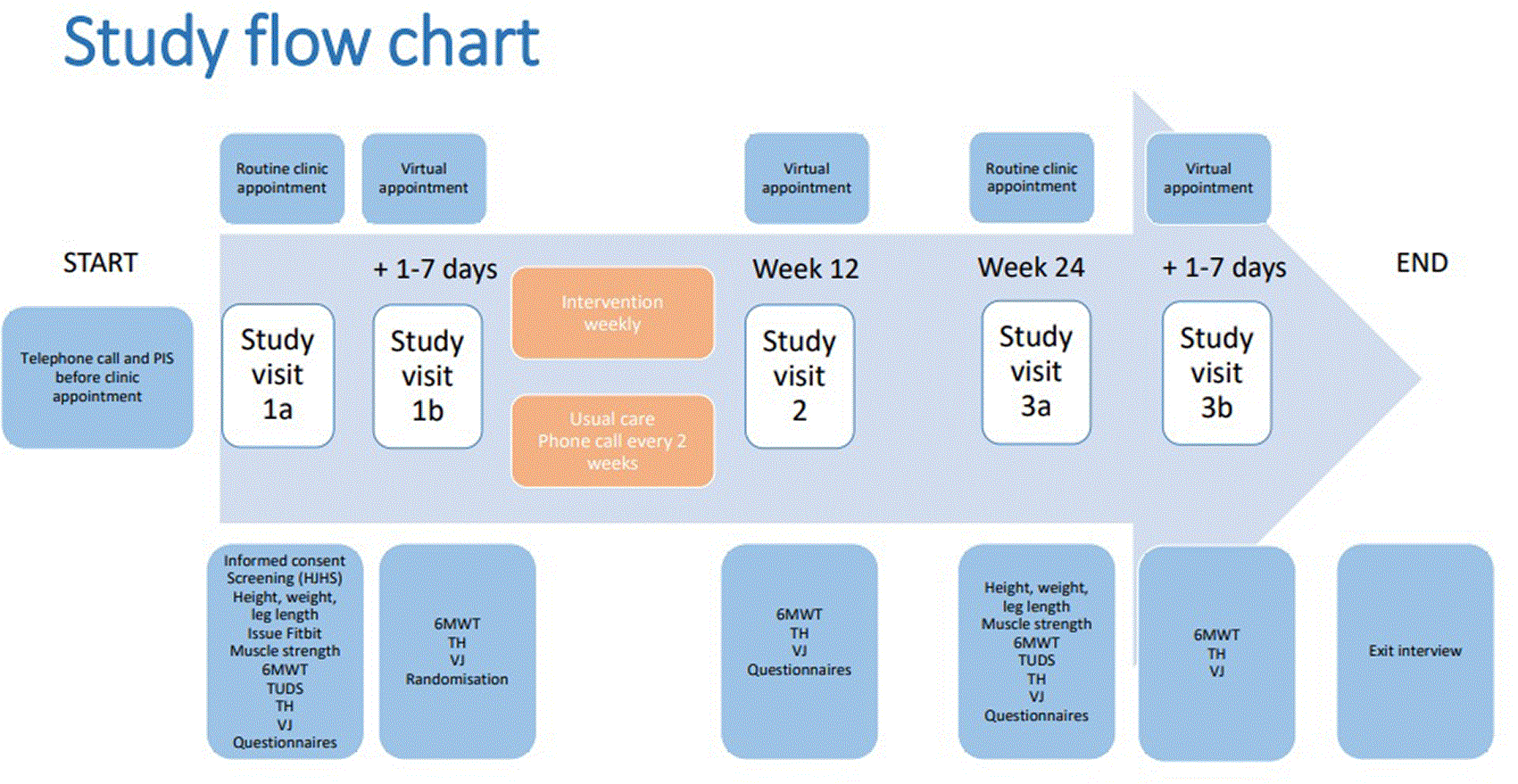
Context: Setting
This qualitative study was part of a larger RCT. The RCT was approved on 03/11/2020 by the Southwest Cornwall & Plymouth Research Ethics Committee (REC ref: 20/SW/0154) (IRAS: 282478). The intervention was conducted from May 2021 to January 2025, and included a period of recruitment at the height of the pandemic. Eleven sites were recruited, and 10 sites delivered DOLPHIN II interventions. One site did not have any children randomized into the intervention arm.
Context: Intervention
This 12-week intervention aimed to master movement control and emphasize the development of body weight strength. The intervention was initiated by an in-person study visit at a care center when participants were randomized, followed by 12 online sessions. Videos with written and spoken instructions for the exercises were provided via the Physitrack website or app (Apple iOS or Andriod) that were accessed from an email sent to the participants’ parents. Once the exercises were downloaded, an Internet connection was not required to view and complete the exercises. Physitrack provided the same information to the participants as the conventional exercise booklet. Participants were asked to complete the exercises twice per week, once with the physiotherapist online via video call, and once supervised by their parent/guardian. Exercises were set to a weekly calendar, allowing each exercise to be assigned daily or on selected days of the week with reminder alerts.
As participants used Physitrack, they were prompted to record exercise completion to enable the research team to track and record adherence, as well as comfort/pain, using a face rating scale. Although participants were offered the option of a conventional paper exercise booklet and diary, if they preferred, all chose to use the Physitrack platform to record responses.
Participants
All physiotherapists who delivered the intervention were invited to take part in a focus group representing seven of the 10 study sites, with one site not having any participants randomized into the intervention arm. Only children who underwent the intervention were invited to participate in a telephone interview at the end of the program with their parents present during the interview. Informed written consent for the physiotherapists’ focus groups was obtained from the physiotherapists at the site initiation visit. Informed written consent for child participants participating in a telephone interview was obtained from parents on recruitment and reconfirmed at the end of the intervention period.
Telephone interviews with children and parents
Telephone interviews with the children and parents were recorded using an audio recorder, each lasting between 10 and 30 minutes. Interview recordings were transcribed verbatim. The interview schedule (Appendix 2) with the children and parents covered questions on when, where, and how often exercises were undertaken; instructions on the exercises (both online and in hard copy); face-to-face and online guidance available from the physiotherapists; and adherence and sustainability.
Focus groups were conducted online with the study’s physiotherapists using Microsoft Teams and recorded; each group lasted between 60 and 90 min. Video recordings were converted into voice files and transcribed verbatim. The focus group schedule for the physiotherapists covered topics such as recruitment and adherence, barriers and facilitators delivering the intervention virtually, safety and appropriateness, and training requirements to deliver the program (see Appendix 1). The interviews and focus groups were conducted by Ferhana Hashem (FH), an experienced qualitative researcher.
Two focus groups were conducted online with the study’s physiotherapists, comprising eight participants from seven of the ten study sites. Interviews were conducted with 12 children via telephone with a parent present, with the participants being based at home. The children were aged between six and 13 years and had a median age of 8.65 (interquartile range 7.9 to 12.4) (see Table 1 for participant no., age, and severity).
The children and their parent explained how they were shown the exercises as a quick ‘taster’ once at the hospital by the physiotherapist when baseline data was collected. The first session took place online under the guidance of a physiotherapist, with the children being based at home.
Parent: He showed that to you didn’t he? Then there was another guy who was not there, he came from XXXXX, and [name withheld] was there as well. They done it first of all, and then you do it at [trust name withheld].
Child: This was the first part of it, and then at home.
Participant Dyad 0201Child (13.3 years old) & Parent.
When asked if they could comment on their preferences in a face-to-face versus an online session, one parent indicated that despite the physical restrictions with an online physiotherapy session, they had a preference for an online session due to proximity to their local care center:
A: I think it was near enough as good as, you know, if it was remote or face-to-face…the one difference I suppose with the remote is that … she couldn’t manipulate his body in terms of physically touching him if she needed to but as well, bless her she was getting up on to the physiotherapy bed to try and show me because of course the camera was a little more restrictive…If I’m honest, it was more convenient because we live 30 miles away from the hospital. So, if I am honest, it would be more convenient to do it remotely. The study was performed weekly for 12 weeks.
Participant Dyad 0103 Child (7.9 years old) & Parent.
The issue of flexibility and convenience was also flagged up by the physiotherapists, as families were time restricted and attending face-to-face appointments for 12 weeks may have acted as a deterrent to recruitment and participation:
I think for the majority of families, and again it depends on where they live, to get them to come into the hospital for 12 consecutive weeks when you have got parents that work and there’s nothing wrong with the child as in they are not recovering from something … is an unrealistic expectation to ask parents to do… So, I think the option of video from that perspective is highly beneficial because it offers flexibility, which probably meant that more families actually consented.
Physiotherapist Focus Group 1.
The online format acted as a catalyst encouraging children and parents to consent to take part by reducing the participant burden for travel to and from the hospital, and enabled parents to accommodate the trial around other commitments.
Adherence to all online sessions was facilitated in advance through weekly planning undertaken by the physiotherapists.
Parent: Normally, he sent a link ahead of time so that we can check if there is any new exercise we need to do… Yes, if there were any exercise changes or any exercise added every week.
Participant Dyad 1001 Child (8.7 years old) & Parent.
The physiotherapists were available and responsive to parents’ queries about the exercise programme:
Parents: We were in regular contact via email and things like that, so she was always very approachable, and we knew we could do that.
Participant Dyad 0501 Child (12.3 years old) & Parent.
The physiotherapists ensured that parents and children were equipped with information on the exercises, as well as the study materials, which were conducive to supporting ongoing access to the sessions:
Parents: Everything was provided to us. All organized into envelopes and everything else. There is nothing that would have been a barrier to us apart from just our circumstances I suppose … over those 12 weeks, but there was nothing that we found difficult, or we couldn’t access.
Participant Dyad 0501 Child (12.3 years old) & Parent.
The children and parents were aided by physiotherapists during and in advance of the weekly online sessions, ensuring there was sufficient information on the exercises.
The instructions and guidance provided by the physiotherapists were age-appropriate and enabled the children to practice and improve their techniques.
Parent: They were all very easy with [name] on the … She would point out maybe the position or something was off. It was difficult to have her do that. But, general … between her like helping and the instructions, I found it very manageable, and if it was something new, he would have needed it described to him a wee bit there, but in general I found them very easy to … the instructions were clear and easy enough to do.
Participant Dyad 0508 Child (7.9 years old) & Parent.
Parent: The lady, we had meetings with her, and we would jump online. She would face [him] over the Internet help [name] … get him aligned and talk him through some of the exercises, and then I was here physically if [name] needed.
Participant Dyad 0702 Child (11.8 years old) & Parent.
One child (0107) stated that sometimes they found the exercises hard, but the physiotherapists provided sufficient explanation to complete the positions correctly.
Parent: If there was anything, we interpreted wrong or whatever he would correct us and tell us how to do it properly.
Participant Dyad 0107 Child (6.9 years old) & Parent.
The online guidance from physiotherapists was patient-centered and targeted around the age of the children. The children and parents had the opportunity to adjust the exercises and revisit them, even if they had been demonstrated in the earlier part of the session. They also felt that they had sufficiently frequent contact points to return to the physiotherapist if they did not understand the requirements of the specific exercise.
The physiotherapists found that using different modes of delivery (e.g., online real-time sessions, recorded videos, and application support) enabled them to explain and demonstrate the exercises to different ages of children and their parents.
I think having this sort of multi-modal way of explaining exercises is a great way to catch all. Again, with my sort of one lad, it was the videos that were the best. The verbal guide cues, if right, you have got the general gist of it; this is what you just need to tweak. It just gave me the opportunity as a coaching tool to use dad as well.
Physiotherapist Focus Group 1.
The physiotherapists commented that they felt the exercise app was used successfully to support the program’s intervention, with videos loaded specifically for the DOLPHIN II study.
I thought the Physitrack was amazing… I thought it’s one of the best exercise programs, home exercise programs that I have seen online. We’ve used Physiotools, we’ve used, there’s a Canadian one we’ve used at work, I can’t remember the name of it off hand, but I mean Physitrack was by far superior to that.
Physiotherapist Focus Group 2.
One child/parent telephone interview elaborated on the integration of the video, instructions, and interactive nature of Physitrack, which had good user accessibility and was clear and self-explanatory:
Child: It was all simple. The app was very good; it showed a video and a description of what should be done. It told you how many reps and how long you got to do it for.
Parents: There was time on there as well … did not it … so you could set the timer as you were doing it. So, if it said … do it for 30 seconds or something, you could set the timer on that exercise.
Participant Dyad 0402 Child (13.5 years old) & Parent.
This child participant also indicated that using the Physitrack app on his mobile phone enabled him to perform the exercises during his lunch break.
Child: We mainly used our mobile phones, so sometimes I had to do it at school; I did that twice, when I had like a free lunch.
Participant Dyad 0402 Child (13.5 years old) & Parent.
The physiotherapists, children, and parents did not report any adverse experiences with using the video or Physitrack app, which enabled a multi-mode of delivery to support adherence.
The children and parents reported a range of mechanisms that supported them to undertake, perfect, and return to exercise once a week with the physiotherapist and when on their own. The multi-modal resources available aimed at both children and parents helped establish a practical healthcare practitioner and patient relationship, which supported the intervention.
The physiotherapists found conducting their sessions online quite a step-change to their interactions with the children and facilitated a move towards a creative and responsive mode of practice:
It definitely got me thinking about how you gave instructions on the video. Trying to give feedback and adapt to the situation, like you said, like being a bit creative around the home environment or they’re finding one of the exercises too difficult that day. That you are trying to, on the spot, you are so used to it as a clinician to be hands on, to work through the video but as [name] said it’s nice to show that you can do it and actually, I have put that into some of our practice following up many of our children now video-wise.
Physiotherapist Focus Group 2.
Another physiotherapy commented how using an online format shifted their own practice:
I think the study, overall, even without seeing the analysis that comes out of it, is going to have changed my practice. I think before having done this, I would probably have been quite reluctant to open up virtual interventions. It would have been more keen face-to-face. However, I think with this, it has already changed my practice in the sense that I know that is a possibility that is more realistic to do. This is also more feasible for parents. It is just those, sort of criteria of how do you select the person that’s best to do it with.
Physiotherapist Focus Group 1.
The above comment suggests that, despite an initial reticence with conducting online sessions, the DOLPHIN II study instigated a change in practice with some physiotherapists. Consequently, it aided an increase in their understanding of the potential ways in which to conduct sessions, as they were able to gauge what was feasible from both the child’s perspective and what support the parents could offer.
This qualitative explorative study employed focus groups and telephone interviews to understand the perspectives of the physiotherapists and participants of the DOLPHIN II study in an online physiotherapy program for muscle-strengthening exercises. The qualitative views of eight physiotherapists and 12 child/parent dyads were analyzed, with the following themes identified: (i) initial contact – face-to-face session, recruitment, and adherence; (ii) access and engagement; (iii) guidance from physiotherapists for sessions; (iv) multi-modal systems supporting exercise program; and (v) changing physiotherapy practice.
The intervention design involved an initial face-to-face appointment based on a local care center (e.g., an acute hospital setting) when baseline data were collected, which was followed by 11 weekly online sessions with the physiotherapist and then a session undertaken independently each week. The start of an online program facilitated by an initial face-to-face session followed by remote consultations was noted in Gefen et al.’s (2021) study on online treatment in pediatric rehabilitation, which indicated that therapists who had initial in-person time with young people provided a better foundation for developing a relationship during the remote sessions in comparison to a connection with patients who had never met physically.28 We reported similar findings that the existing longitudinal relationship, cultivated through regular contact for chronic disease management, provided a foundation of trust and rapport throughout the transition to digital delivery. and created a space for a patient-physiotherapist rapport to develop remotely in time.
The strategies and techniques available for continued access and engagement of children and parents were observable in our study. Multi-faceted approaches were used, including email reminders ahead of sessions, physiotherapist responsiveness to queries about exercises, and provision of study materials, ensuring that participants were equipped with sufficient time in advance with information on the exercises, and consequently nothing was a barrier to them taking part. Reitzel et al (2023) noted in their study on access and engagement in pediatric telerehabilitation that communication with caregivers prior to the commencement of the service was critical, otherwise caregivers expressed feeling unprepared for the sessions, which impacted on how meaningful the sessions were perceived to be, and identified as one of the most important factors influencing parental engagement.29 In a recent feasibility study by Palomo-Carrion et al. (2024) on home-based infant hybrid therapy in children with cerebral palsy,30 it was found that a family centered approach,31 aimed at coaching and cooperation with caregivers, was not only likely to increase treatment effects, but allowed for goal-setting around the circumstances and needs of the family, and consequently making decisions based on this increased adherence to training in the child’s natural context.30 We found a similar pattern of engagement with the intervention, which employed a family centered approach in which parents were given weekly reminders, and opportunities to contact the physiotherapist prior to or after sessions increased the likelihood of adherence.
We found that using multi-modal approaches to online sessions supported the provision of the exercise program, involving different mechanisms (i.e., an initial face-to-face appointment, online real-time sessions, recorded videos, and application support) was instrumental for ongoing engagement. According to their findings, the multitude of formats enlisted in Reitzel et al.’s (2023) study29was highly influential in providing an all-around experience. They found that the use of multi-modal communication approaches within and outside their telerehabilitation study in children was pivotal in facilitating engagement and connection. This enabled a blended approach to be employed (e.g., using a combination of email and phone communication according to preference), tailored to each family’s context.29 Conversely Kim et al (2022) suggested, in their study on implementation frameworks of telerehabilitation in clinical care, that the use of home-based technology for patient rehabilitation was far more challenging for people who lived alone, disabled people, and people from socioeconomically disadvantaged backgrounds.32 Thus, the multi-modal approaches were fit for purpose when delivering an intervention in a family centered environment, involving parents and children who had access to different modes that were appropriate and suitable for both their needs.
The physiotherapists in our study indicated that using online approaches changed their scope of practice to help improve patients’ muscle-strengthening techniques. Evidence to support this finding has not been born out of any published research reviewed; rather, the inverse has been found that the lack of hands-on therapy during remote sessions meant that physiotherapists lost the ability to assess joint range of motion and muscle strength, as well as a range of functional abilities such as gait, posture, and balance via online treatment.28 Nevertheless, current evidence also supports our findings about online approaches opening up collaborative practice between children, parents, and physiotherapists, and how the latter was able to use a family centered coaching model to support parents in adapting routines and find out what strategies maximized their environment and achieved the intervention’s goals.31,33
We found that the benefits of a physiotherapy clinical trial conducted largely online are greater than the detrimental impacts. The lessons learned about the positive impacts are discussed by Bhat et al.’s (2024) study on pediatric rehabilitation and clinical research during the COVID-19 pandemic.34 Bhat et al. (2024) made swift accommodations to their clinical trial, which saw increased geographical access to study participants, reduced travel time, parent-mediated interventions, greater real-word carry-over, and increased tailoring of the intervention to meet families’ needs and preferences.34 The DOLPHIN II study was directly impacted by the COVID-19 pandemic; despite this, we saw how an intervention led remotely gave the families sufficient flexibility to continue to be involved in the trial, who stated that they valued the convenience of the intervention and appreciated not needing to build in time to travel to a hospital setting.
Online physiotherapy care for children with hemophilia can be successfully supported and adapted to a largely home-based setting, with physiotherapy inputs delivered remotely. Physiotherapists were sufficiently agile and innovative to deliver sessions using remote approaches. The online videos, Physitrack application, and supporting resources were age-appropriate and accessible to both children and parents. The physiotherapists indicated that reliance on online approaches was a facilitating factor for families to agree to participate, which provided parents with flexibility and less time commitment for scheduling in the sessions if they were delivered face-to-face. We are encouraged by the perspectives of healthcare professionals on how an exercise program has the potential for ongoing engagement and accessibility, opportunities for collaborative practice through family centered approaches, and ultimately greater sustainability in this rare disease group.
Ethical approval was obtained from outside of the University of Kent, as the research was conducted at the UK’s hospital Trusts, hence NHS Research Ethical Service (NRES) approval is required especially when research is undertaken involving NHS patients, their relatives, or when care staff are recruited due to their status as NHS patients or staff. External approval was sought from the UK’s NHS Research Ethical Service (NRES), as the project is classified as health research, rather than ethical approval being sought exclusively from the University of Kent.
This work is a sub-study of a qualitative study of a larger RCT. The study was approved on 03/11/2020 by the Southwest Cornwall & Plymouth Research Ethics Committee (REC ref: 20/SW/0154) (IRAS: 282478). The study was conducted from May 2021 to January 2025, and included a period of recruitment at the pinnacle of the pandemic. Ten sites delivered DOLPHIN II interventions. Informed written consent was sought by the study’s Research Physiotherapist (HH) for the DOLPHIN Study, who liaised with the parents based at the study centres. Parents provided written informed consent for their children to participate in the full RCT study. They also provided written informed consent to take part in the telephone interviews. Informed written consent was obtained from the physiotherapists who took part in the focus groups by the Principal Investigator (DS).
NVIVO 15 was employed to analyze the focus group and interview data. The cost-neutral computer-assisted qualitative data analysis software available was Taguette (https://www.taguette.org/).
Provide sufficient details of any financial or non-financial competing interests to enable users to assess whether your comments might lead a reasonable person to question your impartiality. Consider the following examples, but note that this is not an exhaustive list:
Sign up for content alerts and receive a weekly or monthly email with all newly published articles
Register with NIHR Open Research
Already registered? Sign in
If you are a previous or current NIHR award holder, sign up for information about developments, publishing and publications from NIHR Open Research.
We'll keep you updated on any major new updates to NIHR Open Research
The email address should be the one you originally registered with F1000.
You registered with F1000 via Google, so we cannot reset your password.
To sign in, please click here.
If you still need help with your Google account password, please click here.
You registered with F1000 via Facebook, so we cannot reset your password.
To sign in, please click here.
If you still need help with your Facebook account password, please click here.
If your email address is registered with us, we will email you instructions to reset your password.
If you think you should have received this email but it has not arrived, please check your spam filters and/or contact for further assistance.

Comments on this article Comments (0)