Keywords
Autoimmune encephalitis, Encephalitis, Neuroinflammation, Intravenous immunoglobulin (IVIG), Randomised controlled trial

Autoimmune encephalitis, Encephalitis, Neuroinflammation, Intravenous immunoglobulin (IVIG), Randomised controlled trial
Encephalitis is an acute, potentially devastating inflammation of the brain. Causes include infections such as herpes simplex virus (HSV), malignancy (paraneoplastic encephalitis) or autoimmune disease (autoimmune encephalitis (AIE). Whilst some forms of AIE such as acute disseminated encephalomyelitis (ADEM) have been described for many years,1 others have been identified and recognised increasingly over the last twenty years.2,3 These newer forms are characterised by a subacute onset of behavioural change, memory loss, psychiatric features, or seizures. In approximately half of patients AIE is associated with an anti-neuronal antibody; the antibody may be against an epitope on the neuronal cell surface, such as the N-methyl-D-aspartate (NMDA) receptor, or Leucine-rich-glioma-1 (LGI-1) receptor, or against intracellular antigens, such as glutamic acid decarboxylase-65 (GAD).4–9 However, for many patients with suspected AIE no antibody is identified.3,10 Although AIE is relatively rare, its consequences overall are significant, both because of its acute healthcare costs and because of acquired brain injury and its devastating impact on quality of life. In one case series looking at longer term outcomes for 77 patients in the USA, nine patients (12%) died and 26 (34%) had a poor outcome at a mean follow-up of 4.4 years; 86% patients had persistent neuropsychiatric symptoms.5
It is widely accepted that AIE responds to immunotherapies, but the precise regimes and types of immunotherapies lack an evidence base. Currently, most patients are initially administered corticosteroids, and there is disagreement about whether this should be supplemented with early intravenous immunoglobulin (IVIG). This equipoise is due to conflicting evidence as to whether IVIG associates retrospectively with improved outcomes.11,12 However, it is an expensive blood product, with risks of significant adverse events, and there is no minimal evidence of efficacy. Our focus group discussions and surveys with clinicians, who are key stakeholders, showed real uncertainty about the best treatment for these patients. NHS England’s Clinical Commissioning Policy Proposition pointed to the lack of definitive evidence to support its use,13 prompting alarm among experts, patients and public stakeholder groups who feared its withdrawal.14
The burden on the NHS from the acute hospital care of encephalitis is estimated to be in excess of £40,000,000 per year, which may be an underestimation,15 and at least one third of cases are autoimmune.2 The overall cost of the disease to society is even higher because of the need for long-term outpatient multidisciplinary management, social and community care, and loss of earnings for patients and families.16,17 Improving treatment will help reduce these costs. IVIG is contractually controlled in the NHS due to its high costs, in excess of £8000 per course, and a global shortage.14
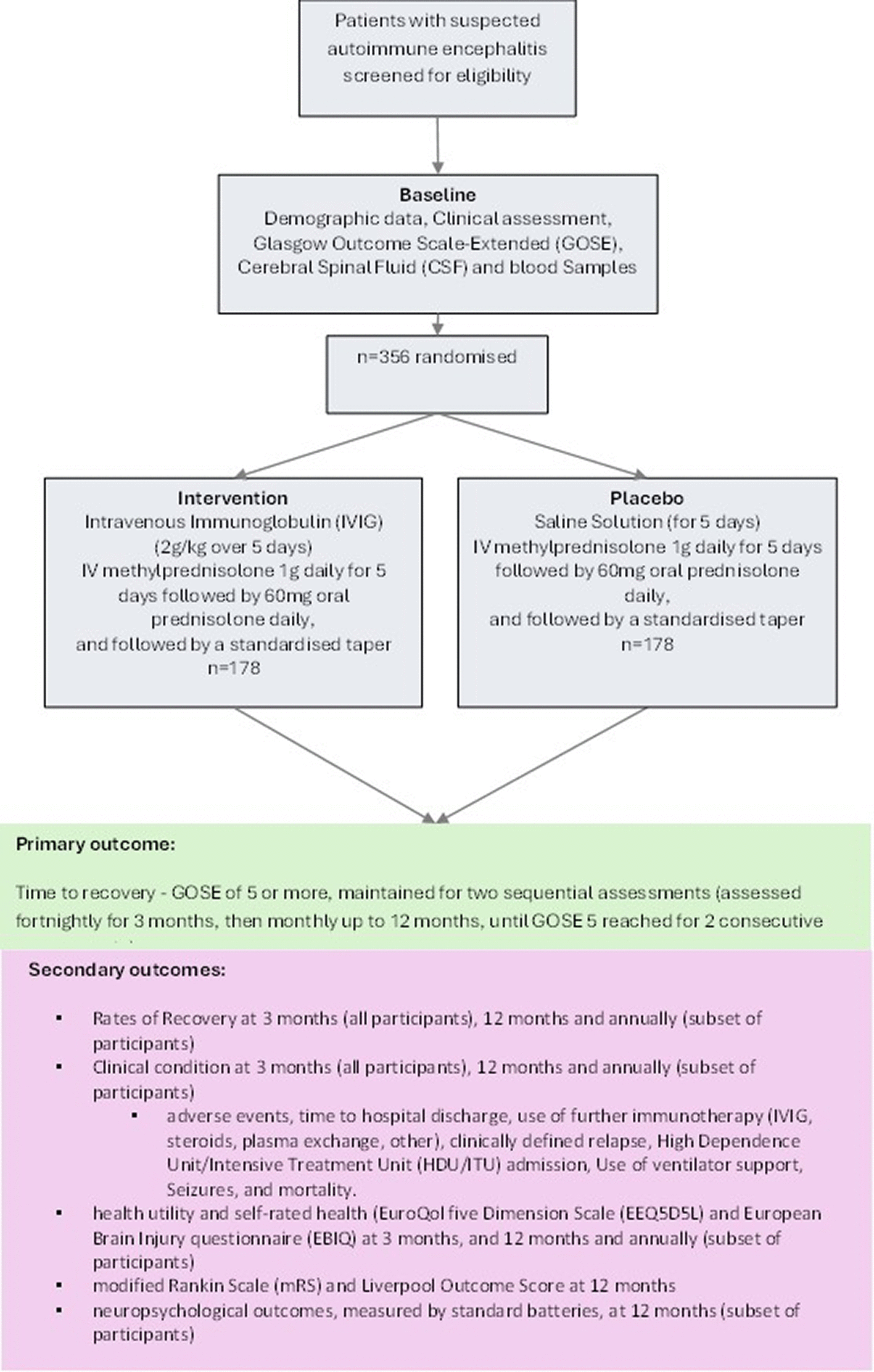
The primary hypothesis for this trial was that early treatment with IVIG leads to a quicker recovery time in adult with AIE. Recovery was defined as achieving a Glasgow Outcome Scale - Extended (GOSE) of 5 or more after two sequential assessments (with a maximum of 25 assessments); GOSE ranges from 1 (death) to 8 (full recovery), with 5 indicating ability to live independently.18
The secondary outcomes evaluated the recovery progress at set time points of three and 12-months post-randomisation, rates of clinical outcomes including adverse events, time to hospital discharge, use of further treatments, relapse, high dependency unit/intensive treatment unit (HDU/ITU) admission, seizures, use of ventilator support, and mortality, assessment of neuropsychological outcomes, and assessment of quality of life and self-rate health. The trial also aimed to explore the mechanism by which IVIG may change time to recovery. A summary of the trial can be found in Figure 1.
The non-profit organisation Encephalitis International (EI) supported the trial’s public and patient involvement. Encephalitis International advocates for and supports patients affected by encephalitis and their families. The structure of the trial was driven by questions important to people affected by encephalitis, and surveys were sent to members of EI who provided key input on trial design. They also advised on the development of trial documentation, analysis, reporting, and dissemination of the trial. The chief executive of EI co-wrote the grant and was one of the applicants, and key members from EI attended monthly trial management group (TMG) meetings providing advice regarding recruitment issues and contributed to decisions being made during those meetings. They also raised awareness of the trial through their research advocacy work. In particular, they provided contact information for individuals at key hospital sites across the UK and reached out directly to many of those individuals. They supported the dissemination of information about the trial through their newsletter for professionals, blog posts hosted on their website and by supporting the trial team attendance at their annual Encephalitis conference. They supported work to encourage trial locations to move through the trial set up phase faster by attending site investigator meetings and drafting a letter to Trust CEOs outlining the importance of this trial for patients. The Encephalitis International team have also contributed to the final report and dissemination activities for the trial.
ENCEPH-IG was a multicentre, double-blind, two-arm, placebo-controlled, randomised superiority trial of IVIG in adults with AIE, with internal pilot. The trial took place in UK NHS secondary and tertiary care centres. Tertiary care locations were defined as having an inpatient neurology ward and ability to perform neurosurgery. All other trial locations were classified as secondary care. The trial was prospectively registered on ISRCTN (69615004, registration date: 18/03/2021) (https://www.isrctn.com/ISRCTN69615004). Ethical approval was issues by Wales REC 3 March 25th, 2021. The final version of the protocol was V6.1, 07/10/2022.
Patients with suspected AIE were eligible for the trial if they met the inclusion and none of the exclusion criteria (see table 1). The site trial team, led by clinician with experience in encephalitis, confirmed eligibility and, if no exclusion criteria applied, the patient was enrolled and randomised. Participants’ age ranged between 17–79. Due to challenges in recruitment and in conjunction with our public and patient contributor some eligibility criteria were broadened nine months after the start of recruitment to reflect the diagnostic pathway better: potential participants could experience symptoms for up to 12 months, as opposed to only 3 months as outlined in V1 of the protocol.
Due to the impact of the disease, participant consent procedures differed according to the mental capacity of the patient. If the patient did not have capacity to consent to the trial, consent could be sought from a friend or family member (personal legal representative) or from a doctor not otherwise involved in the trial (professional legal representative). Once the participant regained capacity, they were asked to provide consent to remain in the trial. If a patient had capacity to provide consent to the join the trial and then subsequently lost capacity, they would remain in the trial, unless it was decided it was in their best interest to be withdrawn. A study partner was identified for all participants regardless of capacity. This was a family member or friend who could support the participant during the trial, and if necessary complete questionnaires (such as the GOSE) on their behalf. If a personal legal representative provided consent on behalf of the participant, they could also act as the study partner, but another individual could be appointed if this was more appropriate.
Participants were randomised 1:1 to receive either IVIG (2 g/kg ideal body weight over 5 days) or placebo treatment (0.9% saline solution). The dosing regime was selected because it is commonly used in neuro-inflammatory conditions, including in Guillain-Barré syndrome (GBS), and is the dose we used in a pilot study of IVIG in encephalitis.19 Treatment was started within 5 days of randomisation. It was recommended that IVIG doses were administered in 10 g vials, with the total dose rounded down to the nearest 10 g vial, and a maximum dose of 200 g. However, due to IVIG shortages, the protocol was amended to allow other concentrations of IVIG as long as the protocol dose was met and the bottles matched the placebo. Infusion rate was limited to a maximum of 1 g/kg per day. Adherence was monitored via clinical research forms, and trial prescription.
All participants also received methylprednisolone 1 g daily intravenously for 5 days, followed by 60 mg oral prednisolone daily for two weeks, followed by an oral taper regime. The prednisolone dose was reduced by 10 mg per week, until participants were receiving only 10 mg daily, and then reduced further by 1 mg per week until stopped. Steroid treatment could start up to 14 days prior to randomisation. Minor adjustments to the steroid regime and taper could be made based on participants tolerance and any adverse events (AEs). All participants received a proton pump inhibitor (or similar alternative) to protect against gastric ulcers, and a calcium supplement and bisphosphate to protect against bone density loss for the duration of steroid treatment. If adrenal insufficiency was suspected, trial locations followed standard local practice to manage the condition.
For the first 14 days post-randomisation, all other immune therapy, such as IVIG, and plasma exchange, was avoided. Once the 14-day period had elapsed, an assessment on whether the participant had improved, stabilised or deteriorated was made. Decisions on the need for additional immune therapy could be made at that time. Clinicians retained the option of providing additional rescue treatment within the 14-day window for reasons of participant safety.
The randomisation list used randomly permuted blocks, stratified by site type (secondary care only vs secondary and tertiary care) as well as time from symptom onset (0–2 weeks vs greater than 2 weeks). Randomisation took place via an online data collection system developed internally by the Centre for Trials Research. The final list was developed by a statistician not otherwise involved in the trial. Once eligibility data were entered onto the online database, participants were automatically randomised. All research site staff, data managers, and participants and their family or friends were blind to treatment allocation. As trial locations were using their own stock of IVIG, site pharmacy staff were not blind to treatment allocation. The trial manager was not blind to treatment allocation, in order to manage placebo supply. The trial manager was not involved in any data collection. Once participants were randomised, two emails were automatically generated, one for the clinical staff that confirmed the participant details and that they were successfully randomised, the second for the pharmacy staff which was the same as the clinical staff email but also included the treatment allocation details. Where possible, bottles were matched for volume and upon dispensing were placed in an opaque bag to conceal allocation. Emergency unblinding was available 24 hours a day through the online data collection portal. Back up unblinding could be accessed through the site pharmacy. IVIG and placebo bottles were matched for size and volume and placed in an opaque bag which was then sealed prior to dispensing.
The primary clinical outcome was time to recovery, with recovery defined as achieving a score of 5 or greater on the GOSE for two assessments in a row. The GOSE is an 8-point measure that classifies a person’s overall functional recovery after brain injury, ranging from death to a full return to independent living with minimal or no symptoms.20 The trial used a web-based version of the GOSE, which was pilot tested with 229 encephalitis patients and families. The scale was administered every two weeks for 3 months and then monthly up to 12 months post-randomisation. Two consecutive measurements were required in order to ensure sustained improvement, and to account for inconsistencies of response. To assess longer term outcomes, after primary outcome had been achieved, all participants completed the GOSE at 3 months and a subset of participants completed it 12-, 24-, 36-, and 48-months post-randomisation, even if they had already achieved the primary endpoint.
The secondary objectives determined the effects of IVIG on the following:
1. Progress of recovery at 3- and 12-months post-randomisation
2. Rates of clinical outcomes:
3. Neuropsychological outcomes
4. Health utility and self-rated health
Site research staff completed clinical assessments of the participants recovery and care needs at 2 weeks, 3 months and 12 months post-randomisation. The participants’ health-related quality of life and self-rated health, as measured using the EQ 5D-5L and the European Brain Injury Questionnaire, were assessed at 3 month and 12 months post-randomisation. Neuropsychological and functional assessments were administered at 12 months post-randomisation and included the modified Rankin score,21 the Barthel Index,22 Liverpool Outcome Score,23 The Addenbrookes Cognitive Examination III,24 The auditory memory index, visual memory index, immediate memory index and delayed memory index subscales of the Wechsler Memory Scale,25 the processing speed index and the working memory index of the Weschler adult intelligence test,26 the confrontational naming task from the neuropsychology assessment battery,27 the trail making test A and B,28 the test of premorbid function,29 Beck’s depression inventory,30 Beck’s anxiety inventory,31 and the perceived deficits questionnaire.32
The trial also aimed to test two exploratory hypotheses to understand the mechanism by which IVIG reduces brain inflammation:
1. Patients with AIE have aberrant IgG Fc glycosylation affecting function, as in other autoimmune diseases, and IVIG modulates this.
2. IVIG reduces levels of anti-neuronal antibodies, as well as downregulating pro-inflammatory host pathways, and these correlate with clinical outcome.
Participants could also consent to donate samples of cerebrospinal fluid (CSF) and blood. Participants could decline to provide samples and still enter the trial. CSF was salvaged from the lumbar puncture that was taken as part of the diagnosis process, and participants could agree to have an additional lumbar puncture to collect a sample of CSF at 2 weeks post-randomisation. Blood samples were collected at baseline, before treatment started at 2 weeks, and 3 months post-randomisation. Serum samples (8.5 ml serum separator tubes) were collected, whole blood (3 ml EDTA tubes), and RNA-stabilised blood samples (2.5 ml PaxGene RNA tube).
An internal pilot was planned which included assessments of time to recruit the first 50 participants, assessments of retention, adherence, and contamination. However, the trial was closed to recruitment before this point was reached. Retention was defined as the percentage of randomised patients remaining in the trial for assessment of the primary outcome. Adherence was defined as the percentage of participants commencing treatment within five days of randomisation. Contamination was defined as the percentage of participants randomised to the placebo arm who received IVIG within the first 14 days post-randomisation.
All AEs that met the standard criteria for Serious Adverse Events (SAEs) were reported as such, with two trial specific criteria: opportunistic Infections (all grades), and unexpected or severe neuropsychiatric events (all grades). Expectedness was monitored through clinical review, and all suspected unexpected serious adverse reactions (SUSARs) were monitored in line with regulatory requirements. Death due to disease progress did not need to be reported within the standard SAE timeframe, unless causality was suspected. This was reported via the clinical case report forms and monitored as part of the trial’s secondary outcomes.
The initial sample size calculation included in the protocol assumed a median time to recovery of 87 days in the placebo arm, with 20% of participants not expected to have recovered (as assessed by the GOSE) by 12-months, based on the ENCEPH-UK study.33 The assumed hazard ratio of 1.43 was equivalent to a 30% relative improvement (or an absolute reduction of 26 days) in the median time to recovery in the intervention arm. Extensive discussions with doctors, patients and their families indicated that this would be considered a clinically significant improvement in recovery time. To achieve 85% power at a one-sided 5% significance level while accounting for a 5% drop out rate, 286 participants were required. However, in August 2024 the funder directed closure to recruitment, after recruitment of 21 participants and before the internal pilot analysis took place.
The primary analysis included all participants with data on the primary outcome. Data were analysed descriptively only; no confidence intervals or p-values were calculated. The median [IQR] of the time from randomisation to recovery was reported (defined as two consecutive GOSE scores ≥5) between the IVIG and placebo arms. Swimmer plots were used to provide a visual representation of the subject-level data of time from randomisation to recovery, presented overall and by trial arm. Secondary analyses included all participants with the relevant outcome data. Secondary outcomes were analysed using the appropriate descriptive statistics and reported overall and by trial arm. Categorical data was summarised by frequencies with percentages, continuous data was summarised by mean (SD), when normally distributed, and median [IQR], when data were skewed.
Descriptive statistics were provided on feasibility outcomes by trial arm, including adherence (the percentage of participants who started their allocated trial treatment in the first 5 days post-randomisation), retention (the percentage of randomised participants who remained in the trial for assessment of the primary outcome), and contamination (the percentage of participants randomised to the placebo arm who received IVIG within the first 14 days post-randomisation). Also, instances of treatment switching were reported, the use of further immune therapy (IVIG, corticosteroids, plasma exchange, or other) and reasons for initiating further immune therapy. The proportion of participants that initiated treatment at any time point were reported, the implementation of the treatment (percentage of doses received), and the participants’ adherence to treatment (number of days on treatment before stopping, from initiation to discontinuation). The frequency (percentage) of AEs and SAEs were presented overall and by trial arm.
All statistical analyses were carried out in Stata version 18 (StataCorp LLC, College Station, TX, USA). The full statistical analysis plan is available from the ISRCTN registration page.
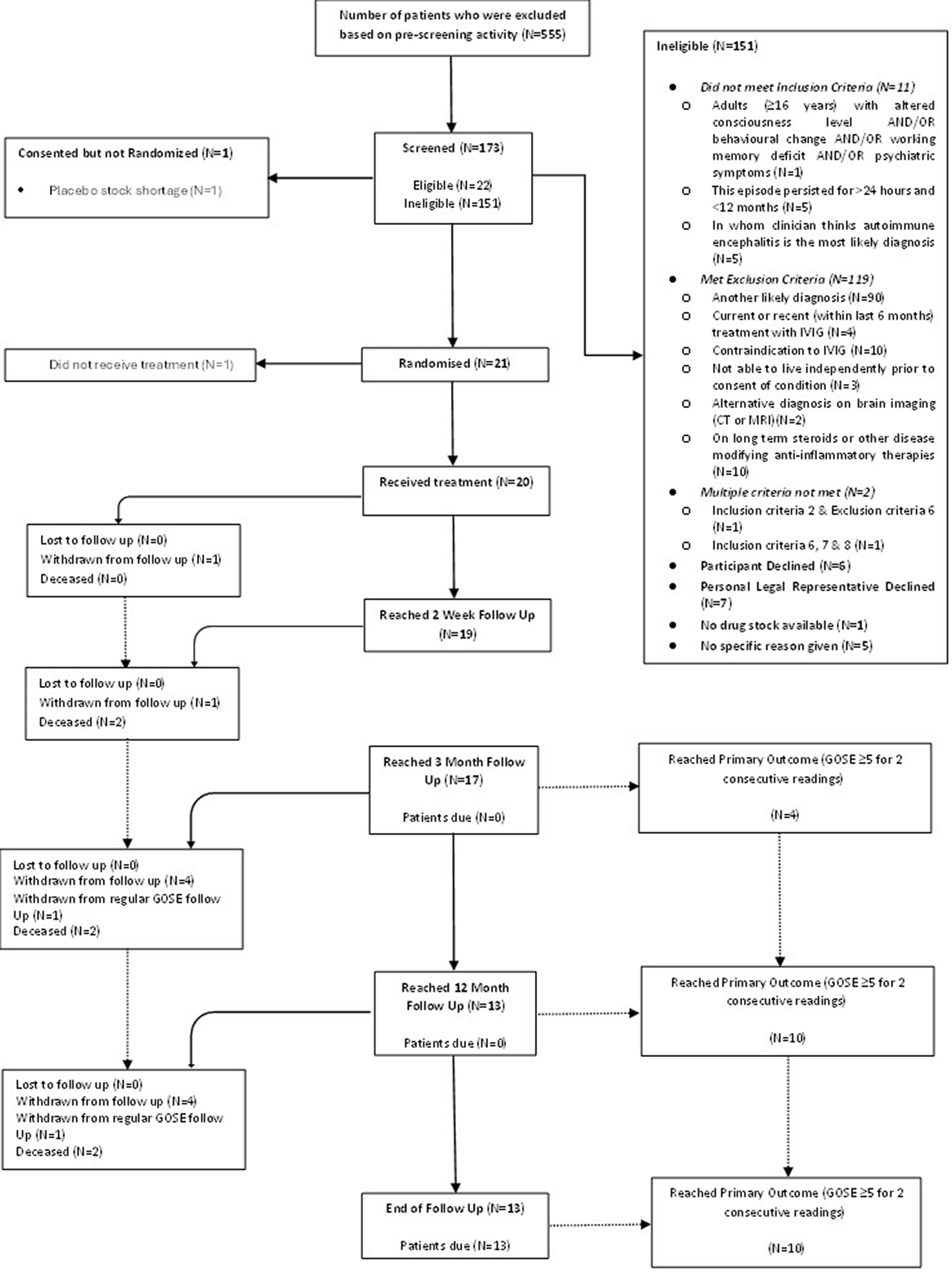
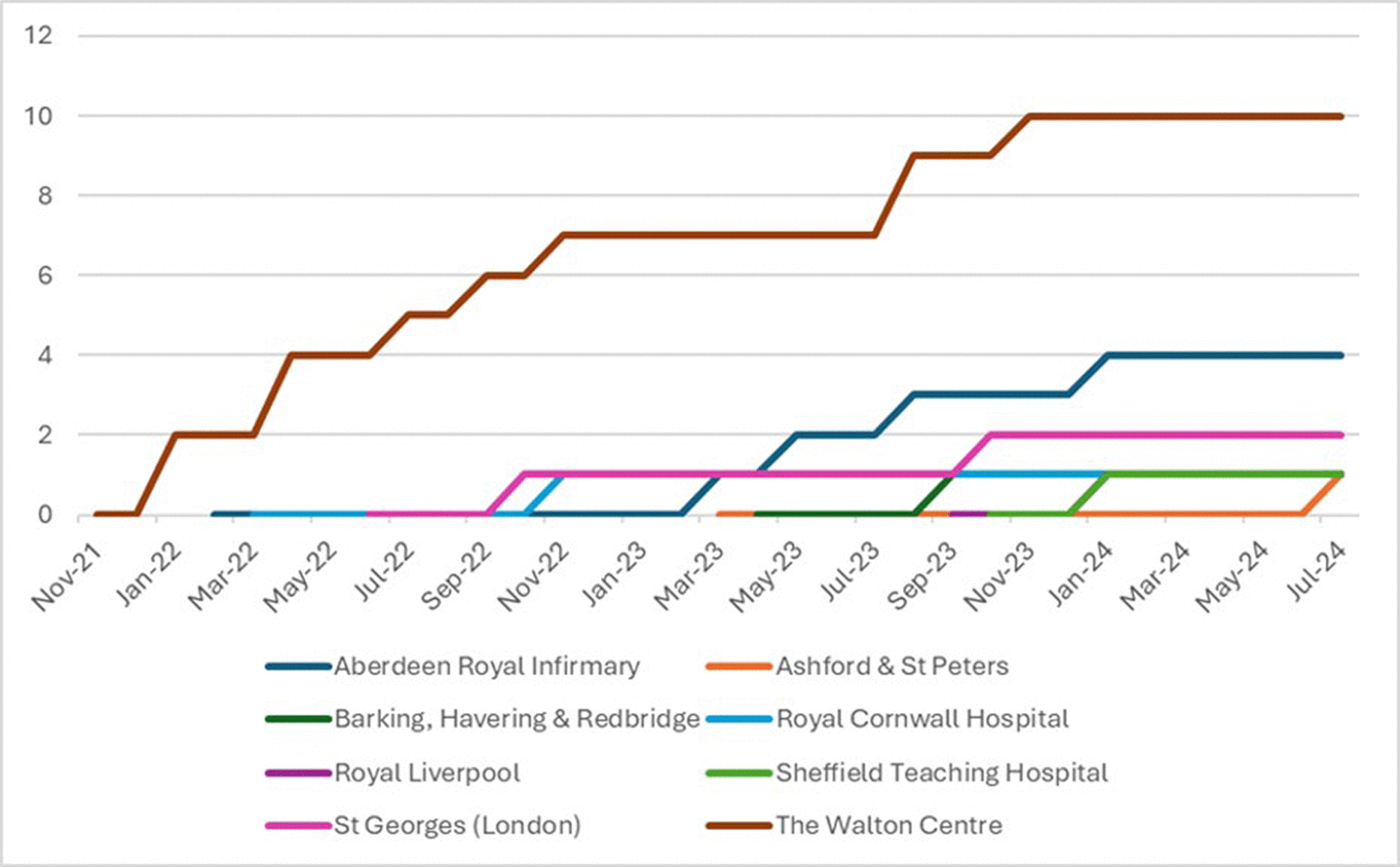
Screening took place between November 11th, 2021, and October 31st, 2024 (36 months) across 11 trial locations: 8 secondary and tertiary care centres, and 3 secondary care only centres.34 555 patients were excluded based on pre-screening activity, 170 were screened, 1 consented but was not randomised, 128 failed the inclusion/exclusion criteria, 11 patients/legal representatives declined, and 5 gave no specific reason.34 21 patients were recruited, of whom 10 were randomised to IVIG treatment and 11 were randomised to placebo (see CONSORT diagram in Figure 2 and cumulative recruitment by site in Figure 3). Five participants were recruited prior to the change in eligibility criteria. The trial did not reach the internal pilot recruitment threshold and ended early due to low recruitment numbers. In total, 15 protocol deviations were recorded.34 Five participants withdrew during the trial, one prior to receiving treatment and four within 12 months prior to achieving the primary outcome.34
Baseline demographic and clinical characteristics were generally balanced between trial arms and are summarised in Table 2. The median age of participants was 70 years (IQR 60–72), 52% were male and 95% were of white ethnicity. Nearly half of participants (10/21) were randomised 8–12 weeks after symptom onset. Participants in the placebo arm were slightly younger than those in the intervention arm. Most participants in the placebo arm (9/11) were in the lower severe disability GOSE category, whereas participants in the intervention arm were more evenly split between the lower severe (5/10) and upper severe (4/10) disability categories..
Participant status at 12 months was similar between trial arms ( Figure 4). Approximately half of participants had recovered (10/21), 10% (2/21) had not recovered, 10% (2/21) had died, and 24% (5/21) had withdrawn. The study closed before a further 10% (2/21) reached the 12-month follow-up; these participants had not recovered at the time of study closure. Participants in the intervention arm had a shorter time to recovery median 70 days [IQR 56–112]) compared with those in the placebo arm (median 140 days [IQR 112–224]). Time to recovery was comparable when using either the scheduled or actual GOSE completion dates ( Table 3).
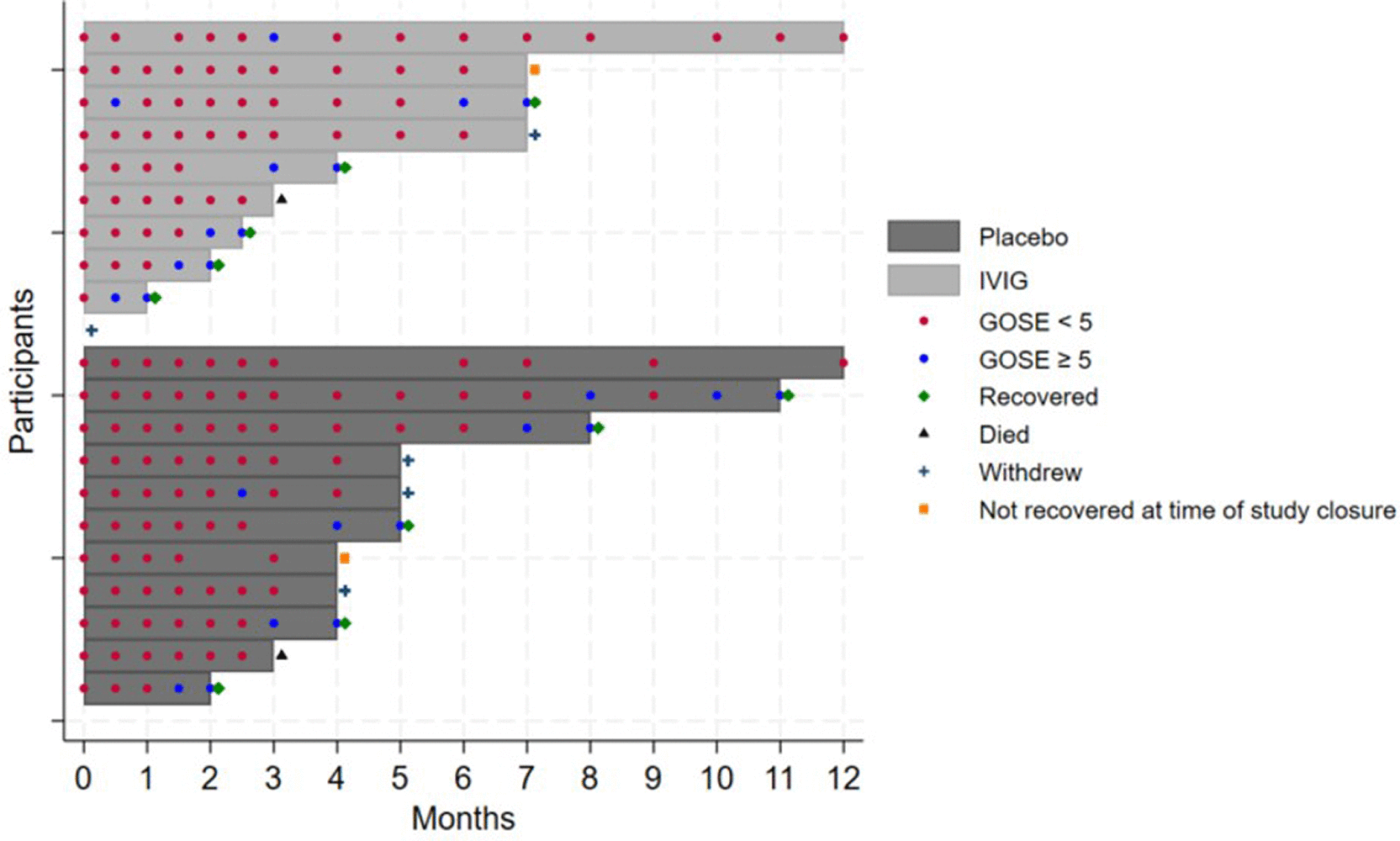
IVIG = Intravenous Immunoglobulin, GOSE = Glasgow Outcome Scale – Extended.
Completion of neuropsychological outcomes was low and cannot meaningfully be interpreted.34 EQ-5D health-related quality of life outcomes at 3 and 12 months were similar across arms, with slightly lower health ratings in the placebo arm. Site research staff administered treatment according to the protocol for 80% (8/10) of the intervention arm: one participant withdrew before treatment commenced and one participant declined the fourth and fifth doses of intravenous methylprednisolone. Additional treatments were received by 29% (6/21) of participants, including rituximab (2/6), plasma exchange (1/6), IVIG (1/6), or both IVIG and plasma exchange (1/6). No participants received additional treatment within 14 days of randomisation; four received treatment within one month, one within two months, and one at just under 12 months post-randomisation (median 24 days [IQR 19, 49]). Three participants died overall: two within 12 months (before recovery) and one after 24 months (following recovery). One death was related to encephalitis, and none were related to IVIG. The cause of death could not be ascertained for one participant who died in the community, as the death certificate could not be accessed. Treatment adherence was high, with 90% (9/10) of the intervention arm commencing treatment within 5 days. One participant in each arm received additional IVIG, with the placebo arm participant receiving it more than 14 days after randomisation, so there was no contamination of groups, as we define it. Among participants who received additional IVIG, one participant in the intervention arm received an infusion of approximately 55 g that was stopped mid-infusion on day 4, while the dose for the participant in the placebo arm was not recorded. Over half of participants (12/21) remained in the study for assessment of the primary outcome. The intervention arm had slightly shorter times to hospital discharge ( Table 4). Eighty-five percent of participants received at least one concomitant medication.34
| Trial arm | |||
|---|---|---|---|
| Placebo | IVIG | Total | |
| N | 11 (52.4%) | 10 (47.6%) | 21 (100.0%) |
| EQ 5D3L score at 3-months | 0.6 [0.4, 0.7] | 0.7 [0.3, 0.8] | 0.7 [0.4, 0.7] |
| N = 9 | N = 8 | N = 17 | |
| Health rating (0–100) at 3-months | 50.0 [34.0, 75.0] | 75.0 [55.0, 87.5] | 70.0 [40.0, 80.0] |
| N = 9 | N = 8 | N = 17 | |
| EQ 5D3L score at 12-months | 0.8 [0.6, 0.9] | 0.7 [0.5, 0.8] | 0.8 [0.5, 0.9] |
| N = 6 | N = 5 | N = 11 | |
| Health rating (0–100) at 12-months | 67.5 [60.0, 83.0] | 80.0 [80.0, 85.0] | 80.0 [60.0, 85.0] |
| N = 6 | N = 5 | N = 11 | |
| Treatment administered as outlined in protocol | |||
| No | 0 (0.0%) | 2 (20.0%) | 2 (9.5%) |
| Yes | 11 (100.0%) | 8 (80.0%) | 19 (90.5%) |
| Reason for changes to protocol treatment (denominator: treatment not administered as outlined in protocol) | |||
| Other | N/A | 1 (50.0%) | 1 (50.0%) |
| Patient refused | N/A | 1 (50.0%) | 1 (50.0%) |
| Change to protocol treatment (denominator: treatment not administered as outlined in protocol) | |||
| Patient had full course of IMP but declined 4&5 of IV methylprednisolone | N/A | 1 (50.0%) | 1 (50.0%) |
| Patient withdrew before treatment commenced | N/A | 1 (50.0%) | 1 (50.0%) |
| Received additional treatment | |||
| No | 3 (27.3%) | 4 (40.0%) | 7 (33.3%) |
| Yes | 4 (36.4%) | 2 (20.0%) | 6 (28.6%) |
| Missing | 4 (36.4%) | 4 (40.0%) | 8 (38.1%) |
| Additional treatment received (denominator: those who received additional treatment) | |||
| Plasma Exchange | 1 (25.0%) | 0 (0.0%) | 1 (16.7%) |
| IVIG | 0 (0.0%) | 1 (50.0%) | 1 (16.7%) |
| Rituximab | 2 (50.0%) | 0 (0.0%) | 2 (33.3%) |
| Anti-epileptic | 0 (0.0%) | 1 (50.0%) | 1 (16.7%) |
| IVIG & plasma exchange | 1 (25.0%) | 0 (0.0%) | 1 (16.7%) |
| Reason for additional treatment (denominator: those who received additional treatment) | |||
| Lack of patient improvement | 4 (100.0%) | 1 (50.0%) | 5 (83.3%) |
| Control of seizures | 0 (0.0%) | 1 (50.0%) | 1 (16.7%) |
| Clinically defined relapse since baseline (returning symptoms of encephalitis after starting to recover) | |||
| No | 8 (72.7%) | 8 (80.0%) | 16 (76.2%) |
| Yes | 3 (27.3%) | 1 (10.0%) | 4 (19.0%) |
| Missing | 0 (0.0%) | 1 (10.0%) | 1 (4.8%) |
| Admitted to ITU or HDU between baseline and 3-months | |||
| No | 10 (90.9%) | 9 (90.0%) | 19 (90.5%) |
| Yes | 1 (9.1%) | 0 (0.0%) | 1 (4.8%) |
| Missing | 0 (0.0%) | 1 (10.0%) | 1 (4.8%) |
| Experienced seizures between baseline and 3-months | |||
| No | 6 (54.6%) | 6 (60.0%) | 12 (57.1%) |
| Yes | 5 (45.5%) | 3 (30.0%) | 8 (38.1%) |
| Missing | 0 (0.0%) | 1 (10.0%) | 1 (4.8%) |
| Required ventilatory support between baseline and 3-months | |||
| No | 10 (90.9%) | 8 (80.0%) | 18 (85.7%) |
| Yes | 1 (9.1%) | 1 (10.0%) | 2 (9.5%) |
| Missing | 0 (0.0%) | 1 (10.0%) | 1 (4.8%) |
| Mortality (while in the trial) | |||
| No | 7 (63.6%) | 6 (60.0%) | 13 (61.9%) |
| Yes | 1 (9.1%) | 2 (20.0%) | 3 (14.3%) |
| Withdrew | 3 (27.3%) | 2 (20.0%) | 5 (23.8%) |
| Time until death (days) | 77.0 [77.0, 77.0] | 441.5 [107.0, 776.0] | 107.0 [77.0, 776.0] |
| N = 1 | N = 2 | N = 3 | |
| Death related to Encephalitis (denominator: those who died) | |||
| No | 1 (100.0%) | 0 (0.0%) | 1 (33.3%) |
| Yes | 0 (0.0%) | 1 (50.0%) | 1 (33.3%) |
| Missing* | 0 (0.0%) | 1 (50.0%) | 1 (33.3%) |
| Cause of death related to IVIG (denominator: those who died) | |||
| No | 1 (100.0%) | 1 (50.0%) | 2 (66.7%) |
| Missing* | 0 (0.0%) | 1 (50.0%) | 1 (33.3%) |
| Cause of death (denominator: those who died) | |||
| Disseminated intravascular coagulation & AIE | 0 (0.0%) | 1 (50.0%) | 1 (33.3%) |
| Ischaemic heart disease, Pneumonia & Crohn’s disease | 1 (50.0%) | 0 (0.0%) | 1 (33.3%) |
| Missing* | 0 (0.0%) | 1 (50.0%) | 1 (33.3%) |
| Adherent (commenced treatment within 5 days) | |||
| No | 0 (0.0%) | 1 (10.0%) | 1 (4.8%) |
| Yes | 11 (100.0%) | 9 (90.0%) | 20 (95.2%) |
| Received additional IVIG | |||
| No | 8 (72.7%) | 7 (70.0%) | 15 (71.4%) |
| Yes | 1 (9.1%) | 1 (10.0%) | 2 (9.5%) |
| Missing | 2 (18.2%) | 2 (20.0%) | 4 (19.0%) |
| % of doses received (denominator: those who received additional IVIG) | |||
| +/− 55 g stopped mid infusion on day 4 | 0 (0.0%) | 1 (100%) | 1 (50.0%) |
| Missing | 1 (100%) | 0 (0.0%) | 1 (50.0%) |
| Number of days on treatment | N/A (missing) | 4 [4,4] | 4 [4, 4] |
| N = 0 | N = 1 | N = 1 | |
| Contaminated (received IVIG within 14 days in placebo arm) | |||
| No | 11 (100.0%) | N/A | 11 (100.0%) |
| Days to first discharge from hospital | 25.0 [14.0, 53.0] | 13.0 [11.5, 16.0] | 14.0 [13.0, 43.0] |
| N = 9 | N = 8 | N = 17 | |
| Days to last discharge from hospital | 58.0 [25.0, 81.0] | 14.5 [13.0, 30.5] | 21.5 [13.0, 63.0] |
| N = 6 | N = 8 | N = 14 | |
* Cause of death could not be ascertained for one participant who died in the community and the death certificate was not accessible. Continuous data summarised by median [Q25, Q75]. EQ 5D3L = EuroQol 5-Dimension 3-Level version, IVIG = Intravenous Immunoglobulin, ITU = Intensive Therapy Unit, HDU = High Dependency Unit.
18 participants experienced at least one AE: 91% (10/11) in the placebo arm and 80% (8/10) in the intervention arm.34 The mean number of AEs per participant was slightly higher in the intervention arm (3.1, SD 2.0) compared with the placebo arm (1.8, SD 1.3). The most frequently reported AE in the intervention arm was gastrointestinal bleed, observed in three participants (38%, 3/8). Two events were reported at the 2-week follow up and one at the 3-month follow up. While pneumonia was most frequent in the placebo arm, observed in four participants (40%, 4/10). One event was reported at the 2-week follow up and three at the 3-month follow up.
15 participants reported a SAE: 82% (9/11) in the placebo arm and 60% (6/10) in the intervention arm. In total, 29 SAEs were reported, with 59% (17/29) in the placebo arm and 41% (12/29) in the intervention arm. Approximately half were infections or infestations, and the majority were graded as severe but not life threatening, requiring hospitalisation or prolongation of existing hospitalisation. 69% (20/29) were confirmed as SAEs, 17% (5/29)) were considered related to IVIG, and 31% (9/29) were unexpected.34
ENCEPH-IG was a multicentre, double-blind, two-arm, placebo-controlled, randomised superiority trial of IVIG in adults with AIE, with planned internal pilot. 21 patients were recruited (10 to the intervention arm; 11 to the placebo arm). The trial was stopped early due to slow recruitment. Due to early termination, insufficient patients were recruited to draw conclusions about the efficacy of IVIG. Nevertheless, the trial provides an opportunity to learn operational lessons for the design of future trials in AIE, as well as other heterogeneous acute neurological conditions.
The cohort was generally older than those described in previous AIE studies (median age 70.0 years, IQR [60.0 to 72.0]), aligning with emerging data that AE is increasingly recognised in older adults.35 Final diagnosis and antibody status of recruited participants was not collected. Participants were predominantly white, a distribution that does not reflect the diversity of the general population. Given that racial and ethnic disparities are recognised in encephalitis epidemiology and outcomes, future trials should incorporate strategies to improve recruitment of under-represented groups.36 Seizures, together with behavioural change, were the most common presenting feature, consistent with prior observational cohorts. 14% of participants were admitted to HDU/ICU at enrolment, indicating that the trial successfully recruited patients with severe disease. Six participants received additional immune therapies during the trial period (four in the placebo group and two in the IVIG group), although there was no contamination of the placebo arm within the first 14 days after randomisation. Overall, 47% of participants reached a favourable outcome (GOSE ≥5) at 12 months, consistent with growing recognition that long-term disability after AIE is common despite early treatment.37 Four patients reached GOSE ≥5, but did not reach the primary outcome because this was not maintained for two consecutive assessments. This highlights the importance of accounting for fluctuations in clinical course when assessing time to recovery in AIE. Median time to first hospital discharge was 14 days (IQR 30) overall, with earlier discharge in the IVIG arm (median 13 days, IQR 4.5) compared with placebo (median 25 days, IQR 39). Three participants died during follow-up: one from ischaemic heart disease and pneumonia, one from disseminated intravascular coagulation, and one from an undetermined cause. Numbers of AEs were similar in IVIG and placebo arms.
The start of the trial coincided with the outbreak of COVID-19 and the subsequent lockdowns. COVID-19 and the subsequent changes in the research landscape had a significant and long-lasting impact on the trial.38,39 The challenges faced by the trial included shortages of IVIG, delays in site opening, and delays recruiting new trial locations. Despite national engagement and strong interest from clinicians, the regulatory and logistical processes required to initiate a large number of centres progressed more slowly than anticipated. As a result, many planned trial locations did not begin recruitment or opened late in the enrolment period, severely constraining the potential participant pool. At the early stages of the pandemic there was a significant and acute shortage of IVIG which affected the ability of trial locations to proceed with set-up activities. On average it took trial locations 15 months to open to recruit, with delays owing to pandemic pressures and prioritisation of COVID-19 research, as well as limited research capacity and workforce pressures at trial locations in the acute stages of the pandemic. In successfully opened trial locations, these pressures affected capacity to screen and recruit participants. The workforce pressures continued after the acute phase of the pandemic with paused studies needing to be restarted, and reduced staffing numbers due to burnout and recovery from sickness. Our aim was to open the trial in 50 trial locations across the UK, but despite regular site recruitment drives, we were only able to add 23 trial locations to the ethics application and only opened 11 trial locations to recruitment. Financial concerns regarding the limited research support costs, and limited excess treatment costs, were significant barriers to timely site opening and the addition of trial locations. The costs for the trial were calculated based on the assumption that IVIG was available to all participants in accordance with the commissioning guidelines, and that it would ordinarily be given to approximately 50% of patients (because of clinical equipoise). In practice, we found that IVIG was not used regularly across all trial locations in the UK. For some trial locations, joining the trial represented an increased cost related to higher IVIG use; for other trial locations who used it in most patients, the trial represented a potentially reduced cost due to trial locations being reimbursed through excess treatment costs.
The treatment paradigm for AIE has increasingly shifted toward earlier and more intensive immune therapy, driven by retrospective data suggesting improved outcomes and by extrapolation from related neuroinflammatory disorders. Against this backdrop, we anticipated that clinical equipoise regarding the use of IVIG might erode during the trial. In practice, contamination of the placebo arm was low and only a small proportion of participants received additional immunotherapies, indicating that equipoise was largely maintained among enrolled participants. Nonetheless, perceptions of IVIG as a de facto first-line therapy in some centres may have influenced both site activation and recruitment, with clinicians less willing to randomise patients to placebo where IVIG was already embedded in routine practice. The challenge around recruitment to placebo trials has been found in other research areas, with some clinicians and participants expressing an unwillingness to be involved in a trial that would result in perceived lack of treatment.40,41 This highlights the challenge of conducting placebo-controlled trials in rapidly evolving therapeutic areas where local practice patterns vary and consensus is still emerging.
ENCEPH-IG is one of a number of trials of IVIG in neurological disease which have failed to recruit successfully, including a trial of IVIG in childhood encephalitis (infectious and autoimmune),42 one in autoimmune epilepsy,43 and another in myelitis.44 All of these failed trials investigated acute, uncommon conditions. Meanwhile, successful trials have been completing investigating IVIG for chronic conditions (such as chronic inflammatory demyelinating polyneuropathy (CIDP)45 and myasthenia gravis,46 or more common acute conditions (such as Guillain-Barré syndrome.46 Nevertheless, several important clinical trials in AIE are currently underway, reflecting an increasing willingness to test novel immune therapies in controlled, prospective settings. The most advanced of these is ExTINGUISH, a phase II randomised, placebo-controlled trial of the anti-CD19 monoclonal antibody Inebilizumab in patients with anti-NMDAR encephalitis, administered in addition to standard first-line therapy.47 The GENERATE-Boost trial is investigating Bortezomib (a proteasome inhibitor targeting long-lived plasma cells) in severe AIE (with neuronal surface antibodies) that persists despite prior B-cell depletion.48 A more intensive combination approach is being studied in the open-label Ofatumumab plus Daratumumab Combination Therapy for CNS Autoimmune Disease, which pairs B-cell depletion (ofatumumab) with plasma-cell depletion (daratumumab). The phase III trial SATRALIZUMAB in Anti-NMDAR or Anti-LGI1 Encephalitis is testing the interleukin-6 receptor antagonist Satralizumab in patients with either NMDAR or LGI1 antibody–associated encephalitis (ClinicalTrials.gov ID NCT05503264). All of these studies are recruiting patients with known neuronal surface antibodies, reducing heterogeneity of the cohort. However, this also reduces their ability to recruit early, undifferentiated patients with suspected AIE and test the value of early treatment, as we attempted to do. A Japanese phase III study NPB-01 in AIE is assessing high-dose IVIG in patients who remain symptomatic after steroid pulse therapy. This trial includes patients who meet the diagnostic criteria for AIE, including those without neuronal surface antibodies. However, there is a clear need for further studies to address the early diagnostic and treatment pathway for patients with AIE.
Traditional parallel-group RCTs are difficult to deliver in a rare, heterogeneous, and rapidly evolving disease area. Work by Abboud et al.49 has highlighted the high trial failure rate in AIE research. The ENCEPH-IG trial attempted to implement some of the mitigation strategies, including identification of participants requesting alerts when trial location labs receive requests for tests that might indicate AIE, not restricting participation based on antibody subtype, and encouraging regional centres to work with local hospitals to identify and refer cases for treatment at the regional centres. The implementation of these strategies varied significantly across the different trial locations, highlighting that a significant cultural shift must take place for research in this area to be successful. Alternative adaptive designs are preferable to address the pragmatic issues of recruitment, treatment variability, and outcome measurement. Platform trials, or master protocols, could allow simultaneous testing of multiple therapies, while ensuring that patients with the highest risk of poor outcome, or with clearly defined immunological signatures, are prioritised. Careful stratification by antibody status, disease severity, and stage of illness, alongside the incorporation of mechanistic, imaging, and biomarker endpoints, will help mitigate difficulties in recruitment. Realistic recruitment targets, longer follow-up periods, and built-in interim monitoring will be essential to avoid underpowered or prematurely terminated studies. Ultimately, progress in AE will depend on an integrated research infrastructure in which adaptive trials and high-quality observational registries operate in parallel, enabling the field to generate robust, generalisable evidence for treatments.
ENCEPH-IG recruited 21 patients with AIE but was halted early owing to slow site set-up and recruitment. It is not possible to draw conclusions about the efficacy of early IVIG in AIE. Research within the general area of rare disease and within the specific area of AIE is inherently demanding. Trials take the same intensive set up and screening processes for participants but generally attract less financial support due to lower recruitment numbers. This places a disproportionate burden on recruiting trial locations, which can affect trial setup and delivery. To address this barrier, trial locations need targeted investment and practical support to be encouraged to get in involved in rare disease trials. Alternative trial designs, including platform trials, alongside national and international registries, should be employed in future to improve treatment of AIE.
Trial ethical approval was issued by Wales REC 3 25/03/2021 (ref: 21/WA/0050) and MHRA regulatory approval 30/04/2026 (ref: CTA 04196/0059/001–0001). All participants or legal representatives provided written informed consent to take part in the trial. Consent for the one minor recruited was giving by the parent/guardian and assent was not sought as the participant did not have capacity to consent.
Provide sufficient details of any financial or non-financial competing interests to enable users to assess whether your comments might lead a reasonable person to question your impartiality. Consider the following examples, but note that this is not an exhaustive list:
Sign up for content alerts and receive a weekly or monthly email with all newly published articles
Register with NIHR Open Research
Already registered? Sign in
If you are a previous or current NIHR award holder, sign up for information about developments, publishing and publications from NIHR Open Research.
We'll keep you updated on any major new updates to NIHR Open Research
The email address should be the one you originally registered with F1000.
You registered with F1000 via Google, so we cannot reset your password.
To sign in, please click here.
If you still need help with your Google account password, please click here.
You registered with F1000 via Facebook, so we cannot reset your password.
To sign in, please click here.
If you still need help with your Facebook account password, please click here.
If your email address is registered with us, we will email you instructions to reset your password.
If you think you should have received this email but it has not arrived, please check your spam filters and/or contact for further assistance.

Comments on this article Comments (0)