Keywords
early years, economic costs, risk factors, early intervention

early years, economic costs, risk factors, early intervention
The circumstances and experiences that shape early years development are important risk and protective factors that may influence a wide range of later life outcomes across multiple policy domains – including health, education, employment, social care, and crime. These impacts can be felt right across the life course, including effects during the primary and secondary school years, adolescence and the transition to the labour market, working age, and even during retirement. Evidence exists to show that experiences (positive and negative) encountered during the critical 1001 days from conception to age two can impact individuals throughout childhood, into adult life and across generations.1,2 Maternal mental and physical health prior to birth can also affect outcomes for the baby, and the period during which the brain is rapidly developing is also crucial.3
While the first period of life is key in understanding later outcomes, this should be seen as a dynamic process whereby specific issues are observed beyond the early years, for example when a child starts to attend school, but can potentially be explained by earlier exposures. It is evident that nature and environment interact in complex ways which can be to the benefit or detriment of the young person. Such risks include individuals’ cognitive development, emotional health, and physical health, and exposures to various parental and family factors and circumstances. Problems in these areas and those encountered later in childhood can not only have long-term detrimental impacts on individuals’ quality of life, health and well-being, and economic outcomes, but can also impose substantial public costs.4–6
Quantification of the magnitude of these effects on different outcomes and public costs at different stages of life can influence policy decisions around intervening in the early years. This is particularly important given the increasing policy focus on the period from conception to age two as a foundation for later health, wellbeing, education and wider life chances. Evidence linking early-life risks with longer-term economic consequences is therefore needed to inform decisions about early intervention and to support investment in approaches that give all children the best start in life.7 Inequalities in health outcomes are well known and adversity in early childhood and throughout the life course tends to be more prevalent amongst underprivileged groups.8,9
The types of exposures that children have, the age at which they occur, and the subsequent outcomes are varied, and numerous studies have been conducted to explore these. Systematic and other reviews have also been conducted examining specific risks and outcomes. The aim of this paper is to conduct an umbrella review to bring together findings on the way in which exposures in early life have subsequent economic impacts in terms of effects on education, employment, income, crime, quality of life, well-being, and costs of public services. While the implicit interest is on the very early stages of life, we include reviews that focus on childhood more broadly if also spanning the early phase. The rationale for this is that exposures reported beyond age two may potentially be predicted or carried on from earlier characteristics and experience.
Reviews of early life influences on later outcomes have been conducted in several disciplines, each with a different focus. In economics, a 2018 review by Almond and colleagues synthesised the quasi-experimental evidence on how prenatal and early childhood circumstances affect adult health, education and earnings, concluding that relatively mild early shocks can have substantial long-term effects that vary with children’s endowments and family resources.10 Related work sets out the developmental origins of health inequality and the human capital skills formation framework used to interpret it,11 and reviews international evidence on parental investment and early childhood development.12 In public health and developmental science, reviews have synthesised the evidence on early adversity, toxic stress and biological embedding,13 and on the links between early life stress and children’s mental, physical, academic and social outcomes.14 These reviews are organised around causal identification, developmental mechanism, or a single category of exposure. Review-level evidence has not recently been collated across the full range of early years exposures and the later outcomes that carry economic consequences for individuals and for public budgets, and that is the contribution of the present umbrella review. Specifically we ask: what early years’ factors impact on subsequent economic outcomes.
The protocol for this umbrella review was registered on the Open Science Framework (https://osf.io/szpx5/overview). Although this is an umbrella review, where appropriate we followed Preferred Reporting Items for Systematic reviews and Meta-Analyses (PRISMA) reporting guidelines for systematic reviews in this paper.15
This review was planned at the proposal stage and subsequently with discussions including PPI colleagues (AD, PS). Findings have been presented to the PPI group who will participate in dissemination of these. No external PPI input was included.
We included papers if (i) they were a review (systematic, rapid, scoping, narrative, or umbrella), (ii) they examined the relationship of exposures to risks in early childhood with subsequent (not contemporaneous) outcomes, and (iii) outcomes had measurable well-being, quality of life, or economic consequences. Reviews were excluded if (i) they were focussed predominantly on low- or middle-income countries, (ii) outcomes were primarily health-focused and not reported in terms of quality of life, wellbeing, service use, costs, education, employment, income, or criminal justice involvement. (iii), their exposure period explicitly excluded children under 10 years of age, and (iv) the exposure period explicitly excluded the first 1000 days of life.
The following databases were searched using EBSCOhost: Medline, APA PsycArticles, APA PsycINFO, CINAHL Plus with Full Text, Education Research Complete & Psychology and Behavioural Sciences Collection. The primary search was conducted on 18/11/25, and no date or language restrictions were placed on the papers included. The search terms were in four blocks, with these relating to (i) economic outcomes, (ii) exposure in early life, (iii) the paper being a review, and (iv) studies not specifically from low- or middle-income countries. The search terms used are provided in supplementary information (https://doi.org/10.17605/OSF.IO/CDY3W).16
Papers were imported to Rayyan (https://rayyan.ai). Two authors (EG, PMc) independently screened titles and abstracts and categorised papers to be included for the next stage of screening, excluded, or where there remained uncertainty. Where there were initial disagreements, discussions were held to produce a resolution. The papers where there was agreed uncertainty were discussed, and after this, remaining papers where there remained uncertainty were included but with an option for exclusion during the data extraction stage.
Two authors (EG, PMc) separately extracted data on 50% of papers. Each also checked 20% of the other author’s extraction for consistency. The following items were reported: authors and year, type of review (systematic, meta-analysis, umbrella, scoping), databases searched, number of studies included and number that are relevant to this umbrella review in terms of ages and outcomes, type of exposures, relevant age category, type of outcomes, and key findings of relevance to this umbrella review.
As this was an umbrella review, we provided narrative analyses of the main topics rather than conducting a forma synthesis. The methodological quality of the included reviews was assessed using a modified AMSTAR scale.17 This tool was adapted from the original AMSTAR instrument to enable objective and reproducible assessments that can be incorporated into rapid systematic reviews. The included reviews were assessed across 11 methodological items, with each item rated categorically rather than combined into an overall numerical score or confidence rating. The assessment was used to identify methodological strengths and limitations across the included evidence base.
There were three deviations from the original protocol. First, the protocol specified exposures from conception to age five, with a focus on the first 1000 days, whereas during screening we broadened eligibility to include reviews covering wider childhood age ranges as some risk factors were measured later but would likely have occurred in younger life. Second, the protocol listed Web of Science and EBSCOhost databases, whereas the paper reports the findings from the EBSCOhost databases only. Third, the protocol referred to the AMSTAR quality appraisal checklist, whereas in the review we used a modified AMSTAR assessment with 11 methodological items which more suited to an umbrella review.
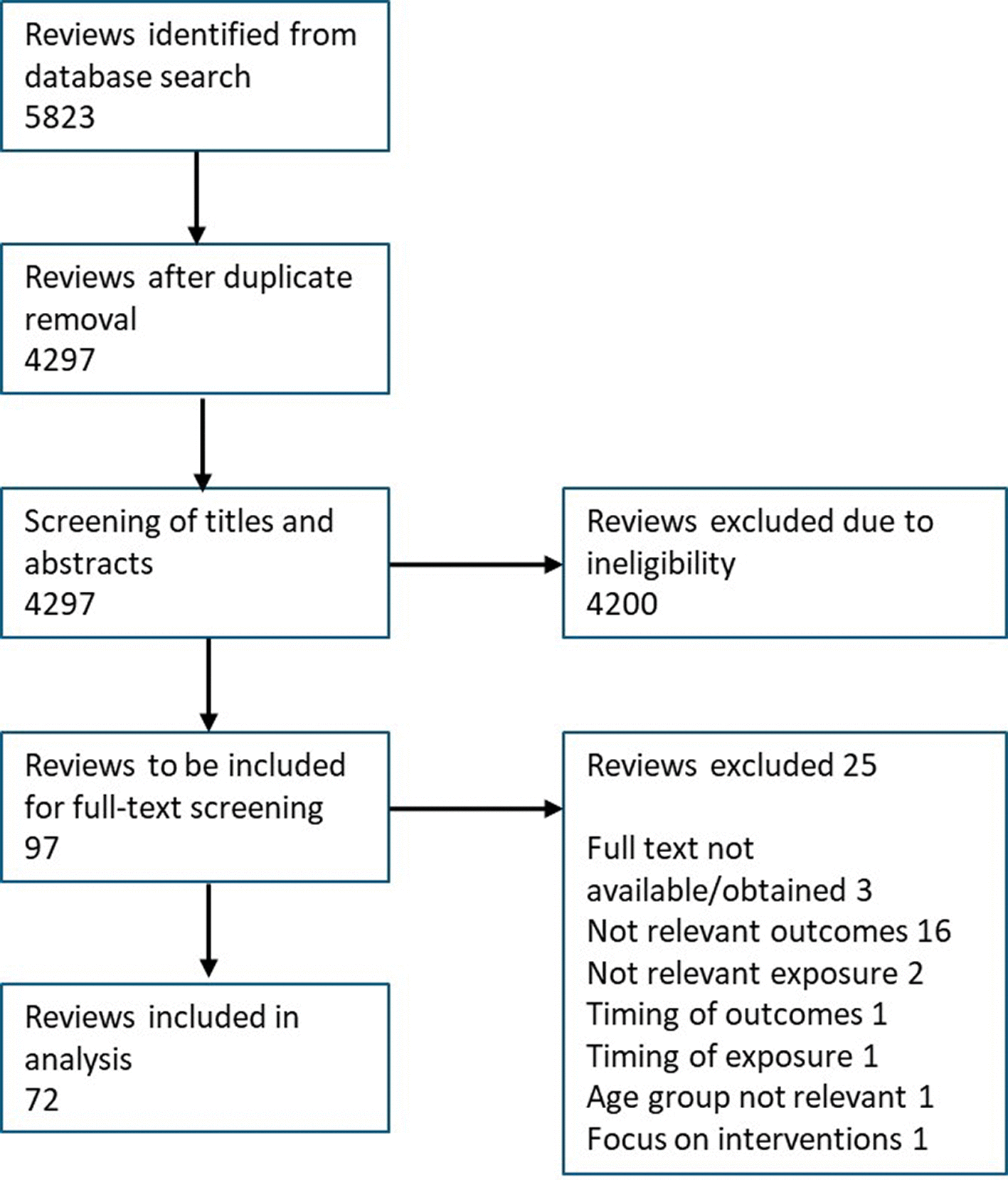
There were 4297 papers considered for inclusion in the review ( Figure 1). Of these, there was 97% agreement between the two screening authors regarding proceeding to full-text screening. We sought to conduct full-text reviews of 97 papers and excluded 25 of these (see Supplementary Table S116). Details of the 72 reviews finally included are provided in Table 1. The earliest review was published in 2001 and the most recent in 2025. Publication volume increased markedly over time: 1.4% of reviews were published in 2001–2005, 2.8% in 2006–2010, 9.9% in 2011–2015, 31.0% in 2016–2020, and 53.5% in 2021–2025. Among the included reviews, adverse childhood experiences (ACEs) were the most frequently examined exposure, followed by childhood cancer, and attention-deficit/hyperactivity disorder (ADHD) and related behavioural difficulties.
| Authors (Year) Reference | Review type | Databases | Num studies | Relevant exposure | Exposure age | Relevant outcomes | Confounders/ moderators/covariates clearly described | Main findings |
|---|---|---|---|---|---|---|---|---|
| ACEs and trauma | ||||||||
| Măirean et al (2023)38 | SR, MA | WoS, PsycInfo, PubMed, ERIC, ASP, ProQuest | 16 | Childhood trauma (war, cancer, ACEs) | NS | Quality of life related to PTSD | Yes | PTSD negatively associated with HRQoL and QoL Relationship significantly stronger for war trauma and cancer than ACEs |
| Kim & Royle (2025)25 | UR | CJA, CSFTC, SA, PsycInfo, PubMed, SSA, PBSC, HSSA, CC, GS, Criminology | 99 | ACEs (abuse, neglect, deprivation, maltreatment, threat) | NS | Recidivism Violence perpetration Violence victimisation | No | Combined aces (cumulatively) had a large (OR of 4.3 and above) impact on criminal justice system involvement. Maltreatment had a medium effect (OR 1.5–2.5). |
| Tyrone et al (2024)19 | SR | MEDLINE, CINAHL, PsycInfo, ERIC | 11 | ACEs | 5–18 | Academic performance | Yes | Weak negative relationship between ACEs and academic performance (r = −0.11, CI -0.22 to −0.01, p = 0.04) |
| Yeo et al (2024)20 | SR MA | PsycInfo, PubMed, Embase, CINAHL | 100 | ACEs | NS | Educational attainment | Yes | Significant correlation between attainment and ACEs (r = −0.18, 95% CI –0.21 to −0.05) |
| Ranu et al (2023)33 | SR MA | MEDLINE, Embase, PsycInfo, ASSIA, WoS | 15 | ACEs | NS | Psychosis with violence | No | ACEs associated with increased odds of psychosis with violence compared to psychosis alone |
| Yohros (2022)32 | SR MA | GS, CJPI, NCJRS, SSCI, WoS, CRLDS, CUSGP, PsycInfo, PubMed, IBSS | 14 | ACEs | NS | Recidivism in young offenders | Yes | Higher number of ACEs associated with increased odds of recidivism (OR 1.044, 95% CI, 1.029–1.059, p < 0.001) |
| Silva et al. (2024)31 | SR | EBSCOhost, WoS, PubMed | 23 | ACEs | <18 years | Criminal activity | No | Mixed results but generally ACEs predicted higher levels of juvenile justice involvement, violent and sexual offending, arrests, recidivism, and incarceration. |
| Astridge et al. (2023)24 | SR, MA | CINAHL Complete, MEDLINE Complete, PubMed, PsycInfo, Embase, Emcare, PTSDpubs | 31 | ACEs | <18 years | Criminal activity (youth recidivism) | Yes | Cumulative ACEs were strongly associated with youth recidivism. For individual ACEs, overall neglect (OR = 1.328, 95% CI 1.078–1.637, p = .008) and physical abuse (OR = 1.382, 95% CI 1.146–1.667, p = .001) significantly increased odds of recidivism, whereas sexual abuse was not significantly associated (OR = 1.188, 95% CI 0.931–1.517, p = .166). |
| Bellis et al. (2019)4 | SR, MA | MEDLINE, CINAHL, PsycInfo, ASSIA, CJD, ERIC | 23 | ACEs | <18 years | ACE-attributable DALYs and annual financial costs (% GDP) and projected cost/DALY savings from reductions in ACE prevalence. | Yes | Using pooled RRs and PAFs, ACE-attributable burden for the 4 risk factors and 6 diseases was ~37.5 million DALYs and annual costs of US$581 billion in Europe (2.67% GDP) and $748 billion in North America (3.55% GDP), with 77–82% of costs arising in those with ≥2 ACEs; a 10% reduction in ACE prevalence was estimated to save about 3 million DALYs and $105 billion per year across both regions. |
| Hughes et al. (2021)40 | SR, MA | MEDLINE, CINAHL, PsycInfo, ASSIA, CJD, ERIC | 37 | ACEs | NS | Interpersonal violence | Yes | For interpersonal violence: pooled RR for ≥2 ACEs vs 0 ACEs = 3.72 (95% CI 2.79–4.97; 5 samples). Also reports large country-level population attributable fractions for interpersonal violence (14.7–53.5%) and large estimated ACE-attributable costs (1.1–6.0% GDP) |
| Graf et al. (2021)23 | SR | PubMed, PsycInfo, ProQuest, WoS, GS | 11 | ACEs | <18 years | Justice system contact | Yes | 13/15 results showed a positive association between cumulative ACE score and justice-system contact: each 1-point increase in ACEs was typically linked to about 10–30% higher odds of juvenile justice involvement (adjusted ORs per ACE point generally ≈1.1–1.3, range 0.91–1.68), including a 68% increase in odds of arrest for trading sex and an 18% increase in odds of adult incarceration per additional ACE |
| Weber et al (2016)36 | SR | Embase, PubMed, Medline, CINAHL, PsycInfo, PSYNDEX, CDSR, ProQuest, NDLDT, DissOnline | 19 | Childhood maltreatment | NS | HQQoL | Yes | Most studies showed strong negative relationship between maltreatment and HQQoL. |
| Bunting et al. (2018)34 | SR | Medline, Embase, PsycInfo, SCI, SSCI, EconLit | 12 | Childhood maltreatment | NS | Economic outcomes: income, employment, SES | Yes | CM was linked with poorer adult economic outcomes: lower earnings (e.g. ≈34% income reduction or ≈$6,500–$7,000 less per year), lower employment and skilled-job odds (ORs ≈ 0.46–0.64), and higher risks of unemployment/NEET, sickness absence/disability, welfare receipt, fewer assets and greater financial insecurity (typical ORs ≈ 1.4–2.3). |
| Brown et al. (2011)41 | SR | PubMed, EconLit, PsycInfo | 12 | Child maltreatment | <18 years | Medical costs in adulthood | No | Annual costs attributable to maltreatment range from $0 to $800 |
| Edalati & Nicholls (2019)28 | SR | PsycInfo, MEDLINE, Embase, WoS, CINAHL | 20 | Childhood maltreatment | NS | Criminal justice involvement | CM was associated with higher criminal justice involvement: in the 10 studies, 8 reported significant effects, typically small–moderate, for example childhood physical abuse increased odds of arrest and ever being in jail (OR≈1.9 and 1.7), and CSA/CPA predicted reoffending or serious/violent crime in several cohorts. | |
| Herbert et al. (2023)35 | SR | PubMed, PsycInfo, CINAHL, SWA, SSA, SA, Scopus | 52 | Child maltreatment | NS | Adult economic outcomes | Yes | Child maltreatment—especially neglect—was consistently associated with poorer adult economic outcomes (lower income, worse employment, more social assistance and financial strain). Smaller retrospective studies often found no effect. |
| Goddard & Pooley (2019)29 | SR (narrative) | PsycArticles, PsycInfo, CINAHL Plus, CJA, ERIC, MEDLINE | 17 | Childhood maltreatment | <20 | Violent crime Recidivism | No | Strong relationships between childhood abuse and recidivism and violent crimes in prisoners |
| Dalsklev et al. (2021)27 | SR | PsycInfo, WoS, PubMed, PILOTS | 13 | Childhood physical & sexual abuse (CPA, CSA) | NS | Criminal activity | Yes | Six studies found significant positive associations between childhood abuse and reoffending; most effect sizes were small (e.g. CPA HR ≈ 2.20, CSA HR ≈ 2.75 in one cohort; HRs ≈ 1 |
| McGrath et al. (2011)30 | SR | NS | 20 | Childhood sexual abuse | <18 years | variety of non-violent offenses, adult arrest and criminal record, type of adult crime, adult imprisonment | No | childhood sexual abuse (CSA) was linked to higher risks of juvenile and adult offending: maltreated youth had more arrests on average (≈1.4 vs 0.8), and sexually abused women were about 4× more likely to be arrested in adulthood than non-abused women. ~5× more likely to be arrested for a sex crime, and sexually abused women 27× more likely to be charged with prostitution. |
| Costa et al. (2015)26 | SR | PubMed, Embase, ProQuest, Scopus | 25 | Childhood physical/sexual abuse, family adversity | <18 years | Adult domestic violence in intimate relationships | No | Social circumstances (single parent, low income, family structure), low IQ, parental crime, conduct problems, family SES, childhood abuse were predictors of domestic abuse. Adolescent physical abuse roughly doubled the odds of adult physical DV perpetration (OR≈2.39). Physical abuse before 6 years predicted both DV perpetration (β ≈ 0.25) and victimisation (β ≈ 0.23) at 23 years. |
| Ravi et al. (2024)22 | SR | ASC, ERIC, LGBTQ+ Source, CINAHL Complete, VAA, FSA, SWA, CDAS, PsycInfo, PubMed | 17 | Childhood exposure to domestic violence | <18 years | Academic success (GPA, perceived academic success); subjective well-being (life satisfaction) | No | Childhood exposure to domestic violence among college students is associated with poorer life satisfaction and somewhat poorer academic success, particularly when exposure is physical and/or cumulative, but the empirical base for academic outcomes is very limited and methodologically weak |
| Fry et al. (2018)21 | SR, MA | PubMed; Embase; PsycInfo; CINAHL; ERIC; SocINDEX | 67 | Childhood exposure to domestic violence | <18 years | school dropout/incompletion and school graduation; school absence/absenteeism; academic achievement/performance (low and high; test scores, GPA); other educational outcomes (grade retention, remedial classes, suspensions/expulsions, engagement/participation). | No | Childhood exposure to any form of violence was consistently linked to worse educational outcomes: it increased school dropout (AOR ≈ 1.6; +5–6 percentage points), reduced graduation probability by ≈13% (physical violence ≈20% lower), doubled odds of school absence (AOR ≈ 2.0; up to ≈3× for bullying in boys and sexual violence in girls), and was associated with more low and less high academic achievement (low achievement AOR ≈ 1.22; high achievement AOR ≈ 0.68), with sexual and physical violence reducing test scores by ~25–29 percentile points compared with non-exposed peers. |
| Grant et al (2023)85 | SR | PubMed, ERC, Scopus, PsycInfo | 75 | Social and economic circumstances in pregnancy and childhood | 0–12 | Educational and cognitive outcomes | No | 49 studies report educational outcomes. Many studies find that duration and timing of exposure to adverse economic and social circumstances affected educational outcomes. |
| Cunha et al (2024)37 | SR | B-On, PsycInfo, PubMed, Scopus,
SciELO | 87 | Positive childhood experiences | NS | Education, employment, income | No | Positive relationship between positive childhood experiences and income, employment, educational achievement |
| Childhood physical health problems | ||||||||
| Bolliger et al (2025)51 | UR | PubMed, PsycInfo, CINAHL | 39 | Childhood cancer | All ages | Quality of life | No | Quantitative data not reported. Cognitive functioning, health behaviour, emotional functioning, social challenges, and education were key domains explored in reviews. |
| Hernádfői et al (2024)55 | SR | PubMed, Embase, CENTRAL | 280 | Childhood cancer | NS | Special education needs Completion of higher education Health-related unemployment | Yes | Special education needs OR 3.28 (2.65–4.06) Completion of higher education OR = 0.69 (CI, 0.40–1.18) Unemployment OR 2.94 (1.90–4.57) Significantly lower rates of high- or middle-income earners. |
| Vetsch et al (2018)74 | SR | PubMed, PsycInfo, Embase, CL | 31 | Acute lymphoblastic leukaemia (ALL) | NS | HRQOL | Yes | 13/24 studies found ALL resulted in worse HRQoL compared to healthy controls, 8/24 found no difference, 3/24 found better HRQoL. ALL resulted in better HRQoL than other cancers in most studies. |
| Mader et al (2017)58 | SR MA | CINAHL, Embase, PubMed, PsycInfo, SocINDEX | 26 | Childhood cancer | NS | Unemployment | Yes | Survivors significantly more likely than controls to be unemployed (OR 1.48, 95% CI 1.14 to 1.93); unemployment in brain tumour survivors OR 4.62, 2.56 to 8.31. |
| Godono et al. (2022)54 | SR, MA | MEDLINE, PubMed, WoS, Embase, CL, PsycInfo | 89 | Childhood cancer | Up to age 16 | Employment prevalence stratified by cancer type | Yes | Employment prevalence was lower for CNS tumours (51%, 0.43–0.59) and higher for haematologic malignancies (65%, 0.53–0.76), multiple cancers (68%, 0.65–0.72), bone/sarcoma (81%, 0.76–0.86) & thyroid cancer (91%, 0.82–0.97). * Does not compare to not having had cancer include rates for different types |
| McDougall & Tsonis (2009)56 | SR | MEDLINE, PubMed, PsycInfo, CINAHL | 13 | Childhood cancer | NS | QOL HRQOL | Yes | Four studies gave summary scores. One found poorer HRQOL than controls, one no difference, two showed better QOL in cancer survivors. |
| Larsen et al. (2023)57 | SR | PubMed, Embase, PsycInfo, CINAHL | 36 | Childhood cancer | Up to age 21 | QoL | Yes | Poorer QoL was most strongly linked to Treatment/disease factors: HSCT in 7/7 studies; certain cancer types & female gender (9/17), lower education (6/9), unemployment (4/4), and poorer economic status (1/2) tended to predict lower QoL. |
| Belson et al. (2020)73 | LR | PubMed, CINAHL, PsycInfo | 15 | Retinoblastoma in childhood | Early childhood | Quality of life/wellbeing, HRQOL | Yes | About half of survivors reported restrictions in daily life, including school activities. Around a quarter reported vision-related restrictions at work (e.g. not being able to do certain tasks or jobs, needing adaptations, or avoiding specific occupations because of sight loss). |
| Saatci et al. (2020)59 | SR, MA | MEDLINE, Embase, ERIC, CINAHL, PsycInfo | 26 | Childhood cancer | <18 years at diagnosis | Educational attainment by ISCED level. Secondary outcome: registration for special educational needs | Childhood cancer survivors were more likely to finish only compulsory education (OR 1.36, 95% CI 1.28–1.43), less likely to complete tertiary education (OR 0.85, 0.79–0.92), and more likely to need special educational support (SEN OR 2.47, 1.91–3.20). Outcomes were worst for CNS tumour/therapy survivors (e.g. moving beyond compulsory level OR 1.77; tertiary completion OR 0.61) | |
| Cantrell. (2011)52 | NS | NS | NS | Childhood cancer survivorship | <18 years at diagnosis | Health-related quality of life (HRQoL) and psychosocial functioning | Yes | most studies reported comparable or near-normal HRQoL in childhood cancer survivors vs controls/siblings. Other predictors of poorer HRQoL included younger age at diagnosis, older attained age, longer time since diagnosis, unemployment, low education, low income, lack of health insurance, decreased physical performance and late effects. |
| Frederiksen et al. (2019)53 | SR | PubMed, Embase, PsycInfo | 52 | Childhood cancer | <20 years at diagnosis | Educational achievement Working life Income Benefits | Yes | Childhood cancer survivors more likely than controls to have worse education outcomes, lower income, and more social security benefits e.g. special education 23% vs 8% in siblings (ORs ≈ 2–3, up to 18.8 in CNS tumours) and less likely to attain higher education (e.g. GB degree OR 0.77, Swiss compulsory-only schooling OR 2.25). Unemployment and lower occupational position higher only for central nervous system cancer. |
| Milton et al (2004)60 | SR | ASSIA, BEI, Caredata, CINAHL, DAI, Embase, ERIC, HMIC, IBSS, IT, MEDLINE, PsycInfo, SIGLE, SSCI, SSA, SA | 29 | Childhood asthma | NS | School attendance, academic achievement, labour market participation | Yes | Additional days of school absence were 2.1–14.8. Absence associated with severity. Academic achievement was not impacted by asthma. Only small negative impacts on employment. |
| Obed et al (2025)61 | SR | PubMed, MEDLINE, Embase, WoS, CL | 19 | Congenital diaphragmatic hernia | <16 years | QoL | No | QoL generally good in patients |
| Shahat & Greco (2021)68 | LR | MEDLINE, Embase, EconLit, GH | 20 | Childhood disability | <18 years | economic costs of childhood disability | No | It’s concluded childhood disability can impose a heavy economic burden on families/health systems/society (e.g. annual costs ranged ≈$450–$69,500 worldwide, lifetime costs ≈$41,000–$4,300,000) |
| Rees et al. (2020)66 | SR, MA | CENTRAL, GS, HMIC, MEDLINE, MEDLINE E-pub, MEDLINE In-Process, PubMed, Embase, CINAHL, Scopus, WoK | 15 | Neonatal abstinence syndrome (NAS) | Birth/neonatal period | School/education outcomes: academic attainment, learning disability | Yes | Children with NAS had substantially higher risks of poor academic attainment, with ≈2.1–2.4× higher odds of scoring below national minimum standards across primary school grades. |
| Watt et al. (2024)71 | RR | MEDLINE | 15 | Poor oral health in early childhood | 0–5 years (preschool) | School attendance and performance | No | Poor early-childhood oral health was linked to worse school outcomes: higher preschool absenteeism (OR≈2.9–4.4) and an ≈8.4-fold higher risk of developmental vulnerability at school entry in children with unaddressed dental needs |
| McKinley Yoder et al. (2019)67 | SR | CINAHL, MEDLINE, ERIC, TRC, Psychology & Behavioral Science Collection, ASE | 43 | Childhood chronic conditions | school-age children | School attendance and performance | Yes | childhood chronic were generally linked to poorer educational outcomes: affected children had more school absences (often 1.5–2× more missed days), higher grade repetition (~20–40% in some conditions), and greater risk of delayed or no graduation (e.g. chronic conditions OR≈1.5, asthma OR≈1.6, cancer/diabetes/epilepsy OR≈2.0; serious disability ≈50% lower graduation odds). |
| Milton et al. (2006)97 | SR | ASSIA, BEI, CINAHL, Embase, ERIC, HMIC, IBSS, MEDLINE, PsycInfo, SIGLE, SSCI, Social Services & Sociological Abstracts | 20 | Childhood-onset Type 1 diabetes mellitus | <18 years at diagnosis | School attendance, academic achievement | Yes | Children with Type 1 diabetes generally had more school absences than peers, but most of the 18 attainment studies found similar overall academic performance, with poorer outcomes mainly in subgroups with early onset, long duration, poor metabolic control or severe hypoglycaemia (e.g. higher grade repetition and lower reading scores, p < 0.05). |
| Puka et al. (2019)70 | SR, MA | MEDLINE, Embase, PsycInfo | 45 | Childhood-onset epilepsy | <18 years at onset | Educational attainment, employment/student status, income | Yes | fewer completed higher education, and only about 63% were employed/students and ~ 1/3 lived independently or had romantic partners/children, |
| Onyimadu et al. (2022)76 | Str R | PubMed, MEDLINE, GS | 110 | Childhood excess weight | <18 years | Health state utility values, economic costs, cost-effectiveness/ cost-utility/cost-benefit of CEW prevention | No | childhood excess weight was linked to higher healthcare costs (excess annual direct costs ≈£89–£1,829 and lifetime ≈£1,494–£13,260 per child), small but consistent HRQoL losses (utilities ≈0.85 vs ≈ 0.82–0.83 for overweight/obese), and poorer human capital (lower cognitive/educational outcomes and ≈6–18% lower adult earnings for obese adolescents). |
| Segal et al. (2021)72 | SR | Global Health, MEDLINE, EconLit, GS, NBER | 22 | Childhood overweight and obesity | age 4 up to 18 | Educational attainment (grade progression/retention, high-school completion, college entry/completion) & labour-market outcomes (adult wages) | Yes | Results were mixed. Overweight/obesity was linked to poorer human capital: sand GPA, 2/3 studies found worse educational attainment, and the single labour-market study reported significantly reduced adult wages for those obese in adolescence, particularly girls. |
| Reiband et al. (2020)77 | LR | PubMed, GS | 12 | Overweight and obesity in childhood | 3–11 years | Adult labour market outcomes: wages, hourly earnings, annual income/household income, employment/unemployment | Yes | childhood/adolescent overweight and obesity were generally linked to worse adult labour-market outcomes, especially for women: obese girls often had lower later wages (e.g. ≈3–7% less, and up to ≈34% lower household income with persistent obesity), while adolescent obesity in men was associated with higher risk of disability pension and, in some studies, ≈6–18% lower earnings |
| Hamilton et al. (2018)75 | SR | CL, PubMed, WoS, Embase, MEDLINE, ASC, CINAHL, EconLit, GS | 13 | Childhood/adolescent overweight | <18 years | direct healthcare costs (hospital, outpatient, primary care, drugs, etc.); indirect productivity costs (workdays lost, premature mortality, income penalty) | No | childhood/adolescent obesity was estimated to cost about €149 k per boy and €148 k per girl over the lifetime, mostly from productivity losses (≈€129–133 k) rather than healthcare (≈€16–20 k). For overweight, lifetime excess cost per boy was ≈€58 k, with almost all of this from productivity losses. Overall, productivity costs were 5–8 times higher than healthcare costs, and total lifetime costs increased with higher BMI |
| McGovern et al. (2017)78 | LR | PubMed, EconLit, GS | 29 | Stunting | Infancy and early childhood (0–5 years) | Adult wages/earnings, income, employment and occupational status | Yes | Childhood stunting/undernutrition was consistently linked to poorer adult economic outcomes e.g. 1 cm increase in height associated with 4% increase in wages for men and 6% for women |
| Pre-term birth and perinatal issues | ||||||||
| Evensen et al. (2022)62 | SR | PubMed, Embase | 58 | Preterm birth with VLBW | Birth/neonatal period | education and employment, HRQoL | Yes | Preterm VLBW individuals had persistently poorer life-course outcomes than term-born peers: around one-third needed special education and had lower school performance; by late adolescence almost twice as many followed vocational rather than higher-education tracks, and by 26 years fewer had completed high school and about 20% were unemployed or on disability benefits. Psychosocial HRQoL in adolescence was ≈1 SD lower than controls. |
| Petrou et al. (2019)65 | SR | MEDLINE, EconLit, WoS, SCI, SSCI, ISTP, CL, DARE, NHS EED, CINAHL, Embase, Scopus + | 43 | Preterm birth (<37 weeks’ gestation) and/or low birth weight | Birth | resource use and economic costs to (a) health services (hospital, neonatal/ICU, outpatient, primary care, drugs), (b) other sectors/public sector, and (c) families/society for infants and children born preterm or low birth weight. | No | preterm/low-birthweight birth was consistently associated with much higher and longer-lasting costs: initial hospitalisation ranged from about $577 k per infant at 24 weeks (median stay ~116 days). in some studies, non-health costs (mainly parental productivity losses) exceeded healthcare costs and comprised ~30–64% of total societal costs. |
| Petrou et al. (2011)63 | LR | MEDLINE, CINAHL, EconLit, SCI, SSCI, ISTP, BLII, Embase, CL, DARE, NHS EED, COPAC | 52 | Preterm birth | Birth | Health costs after initial discharge | No | Inverse relationship between gestational age at birth and birth weight and cost. A UK model estimated public-sector costs to age 18 of about £2.95 billion for one preterm cohort, with extra cost per survivor of ≈£22,855 (all preterm), £61,781 (very preterm) and £94,740 (extremely preterm). |
| Zhou et al. (2025)64 | MA | NS | 11 | Very preterm birth (<32 weeks’ gestation) or very low birth weight (<1500 g) | Birth | Adult socioeconomic outcomes | Yes | Lower odds of higher educational attainment (OR ≈ 0.40, 95% CI 0.26–0.59). Lower odds of remaining in education (OR ≈ 0.63, 95% CI 0.47–0.84). Lower odds of being in paid work (OR ≈ 0.76, 95% CI 0.59–0.97). |
| Karain et al (2025)79 | SR MA | MEDLINE, CINAHL, PubMed, ERIC, PsycInfo, GS | 17 | Prenatal exposure to antiseizure medication | Birth | School outcomes (SEN, ASN, attainment, achievement) | Yes | Sodium valproate associated with increased educational support need |
| Mendu et al. (2024)80 | SR | PubMed, Embase, Scopus | 5 | Early maternal–infant bonding during the “sensitive period” after birth (skin-to-skin) | first hour to first days postpartum | Yes | contact during this early “sensitive period” can have lasting positive effects on psychosocial and emotional development | |
| Lindblad et al (2024)81 | SR | MEDLINE, PsycInfo, Scopus | 32 | Congenital conditions and birth-related factors Childhood health conditions | Up to age 29 | Education Employment Training | No | Good evidence of impact but needs unpacking |
| Brummelhuis et al. (2022)39 | SR | MEDLINE, PubMed, PsycInfo | 31 | Growing up with a parent with a mental illness (COPMI), including a wide range of parental psychiatric disorders (e.g. depression, anxiety, schizophrenia, substance use, severe mental disorder) | <18 years | adult psychological and physical wellbeing, quality of life and psychosocial functioning | Yes | COPMI adults report markedly lower quality of life, poorer psychosocial functioning, more suicidality, shame, loneliness, relationship and parenting difficulties, and feelings of responsibility for the parent’s wellbeing, compared with non-COPMI adults. |
| ADHD | ||||||||
| Gordon & Fabiano (2019)44 | SR | PsycInfo, PubMed | 35 | ADHD | NS | Educational, occupational, and financial outcomes | No | Strong relationship seen in longitudinal studies between ADHD and poor educational and employment outcomes. Earnings substantially affected by ADHD. |
| Di Lorenzo et al (2021)43 | SR, MA | PubMed, PsycInfo, Scopus | 34 | ADHD | 5–18 years at diagnosis | Criminal activity | No | Weighted mean rate of criminal activity in adulthood 30% |
| Christiansen et al. (2021)42 | SR | MEDLINE, WoS, PsycInfo, CL | 6 | ADHD | 6–18 years at diagnosis | Labour market attachment | Yes | Six studies showed that childhood ADHD predicts lower-quality employment and poorer economic outcomes. ADHD probands had about twice as many job changes due to quitting/being fired (0.61 vs 0.32; p < 0.001), shorter job tenure, and lower occupational rankings (e.g. 3.5 vs 4.4, p < 0.0001; 5.2 vs 6.6 on a 1–9 scale, p = 0.002). Educational achievement higher in controls. |
| Mohr-Jensen & Steinhausen (2016)45 | SR, MA | PubMed, Embase, PsycInfo | 11 | ADHD | 4–15 | Criminal activity | Yes | Childhood ADHD was linked to a 2–3 times higher long-term risk of: Arrest: RR ≈ 2.2 (95% CI 1.3–3.5) Conviction: RR ≈ 3.3 (2.1–5.2) Incarceration: RR ≈ 2.9 (1.9–4.3 |
| Bevilacqua et al (2018)46 | SR MA | PubMed, PsycInfo | 13 | Conduct problems | 5–10 | Educational achievement, employment, criminal justice contacts | Yes | Conduct problems that emerged in childhood and continued were significantly associated with impairments in each area. Problems that emerged in childhood and did not continue were significantly associated with educational problems and had strong trends for the other areas. |
| Young (2000)47 | SR | NS | NS | ADHD/hyperactivity in childhood | 6–12 years | Educational attainment, occupational outcomes, criminal activity | No | Childhood ADHD was linked to poorer education, lower occupational status and greater adult criminality. In one cohort, hyperactive men were arrested more often than controls (39% vs 20%) and were more likely to be incarcerated (9% vs 1%); adults with childhood ADHD also had lower occupational rankings |
| Cognitive ability & language development | ||||||||
| Grosse & Zhou (2021)48 | LR | Previous reviews, PubMed, GS | NS | Cognitive ability | NS | Adult annual earnings; lifetime labour productivity; monetary valuation of an IQ point | Yes | Estimates range from 0.5% to 2.5% increased earnings per extra IQ point. In US in 2021 the lifetime value of an extra IQ point was USD 10,600-13,100. |
| Smithers et al. (2018)49 | SR, MA | PubMed, PsycInfo, Embase, BSC | 554 | Early-life non-cognitive skills | ≤12 years (median exposure age ≈4–5y) | academic achievement | Yes | Early-life non-cognitive skills (like self-control and attention) were linked to small academic gains: interventions around age 4 typically improved achievement by about 0.2–0.4 SD in the short term (0–0.3 SD in larger RCTs), while observational studies found associations of roughly 0.16 SD for literacy and 0.22 SD for overall academic achievement. |
| van Barreveld et al (2025)50 | SR | WoS, PubMed, PsycInfo | 34 | Developmental language disorder | All ages | HRQoL | No | Low language ability associated with poorer QoL |
| Other | ||||||||
| Sosu et al. (2021)82 | SR | ERIC, ED database, ASSIA, SASD, PsycInfo, PsyArticles, JSTOR, WoS | 55 | Socioeconomic status | NS | School absence | No | Socioeconomic disadvantage is consistently linked to higher school absenteeism. Lower SES → more absence, with a typical association around r ≈ 0.11 (95% CI 0.08–0.14). |
| Talayero et al. (2023)83 | SR | ProQuest, ESD, PubMed, ToxNet, PAIS | 13 | Lead exposure | Prenatal, early childhood (0–<6y), late childhood (≈6–11y) | Criminal activity | Yes | Prenatal lead exposure was associated with more adult and lifetime arrests (e.g., adult arrests IRR ≈ 1.15; lifetime arrests IRR ≈ 1.16). Early-childhood blood lead was associated with a higher risk of juvenile detention (≈ + 1.3 percentage points per 1 μg/dL, from a 1.8% baseline). Higher early-life lead was associated with increased risk of firearm violence perpetration (RR rising across higher exposure bands, ~2.5–3.5). |
| Keller et al. (2023)84 | SR | PubMed, Scopus, PsycInfo, SocINDEX | 6 | Area-based/neighbourhood social disadvantage indices (composite measures of local poverty, unemployment, education, housing, etc.) | Mostly childhood | Economic outcomes: work commitment and unemployment in early adulthood | No | More cumulative neighbourhood disadvantage at 16–21 → lower work commitment + higher unemployment in early adulthood. |
| Deković et al. (2011)88 | SR, MA | NS | NS | Participation in early childhood/early school-age prevention programmes | Early/middle childhood | Adult criminal offending (arrests, convictions, incarceration); academic attainment | No | Early prevention reduced adult criminal offending with a small but significant pooled effect (OR = 1.26, 95% CI 1.06–1.50, p = .011), the pooled effect on academic attainment and productive activity was stronger and more consistent (OR = 1.36, 95% CI 1.20–1.55, p < .001), with 5 of 8 studies showing significantly better education/work outcomes in the intervention group (higher graduation, more in school/work, less welfare). |
| Ashton et al. (2020)89 | SR | PubMed, ProQuest, GS, organisational websites (WHO, public health institutions, Social Value UK, New Economics Foundation) | 40 | Public-health interventions (mostly health-promotion/preventive programmes) whose “exposure” is participation in services that may affect health, wellbeing and wider social/economic outcomes; mapped to life-course stages | All ages; interventions grouped as: birth/neonatal/post-natal/infancy; childhood & adolescence | Social Return on Investment | No | All reported positive SROI ratios (>1:1), suggesting that for every £/€ invested, multiple £/€ of social value were created. Examples include breastfeeding-support groups (~€15.85 per €1), early-years and family-support services (typically ~£2–£9.20 per £1), employment and recovery programmes (~£2–£4 per £1) |
| Mitchell et al. (2025)87 | SR | MEDLINE, CINAHL, PsycINFO, Scopus | 114 | Parental health-related turning points (mental health/substance use, physical illness, death/bereavement) | Any life stage. Relevant exposures include pregnancy/childhood | Education, employment/income, crime | Yes | Parental health-related TPEs were generally linked to adverse offspring outcomes. Parental death, substance use and cancer were associated with poorer educational outcomes, parental mental disorders were linked to child protective service involvement, and parental death to violent crime. Employment/income outcomes were examined in adult offspring. |
| Leschied et al. (2008)86 | MA | PsycINFO, ERIC, SWA, MEDLINE, CJA | 38 | Child and family risk factors (externalising/internalising behaviour, parental management, family structure, adverse family environment) | 0–6 years | Adult criminality/adult criminal justice involvement | Yes | Overall child factors measured in early childhood were not significant, but early externalising concerns (hyperactivity, aggression, conduct disorder) predicted adult criminality (ES = 0.20, 95% CI 0.10–0.30, p < 0.001). Family factors measured at 0–6 years had a small significant effect (ES = 0.13, 95% CI 0.07–0.18, p < 0.001). |
The methodological quality of the included reviews varied across the modified AMSTAR domains (see supplementary information16). Search and eligibility methods were the most consistently reported domains as details on search terms, databases, and inclusion criteria were commonly provided. Reporting of study characteristics was also comprehensive. In contrast, fewer reviews reported review conduct processes, including independent screening and independent data extraction. Assessment and synthesis of the evidence base was more variable with individual study quality assessed in 43 reviews and heterogeneity in 44. Publication bias was the least frequently addressed item, reported in only 13 reviews. Overall, the quality assessment suggests that the included reviews were generally transparent while some limitations in bias assessment should be considered when interpreting the evidence.
Twenty-four reviews examined the impact of ACEs and related forms of childhood adversity on subsequent economic outcomes. Definitions of ACEs vary, but include childhood abuse (physical, sexual, emotional) and household dysfunction (parents mental health, violence, imprisonment).18 The majority of these simply report whether ACEs occurred during the childhood years (often age 0–18) without information on specific ages. The outcomes included criminal activity (violence, offending, recidivism), quality of life, academic performance, adult economic outcomes, and economic costs.
Education outcomes were examined in multiple reviews. One systematic review and meta-analysis reported a significant but small negative association between ACE exposure and academic performance among US students.19 Another review and meta-analysis, not confined to the USA, also reported a small negative association between childhood adversity and educational achievement/attainment.20 In a broader synthesis of childhood violence exposure, this was found to be consistently associated with worse educational outcomes, including higher odds of school dropout, lower probability of graduation, and increased school absence.21 Elsewhere, Ravi et al reported that childhood exposure to domestic violence was linked to poorer academic success, although the empirical basis was not strong.22
Criminal justice outcomes were commonly assessed in relation to ACEs, particularly youth justice-involved populations. A systematic review of justice system contact found that the majority of studies showed a positive association between cumulative ACE score and criminal justice system involvement, with each one-point increase in ACEs typically associated with approximately 10–30% higher odds of contact.23 Another systematic review and meta-analysis focusing on youth offenders reported that cumulative ACEs were strongly associated with youth recidivism.24 Among individual ACEs, neglect and physical abuse had significantly higher odds of recidivism, while there was not a significant impact of sexual abuse. Elsewhere, Kim and Royle found that abuse, neglect, deprivation, maltreatment, and threat had a significant cumulative impact on violence and recidivism.25 Other reviews similarly linked childhood maltreatment, physical and sexual abuse, and domestic violence exposure with juvenile delinquency, adult offending, violent crime, reoffending and criminal justice involvement.26–32 In a more specific study, Ranu et al (2022) examined the link between ACEs and violence in people with psychosis.33 They found at that the risk of violence was increased when ACEs were present.
Several reviews have linked ACEs, particularly maltreatment, to adult economic outcomes, including poverty, income and employment. A longitudinal systematic review concluded that child maltreatment was associated with poorer adult economic outcomes, including lower earnings (e.g., around one-third lower income or several thousand dollars less per year in some studies), reduced odds of employment or skilled work (odd ratios of 0.46–0.64), and higher risks of unemployment/NEET, welfare benefit receipt, and financial insecurity.34 A more recent systematic review similarly concluded that child maltreatment, and especially neglect, was consistently associated with poorer adult economic outcomes.35
A smaller subset of reviews considered quality of life and economic costs. One systematic review reported a strong negative relationship between childhood maltreatment and health-related quality of life.36 Reviews of trauma and childhood experiences also suggested that adverse experiences were associated with poorer psychosocial and quality of life outcomes, whereas positive childhood experiences appeared to be associated with better later outcomes.25,37,38 Parental mental health issues can also be considered within this broader group of early-life adversities and have been shown to be associated with reduced quality of life in children.39 In terms of costs, two connected systematic reviews and meta-analyses estimated substantial ACE-attributable burden and annual financial costs across Europe and North America (reported as a percentage of GDP), with the majority of costs arising among those with two or more ACEs, and modelling suggesting sizeable potential savings from reducing ACE prevalence.4,40 Another review of medical costs attributable to child maltreatment reported non-trivial long-term cost impacts, though estimates varied widely across studies and settings.41
Six reviews examined ADHD and related behavioural difficulties. Four of these focused specifically on diagnosed (or meeting diagnostic criteria) ADHD.42–45 Evidence from longitudinal studies showed a strong relationship between childhood ADHD and poorer educational, occupational and financial outcomes.44 A systematic review of labour-market attachment similarly found that childhood ADHD predicted lower-quality employment and poorer economic outcomes, with more job instability, shorter job tenure and lower occupational ranking than controls.42 Interestingly that review also found that the overall evidence of a relationship between ADHD and economic outcomes was poor. Across follow-up cohorts, a systematic review reported a weighted mean adult criminal activity rate with conviction or incarceration of around 30% among individuals diagnosed with ADHD in childhood, alongside substantial persistence of ADHD symptoms into adulthood.43 A meta-analysis similarly concluded that childhood ADHD was associated with two- to three-fold higher risks of arrests, convictions and incarcerations compared with individuals without ADHD.45
Evidence on related behavioural disorders suggested that conduct problems meeting diagnostic criteria starting early and persisting over time were associated with particularly poor later outcomes, notably lower educational attainment, poorer employment outcomes and higher criminal justice contact.46 A further review suggested that hyperactivity was particularly related to subsequent adverse socio-economic experiences.47
A number of reviews provided evidence on cognitive ability, early-life non-cognitive skills, and developmental language disorder. A review of cognitive ability suggested that each additional IQ point was associated with higher later earnings and lifetime labour productivity.48 A systematic review and meta-analysis of early-life non-cognitive skills reported small but consistent gains in academic achievement associated with stronger early self-control and attention skills.49 A review of developmental language disorder suggested that low language ability was associated with poorer quality of life and social-emotional functioning.50
Twenty-four reviews considered physical health conditions and their longer-term outcomes with economic implications, with most evidence focused on childhood cancer.51–59 Additional reviews addressed other childhood physical health exposures, including asthma,60 congenital diaphragmatic hernia,61 preterm birth and very low birth weight,62–65 neonatal abstinence syndrome,66 childhood disability,67,68 childhood-onset diabetes,69 childhood-onset epilepsy,70 poor oral health,71 and child obesity.72
Across reviews of childhood cancer, survivors were consistently reported to experience disadvantages in education and labour-market outcomes compared with controls. Meta-analytic evidence indicated lower educational attainment, with survivors more likely to complete compulsory education only and less likely to complete tertiary education while having higher needs for educational support.55,59 Employment outcomes were also adversely affected. A meta-analysis estimated that approximately two-thirds of survivors were employed overall with lower employment prevalence among survivors of central nervous system tumours,54 while a separate meta-analysis found increased odds of unemployment, particularly among brain tumour survivors.58 Narrative syntheses further suggested elevated risks of adverse socioeconomic outcomes in adulthood, including lower income and higher benefit receipt compared with population or sibling controls.53,55 Evidence on quality of life was mixed, even though several reviews reported poorer quality of life among survivors with more intensive treatments and greater socioeconomic disadvantage.51,52,56,57 Additional childhood cancer reviews also pointed to restrictions in schooling, daily activities and later work among some survivor groups.73,74
Evidence on childhood excess weight, overweight and obesity suggested adverse effects on later human capital, including poorer educational attainment, labour-market penalties and, in some studies, lower wages, although findings were heterogeneous.72,75–77 A review of stunting also linked early growth problems with poorer educational and economic outcomes across the life course.78
Other physical health conditions were examined in a smaller number of reviews. For asthma and childhood-onset type 1 diabetes, reviews reported increased school absence, with more limited and mixed evidence on impacts on academic attainment and later labour-market outcomes.60,69 Regarding epilepsy, a review reported poorer adult social outcomes, including lower participation in higher education and lower rates of independent living.70 Elsewhere, poor oral health has been shown to be associated with reduced school outcomes.71
Reviews of disability highlighted substantial economic burden, with cost estimates varying widely across settings and methodologies, and reported associations with poorer educational outcomes, including higher absenteeism and delayed school completion.67,68 For congenital diaphragmatic hernia, long-term follow-up evidence suggested generally good overall quality of life, but with mental health impacts reported in a notable proportion of participants.61
Eight reviews examined birth-related issues and early postnatal factors. Four studies assessed the short- and long-term impact of being born prematurely. Evensen et al found that pre-term birth and low birth weight were associated with needing special education, poor school performance, lower likelihood of higher education, unemployment, receipt of disability benefits, and lower quality of life scores.62 Similar findings were reported by Zhou et al with significantly lower odds of those born pre-term being in higher education, remaining in education, or being in paid work.64 Petrou and colleagues in two reviews assessed the impact of pre-term birth on healthcare costs both at the time of birth and during the longer term.63,65 They found an inverse relationship between gestational age and costs, with costs being substantially higher for those born extremely pre-term.63 In their later review, it was shown that high costs persisted, and parental productivity losses comprised a high proportion of the total.65
Additional reviews in this section broadened the evidence on birth issues beyond prematurity alone. A systematic review and meta-analysis reported that prenatal exposure to antiseizure medication, particularly sodium valproate, was associated with increased need for educational support and poorer school outcomes.79 A review of early maternal-infant bonding during the sensitive period after birth suggested that early skin-to-skin contact may have lasting positive effects on psychosocial and emotional development.80 A broader systematic review of physical diseases and NEET status included congenital conditions and birth-related factors among exposures associated with poorer education, employment and training outcomes.81 Taken together, these findings suggest that birth-related and early postnatal factors can influence later educational, employment and cost outcomes.
Six reviews examined other childhood exposures, including socioeconomic status, lead exposure, area-based or neighbourhood social disadvantage, participation in early prevention programmes, and public-health interventions assessed using social return on investment.
A systematic review found that lower socioeconomic status was consistently associated with higher levels of school absenteeism.82 Similarly, a review of lead exposure reported associations between prenatal and early childhood exposure and later criminal activity, including arrests, juvenile detention, and firearm violence perpetration.83 Area-based social disadvantage was also associated with poorer later outcomes, with one systematic review suggesting that cumulative neighbourhood disadvantage in adolescence was linked to lower work commitment and higher unemployment in early adulthood.84 Elsewhere, the timing and duration of events related to economic and social events have been shown to have an impact on educational outcomes.85 In another review and meta-analysis, the timing of childhood behavioural and emotional problems was also predictive of future criminality, with problems in adolescence having a stronger impact than those occurring earlier.86
Health of parents, specifically when viewed as key ‘turning points’, was examined in a systematic review by Mitchell et al.87 They found that parental death, substance abuse, and cancer were linked to child protective service involvement and poorer educational attainment.
The two remaining reviews focused on interventions rather than adverse exposures. A meta-analysis of early prevention programmes reported reduced adult criminal offending, alongside improvements in educational and productive activity outcomes among those who received intervention.88 In addition, a scoping review of public health interventions found consistently positive social return on investment ratios, including for some early years and family support interventions.89
Of the 72 reviews, 44 (61%) explicitly reported the inclusion of characteristics that were adjusted or controlled for in the analysis of the original papers. It is not in the scope of this umbrella review to systematically investigate the source papers, but examples are helpful. In the review by Măirean et al, the impact of traumatic events on subsequent quality of life moderators variously included age, gender, socio-economic status, geographical region/country, type of childhood trauma, type of PTSD measure, type of QoL measure, study design, and publication status. Astridge et al reviewed the impact of ACEs on future criminal activity. They found that confounders were partly reported and included gender, positive childhood experiences, strong social bonds, empathy, child welfare placement, emotional and behavioural problems, drug use, mental health problems, negative emotionality, type of ACE, cumulative ACE score, age of youth offenders, recidivism definition/data source and justice-system involvement.
Puka et al, who reviewed the impact of childhood epilepsy on educational outcomes, found that only 58% of included articles evaluated subgroups or potential confounding factors. Similarly, Milton et al in a review of asthma and educational outcome found that nearly all reviewed studies failed to control adequately for confounders, although many did include socioeconomic status in the analyses.
This umbrella review has identified a substantial body of literature that has reviewed the relationship between exposures in childhood and subsequent outcomes with economic consequences. These exposures relate to broad areas including ACEs, ADHD and related cognitive issues, physical health problems (e.g. cancer, diabetes, asthma), and circumstances relating to birth (e.g. being born before term, parental health problems at birth). It is clear from the review that such factors have important consequences for later life circumstances. Identifying early-year factors that have subsequent economic consequences is important in prioritising resources and developing cost-effective interventions. Various public health interventions have demonstrated social returns on investment, although few have been focussed on the very first years of life.89
Our review shows that many studies examined the impact of ACEs. ACEs are defined differently across studies but generally capture types of family dysfunction and traumatic events that occurred in childhood (typically before 18 years). There is a strong case to be made for their negative impact on education and contact with criminal justice services. There was less evidence for their impact on the subsequent use of healthcare and social care services in adulthood– and this is indeed true for other risk factors included. ADHD was also frequently examined as well as childhood cancer. While included reviews tended to focus on risk factors in isolation, correlations between them might exist.
Umbrella reviews are by their nature broad overviews of a particular topic and frequently include (indirectly) primary studies that are heterogeneous in their design and findings. Given this, it can be helpful (albeit challenging) to locate the broad findings within a theoretical framework to guide future research. Our umbrella review has identified systematic and other reviews of early years risk factors, and these can be categorised according to various models.
These findings complement previous reviews, including reviews written from an economics perspective that use quasi-experimental designs to identify the effects of early life shocks and circumstances on adult health, education and earnings, and interpret them within a human capital production function in which early capabilities raise the returns to later investment.10–12 That framework offers a direct account of why early exposures carry long-term economic consequences and why prevention is often more cost-effective than remediation, and it complements the ecological and life course models discussed below. Reviews in public health and developmental science converge on the same broad conclusion through the biology of adversity and stress.13,14 Our search covered health, psychology and education databases and did not include book chapters or specialised economics databases such as EconLit, as a result, some reviews by economists were not directly included - though their findings were indirectly included via other reviews.72,78
For example, Bronfenbrenner developed an ecological model of human development whereby multiple interconnected levels of context and their interplay with individuals in time shape life outcomes.90 Specifically, the levels of context include the microsystem (e.g., family, friends, school peers, etc), the mesosystem (how the microsystems link together), the exosystem (social systems not directly connected to the child such as social services, employers, the police, etc), the macrosystem (cultural views and attitudes, etc), and finally the chronosystem (events and circumstances that change over time and have an impact, e.g. family breakdown). Such a model has a conceptual logic, but in it is apparent that the risk factors identified in our review fit unevenly into it. For example, ACEs by definition occur at specific time points and can be ongoing, and so could be seen as part of the chronosystem, but equally could be placed in the microsystem (abuse from family members for instance). Other risk factors are harder to locate. For example, pre-term birth, which in Bronfenbrenner’s framework could be treated as an individual factor. It highlights the interplay between individuals and contexts that shape human development, not just contexts or individual characteristics per se.
Perhaps more relevant for this work is the broad body of work on life course theory described by Elder in his early work.91 Here, experiences in early life are explicitly investigated with reference to subsequent events. The focus of Elder’s work is largely on early socioeconomic events (e.g. economic recession) and the chronological proximity of birth to these whereas Bronfenbrenner has a more developmental emphasis. However, it is made clear that a simple cause and effect or dose-response relationship may not hold given the influence of individual agency and social relationships. This is relevant to our review. For example, at an individual level the occurrences of ACEs or childhood illness may well be mitigated or exacerbated by family and other characteristics.
Identification of early-life risk factors that have long-term economic implications can help improve policy and practice interventions that prevent the occurrence of the risk factors and support people affected across the life course. Addressing early-life risks can presumably generate economic savings, which is crucial for governments, especially in times of facing ever-increasing public service demands. Interventions can come at different points in life and may be preventative or be focused on reducing the impact of risks that have manifested. ACEs are an example where interventions can be introduced to mitigate their intergenerational effects and prevent further occurrence,92 and this could have economic and quality of life benefits. Addressing risks and subsequent events requires interventions or ways of working with consequent resource implications. However, it is evident that many interventions for children and adolescents have a very high return on investment, which indicates good policy choices.93
While understanding the mechanisms whereby risk factors might affect economic outcomes is not the focus of the review, they are still helpful to consider. In a study by Jang and Kim the way in which ACEs affected employment outcomes was largely via their impact on depression, educational attainment, and incarceration.86 Of course, we then also need to understand the mechanisms by which these too are affected. The impact of ACEs on criminal recidivism has been shown to be mediated by being looked after by services, mental health problems, and drug use.24
Several limitations are worth noting. First, although our primary area of interest is on the first period of life, many reviews cover a much wider range of ages in childhood (even up to 18 years). We included such reviews on the premise that there was a strong rationale that the exposures investigated were likely to emerge during the critical 1001 days from conception to age 2 or be correlated with factors present during that period. Examples of this include ADHD and ACEs. The latter for example may be cumulative starting in early life but measured at a later stage. The time at which ACEs occur may impact subsequent costs and future work should investigate this further. Second, outcomes were limited to those we considered to be broadly ‘economic’. These would include reviews of costs (of which there were few), impacts on education and employment, and criminal activity. To maintain focus on clear economic outcomes we excluded reviews that focussed on the impact of the exposures only on health outcomes, even though these might have economic consequences. Third, the outcomes of wellbeing and quality of life, although frequently used in economic evaluations were seldom measured in such ways. Reviews were excluded if it was unlikely that the exposure, if occurring after the critical 1001 days, could be predicted empirically or theoretically from factors during this earlier period. This led us to exclude for example a review of the economic consequences of childhood injuries.94 However, it might be argued that early social circumstances could predict such events, and future consideration could be given to such reviews. Fourth, this paper has attempted to identify reviews of risk factors but has not focussed so much on the mechanisms by which those risks do affect outcomes. That is beyond the scope of this umbrella review. Indeed, although strong relationships were found in many of the reviews, this does not always indicate causation. Fifth, we did not investigate individual papers included in the reviews in terms of bias, or overlap between reviews included in the umbrella review in terms of populations or outcomes. Finally, the focus was very much on risks during childhood that could have longer-term impacts. We did not explicitly exclude positive aspects of early life that could interrupt disadvantaged consequences, but it was noteworthy that such studies were not identified.
The review that we have conducted is part of a wider programme of work that is investigating long-term impacts on public finances of early years risks. This builds on previous modelling in this area.95,96 The early period of life is receiving much attention for being crucial for subsequent development and opportunities through the life course. Challenges during that period have clear economic consequences and can be seen as targets for policy makers in developing strategies to improve life chances as well as being economically beneficial.
Provide sufficient details of any financial or non-financial competing interests to enable users to assess whether your comments might lead a reasonable person to question your impartiality. Consider the following examples, but note that this is not an exhaustive list:
Sign up for content alerts and receive a weekly or monthly email with all newly published articles
Register with NIHR Open Research
Already registered? Sign in
If you are a previous or current NIHR award holder, sign up for information about developments, publishing and publications from NIHR Open Research.
We'll keep you updated on any major new updates to NIHR Open Research
The email address should be the one you originally registered with F1000.
You registered with F1000 via Google, so we cannot reset your password.
To sign in, please click here.
If you still need help with your Google account password, please click here.
You registered with F1000 via Facebook, so we cannot reset your password.
To sign in, please click here.
If you still need help with your Facebook account password, please click here.
If your email address is registered with us, we will email you instructions to reset your password.
If you think you should have received this email but it has not arrived, please check your spam filters and/or contact for further assistance.

Comments on this article Comments (0)