Keywords
Health coaching, HIV, Interviews, Long-term conditions, Normalisation Process Theory, Process evaluation, Wellbeing

Health coaching, HIV, Interviews, Long-term conditions, Normalisation Process Theory, Process evaluation, Wellbeing
Despite major HIV treatment advancements, prevalence of depression and anxiety among people with HIV exceed background population levels.1–4 In addition, HIV associated stigma remains prevalent globally and the Global People Living with HIV Stigma Index 2.0 (conducted 2020–2023) found that most survey respondents with HIV (84.8%, n = 26077/30751) across 25 countries agreed with one or more statements indicating internalised stigma.3 HIV-related stigma is also associated with increased likelihood of experiencing symptoms of anxiety and depression whilst social support can act as a protective mechanism.5
In a UK primary care-based study, the risk of diagnosed depression in people with HIV was double the risk for people without HIV (aHR 1.94; 95% CI 1.68, 2.24) after adjusting for sociodemographic factors.2 Increased risk was also seen for anxiety and severe mental illness.2 The British HIV Association (BHIVA) recommend “exploratory conversations about psychological wellbeing at all routine, non-routine and walk-in appointments”.6 Evidence suggests that the implementation of routine screening or psychological/cognitive assessments remains low, resulting in unmet need and potentially increasing the risk of worsening difficulties.6–8 Additionally, people with HIV in the UK experience significant welfare and lifestyle needs; for example, the 2022 Positive Voices study found that one-third of respondents (n = 1,442) required support from at least one welfare service, with the most common unmet service needs being housing support, financial advice and help claiming benefits.9 As people with HIV age, co-morbidities become increasingly common with a higher prevalence seen compared to the background population. The 2022 Positive Voices study found that almost 2 in 3 adults with HIV were living with ≥1 additional long-term health condition (e.g. diabetes, high cholesterol) compared to 1 in 4 adults in England living with 2+ health conditions.10,11
Health and wellbeing coaching is an example of a self-management intervention that has been trialled in a range of conditions including Type 2 diabetes.12,13 Health coaching empowers people to set goals, make decisions about their health and motivates behaviour change; it has been shown to lead to positive health outcomes including improved medication adherence, quality of life, self-efficacy and reduced hospital admissions.14–16 It also aims to address broader social determinants including welfare support and social isolation.15,17 The role of a health coach is to motivate participants to achieve their goals by identifying and prioritising their options, supporting them with making decisions and identifying any barriers to making behavioural changes.18 Health coaching is underpinned by psychological concepts for behaviour change including the Transtheoretical Model of Change and the Theory for Planned Behaviour which recognise the various stages of change that may occur and how social and personal attitudes and norms may influence decision making.19–22 Therefore, health coaching differs to other interventions such as counselling or psychotherapy as it is future-focused, patient-centred, structured (yet flexible) and collaborative, rather than focusing on diagnosed mental health conditions and intervention.23–25 Coaching may be better suited to people generally functioning well and not experiencing emotional crisis or distress.24 Health coaching was identified as a key intervention in the NHS England 2016 self-care programme26 and was recently formalised in The Fit for the Future 10 Year Health Plan for England in the format of personalised health coaching through the NHS app.27 Social prescribing is another example of a self-management intervention whose implementation into primary care settings was a commitment within the NHS Long Term Plan.28 Social prescribing aims to “connect people to activities, groups, and services in their community to meet the practical, social and emotional needs that affect their health and wellbeing” and enables people to create personalised plans and gain support from local community groups and services.28
The SPHERE randomised controlled trial assed the effectiveness of a multi-component psychosocial intervention (health and wellbeing coaching and social prescribing) at improving the health and wellbeing of people with HIV with psychosocial need.29 The trial was registered with the ISRCTN clinical study registry on 12 July 2024 (ISRCTN47187932).30 The intervention was designed through a series of theory of change workshops and formative qualitative research4,29,31 which is further described in the Methods section. The trial involved the delivery of eight health coaching sessions by trained HIV healthcare providers across seven sites in England. The primary endpoint is a ≥ 40% reduction in the Positive Outcomes-11 (PO-11) score which is a self-reported multidimensional measure of health and wellbeing for people with HIV, from baseline to 6-months after randomisation.29,32 PO-11 was developed from the longer Positive Outcomes33 Patient-Reported Outcome Measure (PROM), as a tool more appropriate for use as a brief self-administered trial outcome measure. It includes eleven questions across three domains: physical, emotional, socioeconomic, each with question score range 0 to 4 (total PO-11 score range 0–44).32 To be eligible for randomisation, individuals needed a PO-11 score ≥ 16 at trial screening.29 Individuals were not eligible if they had an “active serious mental health condition” (e.g. psychosis, active suicidality or bipolar disorder) or were within the first 3-months of receiving a new psychotherapy intervention.29 The control arm of the trial was standard of care and the trial opened for recruitment in August 2024 and closed in July 2026. SPHERE was part of a broader programme of research to develop and evaluate a “person-centred Needs Informed model for Care for people with HIV” (NICHE).29
In this paper we present insights gained from a real-time process evaluation of the SPHERE trial. Process evaluations assess the feasibility and acceptability of interventions, and the underlying mechanism through which they exert their effects.29 Therefore, they enable us to examine how an intervention operates in a real-time context including the role of key stakeholders involved in various implementation processes, whether and how they produce their intended effect and may report on implementation outcomes including acceptability, adoption, feasibility, fidelity and sustainability.29,34 Process evaluations also provide important information that inform how the intervention might be implemented in practice and for addressing common challenges in health service research (e.g. collecting data, recruiting participants).35 However, a systematic review found that process evaluations often have poor visibility despite their ability to identify improvements for interventions, provide contextual insights on trials and add to wider external knowledge.35
Normalisation Process Theory (NPT) is a framework that can be used to identify factors that promote and inhibit the implementation of complex interventions and focuses on the work done by people, and groups, to normalise an intervention.36 NPT has four main components36–40 which can be used to guide exploratory questions in process evaluations such as:
1) coherence (or sense-making) – what is the intervention and what do people believe it will do?
2) cognitive participation (or engagement) – how is the intervention implemented in practice during the trial?
3) collective action (work done to enable the intervention to happen/operational work) – where does the trial fit into the service?
4) reflexive monitoring (formal and informal appraisal of the benefits and costs of the intervention) – what does the service believe about the trial process and intervention and how does it respond?
These components are influenced by relational and organisational dynamics including social norms and conventions and NPT can be used to determine whether to continue or abandon the trial as well as optimise the evaluation of a complex intervention.36 We explored two research questions in our process evaluation of the SPHERE trial29 guided by NPT:
1. What factors promote or inhibit the implementation and impact of health and wellbeing coaching with social prescribing for people living with HIV in the SPHERE trial?
2. How do interactions between intervention mechanisms and their operational contexts shape outcomes for practitioners and people living with HIV?
In this paper, we focus on the implementation of trial processes from the perspective of service providers involved in the SPHERE trial.
The trial tested a health coaching and social prescribing intervention. Coaching sessions were delivered across seven HIV clinics in England. The intervention, mapped to NPT,40 was designed as follows:
Intervention components
• Health and wellbeing coaching sessions delivered by HIV healthcare professionals who received specialist training.
• The initial coaching appointment was 60 minutes (in person) followed by seven structured coaching sessions (50 minutes each) in a format and frequency preferred by the participant (usually fortnightly).
• Goal setting and action planning tools used to identify and break down goals into actionable steps.
• Where required, participants were referred for social prescribing to relevant services and support.
Interaction strategies
• Health and wellbeing coaches were HIV healthcare professionals who received bespoke training (see below) from training providers, Living Well International Community Interest Company41 and the National Centre for Behaviour Change UK.42
• Core training topics and skills included motivational interviewing, active listening, goal setting, agenda mapping, action planning and self-reflection which were mapped to 57 competencies developed by the training partners and linked to the NHS competency framework.16 Competencies included professional and ethical practice; foundations of coaching and behaviour change; skills and proficiency in health and wellbeing coaching; and recording coaching activities.
• Course learning outcomes centred around clinical proficiency in health and wellbeing coaching skills as well as an understanding and integration of social prescribing and the unique challenges faced by people living with HIV.
Rules and resources:
• Participants required significant psychosocial need (PO-11 score ≥ 16) during initial screening to be eligible for randomisation.29,32
• Coaches received extensive training which included four all-day in-person training workshops, two online training workshops, practice and drop-in sessions, scenario-based learning and standardised patient assessments whereby people (either actual or simulated patients) were trained to roleplay as a patient in a standardised way.43 Drop-in support sessions focused on themes including boundaries, trauma-informed practice and effective case management.
• Coaches received monthly online supervisions and support throughout the trial from a behavioural psychologist and through self-directed learning. Coaches also had professional standard expectations around confidentiality, safeguarding and record keeping.
• Coaches completed a written reflection piece and were required to attend 80% of their supervision groups to receive an accreditation at the end of the trial.
• Coaches also received training on social prescribing and were given access to a bespoke, online social prescribing directory developed by an integrated community centre who is a national lead in social prescribing.44 The directory was developed to support health coaches with identifying local services, or initiatives, which clients may have wanted to be referred to (e.g. community-based organisations, HIV support). Coaches were able to contact the centre for advice and meetings throughout the trial.
• Coaches were required to complete a diary reflecting on each coaching session, including any referrals made.
• Coaches had access to a trial database to record sessions and progress and required access to a private room on-site to conduct coaching sessions. Therefore, sessions needed to fit around clinic workload, workflows and room capacity.
Organising logic
• Person-centred care focuses on what matters to people and prioritising autonomy.45
• Coaches guided conversations to develop factors such as health literacy, activation, self-efficacy and used theory to understand people’s propensity to change on a particular habit, for example, transtheoretical theory of change.46
• Coaches also applied theoretical frameworks including social learning theory47 and self-efficacy.48
Our study design was guided by the RE-AIM Framework49 and NPT.40,50 We aimed to explore the entire implementation pipeline: from reach to adoption, implementation, effectiveness, maintenance and beyond as well as the relational and operational work done by people involved in the trial at each stage.
We conducted a qualitative study using semi-structured interviews with trial staff across all sites about their experiences of being involved in the trial and implementation practices, and suggestions to improve recruitment, training or operationalisation.29 We explored the context of relationships and interactions between trial staff, SPHERE trial participants and their broader contexts (e.g. wider NHS and Third Sector services). We also conducted interviews with trial participants to gather insights on their experiences of recruitment and participation in the trial which are presented in a separate paper (unpublished). We present our findings using the Standards for Reporting Qualitative Research (SRQR) checklist.51
For this process evaluation study, trial staff were invited by email to take part in an interview with a female, postdoctoral researcher (VP) who was part of the SPHERE trial research team and that they had briefly met at online all-site meetings. Trial staff included Principal Investigators (PIs), trained health and wellbeing coaches, research and clinical staff involved in recruitment or co-ordinating the study at their site. We also asked interviewed staff to recommend colleagues to be interviewed (snowball sampling). We sampled until we had spoken to a range of trial staff roles across all clinic sites (purposive sampling) ensuring we had a diverse range of perspectives.
We conducted two phases of data collection: (1) a pilot, high-intensity phase in the first three sites to open for recruitment during the first 4 months of the trial; and (2) a main, low-intensity phase for staff at all sites during months 8 to 12. Pilot phase interviews were conducted in October to December 2024 and main phase in April to August 2025. During the main phase, we also conducted repeat interviews with health and wellbeing coaches first interviewed in the pilot phase to explore any changes since their first interview. Interviews lasted between 19 and 57 minutes (average: 38 minutes).
We developed interview topic guides (Supplementary File 1) for each study phase which were guided by NPT concepts. Our topic guides focused on the secondary constructs of NPT which relate to the mechanisms underpinning implementation. All interviews were audio recorded and transcribed by a UCL-approved transcription company operating under a signed confidentiality agreement. VP took field notes during and after interviews to aid analysis. We continued recruitment until we had spoken to at least the PI and health and wellbeing coach at each site, or had attempted contact at least three times.
Participants provided informed consent prior to interviews. Written consent was provided by participants interviewed in person and verbal (audio-recorded) consent where interviews were conducted online.
The method of our analysis was informed by previous approaches52 and was as follows:
Research question – framing work
We defined our topic of interest as exploring the implementation of the trial protocol (or processes). NPT was used to guide our research question, aims and overall methodological approach.
Identification – classification work
NVivo Version 12 Plus53 was used to manage data. A researcher (VP) inductively coded anonymised interview transcripts. An initial codebook was then discussed (VP, CM, FB) and built upon using both inductive and deductive coding guided by qualitative content analysis and abductive approaches.54,55
Characterisation – analytic work
Data were mapped to four core questions developed by CM and guided by core constructs related to NPT (Supplementary File 2). The process evaluation team (VP, CM, FB) looked across and compared between each site to explore relationships between themes and their relative significance.
Explanation – interpretive work
Insights were then explored in relation to available literature and existing theories to explain the patterns and themes of our findings resulting in an NPT coding frame (Supplementary File 3) guided by previous work.56 For example, how health coaching interventions operate, how personalised care is understood and how trial processes are implemented within clinical settings more broadly. CM also conducted qualitative content analysis57 of the manuscript to quality check the coding of NPT (Supplementary File 4). CM used an abductive analysis approach using open content analysis whereby the analysis is informed by theory and the findings interpreted in light of theory.58
The NICHE research programme has a Patient and Public Involvement (PPI) Advisory Group of community members who review and input on the design and delivery of all research aspects. The group meets every three to six months and gave feedback on the design of research materials and ensuring all aspects are ethical, relevant and acceptable for people living with HIV.
We interviewed 24 healthcare professionals, from seven sites, with various roles in the SPHERE trial. Interviewees included trained health and wellbeing coaches and staff supporting recruitment ( Table 1) from a range of clinic roles (e.g. nurses, consultants, health advisors and research staff ). One trained coach (a research nurse) was also a member of the core UCL research team. Most interviews were conducted online (n = 21) with some conducted in person at the clinic (n = 8).
Of the 12 health and wellbeing coaches interviewed during the process evaluations pilot phase, five were re-interviewed during the main trial phase. In total, 29 interviews were conducted with staff, including repeat interviews.
We sought to answer four questions related to the implementation of the intervention and trial during analysis and have mapped our findings to NPT constructs and sub-constructs ( Figure 1). Figure 1 : Inductive and deductive categories from data analysis mapped to NPT constructs and sub-constructs. Adapted from published literature.36–38 Sub-constructs in bold were mapped to topic guide questions and inductive/deductive codes in bold are presented in this paper.
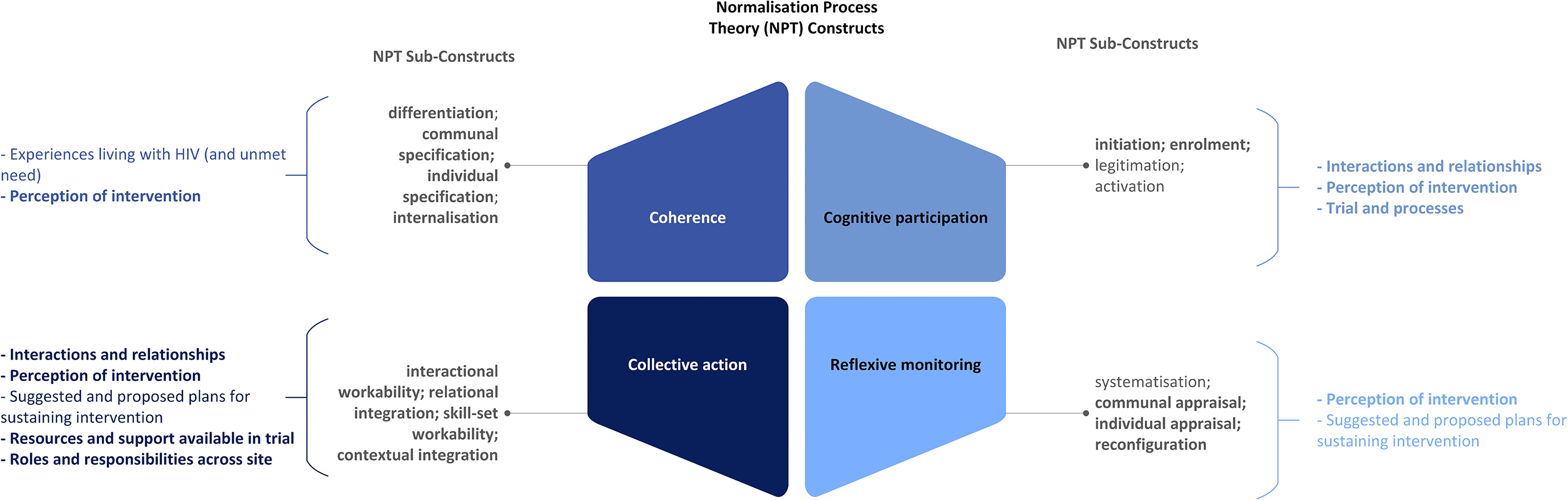
Staff believed that the purpose of health coaching was to provide support, reassurance and encouragement (NPT sub-construct: internalisation). They believed health coaching allowed people to identify and set goals (e.g. stopping smoking, stress management techniques or improving sleep quality), make behaviour changes, and sustain these using an approach which promotes agency and autonomy. Social prescribing was viewed as an approach to address complex, unmet social needs.
“… having the motivation, self-esteem, energy to push forward with things requires a lot of internal development (…) that’s where I think health coaching is so powerful (…) what it could potentially achieve in an individual’s personal behaviour and psyche can really determine so much of their care journey and health experience.”
(A01, Principal Investigator)
Trial staff compared the health coaching and social prescribing intervention with existing roles (e.g. peer mentors) and relationships in some clinics with Third Sector/community-based organisations; in other words, demonstrating the NPT component of differentiation (or sense-making) of the intervention.50 However, some interviewees felt social prescribing was not as defined or structured compared to the health coaching component of the trial. They believed that social prescribing required an awareness of resources and significant administrative time and effort to research relevant, appropriate and available services. All sites were given a bespoke social prescribing directory at the beginning of the trial; however, some interviewees did not feel this was insufficient as it was already out-of-date once they had begun to signpost participants to services.
All sites reported generally good awareness of, and support for, the study which was viewed as important to keep enthusiasm and steady recruitment to the trial,
“They’ve [wider clinic staff] been really supportive (…) [coaching] is something that the nurses are doing, so it was very encouraging. We try to navigate it in the less busy times so there are not as many people around. People are very keen for research to be undertaken, and they believe in the purpose.”
(A19, Health and Wellbeing Coach)
However, some sites reported that enthusiasm may not necessarily translate into action, particularly with competing workloads and priorities in busy clinics.
We explored cognitive participation across trial stages and present these findings under related subheadings.
Conceptualisation of trial and intervention
Some site PIs and trial staff were involved at the conceptualisation stage of the intervention, including supporting with the development of the research proposal and the trial design through theory of change workshops.31 Pre-existing relationships between some trial sites and the UCL research team led to their involvement in the work. One interviewee shared that being involved in initial discussions about the trial had motivated them to get involved and learn more about health and wellbeing coaching,
“I have to say I think I was a lot more onboard after the Theory of Change workshop (…) I found it very engaging. I think the science (…) the aims are compelling.”
(A06, Site Recruitment Staff )
Setting up, recruitment, referrals and randomisation
The PIs at each site were described as supportive and engaged by health coaches and recruitment staff, which was helpful for initiating new or modified processes, raising awareness and supporting recruitment to the trial such as encouraging other clinicians to refer participants to the study. This is a positive example of communal specification and cognitive participation (NPT constructs and sub-constructs) where teams worked together to initiate, enrol and integrate the trial processes.50 Several sites reported challenges at the beginning of the trial in terms of setting up, receiving local approvals and getting started with recruitment although this improved with time. A new QR code was developed part-way during the trial which signposted participants directly to complete the survey (specifically the PO-11 outcome) online and was viewed to be helpful. However, some interviewees expressed concerns that the QR code may have led to poorer completion rates compared to a paper-based survey.
Concerns were also raised about participants who were randomised to the intervention but had complex histories previously raised at multidisciplinary team (MDT) meetings, who may be better suited to a different intervention (e.g. counselling, psychotherapy). Others shared concerns about managing expectations of those not randomised to the intervention arm or randomised to the standard of care arm but with complex needs. Other trial staff shared concerns about the study being labelled as a particular staff member’s which may have influenced decisions to take part. Although all clinics asserted trying to ensure everyone was invited to take part, concerns were raised about staff “cherry picking” participants, specifically those with extreme unmet needs which was difficult for coaches to navigate,
“It really feels like clinicians, consultants are cherry-picking and being, like, ‘This person’s complex. Send them over to get SPHERE tested.’ And then you end up with only really complex people in the cohort.”
(A08, Health and Wellbeing Coach)
Other reasons given by interviewees (including health coaches and recruitment staff ) for their perceptions of why participants decided to take part in the trial included altruism (i.e. “give back to the NHS”) and a perceived personal value or benefit. Reasons for deciding not to take part in, or withdrawing from, the trial included external pressures or life events (e.g. bereavements), not having shared their HIV status with others, a lack of understanding of the intervention and its possible benefit, the time commitment, and not being interested. A recruitment staff member spoke of a localised issue of the financial costs of visiting the hospital with some participants unable to afford parking costs; this was despite travel expenses being covered for each visit for the intervention, suggesting a lack of awareness of this trial process at some sites. The format of coaching sessions may have also played a role in people’s decisions to take part in the trial,
“And someone actually withdrew and got quite angry at [Health and Wellbeing Coach] about it. Because he was like, ‘Oh, just because we’ve got HIV, doesn’t mean we don’t have lives and jobs.’ So, we started being a bit more flexible.”
(A13, Health and Wellbeing Coach)
The randomisation process was largely straightforward for sites; participants were asked to complete a survey on an iPad, and if eligible read the participant information sheet, sign the consent form, complete the baseline questionnaire and were then randomly allocated to the intervention or standard of care arm. However, one site reported what they perceived as an issue during the pilot phase i.e. that too many participants being randomised to the standard of care arm. In fact, the randomiser was allocating correctly, suggesting a lack of awareness or understanding by the trial team at the site. Trial staff also reported concerns about the length of the RCT baseline questionnaire and the potential of questions being ‘triggering’ (e.g. related to stigma, discrimination, mental health). Additionally, a recruitment pause experienced across sites in the first few months of recruitment, due to technical issues, resulted in delays to recruitment targets being met.
Health and wellbeing coaching for people with HIV
At the time of interviews, the number of trial participants seen by the health coaches for health and wellbeing coaching varied between 1 to 5 people per coach ( Table 2).
| Stage of health and wellbeing coaching | Reported number of participants (total) |
|---|---|
| Recently recruited (not started) | 5 |
| Currently coaching | 39 |
| Completed coaching sessions | 25 |
We asked health coaches whether they had previously provided HIV clinical care for people they were coaching. Nearly all (n = 10) coaches spoke about the importance of building a trusting relationship with participants if they had not met before. Where interviewees had previously provided care for the people being coached, they believed this could result in blurred boundaries in terms of their usual role as a healthcare professional and their role as a health coach in the trial. As a result, health coaches at one site wore their own clothes and used non-clinical rooms to distinguish the health and wellbeing coaching sessions from their everyday role.
“Because I’ve been a nurse here for four years so, most of the people, I have seen at some point and if I haven’t met them, I know their name (...) I’ve had people at the end of the coaching session before, sort of saying, ‘Okay, now can you talk to me about this?’ and it’s a nursing thing (…) They bleed into each other because you can’t change your face.”
(A08, Health and Wellbeing Coach)
The organisation and delivery of health coaching could be administratively burdensome and related to the individual specification sub-construct of NPT.50 Coaches made sense of their work required in the trial as delivering of the coaching session, data entry (e.g. coaching diaries and notetaking), booking appointments, finding and booking appropriate rooms, communicating between sessions, rearranging missed appointments and researching resources/services for the social prescribing element of the trial. These tasks take place in the context of existing workflows and systems in the clinic with staff aware of the pressures to deliver a trial at this scale and how workload is allocated (or skillset workability).50 Trial participants’ engagement with sessions had been mostly good (e.g. consistent attendance, active participation and committing to their action plans), although some missed appointments which were rescheduled. Some participants had also decided to stop receiving health and wellbeing coaching sessions before completing all eight, as they felt they had nothing further to discuss or gain.
“In terms of the workflow in the department, the bottom line is, while the study is going on, we will protect the health coaching, but it may mean that there are days when we all have to pull back on the things that we do: give people shorter appointments, don’t do full annual health check assessment...”
(A11, Principal Investigator)
Initially, coaches felt apprehensive about health coaching, particularly the first session, but training and supervision and practicing beforehand had helped. Some coaches reported “feeling out of my depth” (A08) or like “an imposter, at times” (A12) particularly due to the time gap between training and delivering coaching (A23) but also when there were unscheduled leaves of absence during the trial (e.g. sickness, bereavement). To manage concerns around sessions ending, coaches shared more about the need to plan for support once the sessions end, “leaving the door open” in case people need support from their clinic and conducting informal check-ins after sessions end to ensure any outstanding tasks (e.g. referrals) have been completed.
“...I find it really hard bringing them to a close, because I think eight is long enough. I guess some people are ready to finish, and others have said they’re really anxious about finishing, and they’re (…) dreading the eighth session.”
(A24, Health and Wellbeing Coach)
Training and supervision sessions appeared to help with supporting coaches to troubleshoot specific complex cases through receiving advice and support from clinical supervisors and peers and facilitated the relational integration of the intervention through building and maintaining confidence.50
“...the coaches were really pleased with their training. They loved it. They loved training together as a group. I’m really glad we had two people doing it, because they can support each other and do it together …”
(A11, Principal Investigator)
Social prescribing and external services
The social prescribing component of the trial had mixed engagement by interviewees and was fragmented in terms of communications and delivery. This indicated a barrier to interactional workability to operationalise the intervention in everyday settings.50 Some staff had previously engaged with social prescribing services before and were aware of what existed locally, while others had not. For example, coaches based at one site described existing well-established relationships with local community and Third Sector services. Others found the social prescribing directory provided to them during the trial unhelpful as some information appeared out-of-date. Coaches also reported a mixed reception after making referrals to social prescribing teams with occasions on which responses were delayed or not received.
The various needs and services participants were referred to are described in Table 3. Other referrals made were to health services including physiotherapy, weight loss management, mental health support (via GP) or dietetics services. We identified that not all sites have access to a diversity of services and some sites with good links to Third Sector organisations, particularly in major cities, have used these to refer participants to appropriate services. This results in a movement of work burden (task-shifting or interactional workability) from sites to the Third Sector.59,60
Trial processes are often influenced by existing workflows, roles and resources at sites to support the integration of tasks and responsibilities. We explored this question in relation to the feasibility of delivering the trial and how trial processes were integrated; in NPT this relates to operational work, or collective action.
Existing workflows and patient pathways
During trial set up and operationalisation, the site clinical teams were keen to ensure that there was minimal disruption to their service. As a result, sites organised workflows to ensure staffing remained unaffected and administrative staff/receptionists were aware of the study, although minimising impact on workload was not always achieved. The research funding provided support for backfilling roles, and for each health coach to be fully funded to deliver half-day coaching every week. Sites also delegated workloads in a way to incorporate the study into existing clinic processes so consultations could continue as normal. However, recruiting bank staff was not possible for all sites indicating some constraints to the resource work (or contextual integration) of the trial protocol and procedures.50
“… everyone has been really on board. I think the rest of the nursing team have picked up the slack when they’ve needed to and have been pretty supportive (…) we’ve got this bank nurse in who has freed up a bit of time for us.”
(A12, Health and Wellbeing Coach)
“...it’s a small team (…) when there’s a shortage on the Fridays, when [Name] needs to cover, do the intervention, it can be tricky (…) there was the thought that a backfill, maybe, we could consider that. But, in this, it’s not very easy, backfilling. Because of the nature of the clinic and the specialism, it’s not easy to find, in bank, people who would have the skills that we require of them.”
(A02, Co-ordinator)
At nearly all sites, research teams were solely responsible for trial recruitment although one site also had the site PI involved in recruiting to the trial and another had their trained health coaches also recruit to the study. Most sites reported good relationships between research and clinical teams (where research teams existed), although some teething issues relating to understanding the eligibility criteria for the trial occurred initially. One site had the research team specifically visit clinics to discuss the trial. Other clinics used the patient lists of the PIs to target recruitment or waited for referrals from clinic staff more broadly. The highest recruiting site recruited via referrals from all clinicians however, this had led to bottlenecks where patient lists of PIs were exhausted and was not viewed as the easiest approach for all sites. Some interviewees raised concerns about plans to extend trial recruitment beyond the initial study end date of December 2025 due to added workload including competing priorities with newly opening studies, previously agreed workplans related to additional training or educational commitments, as well as being unable to reach the recruitment targets set. Strategies to approach potential participants varied. Research staff at several sites approached potential participants in the clinic waiting room although this did not give enough time to complete all recruitment steps before their appointment and some issues around confidentiality were expressed by one site where the HIV clinic sits within a broader sexual health service. Others approached people during the routine appointment (e.g. observations, bloods) and allowed participants to continue through the patient pathway and return to complete recruitment if they had time afterwards,
“I would then allow the patient to go and have their clinic appointment because that was the purpose of their visit (…) very mindful about upsetting the pathway of the patient journey and then give them the PO-11 form at that point. And then come back to me and if they had time (…) go into the separate room and complete the process.”
(A20, Principal Investigator)
Difficulties surrounding workload and clinic capacity were raised by all sites. This related to ensuring time was available to deliver health coaching and the time taken to recruit to the trial. Although sites were largely supportive of changes in workload allocations, some coaches felt “guilty”. Some sites also faced a reduction in staffing and coaching capacity during the trial due to several reasons including coaches withdrawing from delivering the intervention (n = 2), educational leave (n = 2), annual leave, maternity/paternity leave, staff sickness and staff turnover which put pressure on already overstretched services. The reasons two coaches ended their involvement with the trial included lacking confidence or having less clinical experience,
“They [health coach] kind of felt a bit out of their depth (…) I think a lot of the issues that were coming through were quite complex or were beyond the remit of the role, which is true because that’s what the trial is about. At the same time, I think I’ve been doing this job for a long time, so I’m used to more complex scenarios and able to manage it more comfortably.”
(A19, Health and Wellbeing Coach)
Adaptations made to trial processes to help ease workflow and workloads included booking people for separate appointments to be screened and randomised once they consented to taking part. One site eased the administrative workload by adding clinic drop-downs to systems (i.e. menus on healthcare systems that allows staff to choose from a predefined list) to book people in for health and wellbeing coaching sessions and to send automated reminder texts for appointments which may have led to an improvement in attendance.
Roles and responsibilities
Most trial staff had previous experience running, or being involved in, clinical trials and research studies. Some coaches also had experience supporting patients in a comparable way to health and wellbeing coaching (e.g. motivational interviewing). Coaches were often invited to be trained based on their previous experiences or roles and as a personal development opportunity recommended by their manager, although most sites opened the opportunity to all team members to volunteer.
Some clinics already had staff who support people engaging with care and referrals to other services, including components of social prescribing. Examples given include social workers, psychologists, peer mentors/support workers, health advisers and trained counsellors. One PI shared that they already had social prescribers and peer mentors at their clinic and felt they were delivering coaching to some degree but from a unique perspective. They wanted clarity for what health coaching adds or how this health coaching initiative differed from what they were already providing.
Some sites reported issues with defining roles and responsibilities at the start of the trial and clinic capacity for recruitment. Sites who had support from a research team for recruitment found this helpful. Some sites set up monthly meetings to troubleshoot and address any problems with the PI or wider SPHERE team; this is an example of the NPT construct of reflexive monitoring, specifically communal appraisal, during the trial.50 A few coaches felt nervous or pressure to perform ‘well’ in health and wellbeing coaching as the effectiveness of the intervention was being measured in the trial,
“How effective our intervention is (…) being looked at. I guess that added a bit of pressure to it and, you know, this feeling of believing in the intervention and wanting it to do well and the fact that how well we deliver the intervention, to an extent, is going to affect that.”
(A12, Health and Wellbeing Coach)
Resources and support
Interviewees mentioned the broad range of resources and opportunities for support available in the trial and clinic; for example, meetings, training sessions, supervisions and existing line management support which also provided avenues for appraisal work (or reflexive monitoring) during the trial.50 Multidisciplinary team (MDT) meetings were viewed as a good opportunity to remind the clinic about the trial, as were update emails sent by the local PI. All-site meetings arranged by the UCL research team were viewed as helpful to hear updates, seek support, gain advice and feel part of a larger team. Some sites arranged individual meetings to work through issues related to recruitment or delivering the intervention. Site initiation visits (SIVs) had a mixed response; overall, they were viewed as helpful to understand processes. However, some sites reported that roles and responsibilities remained unclear, and one interviewee felt frustrated after some pressure to recruit more participants from the trial team following a site visit,
“You’ve got to remember you’re talking to NHS staff. I get what you’re saying, but we’re nursing staff, and our priority will always be the patients who are in front of us.”
(A19, Health and Wellbeing Coach)
Two main types of training were conducted: one focused on health coaching to deliver the intervention itself and the other on the trial database which is used to manage trial processes. Staff were very positive of health coaching training; they shared a preference for face-to-face rather than online training. However, coaches shared that the six-month delay between receiving training and the trial opening (due to database development delays) had left them feeling unprepared and less confident to begin coaching. Despite this, earlier supervision sessions, conducted before the trial officially opened for recruitment, were used to focus on training updates and reminders. As a result, some coaches felt additional refresher training, or conducting more standardised patient assessments would help refocus them as the intervention was being delivered,
“It [health coaching training] was great. It was really, really (..) worth doing. I know lots of people have said it’s one of the best courses they’ve done. But it was really good (…) it just makes you rethink how you do everything …”
(A03, Health and Wellbeing Coach)
“… I think there needs to be more training after ( … ) like six months, you have another study day ( … ) because you feel that you could ( … ) catch up on just the theoretical practical stuff. Unless you go back to your books and read it, and a lot of staff work full-time, then you’re (…) losing (…) some of the information”
(A16, Health and Wellbeing Coach)
Database training for trial data entry which was delivered online by the Birmingham Clinical Trials Unit (BCTU) received more mixed reviews; overall the training was viewed as helpful however, some felt another format of delivery might have been effective (e.g. a resource or guide). This is despite information and guidance, including a PDF and PowerPoint presentation containing step-by-step guidance being developed and distributed during the rollout of the database signalling a lack of awareness by some staff.
Health coaches shared that clinical supervisions were a helpful space to gain perspective on how other trained coaches found the intervention, to build confidence and to provide reassurance and support where similar issues are being raised. For example, concerns about the complexity of needs of the participants being recruited to the trial or how to facilitate behaviour change with participants. The spaces ultimately offer a sense of peer support among health coaches,
“… the supervision groups have just been really useful for helping brainstorm what to do with people who I’m feeling stuck with, what to do with somebody who I really, really couldn’t anticipate change anything, at all, about his circumstance...”
(A04, Health and Wellbeing Coach)
“It’s just really nice to hear that other people are having the same problems that I am, that it’s not just a me problem (…) Because across the sites, there are people who are having participants that don’t seem appropriate, that are too complex, that are mentally unwell … it’s nice to know that it’s not just me.”
(A08, Health and Wellbeing Coach)
Supervisions had initially been organised at a time and day which was difficult for coaches to attend, although this was subsequently changed. As a result, extra sessions were organised to support all coaches to reach their required attendance levels to gain accreditation. Additionally, some coaches found ‘peer support’ by the existing coach at their own site, or more experienced staff in similar roles (e.g. peer navigators) helpful alongside receiving advice from coaches in their supervision groups,
“And I think actually just acknowledging, ‘Oh gosh, I’ve got a new health coaching person, I’m actually feeling really anxious about this.’ And you know, just talking through how to structure a session together has been really helpful. So, yeah, we’ve been quite a good support network kind of in-house as well”
(A12, Health and Wellbeing Coach)
A suggested improvement to supervisions were to offer one-on-one supervisions with the health coaching trainers, one of whom is a behavioural psychologist, for more in-depth advice.
Interviewees assessed and adapted trial processes following reflexive monitoring, or appraisal, work. These adaptations were often site-specific and driven by existing demands on the services, rules and resources available. Interviewees reflected on the implementation of trial processes related to recruitment and coaching.
Adapting trial processes for improved recruitment
Recruitment was viewed as administratively burdensome due to the multiple steps and documents required to be completed as well as the general time commitment. For example, where multiple people were being recruited at the same time, ensuring they were seen to completion, they understood health and wellbeing coaching and how randomisation works to manage expectations of receiving coaching. The trial baseline questionnaire was also lengthy and took between 20 minutes and over 1 hour to be completed. One site used existing access to medical records to help support participants with some questions (e.g. related to HIV medications). Other sites supported participants with completing questionnaires due to literacy or language issues which added to workloads.
Sites shared factors introduced to improve recruitment (reconfiguration) by the wider clinic through their appraisal work during the trial.50 For example, one site sent recruitment reminders to their clinical teams through their IT system and by emails including brief information to share with potential participants. Another site introduced a “pre-screening” list to find potentially eligible participants before they visited the clinic, had set up a specific recruitment clinic for the trial and had notification pop-ups for those to approach, although this may have introduced selection bias. One site had a list of participants not to approach (e.g. significant mental health issues). Finally, the recruitment tablet was seen as a helpful addition to support participants completing the survey during recruitment.
“...having in depth conversations with people who are eligible for the RCT and holding both sides of the randomisation process, so that people did understand this was a research project and therefore the standard of care arm when people ended up in that sometimes felt like they’d lost out on something”
(A15, Health and Wellbeing Coach)
Negotiating and advocating for social prescribing to meet individual needs
Some coaches conducted what they described as “informal social prescribing” and were signposting participants to community and other services rather than referring them to a social prescriber; they then used feedback from participants to decide whether to continue referring to specific services. This is an example of the NPT sub-construct of individual appraisal and reconfiguration of the intervention and trial processes through appraisal work.50 One coach described issues completing social prescribing referrals where they had to liaise with the participants’ GP to agree that the referral was appropriate. Coaches had also learned about local services from participants including their previous experiences accessing them; a few coaches reported how some participants were self-motivated and had begun to research new organisations and develop their own social prescribing links. However, a coach shared how some participants were confused when charities had asked for donations as they had interpreted this as needing to pay for a service. Despite coaches being provided with a social prescribing directory as part of the trial processes, some interviewees viewed social prescribing as time consuming as it involves researching resources, developing referrals and following up when services do not respond. Coaches sometimes had to negotiate with service providers, for example, reduced rates for fee-paying services for asylum seekers with no recourse to public funds.
We explored the factors that promoted or inhibited the implementation of SPHERE trial processes. Promoting factors included the extensive bespoke training and support for health coaches and the adaptations made at individual sites to embed trial processes within existing clinic workflows and systems. As expected, we also found that individual site teams displayed Tuckman’s model of ‘forming, storming, norming and performing’61 until a steady workflow was found. When considering our findings in line with NPT,50,40 we found that the intervention components, strategies and organising logic were areas of strength. The main challenges to the implementation of trial processes related to the rules and resources component particularly regarding workforce, workload, workflow and sometimes work content.
Engagement and integration of the trial was challenging at various stages but improved over time. Some sites faced challenges reaching recruitment targets and when deciding on the best time to approach potential participants in clinic. Interviewees reported good engagement by trial participants, but often coaching sessions needed to be rescheduled, and participants needed chasing which added to workload. Retention is a commonly reported challenge across all clinical trials as are issues related to recruitment.62 However, this challenge was expected given the target population being people with higher unmet psychosocial need indicated by a PO-11 score ≥ 16.29 Participation by staff in the trial disrupted relationships with normal job roles however, this was accounted for in the trial protocol and design. For example, each health coach was given a half-day per week in their job plan to deliver the SPHERE trial however, this did mean workflows in departments had to be managed; for example, backfilling posts or reducing clinical duties for the half-day. We found that the ability to backfill roles was appreciated by sites able to do so. Social prescribing, one potential outcome of the health coaching intervention, often required more administrative workload to find suitable and available local services despite coaches being provided with a directory and could disrupt workflows. On the other hand, supportive and engaged PIs at sites helped with the initiation of new and modified processes and that teams worked together to engage with, and integrate, trial processes demonstrating communal specification.50
Our second research question looked to answer how interactions between intervention mechanisms and their operational contexts shaped outcomes for those involved in the trial. We found that the feasibility of the trial was dependent on wider support and resources available at the site, including adaptations to workflows, and clarity about trial roles and responsibilities. All sites had introduced adaptations to trial processes to help improve workflows and workloads in clinics following appraisal work (reflexive monitoring) during the trial.50 For example, setting up monthly site meetings to troubleshoot any trial related challenges. However, workload and clinic capacity issues were raised by all sites including some coaches who ended or paused their involvement in the trial. This shows the importance of continually engaging and seeking feedback from intervention staff; some sites suggested offering refresher training to boost the confidence of coaches. Sites where nurses had been trained particularly struggled in terms of capacity; some suggested to train other staff members to minimise disruptions to services and compared the role of health coaches to existing roles (e.g. peer support) who may be trained in, or familiar with, the components of health coaching. Health coaching training was perceived very positively by all trial staff, as was clinical supervisions; interviewees emphasised the importance of ensuring training is delivered as close to beginning coaching as possible so that confidence and knowledge is maintained. This aligns with previous research which identified training (including peer-to-peer health coach support) as a characteristic which contributes to health coach success, alongside personal characteristics (e.g. trustworthiness) and professional characteristics (e.g. active listening).63 The pilot and main trial phases both indicated the importance of ensuring enough staff are trained to meet coaching demands, a potential benefit of having a dedicated health coaching role in the clinic.
All sites adapted the intervention to help improve the acceptability of the trial and intervention. Interviewees emphasised a need for flexibility when scheduling coaching sessions including the format, day and time, and the number of coaching sessions offered. Although the trial had been designed for a maximum of eight sessions, some participants needed fewer, while others needed more. Therefore, adapting to individuals being coached is an important consideration for long-term implementation of coaching; clinics would need to be open to supporting this flexibility when developing workplans, scheduling rotas and assigning clinic rooms.
This process evaluation study has several notable strengths. First, the process evaluation drew on in-depth qualitative interviews with the range of professionals delivering the SPHERE trial, across all seven participating sites in England. This enabled exploration of variation in organisational contexts, professional roles, and local intervention delivery. Including staff involved in recruitment, coordination, and intervention delivery allowed us to examine implementation work across the full intervention pathway. Second, the study incorporated repeat interviews conducted with a sub-sample of health and wellbeing coaches across the pilot and main phases of the trial. This enabled us to capture how perceptions, confidence, and implementation practices changed as staff gained experience delivering the intervention. This temporal perspective is useful in process evaluations of complex interventions, where challenges, adaptations, and mechanisms of engagement are dynamic rather than fixed. The study was underpinned by a strong theoretical and analytical framework. This provided insight into the practical realities of delivering a psychosocial intervention within pressured NHS HIV services, including adaptations to workflows, training, supervision, and recruitment strategies. These insights are particularly valuable for informing future scale-up and sustainability. The qualitative content analysis of our manuscript (Supplementary File 4) also demonstrates that the NPT constructs presented have not been cherry-picked but rather all constructs are relevant.
Several limitations should also be acknowledged. First, the findings are context specific. Although purposive sampling was used to include a range of roles and sites, not all eligible staff participated. In particular, the views of some health and wellbeing coaches and one principal investigator were not captured, and it is possible that those who took part were more engaged with, or positively disposed towards, the intervention. Second, recruitment of interviewees was challenging at some sites due to competing clinical pressures, staffing shortages, and delays to trial set-up, including a recruitment pause. These factors shaped the timing and composition of the sample but also reflected the real-world conditions under which the intervention was delivered. Finally, the interviewer (VP) was a member of the trial research team, which may have influenced how interviewees discussed challenges or criticisms. Although confidentiality was emphasised and reflexive practices were used throughout analysis, the potential for social desirability bias cannot be excluded.
Clinics should decide how health coaches may work alongside and complement existing clinic roles (e.g. peer support) to address current gaps in the service. Our process evaluation indicated that health coaches from most of the clinics had referred trial participants to peer support suggesting this remains a well-received and valuable resource for clinics. We recommend that any health coaching offered should remain flexible and adaptive to the needs, routines and lifestyles of those being coached. Our process evaluation also clearly indicates the complexity of reorganising workload and workflows in existing clinical services which remain underresourced as fragmentation and funding cuts to services may undermine the long-term positive impacts of such interventions.
Health coaching and social prescribing offer an opportunity to support people with long-term conditions who may struggle to access support to meet their psychosocial needs through traditional routes (e.g. clinical referrals) due to pressures on healthcare systems. Some evaluations have found costs savings from social prescribing and health coaching interventions although a need remains to continue to evaluate the short and long-term cost effectiveness of such interventions, particularly as the evidence base remains limited.64–66 This is particularly important given the number of people aging and living with more than one long-term health condition, and the NHS 10 Year Health Plan which has an emphasis of shifting care from hospital to community settings and for more personalised care.27
Future research should focus on exploring the characteristics of effective health coaches, the intricacies of the relationships formed and built during the coaching interaction, and how health and wellbeing coaching can work to tackle stigma in people living with other long-term conditions.
We showed how the context of each clinic and site played a role in the implementation of the intervention, including adaptations to trial processes. The process evaluation indicated the significant role interactions and relationships held between multiple actors have on trial processes and procedures. The findings suggest that health coaching could play a significant role in the next phase of HIV care regarding good health-related quality of life. Clinics interested in implementing health coaching would need to consider the value added by the intervention where complementary roles already exist. They would also need to consider the capacity for the clinic and flexibility to deliver coaching in an equitable way that is accessible to all potential recipients of coaching. The findings also raise important considerations for the support provided to health coaches delivering coaching in underresourced NHS settings with people who experience multiple, interacting forms of disadvantage and unmet psychosocial need.
Ethical approval was granted by the London – Fulham Research Ethics Committee through the Health Research Authority (REC reference: 24/LO/0449; IRAS project ID: 337571) on 8 July 2024. This study was conducted in accordance with the ethical principles of the Declaration of Helsinki and the UK Policy Framework for Health and Social Care Research. Participants provided informed consent prior to interviews.
Provide sufficient details of any financial or non-financial competing interests to enable users to assess whether your comments might lead a reasonable person to question your impartiality. Consider the following examples, but note that this is not an exhaustive list:
Sign up for content alerts and receive a weekly or monthly email with all newly published articles
Register with NIHR Open Research
Already registered? Sign in
If you are a previous or current NIHR award holder, sign up for information about developments, publishing and publications from NIHR Open Research.
We'll keep you updated on any major new updates to NIHR Open Research
The email address should be the one you originally registered with F1000.
You registered with F1000 via Google, so we cannot reset your password.
To sign in, please click here.
If you still need help with your Google account password, please click here.
You registered with F1000 via Facebook, so we cannot reset your password.
To sign in, please click here.
If you still need help with your Facebook account password, please click here.
If your email address is registered with us, we will email you instructions to reset your password.
If you think you should have received this email but it has not arrived, please check your spam filters and/or contact for further assistance.

Comments on this article Comments (0)