Keywords
Dementia, osteoporosis, medicine optimisation, mixed methods, DOMINO, fracture

Dementia, osteoporosis, medicine optimisation, mixed methods, DOMINO, fracture
Dementia is a growing public health concern. The number of people with dementia in the UK was 982,000 in 2024, projected to increase to 1.4million by 2040.1 People with dementia are 3-times more likely to have fragility fractures (broken bones resulting from little or no force) compared to people without dementia following a fall,2 equating to approximately 32,000 hip fractures alone per year in the UK. The detrimental impact of fragility fractures for people with dementia is wide reaching, including persistent pain, decline in physical function and independence, dementia progression, and increased morbidity3 and mortality.4 Negative impacts can extend to family caregivers, at times contributing to the person with dementia moving into a care home.5 Given that approximately half of people who have a hip fracture have evidence of previous fracture,6 earlier intervention following incident fracture presents a ‘viable and effective route to improving health outcomes’.7
Medicines optimisation is a central component of person-centered care: ensuring that people with dementia have the right choice of medicines that are clinically effective, cost-effective, safe, and fit with their lives.8 In efforts to reduce the risk of fragility fractures, UK osteoporosis guidelines recommend that dementia should trigger a fracture risk assessment, with evidence-based osteoporosis medicine recommended to lower fracture risk, where appropriate.9 First-line oral osteoporosis medicines are inexpensive, readily available and effective at reducing fracture risk. Despite this, people with dementia have low rates of oral osteoporosis medicine use, which is even lower in those living in care homes.10–16 This creates a clinically important treatment paradox whereby those at greatest fracture risk may be least likely to receive preventative therapy. Clinical and shared decision-making to optimise osteoporosis medicines can be complex, requiring consideration of the person’s comorbidities and polypharmacy,17 living and care arrangements, and life expectancy. Increased susceptibility to oral osteoporosis medicine side-effects (e.g. because of poor oral health and swallowing difficulties18,19) and the burden of administration instructions (once per week, first thing in the morning on an empty stomach with a large glass of water, remaining upright) may contribute to inequitable osteoporosis care for people with dementia.
Non-oral osteoporosis medicines may overcome some barriers to use. Intravenous (IV) zoledronate and denosumab subcutaneous injection are clinically effective at reducing the risk of fragility fracture and require less frequent administration than oral options, increasing medicine adherence20,21 and reducing treatment burden.20 However, at present, IV zoledronate and denosumab are usually not recommended first-line (i.e. IV zoledronate is only recommended first-line following hip fracture9). The NICE technology appraisal committee22 recommends that intravenous options should be considered for people with dementia who cannot take oral osteoporosis medicines to address equality issues. A pressing need therefore exists to determine and support implementation of optimal osteoporosis medicine regimens for people with dementia to ensure effective, acceptable, and equitable fracture prevention.
This multiphase mixed methods study includes three sequentially connected phases,23 to determine and support implementation of optimal osteoporosis medicine regimens for people with dementia (see Figure 1). Together, the study phases will explore whether, and how, osteoporosis medicines are currently prescribed, and the acceptability, cost-effectiveness, and implementability of optimised osteoporosis medicines across different contexts.24 Specific objectives for each study phase are to:
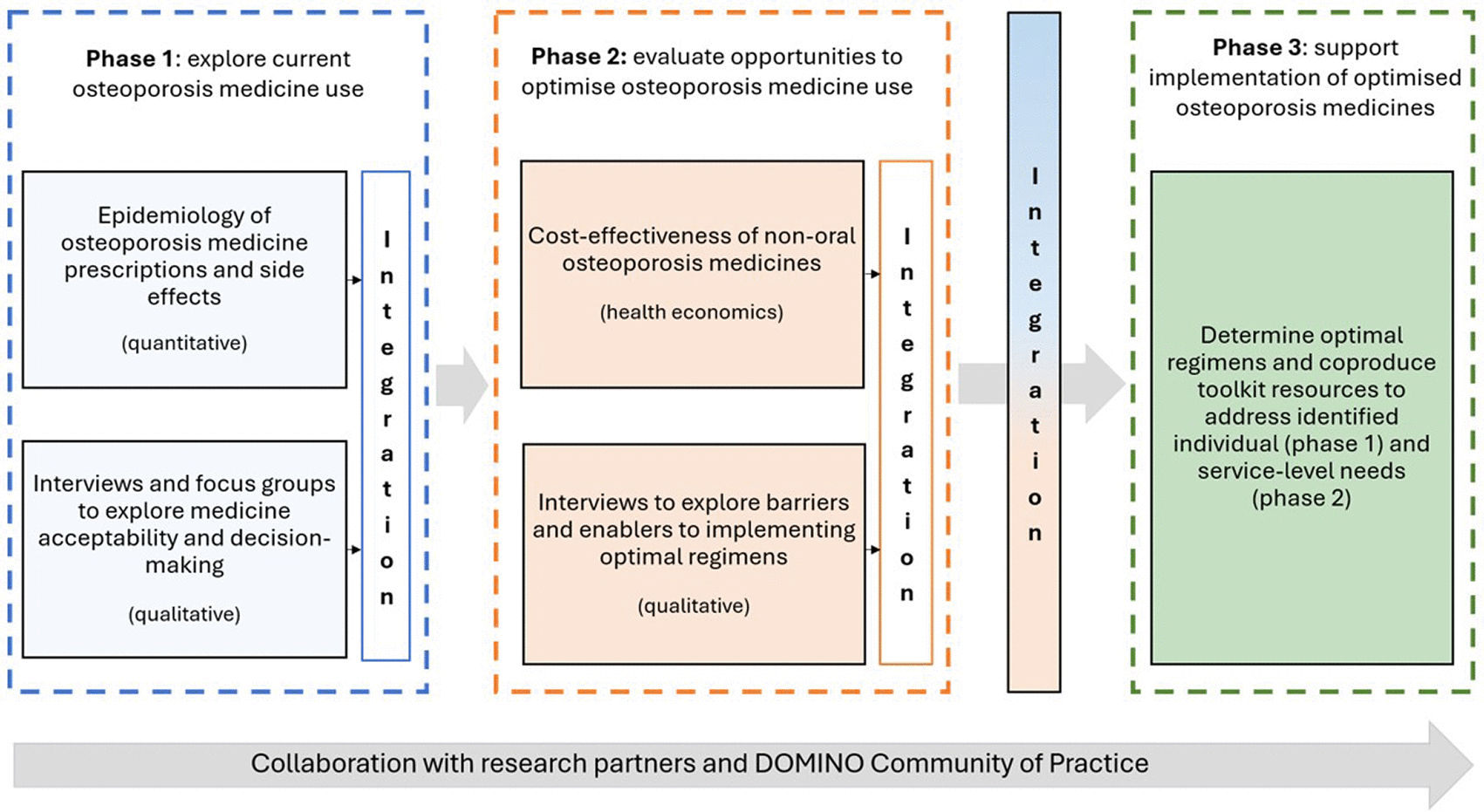
Phase 1: explore current osteoporosis medicine use
1. Describe the epidemiology of osteoporosis medicine prescriptions and to assess the risk of medicine side effects (quantitative) and explore perceived acceptability of, and decision-making about, osteoporosis medicines (qualitative) for people with dementia
2. Integrate the quantitative results and qualitative findings to draw inferences about how perceived acceptability and decision-making experiences explain osteoporosis medicine prescribing (mixed methods)
Phase 2: evaluate opportunities to optimise osteoporosis medicine use
3. Evaluate the cost-effectiveness of non-oral osteoporosis medicine regimens, administered in different settings (quantitative) and explore perceived clinician and system-level barriers to, and enablers of, implementing optimal treatment regimens (qualitative) for people with dementia
4. Integrate the health economic results and qualitative findings to draw inferences about clinician and service-level factors influencing the implementation of optimal osteoporosis medicine regimens in different settings (mixed methods)
Phase 3: support implementation of optimised osteoporosis medicines
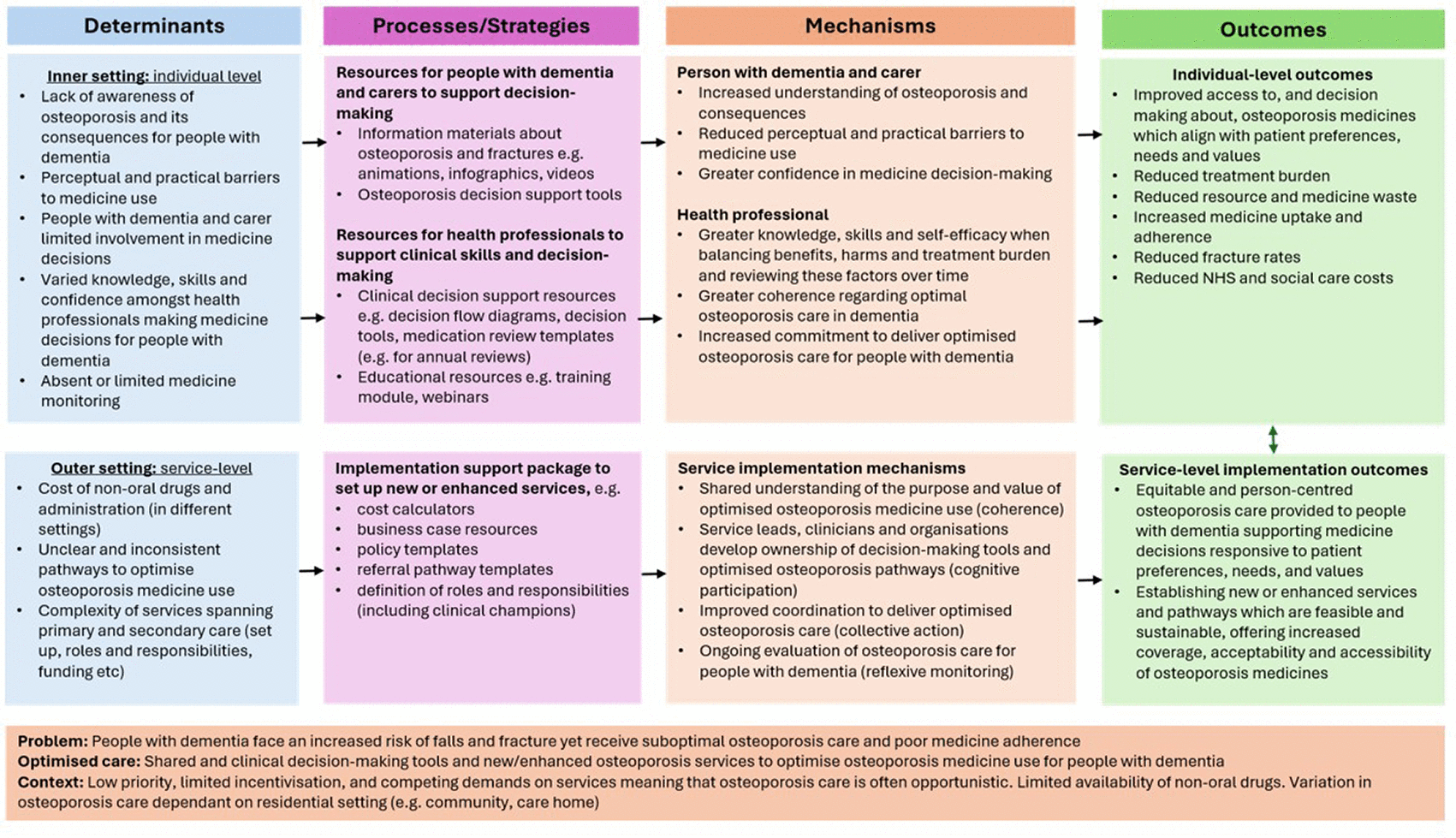
The DOMINO programme theory (or ‘logic model’) details the hypothesised mechanisms and outcomes, and contextual factors. The programme theory was developed at the start of the study based on existing evidence, theory, and research partner perspectives and the determinants, processes, and mechanisms will be examined and refined throughout the study (see Figure 2). The DOMINO programme theory hypothesises that suboptimal osteoporosis medicine use in people with dementia arises from interacting individual and service-level determinants.25 Through the generation of evidence on medicine acceptability, decision-making, safety, cost-effectiveness, and implementation, DOMINO will identify optimal osteoporosis medicine regimens and co-produce resources to support shared and clinical decision-making and service delivery. Together, these resources aim to enable more acceptable, feasible, and equitable osteoporosis care, leading to optimised medicine use and reduced treatment and fracture burden for people with dementia.
In Phase 1 of the DOMINO study, perceptions of acceptability of, and decision-making about, osteoporosis medicines will be explored underpinned by two overarching frameworks: the Theoretical Framework of Acceptability (TFA)26 and Perceptions and Practicalities Approach (PAPA).27 The TFA is a multi-faceted framework to help explore whether an intervention is considered appropriate, based on anticipated or experienced cognitive and emotional responses to the intervention. The TFA consists of seven constructs of acceptability of healthcare ‘interventions’ (affective attitude, burden, intervention coherence, ethicality, perceived effectiveness, opportunity cost, and self-efficacy). The Perceptions and Practicalities Approach (PAPA) underpins NICE guidance on medicines adherence28 and includes three considerations when a person makes decisions about medicines: their perceived need for treatment (necessity beliefs), medicine concerns (e.g. side-effects), and practical difficulties (e.g. challenges administering the medicine).
Phase 2 aims to examine clinician and service-level factors influencing implementing new or enhanced osteoporosis services to optimise osteoporosis medicine use for people with dementia. The Consolidated Framework for Implementation Research (CFIR)25 and Normalisation Process Theory (NPT)29 will prospectively identify and explore the work people do to make sense of new or enhanced osteoporosis services and contextual elements that may impact implementation.30
Patient and Public Involvement
Collaborating with people and communities, strengthens the relevance, quality and impact of research. Public contributors with lived experience of (caring for a person with) dementia and/or osteoporosis supported the development of the NIHR funding application. The group met prior to funding, helping to define the research topic, and guided the research design. The group will continue to meet throughout the study to shape data collection methods, interpret findings, and guide dissemination. One public contributor (GG) joined the study team, regularly attending Study Management Group (SMG) meetings. One public contributor attends Study Steering Committee meetings to provide study oversight and monitoring.
The study team will continue to build and maintain relationships with dementia community and third sector organisations. The study team regularly attends social and support activities (e.g. Dementia Cafés), recording field notes and analytic memos documenting recurrent issues, concerns and experiences raised during informal conversations with attendees. These memos will be used to contextualise and triangulate findings. This helps the research to align with the needs of people with dementia, including those who cannot or do not wish to engage with ‘traditional’ patient and public engagement activities or research participation.31
Community of Practice
Communities of Practice (CoPs) bring together expertise with a common concern or interest, with the aim of improving and learning to do better through regular group interaction.32 DOMINO CoP members include GPs, osteoporosis specialists, nurses, care home workers, geriatricians, pharmacists, people living with dementia and/or their family members or lived experience of osteoporosis (supported by a public involvement worker), representatives from relevant third sector organisations (e.g. Royal Osteoporosis Society [ROS]) and experts in knowledge mobilisation. The DOMINO CoP will meet throughout the study, working within, and across, professional, public, organisational, and policy boundaries33 to create and share knowledge that is central to implementing research into practice and disseminating findings.
The DOMINO study began in January 2025 and is expected to be completed in December 2029.
Phase 1: explore current osteoporosis medicine use
Understanding current osteoporosis medicine use in people with dementia requires consideration of both epidemiological patterns and the factors shaping medicine decision-making. Medicine prescribing, safety, and the acceptability of and decision-making about osteoporosis medicines will therefore be investigated.
Quantitative
A retrospective cohort study using Clinical Practice Research Datalink (CPRD) Aurum to describe the epidemiology of osteoporosis medicine prescriptions for people with dementia in UK primary care and to assess the risk of osteoporosis medicine side effects. CPRD is a longitudinal primary care database containing routinely collected data, covering over 25% of registered patients in England, with linkage to Hospital Episode Statistics Admitted Patient Care data. CPRD Aurum is broadly representative of the UK population in relation to age, sex, deprivation and ethnicity.34 The DOMINO CPRD study contains three work packages (WP) to describe the WP1: prevalence and incidence of osteoporosis medicine prescription; WP2: osteoporosis medicine adherence; and WP3: risk of osteoporosis medicine side effects, in people with and without dementia.
Definition of study populations
To address WP1, two patient groups will be defined: (1) patients aged ≥50 years with incident dementia code between March 2010 to March 2022 and (2) patients aged ≥50 years with no evidence of dementia code. All patients require data linkage with Hospital Episode Statistics Admitted Patient Care (HES APC) data, Patient Level Index of Multiple Deprivation (IMD) and CPRD’s ethnicity algorithm35 and will be evaluated until earliest of date of death, end of registration, practice last collection. Patients with evidence of coded Paget’s disease will be excluded.
To address WP2 and WP3, a dementia and matched cohort will be selected from patient groups established in WP1. Patients with dementia and evidence of incident osteoporosis medicine prescription any time after dementia or up to 6 m before will be included. Incident osteoporosis medicine prescription defines index date. A matched cohort (up to 1:5 on age (estimated from year of birth +/− 5 years), sex and year of incident osteoporosis medicine prescription) with no evidence of recorded dementia code up to 6 m after incident osteoporosis medicine prescription will be derived. All patients will be required to have been registered for at least 24 months before their index date.
Outcomes
All medicines approved for the treatment of osteoporosis during the study period will be included: oral bisphosphonates (e.g., risedronate, alendronate, ibandronate, etidronate), parenteral bisphosphonates (e.g., zoledronate [formulations licensed for treatment of osteoporosis], ibandronate), SERMs (i.e., raloxifene), PTH (e.g., teriparatide), strontium ranelate, romosozumab and denosumab.
Recording of osteoporosis medicine side effects, grouped into three outcome categories: (1) upper gastrointestinal irritation (common side effect) including reflux, mild gastritis, nausea, and abdominal pain; (2) upper gastrointestinal reactions (uncommon side effect) including oesophageal ulcers, oesophageal strictures, and oesophageal erosions and (3) osteonecrosis of the jaw (ONJ) (rare side effect). These will be derived from primary care and linked secondary care records. Outcome will be the recording of each side effect after index date until medicine discontinuation, plus 6-month washout period (to account for carryover effects36), or until censoring.
Covariates
Candidate baseline covariates include patient characteristics (neighbourhood deprivation [Index of Multiple Deprivation]), ethnicity (using CPRD algorithm37), care home residence), health conditions and events (fragility fracture, rheumatoid arthritis, chronic kidney disease, history of upper GI events, dysphasia), prescriptions (polypharmacy, glucocorticoid steroids, non-steroidal anti-inflammatory drugs) and lifestyle factors (smoking, BMI, alcohol consumption).
Sample size considerations
We have estimated there will be a minimum of 126,000 people aged ≥50 years with an incident recorded dementia code between 2010 and 2022. Of whom, an estimated 13,000 initiate osteoporosis medication following dementia diagnosis.
WP1: Assuming osteoporosis medicine prevalence of 1,000 per 10,000 people with dementia, the overall estimate can be determined with a 95% confidence interval (CI) of <±20 per 10,000. Assuming approximately 30,000 people with dementia contribute data annually, and a minimum stratum size of 1,000 individuals (e.g. for a non-white ethnicity group38), annual stratified estimates can be determined with a 95% CI of approximately ±200 per 10,000.
WP2/3: A sample of approximately 13,000 patients with dementia initiating osteoporosis medication and 65,000 matched patients without dementia will provide 90% power to detect a hazard ratio of 1.2, assuming a 5% event rate in the non-dementia cohort and an R2 of 0.2 between dementia status and other covariates.
Analysis
Descriptive statistics of patient characteristics will be summarised as number and percentage (categorical variables) and mean and standard deviation (SD) or median (IQR) (continuous variables).
WP1: Prevalence and incidence rates of osteoporosis medicine prescription will be calculated for each calendar year in dementia and non-dementia groups, stratified by age, sex, ethnicity and deprivation. Binary logistic regression models will determine covariates associated with osteoporosis medicine prescribing in people with dementia.
WP2: Medicine adherence will be determined from index date to prescription end date, defined as the final day of prescription at medicine discontinuation or censoring. Medicine discontinuation will be assumed if there is a gap between the expected prescription end date and the next prescription date. Adherence calculations will consider medicine switching and overlapping prescriptions. Adherence will be described as median (IQR) length of time prescribed medicine and percentage of patients still prescribed osteoporosis medicine at 12 month intervals after index date and by Kaplan-Meier curves, stratified by age, sex, ethnicity and deprivation. Time-to-event (medicine discontinuation) analysis approach will determine differences between dementia and matched cohorts, adjusted for covariates. Robust variance estimator will account for matching, and death will be included as a competing risk to address concerns about healthy cohort bias. Medication possession ratio (MPR) for oral osteoporosis medicines and medication coverage ratio (MCR) for non-oral medicines will be calculated. Adherence will be defined as MPR %: good (80%), moderate or medium (50% < MPR < 80%), and low or poor (MPR 50%). Ordinal logistic regression will compare adherence based on MPR between dementia and matched cohorts, adjusting for the covariates, with robust variance estimator to account for matching.
WP3: Rates of recorded side effects per 1000 person years at risk and 95% CI will be calculated for dementia and matched cohorts. For non-rare outcomes, Cox regression will be used to compare between dementia and matched cohorts, adjusting for covariates and including death as a competing risk.
Additional sensitivity analyses and stratifications will be informed by emerging evidence from the wider programme of work.
Qualitative
Semi-structured interviews and focus groups will capture both individual perspectives and collective dynamics, enabling a richer and more nuanced understanding of acceptability and decision-making in osteoporosis medicines for people with dementia.
Participants
People with dementia recommended an osteoporosis medicine and/or informal carers (e.g. family members or friends) (~n = 40) will be recruited via:
• Primary care, secondary care, and care home mailouts and handouts of study packs to people with dementia, with the support of the Research Delivery Network
• Research volunteer platforms, such as Join Dementia Research (www.joindementiaresearch.nihr.ac.uk)
• National and regional third sector (e.g. Dementia UK and the Royal Osteoporosis Society) and community organisations
• Study promotion via noticeboards, newsletters, and social media
Health and social care professionals who recommend, prescribe, or support osteoporosis medicine use in people with dementia across primary, secondary and social care settings will be recruited (~n = 20) with the support of the Research Delivery Network networks. Recruitment will also be supported by third sector and professional organisations (e.g. Royal Osteoporosis Society, British Society for Rheumatology), established networks of the study team, and social media (e.g. LinkedIn).
Data collection and analysis
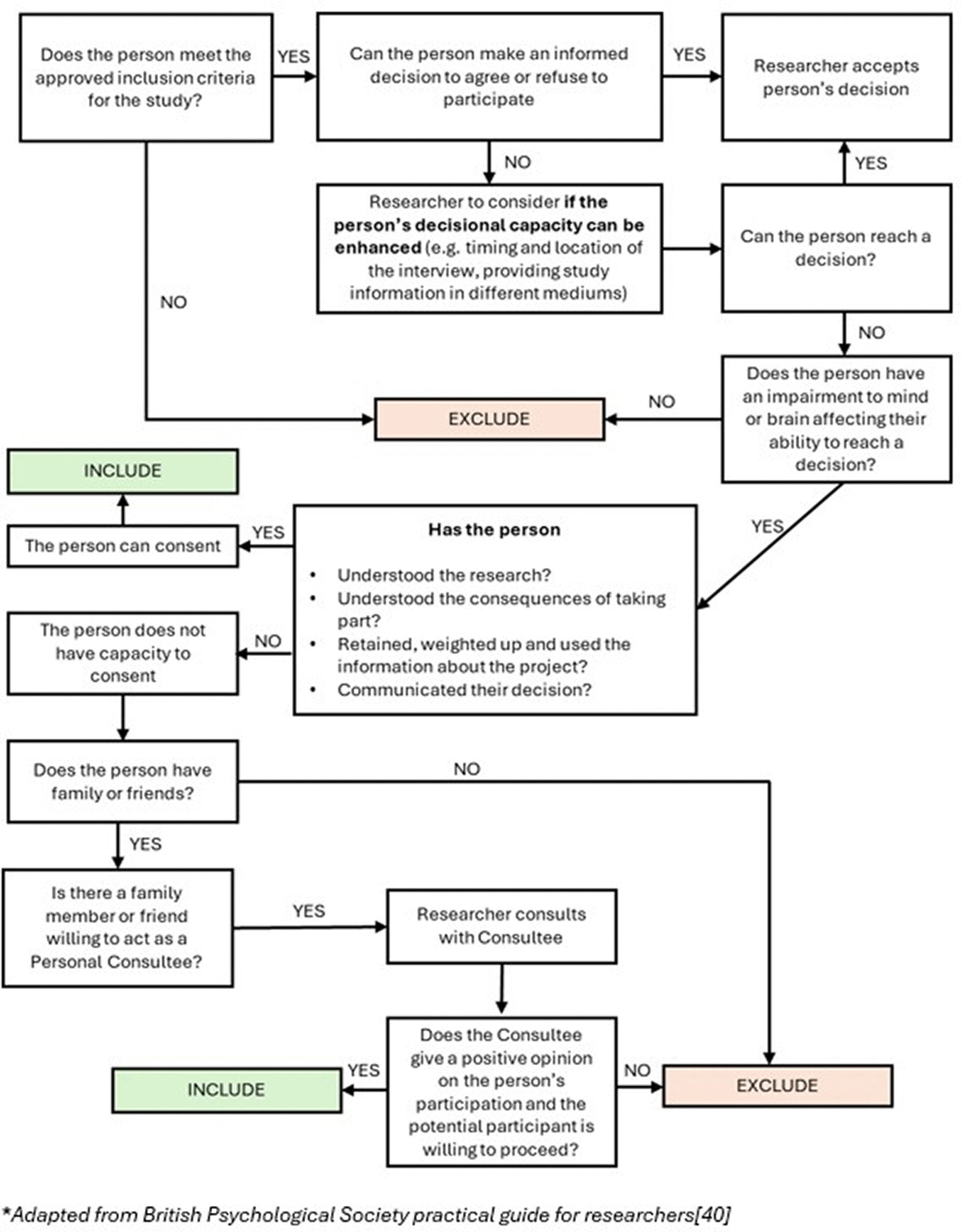
Semi-structured interviews will be completed with people with dementia and/or an informal carer. All participants with capacity will provide written informed consent. In circumstances where a person with dementia expresses interest but lacks capacity to provide informed consent to take part in research, the researcher will consult with a personal consultee to gain opinion on whether the person should be included (see Figure 3). A personal consultee will provide a written consultee declaration regarding the person’s likely wishes and feelings about participation. Written informed consent and consultee declarations will be obtained before interview. Optional written or audio diaries will supplement semi-structured interviews to support people with dementia and informal carers to record their experiences ‘in the moment’ during the lead up to interview, supporting meaningful involvement.39 Audio or written diary entries (where completed) and topic guides will facilitate interview discussions. Interviews with people with dementia and carers can be face-to-face, by video call, or by telephone and be conducted one-to-one or together (‘dyadically’), depending on participant(s) preference.
Data collection with busy professionals in busy environments (e.g. hospitals and care homes) will remain flexible to adapt to people’s preferences and availability. A combination of semi-structured interviews and focus groups with health and social care professionals will facilitate the collection of individual and group-level understandings, practices, and decision-making. Interviews and focus groups will be conducted face-to-face, by telephone or video call, allowing wider participation and geographical variation.
Interviews and focus groups will be recorded and transcribed. We will use a framework approach to analysis,40 informed by the PAPA and TFA domains. The framework method is structured and systematic, using a matrix analyse the data, supporting interdisciplinary and collaborative coding and interpretation with team members and research partners. Data management will be facilitated by NVivo software.
Phase 2: evaluate opportunities to optimise osteoporosis medicine use.
Early consideration of implementation increases the potential of interventions being widely adopted and maintained in real world settings.24 System-level and contextual factors in community, hospital, and care home settings which influence the acceptability, appropriateness and feasibility of implementing optimal osteoporosis medicines for people with dementia will be examined.41
Health economic
An economic evaluation will determine the cost-effectiveness of non-oral osteoporosis medicines for people with dementia compared with alendronate or no treatment. Discrete event simulation (DES) will estimate lifetime costs and quality-adjusted life-years (QALYs) for a heterogeneous cohort of patients with dementia. We will adapt the ScHARR osteoporosis model,42 previously used as part of the NICE technology appraisal (TA)464. Analyses will be conducted from an NHS and Personal Social Services perspective, with costs and benefits discounted at 3.5% per annum in accordance with NICE reference case methods. The model will estimate lifetime costs and QALYs for each intervention and comparator. Cost-effectiveness will be assessed through incremental analyses, including estimation of incremental cost-effectiveness ratios (ICERs). Uncertainty will be explored through sensitivity and scenario analyses.
Simulated cohort
The model will be a patient-level simulation of people with dementia eligible for fracture risk assessment under NICE clinical guideline (CG)146, including men and women, patients with and without a prior fracture, those with steroid-induced osteoporosis, those with secondary osteoporosis and those with other risk factors for fragility fracture. A proportion of the cohort will be assumed to reside in a care home. CG146 recommends that either FRAX or QFracture be used to assess the absolute risk of fracture (hip, wrist, proximal humerus and vertebral). QFracture will be used to estimate the risk of fracture for an individual based on their characteristics and this will be updated during the simulation to reflect incident fractures.
Interventions and comparators
Non-oral osteoporosis medicines include zoledronate and denosumab. Each non-oral strategy will be compared with alendronate and no treatment. Additional osteoporosis medicines included in the original ScHARR model,42 may be incorporated where relevant, guided by their use and perceived acceptability for people with dementia, identified in Phase 1.
Treatment adherence and effect
Non-UK evidence suggests that people with dementia have lower osteoporosis medicine adherence.10–16 Medicine adherence estimates will therefore use the results of the quantitative study (in Phase 1). Osteoporosis medicine effectiveness (determined from published sources42,43) will be applied for the duration of treatment. Some effectiveness will be assumed to persist beyond treatment during the ‘offset period’. A linear decline in treatment effect will be assumed from the end of treatment to the end of the offset period.
Model events and utility data
The model will simulate fragility fractures (hip, vertebral, wrist and proximal humerus fractures) and subsequent consequences, including hospital admission, increased length of stay, care home admission and mortality. Adverse events associated with osteoporosis medicines will be incorporated within the model where appropriate. Event risks will be updated using estimates identified through evidence reviews and the CPRD Phase 1 study, where possible.
Health-related quality of life
Utility values used to estimate QALYs will be derived from published studies reporting EQ-5D in people with dementia (self or proxy completed, where available, or mapped from alternative quality of life measures) or comparable populations. Where evidence permits, utility estimates will account for characteristics expected to influence quality of life, such as age, dementia severity, and care setting.
Costs and resource use
Drug costs, administration and monitoring costs, and fracture costs will be updated to reflect current prices. Drug costs will be based on NHS Drug Tariff costs for the lowest cost preparation including generic or biosimilar versions where applicable. Previous economic evaluations identified that oral osteoporosis medicines were more cost-effective than non-oral osteoporosis medicines due to the high cost of non-oral administration in hospital settings.44 For this reason, the model will consider incorporating dispensing costs of alendronate and conduct a threshold analysis to explore the medicine administration settings (e.g. at-home and in-hospital delivery) and associated healthcare and social care resource use (e.g. staff time and hospital transport for care home residents), where appropriate data are available.
Qualitative
Semi-structured interviews will explore perceived barriers and enablers to implementing optimal osteoporosis treatment regimens for people with dementia.
Participants
Key stakeholders involved in referral to and delivery of osteoporosis care services (~n = 20) e.g. primary and secondary care clinicians and service leads, community commissioners, and service managers. Participants will be recruited via professional organisations and working groups (such as the Royal Osteoporosis Society, Fracture Liaison Service database [FLS-DB] mailing lists), Research Delivery Network, and clinical networks of the study team. Sampling will consider variation in geography, speciality (e.g. endocrinology, rheumatology, geriatric medicine), and service delivery model (e.g., delivering IV services at-home and in-hospital).
Data collection and analysis
Semi-structured interviews will be conducted face-to-face, by telephone or video call, allowing wider participation and geographical variation. Interviews will be recorded, transcribed, and analysed using framework method, as described in Phase 1. Data collection and analysis will be informed by the CFIR25 and NPT29 to prospectively identify and explore complex interactions and processes within and between people, organisations and contextual determinants when considering implementation of new or enhanced services to optimise osteoporosis care for people with dementia.
Integrating findings
Within each phase, quantitative and qualitative findings will first be analysed independently before being brought together using joint display techniques.45 Areas of convergence, expansion, dissonance and silence between findings will be identified and interpreted to generate meta-inferences. Integration will also occur across study phases to examine how individual, clinical and service-level factors interact to influence osteoporosis medicine optimisation. Integrated findings will inform Phase 3.
Phase 3: support implementation of optimised osteoporosis medicines.
In collaboration with research partners (people and communities and the DOMINO CoP), Phase 3 will determine and implement optimal osteoporosis medicine regimens for people with dementia. Integrated findings from Phases 1 and 2 will provide an evidence-based foundation for a series of coproduction workshops to:
1. Determine optimal treatment regimens for people with dementia that are acceptable, cost-effective, and safe, and have potential to be implemented in current practice.
2. Coproduce toolkit resources to address identified shared and clinical decision-making needs (as identified in Phase 1 e.g. easy read-leaflets, animations and decision support tools) and support implementation of new or enhanced services (as identified in Phase 2 e.g. cost calculators, business case resources, and care pathways).
In line with co-production methods, the design and content of the toolkit resources will be determined collaboratively. Toolkit resources will be freely available for use, disseminated in partnership with relevant dementia and bone health professional organisations.
Ethics approval for the qualitative work outlined in phases 1 and 2 was obtained from Yorkshire & The Humber - Leeds West Research Ethics Committee (reference number: 25/YH/0141). All participants with capacity will provide written informed consent. Where a participant lacks capacity, a personal consultee will provide a written consultee declaration regarding the person’s likely wishes and feelings about participation. Written informed consent and consultee declaration will be obtained before data collection. Approval from CPRD Research Data Governance granted February 2026 study reference ID 25_005976.
Dissemination and knowledge mobilisation will be facilitated through national bodies and networks such as the Royal Osteoporosis Society, journal papers and conference presentations. The results of this study will be made widely and freely available; a summary of the results will be published on the Keele University website. Research partners will advise on how to translate these into easily understandable messages and on how best to disseminate the results to the wider public. In addition to publications in open-access peer-reviewed journals, we will use NHS networks and links to professional bodies to support dissemination of the findings and will use social media to promote the findings.
The DOMINO study will generate a comprehensive evidence base to optimise osteoporosis medicine use for people with dementia by integrating qualitative, epidemiological, health economic, and implementation research. Through a multiphase mixed methods design, the study will describe osteoporosis medicine prescribing, understand decision-making and acceptability, evaluate the potential role of non-oral regimens, and explore factors influencing their implementation. While challenges are anticipated given the complexity of treatment decision-making and service delivery for people with dementia, the involvement of research partners throughout the study will help ensure findings are relevant, feasible, and meaningful. Ultimately, DOMINO aims to support more equitable, acceptable, and cost-effective fracture prevention for people with dementia.
Provide sufficient details of any financial or non-financial competing interests to enable users to assess whether your comments might lead a reasonable person to question your impartiality. Consider the following examples, but note that this is not an exhaustive list:
Sign up for content alerts and receive a weekly or monthly email with all newly published articles
Register with NIHR Open Research
Already registered? Sign in
If you are a previous or current NIHR award holder, sign up for information about developments, publishing and publications from NIHR Open Research.
We'll keep you updated on any major new updates to NIHR Open Research
The email address should be the one you originally registered with F1000.
You registered with F1000 via Google, so we cannot reset your password.
To sign in, please click here.
If you still need help with your Google account password, please click here.
You registered with F1000 via Facebook, so we cannot reset your password.
To sign in, please click here.
If you still need help with your Facebook account password, please click here.
If your email address is registered with us, we will email you instructions to reset your password.
If you think you should have received this email but it has not arrived, please check your spam filters and/or contact for further assistance.

Comments on this article Comments (0)