Keywords
Qualitative, systematic review, mode of birth, decision-aid

Qualitative, systematic review, mode of birth, decision-aid
Since 2011, NICE guidance has recommended that pregnant women should be engaged in informed discussions about planned mode of birth (MOB) options1. All NHS services have been legally obliged to support pregnant women to make informed choices between planning vaginal or caesarean birth since the UK Supreme Court ruling in the 2015 Montgomery versus Lanarkshire Health Board case2. Furthermore, supported decision-making is increasingly seen as the gold standard approach to presenting choices across multiple adult UK healthcare settings3,4. However, recent systematic reviews and reports on UK maternity services have revealed limited opportunities for supported decision-making when planning mode of birth5–9. In the antenatal healthcare setting, some women are not offered an opportunity to discuss planned caesarean birth despite the potential of doing so. Similarly, women may not always receive consistent or balanced information about the risks and benefits of planned vaginal and caesarean births. The 2020 Birthrights UK survey of 1500 women who had recently given birth found that while 74% had an opportunity to discuss the benefits of vaginal birth antenatally, only 42% had an opportunity to discuss its risks10. For caesarean birth, this was 42% and 51%, respectively10. More than half of women (61%) would have liked more information from the NHS to plan their birth10.
Healthcare professionals (HCPs) can find it challenging to present the risks, benefits and consequences of each MOB option in ways that do not conflict with their personal/professional opinions, and this is likely to be a major barrier to supportive discussions taking place with women during their routine antenatal care11. Decision aids can help address this issue by providing valuable information and framework(s) to support discussions about different options; however, no such decision aid exists for women planning MOB in routine NHS antenatal care.
This qualitative evidence synthesis aimed to identify the information requirements and decision-support needs of women planning their birth. The review focused on studies conducted in high-income countries due to their relevance for UK antenatal healthcare. The findings will shape the content of a decision aid and inform its implementation in the NHS.
Four patient and public involvement (PPI) partners with lived experience, including women from underserved groups, were involved in collecting pilot data, reviewed the initial project proposal, and were co-applicants on the funding application. The four PPI partners were part of the PPI panel for the wider Plan-A project. The panel included eight PPI partners (one partner disengaged in year two of the project). The panel provided input from their experiences to inform the wording of the project’s research questions and remained involved throughout study planning and conduct to ensure an inclusive and relevant approach was taken. PPI partners acted as research collaborators and participated in regular study meetings, where they not only contributed to data analysis discussions but were also offered opportunities to make suggestions or review outputs intermittently. The panel has spent an average of 60 hours each on project activities, including planning dissemination strategies. On the advice of the panel, planned dissemination activities include the preparation of short and long videos to share project findings in the NHS, on social media, and via charities and maternity voice partnerships in the UK. Three PPI partners co-authored this manuscript.
This systematic review is the first in a series of reviews within a wider mixed methods study to develop a decision aid to support planned mode of birth (MOB) discussions in routine antenatal care in the UK NHS and equivalent settings (the Plan-A study, researchregistry8238). A second review explores the key influences on women’s preferences for vaginal or caesarean birth12. This systematic review was conducted following current methodological standards13 and reported in adherence to the Preferred Reporting Items for Systematic Reviews and Meta-Analyses (PRISMA) 2020 statement for reporting systematic reviews and meta-analyses14. The review methods were pre-specified in a research protocol (see the international prospective register of systematic reviews, PROSPERO registration CRD42022372831). (https://www.crd.york.ac.uk/prospero/display_record.php?ID=CRD42022372831)
Plan A applies to all who get pregnant. For more information, see the project's language statement (https://www.abdn.ac.uk/acwhr/research/plan-a-193.php#panel201).
Evidence was considered from qualitative or mixed methods studies that included qualitative data published from 2011 onwards. Studies that provided only quantitative data were excluded. Systematic reviews and commentaries were also excluded.
Participants. Eligible participants were:
Pregnant women or
Women who have been pregnant and gave birth after 37 weeks gestation. There was no limit on the time since the woman last gave birth.
Studies were excluded if they focused on:
Pregnant women with specific complications during pregnancy (for example, major placenta praevia/placenta accreta, pre-eclampsia, preterm labour or vaginal bleeding)
Eligible data. Studies were considered eligible for inclusion if they reported:
Information that influenced women’s planned/preferred MOB or was considered important for planning MOB
Information on the extent to which women’s decision support needs were met when planning MOB
Optimal/suboptimal timing of decision support for planning MOB
Setting. Studies were deemed suitable for inclusion if they were conducted in high-income countries, based on the World Bank classification15. Studies that recruited participants from high- and non-high-income countries were eligible for inclusion if at least 80% of participants were from high-income countries.
An information specialist developed a sensitive literature search strategy to identify published, peer-reviewed studies, including database index terms and free text to encompass the facets of MOB, decision-making or choice, and qualitative studies. The following databases were searched: ASSIA, CENTRAL, CINAHL, Embase, Medline, MIDIRS, and the Web of Science Social Science Citation Index. The search was not restricted by study type or language, but results were limited to high-income settings. The search covered the period from 1st January 2011, when NICE first recommended that a balanced discussion of birth mode options should occur, to 15th November 2022. All references were exported to Endnote for recording and deduplication. The reference lists of all articles selected for full-text appraisal were screened for additional studies. Details of the search strategies are reported in Supplementary File 1 and are available from the review data repository (see the Availability of data and materials section for details of the data repository).
A random sample of 20% of the citations identified by the search strategies were screened independently by two reviewers (CR and MC) to ensure that eligibility criteria were applied consistently. A single reviewer (CR or MC) screened the remaining search results. All potentially relevant articles were retrieved for full-text assessment, and a random sample of 10% of the full-text articles were double-screened by the same two reviewers. The remaining full-text articles were assessed by a single reviewer (CR or MC). Information on the main characteristics of each identified study (e.g., aims, methods and participants, including PROGRESS-Plus characteristics)16, and all relevant qualitative data were extracted by a single reviewer (CR or MC) with 20% of articles cross-checked by another reviewer (CR or MC) to ensure accuracy. Disagreements or uncertainties were resolved by discussion or arbitration within the research team, including independent patient and public involvement (PPI) partners, as well as clinical and methodological experts.
The quality of the included studies was assessed using the CASP (Critical Appraisal Skills Programme) tool for qualitative research17. One reviewer (CR or MC) assessed all included studies, and a second reviewer (CR or MC) cross-checked a 20% random sample. An overall score (0–10) was calculated for each study by summing the responses for each of the ten tool domains, with higher scores indicating greater methodological quality.
We used the GRADE-CERQual (Grading of Recommendations Assessment, Development, and Evaluation-Confidence in the Evidence from Reviews of Qualitative research) approach to assess confidence in the thematic findings18. Two reviewers (CR and MC) made a joint overall assessment of confidence based on each thematic finding developed by the review. The initial assumption was that all findings were 'high confidence' and a reasonable representation of the phenomenon of interest; findings were downgraded if there were concerns regarding any of the four GRADE-CERQual components.
We conducted a framework analysis19,20. We extracted data according to three pre-established global themes that were developed from the research questions outlined in the Plan-A protocol: Important information needs, Decision support needs and Timing of decision support. Following a process of familiarisation with and coding of data, we identified sub-themes from the included studies and compared and grouped them according to their shared meaning and mapped them to the global themes. On close reading of the included studies, one reviewer (CR) identified the recurring sub-themes, and a second reviewer (MC) cross-checked them. The PPI partners then cross-checked the review themes and sub-themes and discussed their views with researchers to ensure these were meaningful and relevant for women planning their MOB. Any disagreements or uncertainties were resolved through analytical discussions within the research team. Team members considered and discussed their interpretation of the data by reviewing all relevant participant quotes, authors’ interpretations of participant quotes, codes and sub-themes, note-taking and group discussion.
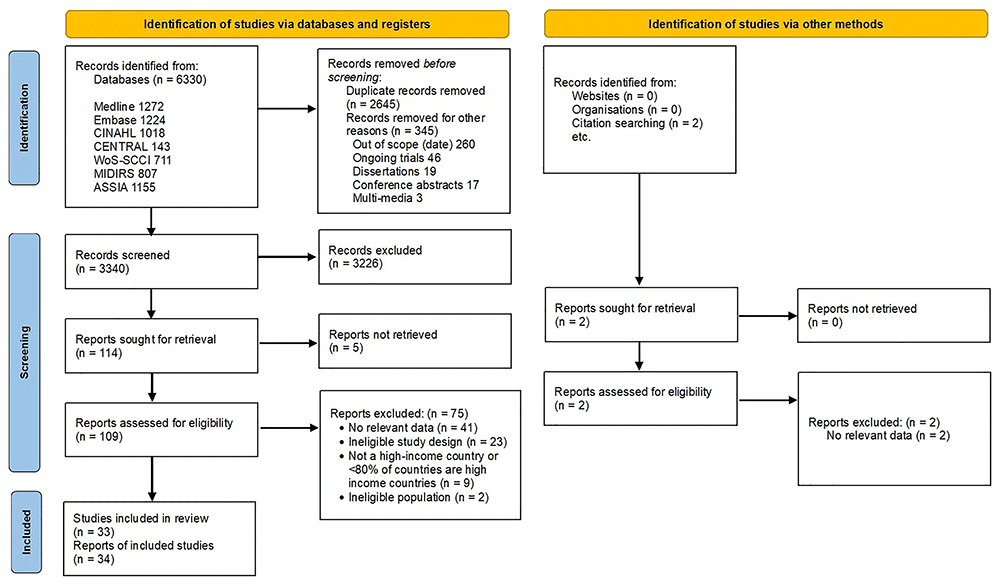
The literature search identified a total of 3340 citations. After screening titles and abstracts, 109 articles were retrieved for full-text assessment. Two additional studies were identified by hand-searching the reference lists of retrieved studies and were assessed for eligibility21,22. Seventy-seven studies were excluded because they failed to meet our pre-specified inclusion criteria. Two publications by Eide et al. (2019, 2020) report data from the same study23,24. Eide et al. (2019)24 was treated as the primary publication for summarising data and conducting the CASP and GRADE-CERQual assessments. Two publications by Munro et al. published in 2017 were included in the review25,26. We found no evidence of overlap in participants and, thus, the studies were treated as distinct. A total of 33 studies, published in 34 reports, were included in the review. Figure 1 summarises the screening process. The bibliographic details of the included and excluded studies are available from the data repository.
The key characteristics of the included studies and participant demographic data are provided in (Supplementary file 2 Table 1), available from the data repository. The 33 included studies were published between 2012 and 2022, and were conducted in Europe (10,24,27–35 including 3 from the UK33–35); North America (7 USA36–42 and 2 Canada25,26); Australia (9);43–51 Taiwan (4);52–55 and Japan (1)56. Most studies (24/33 [72.7%]) collected data via individual interviews. One study collected data via four focus groups25, three collected data via focus groups and semi-structured interviews29,30,42, and five used open-ended questions obtained from surveys36,37,44,47,50.
The studies reported data for at least 2764 participants. Monis et al. (2022) did not report the number of participants included in their analysis28. Fourteen studies (42.4%) reported the participants’ ethnicity26,27,33,34,36–40,42,43,47,48,51, and 20 (60.6%) reported the participants’ educational attainment level24–27,32,33,36–40,42,46–48,50,53–56. The participants were mainly white and educated at high school level or above. Nine studies reported mean age31–33,37,42,43,50,55,56. The youngest and oldest reported mean ages were 28.9 years (SD 3.9)42 and 36 years (SD 4)31, respectively. The data were collected between two weeks51 and 12 years39 after the women last gave birth. Details of the women’s occupational status and other PROGRESS-Plus16 characteristics were rarely reported by the study authors.
Twenty-six (78.8%) studies only recruited women with at least one previous caesarean birth25–32,35–37,39–41,43,45–54,56. Additionally, all the women recruited in the Coates et al. (2021) study planned to have a caesarean birth for their current pregnancy, with 48% having had a previous caesarean birth44. Sixteen studies reported data for the planned MOB for 2324 women24,26,29,31,32,36,37,40,42,44,47,48,51,53,54,56. Vaginal birth or vaginal birth after caesarean (VBAC) was the planned MOB for most women (1684, 72.5%); primary or repeat caesarean birth was the planned MOB for 578 (24.9%); and 62 (2.7%) were undecided. Information on total parity was inconsistently reported across studies, and it is, therefore, not possible to report an average number of previous births for the women.
Most studies were of adequate quality. The overall CASP score was at least 6/10 for all but two studies31,33. The CASP study level results are reported in (Supplementary file 3 Table 2), available from the data repository.
Our findings are presented narratively for each of the three pre-specified global themes and are organised by sub-themes with illustrative quotations according to their content.
Many included studies did not report demographic data for specific participant quotations. The complete list of participant and author quotations, structured by global themes and sub-themes, is available from the data repository. The contribution of studies to each theme and sub-theme is presented in (Supplementary file 4 Table 3), available from the data repository.
Sub-theme 1: Safety/risk and recovery. The women discussed the importance of having balanced information on the safety of vaginal and caesarean birth, including the risks associated with each planned MOB and the chances of experiencing their planned MOB. The women described how information about specific risks, such as uterine rupture, scarring, tearing and use of forceps informed their decision-making. Some women said this information led them to re-evaluate their preferred MOB. In contrast, others described being happy to accept the risks or considered themselves at low risk and felt comfortable proceeding with their preferred MOB.
“I feel that trying vaginal birth may be more difficult than expected, after learning about the risks of a vaginal birth” (Torigoe 2018)56
“They have pointed out about the wound, how it could tear . . . It didn’t put me off; there is a risk in everything you do so it is the level of risk you calculate. I think once you have the percentage of facts you make the decision […]” (Monis 2022)28
The women also explained how they wanted information that could be interpreted in the context of their unique personal medical status or medical history. Some women expressed the need for information tailored to their individual risk.
Most women wanted to receive information about the expected recovery associated with each planned MOB. For some, this information was considered in the context of the availability of a social support network and caring for their newborn and other children; for example, they wondered whether they would be able to lift their older children following a caesarean birth. Some women opted for a vaginal birth believing this would allow faster recovery whilst others believed that recovery following vaginal birth is worse than a caesarean birth. Several women chose a planned caesarean birth so they could schedule help from family and friends around the date of the birth. Information about recovery was often obtained from other women rather than HCPs.
“I have discussed with few friends…one who had a section with the first and had natural with the second, she had an ‘episiotomy’ and . . .she said the recovery was worse after that (episiotomy) than after the section.” (Monis 2022)28
Several women reported not receiving adequate information about safety and risks, or that this information was missing during their antenatal care. Women felt uninformed about possible short and long-term risks, especially for caesarean birth. This made it difficult for women to compare the risks associated with each birth mode. Women reported having to initiate these discussions with HCPs or having to seek information on risks associated with MOB from the internet.
Sub-theme 2: What to expect during the planned MOB. Some women stated that they had not received enough information about what could happen during labour and before and immediately after the birth, such as information about pain relief and skin-to-skin contact. Whilst most of the women were satisfied with the details they received from their HCP, as was the case with information about risks and recovery, many explained how they supplemented the information with advice from family and friends or information obtained online.
“I think the information I received from the hospital was good. Good, simple, basic… but then I still, I wouldn’t have been happy unless I had looked further into it and got more details on the procedures and stuff” (Thirukumar 2021)51
Women also wanted to know whether their values could be accommodated during the different MOB options. For example, one woman wondered whether her husband would be able to cut the umbilical cord if she chose to have a caesarean birth.
Sub-theme 3: Presentation and quality of communication. Women valued being listened to and respected during MOB discussions with HCPs and, whilst believing that HCPs should have a neutral stance, they appreciated the encouragement and support provided. Some women felt they were not listened to or were pressured into choosing a particular MOB by HCPs’ coercive behaviour. This included HCPs emphasising the risks associated with one MOB, with little or no discussion of the benefits, and using negative or intimidating language. By contrast, the use of clear, positive language was welcomed.
“…[…] she kind of pushed me and was like, if you don't [have a C-section], you know, complications, you could die, your baby could die. […] So, I just cried that day and like went along with it [..].” (Miller 2022)39
“I have been really lucky to have a doctor I trust and listens to me. With my other pregnancies I felt all the decisions were made for me … This time I feel included in the decision-making process a lot more which makes me more comfortable and happy” (Coates 2021)44
Some women felt strongly that they should be included in decision-making and have the final say on MOB choice. These women appreciated HCPs who encouraged them to ask questions and make decisions. Women also described how HCPs had helped them to “let go”30 of previous negative birth experiences to then plan a subsequent MOB. Other women stated that they wanted to be included in the decision-making process, but they wanted the HCP to make the final MOB decision.
“She really encouraged me to own my decisions and not be coerced into something that doesn’t seem right and that includes things that she recommends as well. She’s always given me all of the available options and then let me choose from there.” (Keedle 2019)48
“I don’t believe the woman should decide for herself, not exclusively…Either way you need someone to talk to about it. Not necessarily to be allowed to decide completely.” (Eide 2020)23
Sub-theme 4: Other women’s experiences. For some women, information about other women’s experiences was more influential to their decision-making than “academic”35 information received from their HCP. One woman explained that she decided to have a repeat caesarean birth because her sister had been unable to have a vaginal birth. Women also discussed how they appreciated hearing the experiences of women from outside their family or social circle, especially those who preferred a vaginal birth after a previous caesarean birth. Women indicated they would welcome attending support groups where experiences could be shared, and they valued hearing the personal accounts of women online. Women discussed how, despite receiving advice from HCPs that VBAC was possible for them, information about other women’s experiences gave them further confidence that they would be able to have a VBAC.
“Your midwife did not experience VBAC herself, and I believe it would be very helpful to hear from women who experienced it and recognise your fears. I believe that would be the most effective way to reassure women” (Nilsson 2017b)30
Sub-theme 5 Type and format of information requirements. Preferences for information format varied. For example, some women preferred written information on paper, but they acknowledged that this might not work for everyone, and that some women may choose online information rather than leaflets or pamphlets. Women indicated that it would be helpful to include details of additional information sources, such as links to relevant websites or social media groups.
“I could have had more information. Well… actually I think I just wanted the information to apply to me. I just wanted it to apply to me.” (Thirukumar 2021)51
The women explained that they wanted clear, realistic, and easy-to-digest information. Birth stories and scenarios, including scenarios presented by different risk levels were considered particularly useful when making decisions about MOB.
“It would be nice if there was like a really comprehensive website that talked about like different scenarios and things. Like maybe like what are your odds of having a successful VBAC, like if you’re low risk or medium risk or different things.” (Munro 2017a)25
Receiving balanced information that allowed women to make birth mode comparisons was identified as an important decision-support need. Several women explained that they had only received information about one MOB option from their HCP or had received biased information that was either strongly favourable or unfavourable towards either vaginal or caesarean birth. Other women reported receiving conflicting or inconsistent information from different HCPs. This had been unsettling and confusing, and left women feeling unsupported or compelled to find supplementary information from alternative sources.
“I went to one of the birthing classes … and about 90% of that class covered just vaginal birth options and covered caesarean in like one slide, so I felt that it’s important that the doctor added to our understanding about what the caesarean would do.” (Thirukumar 2021)51
“According to my experience I consulted several doctors, everyone says something different, but in the end the same conclusion: ‘You have to decide yourself’.” (Nilsson 2017a)29
Sub-theme 6: Having time to consider the information and ask questions. Due to the limited time available during antenatal appointments, some women felt that there was little time to “stop and think”43 or ask questions, and this caused stress and confusion. The women suggested that it would be helpful to receive information “ahead of time”26 so they could consider their options and prepare questions before their healthcare appointments. This meant that some women searched the internet or social media for information to prepare questions before their clinic visits, despite concerns about the reliability of these information sources. Women described feeling rushed, and that their appointments had become “one-way information provision”26 sessions rather than an opportunity for discussion. The women valued appointments where HCPs were patient and took their time to explain things and answer questions.
“You have a baby brain . . . you can’t just make rash decisions . . . I just feel like we need to just slow it down and keep it basic” (Chan 2021)43
“[…] when I met with the obstetrician, I asked lots of questions and they took a lot of time explaining things to me in detail” (Lewis 2014)49
“The doctor was too busy. When you asked him questions, he just briefly understated it, telling you in just a few words. He could not answer all your doubts.” (Chen 2018)53
Sub-theme 7: Extent of belief in the information. Some women recognised that HCPs and family members had a more persuasive impact on their MOB decisions than impersonal, objective information on risks and benefits. Several stated that they listened to information they felt was trustworthy and confirmed their pre-existing beliefs. Similarly, they noted that they would disregard information that seemed biased, untrustworthy, or conflicted with their existing MOB preferences. Peers, in person or on social media, were described as “understanding”, “real”, and “helpful”25.
Sub-theme 8: Before pregnancy. Women indicated that they wanted information about MOB for future pregnancies as soon as possible following a caesarean birth and, where the recent caesarean was not an elective procedure, an explanation to understand the reasons why caesarean birth was required.
“I don’t know if it is possible to be informed earlier about VBAC that would be great. But, in general, as soon as possible”. (Nilsson 2017a)29
Sub-theme 9: During pregnancy. A common complaint among women was that MOB decisions were made later in their pregnancy. Processing of information in the later stages caused psychological stress and uncertainty, with several women stating they were unable to enjoy their pregnancy until the MOB decision had been finalised, and only at that point were they “able to relax”23.
The GRADE-CERQual ratings are presented in (Supplementary file 4 Table 3). We rated most sub-themes as low confidence (5/9 [55.6%]). Four sub-themes (44.4%) (What to expect during planned MOB, Other women’s experiences, Having time to consider the information and ask questions and Before pregnancy) were graded as moderate confidence. Findings were downgraded for ‘relevance’ because participant demographic data, including sociodemographic status and ethnicity, were poorly reported across studies. Our confidence in the findings across the sub-themes is weakened because it is unclear whether the findings have relevance for women from minority and under-served groups. Findings for the Safety/risk and recovery, Presentation and quality of communication, Type and format of information requirements and During pregnancy sub-themes were also downgraded for ‘methodological limitations’ because one or more of the studies that contributed data to these subthemes were of overall poor methodological quality as assessed by the CASP checklist for qualitative studies. One sub-theme (Extent of belief in the information) was downgraded for adequacy because only one study contributed to this sub-theme25.
PPI partners advised on study eligibility and challenged interpretations of data. Together, we navigated the creative tensions arising from diverse viewpoints, resulting in enhanced analytical depth. This led to the refinement of analytical themes and discussions around these, thus ensuring our interpretations are more nuanced, grounded, and reflective of diverse experiences. For example, they stressed the importance attached to hearing other women’s experiences and the cultural importance of this. They also provided insight and context to the extensive data collected on how health professionals’ attitudes influence informed decision-making. Beyond the impact on the project, we observed that being involved gave our PPI partners a sense of empowerment and ownership over health research that impacts their lives or communities, contributing to greater advocacy.
This review synthesises women’s information and decision support needs when planning MOB in high-income countries. Most studies were of good methodological quality; however, confidence in most of our findings is low. Most of the women in the included studies had given birth or planned to give birth by VBAC.
Our findings highlight women’s need for clear, consistent, balanced information about planned vaginal and caesarean birth so they can compare the risks and benefits of each MOB. Women also want to be informed about what to expect during birth and the recovery. Many women in the included studies reported that they did not receive balanced information, and some felt they had been coerced into choosing a MOB that their HCP favoured. Women indicated that information about other women’s experiences was important to them because this was more relatable than impersonal academic information; however, several women expressed concerns about the factual accuracy of anecdotal information obtained from other women’s experiences. Some women were frustrated that they had received insufficient information during their antenatal healthcare appointments and had felt time-pressured during the decision-making process. These women often searched the internet to obtain information despite having concerns about the reliability of online information sources. Interestingly, some women noted that they would disregard any information that seemed untrustworthy or conflicted with their pre-existing MOB beliefs; therefore, it is crucial that any objective, scientific information that is presented to women is both credible and authentic to those women. Each woman is an individual with different personal circumstances, expectations and values. It is, therefore, unsurprising that these women stated they wanted to receive information that is individualised, and available in a range of formats. The women also stressed the importance of being listened to and respected by HCPs during their decision-making process.
We used established and scientifically robust methods for the conduct, quality assessment and reporting of this qualitative evidence synthesis; however, we acknowledge that qualitative interpretive approaches are subjective by nature, and it is possible that different overall findings may have emerged had other researchers conducted this synthesis. The research team included clinical and methodological experts who acknowledged their role in the analytical process through note-making and discussions. PPI partners acted as research collaborators/partners and gave input at all stages of this review, including data synthesis, thus ensuring that data analysis was considered from the perspectives of women who make MOB decisions. In our experience, incorporating individuals with lived experiences into the data synthesis process for a literature review, especially when it concerns amplifying the voices of the communities they represent, demands time and support but profoundly enhances the research. This approach ensures that the findings are authentically anchored in real-world experiences, enriching the analysis with a level of cohesion, depth, and comprehensiveness that amplifies its impact. The data were obtained from studies that included women who were pregnant with their first child and women who had previously had a vaginal or caesarean birth. Due to the limited reporting of participant demographic data by the authors of the included studies, it is unclear whether the study participants are representative of all women who undertake MOB decisions, including women from under-served groups and minority ethnic communities, and this may reduce the transferability of the review’s findings. Furthermore, under-representation of these groups in research may imply that clinical and policy decisions could be grounded in data that predominantly cater to some groups, neglecting the needs of others57,58. At the time of writing, we are conducting an overview of systematic reviews that explores the experiences of women from under-served and marginalised groups when accessing antenatal care. The findings of this overview will also inform the development and implementation of the decision aid.
Our findings support existing evidence that women are not routinely offered comprehensive information on MOB options during antenatal care5–10. This is despite NHS maternity policies (e.g., Best Start, Better Births) and the Maternity Choice and Personalisation initiative within the NHS England’s (NHSE) Maternity Transformation Programme, which aims to improve the provision of information, choice and personalised care59–61. It indicates a clear need for a resource to support MOB discussions between primiparous and multiparous women and HCPs in routine antenatal care. Our findings suggest that a decision aid should contain comparative information on the benefits and risks of planned vaginal and caesarean birth and what women can expect to happen in terms of the procedures and processes with/for each option. Women stressed the importance of receiving information about other women’s experiences, whilst also worrying about the accuracy of such information, which presents a challenge for developing a decision aid that contains objective information that has personal relevance for individual women. Presenting evidence-based information as realistic scenarios that are easy to read, along with the testimonies or accounts of women who have experienced different MOB options, may address this issue. It should also be recognised that some women have strong MOB preferences, whilst others may not feel comfortable making the final MOB decision. Thus, different women may have different decision-support needs. Whilst the aim of a decision aid is to assist MOB discussions, differing information and decision-support needs of women should be recognised and accommodated by HCPs to ensure adequate support for all women making MOB decisions. Antenatal healthcare appointments should, therefore, allow sufficient time for two-way discussions where women can ask questions and have a voice in the decision-making process. Health services can further support such discussions by ensuring that clinicians work in an environment where leadership, infrastructure and practice actively promote supported decision-making.
This evidence synthesis highlights women’s differing information and decision support needs when making MOB decisions in high-income countries. Future research should be conducted in accordance with guidance from initiatives such as the National Institute for Health and Care Research (NIHR) INCLUDE framework and the NHS England guide to increasing diversity in research participation to enhance the generalisability of findings57,62. The findings of this review will be used in conjunction with findings from the wider Plan-A project to inform the development of a decision aid to support MOB discussions as part of routine antenatal care in the NHS and its accompanying implementation guide.
Not applicable. Ethics approval and consent to participate were not required for this work.
Provide sufficient details of any financial or non-financial competing interests to enable users to assess whether your comments might lead a reasonable person to question your impartiality. Consider the following examples, but note that this is not an exhaustive list:
Sign up for content alerts and receive a weekly or monthly email with all newly published articles
Register with NIHR Open Research
Already registered? Sign in
If you are a previous or current NIHR award holder, sign up for information about developments, publishing and publications from NIHR Open Research.
We'll keep you updated on any major new updates to NIHR Open Research
The email address should be the one you originally registered with F1000.
You registered with F1000 via Google, so we cannot reset your password.
To sign in, please click here.
If you still need help with your Google account password, please click here.
You registered with F1000 via Facebook, so we cannot reset your password.
To sign in, please click here.
If you still need help with your Facebook account password, please click here.
If your email address is registered with us, we will email you instructions to reset your password.
If you think you should have received this email but it has not arrived, please check your spam filters and/or contact for further assistance.

Comments on this article Comments (0)