Keywords
Disability; inclusion; health service access; Africa

Disability; inclusion; health service access; Africa
Sixteen percent of the global population are estimated to be living with a disability.1 All people with disabilities have the right to access the healthcare they need. This right is assured through national legislation, and international conventions such as the 2007 United Nations Convention on the Rights of Persons with Disabilities and the 2019 Political Declaration for the UN High-Level Meeting on Universal Health Coverage.2,3 Access to healthcare for people with disabilities is also a prerequisite for countries to meet universal health coverage (UHC) goals that aspire that “all individuals and communities receive the health services they need without suffering financial hardship”.4
People with disabilities have the same general health needs as everyone else in the population, for services such as routine vaccination, cancer screening and so on. However, because of intersecting factors including age, gender, poverty, and inaccessible environments, many have poorer health status than others, and consequently a greater need for general healthcare services. In addition, many people with disabilities need rehabilitation services to address their underlying impairment and improve their everyday functioning. However, evidence suggests that people with disabilities are often less likely to access the health services they require due to a range of barriers, and that when they do so, the experience and impact are less positive, and the costs greater, than for people without disabilities.1,5
Up to 80 million people with disabilities live in sub-Saharan Africa (SSA), although published estimates vary depending on the source and approach to collecting data.6–8 The 2023 Universal Health Coverage Global Monitoring Report suggests that people living in Africa have the lowest access to health care services globally, despite improvements since 2000.9 Compared to global averages, people in SSA also face extremely high levels of impoverishing out-of-pocket expenditure related to healthcare, reflecting both low government and out of pocket expenditure on health, and the extreme poverty in many parts of the region.9 It seems reasonable to assume that people with disabilities are disproportionately worse off than people without disabilities in terms of both service coverage and the financial hardship incurred in the pursuit of healthcare. However, this is an assumption, and there is no up-to-date review of the extent to which access to healthcare services differs between people with and without disabilities in SSA.
The aim of this study is to quantitatively describe how access to health services differs between people with and without disabilities in SSA. We seek to identify and summarise differences in health service access outcomes that address individuals receiving the health services they need, the service quality, and the cost or financial impact of receiving those services.
This is a systematic review of published and grey literature, reported following the Preferred Reporting Items for Systematic reviews and Meta-Analyses (PRISMA) guidelines.10,11 The protocol was published in Prospective Register of Systematic Reviews (PROSPERO; registration number CRD42022332482). This review updates that conducted by Bright et al in 2017, with a particular focus on sub-Saharan Africa.12
Patients and the public were not directly involved in the design, conduct, or reporting of this study, as it was a systematic review of previously published literature and did not involve primary data collection or participant recruitment. The review addresses issues of direct relevance to patients and the public, particularly in relation to how people with disabilities access health services, drawing on existing evidence that reflects population needs and priorities. Findings from this review will be shared with relevant stakeholder groups to inform future research, implementation, and dissemination.
Disability was defined broadly including through social or medical model approaches; self-report or clinical diagnosis; and definitions based on health conditions likely to be disabling (e.g. schizophrenia), impairments (e.g. blindness) or activity/participation restrictions (e.g. inability to walk). We excluded mild levels of disability such as moderate vision impairment.
We included studies that report one or more quantitative measures of health service access. In this review, we will draw on the UHC definition of “all individuals and communities receive the health services they need without suffering financial hardship”. We considered measures related to service utilisation, coverage, quality, adherence, and financial coverage ( Table 1). Health service access includes objective or self-reported measures of access to any type of health service including promotive, preventative, curative, or palliative care.13 We did not include rehabilitation services as there would not have been a non-disabled group to compare.
We included studies reporting outcomes related to our primary study objective: access to health services where differences between people with disabilities and a comparator group of people without disabilities, are measured and reported. We included studies that used any quantitative study design, including experimental, quasi-experimental, and observational designs, both prospective and retrospectively collected data, routinely collected data, and cross-sectional and longitudinal studies. Studies were eligible if they reported results for people of any age, were conducted in the World Bank Africa region, of any publication status or language. We excluded studies conducted prior to 2000, as they were unlikely to reflect the current healthcare access context.
Eligible studies must have reported a measure of association between disability and the health access indicator, for example, odds ratios (ORs), and a measure of confidence of the estimate, for example, confidence intervals (CIs), p-values, or standard errors, or sufficient data to calculate these measures.
The initial search strategy was developed for Medline (Extended Data 111) and was piloted, refined and then adapted for the other databases: EMBASE, Global Health, PsychInfo, SCOPUS, Web of Science, African Index Medicus, the SINTEF library, and Google Scholar (first 500 hits). The search was developed around three concepts: disability; health access; and SSA. For ‘disability’, we drew on the search terms reported by Bright et al, in their systematic review, reviewing and adapting where necessary.12 The health access concept was developed around the terms described in Table 1, using synonyms and commonly accepted alternative terms and concepts where appropriate. Medline provide a pre-written search strategy for World Bank defined sub-Saharan Africa that we used in this search.
We complemented the database search by reviewing the reference lists of included publications, hand searching websites of non-governmental organisations known to be active in the field, and contacting researchers identified as active in the field. These include Source; WHO AFRO; World Bank; AMREF Health Africa; Fondation Internationale Recherche Appliquée sur le Handicap; Africa Health Organisation; Development Pathways; Leonard Cheshire International; Handicap International; CBM; Sightsavers. Although they uniquely contain review papers, we searched the Campbell and Cochrane libraries for related studies and searched their reference lists.
We ran our search from January 2017 to November 2025. We used the studies identified by Bright et al through their search that ran from inception until February 2017 that reported data from sub-Saharan Africa.
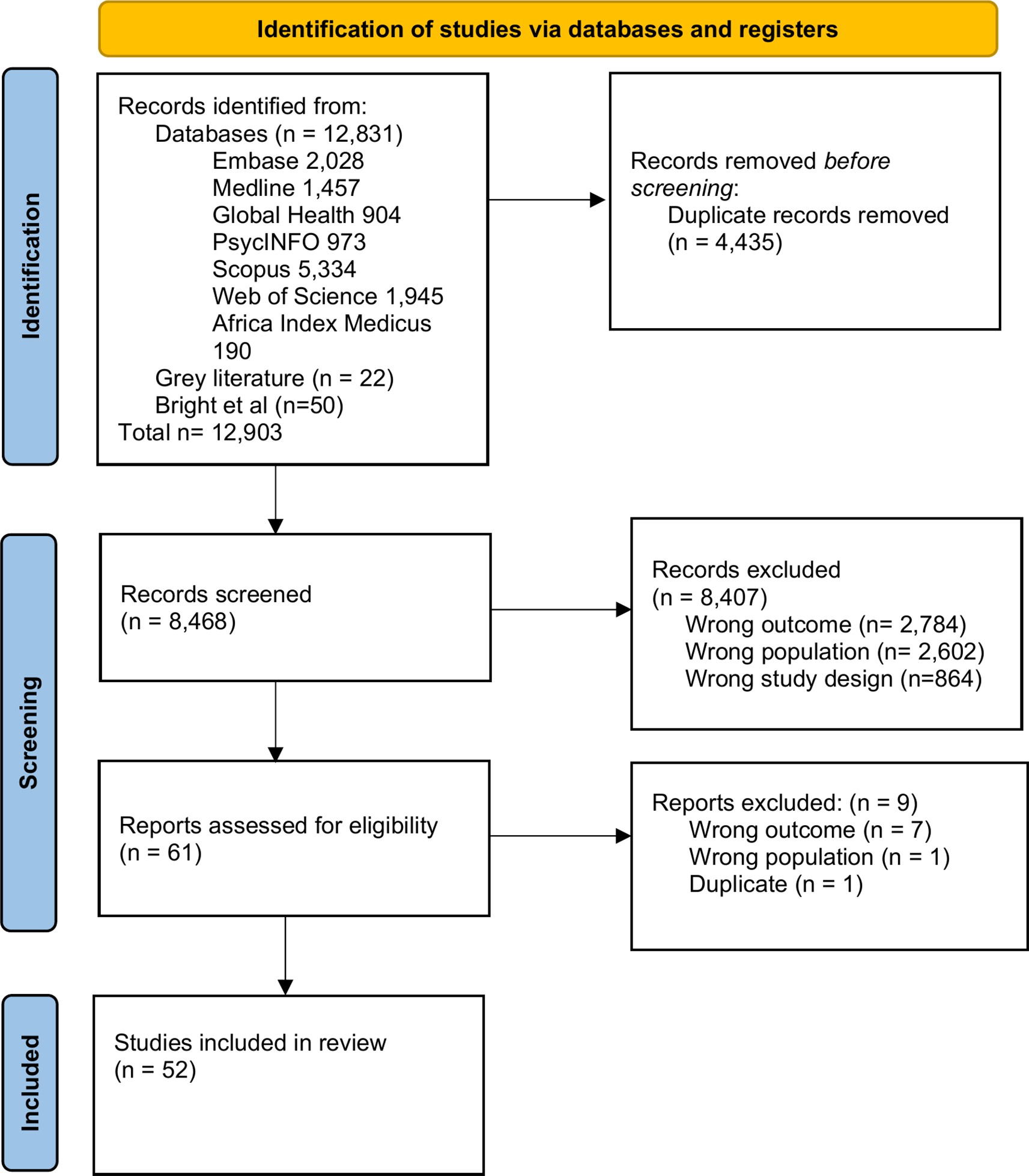
The titles and abstracts of all records identified through our search were exported into the online tool, Rayyan, where we identified and removed duplicates.14 Two authors (EJ and BV) independently screened titles and abstracts against the eligibility criteria and identified those eligible for review, recording reasons for exclusion. Full texts were retrieved and two authors independently screened them to confirm inclusion, recording reasons for exclusion. We resolved disagreements through discussion between the two authors, involving a third author if necessary. We then screened and added any eligible studies not already identified from the Bright et al review (i.e. those published since 2000, and reporting data from SSA).12 From this point on, they were treated in the same was as more studies identified through our search.
All studies were assessed and assigned a risk of bias score (low, medium or high risk) using the SIGN 50 checklists.15 Risk of bias was assessed by EJ and BV independently.
Results were presented in tables and described narratively, with sub-analyses by age, gender and type of disability described when presented. Negatively phrased outcomes were inverted to simplify interpretation. Where multiple models were presented, we reported the adjusted models, with preference to those adjusting just for age and sex. We considered there to be statistically significant differences between people with and without disabilities when the indicated p-values were less than 0·05, or when the 95% CIs did not include the null value. We categorised non-significant results as ‘null’, and categorised significant results as being ‘better’ for people with disabilities if they indicated higher access compared with the non-disabled group, ‘worse’ if they indicated lower coverage for people with disabilities, and ‘mixed’ if they presented more than one estimate indicating different directions of association.
We planned to pool similar outcome measures into meta-analyses with random effects, using Stata software, describing both pooled standard effect sizes, 95% CIs, and I2 statistic to quantify the heterogeneity between studies. However, we did not identify sufficient studies using comparable metrics.
Fifty-two were included in this review, with total sample sizes ranging from 72 to 116,998 ( Figure 1; Extended Data 211).
Geography
Forty-five of the retrieved papers report data from just one country, and seven papers report studies from two or more countries ( Table 2). Thirty countries are represented in the 52 papers retrieved. South Africa has the highest level of representation (12/52 studies; 23%), followed by Uganda (9; 17%), Nigeria (7; 13%), Ethiopia, Ghana and Malawi (6; 12% each), Sierra Leone (5; 10%) and the remainder in four papers or fewer each.
The majority of studies were surveys conducted among households (n = 26; 50%), health settings, particularly HIV clinics (n = 6; 12%), participants of development projects/health interventions (n = 4; 8%), education settings (n = 3; 6%), or telephone or online surveys (n = 2; 4%). The remainder were case-control studies (n = 11; 21%).
Disability measurement
Studies reported a wide range of approaches and tools for measuring disability, broadly categorised into five groups: 1) self-reported functional difficulties or activities of daily living (e.g. WHODAS, Washington Group), 56% 2) clinical questionnaires (e.g. Patient Health Questionnaire), 17%, 3) combination of self-reported functional difficulties and clinical assessment, 15%, 4) self-reported disability, 8%, and 5) registered disabled or recipients of disability-focussed services, 4%.
Risk of bias
The majority of studies were evaluated as having low risk of bias, indicating a high confidence in their methodological quality (n = 36; 69%; Extended Data 311). However, 13 (25%) studies were evaluated as moderate risk of bias, and three (6%) were evaluated as being at high risk of bias indicating low methodological quality. Limitations identified in the studies evaluated as low quality included no or limited description of outcome and explanatory measures, no or inappropriate description of control selection, and inappropriate analytical strategy.
From the 52 included papers, we identified 103 reported outcomes for inclusion in our study. While most papers (n = 27/52; 52%) reported just one outcome, 11 (21%) reported two, eight (15%) reported three, five (10%) reported four, and one reported ten (2%). Across the 103 outcomes, the most commonly reported health access concept was coverage (n = 60; 58%), followed by financial coverage (17; 17%), utilisation (12; 12%) adherence (10; 10%) and quality (4; 4%).
Twelve identified outcomes were related to health service utilisation ( Table 311), including: i) general use within a specific timeframe (n = 8)16–22; and ii) general health service use, including from specific types of facilities (n = 4).16,23,24 Among the twelve outcomes, two suggested higher utilisation of services among people with disabilities and two suggested lower utilisation.16,18,21,24 Among the remaining eight outcomes, three presented null results and five presented a mixed picture.
Sixty outcomes were related to health service coverage ( Table 411), including: i) HIV testing or treatment services (n = 10)25–34; ii) sexual and reproductive health (SRH) and maternal health services including contraceptive use (n = 22)24,27–29,31,35–39; iii) a range of child health interventions (n = 15)39–44; iv) general health services use (n = 7)16,45–50; and v) a range of specific health services (n = 6).28,31,51–53
Among the HIV service-related outcomes, three indicated lower coverage among people with disabilities,26,32,34 three reported null results,29,31,33 and four indicated a mixed picture.25,27,28,30 Studies indicating a mixed picture included those which disaggregated some outcomes by type or severity of disability, and found differing results. For example, a study in Zambia found that people with cognition impairments were more likely (AOR 1·67, 95%CI 1·22–2·29) to have ever tested for HIV in an ANC clinic, and people with hearing (AOR 0·36, 95%CI 0·16–0·80) or communication (AOR 0·08, 95%CI 0·01–0·42) impairments were less likely to have ever tested.25
Among the 22 outcomes associated with SRH or maternal health services, two indicated a worse situation for people with disabilities,27,36 seven indicated a mixed picture,27–29,37 and 13 reported null results.24,28,31,35,37,39 Among the seven with mixed results, three (from the same study) suggested lower access to different types of services access by women with disabilities at different points throughout the Covid-19 lockdowns in South Africa,28 two suggest lower access to modern contraceptive use by women with specific types of impairments or degrees of difficulty,27,29 two (from the same multi-country study) suggest that women with disabilities in Uganda have higher access to any contraception, and to 4+ ANC visits.37,28
Among the 15 outcomes related to child health, five reported mixed results,42,43 and 10 reported null results.39–42,44 The five reporting mixed results were all multi-country analyses which overall showed null results, but certain country specific results were significant but in opposing directions.
Among the seven outcomes related to general healthcare needs, four suggested worse results for people with disabilities,45,47,49,50 one reported a mixed picture,16 and two reported null results.46,48
Among the six outcomes related to coverage of specific health care services, one indicated a better situation for people with disabilities,53 a second indicated a worse situation,52 and the other four outcomes were null results.28,31,51,53
10 reported outcomes were related to adherence, all related to types of HIV services ( Table 511).30,32,54–58
| First author, year | Disability definition | Description of adherence measure | Adherence among participants with disabilities | Adherence among participants without disabilities | Estimate and significance of effect 1 | Direction of effect | Factors in model | Risk of bias |
|---|---|---|---|---|---|---|---|---|
| Asrat, 2020 | Major depressive disorder (MINI), and functional difficulties (WHODAS) | ART adherence | MDD: 74 (62.2%) FD: 98 (70.8%) | No MDD: 215 (91.9%) No FD: 789 (89.6%) | ARR (95%CI) No MDD (ref MDD) 1.43 (95%CI 1.05–1.96) No functional disability (ref FD) 1.06 (95%CI 0.79–1.41) | Mixed | None | Low |
| Belus, 2019 | Psychiatric disorder (MINI) | ART staging appointment | not reported | not reported | ARR (95%CI): (ref 0 diagnosis) 1 diagnosis 0.85 (0.49–1.47) 2+ diagnoses 1.01 (0.59–1.71) | Null | age, gender, employment status, perceived health status, and baseline CD4 count | Low |
| Number of ART appointments | not reported | not reported | ARR (95%CI): (ref 0 diagnosis) 1 diagnosis 1.09 (0.61–1.95) 2+ diagnoses 0.86 (0.40–1.82) | Null | ||||
| Cholera, 2017 | Depression (PHQ-9) | CD4 test uptake | 103 (80.0%) | 237 (73.0%) | ARR (95%CI) Depressed PHQ > =10 (ref <10) 1.05 (0.93–1.18) | Null | Age, gender, employment status, country of birth, alcohol use, perceived health status, and baseline CD4 count | Low |
| ART initiation | 63 (81.0%) | 113 (81.0%) | ARR (95%CI) Depressed PHQ > =10 1.01 (0.87–1.17) | Null | ||||
| Mandlate, 2022 | Severe mental disorder (MINI) | ART adherence | 20% | 29% | AOR (95%CI) 0.69 (0.47–1.02) | Null | Age, gender, marital status, education, occupation, income | Low |
| Hanass-Hancock, 2015 | Functional difficulties (WHODAS) | ART adherence | 14.8 | 15.4 | ARR (95%CI) Global limitations 1.09 (1.05–1.14) Mobility limitations 1.34 (1.16–1.55) Life activity 0.70 (0.42–1.15) Cognition 1.08 (0.79–1.46) Participation 1.15 (0.89–1.47) Self-care 0.66 (0.31–1.39) Getting along 0.98 (0.65–1.47) | Mixed | Age, gender, months on ART | Low |
| Abimanyi-Ochom, 2017 | Functional difficulties (WGSS) | Received latest HIV test results | 93.5% | 94.8% | AOR (95%CI) Any disability 0.79 (0.61–1.02) Multiple disability 0.6 (0.41–0.87) Low severity 0.76 (0.59–0.99) High severity 0.60 (0.35–1.01) | Mixed | Age, gender, education, marital status, wealth, rural/urban | Low |
| Zandam, 2021 | Functional difficulties (WGSS) | Took HIV test and obtained results | 61.4% | 68.2% | AOR (95%CI) 0.88 (0.78–0.99) | Worse | Maternal age, education, marital status, number of living children, employment, household wealth, and residence | Low |
| Received post-test HIV counselling | 51.6% | 55.5% | AOR (95%CI) 0.93 (0.84–1.04) | Null |
Three outcomes related to receiving test results, one of which indicated that people with disabilities were less likely to do so than people without disabilities.32 A second reported non-conclusive results overall, but analysis of sub-groups identified that people with i) multiple disabilities, and ii) low severity disabilities, were less likely to have received their latest HIV test results.30
The two studies related to CD4 testing and antiretroviral treatment (ART) staging both reported non-conclusive results.
Among the five outcomes related to ART adherence, one indicated lower adherence among people with disabilities.58 A second found that people with major depressive disorder were less likely to adhere, than people without major depressive disorder.54
We identified 17 financial coverage outcomes ( Table 611). Ten outcomes focused on health insurance coverage,21,59–62 five focused on catastrophic out-of-pocket expenditures (CHE) for healthcare,63–66 and two reported out-of-pocket (OOP) expenditures on health.60,63
| First author, year | Disability definition | Description of financial risk protection measure | Financial risk protection among participants with disabilities | Financial risk protection among participants without disabilities | Estimate and significance of effect 1 | Direction of effect | Factors in model | Risk of bias |
|---|---|---|---|---|---|---|---|---|
| Agbadi, 2021 | Parent-reported functional difficulties (MICS) | Health insurance coverage | 49.99% | 59.46% | APR (95%CI)
1.19 (1.10–1.30) | Worse | Gender, age, education, mother’s disability, mother’s education, household wealth, rural/urban, region | Low |
| Guets, 2022 | Functional difficulties (WGSS) | Community-based insurance or savings | not reported | not reported | Probit model (p-value)
0.039 (p > 0.05) | Null | Age, gender, marital status, education, wealth, private sector for healthcare, region, number of children, rural/urban | Low |
| Employer health insurance | not reported | not reported | Probit model (p-value)
-0.248 (p > 0.05) | Null | ||||
| Private insurance | not reported | not reported | Probit model (p-value)
-0.423 (p < 0.01) | Worse | ||||
| Kuper, 2016 | Functional difficulties (WGSS) | Health insurance coverage: any scheme | 13 (10%) | 15 (12%) | AOR (95%CI)
0.8 (0.4–1.9) | Null | Age and gender | Low |
| Health insurance coverage: community health fund | 6 (5%) | 14 (11%) | AOR (95%CI)
0.4 (0.1–1.1) | Null | ||||
| Health insurance coverage: have health insurance | 13 (10%) | 24 (19%) | AOR (95%CI)
0.5 (0.2–1.0) | Worse | ||||
| Health insurance coverage: if yes, paid for insurance | 7 (54%) | 15 (63%) | AOR (95%CI)
0.9 (0.2–3.9) | Null | ||||
| Mutwali, 2019 | Functional difficulties (WGSS) | Health insurance coverage | 22% | 25% | p < 0.001 | Worse | None | Medium |
| Oyekale, 2024 | Self-reported disability binary | Health insurance coverage: any scheme | Physical disability 0.2434 Cognitive disability 0.2457 Sensory disability 0.2468 | No disability not stated | Average treatment effect (p-value)
Physical disability 0.1100 (p < 0.05) Cognitive disability 0.1816 (p < 0.05) Sensory disability 0.0533 (p > 0.05) | Mixed | None | High |
| Brinda, 2014 | Self-reported disability categories physical (visual, hearing or limb), psychiatric disorders, or functional difficulties | Catastrophic health expenditure (40% threshold) | not reported | not reported | AOR (95%CI)
Household member with a functional disability 1.19 (0.93–1.51) | Null | Household head: age, gender, education, employment, household size, assets, violence against women, household member with chronic disease, traditional healer use | Low |
| Hailemichael, 2019 | Severe mental disorder clinically confirmed | Catastrophic health expenditure (40% threshold) | 32.20% | 18.20% | AOR (95%CI)
Households with a person with SMD 1.5 (1.0–2.7) | Worse | Household: size, age of head, gender of head, rural/urban, education of head, children, consumption quintile | Low |
| Hailemichael, 2019 | Depression (PHQ-9) and functional difficulties (WHODAS) | Catastrophic health expenditure (10% threshold) | household with depression and high disability: 24.0% household with depression and low disability: 15.3% | 12.10% | AOR (95%CI)
Depression and low disability 1.3 (0.5–3.1) Depression and high disability 2.1 (1.1–4.6) | Mixed | Household: gender of head, rural/urban, consumption quintile, children, head education, member above 60 years | Low |
| Lund, 2019 | Alcohol use disorder, depression, epilepsy or psychosis clinically assessed | Catastrophic health expenditure (10% threshold) | Ethiopia 15.4% Nigeria 26.2% South Africa 12.5% Uganda 35.2% | Ethiopia 7.75% and 6.23% Nigeria 15.6% South Africa 17.2% Uganda 30.9% | Ethiopia p < 0.01
Nigeria p > 0.05 South Africa p > 0.05 Uganda p > 0.05 | Mixed | None | Low |
| Catastrophic health expenditure (40% threshold) | Ethiopia 22.8% Nigeria 13.5% South Africa 4.1% Uganda 13.4% | Ethiopia 14.0% and 8.3% Nigeria 9.4% South Africa 4.1% Uganda 24.6% | Ethiopia p < 0.01
Nigeria p > 0.05 South Africa p > 0.05 Uganda p < 0.01 | Mixed | ||||
| Guets, 2022 | Functional difficulties (WGSS) | Out of pocket payment | not reported | not reported | Probit model (p-value)
0.092 (p < 0.01) | Better | Age, gender, marital status, education, wealth, private sector for healthcare, region, number of children, rural/urban | Low |
| Brinda, 2014 | Self-reported disability categories physical (visual, hearing or limb), psychiatric disorders, or functional difficulties | Out-of-pocket health expenditure | not reported | not reported | Linear regression β (95%CI)
Adults (18-59) Blindness/ visual defect −0.12 (−0.74 − +0.51) Hearing defect + 1.96 (+0.24 − +3.68) Limb defect +0.51 (−0.37 − +1.39) Psychiatric morbidity +0.41 (−1.18 − +1.98) Functional disability + 1.08 (+0.56 − +1.61) Older adults (60+) Blindness/visual defect + 1.03 (+0.29 − +1.77) Hearing defect −0.24 (−1.35 − +0.86) Limb defect −0.14 (−1.04 − +0.75) Psychiatric morbidity −0.98(−2.56 − +0.60) Functional disability + 0.70 (+0.14 − +1.26) | Mixed | Age, gender, education, marital status, employment, assets, BMI, use of traditional healer | Low |
Among the ten health insurance coverage outcomes, four outcomes show lower coverage among people with disabilities, specifically indicating that people with disabilities were more likely to be non-enrolled generally, or to have private insurance.21,59,6061 One showed mixed results, with refugees with physical and cognitive disabilities in urban Kenya having greater coverage than refugees without disabilities, but no difference observed among refugees with sensory disabilities.62 The other six outcomes showed null results.60,61
Among the five catastrophic health expenditure outcomes, only one showed a clear difference, with households with an individual with a severe mental disorder having 50% greater odds of experiencing CHE than households without.64 Four other reported outcomes (three from the same study) showed clear differences between specific sub-groups: in three cases they indicated people with disabilities were more likely to experience CHE (at the 10% and 40% threshold in Ethiopia), and in one case they indicated they were less likely to experience CHE (at the 10% threshold in Uganda).65,66
Among the two outcomes focused on out of pocket health expenditures, one indicated that people with disabilities were more likely to make OOP,60 and the other reported mixed results between different sub-groups.63 Adults with functional difficulties and those with ‘hearing defects’, and older individuals with visual defects and those with functional difficulties were observed to have greater OOP, whereas no difference was observed for the other groups.
Four outcomes focused on quality were reported ( Table 711). Two focused on reported difficulties accessing health care,27,37 one on satisfaction with health services,46 and one on a compound indicator grading health system responsiveness.67 One study from Uganda showed that people with disabilities were significantly more likely to be dissatisfied with health services than people without disabilities.46 The other three studies reported mixed results overall, but all reported sub-analysis outcomes with clear differences indicating people with disabilities experience lower quality outcomes than people without disabilities. A study in Cameroon found that overall, people with disabilities reported greater difficulties with SRH care.27 Disaggregation of the outcome by type and degree of disability highlighted a more nuanced picture, with people with mobility and hearing difficulties reporting greater difficulties, and people with visual difficulties, and difficulties graded as severe, having no clear difference. A study reporting women’s difficulties accessing health services from six DHS surveys found women with disabilities had greater difficulties in four countries (Rwanda, Senegal, South Africa, and Uganda), but no clear difference in two (Mali and Nigeria).37 No difference in outpatient health system responsiveness was observed in Ghana for either for either disabled or severely disabled people compared with people with no to mild disability.67 The same study found that in South Africa, outpatient health system responsiveness was not different for people with disabilities overall, but was lower for people with severe disabilities.
| First author, year | Disability definition | Description of quality measure | Quality measure among participants with disabilities | Quality measure among participants without disabilities | Estimate and significance of effect 1 | Direction of effect | Factors in model | Risk of bias |
|---|---|---|---|---|---|---|---|---|
| De Beaudrap, 2019 | Functional difficulties (WGSS) | Difficulties with SRH care | not reported | not reported | OR (95%CI)
Overall 1.81 (1.06–3.08) Mobility 2.4 (1.15–5.02) Visual 0.56 (0.19–1.66) Hearing 8 (1–63.96) Severe 1.76 (0.97–3.2) | Mixed | Age, sex and childhood socioeconomic condition | Low |
| Eide, 2021 | Functional difficulties (WGSS for 18+ and CFM for 2–17). | Dissatisfied with health services | 17.7% | 13.2% | p < 0.001 | Worse | None | Medium |
| MacQuarrie, 2022 | Functional difficulties (WGSS) | Difficulty accessing health services | Mali 45.1% Nigeria 49.3% Rwanda 55.1% Senegal 54.2% South Africa 22.1% Uganda 66.5% | Mali 47.7% Nigeria 51.6% Rwanda 47.0% Senegal 51.1% South Africa 17.1% Uganda 55.8% | AOR (p-value)
Mali 0.89 (0.121) Nigeria 0.97 (0.676) Rwanda 1.37 (<0.001) Senegal 1.46 (0.007) South Africa 1.31 (0.006) Uganda 1.30 (<0.001) | Mixed | Age, education, household wealth, residence, marital status, and parity | Low |
| Rahman, 2019 | Functional difficulties | Outpatient health system responsiveness | Ghana: Disability 55.0% Severe disability 55.0% South Africa Disability: 52.0% Severe disability 47.0% | Ghana: No to mild disability 55.0% South Africa no to mild disability: 55.0% | OLS coefficients
Ghana Disabled 0.38 p > 0.05 Severely disabled 1.86 p > 0.05 South Africa: Disabled −1.57 p > 0.05 Severely disabled − 5.39 p < 0.001 | Mixed | Age, sex, marital status, education, | Low |
This systematic review identified 52 papers reporting 103 outcomes measuring differences in health service access between people with and without disabilities in sub-Saharan Africa. The majority of outcomes focused on healthcare coverage, followed by financial risk protection, utilisation, adherence, and finally, quality. The high heterogeneity across studies meant meta-analysis was not possible, and future research would benefit from use of standard and consistent outcome indicators to aid comparability and meta-analysis. However, the outcomes with statistically significant differences in the domains of health care coverage, financial risk protection, and quality pointed to lower access for people with disabilities than people without disabilities. Where outcomes were mixed, they often included estimates of worse outcomes for people with disabilities alongside null estimates.
The mixed results around differences in utilisation are consistent with those from other reviews, including the recent one addressing the same question in Latin America and the Caribbean.12,68 People with disabilities do generally have greater health needs than others in the population, and thus it is not surprising that their use is higher in many situations. However, utilization of services is not only influenced by need, but by other factors such as service availability, the cost of accessing the service, the quality of the service received, and barriers to service access (e.g. physical, informational, attitudinal barriers) which can negatively impact on uptake for people with disabilities.69 The differences we observed in coverage were clearer overall, pointing towards lower coverage among people with disabilities, notwithstanding that some sub-group analyses presented a more variable picture including for people with different types and degrees of impairments.
The finding that people with disabilities are more likely to experience worse financial protection coverage outcomes is consistent with evidence from multiple sources that suggests people with disabilities incur additional costs when seeking care.70 This current review confirms that in SSA, people with disabilities are less likely to have insurance coverage, more likely to make out of pocket payments, and more likely live in households that experience catastrophic expenditure. Despite the observed differences, the results show that outcomes tend to be poor for all participants, both those with and without disabilities. For example, the significant differences observed in health insurance coverage in Ghana and South Africa represented coverage of 50% and 22% among people with disabilities, but only 59·5% and 25% among people without disabilities.21,59 This reflects the generally low levels of healthcare expenditure and high levels of poverty on many parts of the continent, such as those described by WHO’s 2023 UHC global monitoring report. Only four study outcomes focused on quality, and the only one that showed significant results suggested people with disabilities experience lower quality care than people without disabilities. A similar review conducted in Latin America and the Caribbean found a similar paucity of studies focusing on quality.68 The small number of studies on this topic may reflect a lack of research focus on the issue of quality, or it may suggest that studies focusing on this topic are more likely to use qualitative methods.
A large proportion of the outcomes reported here (47/103; 46%) show no significant difference in healthcare access between people with and without disabilities. Reasons for this may include insufficient sample size which is particularly likely when disability is included as a co-variate in a study and not the main indicator of interest. Several studies that report non-significant results overall, also report significant differences for some sub-groups. It raises the questions of whether similar disaggregation – and correct analysis using interaction terms – may elicit similar differences in other studies that did not attempt such analysis. Overadjustment in multivariate models may also contribute to effect sizes being biased towards the null. While confounding in observational studies is an important bias to address and adjustment through statistical models a useful solution, researchers need to be mindful that adjusting for factors on the causal pathways between disability and the outcome of interest will reduce the observable association with disability.71 In this review, we observed a quarter of the estimates included were completely unadjusted, 13 were adjusted for age and sex, and the remainder, 62, adjusted for between 3 and 18 factors. An alternative explanation for the large proportion of null results, proposed by some scholars, is that there is a ‘disability and development gap’, so that as socioeconomic development improves access to healthcare (among other public goods), people with disabilities are at risk of being left behind.72 Consequently, because health systems are so under-developed in Africa there is not yet a large gulf between those with and without disabilities, but it may appear with increasing development.
This study provides a comprehensive and up-to-date analysis of the quantitatively measured differences in access to health between people with and without disabilities in sub-Saharan Africa and has many strengths. The results are based on a robust and comprehensive search of both published and grey literature where we screened over 12,000 documents and included 52 studies that met the eligibility criteria. The quality of the primary studies identified was reassuringly high: only three studies were considered to have a high risk of bias, and two-thirds were considered to have a low risk of bias. This is in contrast to past reviews on access to healthcare for people with disabilities which have commented on the low-quality primary evidence.73,74
These results speak to the need to recognise people with disabilities as a diverse group of individuals, with type and degree of their disability interplaying with personal factors to shape their health care access experiences.75 Furthermore, use of a single binary disability variable in analysis, regardless of how it was measured, may hide variability in size and direction of effect experienced by different sub-groups. While the diversity of approaches to conceptualising and measuring disability is often described as ‘complex’ and posed as a problem, researchers should engage critically with their relative strengths and weaknesses to choose an approach (or approaches) to data collection and analysis that support their hypotheses, and deploy, analyse and interpret them appropriately.76
There are also limitations to this study that must be accounted for when interpreting the results. Despite the thorough search strategy, it is always possible that some studies were missed and not included. Publication bias in primary data may mean that non-significant results were less likely to be published, and thus we may underestimate the null results available on the topic. The results included here may not be representative of the situation across health services in Africa, with more than half of studies reporting data from three countries (South Africa, Uganda, and Nigeria). Meta-analysis of results was not possible due to both the heterogeneity of outcome measures and also the diversity of approaches to measuring disability and analysing the relationships among the primary studies, which has been commented on previously.73,77,78 Moreover, it was not always clear whether to classify an outcome as coverage or utilisation (e.g. HIV testing and use of family planning services). Finally, primary studies may be inadvertently masking differences or reducing the precision around effect size by using aggregate measures and incorrect analysis approaches, potentially contributing to an underestimation in the extent of inequalities experienced by people with disabilities.
In conclusion, people with disabilities appear to have lower access to health services than people without disabilities, particularly with respect to coverage, financial protection and quality. Our findings provide an important confirmation of wide-ranging inequity across health systems and underscore the need for urgent policy action and resource allocation to improve health equity. While more primary studies than ever include disability as a co-variate, there remains a need for improvement in how researchers critically engage with conceptual frameworks and measurement tools related to disability, to improve the quality and comparability of primary studies.
Provide sufficient details of any financial or non-financial competing interests to enable users to assess whether your comments might lead a reasonable person to question your impartiality. Consider the following examples, but note that this is not an exhaustive list:
Sign up for content alerts and receive a weekly or monthly email with all newly published articles
Register with NIHR Open Research
Already registered? Sign in
If you are a previous or current NIHR award holder, sign up for information about developments, publishing and publications from NIHR Open Research.
We'll keep you updated on any major new updates to NIHR Open Research
The email address should be the one you originally registered with F1000.
You registered with F1000 via Google, so we cannot reset your password.
To sign in, please click here.
If you still need help with your Google account password, please click here.
You registered with F1000 via Facebook, so we cannot reset your password.
To sign in, please click here.
If you still need help with your Facebook account password, please click here.
If your email address is registered with us, we will email you instructions to reset your password.
If you think you should have received this email but it has not arrived, please check your spam filters and/or contact for further assistance.

Comments on this article Comments (0)