Keywords
co-design, person-based approach, behaviour change wheel, cystic fibrosis, NHS digital weight management program

co-design, person-based approach, behaviour change wheel, cystic fibrosis, NHS digital weight management program
 How to cite: Barrett J, Topping AE, Ntoumanis N et al. Development of a Cystic Fibrosis Weight Management Programme: protocol for a co-design study [version 1; peer review: 2 approved, 1 approved with reservations]. NIHR Open Res 2026, 6:7 (https://doi.org/10.3310/nihropenres.14190.1)
First published: 12 Jan 2026, 6:7 (https://doi.org/10.3310/nihropenres.14190.1)
Latest published: 20 Feb 2026, 6:7 (https://doi.org/10.3310/nihropenres.14190.2)
How to cite: Barrett J, Topping AE, Ntoumanis N et al. Development of a Cystic Fibrosis Weight Management Programme: protocol for a co-design study [version 1; peer review: 2 approved, 1 approved with reservations]. NIHR Open Res 2026, 6:7 (https://doi.org/10.3310/nihropenres.14190.1)
First published: 12 Jan 2026, 6:7 (https://doi.org/10.3310/nihropenres.14190.1)
Latest published: 20 Feb 2026, 6:7 (https://doi.org/10.3310/nihropenres.14190.2)
Cystic fibrosis (CF) is the most common life limiting genetic disease in the UK. It is caused by mutations of the cystic fibrosis trans membrane regulator (CFTR) gene, leading to deficiency or dysfunction of epithelial chloride channels and the production of abnormally thick mucus at the cell surface1. This defect predominantly affects the respiratory and gastrointestinal systems leading to frequent respiratory exacerbations and respiratory failure, exocrine pancreatic insufficiency, and gastrointestinal manifestations including liver disease. Other co-morbidities include cystic fibrosis related diabetes (CFD), sub-fertility in women, infertility in men, and osteoporosis2.
As a consequence of these clinical manifestations, patients historically had high nutritional requirements, and experienced difficulty achieving a healthy weight. Nutritional management recommended a high fat, high energy diet with pancreatic replacement enzyme therapy (PERT) to minimise malabsorption and maldigestion, prevent malnutrition and promote weight gain3. This nutritional management approach aimed to achieve BMI targets of 22kg/m2 for women and 23kg/m2 for men, as these are associated with better lung function and improved life expectancy4. Following the introduction of highly effective modulator therapies (HEMT), treatments that correct CFTR protein dysfunction, patients have experienced significant health improvements, including improved lung function and weight gain5–7). Over 84 % of people living with CF in the UK are receiving HEMT8. However, these treatments are associated with an increased prevalence of overweight and obesity. Over 30% of adults with CF are now living with overweight or obesity in the UK. This prevalence has also been observed internationally8–11.
The aetiology of weight gain is unclear, although several factors such as a reduction in the frequency of respiratory infections and resting energy expenditure, decreased gut inflammation, and increased fat intake and absorption have been suggested12,13. Lifestyle factors are also likely to play a role, including diet and physical activity behaviours formed as a consequence of CF management strategies. Specifically, adults with CF may continue to adhere to a high energy diet when no longer necessary, leading to the development of overweight or obesity14. In addition, levels of moderate-to-vigorous physical activity – which may contribute to maintaining a healthy weight - have been found to be lower in people with CF15,16.
HEMT are expected to increase the life expectancy of the CF population; in fact, median survival is now 66 years in the UK8. As more of the CF population survive into, and beyond middle age, overweight and obesity, and associated co-morbidities are expected to be more common17,18. Behaviour change interventions are now needed to support people living with CF and overweight/obesity to adjust to their new dietary needs with HEMT to support them to adopt healthy eating behaviours, and to become more physically active to manage their weight.
Currently, there are no weight management interventions that meet the specific needs of people with CF who are overweight/obese. Despite an increasing clinical need, published evidence on the dietary intake, physical activity and their perspectives of weight management of this population remains scarce to inform intervention development19–21. Digitally delivered weight management interventions would align with the infection control needs of people living with CF, and the hybrid care model now delivered by many regional adult CF centres22.
In the non-CF population, the English NHS digital Weight Management Programme (NHS digital WMP) has demonstrated effectiveness, with 31 % of completers achieving clinically meaningful weight loss of 5% or more23. However, this programme has not been trialled in the CF population, and may not meet their complex dietary, physical and psychological needs.
In this paper, we describe the co-development of a CF-specific weight management programme (CF WMP) for people living with CF and overweight/obesity (PwCFow/ob). The CF WMP will be co-designed with people living with CF and professional stakeholders. It will be designed to be delivered alongside the existing NHS digital WMP (MoreLife®), with the intention of providing additional content and support necessary to meet the complex needs of people living with CF.
A co-design approach will be used to develop a CF specific weight management programme. Co-design is an inclusive approach where individuals with lived experience of CF, stakeholders with clinical practice experience, and behaviour change researchers collaborate to make shared design decisions. It emphasizes a partnership approach to power-sharing, mutual respect for diverse perspectives and knowledge, with the aim of enhancing the relevance, quality and impact of the co-designed product24. This collaborative approach involves a range of stakeholders, particularly individuals representing the intervention target population. It is more likely to produce a programme that will be effective at supporting behaviour change and positively impact the health of the target population24,25.
The Person Based Approach (PBA) is a co-design methodology, which has been used successfully to develop digital interventions in a range of clinical populations26–30. The PBA guides intervention development from an in-depth understanding of the lived experiences, perspectives, and behavioural needs of the target population. It involves iterative qualitative research and patient and public involvement with the target population, including usability testing to inform the co-development process. This informs the formulation of guiding principles to underpin how these behavioural needs will be addressed by the intervention in a way that is acceptable, engaging, relevant and motivating. This is especially critical when designing digital interventions, which are mostly accessed independently, making user acceptability, engagement and usability essential.
Following the PBA, the CF WMP will be developed in 3 stages: planning the programme (stage 1), co-designing the programme (stage 2), and optimising the programme (stage 3)26 (Figure 1). Below, we outline the co-design protocol and briefly describe how each stage of the PBA will be applied to develop the CF WMP programme. This intention is to provide an overview of the co-design process, following which, the methods for each of the studies conducted within the 3 stages of the PBA, will be described in more depth.
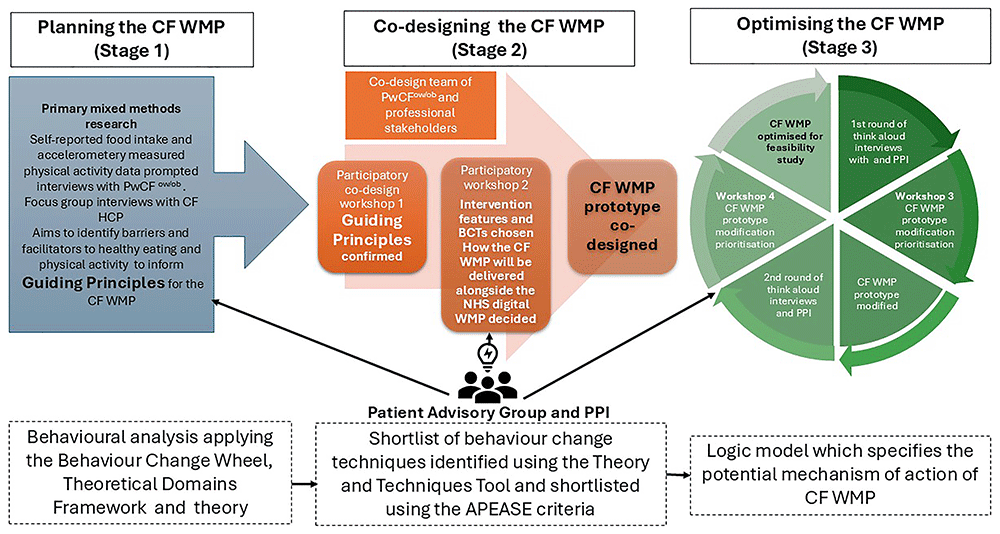
The first stage (planning), will involve undertaking primary mixed-methods research with both PwCFow/ob and CF health care professionals (HCPs) to identify barriers and facilitators to the desired behaviours (i.e. diet and physical activity). For PwCFow/ob, gaining an in-depth insight into their evolving needs and preferences, and the specific behavioural challenges they encounter regarding their diet and physical activity, will be critical to designing an acceptable, engaging, relevant, and motivating intervention for them. Obtaining insights from HCPs in the planning stage will also ensure that the CF WMP is designed to be feasible to deliver in clinical practice and within the CF model of care (regional specialist centres).
Development of Guiding Principles: data from stage 1 will be used to formulate the “guiding principles” for the intervention, which underpin the co-design process. The guiding principles define how the intervention will address key behavioural issues (identified during stage 1), that are crucial to engagement with the intervention, specify intervention design objectives that may improve engagement, and outline key intervention features (intervention components) that meet the design objectives. These guiding principles will be iteratively refined throughout the development process, from the findings of ongoing qualitative research and patient and public involvement (PPI) with the target population, to ensure that the intervention continues to meet their specific needs in a way that is acceptable, engaging, relevant and motivating.
Behavioural analysis: during stage 1, a behavioural analysis will also be undertaken, with the aim of specifying intervention content to address the barriers and facilitators to diet and physical activity31,32. First, the barriers and facilitators to eating a healthy diet and being physically active will be a mapped to the capability, opportunity and motivation domains of the Behaviour Change Wheel (BCW). The BCW will be used to specify intervention functions that can target the specific barriers and/or facilitators, and then second, to identify possible Behaviour Change Techniques (BCTs) that meet the intervention functions (i.e. that could act as intervention features). In parallel, the barriers, facilitators and COM-B domains will be mapped onto the Theoretical Domains Framework, and the TTaT tool will be used to link BCTs to their mechanism of action. , i.e. to specify the active ingredients of the intervention
The second stage (co-design) will draw on the data and information gathered during stage 1, to develop the CF WMP prototype. This will be achieved through a series of participatory co-design workshops. Workshops will comprise PwCFow/ob, CF and weight management HCPs, and professionals with experience of developing and delivering NHS digital WMPs. The aim of these workshops will be for the co-design team to (1) confirm and refine the guiding principles, and (2) decide which intervention functions/features and BCTs should be included in the CF WMP, that are likely to be acceptable, engaging, relevant, and motivating to PwCFow/ob.
To guide these decisions, potential intervention functions and BCTs will be appraised and shortlisted using the APEASE criteria (affordability, practicability, effectiveness and cost-effectiveness, acceptability, side-effects/safety and equity) for consideration and inclusion in the CF WMP by the co-design team. A preliminary logic model will be constructed to begin to outline the potential mechanisms of action of the intervention.
In the final stage (optimisation), the co-design team will iteratively refine the CF WMP prototype using think-aloud interviews. The think-aloud interview technique enables feedback on a prototype to be rapidly obtained capturing participants immediate thoughts and reactions as they are observed interacting with a prototype33. To optimise the CF WMP, think-aloud interviews will be conducted with PwCFow/ob, to gather their views and opinions of the intervention features and BCTs (focussed on acceptability, engagement, motivation and useability), and inform modification decisions. Participant views and opinions will be tabulated in a “table of changes” and coded according to PBA guidance (e.g. regarding importance, ease of change), to direct and prioritise modifications. The CF WMP prototype (and logic model) will then be iteratively modified through during 2 cycles of think aloud interviews and PPI activities followed by a modification workshop with the co-design team.
PPI will be integrated throughout the research process, and in the activities employed to co-develop the CF WMP. The PPI plan for this research has been guided by the NIHR INVOLVE National Standards for Public Involvement and developed in collaboration with people living with CF34. Prior to obtaining research funding, the views and opinions from the CF community on this research were gathered during online focus groups, face-to-face and telephone interviews. PwCF viewed this research as important to the many who had experienced significant weight gain on HEMT and they welcomed specific weight management support tailored for PwCF. Additionally, consultation with CF HCPs supported this research as a high priority for their clinical practice35.
Since securing research funding, two lead research partners representing PwCFow/ob, have been recruited to work with the study team, to develop and refine the research ideas, lead on the delivery of PPI activities, and facilitate co-design activities (e.g. workshops). These lead research partners will also contribute to the dissemination of the research findings to the CF community.
A patient advisory group has also been established, comprising people living with CF who have experienced overweight or obesity. The advisory group will inform the development of study documents, research protocols (including outcome measures), plain English summaries, and co-design activities. They will be used to check the qualitative findings that inform the CF WMP co-design process and provide their views and opinions on the CF WMP prototype as it is developed.
In addition to working with the patient advisory group, PPI activities will also be undertaken with the wider CF community via charity involvement activities and through contact with people receiving care at adult CF centres. This will aim to gather the views and opinions from a diverse range of PwCFow/ob, and those who may have barriers to participating in a patient advisory group.
Data-prompted interviews will be conducted with PwCFow/ob, to understand the barriers and facilitators to eating a healthy diet and being physically active. Focus groups with CF HCPs will also be conducted to explore their experiences of delivering diet and physical activity behaviour change to this patient group.
Sampling and recruitment: A purposive sampling technique will be employed to recruit 20–30 PwCFow/ob from adult CF centres in Birmingham, Nottingham, and Sheffield. To be eligible to participate, individuals must have a confirmed diagnosis of CF with genotype, be clinically stable (no respiratory exacerbation within previous 28 days), 18 years of age or over, BMI >25kg/m2, and be prescribed HEMT. Those with conditions that may affect usual diet and physical activity behaviours including the diagnosis of an eating disorder, pregnancy, undergoing screening for diabetes, prescribed an increased dose of glucocortocid (above usual maintainence dose) recieving treatment for acute constipation, distal ileal obstruction syndrome or receiving IV antibiotic therapy for a respiratory exacerbation will not be eligible to participate.
For focus groups, up to 24 CF HCP will be purposively sampled via professional specialist interest groups and social media advertisements. To be eligible to participate, CF HCP must be working as a registered dietitian, physiotherapist, clinical nurse specialist, psychologist or physician at an adult CF centre in the UK.
Interviews with PwCFow/ob: Using a sequential exploratory mixed methods design, data-prompted interviews will be undertaken with PwCFow/ob. Participants will be provided with a wrist-worn accelerometer to wear for 14 days (Actigraph wGT3X-BT36), and an app-based food diary to complete for 4 consecutive days (MyFood24®37). Data from the accelerometer and food diary will be analysed to quantify habitual physical activity and dietary behaviours and summarised into a visual format. These visual summaries will be used as a prompt to guide narratives during a qualitative semi-structured interview. Interviews will explore participants experiences of weight management, contextual influences on dietary choices and physical activity behaviours, and perceptions of diet and physical activity. They will also be asked to discuss the content and features they would like included in a CF WMP. Lastly, their experience of the data collection techniques used will be explored in preparation for design of a future feasibility study to test the CF WMP. Participants will be interviewed, at their usual CF Centre, in their home or by video-conferencing platform (Zoom® or MS Teams®) and will be audio/audio-video recorded.
Focus groups with CF HCPs: Semi structured focus groups will be delivered online to CF HCPs in groups of 4–6 participants, who work in the same professional discipline. Focus groups will be conducted via a video-conferencing platform (Zoom® or MS Teams®) and will be audio/audio-video recorded. One-to-one virtual interviews will also be conducted with CF HCP who are unable to attend a scheduled focus group interview.
Data analysis
Qualitative Data Analysis: An inductive thematic framework approach will be used to analyse the data. Specifically, to develop codes and categories into themes and subthemes which represent barriers and facilitators to eating a healthy diet and being physically active, experienced by PwCFow/ob38
Quantitative and Qualitative Data Integration: food and nutrient intake (mean energy, macronutrient intakes, portions of fruit and vegetables, sugar intake and foods making a significant contribution to macronutrient intakes), physical activity data (mean percentage time spent in sedentary, light, moderately vigorous, vigorous activity levels and daily step count) and qualitative themes from CF HCP and PwCFow/ob interviews) will be integrated using joint display analysis39,40. Joint display analysis is a technique used to visually integrate qualitative and quantitative data, enabling comparison of how themes are reflected in, or contrast with the findings of a quantitative data set. It will be used to explore perceptions of dietary intake and physical activity among PwCFow/ob and to examine where these perceptions align with or diverge from their food intake and physical activity behaviours, and the perceptions of CF HCPs.
Development of Guiding Principles: barriers and facilitators identified in focus groups and interviews will be combined with a synthesis of existing evidence to formulate the “guiding principles” for the intervention. The guiding principles will; (1) identify the specific characteristics of PwCFow/ob , that are likely to affect engagement, (2) outline intervention design objectives that may improve engagement (which address the behavioural issues, barriers and facilitators identified in qualitative research), and (3) specify key intervention features (intervention components) that meet the design objectives.
Behavioural analysis: This will be done using the Behaviour Change Wheel – a structured framework and synthesis of 19 behaviour change models that can be used to map barriers and facilitators to sources of behaviours (capabilities, opportunities and motivations)41. It specifies that three domains must be present for a Behaviour (B) to occur: psychological and physical Capability to enact the behaviour (C), social and physical Opportunity for the behaviour to occur (O), and sufficient Motivation to do the behaviour (autonomous and reflective (M)). The barriers and facilitators to diet and physical activity of PwCFow/ob will be mapped into each of these domains, to identify intervention functions and Behaviour Change Techniques (BCTs) for the CF WMP, that can target the specific barriers and/or facilitators.
Following this, COM-B domains will be mapped onto the Theoretical Domains framework (TDF), to understand the underlying psychological constructs that may be influencing Capabilities, Opportunities and Motivations of PwCFow/ob in regard to diet and physical activity behaviours. The TDF is a synthesis of 33 behaviour change theories and evidenced-based constructs grouped into 14 domains that include beliefs about capabilities and consequences, emotions, behavioural regulation and decision-making processes32. This will provide the theoretical grounding for the intervention26,27 – i.e. the intervention functions and BCTs will be directly linked to theoretical constructs, to specify the active ingredients of the intervention. The Medical Research Council framework for complex interventions24,42, outlines the importance of developing theory-informed interventions. The Theory and Techniques Tool (TaTT)43 will also be used alongside the TDF, to identify relevant BCTs that map onto the theoretical constructs underpinning the intervention.
Patient Advisory Group Collaboration and Patient and Public involvement
Findings from interviews with PwCFow/ob and CF HCP focus groups will be shared and discussed with the patient advisory group to check qualitative themes. PPI activities will also be conducted to gather views and opinions on the challenges of eating a healthy diet and being physically active from the wider CF community. Their opinions will be integrated with the qualitative themes and subthemes from interviews with PwCFow/ob and CF HCP.
Outcomes
Key outcomes of the planning stage are:
1. Key context specific barriers and facilitators to eating a healthy diet and being physically active experienced by PwCFow/ob
2. Development of the guiding principles – described in a table; (1) key design objectives that may improve engagement and (2) key intervention features that meet the design objectives (i.e. to overcome barriers to diet and physical activity behaviour change)
3. Behavioural analysis - intervention functions and potential BCTs for the CF WMP identified and mapped to theoretical constructs
A co-design team of key stakeholders will be established. The co-design team will undertake a series of participatory co-design workshops to develop the CF WMP prototype, informed by the outcomes of stage 1 (planning).
Sampling and recruitment: a purposive sampling technique will be used to recruit 12 participants to the co-design team (PwCFow/ob and HCPs and professionals involved in the area of CF care and weight management). An equal number of people living with CF and professional stakeholders will be recruited to achieve an equitable balance of power for collaborative working and shared decision-making by the team44. Co-design team members who are PwCFow/ob, will be recruited via adult CF centres and CF Charity patient communication e.g. newsletters, websites. Other team members will be recruited via professional groups and social media advertisements.
Participatory co-design workshops: using the integrated findings from the planning stage, the co-design team will work together to design the CF WMP prototype during 2 participatory workshops (Table 1). The aim of these workshops will be for the co-design team to confirm and refine the guiding principles and decide which intervention features and BCTs should be included in the CF WMP. The workshops will be delivered online using a video conferencing platform (Zoom® or MS Teams®), to enable participation from team members located throughout the UK, and to remove the risk of cross-infection among PwCF.
Patients Advisory Group Collaboration and Patient and Public involvement
Views and opinions on the guiding principles and how the CF WMP should be delivered alongside the NHS digital WMP will be gathered from the patient advisory group and people with CF during PPI activities. Their opinions will be presented to the co-design team to inform their co-design work.
To optimise the CF WMP, the co-design team will iteratively refine the CF WMP prototype through a series of think-aloud interviews and co-design workshops.
Sampling and recruitment: a purposive sampling technique will be used to recruit 16 PwCFow/ob for think-aloud interviews. Participants will be recruited via adult CF centres and CF community communication e.g. newsletters, websites. Eligible participants will be 18 years or over and have lived experience of CF and overweight/obesity.
Think-loud interviews; think-aloud interviews will be conducted with 6–8 PwCFow/ob, using the CF WMP prototype. The aim will be to identify any acceptability, engagement, motivational and usability issues with the intervention features, BCTs and delivery format. Participants will be asked to say out loud any thoughts or reactions they have in response to interacting with the CF WMP. Probes and follow up questions will be used to explore their experience of using the programme and suggestions on how it could be modified to improve acceptability and engagement. Interviews will be conducted in person or online via a video conferencing platform (Zoom© or MS Teams©) and will be audio or video recorded.
Prototype Modification: participant views and opinions gathered from think-aloud interviews and PPI activities, will be tabulated in a “table of changes”. Possible modifications will be outlined and coded as; important for behaviour change, consistent with guiding principles, easy to modify within resources available, supported by PPI opinions or the literature, a frequently occurring theme, or no change to be made.
The co-design team will be presented with this “table of changes” during an online workshop, The co-design team will discuss this feedback and prioritise CF WMP modifications using the MoSCoW criteria45; Must have –essential for the programme to be effective, Should have –may directly or indirectly influence programme effectiveness. Could have –a useful change if resources allow, Would like- not necessary for effectiveness, but may enhance acceptability, engagement, enjoyment, usability, feasibility, if resources allow. A rationale as to why this decision was made will also be documented. Any differences of opinion within the team will be resolved using a triangulation matrix to reach a consensus. The modifications prioritised by the co-design team will then be made to the CF WMP prototype.
The modified CF WMP prototype will then be user tested again, in a second round of think-aloud interviews with a further 6–8 PwCFow/ob and adjunct PPI activities. The above modification prioritisation process will be repeated during a final co-design workshop. Any remaining modifications that have been identified as being high priority will be made and further think-aloud interviews and refinements conducted where required. After which it will be considered optimised and ready for testing in a subsequent feasibility study. In parallel to modifications, the logic model will be updated to reflect the proposed mechanisms of actions of the intervention.
Since the introduction of HEMT, the prevalence of overweight and obesity has increased in the adult CF population. PwCFow/ob now need diet and physical activity behaviour change interventions to support them to manage their weight. Although effective NHS digital weight management interventions are available, they may not meet the complex health needs of people living with CF23. These complex health needs include person-centred support for pancreatic insufficiency and gastrointestinal issues, CF diabetes and low bone mineral density. Furthermore, existing programmes do not address the pre-HEMT experience of people with CF, particularly the traditional ‘legacy’ dietary needs, severe disease and limited life expectancy that have shaped diet and physical activity behaviours. These experiences present additional challenges to weight management for individuals who are adjusting to improved health and extended life expectancy.
This study aims to co-design with PwCFow/ob and professional stakeholders, a theory informed diet and physical activity behaviour change intervention to support people living with CF and overweight/obesity to manage their weight. To our knowledge this will be the first CF-specific weight management programme to be developed for PwCFow/ob .It will be designed to be delivered alongside an existing NHS digital WMP (Morelife®) to extend the usability to people living with CF by meeting their specific and changed dietary needs that have emerged since the advent of HEMT.
Ethical approval for the planning stage has been granted by the NHS Research Ethics Committee Northern Ireland (24/NI/0098). Ethical approval for the co-design stage and optimisation stage has been granted by Bradford Leeds Research (Yorkshire & The Humber) Research Ethics Committee ((25/YH/0189)) and Health Research Authority.
Findings from the study will be disseminated via scientific meetings, publications in open access peer-reviewed journals and Researchfish® (https://researchfish.com/). Plain English summaries of the study findings produced by the patient advisory group and Lead Partners will disseminate to the CF community in newsletters, social media posts and websites publications (www.heartlandscf.org).
Provide sufficient details of any financial or non-financial competing interests to enable users to assess whether your comments might lead a reasonable person to question your impartiality. Consider the following examples, but note that this is not an exhaustive list:
Sign up for content alerts and receive a weekly or monthly email with all newly published articles
Register with NIHR Open Research
Already registered? Sign in
If you are a previous or current NIHR award holder, sign up for information about developments, publishing and publications from NIHR Open Research.
We'll keep you updated on any major new updates to NIHR Open Research
The email address should be the one you originally registered with F1000.
You registered with F1000 via Google, so we cannot reset your password.
To sign in, please click here.
If you still need help with your Google account password, please click here.
You registered with F1000 via Facebook, so we cannot reset your password.
To sign in, please click here.
If you still need help with your Facebook account password, please click here.
If your email address is registered with us, we will email you instructions to reset your password.
If you think you should have received this email but it has not arrived, please check your spam filters and/or contact for further assistance.

Comments on this article Comments (0)