Keywords
COVID, Hospital admission, Elective surgery equity

COVID, Hospital admission, Elective surgery equity
Waiting lists for elective surgery increased rapidly in England during and following the COVID pandemic. By the end of March 2021 436,127 patients had been waiting for over 52 weeks from referral for elective treatment, which had only fallen to 309,300 by March 2024. In comparison, prior to COVID in February 2020, this number was 1,8451.
Managing the demand for elective surgery is a matter of public concern and political interest. In this paper we studied the supply of elective surgery over the COVID pandemic with particular emphasis on the pre- and post-COVID epochs – in previous work we documented the supply of elective surgical services during the pandemic itself (see pre-print2). Another study found that acute NHS hospital trusts did not fully recover from COVID by 20213. In the current study we used surgical volumes/throughput to shed light on several issues of theoretical and practical interest.
First, we simply tracked and described surgical volumes over the two epochs, pre- and post-COVID. Theoretically, we may have expected the supply of operations to increase over time, given the political and clinical imperative to match demand and reduce waiting times and numbers.
Second, we looked for evidence that, compared with the pre-COVID epoch, greater priority would be given to certain operation types over other operation types in the post-COVID epoch. Here, we built on the official “Clinical guide to surgical prioritisation”4, which assigns priority levels to surgical procedures. We examined any change in priority between the more urgent elective category (priority 3 – procedures to be performed in less than 3 months) and the less urgent category (priority 4 – procedures to be performed in over 3 months). Thus, we did not examine emergency (priority 1 – procedures to be performed in less than 24/72 hours) and cancer (priority 2 – procedures to be performed in less than 1 month) operations. Unlike cancer operations, no financial incentives are applied to priority 3 and 4 operations. This allowed us to examine the effect of prioritisation in the absence of an extrinsic motivating factor. Theoretical interest here concerned the extent to which the system may have prioritised certain cases, given that there was no penalty or reward for doing so.
Third, we examined changes between the pre- and post-COVID epochs with respect to the proportion of NHS-funded operations carried out in publicly owned vs independent facilities. Here we exploited the fact that the NHS funds operations in both sectors. Like, for example, Kaiser Permanente in California, it acts as both a commissioning and a provider organisation with the feature that individual doctors (surgeons and anaesthetists) work in both settings, while nurses and auxiliary workers tend not to. These features enabled us to gain some insights into the relationship between supply and demand – it might be hypothesised, for example, that the number of operations in NHS organisations would remain static, while the proportion done in independent facilities increased, thereby leading to overall increase in volumes. We also examined the ‘sub-hypothesis’ that the proportion of operations in the less urgent category (priority 4) would increase in independent hospitals relative to public hospitals over the two epochs. This would happen if the profit motive, rather than patient need, drove independent provider behaviour.
Fourth, we wished to find out whether there would be a change in the proportion of surgeries carried out based on patient characteristics, IMD quintile group and ethnicity, to test the hypothesis that some groups would have been able to negotiate ‘privileged access’. For reasons that will become apparent, we were not able to include ethnic group in this comparison.
While our study is limited to England, the above contextual features enable us to examine theoretical insights of potentially wider applicability, for example on the interplay between independent and public provision under a common payer.
This paper follows the STrengthening the Reporting of OBservational studies in Epidemiology (STROBE) guidelines for studies conducted using routinely collected healthcare data5 and we have completed the RECORD statement (see Other Information).
We conducted a retrospective, observational, longitudinal study using routinely collected healthcare data to examine the effect of COVID on access to planned NHS-funded surgery. We did this by plotting the monthly number of operations before, during and after the COVID lockdown period and recording the percentages in different IMD quintiles over these three windows. We chose the time windows in line with lockdown dates in England, as recorded on Gov.uk6.
The data used for this study were extracted from the Hospital Episodes Statistics (HES) database which contains all emergency and elective patient admissions, outpatient appointments and A&E attendances funded by the NHS in England. All procedures funded by the NHS were included, irrespective of whether they took place in NHS or independent hospitals.
We included spells containing one of a selection of primary operation codes from priority groups 3 and 4, listed in Extended Data 17. Operations were chosen on the grounds that they were among the most frequently performed operations in their priority group.
Our dataset was divided into three time periods: April 2015 – February 2020 (pre-COVID), March 2020 – July 2021 (COVID) and August 2021 – December 2024 (post-COVID). These time periods were in accordance with the lockdown period recorded by the Government6.
We described, across time periods: provider type, sex, Charlson comorbidity score, number of any-cause deaths within 90 days of the operation date, number of emergency readmissions within 90 days of the operation date, median age, median length of stay, ethnicity, IMD quintile and specific operation type. Given that the time periods were of unequal duration, we included the monthly mean number of operations in addition to comparing percentages overall and within groups. We plotted the results across the time periods to allow visual inspection and described the overall trends in operations.
We described differences between pre- and post-COVID proportions of surgeries by age, ethnic and IMD quintile group in the Extended Data 2 (Figures A to J)7. We do not test the statistical significance of the difference between proportions because very small differences (less than a percentage point) might be ‘significant’ but provide spurious associations, for example, as a result of equally small changes in the denominator population.
Investigators at University Hospitals Birmingham (UHB) had access to pseudonymised, patient-level HES data for the purposes of this study. Data were cleaned using the inclusion criteria listed above and aggregated for reporting purposes.
No patients were involved in setting the research question or the outcome measures, nor were they involved in developing plans for recruitment, design or implementation of the study. No patients were asked to advise on interpretation or writing up of results. There are no plans to disseminate the results of the research to study participants or the relevant patient community.
This project was a service evaluation using pseudo-anonymised data, so consent from patients was not required. Ethics approval was not required for this work, and this was confirmed by the University of Birmingham Research Ethics team.
The evaluation was registered with the local Clinical Audit Department under the Clinical Audit Registration and Management System (CARMS) number 20835. Access to the dataset was restricted to the designated analyst within University Hospitals Birmingham NHS Foundation Trust. All data were used in accordance with the data sharing agreement with NHS Digital (https://digital.nhs.uk/your-data) and handled in line with the Caldicott Principles and the ethical standards of the Declaration of Helsinki, with suppression of small numbers and sensitive items to minimise disclosure risk.
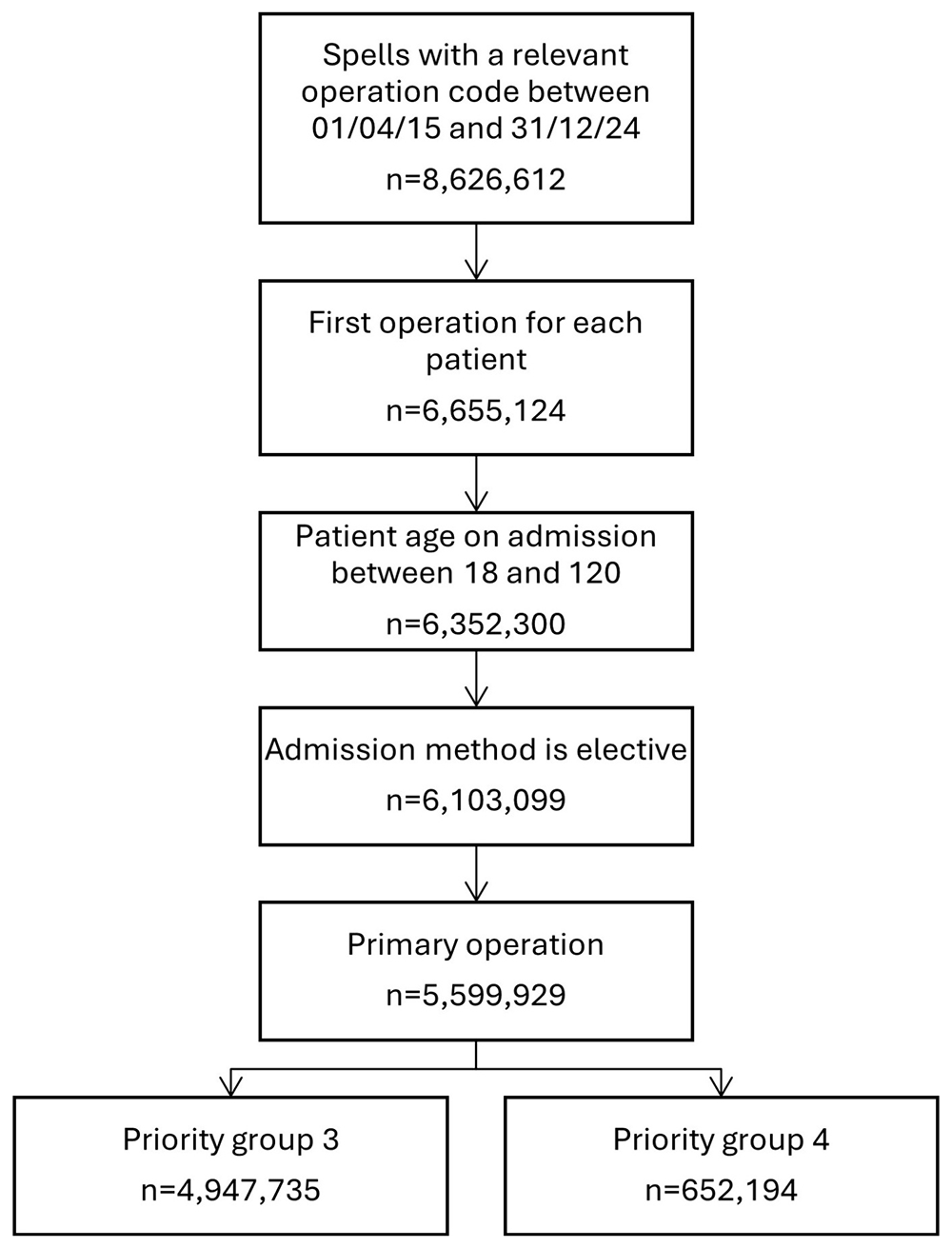
Our method of data selection is illustrated in Figure 1. We included all spells where the primary operation is one of the OPSC-4 codes from priority group 3 or 4 (listed in Extended Data 17) and the operation date is between 1st April 2015 and 31st December 2024. Following this, operations were excluded if: it was a repeat operation for a patient, patient age was not between 18 and 120, admission method was not elective, patient age or sex was unknown or there were inconsistencies e.g. date of death preceded operation date.
We summarised our data in Table 1 (priority 3) and Table 2 (priority 4). Total and monthly average number of operations are shown in the first two rows for each period. The number of operations and the percentage of the total are then shown for each period for provider type, sex, Charlson comorbidity score, number of any-cause deaths within 90 days of the operation date, number of emergency readmissions within 90 days of the operation date, median age, median length of stay, ethnicity, IMD quintile and specific operation type. IMD quintiles are calculated using IMD 2015 scores for the Lower Super Output Area (LSOA) 2011 of the patient’s home address.
The percentage of priority 3 operations carried out at ISHPs increased from 21% to 32% during COVID and further still to 43% post-COVID. The same pattern was not seen for priority 4 operations, where the percentage carried out at ISHPs remained fairly constant throughout.
Changes were also observed in ethnicity groups for priority 3 operations, specifically for White and Unknown groups. The percentage of patients self-reporting as White decreased by 12% from 77% to 68% to 64% over the pre-, during- and post-COVID time periods respectively. Conversely, the percentage of patients self-reporting as Unknown increased by 14% from 15% to 25% to 29% during the same time periods. There was a similar pattern for priority 4 operations, but the changes were smaller. The proportions in the male sex and in the lowest deprivation quintile group changed by only 1 percentage point.
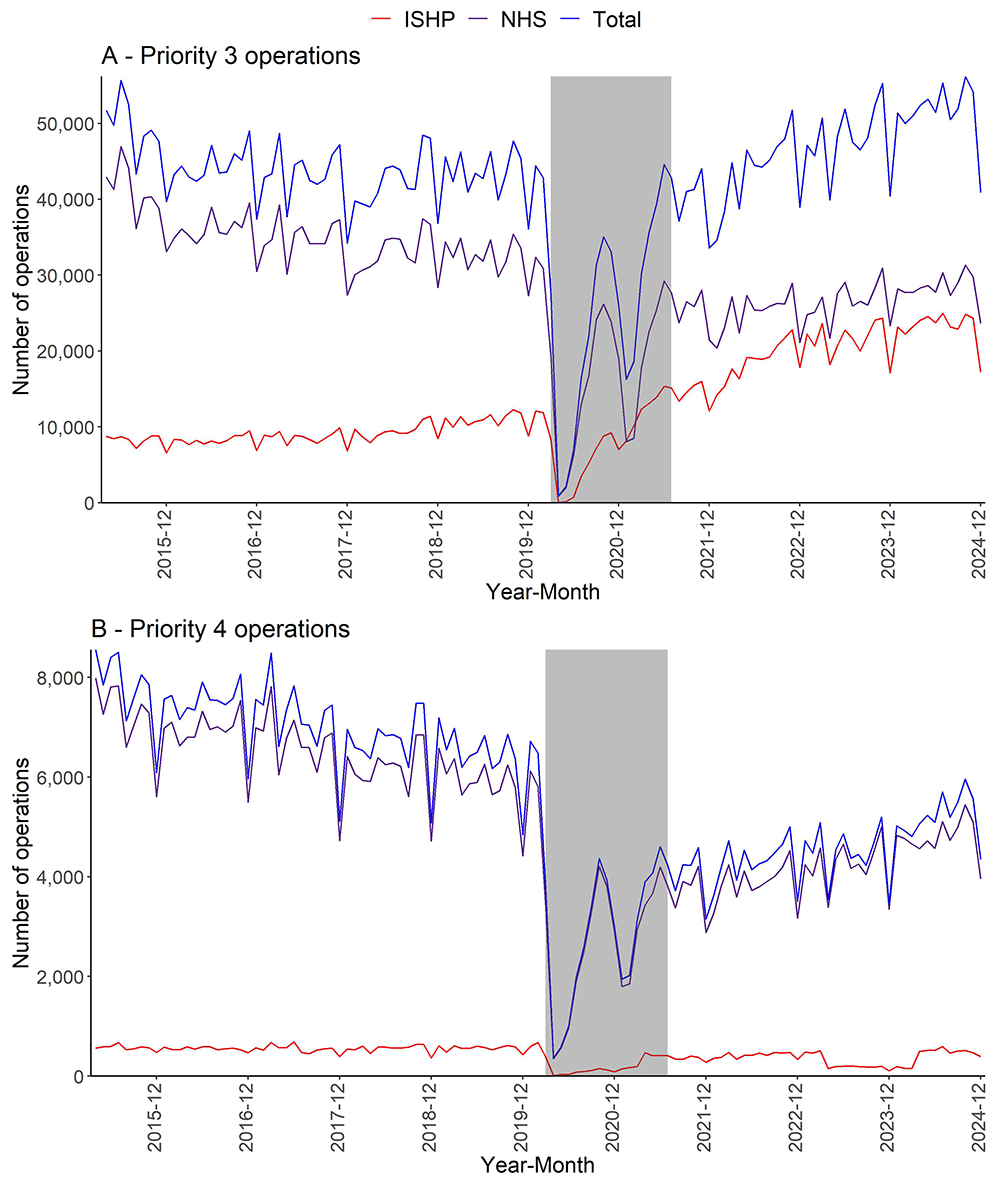
We illustrated the total number of operations per month (Figure 2) by organisation type (ISHP and NHS) and overall. The COVID period is shown by the grey, shaded area. For both priority groups, there was a large drop in the number of operations at the start of the COVID period, with some recovery part-way through, followed by a second drop before the lockdown restrictions were lifted. The trend here is one of gradual recovery of volumes over three years and nine months but with differences by priority group as we now describe. Extended Data 3 (Figures K to W) shows the numbers of each individual operation over time7.
We initially included YAG laser capsulotomy surgery in the priority 4 group, as this is one of the most frequently performed surgeries. However, we chose to exclude it as the increase in operations at ISHPs was so large that it completely changed the overall trend for that group. We included the time trend plot for this operation in Figure X in Extended Data 37. This large increase seemed to be in keeping with a general shift towards ISHPs for ophthalmology treatments, as reported by the Health Foundation8.
The number of operations per month for priority 3 (Figure 2, Panel A) was reasonably flat pre-COVID. It decreased during the pandemic, gradually recovering to at least pre-pandemic levels over the subsequent three years and nine months. This pattern is not shown for priority 4 (Figure 2, Panel B) operations, where the number of operations following the COVID period recovers slowly, remaining below the pre-COVID number. There is, thus, clear evidence that the service was prioritising the operations that the NHS had classified as more urgent. This excluded the single relatively new ophthalmic operation (YAG laser), whose use had increased dramatically despite being priority 4 (Extended Data 3, Figure X)7.
It can be seen in Figure 2, Panel A that the proportion of priority 3 operations carried out in ISHPs increased dramatically post-COVID to almost equal the proportion carried out in NHS-owned hospitals. This pattern was not replicated for priority 4 operations in Figure 2, Panel B.
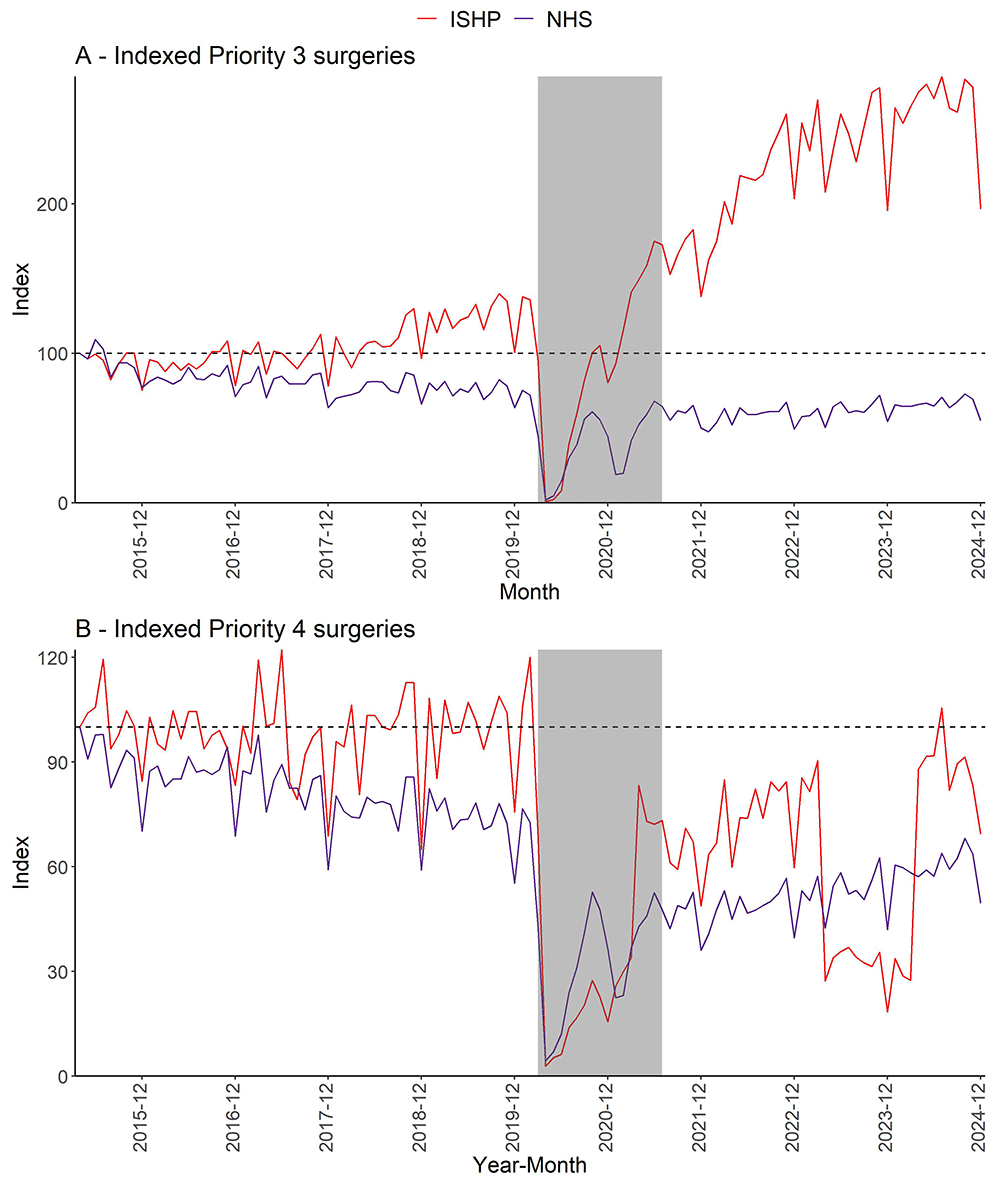
The change over time by organisation type and by priority level was illustrated further by calculating indexed operations in Figure 3. Operations were indexed against the total for April 2015, the first month in our dataset, which was set to 100 as the baseline. For month X, the indexed value was
Operations were indexed against the total for April 2015 which was set to 100 as the baseline. For month X, the index value was . The plots show the percentage change from the baseline over time.
The plots show the percentage change from the baseline over time. For priority 3 operations in Panel A, the number of operations carried out at NHS hospitals clearly decreased as a percentage of the initial total. The opposite is true for operations at ISHPs, which also dipped during COVID but then increased to more than 200% of the April 2015 baseline figure. For priority 4 operations in Panel B, the number of operations at both NHS hospitals and ISHPs fell as a percentage of the baseline value, with minimal change in favour of ISHPs.
The fourth question we aimed to answer was whether there was evidence that the proportion of operations changed in favour of people from the least deprived neighbourhoods. While the point estimate showed a slightly increased proportion for the least deprived group, the magnitude of this difference is very small (half of a percentage point) (Table 3). We chose not to carry out the same analysis for ethnic group because of the large shift in self-categorisation described earlier.
We documented changes in trends in operations as per the first aim. Overall, the number of operations did not recover to its pre-COVID level. Given the backlog, and presumably increasing demand, it is not surprising that waiting lists remain high. Waiting lists may underestimate demand since the perception of supply constrains is likely to affect patient willingness to request appointments.
Regarding the second aim, we found that changes were in the hypothesised direction. Priority 3 operations were indeed (and increasingly) prioritised over priority 4 operations in comparison to the pre-COVID period.
Turning to the third aim, we again confirmed our prior hypothesis: the proportion of operations in the independent sector increased relative to the total of NHS funded procedures. However, our hypothesis that operations overall would increase was disproven. Likewise, we found the opposite of our hypothesis that the independent sector would provide the greatest increase for priority 4 (lower priority) operations.
The fourth aim examined possible service discrimination in favour of some groups over others relative to the pre-COVID era. While there was a small effect in this direction, the difference was less than one percentage point, and such a small effect could be accounted for by factors other than discrimination.
Despite targeting higher priority procedures and greater use in independent providers, there remains considerable unmet demand. Our findings provide some clues as to what might be achieved at the demand and supply sides of the health economy.
Demand cannot be wished away but one option is to ration by priority as advocated by Blom and colleagues with respect to elective orthopaedic surgery9. The change we observed post-COVID in favour of higher priority surgeries was in line with government policy and the principle of making best use of scarce resources under scarcity. This was achieved without a financial incentive. On the assumption that the benefits (QALY gains) are greater for priority 3 than priority 4 surgeries, why not fund only the former until the backlog has cleared? These are problems, if not flaws, in such a policy. First, the prioritisation was based on consensus, not a formal decision analysis (cost-utility or cost-benefit) model. Second, the effect of the condition is not uniform across operation categories – severity and preferences differ such that, inevitably, there would be a considerable overlap in capacity to benefit across operation types. An intermediate solution may be to increase the reimbursement differential between the categories – a type of “firm nudge”. Overall, however, we see little opportunity for demand management to solve the problem.
We find, first, that the public sector has not retained its throughput and second, the independent sector, while expanding, has not done so to the extent necessary to make good the reduced volumes in the public sector. One might have expected (or hoped) that either: 1) the independent sector would have added to, not substituted for, NHS activity; or 2) the independent sector would have continued to expand, so that overall capacity increased despite falling NHS capacity. Our findings cannot explain the enigmatic finding that neither of these desirable scenarios have occurred, and we must speculate.
Regarding the public sector, the problem could lie with a physical limit on human resources. The government has tried to expand capacity by building High Volume Low Complexity (HVLC) units, but it is still possible that capacity is constrained, say by overflow of medical patients in the surgery beds. There is some evidence for this hypothesis in the high number of cancelled operations in the system10. Moreover, a recent study has shown that there is no hospital-level variable that is systematically associated with recovery in surgical volume post-COVID3. An alternative, or additional, explanation is that medical staff are depleted in the public sector because their efforts have been diverted into the independent sector.
It would be wrong to categorise all hospital beds as uniform; capacity is divided between general inpatient beds, day case or short stay beds and specialist High Dependency or Intensive Care beds. Much of the elective work workload is delivered through short-stay or day case beds which are often only open from Monday to Friday and are therefore protected from emergency patients being outlined to them which may explain why fewer priority 4 patients have been outsourced to independent providers. It may be that as well as the constraint of overall numbers of beds, the attribution of beds may also not reflect the balance of required activity.
The independent sector has taken up the shortfall in operations in the public sector but has not gone further such that overall supply would increase. It is possible that the increased demand has used up whatever spare capacity might have existed in the independent system. What could explain failure to further expand supply? One possible explanation lies in delays in the (notoriously) constrained UK planning system. A perhaps more likely, explanation lies in the workforce. This explanation is supported by the difficulty the government is having in recruiting and retaining its nursing workforce. The NHS reported a 10.3% vacancy rate for nursing in September 202311. This may be the final limiting factor across both sectors, public and independent. However, we should also consider demand which may have been altered by price. The NHS payment scheme specifies unit price for various procedures but allows for different payment mechanisms. In practice, surgery in independent hospitals costs more than those in NHS hospitals due to the NHS’s ability to purchase at scale. As NHS hospitals sub-contract to independent hospitals directly for activity this creates a bottleneck – independent hospitals cannot do many surgeries as cheaply as a NHS hospital, but the NHS hospital is paid a set price wherever it is performed and so cannot afford to pay the independent provider more than it will receive. This, more than workforce or facility constraints, may explain failure to further expand independent provision. By increasing capacity in independent providers, the NHS has created a market in elective surgical care. However, markets need to be managed or shaped. This means that they need to be understood. In our opinion, new policy needs to be based on a much more complete understanding of the existing market with respect to its interactions and bottlenecks.
There are always limitations when working with routinely collected healthcare data that are not collected for the purpose of audit, service evaluation or research. There are possible coding errors, and missing data, however, we follow trends over time and there is no strong reason to suspect that data collection accuracy varies over time. We do not carry out statistical analysis since we make numerous observations and our study covers the whole population, not a sample thereof. Our study is based on the highest prevalence operations, and we do not break the operations down into individual types, save for YAG eye surgery. We think these decisions are consistent with the practical and theoretical aims of our study.
Our study assumes stable underlying rates, for example for IMD quintile groups, and in the case of ethnic group, in particular, this does not hold.
Provide sufficient details of any financial or non-financial competing interests to enable users to assess whether your comments might lead a reasonable person to question your impartiality. Consider the following examples, but note that this is not an exhaustive list:
Sign up for content alerts and receive a weekly or monthly email with all newly published articles
Register with NIHR Open Research
Already registered? Sign in
If you are a previous or current NIHR award holder, sign up for information about developments, publishing and publications from NIHR Open Research.
We'll keep you updated on any major new updates to NIHR Open Research
The email address should be the one you originally registered with F1000.
You registered with F1000 via Google, so we cannot reset your password.
To sign in, please click here.
If you still need help with your Google account password, please click here.
You registered with F1000 via Facebook, so we cannot reset your password.
To sign in, please click here.
If you still need help with your Facebook account password, please click here.
If your email address is registered with us, we will email you instructions to reset your password.
If you think you should have received this email but it has not arrived, please check your spam filters and/or contact for further assistance.

Comments on this article Comments (0)